
Home Inspector Career: Complete 2026 September Guide to Training, Salary, Certification & Job Outlook
Explore a home inspector career: 🔎 salary, certification, training, licensing, and job outlook. Complete 2026 September guide to becoming a home inspector.
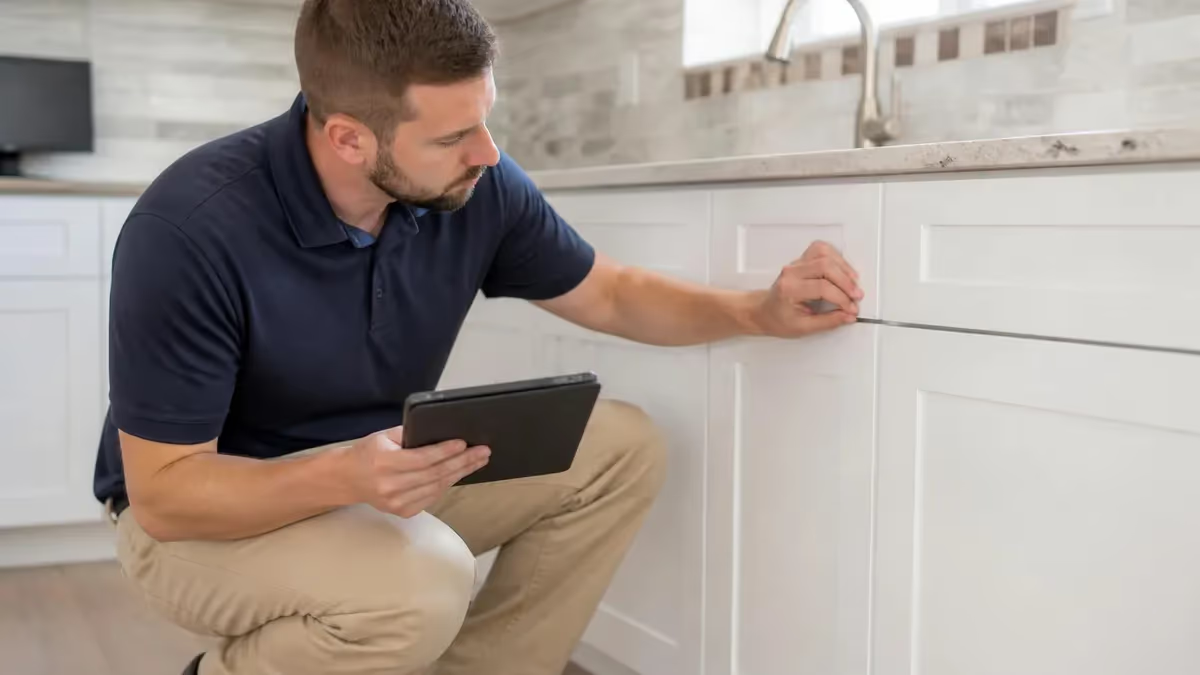
A home inspector career offers one of the most accessible paths into the real estate industry, blending hands-on building knowledge with the independence of running your own professional practice. Whether you are searching for home inspectors near me to understand the local market or considering a career change yourself, this guide walks through every milestone — training, licensing, certification, salary expectations, and long-term job outlook in 2026. Demand remains steady, fueled by a resilient housing market and growing buyer awareness about hidden defects and structural risk.
Home inspectors play a critical role in real estate transactions, identifying issues with roofing, electrical, plumbing, HVAC, foundations, and dozens of other systems before buyers commit to one of the largest purchases of their lives. The job blends technical expertise with client communication, requiring you to translate complex findings into reports that homeowners, agents, and lenders can act on. It is part building scientist, part educator, and part trusted advisor — a rare combination that keeps the work fresh.
The financial profile is attractive for a career that typically requires no four-year degree. Entry-level inspectors often earn $45,000 to $60,000 in their first year, while established solo inspectors with strong referral networks frequently clear $90,000 to $130,000 annually. Multi-inspector firms can scale revenue well past $250,000. With training costs ranging from $500 to $3,000 and a typical timeline of three to six months from enrollment to first paid inspection, the return on investment is among the fastest in skilled professional careers.
Regulation varies dramatically across the United States. Roughly 30 states require formal licensing, while others allow inspectors to operate with only voluntary certification through organizations like InterNACHI or ASHI. This patchwork creates both opportunity and confusion — what qualifies you to inspect in Texas may not be sufficient in Illinois, and pricing norms in Chicago differ widely from rural Minnesota markets. Understanding your state's specific requirements is the first practical step toward building a sustainable inspection business.
Beyond licensing, success depends on continuous learning. Building codes evolve, materials change, and new technologies — drones for roof inspections, thermal imaging cameras, sewer scope cameras — have raised client expectations dramatically over the past decade. Inspectors who invest in advanced tools and ancillary services like radon testing, mold sampling, and termite inspections command premium pricing and tend to weather market downturns better than generalists who only offer standard reports.
The career also offers flexibility that few other professional paths can match. Many inspectors set their own schedules, choose which neighborhoods to serve, and decide whether to remain solo operators or grow into multi-inspector firms. Some transition from related fields like construction, electrical work, HVAC, or real estate sales, leveraging existing knowledge to shorten the learning curve. Others enter directly through structured pre-licensing programs and apprentice with experienced inspectors before going independent.
This complete guide covers everything you need to evaluate whether a home inspector career fits your goals — from realistic salary data and licensing pathways to the daily reality of the job, business setup, insurance requirements, and how to find your first 50 clients. By the end, you should be able to make an informed decision and map a concrete next-90-days plan if the field aligns with your strengths and lifestyle expectations.
Home Inspector Career by the Numbers

Training & Certification Path: From Beginner to Licensed Inspector
Research State Requirements
Complete Pre-Licensing Course
Pass the National Home Inspector Exam
Obtain Insurance & Business Setup
Shadow & Complete Ride-Alongs
Launch Marketing & First Inspections
Salary and earning potential are usually the first questions aspiring inspectors ask, and the honest answer is that compensation varies enormously depending on geography, experience, business model, and willingness to upsell ancillary services. Understanding the full picture before you invest in training helps set realistic expectations. If you want a deeper benchmark across the profession, our breakdown of home inspector salary data covers regional variation, employee versus self-employed splits, and specialization premiums in detail.
Entry-level employees at established multi-inspector firms typically earn $40,000 to $55,000 in their first year, often supplemented by a per-inspection bonus structure once they ramp up. These positions trade upside for stability — predictable schedules, no marketing burden, and mentorship from senior inspectors. The trade-off is that ceilings are lower; even senior employees rarely cross $80,000 unless they move into management or sales roles within the firm.
Solo inspectors who own their businesses see dramatically different income curves. Year one is often a financial squeeze as marketing investment and slow referral growth limit volume to 50-100 inspections. By year three, established solo inspectors completing 250-350 inspections at an average ticket of $450 routinely generate $110,000 to $160,000 in gross revenue. After expenses, take-home typically lands between $75,000 and $110,000, with high performers in expensive markets pushing well above that.
Geographic differences are stark. Inspectors in Chicago, Seattle, Denver, and the Bay Area frequently charge $500-$700 for a standard inspection and add $150-$300 for radon, sewer scope, or mold sampling. In rural markets across Iowa, Kansas, or upstate New York, the same inspection might bill at $300-$375 with fewer ancillary opportunities. Cost of living adjusts these numbers somewhat, but high-cost markets generally produce higher real earnings per hour worked.
Ancillary services are the single largest lever for boosting income. A standard inspection takes three to four hours on-site plus two to three hours of report writing, totaling roughly six labor hours. Adding a radon test ($150 add-on for 15 minutes of setup), a sewer scope ($200 for 30 minutes), and termite letter ($75 for 5 minutes) can push a single appointment from $450 to over $850 — nearly doubling effective hourly earnings without adding a full inspection slot to the calendar.
Multi-inspector firm owners occupy the highest income tier, but they take on operational complexity that solo inspectors avoid. Owners who employ three to five inspectors and handle scheduling, sales, and back-office work commonly see net income of $150,000 to $300,000, though hands-on inspecting time drops dramatically. Some owners eventually transition fully into the business side, focusing on scaling, hiring, and acquiring smaller competitors rather than performing inspections themselves.
Income stability deserves honest discussion. Home inspection demand tracks the residential resale market, which fluctuates with mortgage rates, employment, and consumer confidence. Inspectors who survive downturns typically diversified early — relocation services, pre-listing inspections for sellers, commercial property inspections, and insurance inspections (4-point and wind mitigation in coastal states) all provide counter-cyclical revenue streams. Plan for income variability and build a six-month cash buffer once you stabilize.
Home Inspector Practice Test Questions
Prepare for the Home Inspector Test exam with our free practice test modules. Each quiz covers key topics to help you pass on your first try.
Home Inspector MCQ
Home Inspector Exam Questions covering MCQ. Master Home Inspector Test concepts for certification prep.
Home Inspector Test
Free Home Inspector Practice Test featuring Test. Improve your Home Inspector Exam score with mock test prep.
Home Inspector Trivia
Home Inspector Mock Exam on Trivia. Home Inspector Study Guide questions to pass on your first try.
Home Inspector Home Online Inspector Test
Home Inspector Test Prep for Home Online Inspector Test. Practice Home Inspector Quiz questions and boost your score.
Home Inspector Top Rated Home Inspector
Home Inspector Questions and Answers on Top Rated Home Inspector. Free Home Inspector practice for exam readiness.
Home Inspector Ultimate Home Inspector
Home Inspector Mock Test covering Ultimate Home Inspector. Online Home Inspector Test practice with instant feedback.
Home Inspector Electrical System Safety Ha...
Free Home Inspector Quiz on Electrical System Safety Hazards. Home Inspector Exam prep questions with detailed explanations.
Home Inspector Forced-Air Furnace Inspection
Home Inspector Practice Questions for Forced-Air Furnace Inspection. Build confidence for your Home Inspector certification exam.
Home Inspector Plumbing DWV Systems
Home Inspector Test Online for Plumbing DWV Systems. Free practice with instant results and feedback.
Home Inspector Roofing Systems and Materials
Home Inspector Study Material on Roofing Systems and Materials. Prepare effectively with real exam-style questions.
Home Inspector Structural Framing Defects
Free Home Inspector Test covering Structural Framing Defects. Practice and track your Home Inspector exam readiness.
What Do Home Inspectors Look For During an Inspection?
Inspectors evaluate the foundation for cracks, settling, water intrusion, and grade slope, then move to framing, siding, soffits, fascia, and trim. Roof condition is examined either by walking the surface or using drones — checking shingle wear, flashing integrity, chimney crown, and gutter function. Exterior windows, doors, decks, porches, and driveways are documented for safety hazards, deferred maintenance, and structural concerns.
Outdoor systems including grading, drainage patterns, retaining walls, and exterior electrical fixtures are also reviewed. Inspectors look for evidence of pest damage, moisture staining, and improper repairs. A typical exterior walk-around takes 30-45 minutes and produces 15-30 photographed findings on most homes, often more on older properties or those with deferred maintenance.

Is a Home Inspector Career Right for You?
- +Low barrier to entry — no four-year degree required in most states
- +Strong income potential with $80K-$130K achievable as solo operator within 3-5 years
- +Schedule flexibility and ability to work independently as your own boss
- +Hands-on work blending technical knowledge with client communication
- +Growing demand in active real estate markets with steady transaction volume
- +Relatively quick path to launch — 3 to 6 months from enrollment to first paid job
- +Opportunity to specialize in commercial, insurance, or environmental inspections
- −Income tied to real estate transaction volume — vulnerable to housing downturns
- −Liability exposure requiring ongoing E&O and general liability insurance
- −Physically demanding — crawl spaces, attics, ladders, weather extremes daily
- −Marketing and referral building required to grow beyond first-year baseline
- −Continuing education and license renewal costs every 1-2 years
- −Difficult clients and post-inspection disputes are an unavoidable part of the job
- −Reporting software, tools, and vehicle costs add ongoing overhead
Home Inspector Career Launch Checklist
- ✓Research your state's licensing, certification, and insurance requirements thoroughly
- ✓Complete an approved pre-licensing course (60-140 hours depending on state)
- ✓Pass the National Home Inspector Exam (NHIE) or your state-specific equivalent
- ✓Purchase essential tools: flashlight, voltage tester, moisture meter, ladder, thermal camera
- ✓Secure general liability and errors and omissions (E&O) insurance coverage
- ✓Register your business as an LLC and obtain required business licenses
- ✓Subscribe to inspection reporting software (Spectora, Home Inspector Pro, HomeGauge)
- ✓Complete 25-100 ride-along inspections with experienced mentors before going solo
- ✓Build a professional website with online scheduling and clear pricing information
- ✓Join InterNACHI or ASHI for ongoing education, marketing tools, and credibility
Ride-alongs accelerate career success more than any other single factor
Inspectors who complete 50+ supervised ride-alongs before going solo report 40% higher first-year revenue and significantly fewer client disputes than those who launch directly from training. The reason is simple: classroom learning teaches you what to look for, but mentorship teaches you how to handle ambiguity, communicate findings, and manage client expectations in real time.
Building a sustainable home inspection business requires more than technical competence — it demands marketing fluency, financial discipline, and relentless attention to client experience. Most new inspectors underestimate how much time goes into the business side during the first two years. Expect to spend 15-20 hours per week on marketing, agent outreach, reporting refinement, and administrative tasks beyond the actual inspections themselves.
Real estate agent referrals remain the single most reliable source of inspection business. Agents typically work with two or three inspectors regularly, recommending them by name when buyers ask. Earning a spot on those preferred lists requires consistent reliability, clear communication, and reports that help the deal move forward rather than killing transactions unnecessarily. Inspectors who alarm clients with overly dramatic language quickly lose agent referrals — even when their findings are technically accurate.
Online reviews and search visibility have become equally important. Buyers increasingly find inspectors directly through Google searches and home services platforms before asking their agent. A robust review profile on Google Business, Yelp, and Zillow can generate 30-50% of total inspection volume for established inspectors. Encouraging satisfied clients to leave reviews — and responding professionally to negative ones — pays dividends throughout your career.
Pricing strategy deserves careful thought. Many new inspectors discount aggressively to win early jobs, but this trains agents to expect cheap inspections and attracts price-sensitive clients who often become difficult during disputes. A better approach: price at or slightly above market average from the start, then justify the premium through faster reports (within 24 hours), higher-quality photography, thermal imaging on every job, and proactive follow-up calls explaining findings in plain language.
Insurance is non-negotiable. General liability protects you against on-site injuries and property damage, while E&O insurance covers claims that you missed defects or made faulty recommendations. Annual premiums typically run $1,200 to $2,500 depending on state, experience, and coverage limits. Some states require minimum coverage levels as a condition of licensing. Shop multiple providers — pricing varies significantly, and some carriers specialize in inspector coverage with better claims handling.
Tools represent another important investment area. Beyond the basics, established inspectors commonly carry thermal imaging cameras ($1,500-$4,000), moisture meters, gas leak detectors, drones for roof inspections ($500-$2,500), and sewer scope cameras ($1,500-$3,500). Each tool unlocks an upsell opportunity or differentiates your service from cheaper competitors. ROI on these tools is typically 12-24 months when paired with effective marketing of the new service.
Software choice impacts daily efficiency more than most people realize. Reporting platforms like Spectora, Home Inspector Pro, and HomeGauge each have distinct strengths in mobile editing, photo handling, and template customization. Test free trials before committing — switching platforms after two years means rebuilding templates, retraining habits, and potentially losing historical reports. Choose one and invest in mastering it rather than constantly shopping for the next tool.

Performing inspections without active general liability and errors and omissions coverage exposes your personal assets to lawsuits that routinely exceed $50,000. Many states will revoke your license — and clients can sue you personally years after the inspection if a missed defect surfaces. Activate coverage before your first paid job, verify annual renewals automatically, and never let policies lapse between contracts.
Long-term growth in a home inspector career typically follows one of three paths: deepening specialization, scaling into a multi-inspector firm, or transitioning into adjacent industries. None is inherently better — your choice should reflect personal goals, financial targets, and lifestyle preferences. Many inspectors find their strongest income years come 5-10 years into the career, once reputation, referral networks, and operational systems compound. If you want to see how specialty platforms compare for established inspectors, our review covering how much do home inspectors make at different career stages illustrates the salary curve well.
Specialization is the path that suits most solo inspectors. Common specialties include commercial property inspections (warehouse, retail, and small office), pre-listing inspections for sellers, new construction phase inspections, insurance inspections (4-point, wind mitigation, and roof certifications in coastal states), and environmental services like radon, mold, lead, and asbestos sampling. Each specialty commands premium pricing — commercial inspections often bill at $1,500-$5,000 versus $400 for residential.
Scaling into a multi-inspector firm requires fundamentally different skills than performing inspections yourself. You become an operations manager, salesperson, recruiter, and trainer. Most owners who scale successfully hire their first additional inspector around year three to five, when demand consistently exceeds their personal capacity. Building systems for scheduling, quality control, report review, and client communication becomes more important than your personal technical expertise.
Transitioning into adjacent fields offers another long-term option. Experienced inspectors frequently move into expert witness work for litigation, building consulting for developers and homeowners, code enforcement positions with municipal governments, or training and education roles with inspection schools and certification bodies. These transitions typically come 10-15 years into the career when accumulated experience commands premium fees for specialized knowledge.
Continuing education is mandatory in most licensed states but valuable everywhere. Most jurisdictions require 16-24 hours of CE every two years, covering code updates, new materials, and emerging technologies. Beyond minimums, the most successful inspectors pursue advanced certifications in areas like infrared thermography (Level 1 or 2), structural inspection, and septic system evaluation. Each credential supports premium pricing and differentiates you from generalist competitors.
Industry trends to watch closely include increasing buyer demand for environmental testing, growing use of AI-assisted report writing tools, the gradual adoption of drone inspections for roofs, and the rise of remote video inspections for relocations. Inspectors who embrace these trends early generally outperform those who resist. Resistance often comes from older inspectors comfortable with established methods — creating opportunity for newer inspectors willing to adopt new technology faster.
Retirement planning deserves attention from day one. Self-employed inspectors should contribute to a SEP-IRA or Solo 401(k) immediately, targeting 15-20% of net income toward retirement annually. Many successful inspectors build the business as an asset they eventually sell — established inspection firms with strong referral networks and recurring revenue routinely sell for 1-2x annual revenue, providing a meaningful retirement payout that pure-employee careers rarely match.
Practical tips for launching and sustaining a successful home inspector career come down to discipline, patience, and a willingness to invest in skills before chasing revenue. The inspectors who burn out fastest are those who treat the first year as a sales sprint rather than a craft-building period. Slow down, focus on report quality, and let referrals compound naturally — they always do for inspectors who deliver consistent value.
Build a 90-day post-launch plan before you spend money on training. Document the specific milestones you want to hit: number of completed ride-alongs, target market segments, first-90-days revenue goals, and the agent partnerships you intend to cultivate. Without this concrete plan, most new inspectors drift through their first six months without clear direction, wasting marketing dollars and missing growth opportunities that would have been obvious with a structured approach.
Photography quality separates great reports from mediocre ones more than any other factor. Invest in a good camera (or recent smartphone with strong low-light performance), learn composition basics, and photograph every finding from at least two angles — wide context shot plus close detail shot. Clients judge inspector competence largely on what their report looks like, not on the technical content. Sloppy photography signals sloppy work even when the findings themselves are accurate.
Communication style during the inspection matters as much as the report. Walk clients through major findings on-site rather than burying everything in the written report. A 15-minute summary at the end of every inspection — covering top three concerns, deferred maintenance items, and overall condition assessment — dramatically improves client satisfaction and reduces post-inspection disputes. It also generates the conversational warmth that drives future referrals.
Manage your physical health proactively. Home inspections involve crawl spaces, attic access, ladder work, and prolonged standing in extreme temperatures. Inspectors in their first five years often ignore the cumulative toll until back, knee, or shoulder injuries force time off work. Stretch daily, lift carefully, wear knee pads in crawl spaces, and never push through risky access situations to satisfy a client — your career depends on staying physically capable for decades.
Develop strong dispute resolution habits early. Every inspector eventually faces an angry client claiming a missed defect. The professional response is to document thoroughly during every inspection, communicate findings clearly in real time, and respond to complaints with calm professionalism rather than defensiveness. Most disputes resolve quickly when you can produce timestamped photos, written disclaimers, and a clear record of what you communicated to the client during the inspection.
Finally, never stop learning. The best inspectors after 20 years still take continuing education enthusiastically, read building science journals, attend industry conferences, and seek out unfamiliar property types to expand their expertise. Curiosity is the single trait that separates lifelong successful inspectors from those who plateau after five years. Treat every inspection as an opportunity to learn something new, and the career will reward you with both income and satisfaction for as long as you choose to practice it.
Home Inspector Questions and Answers
Certified Home Inspector: Complete Guide to Training, Certification, Salary & Career Path in 2026
Local Home Inspectors: Complete Guide to Finding, Hiring, and Working With Trusted Inspection Pros Near You
National Home Inspector Exam: Complete 2026 Study Guide, Pass Rates, Cost & Certification Prep

Home Inspector Pro Review 2026: Pricing, Features & Top Alternatives
Free National Home Inspector Questions and Answers
About the Author

Licensed Real Estate Broker & Licensing Exam Specialist
University of Wisconsin School of BusinessSandra Taylor is a Graduate Realtor Institute (GRI) and Accredited Buyer's Representative (ABR) designee with an MBA in Real Estate from the University of Wisconsin School of Business. She has 18 years of residential and commercial real estate brokerage experience and coaches real estate license candidates through state salesperson and broker pre-license examinations across multiple states.