
What Does Home Depot Use for Delivery? Complete Guide to Home Depot Services
What does Home Depot use for delivery? Learn about carriers, service types, and tips for the Home Depot Assessment. ✅ Full 2026 October guide.

If you have ever placed an online order or visited a store and wondered what does Home Depot use for delivery, you are not alone. Home Depot operates one of the most complex retail logistics networks in the United States, relying on a combination of proprietary flatbed trucks, third-party parcel carriers, and last-mile delivery partners to move millions of products every single day. Understanding how this system works is valuable whether you are a customer tracking a heavy appliance or a job applicant preparing for the Home Depot Assessment.
Home Depot's delivery ecosystem is divided into several distinct categories. Small parcel items — think light bulbs, hand tools, or paint supplies — typically ship through national carriers such as UPS, FedEx, and USPS. Larger items like refrigerators, riding lawn mowers, and lumber are handled through Home Depot's own fleet of delivery trucks or through contracted freight partners. The company has invested heavily in its supply chain over the past decade, and today roughly 90 percent of the U.S. population lives within ten miles of a Home Depot store.
For job seekers, familiarity with Home Depot's service offerings is directly relevant to the hiring process. The retailer screens customer-facing candidates with a structured behavioral assessment that tests situational judgment, particularly around how associates should handle delivery-related customer concerns. Whether a customer is frustrated about a delayed appliance or confused about installation scheduling, knowing what Home Depot promises — and how it fulfills those promises — gives you a real edge on the test.
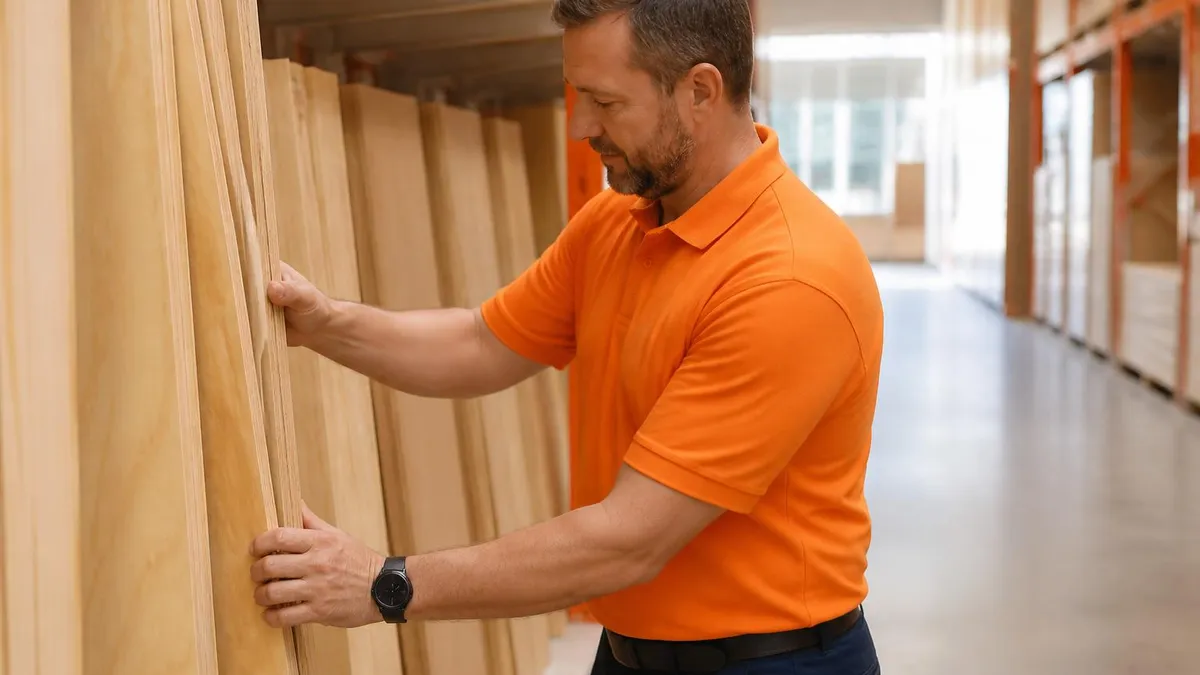
Home Depot launched its own dedicated delivery network called the "flatbed XL delivery" service specifically for bulky building materials. This service deploys large flatbed trucks staffed by trained associates who can unload heavy items like concrete blocks, plywood sheets, and fencing panels at the curb or inside a garage. The flatbed fleet is a point of pride for the company and a frequent topic in customer service scenarios on the assessment.
The retailer also partners with third-party installation and delivery services for connected appliance purchases. When a customer buys a washing machine, Home Depot coordinates delivery timing, old appliance haul-away, and installation scheduling through a network of vetted contractors. This end-to-end ownership of the customer experience is central to Home Depot's brand promise and comes up repeatedly in situational judgment questions about managing customer expectations during multi-step service interactions.
Beyond physical delivery, Home Depot offers Buy Online, Pick Up In Store (BOPIS) and curbside pickup options that have grown dramatically since 2020. These services rely on in-store associates who locate items, stage them for pickup, and communicate with customers via text alerts. Understanding the hand-off points in this fulfillment process — from online order to store shelf to customer vehicle — is the kind of operational knowledge that separates strong assessment performers from average ones. You can explore home depot services in more depth to understand how these logistics roles connect to broader home improvement careers.
This guide covers every major delivery and service category at Home Depot, explains how the assessment measures your understanding of customer service in a delivery context, and gives you practical preparation strategies. Whether you are trying to track a package, interview for a job, or simply understand how this retail giant operates, you will find detailed, accurate answers here. Read on to learn everything you need to know before your assessment date.
Home Depot Delivery by the Numbers

Home Depot Delivery Methods Explained
Lightweight items under 150 pounds ship via UPS, FedEx, or USPS. Orders typically arrive in 2–5 business days. Customers receive tracking numbers via email and can monitor status through the Home Depot website or the carrier's own app.
Home Depot's proprietary flatbed trucks handle heavy and oversized items such as lumber, concrete, fencing, and roofing materials. Trained associates deliver to the curb, driveway, or inside the first dry area of a customer's property.
Major appliances like refrigerators, dishwashers, and washers are delivered by contracted white-glove teams. Services include setup, connection, and old appliance haul-away. Scheduling is coordinated at the time of purchase.
Customers order online and collect items at the service desk or curbside. In-store associates pick, stage, and alert customers when orders are ready. Most BOPIS orders are available within two hours of purchase.
In select metropolitan markets, Home Depot offers same-day and two-hour delivery windows for eligible items. This service uses third-party last-mile providers and is fulfilled from the nearest store location.
Understanding which carrier or partner handles a specific shipment is crucial for anyone working at Home Depot. When a customer calls to ask about a delayed package, the associate needs to know immediately whether the item was sent via UPS ground, shipped on a flatbed truck, or is waiting for a contracted appliance installer to confirm a time window. Each fulfillment path has different tracking tools, different escalation contacts, and different customer expectations about timelines.
UPS is Home Depot's primary partner for small parcel domestic shipments. Most in-stock items that weigh under 70 pounds and do not require special handling will move through the UPS network. Customers receive a tracking number that updates in real time, and in most U.S. zip codes, UPS provides a narrow delivery window notification the morning of delivery. Home Depot associates can look up UPS tracking directly inside the company's internal order management platform without needing to navigate to a separate website.
FedEx handles a portion of Home Depot's parcel volume, particularly for certain vendor-direct shipments where the manufacturer uses FedEx as their preferred carrier. This arrangement is common with power tool brands and specialty hardware suppliers who negotiate their own carrier contracts and ship directly from their own warehouses. Associates should be aware that vendor-direct orders may have different return policies and separate tracking systems compared to orders fulfilled from Home Depot's own distribution centers.
USPS is used primarily for small, lightweight items that fit in flat-rate boxes or first-class mail packaging. This is less common for Home Depot's core product lines but does appear for small electrical components, replacement parts, and certain seasonal promotional items. Delivery times via USPS can vary significantly, especially in rural areas, and this variability is something associates should communicate proactively to customers rather than allowing them to discover it after the fact.
For heavy freight that exceeds the limits of parcel carriers, Home Depot uses contracted less-than-truckload (LTL) freight companies. Large orders of tile, stone countertops, and bulk hardware supplies may ship LTL, which means they travel on shared freight trucks and are subject to longer delivery windows, typically three to seven business days. LTL deliveries usually require a scheduled appointment for residential addresses, and customers must be present to sign for the shipment and inspect it for damage before the driver departs.
Home Depot's own distribution network is anchored by more than 90 distribution and fulfillment centers across the United States. These facilities include traditional stocking distribution centers, flatbed distribution centers designed for building materials, and rapid deployment centers that support online order fulfillment. Understanding the layered nature of this infrastructure helps associates explain to customers why, for example, a bag of mulch ordered online might arrive on a different day than the garden hose ordered in the same cart — each item may ship from a different facility through a different carrier.
The company has also been expanding its tool and truck rental program, which operates as an in-store service rather than a delivery service. Rental transactions generate their own category of customer service questions and are covered on the assessment. Associates are expected to understand rental rates, insurance requirements, equipment operation safety, and return procedures. This breadth of service knowledge — spanning delivery logistics, installation coordination, and rental management — is exactly what the Home Depot Assessment is designed to evaluate across its multiple question sets.
Home Depot Delivery Types: Parcel, Flatbed, and Appliance
Parcel shipping covers the majority of Home Depot's online orders by volume. Items that weigh under 150 pounds and do not require special handling ship through UPS, FedEx, or USPS with standard 2-to-5 business day delivery windows. Customers can choose expedited options at checkout, and most orders qualify for free standard shipping above a certain cart threshold. Tracking is automatic and sent to the email address on file.
From an associate's perspective, parcel inquiries make up a large share of daily customer contacts. Common issues include packages marked as delivered but not received, damaged shipments, and address correction requests. Associates must act quickly on these cases because parcel carriers have short claim windows — typically 60 days from ship date — and delays in filing can result in the customer bearing the cost. Knowing the process for initiating a carrier claim is a core competency tested on the assessment.

Pros and Cons of Home Depot's Delivery Network
- +Extensive carrier network covers 90% of U.S. addresses with fast parcel delivery
- +Proprietary Flatbed XL service handles bulky building materials competitors cannot ship
- +Same-day and two-hour delivery available in major metro markets
- +Integrated appliance delivery, installation, and haul-away in one purchase transaction
- +BOPIS and curbside pickup reduce wait times for in-stock items to under two hours
- +Real-time order tracking integrated directly into the Home Depot website and mobile app
- −LTL freight deliveries for large orders require appointment scheduling and long windows
- −Appliance installation is contracted out, so service quality can vary by region
- −Rural addresses may face limited same-day options and slower parcel delivery times
- −Flatbed XL placement is limited to curbside or first dry area — not inside the home
- −Vendor-direct shipments have separate tracking and return policies that confuse customers
- −High demand periods like spring landscaping season cause significant delivery backlogs
Pros and Cons at a Glance
| Pros | Cons |
|---|---|
| Proprietary Flatbed XL service handles bulky building materials competitors cannot ship | LTL freight deliveries for large orders require appointment scheduling and long windows |
| Same-day and two-hour delivery available in major metro markets | Appliance installation is contracted out, so service quality can vary by region |
| Integrated appliance delivery, installation, and haul-away in one purchase transaction | Rural addresses may face limited same-day options and slower parcel delivery times |
| BOPIS and curbside pickup reduce wait times for in-stock items to under two hours | Flatbed XL placement is limited to curbside or first dry area — not inside the home |
| Real-time order tracking integrated directly into the Home Depot website and mobile app | Vendor-direct shipments have separate tracking and return policies that confuse customers |
Home Depot Assessment Prep Checklist for Delivery and Services
- ✓Learn the names of all major delivery types: parcel, Flatbed XL, appliance, BOPIS, and express.
- ✓Understand which carriers handle which product categories (UPS, FedEx, USPS, LTL).
- ✓Memorize the standard timeframes for parcel (2-5 days), LTL (3-7 days), and same-day windows.
- ✓Know Home Depot's BOPIS process from order placement to customer pickup confirmation.
- ✓Study the appliance delivery and installation bundle — what is included and what is excluded.
- ✓Practice explaining delivery status updates to a frustrated customer in clear, empathetic language.
- ✓Review Home Depot's damage claim procedures and the timelines for filing carrier claims.
- ✓Understand the Flatbed XL placement policy and how to handle placement dispute calls.
- ✓Familiarize yourself with the tool and truck rental service terms available in stores.
- ✓Complete at least three full practice assessment question sets before your test date.
Delivery Knowledge = Higher Assessment Scores
Candidates who understand Home Depot's multi-carrier delivery network before their assessment consistently choose better answers on situational judgment questions. The test does not require memorizing policy documents — it rewards the kind of customer-first reasoning you develop by genuinely understanding how Home Depot fulfills its service promises from order to doorstep.
Customer service scenarios involving delivery are the most common question type on the Home Depot Assessment, and for good reason. Delivery is where the company's promise to customers becomes tangible, and it is also where things are most likely to go wrong. A product can ship on time but arrive damaged.
A Flatbed XL team can follow the correct policy but still leave a customer feeling dismissed. An appliance installer can complete the job correctly but fail to explain what the customer should do if the unit malfunctions in the first week. Each of these situations creates a call or visit, and each requires the associate to navigate competing pressures with skill.
The assessment measures situational judgment, not memory. It presents you with a realistic scenario — usually a customer in some state of frustration or confusion — and asks you to choose between four possible associate responses. The responses are designed to be plausible, and the correct answer is rarely obvious without a genuine understanding of what a great service interaction looks like. The best answers typically involve acknowledging the customer's specific concern before moving to a solution, and avoiding blame-shifting toward the carrier or installer even when they were at fault.
One common scenario type involves a customer who was given a delivery window of 8 AM to noon but received a notification the morning of delivery saying the window had changed to 2 PM to 6 PM. The customer has taken a day off work and is understandably upset.
The correct associate response in this scenario prioritizes empathy first, provides a clear explanation of what caused the change if known, and offers a concrete remedy — typically a discount, store credit, or re-scheduling priority — without waiting to be asked. This pattern of proactive resolution is tested repeatedly across different delivery contexts.
Another common scenario type involves a customer who ordered lumber via Flatbed XL and finds that the delivery team placed it at the curb rather than inside the fence line as the customer had requested verbally at the store. The key here is that verbal requests made at the store do not override the written delivery terms the customer agreed to at checkout. The correct response acknowledges the inconvenience, clarifies the policy, and offers to explore whether an additional placement service can be scheduled — all without suggesting the customer was wrong to have had the expectation.
Scenarios involving damaged appliances test a slightly different skill set. When a customer receives a new refrigerator with a dented door panel, the associate must immediately determine whether the customer signed the delivery receipt noting the damage, because that signature status affects which remedies are available. If the customer signed without noting damage, the claim pathway is different than if they refused the delivery or noted damage on the receipt. This kind of procedural knowledge — knowing the downstream consequences of each action — is what separates a 90th-percentile assessment score from an average one.
The assessment also includes scenarios that test how associates handle situations where they do not know the answer. A customer might ask about a specific delivery date for a product that is currently backordered at the distribution center, and the associate has no way to give an accurate estimate. The correct response involves being honest about the uncertainty, offering to follow up with a specific timeline for getting a better answer, and giving the customer a direct callback rather than asking them to call back. Vague assurances and deflection are consistently the wrong answer on the Home Depot Assessment.
Building a strong mental model of Home Depot's entire service ecosystem — from the moment a customer places an order to the moment the product is installed and operational — is the single best preparation strategy for the delivery-related portions of the assessment. Practice sets that simulate real call encounter scenarios are invaluable for this, as they force you to apply principles under time pressure rather than simply reading them in a study guide.

Home Depot typically enforces a waiting period between assessment attempts, often 60 to 180 days depending on the position. If you do not pass on your first attempt, you may need to wait several months before reapplying. Use every available practice resource before your scheduled test date to maximize your first-attempt score.
Preparing for the Home Depot Assessment requires a blend of operational knowledge, customer service philosophy, and situational judgment practice. The delivery and services content covered in this guide represents one major cluster of questions, but the assessment also covers topics like inventory management, team collaboration, safety procedures, and handling difficult interpersonal situations with coworkers. The delivery knowledge you have built here directly supports your performance on customer service questions, which represent the largest single category on the test.
One underrated preparation strategy is to think carefully about the difference between what you would want to do in a given scenario and what the best associate response actually is. These often diverge in interesting ways. For example, most people's instinct when a customer is angry is to apologize repeatedly, but the assessment consistently rewards responses that move quickly from acknowledgment to action. An excessive focus on apology without a concrete path forward is scored poorly because it does not resolve the customer's actual problem, even though it might feel more empathetic in the moment.
Reading reviews of Home Depot on consumer review platforms gives you a realistic picture of what customers complain about most frequently. Delivery delays, installation no-shows, and damaged product deliveries appear over and over. This is not a coincidence — these are the scenarios that Home Depot's assessment designers built their question bank around, because they represent the situations where a skilled associate can make the biggest difference in the customer's experience and the company's reputation.
If you are applying for a role that involves direct delivery coordination — such as a department supervisor, installation coordinator, or online fulfillment specialist — the depth of delivery knowledge you bring to the assessment and to your interview will be noticed. These roles carry significant customer-facing responsibility, and hiring managers are specifically looking for candidates who can navigate the multi-party complexity of a Home Depot delivery transaction without dropping the ball on the customer experience.
It is also worth understanding Home Depot's Pro Xtra loyalty program and how it interacts with delivery services. Pro customers — contractors, builders, and tradespeople who spend significant amounts with Home Depot — often have negotiated delivery terms, priority scheduling, and dedicated account contacts. Scenarios involving Pro customers on the assessment may test whether you understand that their expectations and the service commitments made to them can differ from those made to retail customers. Treating a Pro customer's delivery complaint with the same standard retail response may not be the highest-scoring answer.
The Pro Desk is a distinct in-store service area staffed by associates with deeper product and delivery knowledge specifically for trade customers. Pro Desk associates need to understand LTL freight timelines, bulk order fulfillment, job site delivery requirements (specific floors, no elevator access, delivery time restrictions), and the invoicing and credit arrangements that Pro customers use. If you are applying for a Pro Desk or Pro Services role, this specialized delivery knowledge is a genuine differentiator in both the assessment and the subsequent interview process.
Ultimately, doing well on the Home Depot Assessment comes down to genuinely caring about the customer experience and being able to demonstrate that care through specific, action-oriented responses under test conditions. The delivery content is rich and detailed, but it is always in service of a single underlying principle: the customer's problem is real, their time matters, and the associate's job is to make things right as efficiently and respectfully as possible. Keep that principle at the center of every answer you choose, and you will perform well across every delivery scenario the assessment throws at you.
As you enter the final phase of your preparation for the Home Depot Assessment, there are several practical strategies that consistently improve scores across all question categories, not just delivery-related ones. The most important is to practice under realistic time conditions. The assessment has a set time limit, and candidates who have practiced answering scenario questions quickly and decisively consistently outperform those who have only studied content passively. Use practice tests that simulate the actual format, pacing, and question style of the real assessment.
Pay close attention to answer choices that are almost correct. The Home Depot Assessment uses a multiple-choice format where two or three answers may seem reasonable at first glance. The differentiator is usually a single word or phrase — one answer might say the associate should tell the customer they will call back within 24 hours, while the better answer says the associate should call back within two hours with an update. Both demonstrate follow-through, but the specificity and urgency of the second option reflects a higher standard of service that aligns with Home Depot's brand expectations.
Avoid answers that involve making promises you cannot keep. If a scenario involves a delivery date that is genuinely uncertain due to supply chain disruption, the worst response is to give the customer a specific date without verification. The assessment penalizes overconfidence and rewards intellectual honesty combined with genuine effort to find an answer. This mirrors what good customer service actually looks like in real high-volume retail environments, and it is a principle that applies equally whether you are answering a practice question or handling a live call.
Group study with other applicants can be surprisingly effective preparation for the Home Depot Assessment. Discussing why one answer is better than another forces you to articulate your reasoning, which reveals gaps in your understanding much more efficiently than passive reading. If you do not have a study group, online forums and communities for Home Depot job applicants can serve a similar function. Reading about other people's experiences with specific question types helps you anticipate the scenarios most likely to appear on your version of the test.
The day before your assessment, avoid cramming new content. Instead, review the key principles — acknowledge first, act fast, be specific, follow through — and do a brief warm-up set of five to ten practice questions just to get your mind in the right mode. Make sure you have a quiet testing environment if the assessment is taken online, a reliable internet connection, and enough time blocked out that you will not feel rushed. Rushing is a primary cause of careless errors on timed assessments.
After the assessment, if you receive a callback for an interview, your delivery knowledge will continue to be relevant. Home Depot interviewers commonly ask behavioral questions like, tell me about a time you resolved a difficult customer situation involving a product that did not arrive as expected. Having a detailed, structured answer prepared — one that walks through the situation, your actions, and the customer outcome — will help you stand out. Your preparation for the assessment has already given you the vocabulary and frameworks to answer these questions confidently.
Whether you are aiming for an entry-level floor associate position or a more senior operations role, the investment you make in understanding Home Depot's delivery network and service philosophy will pay dividends throughout the hiring process and beyond. Customers remember the associates who solved their problems, and Home Depot builds its hiring process to find exactly those people. Go into your assessment with confidence, apply the principles you have learned, and give every scenario question the same thoughtful, customer-first reasoning you would apply to a real situation on the job floor.
Sample Home Depot Assessment Practice Questions
Try these questions from our free Home Depot Assessment practice tests. The correct answer and an explanation follow each question.
What is the purpose of daily team huddles or department meetings at Home Depot stores?
- A. To share priorities, address concerns, and align the team before the shift begins
- B. To review individual performance publicly
- C. To assign blame for previous shift issues
- D. To read company announcements from corporate
Answer: A. To share priorities, address concerns, and align the team before the shift begins
Pre-shift huddles align the team on goals, changes, and priorities so everyone is prepared to serve customers effectively.
What does an associate's primary responsibility on the sales floor center on?
- A. Avoiding customers to finish stocking
- B. Providing helpful service and product knowledge to customers
- C. Working only the register
- D. Staying in the break room
Answer: B. Providing helpful service and product knowledge to customers
Floor associates exist mainly to assist customers and share product expertise.
Home Depot's Code of Ethics requires associates to:
- A. Act with integrity, avoid conflicts of interest, and report unethical behavior
- B. Keep all internal issues private to protect the company's reputation
- C. Follow the manager's instructions regardless of ethical concerns
- D. Only follow policies that directly affect their role
Answer: A. Act with integrity, avoid conflicts of interest, and report unethical behavior
Home Depot's Code of Ethics establishes a clear standard of integrity that all associates are expected to uphold and report violations of.
Which approach best reflects Home Depot's customer-first value when greeting shoppers?
- A. Wait for them to find you
- B. Make eye contact and offer assistance proactively
- C. Only greet customers who look confused
- D. Greet only big spenders
Answer: B. Make eye contact and offer assistance proactively
Proactively greeting and offering help reflects the customer-first culture.
Home Depot Assessment Questions and Answers

Home Inspectors by Location: A State and City Directory
How to Become a Home Inspector: Training, Licensing, and Path

Home Depot Interview Questions: What to Expect and How to Prepare

Home Inspector Certification: InterNACHI, ASHI & State Requirements (2026 Guide)

Home Inspector Training: Complete Guide to Certification, Courses, and Career Path
About the Author

Educational Psychologist & Academic Test Preparation Expert
Columbia University Teachers CollegeDr. Lisa Patel holds a Doctorate in Education from Columbia University Teachers College and has spent 17 years researching standardized test design and academic assessment. She has developed preparation programs for SAT, ACT, GRE, LSAT, UCAT, and numerous professional licensing exams, helping students of all backgrounds achieve their target scores.