
Home Health Aide Duties: Allowed vs Not Allowed Tasks 2026 October
Complete home health aide duties list: 📝 ADLs, meal prep, vitals, and the clinical tasks HHAs cannot legally perform without an RN or CNA.
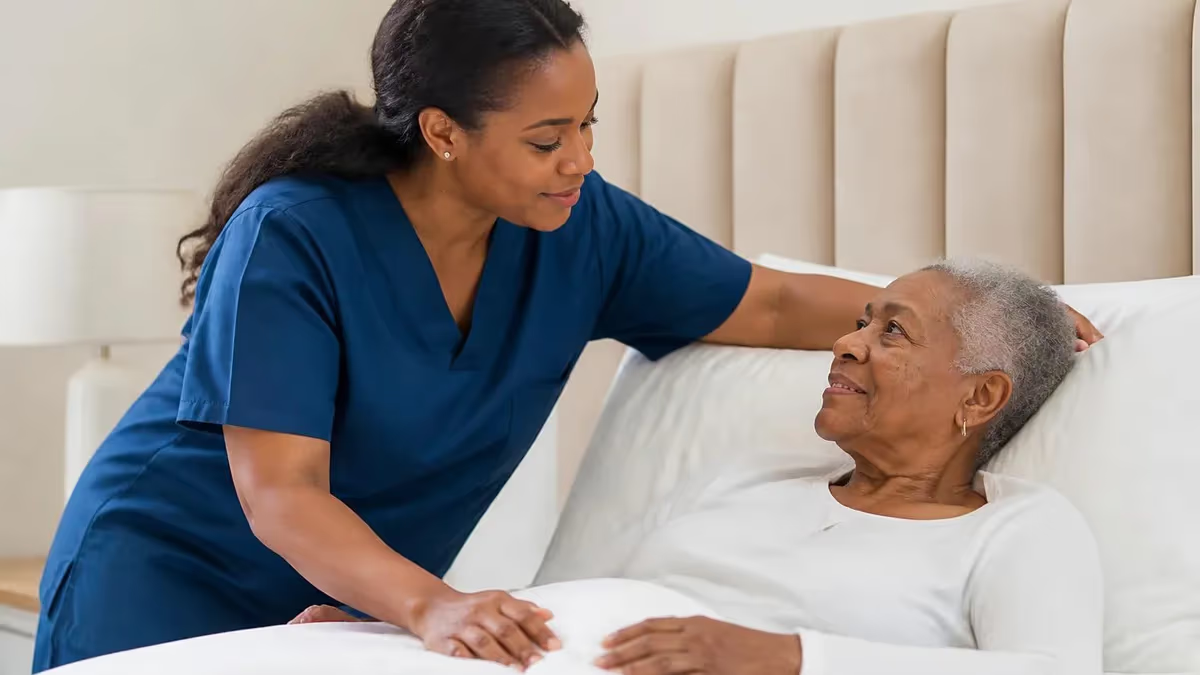
Home health aides are the workforce that keeps people aging in place. They show up at someone's house, walk past the family dog, set down a bag, and start the day's work — bathing, breakfast, laundry, blood pressure, a walk down the hall. The role looks simple from the outside. It isn't. Every task an HHA performs sits inside a tight scope of practice set by federal Medicare rules, state nurse practice acts, and the supervising agency's care plan. Step outside that scope and you put your certification, your client's safety, and your agency's license at risk.
This guide answers what home health aides actually do on a shift, what they are not allowed to do, and how the rules shift between a private home, an assisted living community, and a skilled nursing facility. You'll also see where federal Medicare scope ends and state nurse-delegation rules begin, plus the few specific tasks that trip new aides up — reinforcing a dressing, helping with prescribed medications, taking vital signs, and the one question every agency director hears in week one: can a home health aide work in a nursing home?
If you're studying for an HHA competency test or starting a new agency role, read this end to end. The boundary between "personal care" and "skilled care" is where careers end and lawsuits start. Knowing exactly where that line sits is the most important thing an aide ever learns.
Home Health Aide Duties by the Numbers
Federal Medicare conditions of participation define a home health aide as a paraprofessional who provides hands-on personal care, light household services, and supportive care under the supervision of a registered nurse or licensed therapist. That definition is narrow by design. The aide is not a nurse, not a medication technician, not a physical therapist — even though aides often work alongside all three.
The role exists because most older adults and people with disabilities don't need round-the-clock clinical care. They need help with the things that get harder as bodies wear out: getting clean, getting fed, getting dressed, getting from the bedroom to the kitchen safely. A home health aide handles those activities of daily living — usually called ADLs and instrumental activities of daily living, IADLs — and reports back to a nurse about anything that looks different from yesterday.
That observation-and-report function is the quiet heart of the job. Aides see clients every day. Nurses might see them once a week. So when something changes — a new cough, swelling in the ankles, confusion that wasn't there Monday — the aide is usually first to notice. Reporting that to the case manager is technically a "duty," but in practice it's the thing that keeps clients out of the emergency room.
What a Home Health Aide Legally Is
Under Medicare's home health Conditions of Participation, a home health aide is a paraprofessional who provides personal care, simple home tasks, and supportive services under the supervision of a registered nurse or licensed therapist. Aides do not perform skilled nursing, do not assess clients clinically, and do not administer medications outside specific state medication-aide programs. Scope is defined by federal Medicare rules, the state nurse practice act, and the individual care plan written by the supervising nurse.
The most common HHA tasks fall into five buckets that show up in every state's training curriculum and on every Medicare-certified care plan. They are the things aides actually do for most of every shift, and they cover what HHAs are allowed to perform without nurse delegation.
The Five Buckets of Allowed HHA Duties
Bathing, dressing, toileting, grooming, oral care, shaving, hair care, and incontinence care. The core of every shift.
Helping the client reposition, transfer bed to chair, ambulate with walker or cane, and perform PT-prescribed range-of-motion exercises.
Cooking to the care-plan diet, plating, assisting at the table, monitoring intake, and washing dishes after meals.
Bed linens, laundry, dusting, vacuuming the client's living area, and emptying trash. Not whole-house cleaning.
Vital signs, intake/output, behavior changes, skin condition, mood. Report anything outside the care-plan norm to the supervising nurse same day.
Personal care is the part of the job most people picture when they hear "home health aide." It's also the part where dignity, privacy, and skill matter most. A good aide turns bathing, dressing, and toileting into routines that feel safe and respectful — not clinical, not rushed, not embarrassing for the client.
Bathing covers bed baths, shower assists, and full-body cleansing for clients who can't safely stand in the tub. Dressing means helping select clothes appropriate to the weather and the day, assisting with buttons and zippers, putting on compression stockings (when no prescription adjustment is required), and managing prosthetics or orthotics the client already uses. Toileting includes assistance to and from the bathroom, help with bedpans or bedside commodes, incontinence care, and changing briefs or pads. None of this requires nurse delegation. All of it is core HHA scope.
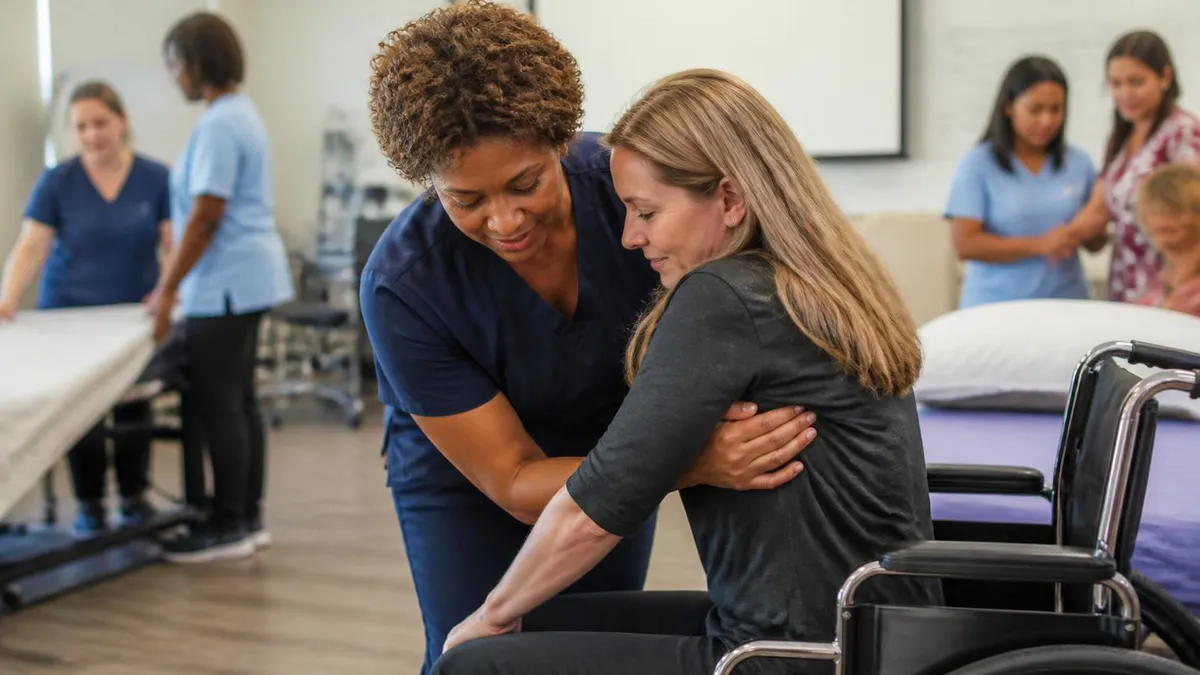
Mobility and transfers are the other half of personal care. Aides help clients reposition in bed, transfer from bed to wheelchair, ambulate with a walker, and use mechanical lifts when a registered nurse has trained the aide on the specific equipment in the home. Aides also assist with prescribed range-of-motion exercises the physical therapist has demonstrated. What aides cannot do is design a new exercise plan or modify the therapist's instructions — they follow what the licensed clinician wrote in the care plan, no improvisation.
Beyond personal care, the typical shift includes meal preparation, light housekeeping, and the kind of supportive presence that family members can no longer provide. These tasks are formally called "instrumental ADLs" because they keep the home functioning even though they aren't strictly clinical.
Meal prep means cooking food the client can chew and swallow safely, following any dietary restrictions in the care plan — low sodium, diabetic, pureed, thickened liquids. Aides plate the meal, set the table, sit with the client during the meal if needed, and document intake. Aides don't write the diet — that came from the doctor or dietitian — but they execute it correctly.
Light housekeeping covers the client's immediate living area: changing bed linens, doing laundry, dusting, vacuuming, washing dishes after meals, and emptying trash. It does not extend to deep-cleaning the rest of the house or doing chores for other household members. The agency care plan defines what counts as "the client's space."
Companionship is real work too. Many clients spend long stretches alone. An aide who plays cards, reads aloud, or just sits and talks for twenty minutes a shift is doing legitimate, billable care — and is often the reason the client doesn't slide into depression or social isolation. Don't undervalue it.
Allowed vs Not Allowed: The Critical Gray Zones
Allowed: Remind the client it's time to take a medication, open the pre-filled pill organizer or bottle, hand water, observe the client take the dose, document in the shift notes.
Not allowed (in most states): Pour a measured dose from a stock bottle, push a pill into the client's mouth, administer an injection of any kind, apply a new medication patch the nurse hasn't pre-positioned, give insulin, give a controlled substance without a med-aide credential.
A few states run formal medication-aide certification programs that authorize additional administration tasks under RN supervision — check your state nurse practice act before assuming anything.
Here is where new aides get into the most trouble. The Medicare definition is clear that home health aides perform personal care, not skilled care. Skilled care is reserved for nurses (RN, LPN, or LVN depending on the state) and therapists. The line between the two looks blurry until you read the state nurse practice act — then it gets very sharp very fast.
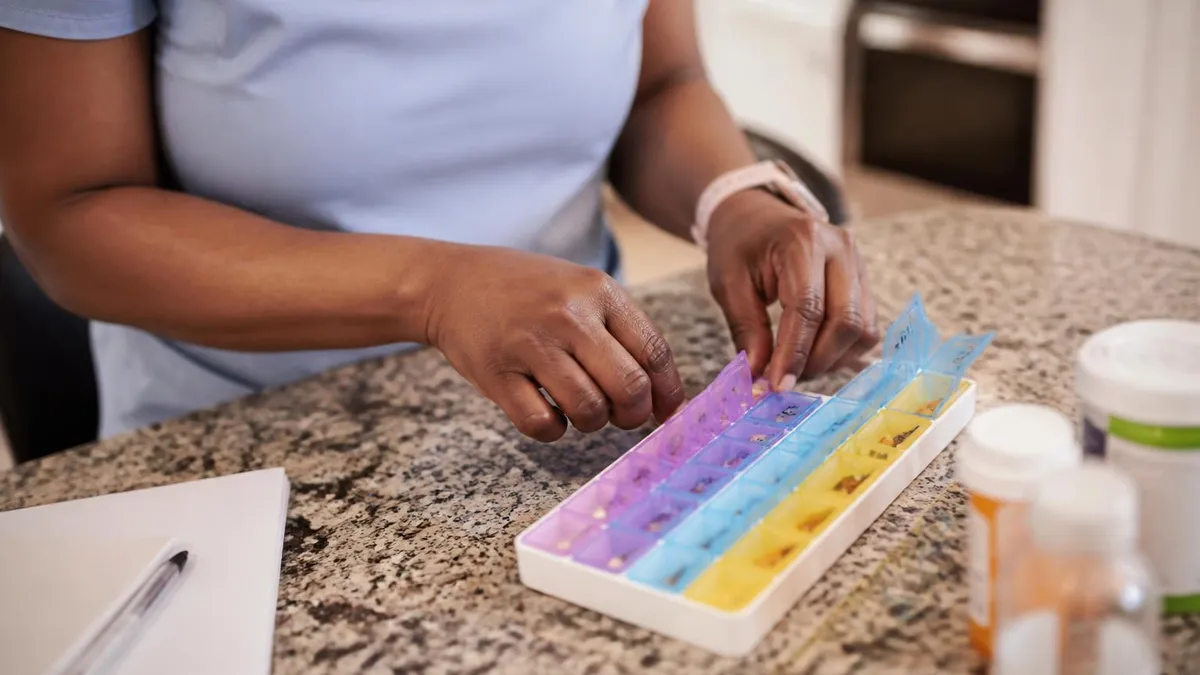
Medication is the area where state law varies the most, so always check your state nurse practice act and your agency's policy. As a baseline that applies in most states, a home health aide may remind a client to take medication, open the bottle or pill organizer, hand a pre-poured cup of water, and observe and document that the medication was taken. What aides generally cannot do is administer — pour a measured dose from a stock bottle, draw up an insulin injection, push a pill into the client's mouth, or apply a medicated patch the nurse hasn't pre-positioned.
A few states use formal medication-aide programs (sometimes labeled CMA or QMA) where additional certified training authorizes specific medication administration under RN supervision. Outside those programs, the rule is "remind and assist, do not administer." Documentation matters here — if the client refuses a medication or skips a dose, write it down and notify the case manager that same shift. A missed dose of a blood thinner or seizure drug can land your client in the hospital.
Families will sometimes ask aides to do things outside scope — give an extra dose, change a wet dressing because the nurse is two hours out, or even draw insulin. Saying no feels uncomfortable. Saying yes can end your career and put the client in the hospital.
The right answer every single time is to call the supervising nurse, explain the situation, document the call in your shift notes, and follow the nurse's instructions. Agencies expect that call — they would rather pay for a phone consult than defend a scope-of-practice violation in front of the state survey team.
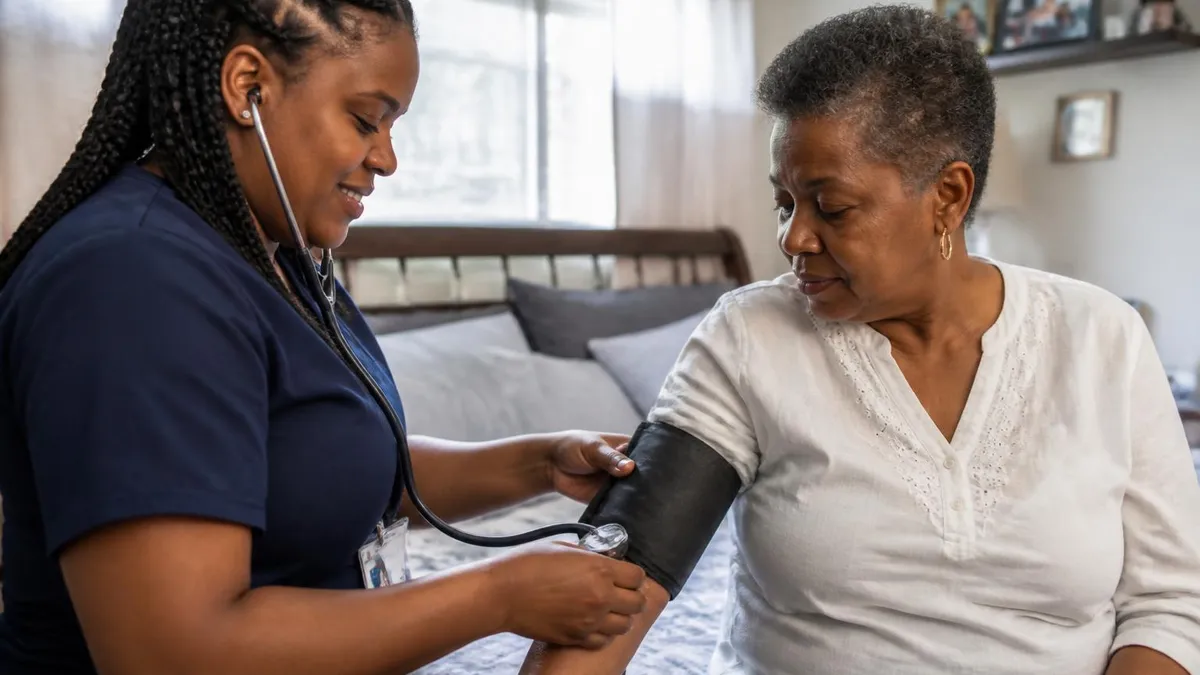
Aides take and record basic vital signs as part of every shift — temperature, pulse, respirations, and oxygen saturation with a pulse oximeter. Blood pressure is included in the training and is universally permitted. What aides cannot do is interpret the readings clinically or change the care plan based on them. If the reading is outside the normal range the care plan defines, you call the supervising nurse and document the reading. You do not adjust medications, decide whether the client needs an ambulance, or hold a scheduled dose because the pressure is high. That call belongs to the nurse.
The same pattern shows up everywhere in the scope question: collect the data, report the data, never interpret or act on the data clinically. It feels backwards when you've been working with a client for two years and you can predict what the nurse will say. Doesn't matter. Make the call.
Wound care is one of the most asked-about areas — especially the dressing-reinforcement question that trips up most students. The short answer: a home health aide can reinforce a dressing if it becomes loose or partially detached, meaning the aide can add extra tape or an outer covering to keep the existing dressing in place until the nurse arrives.
The aide cannot change the dressing — that's removing the old gauze, cleaning the wound, and applying new sterile material. Sterile dressing changes require a licensed nurse because they involve assessing the wound, breaking the sterile field correctly, and judging whether the wound is healing, infected, or needs a doctor's attention.
Same logic applies to any procedure that requires sterile technique: catheter insertion or removal, suctioning a tracheostomy, accessing a central line, changing an ostomy bag for the first time after surgery. Aides may empty a catheter drainage bag, empty an ostomy pouch in routine maintenance once trained, and perform clean (non-sterile) care of established ostomies — but the initial setup, troubleshooting, and any sterile procedure stays with the nurse.
Home Health Aide Duties Checklist — Every Shift
- ✓Review the client's care plan and any nurse notes from the previous visit
- ✓Wash hands and perform standard infection-control precautions on entry
- ✓Greet the client by name and explain the day's planned tasks
- ✓Take and record vital signs per the care-plan schedule (BP, pulse, respirations, SpO₂)
- ✓Assist with bathing, oral care, and grooming as ordered
- ✓Help the client dress in clean, season-appropriate clothing
- ✓Provide toileting assistance and incontinence care as needed
- ✓Prepare meals to the prescribed diet and assist with intake; document fluid and food consumed
- ✓Assist with prescribed mobility exercises and ambulation; help with transfers using approved equipment
- ✓Perform light housekeeping in the client's immediate living area
- ✓Remind the client of scheduled medications and observe self-administration
- ✓Document all care provided, observations, and any communication with the nurse or family
- ✓Report any change in condition, skin breakdown, fall, refusal, or out-of-range vital to the supervising nurse before leaving
Almost every aide will work in more than one setting over a career. The work changes more than you'd expect when the address changes. Here's how the same scope of practice plays out in three very different environments.
Private homes are the original HHA setting. You arrive solo, you work without backup, and you handle whatever the client needs within your scope for the shift you're assigned. The supervising RN visits intermittently — often every two weeks for stable Medicare clients, more often for higher-acuity cases. You communicate by phone, text, or the agency's electronic visit verification system. The big risks in the home are isolation, family conflict, environmental hazards (clutter, pets, stairs), and the temptation to take on tasks outside scope because the family asked nicely.
Assisted living communities employ HHAs and CNAs alongside med-techs and on-site nurses. The pace is faster because you may cover six or eight residents in a shift. You still work within HHA scope, but you have immediate backup when something escalates — a fall, a sudden change in mental status, an allergic reaction. Assisted living tends to have stricter documentation routines because state surveyors visit annually and chart everything.
Skilled nursing facilities — what most people call nursing homes — are different. Federal law for SNFs uses the Certified Nursing Assistant (CNA) credential, not HHA. Many state-issued HHA certifications do not satisfy CNA requirements, even though the work overlaps. Some states allow HHAs to work in SNFs as nursing assistants if they complete additional training and pass the state CNA exam. Other states require a fresh CNA program. The right answer depends entirely on your state — call your state nurse aide registry before applying to a nursing home job.
Career Trade-offs of Working Inside HHA Scope
- +Clear legal boundaries protect your certification and your client
- +Shorter training than CNA, LPN, or RN — you can be working in 4 to 12 weeks
- +Most work happens in private homes — one client at a time, less chaos than facility shifts
- +Strong demand: aging population means the BLS projects faster-than-average growth through 2032
- +Direct path to CNA, then LPN, then RN if you want to grow
- +Real relationships with clients and families — meaningful work, not anonymous
- −Pay starts lower than CNA in most states (often by $1-3 per hour)
- −Scope is narrow — many clinical tasks require a nurse, which can feel limiting once you have experience
- −Working solo in homes means no immediate backup if something escalates
- −Family members may pressure you to take on out-of-scope tasks
- −Travel between client visits is usually unpaid in non-agency hourly setups
- −HHA credential alone does not satisfy CNA requirements in many states for SNF work
Pros and Cons at a Glance
| Pros | Cons |
|---|---|
| Clear legal boundaries protect your certification and your client | Scope is narrow — many clinical tasks require a nurse, which can feel limiting once you have experience |
| Most work happens in private homes — one client at a time, less chaos than facility shifts | Working solo in homes means no immediate backup if something escalates |
| Direct path to CNA, then LPN, then RN if you want to grow | Family members may pressure you to take on out-of-scope tasks |
| Real relationships with clients and families — meaningful work, not anonymous | Travel between client visits is usually unpaid in non-agency hourly setups |
Medicare pays for home health aide services only as part of a broader skilled-care episode — meaning the client must already qualify for skilled nursing visits or therapy. The aide is one piece of that care plan. Medicare won't pay for an aide whose only purpose is companionship or housekeeping. Medicaid rules vary state to state — most state Medicaid programs offer personal care services, attendant care, or home-and-community-based service waivers that fund aide hours for non-skilled care. Some states allow family members to be paid as the aide; some don't.
Private long-term-care insurance, Veterans Affairs Aid and Attendance benefits, and out-of-pocket payment fill the gap when Medicare and Medicaid don't apply. Each payer source has its own documentation rules. The aide doesn't have to memorize them all, but understanding that the funding source dictates the paperwork helps everything go smoother — especially when shifts get audited months later.
Memorize this rule and you'll save yourself most of the trouble that ends HHA careers early. If a task involves a needle, a sterile field, a clinical assessment, or interpreting medical data, it requires a license. If a task involves bathing, dressing, eating, walking, household chores, or reporting observations, it's HHA scope. Anything in between — wound care, medication, suctioning — gets handled the way the supervising nurse and the care plan say.
Two more rules worth tattooing on the inside of your eyelids. First: when in doubt, call the nurse. The agency would rather take a phone call than read an incident report. Second: document everything that happens, and document the moment it happens. Vital signs, intake, output, medication taken, refusals, falls, family disputes, anything outside routine. Your notes are the legal record of what care was provided. If it's not written down, the law treats it as if it didn't happen.
Career growth from HHA looks like a staircase, not a wall. The aide who knows the limits of the role and respects them is the one promoted to senior aide, team lead, or trainer within two or three years. Many move into Certified Nursing Assistant work next — which expands the scope inside skilled facilities — and from there into LPN or RN programs.
Some aides stay in the role for twenty-plus years because they love the home-based work and the long relationships with clients. Both paths are valid and both pay better than people assume once you factor in shift differentials, holiday pay, and agency loyalty bonuses.
The thing that gets people to that staircase, though, is competence within the scope they already have. Master the duties below, document them cleanly, stay inside the lines, and your agency will hand you everything else you need.
The duties list is a starting point. Real shifts include nuances — a client who hates being bathed in the morning, a family member who keeps asking you to do laundry for the whole house, a doctor's office that wants you to read off the medication list during a phone call. None of those situations are in the textbook, all of them happen in week one. Lean on the supervising nurse, the agency's policy manual, and your own training. The job rewards aides who default to "let me check with my supervisor" over "sure, I can do that."
Keep this page bookmarked. The exact scope details change as states update nurse practice acts (medication aide programs are expanding in many states), but the framework — what aides do, what they don't, who they call, how they document — has been stable for decades. Knowing it cold makes the rest of the career feel manageable.
For most clients, what makes an aide unforgettable isn't a flashy clinical save. It's the steady, careful, dignified handling of small things. The aide who warms the towel before the shower. The aide who remembers the client likes coffee with two sugars but the family says one. The aide who notices the cat hasn't eaten today and mentions it to the daughter. Those moments don't show up on a duties checklist, but they're the reason families request the same aide week after week, and the reason agencies hold onto good HHAs through every wage spike and labor shortage.
The duties are the floor. The relationships are the ceiling. Both matter.
If you're studying for an HHA exam, practice questions are the fastest way to lock these rules into long-term memory. The competency test and certification exam both lean heavily on scope-of-practice scenarios — exactly the kind covered above. Work through a few sets of practice questions before sitting for the real exam and the format won't surprise you.
Sample HHA Practice Questions
Try these questions from our free HHA practice tests. The correct answer and an explanation follow each question.
What should a home health aide do if a patient falls?
- A. Move the patient immediately to avoid injury.
- B. Ensure safety, avoid movement, and report the fall
- C. Ignore the fall and continue with the tasks.
- D. Ask the patient to get up on their own.
Answer: B. Ensure safety, avoid movement, and report the fall
The aide should ensure the patient's safety, avoid moving them unless necessary, and immediately report the fall to the appropriate medical personnel.
How should a home health aide support a patient with anxiety?
- A. By ignoring the patient’s anxious behavior.
- B. By offering reassurance and helping the patient practice relaxation techniques
- C. By telling the patient to relax on their own.
- D. By minimizing the patient’s feelings of anxiety.
Answer: B. By offering reassurance and helping the patient practice relaxation techniques
Offering reassurance validates the patient's feelings and provides comfort, which is crucial when someone is anxious. Helping them practice relaxation techniques, such as deep breathing or mindfulness, provides practical tools they can use to manage their physical and mental symptoms of anxiety. This approach empowers the patient and fosters a sense of control, unlike ignoring or minimizing their feelings.
How should a home health aide handle a situation where a patient refuses care?
- A. By ignoring the refusal and continuing the care.
- B. By respecting the refusal, explaining the consequences, and documenting the refusal
- C. By forcing the patient to accept care.
- D. By reporting the refusal to family members.
Answer: B. By respecting the refusal, explaining the consequences, and documenting the refusal
Patients have the right to refuse care, even if it is deemed beneficial. A home health aide must respect this decision, as it upholds the patient's autonomy. It is important to clearly explain the potential consequences of their refusal to ensure it is an informed choice, and then meticulously document the refusal and the discussion for legal protection and continuity of care within the healthcare team.
Why is it important for a home health aide to maintain patient privacy?
- A. It is not important to maintain privacy.
- B. It helps maintain trust and comply with regulations
- C. It only applies to medical staff.
- D. It reduces the need for family involvement.
Answer: B. It helps maintain trust and comply with regulations
Maintaining patient privacy is essential to ensure confidentiality, build trust, and comply with legal and ethical standards of care.
HHA Questions and Answers
About the Author

Registered Nurse & Healthcare Educator
Johns Hopkins University School of NursingDr. Sarah Mitchell is a board-certified registered nurse with over 15 years of clinical and academic experience. She completed her PhD in Nursing Science at Johns Hopkins University and has taught NCLEX preparation and clinical skills courses for nursing students across the United States. Her research focuses on evidence-based exam preparation strategies for healthcare certification candidates.
Join the Discussion
Connect with other students preparing for this exam. Share tips, ask questions, and get advice from people who have been there.
View discussion (8 replies)