
HazMat Certification Requirements: Complete Guide to the Hazardous Materials Endorsement
Master hazardous materials endorsement requirements: TSA background check, CDL test, renewal steps & state rules. Pass first try ✅

Understanding hazmat certification requirements is the first and most critical step for any commercial driver who wants to transport dangerous goods legally in the United States. The hazardous materials endorsement is a federal add-on to your Commercial Driver's License that unlocks some of the highest-paying freight lanes in the industry. Without it, you cannot legally haul explosives, flammable liquids, corrosive chemicals, or dozens of other regulated substances — regardless of how many years of CDL experience you already have behind the wheel.
The process for earning a hazardous materials endorsement is more involved than any other CDL endorsement. Unlike the tanker or doubles/triples endorsements, HazMat requires a mandatory Transportation Security Administration background check in addition to the standard knowledge exam. This two-layer screening exists because the federal government classifies HazMat transport as a national-security-sensitive activity. Every applicant must pass both the TSA check and the written test before a single HazMat placard can legally appear on their trailer.
The knowledge exam itself covers a wide range of federally regulated topics drawn from the FMCSA's Title 49 Code of Federal Regulations. Test-takers must demonstrate proficiency in hazard class identification, shipping paper requirements, proper placarding rules, emergency response procedures, and the safe loading and unloading of regulated materials. Most state DMVs administer a 30-question test with a minimum passing score of 80 percent, meaning you cannot miss more than six questions and still earn your endorsement.
Before sitting for the exam, you must already hold a valid CDL — either a Class A, Class B, or Class C license. You cannot apply for the HazMat endorsement while still holding only a CDL learner's permit. Additionally, federal law bars certain individuals from receiving the endorsement, including anyone convicted of specific felonies, citizens of countries on federal watch lists, and individuals who have been found mentally incompetent by a court. Your state motor vehicle agency will provide the full disqualifying-offense list at the time of application.
Cost is another factor applicants often underestimate. The TSA threat assessment alone runs approximately $86.50 at the federal level, though many states layer on additional endorsement fees ranging from $5 to $30. Some states, such as Texas and California, also require a separate state-level fingerprinting appointment at an approved IdentoGO enrollment center, which adds scheduling time on top of the dollar cost. Budgeting between $100 and $150 for the full process is a realistic baseline before you account for any study materials or practice exams.
Renewal adds another layer of ongoing obligation that many new endorsement holders overlook. The HazMat endorsement does not renew automatically when you renew your CDL. Federal regulations require a fresh TSA threat assessment every five years, meaning you must repeat the background check process on each renewal cycle. Some states set their endorsement renewal periods shorter than five years, so hazmat certification requirements can vary meaningfully by jurisdiction. Planning ahead and starting the renewal process at least 60 days before your current endorsement expires is the safest strategy to avoid any lapse in your authority to haul regulated materials.
The good news is that the knowledge required to pass the written exam is learnable and well-defined. The FMCSA's Commercial Driver's License Manual, Section 9, covers virtually every topic you will encounter on test day. Supplement that official material with targeted practice tests, flashcards covering the nine hazard classes, and a solid understanding of the placarding threshold tables, and you will be well-positioned to pass on your first attempt. This guide walks you through every stage of the certification process in detail so nothing catches you off guard.
HazMat Endorsement by the Numbers

HazMat Endorsement Exam Format
| Section | Questions | Time | Weight | Notes |
|---|---|---|---|---|
| Hazard Classes & Identification | 7 | ~12 min | 23% | Nine classes plus divisions |
| Shipping Papers & Documentation | 6 | ~10 min | 20% | Required entries and placards |
| Placarding Rules & Thresholds | 6 | ~10 min | 20% | Table 1 vs. Table 2 materials |
| Loading, Unloading & Segregation | 5 | ~9 min | 17% | Compatibility and blocking rules |
| Emergency Response Procedures | 6 | ~10 min | 20% | ERG use, spill response, reporting |
| Total | 30 | Varies by state (typically 60 min) | 100% |
The TSA hazardous materials endorsement threat assessment is the element that most distinguishes the HazMat endorsement from every other CDL add-on. Congress mandated this screening under the USA PATRIOT Act after federal authorities identified unescorted access to hazardous cargo as a potential terrorism vector. Today, the TSA's Office of Transportation Threat Assessment and Credentialing manages the program, and no state DMV can issue a HazMat endorsement to any driver who has not successfully completed it. The screening runs concurrently with your fingerprint-based FBI criminal history check.
To initiate the TSA process, you must schedule an appointment at an approved enrollment center — most commonly an IdentoGO location operated by IDEMIA. At your appointment you will provide government-issued photo identification, submit a digital fingerprint capture, and pay the $86.50 federal fee. The fingerprints are forwarded to the FBI for a criminal history search and to the TSA for a broader intelligence-database comparison. TSA also cross-checks your name against the Department of Homeland Security watch lists and the list of countries whose nationals are automatically disqualified from holding the endorsement.
Processing typically takes two to four weeks, though the TSA has up to 60 days by regulation. If TSA issues an Initial Determination of Threat Assessment — essentially a preliminary denial — you have the right to appeal and to review the records on which the determination was based.
You can submit a correction request if any criminal record information is inaccurate. Many initial determinations are reversed on appeal once drivers provide documentation showing a conviction was expunged or that there was a case of mistaken identity. Never assume an initial denial is final until you have fully exhausted the appeal process.
Absolute disqualifiers for the TSA check include convictions for crimes such as murder, kidnapping, aircraft piracy, espionage, sedition, and treason — these cannot be waived under any circumstances. A second tier of disqualifying offenses covers crimes like arson, robbery, and certain drug trafficking convictions within the past seven years. Convictions outside that seven-year window do not automatically disqualify you, though TSA retains the right to conduct a broader threat assessment if the offense is deemed relevant. Understanding which category your history falls into before you pay the enrollment fee can save you significant time and money.
Citizenship and immigration status are also screened during the TSA process. Nationals of countries that the State Department has designated as state sponsors of terrorism are automatically ineligible, regardless of their residency status in the United States. Legal permanent residents who are citizens of non-designated countries are generally eligible, but must provide additional documentation proving lawful immigration status at the enrollment center. Undocumented individuals cannot receive the endorsement under any current federal regulatory framework, and states have no authority to issue waivers for this federal requirement.
Once you pass the TSA check, the result is transmitted electronically to your state DMV, which then clears you to take the knowledge exam. Some states allow you to sit for the written test while your TSA check is still pending, but will not issue the actual endorsement until TSA clearance arrives.
Others require TSA clearance before you can even schedule your test appointment. Confirm your state's specific sequencing requirements before you book either appointment to avoid wasting a trip to the DMV. Review the full hazardous material endorsement requirements for your state carefully, since procedures differ more than most applicants expect.
After TSA clearance is confirmed and your knowledge test is passed, your state DMV will update your CDL with the "H" endorsement designation. In some states this requires a visit to the DMV office to have a new physical license printed; in others the update is made electronically and a new card is mailed to you. Either way, you should not attempt to haul HazMat loads until the endorsement code physically appears on your license — a verbal confirmation from a DMV representative is not sufficient documentation if you are stopped at a weigh station or DOT inspection point.
Hazardous Materials Endorsement Study Guide: Key Topics
The hazardous materials endorsement test dedicates a significant portion of its questions to the nine DOT hazard classes and their subdivisions. Class 1 covers explosives (divisions 1.1 through 1.6), Class 2 covers gases, Class 3 covers flammable and combustible liquids, and Classes 4 through 9 address solids, oxidizers, poisons, radioactive materials, corrosives, and miscellaneous hazardous materials respectively. Memorizing each class number, name, and placard color is non-negotiable exam preparation.
Beyond memorizing the class definitions, test questions frequently ask you to identify the correct placard for a specific material or situation. The key distinction to internalize is the difference between Table 1 materials — which always require placards regardless of quantity — and Table 2 materials, which only require placards when you are transporting 1,001 pounds or more. Mixing up these two tables is one of the most common reasons candidates fail the HazMat written exam on their first attempt.

Is Pursuing the HazMat Endorsement Worth It?
- +Significantly higher average pay — HazMat drivers typically earn 15–25% more than general freight drivers
- +Expands the types of loads you can legally haul, opening access to chemical, fuel, and pharmaceutical freight lanes
- +Reduces competition for specialized loads since fewer drivers hold the endorsement
- +Strengthens your resume and makes you a more attractive hire to large carriers and chemical companies
- +Federal background check completion adds credibility with security-conscious shippers
- +Pairs powerfully with tanker endorsement for maximum earning potential in liquid bulk freight
- −Mandatory TSA background check adds cost ($86.50+) and 2–6 weeks of processing time before you can drive
- −Drivers with certain criminal history are permanently or temporarily disqualified under federal law
- −Renewal requires repeating the TSA threat assessment every five years, adding recurring cost and administrative effort
- −Carrying HazMat loads increases personal liability exposure in the event of an accident or spill
- −Some loads require specialized equipment such as bonding cables, placards, and fire extinguishers rated for the specific hazard class
- −Inspections are more rigorous — DOT officers pay extra scrutiny to placarding, shipping papers, and securement on HazMat loads
HazMat Endorsement Application Checklist
- ✓Confirm you hold a valid Class A, B, or C Commercial Driver's License before starting the application process
- ✓Review the federal disqualifying offenses list and verify your criminal history does not contain any automatic bars
- ✓Locate the nearest approved IdentoGO or TSA enrollment center and schedule your fingerprinting appointment online
- ✓Bring government-issued photo ID and pay the $86.50 TSA threat assessment fee at your enrollment appointment
- ✓Check your state DMV's sequencing rules — determine whether you can test before TSA clearance arrives or must wait
- ✓Download and study FMCSA CDL Manual Section 9, focusing on all nine hazard classes and their placard requirements
- ✓Complete at least three full-length hazardous material endorsement practice test sets covering all exam topic areas
- ✓Memorize the Table 1 vs. Table 2 placarding distinction and the 1,001-pound threshold for Table 2 materials
- ✓Learn the required order of the basic description on shipping papers: proper name, hazard class, ID number, packing group
- ✓After passing your knowledge exam, verify the "H" code appears on your physical CDL before accepting any HazMat loads

80% Is the Magic Number — and It's Non-Negotiable
Every state that administers the hazardous materials endorsement test uses a minimum passing score of 80%, meaning you can miss no more than 6 out of 30 questions. Unlike some other CDL knowledge tests where borderline scores can be rounded up, the HazMat exam does not offer partial credit or rounding — an 79% is a failing score that requires a full retake. Budget for at least two weeks of focused daily study using the CDL Manual and practice tests before scheduling your exam appointment.
State-level variation in hazmat certification requirements is one of the most underappreciated complexities of the endorsement process. While the federal framework established by the FMCSA and TSA applies uniformly across all 50 states, each state DMV has the authority to layer on additional administrative requirements, fees, and procedural steps. The result is that a driver applying in Texas faces a somewhat different process than one applying in Wisconsin, New York, or California — even though the knowledge exam content and TSA screening are federally standardized.
Texas is a useful case study because it administers one of the more well-documented state processes. The Texas hazardous materials endorsement test consists of 30 questions drawn from the state's CDL handbook, which closely mirrors the federal manual. Texas requires applicants to schedule their TSA fingerprinting through IdentoGO before visiting a DPS driver license office.
The state charges a separate endorsement fee on top of the federal TSA cost, and applicants must pass the written exam at a DPS office — not at a third-party testing site. Processing times at busy DPS offices can extend the overall timeline by several weeks beyond the TSA clearance period alone.
California similarly requires in-person DMV visits and charges a fee for each endorsement transaction. What makes California distinctive is its requirement that certain HazMat drivers also comply with state-level hazardous materials transportation licensing under the California Highway Patrol, separate from the federal CDL endorsement. Drivers transporting certain classes of materials in California must verify whether they need both the federal CDL HazMat endorsement and the state-specific HM license — carrying only one when both are required is a citable violation.
Florida simplifies the process somewhat by allowing online scheduling for TSA appointments and by accepting the federal clearance confirmation electronically without requiring a separate trip to a DMV office in many cases. However, Florida also mandates that the CDL HazMat endorsement be renewed on a cycle tied to the overall CDL renewal, which occurs every eight years in that state — a longer cycle than many states. Drivers who move between states must be aware that their endorsement from a prior state does not automatically transfer; they must reapply through their new state's process, including paying any applicable state fees.
New York presents yet another variation: the state requires drivers to surrender their out-of-state CDL within 30 days of establishing New York residency and to apply for a New York CDL, which restarts the endorsement application process from scratch.
New York also maintains its own fee schedule that differs from neighboring New Jersey, meaning a driver who lives in one state and works in another should confirm which state's DMV has jurisdiction over their CDL. Generally, the state of legal domicile — where you maintain your primary residence and pay income taxes — is the state whose DMV you must use for your CDL.
Drivers seeking the cdl hazardous materials endorsement in rural states sometimes face geographic challenges that urban applicants do not. TSA enrollment centers may be located hours away from the driver's home, and some states have limited DMV office hours in rural counties.
Planning your application timeline around these geographic realities is important — do not assume you can complete both the TSA appointment and the knowledge exam on the same day unless you have confirmed both services are available at the same location on the same date. Building a two-day buffer into your planning prevents a single scheduling conflict from delaying your endorsement by weeks.
Despite all of this variation, the core competencies tested on the knowledge exam remain consistent across every state. The nine hazard classes, the placarding tables, shipping paper requirements, and emergency response procedures are all drawn from the same federal regulatory source — Title 49 of the Code of Federal Regulations. A driver who masters those federal topics is well-prepared to pass the written exam regardless of which state administers it, even if the administrative procedures surrounding the exam differ. Focus your study energy on the federal content and spend time separately confirming your specific state's procedural requirements.
The HazMat endorsement does not automatically renew with your CDL. Federal law requires a new TSA threat assessment every five years, and TSA processing can take up to 60 days. If your endorsement expires before the new one is issued, you are legally prohibited from hauling hazardous materials — even for a single day — until the renewed endorsement appears on your physical license. A lapse can cost you weeks of income and may trigger a review by your carrier's compliance department.
Renewing your hazardous materials endorsement on time is just as important as earning it in the first place, and the renewal process has enough moving parts that treating it as a last-minute task is a significant professional risk. The federal five-year renewal requirement means most drivers will go through the TSA threat assessment process at least a dozen times over the course of a full trucking career.
Building a personal reminder system — calendar alerts set 90 and 60 days before expiration — is a basic professional habit that prevents costly lapses. Learn more about the full hazmat certification requirements renewal process to stay fully compliant.
The renewal procedure mirrors the initial application process in most respects. You must return to an approved TSA enrollment center, submit fresh fingerprints, and pay the current threat assessment fee — which has held at $86.50 for several years but is subject to change with federal rulemaking.
Some enrollment centers allow you to use the same IdentoGO account you created for your initial application, which speeds up the appointment scheduling process on subsequent renewals. Your criminal history is re-screened from scratch on each renewal cycle, so any new convictions that occurred since your last clearance will be evaluated under the same disqualifying-offense framework that applied when you first applied.
One renewal complication that catches experienced drivers off guard is the intersection of state CDL renewal cycles and the federal HazMat renewal cycle. In states with eight-year CDL renewal cycles, the CDL itself may not be due for renewal when the five-year HazMat endorsement expires.
This means you may need to visit the DMV specifically to renew the endorsement as a standalone transaction — paying applicable state fees and triggering a new license card — even though your underlying CDL is still mid-cycle. Confirm with your state DMV whether a mid-cycle endorsement renewal requires a new physical license or is handled as an administrative update to your existing record.
Drivers who let their endorsement lapse even briefly should be aware that reinstatement is not always instantaneous. Most states treat a lapsed endorsement as a new application rather than a renewal, which can mean starting the TSA process over from scratch and waiting the full processing period before hauling HazMat again.
Some carriers have internal compliance policies that suspend a driver from HazMat loads the moment their endorsement shows as expired in the carrier's system — even if the renewal is in progress. Communicating proactively with your dispatcher and fleet safety manager about your renewal timeline prevents operational surprises for both you and your employer.
The hazardous material endorsement renewal is also an opportunity to update your knowledge. Federal regulations governing HazMat transport are updated periodically through pipeline and hazardous materials safety administration rulemaking, and changes to placarding tables, packing group definitions, or reporting thresholds can affect how you do your job daily. Using each renewal cycle as a prompt to review the current version of the CDL Manual Section 9 and any recent PHMSA regulatory updates ensures you remain compliant with the current rules — not just the rules that applied when you first earned your endorsement years ago.
Some carriers offer tuition reimbursement or paid study time for HazMat renewal preparation, recognizing that maintaining a fleet of HazMat-endorsed drivers is a competitive advantage in the freight market. If your employer offers these benefits, take advantage of them.
Even if they do not, the cost of a few hours of self-directed study using free online practice tests is trivially small compared to the income loss that results from failing the renewal knowledge exam and having to wait for a retake appointment. Most states impose a waiting period of at least 24 hours between failed exam attempts, though the specific policy varies by jurisdiction.
Finally, remember that the renewal period is also an appropriate time to assess whether your vehicle equipment remains in compliance. HazMat vehicles are subject to periodic inspections of placards, fire extinguishers, spill kits, and emergency response documentation. A renewal is a natural checkpoint to audit your truck's HazMat kit, replace any outdated ERG editions (the ERG is updated every four years), and confirm that all placards are in good condition and properly mounted. Arriving at a DOT inspection with a current endorsement but outdated or damaged equipment defeats the purpose of maintaining your certification.
If you want more targeted practice, the hazmat practice test page covers the same material with additional questions and explanations.
Building an effective study plan for the hazardous materials endorsement test starts with understanding exactly what the exam tests and then working backward to allocate your time. Most successful first-time passers spend between two and four weeks on focused preparation, dedicating 45 to 60 minutes of daily study to HazMat-specific content. Spreading your preparation over multiple shorter sessions is more effective than cramming everything into one or two long marathon sessions the weekend before your exam. Your brain consolidates factual information best with spaced repetition over time.
Start your preparation with a cover-to-cover read of CDL Manual Section 9. Read actively — highlight the nine hazard classes, make a flashcard for each one, and draw the Table 1 versus Table 2 distinction until you can reproduce it from memory without looking. The placarding tables are dense, but they follow logical patterns once you understand the underlying regulatory logic: materials that pose the most severe acute hazard are on Table 1 (always placard regardless of quantity), while materials with lower acute risk are on Table 2 (placard only above 1,001 pounds).
Once you have completed your initial read-through, shift to active recall practice. Take a full-length hazardous material endorsement practice test under exam conditions — no notes, timed, 30 questions — and review every question you missed, not just the ones you got right. Confidence in a correct answer matters less than understanding why a wrong answer was wrong. For any question where you were uncertain even if you guessed correctly, add that topic to your review list. Over-confidence in borderline-understood material is one of the most common causes of unexpected exam failures.
Flashcards are particularly effective for the identification-number and hazard-class content that makes up roughly 20% of the exam. Create a set covering UN and NA number prefixes (UN numbers apply internationally; NA numbers are North America-specific), the meaning of each hazard class placard color, and the specific materials that appear most frequently in exam questions — chlorine, propane, sulfuric acid, and radioactive materials tend to generate disproportionate numbers of test questions relative to their frequency in everyday freight. Knowing those high-frequency materials cold gives you a meaningful edge on exam day.
Supplement your personal study with timed practice tests that mirror the actual exam format. PracticeTestGeeks offers multiple HazMat endorsement practice sets that cover all exam topic areas, including awareness-level questions, operational questions, and theory-focused questions covering the regulatory framework. Taking varied practice tests rather than repeating the same set prevents you from memorizing specific question wording rather than genuinely learning the underlying content — a trap that fails many candidates who feel well-prepared going into the exam but encounter unfamiliar question phrasings on test day.
The week before your exam, shift from learning new material to consolidating what you already know. Take two or three full practice tests on separate days, focusing on identifying any remaining weak spots.
If you are consistently missing questions in a particular topic area — say, emergency response reporting requirements or the specific rules for radioactive materials — dedicate an extra review session to that topic using the CDL manual as your reference. Avoid introducing entirely new material in the final 48 hours before your exam; trust the preparation you have done and arrive at the testing center rested and confident.
On exam day itself, practical habits make a measurable difference. Arrive at the DMV or testing center at least 15 minutes early with all required identification documents. Read each question completely before looking at the answer choices — many exam failures result from reading only part of a question and selecting an answer that would be correct for a different version of the question.
When you encounter a question you are uncertain about, eliminate obviously wrong answers first, then make your best-informed choice and move on. Do not spend disproportionate time on single questions; the exam is designed to be completable well within the allotted time window if you work at a steady pace.
HazMat Questions and Answers
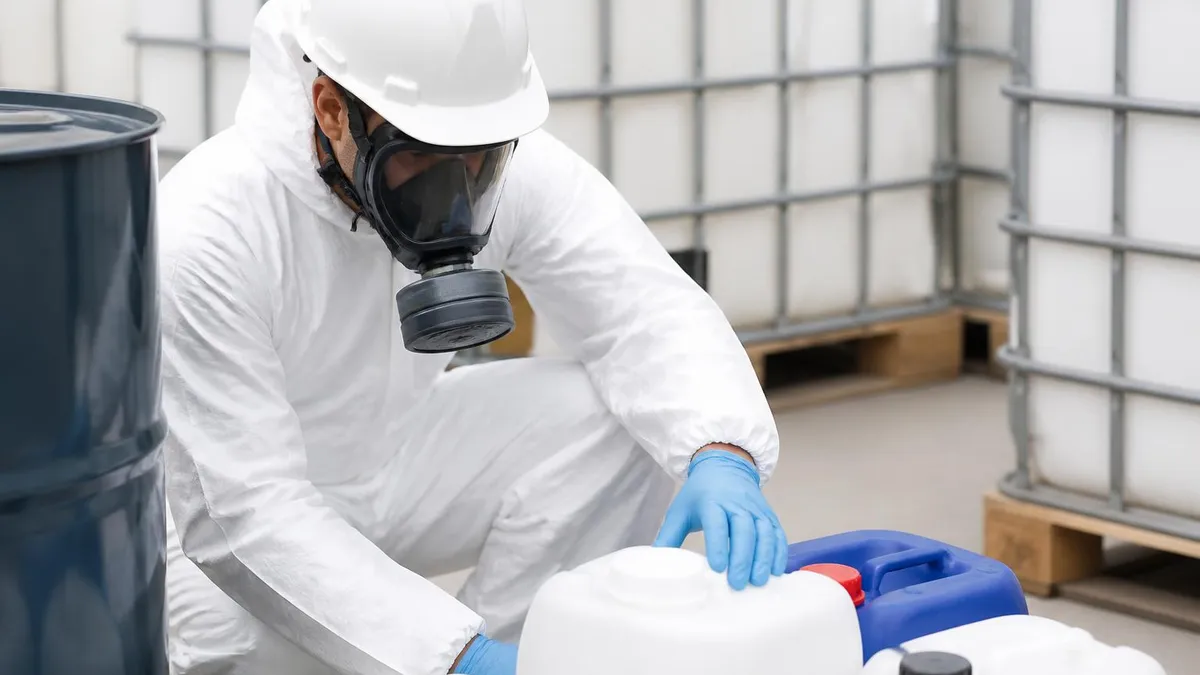
HazMat Endorsement: CDL Requirements, Test, and Cost

Wisconsin HazMat Endorsement: Complete Study Guide & CDL Certification Prep

HazMat Endorsement Renewal: Complete 2026 Guide to Keeping Your CDL HazMat Certification Active

HazMat Team: Complete Guide to Hazardous Materials Endorsement for CDL Drivers

CDL HazMat Practice Test 2026: Free 30-Question Quiz + Study Guide
About the Author

Educational Psychologist & Academic Test Preparation Expert
Columbia University Teachers CollegeDr. Lisa Patel holds a Doctorate in Education from Columbia University Teachers College and has spent 17 years researching standardized test design and academic assessment. She has developed preparation programs for SAT, ACT, GRE, LSAT, UCAT, and numerous professional licensing exams, helping students of all backgrounds achieve their target scores.
Join the Discussion
Connect with other students preparing for this exam. Share tips, ask questions, and get advice from people who have been there.
View discussion (8 replies)