
General Knowledge MCQs: How to Master Multiple-Choice Questions on the GKT
Master general knowledge MCQs for the Florida GKT. Tips, formats, and practice strategies to pass your teacher certification exam. 🎯

General knowledge MCQs are the backbone of the Florida General Knowledge Test (GKT), the mandatory certification exam that every aspiring teacher in Florida must pass before entering the classroom. Multiple-choice questions dominate the exam, testing your ability to read critically, write effectively, reason mathematically, and recall broad subject-area content under timed conditions. Understanding how these questions work — and how to approach them systematically — is the single most effective thing you can do to improve your score before test day arrives.
The GKT is administered by the Florida Department of Education and is required for all individuals seeking an initial Florida Educator Certificate. The exam consists of four separate subtests: Essay, English Language Skills, Reading, and Mathematics. While the Essay subtest requires a written response, the remaining three subtests are entirely multiple-choice in format. That means the overwhelming majority of your score depends on your ability to interpret, eliminate, and select the best answer from four possible choices on a wide range of general knowledge topics.
Many test-takers underestimate the strategic dimension of multiple-choice exams. It is not simply a matter of knowing the content — it is also about reading each question carefully, identifying the precise skill being tested, and applying a systematic elimination process that reduces guessing errors. Research consistently shows that examinees who practice with MCQs specifically designed to mirror the GKT's question style perform significantly better than those who only review content passively through textbooks or notes.
One of the most common mistakes candidates make is treating all MCQs the same regardless of subject area. Reading MCQs require you to analyze passages for main ideas, author's purpose, and implied meaning. Mathematics MCQs require you to set up and solve problems accurately within strict time limits. English Language Skills MCQs test sentence structure, punctuation, and word usage in context. Each domain demands a slightly different mental approach, and your study plan should reflect these differences through targeted, domain-specific practice.
Authentic practice materials are essential. Working through general knowledge mcqs sourced from real GKT-aligned question banks exposes you to the exact difficulty level, phrasing style, and cognitive demands you will face on exam day. Passive reading of study guides is far less effective than actively answering questions, reviewing your errors, and understanding exactly why the correct answer is correct and why each distractor is wrong. This error-analysis habit is what separates high scorers from those who need to retake the exam.
The GKT is scored on a scale of 100 to 300, with a minimum passing score of 200 required on each subtest. This means you cannot offset a weak subtest with a strong one — every section must be passed independently. Knowing this, it is critical to identify your weakest subtest early in your preparation and allocate proportionally more study time to that area. Many candidates discover through diagnostic practice tests that their mathematics skills need the most attention, while others find the Reading subtest surprisingly demanding due to its inference-heavy questions.
This article walks you through everything you need to know about general knowledge MCQs on the GKT: how the exam is structured, which question types appear in each subtest, proven strategies for answering MCQs under pressure, a checklist of preparation actions, and answers to the most frequently asked questions from real test-takers. Whether you are sitting for the GKT for the first time or preparing to retake a subtest, the guidance here will help you approach every multiple-choice question with confidence and precision.
GKT General Knowledge MCQs by the Numbers
Key Facts at a Glance
| Item | Value | Details |
|---|---|---|
| Minimum Passing Score | 200 | Required on each subtest independently |
| Total Testing Time | 4 hrs | Across all four GKT subtests |
| Retake Attempts Allowed | Unlimited | 31-day waiting period between attempts |
GKT Exam Structure: The Four Subtests
One written prompt requiring a focused, well-organized essay of approximately 300–600 words. You are assessed on focus, support, organization, and language conventions. Graded holistically on a 1–6 scale by two independent raters.
Multiple-choice questions covering grammar, punctuation, sentence structure, and word choice in context. Questions present sentences or short passages with underlined sections requiring you to identify errors or select the most effective revision.
Multiple-choice questions based on reading passages across content areas including humanities, social sciences, and natural sciences. Tests main idea identification, inferential reasoning, vocabulary in context, and author's purpose or tone.
Multiple-choice questions covering arithmetic, algebra, geometry, statistics, and problem-solving. A four-function on-screen calculator is provided for some questions. Emphasis is on applied reasoning and multi-step problem setup, not just computation.
Understanding how MCQ formats differ across the GKT's three multiple-choice subtests is essential for targeted preparation. On the Reading subtest, questions are always passage-based. You will read a text of 200 to 500 words and then answer several questions about it. The passages deliberately come from unfamiliar content areas, so you cannot rely on prior knowledge — every answer must be grounded in what the passage explicitly states or logically implies. The most frequently tested skills include identifying the main idea, determining the meaning of words from context clues, drawing inferences, and recognizing the organizational pattern of a passage.
Reading MCQs on the GKT are specifically designed to test higher-order thinking, not simple recall. You will rarely find a question that asks you to locate a fact directly restated in the passage. Instead, questions ask you to synthesize information across multiple paragraphs, evaluate the author's purpose, or distinguish between a stated fact and an unsupported opinion. This demands active reading habits: annotating key sentences, pausing to summarize each paragraph in your head, and constantly asking yourself why the author included each piece of information.
The English Language Skills subtest presents MCQs in a format that mirrors real editing decisions. A sentence or paragraph is presented, and you must choose the option that corrects an error or improves clarity. Common error types include subject-verb agreement, pronoun reference, comma usage, apostrophe placement, parallel structure, and misplaced modifiers. One important insight is that the longest answer choice is not always the correct one — often the best revision is the most concise option that corrects the identified error without introducing new problems.
Mathematics MCQs on the GKT require careful reading before any calculation. Many examinees lose points not because they cannot do the math, but because they misread what the question is actually asking. Before computing anything, identify the unknown variable, the given information, and the operation required. The GKT math subtest includes questions on fractions, percentages, ratios, linear equations, geometric formulas, mean/median/mode, and basic probability. Questions involving word problems are especially common and require translating verbal descriptions into mathematical expressions before solving.
Across all three MCQ subtests, answer distractor design follows predictable patterns. One distractor is typically a partially correct answer that becomes wrong when you read the full question carefully. Another is an answer that sounds authoritative or uses vocabulary from the passage but does not actually answer what was asked. A third distractor often represents the result of a common computational or reasoning error. Knowing these patterns helps you spot traps before you fall into them, especially when time pressure makes you want to select the first plausible-sounding option.
Pacing is one of the most underappreciated skills in MCQ performance. Each GKT subtest has a time limit, and running out of time before completing all questions is a significant risk for underprepared candidates. The recommended pacing strategy is to move through questions at a consistent rate, flag any question that takes more than 90 seconds, and return to flagged questions after completing the rest. Never leave a question unanswered on the GKT — there is no penalty for guessing, so an educated guess is always better than a blank.
Practice under timed conditions is the best way to build the pacing instincts you need. When you complete a full-length practice subtest in the allotted time, you are not only reinforcing content knowledge — you are also training your brain to make faster, more confident decisions under pressure. Candidates who complete at least three timed practice sessions per subtest before their actual exam date consistently report feeling more in control on test day and are statistically more likely to pass on their first attempt.
Strategies for GKT Multiple-Choice Questions by Subtest
For Reading MCQs, always read the questions before the passage so you know exactly what information to look for as you read. This active preview technique reduces re-reading time and helps you annotate more efficiently. When you encounter vocabulary-in-context questions, use the surrounding sentences to determine meaning rather than relying on your general knowledge of the word — the GKT often uses familiar words in specific ways that differ from their most common usage.
When two answer choices seem equally correct, apply the specificity test: the answer that is more precisely supported by the passage text is almost always right over one that is only vaguely consistent. Eliminate answers that use absolute language like "always" or "never" unless the passage itself uses equally absolute statements. After selecting your answer, briefly re-read the relevant passage section to confirm your choice is directly supported — this 10-second verification step catches a significant percentage of errors before they cost you points.

MCQ Format on the GKT: Advantages and Challenges
- +No penalty for guessing — every blank should be filled with your best educated guess
- +Process of elimination reduces four choices to two, making educated guessing far more effective
- +Consistent format across practice materials means preparation skills transfer directly to test day
- +On-screen flagging tools let you mark difficult questions and return efficiently before time expires
- +Four answer choices mean there is always a 25% baseline probability even on questions you are unsure about
- +MCQ format allows for faster answering than written responses, giving more time for review if you pace well
- −Well-designed distractors can make partially correct answers seem compelling if you read too quickly
- −Passage-based Reading MCQs require sustained concentration across many paragraphs in a timed environment
- −You cannot receive partial credit — a careless error on the last step costs you the full point value
- −Math word problems require accurate reading comprehension in addition to mathematical skill
- −Time pressure can cause anxiety that degrades performance even when underlying content knowledge is solid
- −Each subtest must be passed independently, so a low score in one area cannot be offset by high scores elsewhere
GKT MCQ Preparation Checklist
- ✓Take a full-length diagnostic practice test in all three MCQ subtests to identify your weakest areas before studying.
- ✓Review the official GKT competencies and skills list from the Florida Department of Education to align your study topics.
- ✓Complete at least 50 timed practice MCQs per subtest per week throughout your preparation period.
- ✓Analyze every incorrect answer to understand whether the error was a content gap, a misread question, or a pacing mistake.
- ✓Study grammar rules most commonly tested on the ELS subtest: subject-verb agreement, pronoun case, parallel structure, and punctuation.
- ✓Practice active reading strategies: preview questions before the passage, annotate key sentences, and summarize each paragraph.
- ✓Drill foundational math skills in fractions, percentages, ratios, and basic algebra until calculation speed is automatic.
- ✓Simulate full test-day conditions at least twice: use a timer, a computer screen, and avoid all interruptions.
- ✓Build a personal error log that categorizes every mistake by question type and root cause for targeted review.
- ✓Schedule your official test date at least four to six weeks after beginning structured preparation to allow adequate practice time.
Error Analysis Beats Passive Review Every Time
Candidates who spend 20 minutes reviewing why they missed each practice question improve faster than those who spend an hour re-reading content notes. Every wrong answer on a GKT practice test is a roadmap: it tells you exactly which skill to target next. Build this habit from day one of your preparation and your score will improve measurably within two to three weeks.
Building a strong MCQ study routine requires more than simply collecting practice questions. The most effective preparation programs are structured around spaced repetition, deliberate practice, and regular self-assessment. Spaced repetition means distributing your practice sessions across multiple days rather than cramming large volumes of questions in a single sitting. Research in cognitive psychology consistently shows that information reviewed at spaced intervals is retained far more durably than the same material studied in one long block, and durable retention is exactly what you need on test day.
Deliberate practice means focusing your effort on the specific question types and content areas where you are weakest, not the ones where you already perform well. It is tempting to spend study time on topics you find interesting or easy because it feels productive, but this approach creates a false sense of readiness. Use your diagnostic test results to identify your lowest-scoring competency areas within each subtest and build weekly study goals around closing those specific gaps, even if they are uncomfortable to work on.
For the Reading subtest, supplement MCQ practice with regular close reading of challenging texts. Academic articles, newspaper editorials, and science journalism provide the kind of dense, argument-driven prose that GKT Reading passages tend to resemble. As you read, practice identifying the thesis of each paragraph, the organizational pattern of the piece, and the author's implicit assumptions. These analytical habits transfer directly to answering passage-based MCQs more accurately and efficiently during the actual exam.
For the ELS subtest, focus your grammar review on the specific rule categories that appear most frequently. Subject-verb agreement, comma splices, apostrophe misuse, pronoun-antecedent agreement, and dangling modifiers account for a disproportionate share of ELS questions. Rather than trying to master every nuance of English grammar, concentrate your energy on these high-frequency areas first. Once you can identify and correct these common error types reliably, broaden your review to include sentence combining, subordination, and rhetorical effectiveness.
For the Mathematics subtest, practice is most effective when it is paired with concept review. If you get a geometry question wrong, do not just note the correct answer and move on — go back and review the relevant formulas and their applications before attempting similar questions. The GKT math subtest covers a finite set of topics, and mastering the underlying concepts for each category gives you the ability to handle any variation of that question type, not just the specific problems you have already seen in practice materials.
One underrated component of GKT MCQ preparation is vocabulary building. Both the Reading and ELS subtests require strong vocabulary to interpret passage language, select precise word choices, and identify connotation-based errors. Dedicate time each week to learning academic vocabulary, specifically the Tier 2 words — words like "infer," "corroborate," "ambiguous," "transition," and "chronological" — that appear frequently in test instructions and passage text. A wider vocabulary directly improves your reading comprehension speed and your ability to evaluate answer choices that contain nuanced language.
Finally, mental preparation matters as much as content knowledge in the weeks leading up to your exam. Practice calming techniques for managing test anxiety, including controlled breathing before timed sessions and positive self-talk after reviewing incorrect answers. Treat each practice test not as a judgment of your ability but as information: data that shows you exactly where to focus your next study session. Candidates who maintain a growth mindset throughout preparation — viewing every mistake as a learning opportunity rather than a failure — consistently outperform those who approach the GKT with fear or avoidance.
You cannot combine scores across GKT subtests to achieve a passing result. A score of 200 or higher is required on each individual subtest — Essay, English Language Skills, Reading, and Mathematics — before you receive full GKT certification. If you pass three subtests but fail one, you must retake only the failed subtest, but you must wait a minimum of 31 days before your next attempt. Plan accordingly to avoid delays in your certification timeline.
As you enter the final weeks before your GKT exam date, your preparation strategy should shift from broad content review to focused refinement and confidence building. At this stage, the most productive activities are full-length timed practice tests, targeted review of your personal error log, and light reinforcement of the concepts you have already mastered. Avoid the common mistake of trying to learn entirely new content in the final week — at this point, solidifying what you already know is far more valuable than attempting to cover topics you have not yet studied.
Simulate the actual test environment as closely as possible during your final practice sessions. Sit at a computer rather than on paper, use the on-screen calculator provided in the official test interface for math problems, and practice typing your essay response within the character and time constraints. Many candidates are surprised to discover that typing an organized, well-developed essay within 50 minutes is more demanding than writing by hand, and discovering this the first time during your actual exam would be a costly surprise.
Score analysis in the final preparation phase should go beyond identifying wrong answers — it should extend to analyzing the pattern of why you are still missing certain question types. If you consistently miss inference questions on the Reading subtest, for example, the problem is likely a specific skill gap rather than a random knowledge deficit. Target that skill directly with focused practice on drawing conclusions from implicit textual evidence, and you will see improvement across many questions simultaneously rather than just on the individual questions you practiced.
Time management in the final stretch also includes logistical preparation for test day itself. Know your testing center location, plan your route to arrive at least 20 minutes early, and confirm the identification documents you will need to bring. The Florida GKT is administered at Pearson VUE testing centers, and the check-in process includes biometric verification and personal item storage. Arriving flustered or unprepared logistically can disrupt your mental readiness even before the first question appears on screen.
On the day before your exam, avoid intensive study sessions. A light review of key formulas or grammar rules is acceptable, but trying to cram new information the night before the test typically increases anxiety without meaningfully improving performance. Instead, prioritize adequate sleep — research on exam performance consistently shows that candidates who sleep seven to nine hours the night before a high-stakes test perform measurably better than sleep-deprived candidates with equivalent preparation levels.
During the actual exam, use the flagging feature strategically. If a question takes you longer than 90 seconds, flag it and move on rather than allowing one difficult item to consume time you could spend answering multiple easier questions. After completing the remainder of the subtest, return to flagged questions with fresh eyes. You will often find that questions that seemed impossible when you first read them become clearer after you have answered other related questions, because those other questions may have activated relevant knowledge or reminded you of applicable strategies.
After your exam is complete, take time to reflect on your experience regardless of your result. If you passed, note which preparation strategies were most effective so you can recommend them to colleagues who are preparing for their own GKT. If you need to retake a subtest, use the score report to identify exactly which competency areas need additional work before your next attempt. The GKT is a passable exam for motivated candidates who prepare strategically, and every attempt — successful or not — provides valuable information that makes your next performance stronger.
Practical preparation tips can make the difference between a confident test performance and an anxious one. Start by creating a realistic study schedule that works within your existing commitments. Most candidates need four to eight weeks of consistent preparation to feel ready for the GKT, with study sessions of 60 to 90 minutes scheduled four to five times per week. Sessions shorter than 45 minutes are generally insufficient for building the sustained focus that the Reading and Essay subtests demand, while sessions longer than two hours tend to produce diminishing returns as mental fatigue sets in.
Use official and officially aligned practice materials wherever possible. The Florida Department of Education publishes a GKT Competencies and Skills document that lists every topic that can appear on each subtest. Cross-reference your practice test content against this official list to ensure you are not spending time on topics that fall outside the actual exam scope. Focused preparation on the right content is more efficient than broad general study that includes topics the GKT does not test.
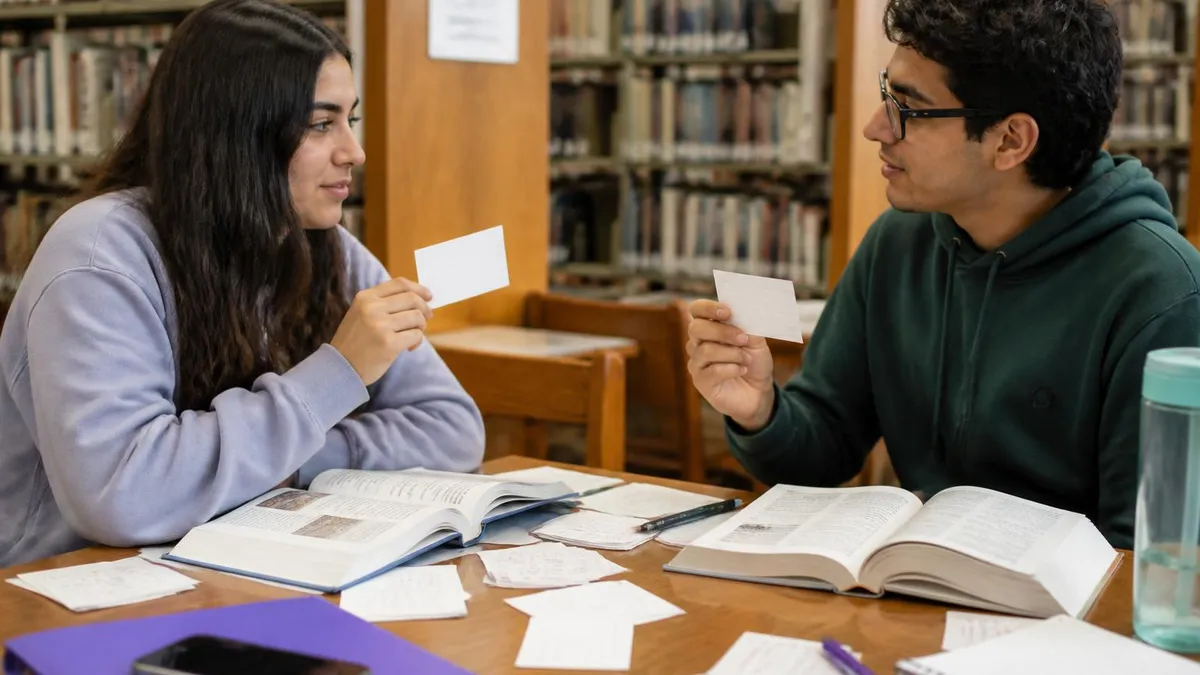
Form a study group with other teacher certification candidates if possible. Group study has several advantages for GKT preparation: explaining concepts to others reinforces your own understanding, discussing wrong answers exposes you to reasoning approaches you may not have considered, and the social accountability of scheduled group sessions helps maintain consistency across a multi-week preparation period. Many candidates find that explaining why a certain MCQ answer is wrong to a study partner solidifies their understanding more effectively than reading an answer explanation alone.
Consider the role of physical wellness in your cognitive performance. Regular aerobic exercise during your preparation period has been shown in multiple studies to improve working memory, attention span, and processing speed — all of which are directly relevant to MCQ performance. Even 30 minutes of moderate exercise three times per week can produce measurable cognitive benefits within two to three weeks. Similarly, managing stress through adequate sleep, healthy nutrition, and deliberate relaxation practices supports the mental clarity you need to perform well on exam day.
Practice writing your GKT Essay under timed conditions starting at least three weeks before your exam. The Essay subtest requires you to produce a focused, organized, well-supported written argument in approximately 50 minutes. Many mathematics- or reading-focused candidates neglect essay preparation only to find on test day that their ability to organize and express ideas under time pressure is weaker than expected. Practice with a variety of prompt types — persuasive, expository, and analytical — so you are ready for whatever prompt appears on your exam.
Review your GKT score report carefully after each practice test and official exam attempt. The score report provides a breakdown of your performance by competency area, which tells you not just how many questions you got right overall but which specific skill categories cost you the most points. Use this granular data to adjust your study focus rather than simply repeating the same general practice tests. Targeted improvement on your lowest-scoring competencies will yield the fastest overall score gains in the shortest amount of preparation time.
Stay current with any administrative updates to the GKT. The Florida Department of Education periodically updates test specifications, passing scores, and registration procedures. Before finalizing your exam registration, visit the official FTCE website to confirm current requirements, testing window dates, and any fee structures that may have changed since you last reviewed them. Preparing for the right version of the exam, with accurate knowledge of what is and is not being tested, ensures that every hour of your study time is invested in material that will actually appear on your test day.
Sample GKT - General Knowledge Test Practice Questions
Try these questions from our free GKT - General Knowledge Test practice tests. The correct answer and an explanation follow each question.
How should professionals apply communication and documentation in daily practice?
- A. Only when being evaluated
- B. Consistently integrate best practices into every aspect of professional work
- C. Apply principles selectively based on convenience
- D. Follow standards only for complex tasks
Answer: B. Consistently integrate best practices into every aspect of professional work
Consistent application of professional standards ensures quality outcomes and builds professional credibility.
How should professionals apply continuing education requirements in daily practice?
- A. Only when being evaluated
- B. Consistently integrate best practices into every aspect of professional work
- C. Apply principles selectively based on convenience
- D. Follow standards only for complex tasks
Answer: B. Consistently integrate best practices into every aspect of professional work
Consistent application of professional standards ensures quality outcomes and builds professional credibility.
Which sentence is written in the active voice?
- A. The report was written by the committee.
- B. Mistakes were made by the staff.
- C. The teacher graded all the exams.
- D. The policy was changed by the board.
Answer: C. The teacher graded all the exams.
In active voice, the subject ('the teacher') performs the action directly on the object ('the exams').
What is the value of π (pi) rounded to two decimal places?
- A. 3.12
- B. 3.14
- C. 3.16
- D. 3.18
Answer: B. 3.14
Pi (π) equals approximately 3.14159, which rounds to 3.14 at two decimal places.
GKT Questions and Answers

History General Knowledge: What the GKT Tests and How to Prepare

General Knowledge Book: Your Complete GKT Study Resource Guide

Define General Knowledge: What It Means for the GKT and Your Teaching Career

Florida General Knowledge Test: Complete Study Guide and Certification Prep

General Science Knowledge: What the GKT Tests and How to Master It
About the Author

Educational Psychologist & Academic Test Preparation Expert
Columbia University Teachers CollegeDr. Lisa Patel holds a Doctorate in Education from Columbia University Teachers College and has spent 17 years researching standardized test design and academic assessment. She has developed preparation programs for SAT, ACT, GRE, LSAT, UCAT, and numerous professional licensing exams, helping students of all backgrounds achieve their target scores.