
GCSE 2026
Free GCSE practice tests for English, Maths, Science and more. Graded 9-1 questions with instant feedback and expert explanations for effective exam revision.
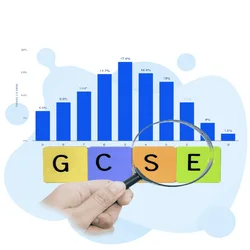
Note: The GCSE Grading System uses a numerical scale from 9 to 1, with 9 being the highest. A grade 4 is considered a standard pass, while a grade 5 is a strong pass. Understanding these GCSE Grades is vital for meeting entry requirements for sixth form and college courses.

GCSE Exam Prep Flashcards
Click to flip and test your knowledge
🎯What is the GCSE passing grade?
A grade 4 is considered a standard pass in the GCSE Grading System, while a grade 5 is a strong pass.
START GCSE PRACTICE TEST📚How many GCSE subjects do students take?
Most students take between 9 and 10 GCSE Subjects, including core mathematics, English, and science.
🏛️Who awards GCSE qualifications?
Exams are administered by boards like AQA GCSE, Edexcel GCSE, and OCR GCSE under Ofqual regulation.
REVIEW GCSE QUESTIONS📅When are GCSE exams taken?
The main GCSE Exam period occurs annually in May and June, with results released in August.
TRY GCSE MOCK EXAM🎓What is the GCSE equivalency?
A GCSE Certificate at grade C/4 or above is widely recognized as a Level 2 qualification in the UK.
ACCESS GCSE STUDY GUIDE👥Can adults take GCSEs?
Yes, GCSE Courses are available for adult learners, often through local colleges or distance learning providers.
PRACTICE GCSE TEST NOWGCSE Exam Study Guide
Prepare effectively with our detailed answers to common questions about the GCSE Exam. This guide covers basics, format, registration, results, and study tips to help you succeed.
GCSE Test Format
The GCSE Exam format varies by subject. Below is a general overview of the structure for key core subjects typically taken by students.
Standard structure for Edexcel/AQA. Foundation and Higher tiers available.
- Topics: Number, Algebra, Ratio, Geometry, Probability, Stats
- Questions: Paper 1 (Non-Calc), Paper 2 & 3 (Calc)
Focuses on reading fiction/non-fiction and writing skills.
- Topics: Explorations in Creative Reading, Writers' Viewpoints
- Questions: Reading analysis & Creative/Persuasive writing
Assessment of set texts including Shakespeare and poetry.
- Topics: Macbeth, Christmas Carol, Inspector Calls, Power & Conflict
- Questions: Essay-based questions on set texts
Combined Trilogy (2 GCSEs) or Triple Science (3 GCSEs).
- Topics: Cells, Atomic Structure, Forces, Energy, Ecology
- Questions: 2 papers per subject (Bio 1&2, Chem 1&2, Phys 1&2)
Typical structure for Geography or History.
- Topics: Hazards, Urban Issues, Elizabethan England, Cold War
- Questions: Short answer, data response, extended writing
French, Spanish, German structure.
- Topics: Identity, Local Area, School, Future Aspirations
- Questions: 25% weighting for each skill area
Past papers are your best friend. Practicing with real GCSE Exam Questions from AQA, OCR, or Edexcel helps you understand the format and time constraints of the actual test.
GCSE Score Calculator
Total Scored Questions
150
105 out of 150 correct
70%
Required to Pass: ~70% (Estimated)
GCSE Score Interpretation
Understanding the 9-1 GCSE Grading System is crucial for college and university applications.
Job seekers and students can prepare for free ncae general scholastic using our NCAE general scholastic ability test 2026, which mirrors the real assessment format and scoring.
Candidates preparing for udee can build exam confidence with our UDEE practice test 2026, which covers all key topics and question formats used in the real assessment. For more exam practice, try our A Level practice test.
| Score Range | Interpretation | Old Grade Equiv | Outcome |
|---|---|---|---|
| 🏆 Grade 9 | Highest Grade | Top A* | Exceptional |
| 🥇 Grade 8 | Outstanding | A* | Excellent |
| 🥈 Grade 7 | Excellent | A | High Achievement |
| 🥉 Grade 5 | Strong Pass | High C/Low B | Good Foundation |
| ✅ Grade 4 | Standard Pass | C | Minimum Pass |
GCSE Practice Test Questions
Prepare for the GCSE - General Certificate of Secondary Education exam with our free practice test modules. Each quiz covers key topics to help you pass on your first try.

GCSE Biology
GCSE Exam Questions covering Biology. Master GCSE Test concepts for certification prep.
Start FREE Test
GCSE Chemistry
Free GCSE Practice Test featuring Chemistry. Improve your GCSE Exam score with mock test prep.
Start FREE Test
GCSE English
GCSE Mock Exam on English. GCSE Study Guide questions to pass on your first try.
Start FREE Test
GCSE Geography
GCSE Test Prep for Geography. Practice GCSE Quiz questions and boost your score.
Start FREE Test
GCSE MATH
GCSE Questions and Answers on MATH. Free GCSE practice for exam readiness.
Start FREE Test
GCSE SPaG
GCSE Mock Test covering SPaG. Online GCSE Test practice with instant feedback.
Start FREE Test
GCSE - General Certificate of Secondary Ed...
Free GCSE Quiz on - General Certificate of Secondary Education Analysing Unseen Poetry. GCSE Exam prep questions with detailed explanations.
Start FREE Test
GCSE - General Certificate of Secondary Ed...
GCSE Practice Questions for - General Certificate of Secondary Education Atomic Structure & Periodic Table. Build confidence for your GCSE certification exam.
Start FREE Test
GCSE - General Certificate of Secondary Ed...
GCSE Test Online for - General Certificate of Secondary Education Cell Biology. Free practice with instant results and feedback.
Start FREE Test
GCSE - General Certificate of Secondary Ed...
GCSE Study Material on - General Certificate of Secondary Education Macbeth: Key Themes. Prepare effectively with real exam-style questions.
Start FREE Test
GCSE - General Certificate of Secondary Ed...
Free GCSE Test covering - General Certificate of Secondary Education Solving Quadratic Equations. Practice and track your GCSE exam readiness.
Start FREE Test
GCSE - General Certificate of Secondary Ed...
GCSE Exam Questions covering - General Certificate of Secondary Education Weimar & Nazi Germany. Master GCSE Test concepts for certification prep.
Start FREE Test
GCSE History: The Cold War
Free GCSE Practice Test featuring History: The Cold War. Improve your GCSE Exam score with mock test prep.
Start FREE Test
GCSE Physics: Forces and Motion
GCSE Mock Exam on Physics: Forces and Motion. GCSE Study Guide questions to pass on your first try.
Start FREE Test🎓 Target Grades
Most sixth forms require at least a Grade 4 or 5 in GCSE Maths and GCSE English. Top universities often look for Grades 7-9 in relevant subjects.
GCSE Registration Process
The path to completing your GCSE Courses and exams follows a structured timeline, typically over two years (Year 10 and 11). For more exam practice, try our IELTS practice test.
- Choose GCSE Options - Select your optional subjects in Year 9 (e.g., History, Art, Business).
- Study Core Subjects - Focus on mandatory GCSE English, Maths, and Science throughout the course.
- Complete Coursework - For subjects like Art or DT, complete non-exam assessments (NEA).
- Mock Exams - Sit mock exams in Year 11 to practice under timed conditions.
- Final Revision - Use a GCSE Revision timetable to structure your study in the final months.
- Sit Exams - Take your final exams in the summer term (usually May-June).
- Results Day - Collect your GCSE Results in August and confirm your next steps.
📄 £45-£60Exam FeePer subject (board fee) 🏢£50-£100Centre FeeAdmin fee per centre 📚£20-£50MaterialsBooks & revision guides 💻£300+CoursesDistance learning (optional) 📝£40Late FeeFor late registration 🔄£40-£50Resit FeePer subject resit 💰 Total Investment
Private candidates should budget between £150 and £250 per subject for GCSE Exam entry fees and administration costs.

GCSE Testing Contacts
For official information, contact the major UK exam boards directly.
Edexcel (Pearson)Exam
Board
GCSE Test Day Checklist
Ready to Pass Your GCSE Exams?
Get started with our free practice questions and comprehensive study guides today.

GCSE Questions and Answers
About the Author
Law Enforcement Trainer & Civil Service Exam Specialist
John Jay College of Criminal JusticeMarcus B. Thompson earned his Master of Arts in Criminal Justice from John Jay College of Criminal Justice and served 12 years as a law enforcement officer before transitioning to full-time academy instruction. He is a POST-certified instructor who has prepared candidates for police entrance exams, firefighter assessments, and civil service examinations across dozens of agencies.