
FLSD F07 Test Questions and Answers: What the FDNY Exams Really Ask 2026
🎯 FLSD F07 test questions and answers: there is no F07 exam. The FDNY tests are N85 (120 questions) and Z89 (55), 70% to pass. See topics and prep.

FLSD F07 test questions and answers do not exist as an official FDNY exam, because there is no F07 test. The Fire Life Safety Director certificate is earned by passing the N85 fire computer-based test (120 questions, 186 minutes) and the Z89 non-fire test (55 questions, 83 minutes), scoring 70 percent on each. FDNY does not publish its questions or answers.
FLSD F07 Test Questions and Answers: Key Facts (Updated October 2026)
| Fact | Details | Source |
|---|---|---|
| Fire test (N85) | 120 questions in 186 minutes | FDNY Certificate of Fitness F-89 |
| Non-fire test (Z89) | 55 questions in 83 minutes | FDNY Certificate of Fitness F-89 |
| Passing score | 70% on each computer-based test | FDNY Certificate of Fitness F-89 |
| Test location | FDNY headquarters, 9 MetroTech Center; scheduled online | FDNY Certificate of Fitness F-89 |
| Required course | 31-hour FDNY-approved course (20 hours fire, 11 hours non-fire including 4 hours ASMEP) | FDNY Certificate of Fitness F-89 |
| Test application fee | $25 for each computer-based test | FDNY Certificate of Fitness F-89 |
| F-89 validity and renewal | 3 years, renewable online; $15 renewal fee | FDNY Certificate of Fitness F-89 |
| Older certificates | F-59, F-25, F-58 and F-85 have been invalid since March 1, 2020 | FDNY Certificate of Fitness F-89 |
People who search for flsd f07 test questions and answers are usually after one of two things: a leaked answer key, or a realistic preview of the real exam. The first does not legitimately exist, and chasing it wastes weeks. The second is achievable. A disciplined flsd practice test routine, built on FDNY study material and timed question drills, is how candidates actually reach the 70 percent line.
The code F07 does not appear in the FDNY certification system. Candidates most likely mean the F-89 certificate, which is the Certificate of Fitness for Fire and Life Safety Director in New York City. It is earned through two separate computer-based exams. Knowing the real names matters, because study sites that advertise an F07 answer sheet are either mislabeling old material or selling something that FDNY never produced and would not recognize.
The fire exam, labeled N85, is the longer and harder of the two. It asks 120 questions over 186 minutes, which works out to about a minute and a half per question. It focuses on fire safety plans, evacuation procedures, building fire protection systems, and the duties of a director during a fire event. Scenario questions dominate, so memorizing isolated facts without understanding how a director would actually respond leaves most candidates short of the required score.
The non-fire exam, labeled Z89, is shorter at 55 questions in 83 minutes, but it should not be underestimated. It covers emergency action plans for non-fire events, medical emergencies, and active shooter preparedness, which is the ASMEP portion of the course. Many people who pass the fire test comfortably stumble here because they treated the 11 non-fire course hours as an afterthought. Both exams need the same 70 percent, and a pass on one does not carry the other.
Many candidates begin with the flsd video walkthroughs to hear how a scenario question should be reasoned through, then move to written practice. That order helps because the FDNY exams reward judgment rather than recall. When you see why one answer is the director's responsibility and another belongs to the fire department or a building tenant, the same reasoning transfers to questions you have never seen before, which is exactly what the real test will present.
A real answer key would not help you anyway. FDNY rotates and updates its question pool, and the exam is tied to the current rules, so memorized letters from an outdated source can steer you toward wrong choices. What helps is a mental model of the director's role, a solid grasp of the building's fire safety plan, and enough timed practice that the 186-minute fire test feels routine. The sections below show how to build all three.
This guide is organized around the questions candidates ask most. You will see the exam format, what each test covers, how the on-site experience at MetroTech works, the advantages and drawbacks of different study methods, and a checklist you can follow week by week. Where numbers appear, they come from the FDNY certificate pages. Where something is not published, we say so plainly rather than inventing answers that could cost you a retake fee.
You can continue preparing with the flsd practice test, which includes answer explanations for every question.
FLSD Exam by the Numbers
How Are the FDNY FLSD Tests Formatted?
| Section | Questions | Time | Weight | Notes |
|---|---|---|---|---|
| Fire Test (N85) | 120 | 186 min | 70% to pass | Fire safety plans, evacuation, building systems |
| Non-Fire Test (Z89) | 55 | 83 min | 70% to pass | Emergency action plans, medical, active shooter |
| Total | 175 | 269 minutes combined | 100% |
Is There an FLSD F07 Test, and Where Do the Answers Come From?
There is no FLSD F07 test, and no official answers are published for any FDNY exam. The certificate that most people mean is the F-89, and it depends on the N85 and Z89 computer-based tests. FDNY releases a study material set and a Notice of Examination, not a question bank. Anyone claiming to sell the F07 answers is guessing at what you want, and the label alone should make you cautious about the rest of what they offer.
Why does the F07 label circulate at all? Part of the answer is history. Before March 1, 2020, New York City used several separate certificates, including F-59, F-25, F-58 and F-85, for different building types and roles. FDNY consolidated them, and those older certificates became invalid. Study sites that never updated their pages still carry the old numbering, and search engines pick up stray codes. A mislabeled page can look authoritative while describing an exam that no longer exists.
The practical consequence is simple: check the certificate name before you trust any material. The current credential is the Certificate of Fitness for Fire and Life Safety Director, F-89, and its sibling T-89 for buildings where a different arrangement applies. If a resource does not mention N85 and Z89, or the 31-hour FDNY-approved course, it was probably written for the pre-2020 system. Save yourself the time and move on to sources tied to current rules.
Candidates who want more preparation structure can read our flsd training guide, which walks through the course, the application, and the weeks before test day. It pairs well with this article because it explains the process from enrollment to certificate, while this page concentrates on what the questions look like and how to practice them. Reading both gives you the full picture without leaning on rumor or recycled answer sheets.
What do legitimate sample questions look like? They are scenario based. For example, a prompt might describe smoke detected on a mid-level floor of a high-rise office building during business hours, then ask what the director should do first. The correct choice follows the building's fire safety plan and the director's duties, such as confirming the alarm and directing the response. Wrong choices usually sound helpful but skip a required step or hand off a duty that belongs to the director.
Because the logic is procedural, practicing in the same style matters more than collecting facts. When you miss a practice question, do not just note the right letter. Write down which duty or rule made it correct, and which detail in the scenario pointed to it. After twenty or thirty such notes, patterns appear: the director confirms before escalating, communicates clearly to occupants, and keeps records. Those patterns carry over to new questions far better than memorized answers ever could.
Finally, treat practice scores as a trend rather than a promise. A candidate who averages 80 percent on well-written practice sets across several days is in a good position for the 70 percent standard, while one who scores 65 percent should keep studying. Practice material varies in difficulty, so judge your readiness by consistency, by whether you can explain each answer aloud, and by how you handle the longer scenario items near the end of a session.
What Does an FLSD Practice Test Cover for Each FDNY Exam?
The N85 fire test is 120 questions in 186 minutes, and it draws on the 20 fire hours of the FDNY-approved course. Expect questions about the building's fire safety plan, the director's duties during an alarm, fire protection systems, evacuation and relocation procedures, and communication with the fire department. Most items present a short situation and ask what you should do first or next, which tests sequencing and responsibility.
Budget your time at roughly ninety seconds per item, and flag any question that takes longer so you can return to it. Because you have 186 minutes, there is room to review, but candidates who linger early often rush the final thirty questions. Practice sets in blocks of twenty-five with a timer will teach you the pace long before you sit at MetroTech.
Is Practice-Question Study Better Than Memorizing FLSD Answers?
- +Teaches the reasoning behind each response, so new questions feel familiar
- +Builds the pacing needed for 120 questions in 186 minutes
- +Exposes weak topics early, while there is time to fix them
- +Matches the scenario style FDNY actually uses on the tests
- +Reduces test-day anxiety through repeated timed exposure
- +Carries over into real work as a Fire Life Safety Director
- −Takes more weeks than skimming a list of supposed answers
- −Quality varies, and outdated pre-2020 material can mislead you
- −Practice scores do not guarantee the same result on the real test
- −Requires discipline to review every miss, not just the score
- −Cannot replace the 31-hour FDNY-approved course itself
- −Question wording on the real exam will never match practice exactly
How Do You Prepare for the FLSD Test? A Practical Checklist
- ✓Confirm you need the F-89 and not an older certificate.
- ✓Verify you meet the experience requirement before applying.
- ✓Complete the 31-hour FDNY-approved FLSD course.
- ✓Read the FDNY study material from cover to cover once.
- ✓Take a timed practice set of 25 questions every study day.
- ✓Write down the duty or rule behind every missed answer.
- ✓Spend extra time on the 4-hour ASMEP material for Z89.
- ✓Schedule both computer-based tests online at MetroTech.
- ✓Pay the $25 application fee for each test.
- ✓Plan a retake window in case a score falls below 70%.
Explain every answer out loud
If you can state why the correct choice is the director's duty and why each wrong choice fails, you are ready for unseen questions. Memorized letters collapse the moment FDNY rewords a scenario, but a clear explanation of the reasoning survives any rewording on both the 120-question and 55-question tests.
Where Can You Find Real FDNY FLSD Test Questions and Study Material?
Real study material comes from FDNY itself. The Certificate of Fitness pages on nyc.gov list the requirements, the fees, the test format, and the study materials for the F-89 and T-89. These pages are the standard against which every third-party resource should be checked. If a practice site contradicts the number of questions, the time limit, or the 70 percent passing score published there, trust FDNY and treat the site with suspicion.
Some searchers arrive here after typing a court address such as the www.flsd.uscourts.gov questionnaire into a search bar. That website belongs to the United States District Court for the Southern District of Florida, and its questionnaire concerns jury service. It has nothing to do with the FDNY Fire Life Safety Director exam. The abbreviation FLSD simply overlaps, so make sure you are studying the New York City certificate and not a Florida court form.
Beyond FDNY documents, the best preparation tool is the FDNY-approved course. Its 31 hours are divided into 20 hours of fire topics and 11 hours of non-fire topics, including the 4-hour ASMEP block. Instructors know how the tests are built, and they teach in a way that maps to the question types. Take notes during class, ask for clarification on any plan or procedure that seems ambiguous, and review those notes within a day while memory is fresh.
Practice questions are most valuable after you have completed the course. Taking them before you understand the material only measures guessing. Once the course is done, start with untimed sets to learn the question style, then move to timed blocks. Track your score by topic rather than overall. If fire safety plan questions run at 85 percent and medical emergency questions at 60 percent, you know exactly where to spend your next several study sessions.
Be careful with free flashcards and forum posts that claim to reproduce actual exam items. FDNY tests are proprietary, and candidates agree not to share them. Anything described as a recalled question may be inaccurate, incomplete, or outdated, and it can reinforce a wrong habit. Use those materials only as prompts for discussion, then confirm every fact against the FDNY study material before you let it influence how you answer a scenario.
Study groups can help when they stay disciplined. Meet with two or three classmates, take turns presenting a scenario in your own words, and have the others choose the first action the director should take. Defending a choice to peers reveals gaps faster than silent reading. Keep sessions to an hour, rotate who leads, and end each one by listing the three topics that caused the most disagreement for follow-up study.
Finally, remember that the certificate has a purpose beyond the test. A Fire Life Safety Director must be on the premises during business hours at buildings that require a comprehensive fire safety plan and emergency action plan, such as high-rise offices and hotels. The experience requirement is three years full time, or eighteen months including six continuous months at one location. Studying with real building situations in mind makes the material stick and the answers feel natural.
The F-59, F-25, F-58 and F-85 certificates have been invalid since March 1, 2020. Study material built around those codes, or around an F07 label, may be obsolete. Check every resource against the current FDNY F-89 page before you trust it.
How Hard Is the FLSD Metrotech Exam, and How Do You Pass It?
The FLSD exams are demanding but fair. Passing requires 70 percent on both the 120-question fire test and the 55-question non-fire test, which means you can miss up to 36 questions on the N85 and 16 on the Z89. The difficulty comes less from obscure facts than from long scenarios and plausible wrong answers. Candidates who finish the course, practice regularly, and read the FDNY material carefully give themselves a strong chance.
A structured plan removes guesswork. Our guide on how to pass the flsd exam in 2026 — complete study guide lays out a week-by-week approach, and the same principles apply here. Start with the course, then spend two or three weeks on reading and note review, then move into timed practice. Leave the final week for light review rather than cramming, so you arrive rested and confident at MetroTech.
Time management deserves its own rehearsal. On the N85, divide the 186 minutes into three passes: a first pass answering everything you know, a second pass on flagged items, and a final review of any that remain uncertain. With 120 questions, a first pass at about ninety seconds each leaves a generous cushion. On the Z89, the 83 minutes give you a similar cushion, so there is no reason to rush any scenario.
Read each question stem twice before looking at the choices. Many wrong answers are attractive because they are partially correct, so ask yourself what the question is truly asking: the first action, the best action, or the responsibility of the director specifically. Underline key details such as the time of day, the floor, or whether the building is occupied. Those details are usually there to rule out an option that would otherwise seem reasonable.
If you do not pass on the first attempt, treat it as data. FDNY allows you to apply again, and the $25 application fee applies to each test attempt. Review which topics felt weakest, rebuild your study plan around them, and retake once you are consistently scoring above the passing line in practice. Many candidates who fail narrowly fix a single weak area and pass the next time.
Pay attention to deadlines after you pass. Results letters have time limits, and the certificate process includes steps such as the onsite evaluation, which has its own grading standard. The onsite portion requires at least 70 percent, all mandatory items correct, and no more than one important item failed. Set calendar reminders for each deadline so a passing score does not go to waste.
Keep the certificate current once you have it. The F-89 is valid for three years and can be renewed online for a $15 fee, with a $25 penalty for late renewal. Directors who let it lapse can face extra work and interruptions in their duties. Build the renewal date into your building's compliance calendar the day you receive the certificate, and your preparation effort continues to pay off.
What Are the Best Final Tips Before the FLSD Test?
Start with the fundamentals: know the format cold. Fire test, 120 questions, 186 minutes. Non-fire test, 55 questions, 83 minutes. Passing score, 70 percent on each. When these numbers are automatic, you stop spending test-day energy on logistics and can focus on reasoning. Write them on the first page of your notebook and recite them before each practice session until they feel as familiar as your own address.
Build a realistic weekly rhythm. Four to five study sessions of about ninety minutes each are more effective than one long weekend marathon. Alternate reading with practice questions so the material is applied right away. Many candidates finish the course and then wait a month before studying, only to find that the details have faded. Start practice within a few days of the final class while the examples are still vivid.
Take at least two full-length simulated sessions. For the fire test that means 120 questions with a 186-minute clock, sitting at a desk with no phone and no interruptions. The first run will show how your attention holds up. By the second run, you will have adjusted your pacing and learned when to take a short mental reset. Candidates who skip this step often find the real exam tiring in ways they did not predict.
Do not neglect the non-fire test. It is easy to spend 80 percent of your study time on the fire material because it is larger, but the Z89 is a separate pass-or-fail hurdle. Dedicate at least a quarter of your sessions to emergency action plans, medical emergencies, and active shooter preparedness. If your calendar allows, practice these topics in the final week so they are fresh when you sit for the test.
People who typed www flsd uscourts gov questionnaire expecting exam help should read our www flsd uscourts gov questionnaire companion on seven essential training tips, which clears up the confusion and refocuses on the FDNY path. It is a quick read that complements the checklist above and reinforces habits such as note-taking, scenario practice, and scheduling that move candidates from the classroom to a passing score.
Think about the career payoff as well. Fire Life Safety Directors are required in many commercial buildings, so qualified people are in steady demand, and searches for flsd jobs nyc reflect that need. Employers value the F-89 because the building cannot meet its obligations without it. Keeping that outcome in mind makes the long study weeks easier to sustain, especially when practice scores plateau for a few days.
On the day itself, sleep well, eat a real meal, and arrive early with the identification FDNY requires. Read every question fully, trust the reasoning habits you built, and use the full time available when you need it. If a question seems unfamiliar, break it into who, what, and when, then eliminate choices that skip a required step. Calm, methodical reading beats panic every time, and it is the best final preparation you can give yourself.
FLSD Questions and Answers

FLSD (Fire Life Safety Director) Test

FLSD Practice Test: Complete Study Guide for the Fire Life Safety Director Exam
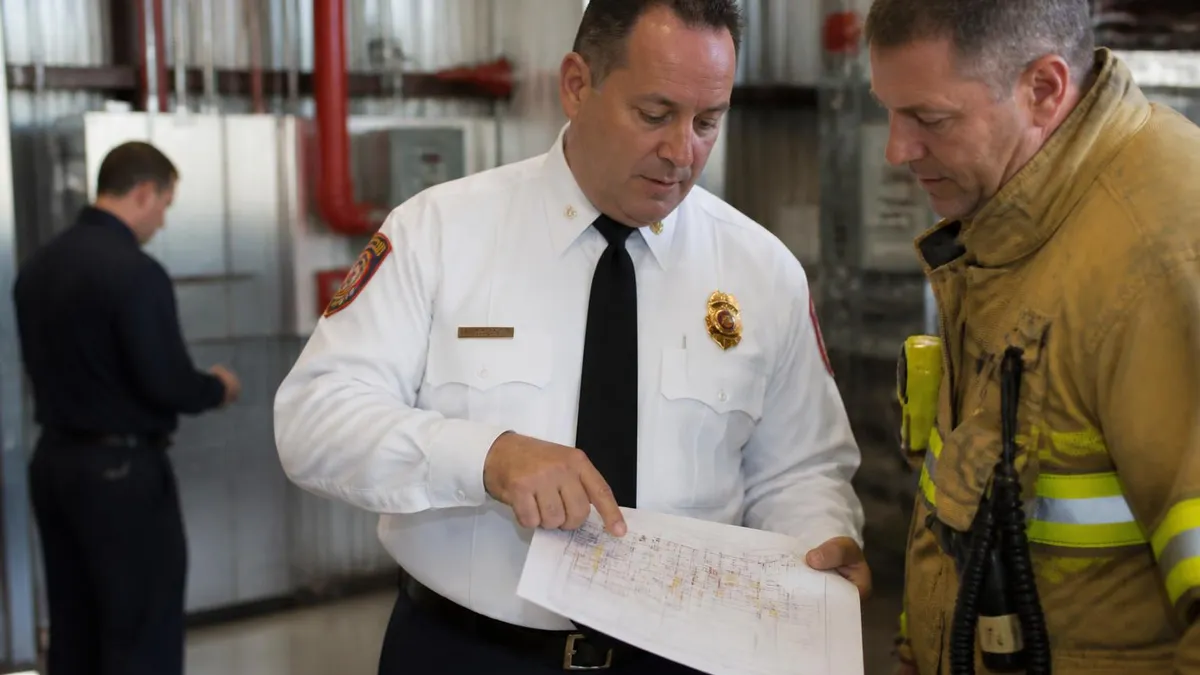
FLSD Meaning: What a Fire Life Safety Director Is and How to Get Licensed
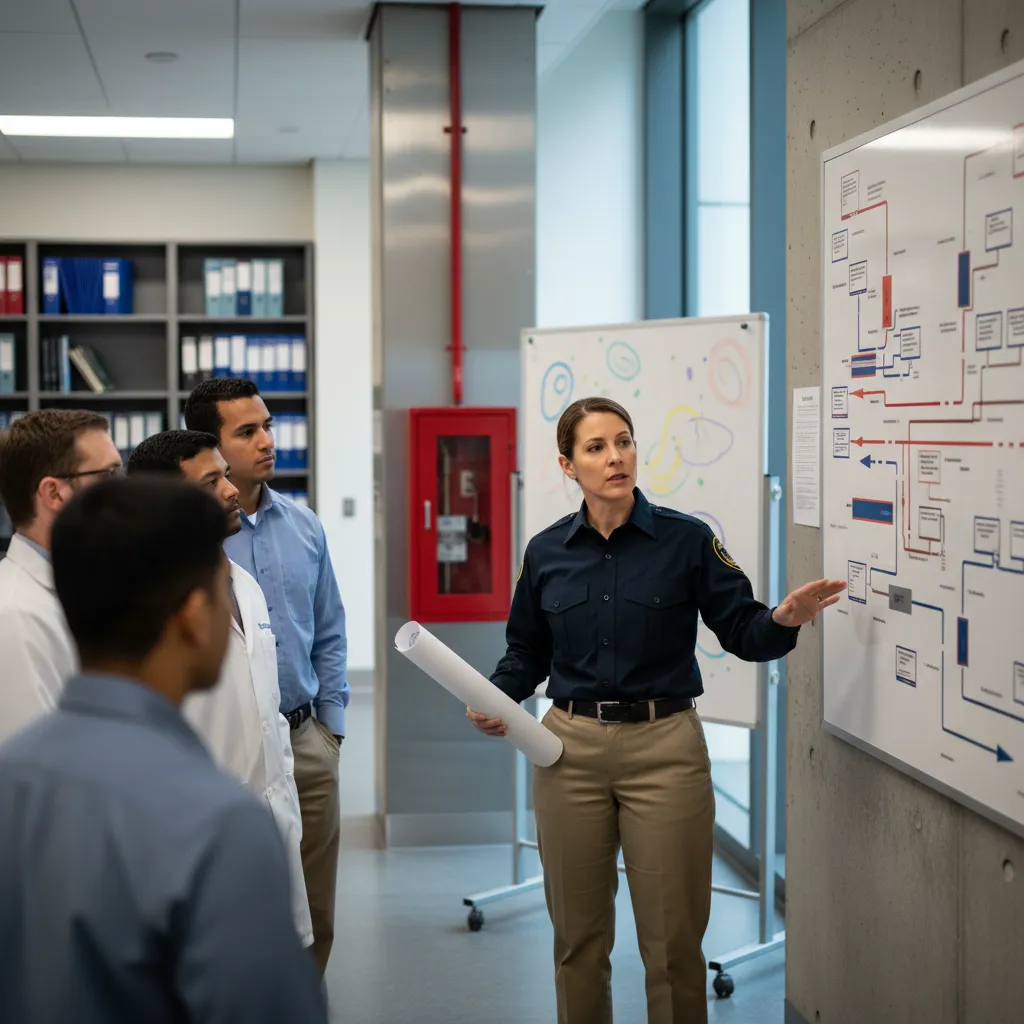
How to Pass the FLSD Exam in 2026 — Complete Study Guide
FLSD Practice Test Video Answers
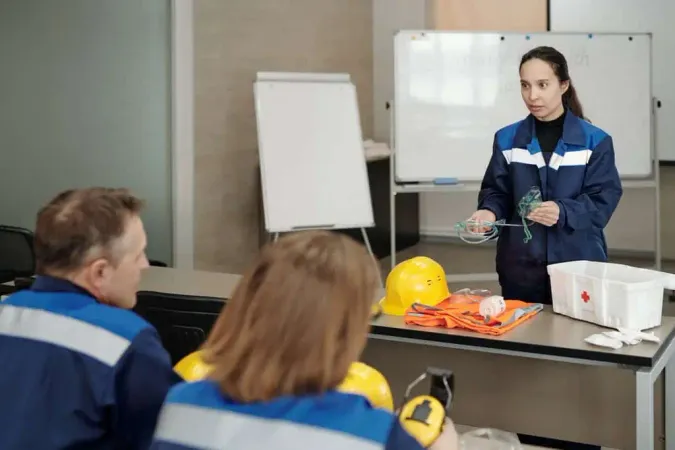
FLSD Training: 7 Essential Tips to Know
About the Author

Educational Psychologist & Academic Test Preparation Expert
Columbia University Teachers CollegeDr. Lisa Patel holds a Doctorate in Education from Columbia University Teachers College and has spent 17 years researching standardized test design and academic assessment. She has developed preparation programs for SAT, ACT, GRE, LSAT, UCAT, and numerous professional licensing exams, helping students of all backgrounds achieve their target scores.
Join the Discussion
Connect with other students preparing for this exam. Share tips, ask questions, and get advice from people who have been there.
Start the conversation