
FDNY Memorial: Honoring the Fallen Heroes of New York City's Bravest
Explore the FDNY memorial traditions, fallen firefighter tributes, and how NYC honors its bravest. 🏆 Learn the history, locations, and legacy.

The FDNY memorial stands as one of the most powerful and emotionally resonant tributes in New York City, honoring the thousands of firefighters who gave their lives in service to their communities. Since the Fire Department of New York was formally established in 1865, more than 1,100 members have made the ultimate sacrifice — a number that etched itself permanently into the American consciousness after the September 11, 2001 terrorist attacks, when 343 FDNY members perished in a single morning.
Understanding what the memorial represents matters deeply for anyone connected to the department, whether as an aspiring firefighter, a family member, or an informed citizen. Those preparing for the fdny memorial and related department knowledge sections will find this history both moving and essential.
New York City has built its firefighting tradition on the shoulders of those who came before, and the various memorials scattered across the five boroughs serve as permanent reminders of that debt. The most recognized FDNY memorial sites include the FDNY Memorial Wall at MetroTech Center in Brooklyn, the Firefighters Memorial on Riverside Drive in Manhattan, and the numerous station-house plaques that catalog every fallen member by name, rank, and date of death.
These physical spaces function as sanctuaries of remembrance, where current firefighters, retirees, and civilians gather to reflect on the cost of public safety and the extraordinary bravery that defines the department's culture.
The tradition of memorializing fallen firefighters in New York predates the Civil War, but the modern system of formal tributes took shape gradually through the late nineteenth and early twentieth centuries. Early firefighters were often volunteers from local neighborhoods, and when one died in the line of duty, the community would organize modest ceremonies to honor their service.
As the department professionalized and grew into one of the largest municipal fire agencies in the world, those informal traditions evolved into structured protocols that today govern everything from funeral honors and widow benefits to annual memorial ceremonies attended by the fire commissioner, the mayor, and thousands of uniformed members.
Beyond the physical monuments, the FDNY memorial tradition encompasses a rich set of cultural practices that keep the memory of fallen members alive within the department itself. Firehouses often display portrait photographs of members killed in the line of duty, and it is common for companies to informally adopt the nickname or call sign of a deceased colleague as a way of keeping their spirit present in daily operations.
Some companies go further, dedicating equipment, apparatus, or entire apparatus bays to the memory of specific members whose courage or sacrifice was particularly exceptional. These informal tributes complement the official memorials and reinforce the department's deeply held belief that no member is ever truly gone as long as their story is remembered and told.
The September 11 attacks transformed every aspect of how the FDNY approaches memorialization. Before 2001, the department had lost members at a pace that was tragic but manageable within existing ceremonial frameworks — typically between two and ten line-of-duty deaths per year.
The loss of 343 members in a single event shattered that framework entirely and forced the department, the city, and the nation to develop new rituals and new institutions capable of honoring a grief that was simultaneously collective and intensely personal. The FDNY's response to 9/11 set a new standard for how fire departments across the country approach the memory of fallen members, and the lessons learned from that experience continue to shape memorial practices two decades later.
Understanding the geography of FDNY memorial sites helps visitors and aspiring department members appreciate the full scope of the tribute network. The MetroTech Memorial Wall in downtown Brooklyn, unveiled in 2006, features the names of every FDNY member who died in the line of duty from 1865 through the present, with space reserved for future additions.
The Firefighters Memorial on Riverside Drive at 100th Street, created by sculptor Attilio Piccirilli and dedicated in 1913, depicts allegorical figures representing duty, sacrifice, and mourning. Each site speaks a slightly different language of grief and honor, together composing a citywide conversation about what it means to serve and to lose.
For those studying to join the FDNY, familiarity with the department's memorial culture is not merely a matter of historical knowledge — it is an introduction to the values that will govern their professional lives. The willingness to honor fallen comrades, to keep their memories alive, and to carry forward the traditions they upheld is part of what distinguishes a firefighter from any other public servant.
Every candidate who passes through the hiring process and earns a place in the department becomes a steward of that memorial tradition, responsible for adding their own chapter to a story that has been unfolding for more than 160 years.
FDNY Memorial by the Numbers

Key FDNY Memorial Sites in New York City
Unveiled in 2006, this granite wall lists every FDNY member killed in the line of duty from 1865 to the present. Located near the department's headquarters, it serves as the primary official tribute site and hosts the annual memorial ceremony each June.
Dedicated in 1913 and sculpted by Attilio Piccirilli, this landmark monument at 100th Street features allegorical bronze figures representing sacrifice and mourning. It is one of the oldest firefighter tributes in the United States and remains a pilgrimage site for the fire service community.
The FDNY Fire Zone visitor center in Midtown Manhattan includes a dedicated memorial section with artifacts, photographs, and accounts from 9/11 and other major incidents. Educational programming makes it accessible to school groups, tourists, and prospective firefighters.
Every FDNY firehouse maintains internal tributes to members who served in that company and were killed in the line of duty. These plaques, photographs, and dedicated apparatus bays form a decentralized memorial network that spans all five boroughs and more than 250 firehouses.
The history of FDNY memorialization stretches back to the department's earliest days as a professional organization, though its roots lie even deeper in the culture of the volunteer companies that preceded formal municipal fire service. When New York City transitioned from a volunteer to a paid department in 1865, it inherited a set of informal mourning practices that volunteers had developed over decades — practices centered on communal gathering, public procession, and the public recognition of sacrifice. These traditions were adapted and formalized over the following decades as the department grew and the city changed around it.
The late nineteenth century saw the first formal efforts to create permanent physical memorials to fallen firefighters. Local fire companies would sometimes commission plaques or portraits to hang in their quarters, and newspapers of the era gave prominent coverage to firefighter funerals, helping to establish the public narrative of the heroic fallen fireman that persists to this day. The formation of the Uniformed Firefighters Association in 1917 provided an institutional framework for advocating on behalf of fallen members' families and for organizing more systematic memorial practices across the department as a whole.
The early twentieth century brought both tragedy and progress on the memorialization front. The Triangle Shirtwaist Factory fire of 1911, which killed 146 garment workers rather than firefighters, nonetheless galvanized public awareness about workplace danger and reinforced the cultural importance of honoring those who respond to catastrophic fires.
That same era saw the construction of the Riverside Drive Firefighters Memorial, which was dedicated in 1913 after a years-long campaign by firefighter advocacy groups. The monument's unveiling drew thousands of spectators and was covered extensively by the New York press, marking a turning point in how the city publicly acknowledged firefighter sacrifice.
During the mid-twentieth century, the FDNY developed more systematic protocols for handling line-of-duty deaths, including standardized funeral procedures, benefit payments for surviving family members, and the formal recognition of members killed in the line of duty through departmental orders and official records. The creation of the FDNY Foundation in 1983 provided a philanthropic vehicle that would eventually support memorial projects, survivor assistance programs, and educational initiatives honoring fallen members. These institutional developments helped professionalize memorialization in a way that matched the department's growing size and complexity.
The 1990s brought a series of devastating fires that tested the department's resilience and its memorial practices. The Father's Day fire of 1994 at Watts Street in Manhattan killed three firefighters and injured dozens more, prompting an extensive departmental review of operational safety and a renewed commitment to honoring line-of-duty deaths with appropriate ceremony. Each significant incident of that decade added new names to the department's growing catalog of fallen members and reinforced the importance of maintaining robust memorial traditions that could accommodate grief at scale.
When September 11, 2001 arrived, the FDNY was better prepared institutionally to handle mass casualty grief than it might have been a generation earlier — but no preparation could have fully anticipated the loss of 343 members in a single morning. The department's response demonstrated both the strength of its existing memorial culture and the limitations of any framework built to handle normal-scale tragedy.
In the months and years that followed, the FDNY worked with city government, federal agencies, private donors, and the families of the fallen to develop new memorial institutions, including the permanent memorial at the World Trade Center site, expanded support services for widows and children, and annual ceremonies that draw tens of thousands of participants.
Today, the FDNY's approach to memorialization reflects more than 150 years of accumulated tradition, institutional learning, and cultural evolution. The department maintains detailed records of every line-of-duty death, publishes annual reports on firefighter safety and fatalities, and participates in the National Fallen Firefighters Foundation's programs, which provide a broader framework for honoring fire service members lost across the country. For anyone seeking to understand the full depth of the FDNY's institutional character, studying its memorial history is as important as studying its operational procedures and organizational structure.
September 11 and the FDNY Memorial Legacy
On September 11, 2001, the FDNY responded to the World Trade Center attacks with virtually every available resource in the department. Firefighters from across all five boroughs converged on Lower Manhattan within minutes of the first plane strike, climbing stairwells in the North and South Towers in an effort to evacuate civilians and fight fires on upper floors. When the towers collapsed, 343 FDNY members — including the fire chief, a chaplain, and members from nearly every rank — were killed instantly or fatally injured. It remains the single largest loss of life for any emergency services organization in a single incident in American history.
The immediate aftermath required the department to simultaneously manage the ongoing rescue and recovery operation at Ground Zero, support thousands of grieving family members, and begin the process of replacing the personnel it had lost. Chief officers who survived led their diminished companies through weeks of 24-hour shifts at the site. The department's peer support and counseling programs, already well-developed before 9/11, were activated at unprecedented scale to address the psychological trauma that touched virtually every member of the department's more than 17,000-person workforce.

Visiting FDNY Memorial Sites: What to Expect
- +Free and open to the public year-round, making tribute accessible to all visitors
- +Multiple locations across all five boroughs ensure geographic accessibility
- +Educational signage and exhibits provide rich historical context for each site
- +Annual ceremonies offer opportunities to witness living memorial traditions firsthand
- +Proximity to other NYC landmarks makes combining memorial visits with broader itineraries easy
- +Staff and volunteer guides at major sites can answer questions and share personal stories
- −Emotionally intense environments that may be overwhelming for some visitors, especially children
- −The 9/11 Memorial Museum charges an admission fee that may be prohibitive for some families
- −Crowding at the World Trade Center site can make quiet contemplation difficult during peak hours
- −Some station-house tributes are not accessible to the public without prior arrangement
- −Limited parking near most urban memorial sites requires use of public transportation
- −Ceremonial events may close public areas temporarily and require advance planning to attend
How to Pay Your Respects at FDNY Memorial Sites
- ✓Visit the FDNY Memorial Wall at MetroTech Center in Brooklyn during daylight hours for the best viewing experience.
- ✓Bring a printed list of names you wish to find; the wall contains more than 1,100 entries and can be difficult to navigate without preparation.
- ✓Check the FDNY website or NYC Parks calendar for the annual June memorial ceremony date and register to attend if required.
- ✓Plan your visit to the 9/11 Memorial with timed entry tickets booked in advance, especially during summer and September.
- ✓Dress respectfully when visiting any FDNY memorial site; casual but neat attire is appropriate for most locations.
- ✓Photograph respectfully and silently at memorial walls — avoid selfies or disruptive behavior near name panels.
- ✓Contact your local FDNY firehouse in advance if you wish to visit an in-house tribute or station-house plaque.
- ✓Bring flowers or small mementos to leave at outdoor memorial sites, where such tributes are welcomed and periodically collected by the department.
- ✓Volunteer with the FDNY Foundation or a firefighter survivor support organization to honor fallen members through active service.
- ✓Consider donating to the FDNY Widows and Children's Fund, which provides direct financial support to surviving family members of line-of-duty deaths.
343 Names — The Largest Single-Day Loss in Fire Service History
The 343 FDNY members killed on September 11, 2001 represented approximately 2% of the department's entire uniformed workforce at the time — the equivalent of losing every firefighter in a mid-sized American city in a single morning. This staggering loss reshaped not only the FDNY's memorial culture but the entire American fire service's approach to honoring fallen members and supporting their families.
When an FDNY member dies in the line of duty, the department activates a formal protocol that balances operational continuity with deep respect for the fallen member and their family. The process begins within hours of a confirmed line-of-duty death, with the fire commissioner and department chaplains notifying the family in person. A Casualty Assistance Officer is assigned to the family immediately, serving as a single point of contact for navigating the complex logistics of funeral arrangements, benefit claims, and institutional support in the days and weeks that follow.
Funeral honors for a fallen FDNY member are extensive and carefully choreographed. The department provides a formal funeral escort, including ladder truck and engine company apparatus, uniformed pallbearers, and ceremonial units. The FDNY Pipes and Drums plays at the graveside service, a tradition that has become one of the most emotionally recognizable elements of the firefighter funeral ceremony.
The playing of taps, the folding and presentation of an American flag to the next of kin, and the ringing of a bell four times in a pattern known as the four fives — once a telegraph code signaling a firefighter's death — are all part of the standardized ritual that the department performs for every member killed in the line of duty regardless of rank or tenure.
The financial support provided to surviving family members is substantial and comes from multiple sources. The federal Public Safety Officers' Benefits Act provides a one-time payment to the families of firefighters killed in the line of duty, a benefit that has been adjusted periodically by Congress to keep pace with inflation and currently provides more than $400,000 per death.
New York City adds its own survivor benefits through the city pension system, and private organizations including the FDNY Foundation, the Uniformed Firefighters Association Widows and Children's Fund, and numerous community-based groups provide additional financial and emotional support to surviving spouses and children.
Line-of-duty deaths in the FDNY are investigated thoroughly by the department's safety division, with findings used to update training, equipment, and operational procedures in an effort to prevent similar deaths in the future. These investigations represent one of the most practical ways in which the memory of fallen members directly improves outcomes for those who follow them.
When a firefighter dies because of a structural collapse, a hazardous materials exposure, or a cardiac event, the department's investigation seeks to understand not just what happened in that specific incident but what systemic changes could reduce the likelihood of similar tragedies occurring again.
The role of the chaplain corps in supporting families of fallen members is central to the FDNY's memorial culture. The department maintains a corps of chaplains drawn from Catholic, Protestant, Jewish, and Muslim traditions, ensuring that spiritual support is available to members and families from diverse backgrounds.
The chaplains who responded to the World Trade Center on September 11, 2001 — including Father Mychal Judge, who was killed that morning and became the first certified fatality of the attacks — embody the integration of spiritual support into the department's operational culture. Father Judge's death and his subsequent recognition as a symbol of selfless service added another layer of meaning to the department's memorial traditions.
The FDNY's relationship with the families of fallen members does not end with the funeral. The department maintains ongoing contact with surviving spouses and children through the FDNY Widows and Children's Fund, which organizes holiday events, summer programs for children, and annual gatherings that allow families to maintain connections with each other and with the department.
These continuing relationships help ensure that the families of fallen members never feel abandoned once the immediate period of mourning has passed, and they reinforce the department's commitment to treating every fallen member as a permanent part of the FDNY family rather than a historical footnote.
For aspiring firefighters, understanding line-of-duty death protocols serves a dual purpose. On a practical level, it provides important information about the protections and benefits that come with the job — knowledge that candidates should factor into their decision to pursue a firefighting career. On a deeper level, it conveys the department's fundamental values: that every member matters, that sacrifice is recognized and honored, and that the bonds of brotherhood and sisterhood forged in the firehouse extend beyond death. These values are not abstract ideals but active commitments that shape daily life within the department.

The FDNY holds its primary annual memorial ceremony each June at the Memorial Wall in MetroTech Center, Brooklyn. The event is open to the public but may require registration in advance. Check the official FDNY website or the FDNY Foundation's event calendar for the current year's date, time, and any attendance requirements before planning your visit.
The FDNY memorial culture has a direct and meaningful relationship to the experience of candidates preparing to join the department. Understanding what the memorials represent — and why they matter so deeply to current members — helps candidates develop the mindset and professional identity that will serve them throughout a firefighting career. This is not a matter of rote knowledge to be memorized for an exam but a genuine orientation toward the values and traditions that define the FDNY as an institution. Candidates who approach this material with curiosity and respect are already developing the qualities that make excellent firefighters.
The FDNY's entrance examination and hiring process do not typically include direct questions about specific memorial sites or line-of-duty death statistics. However, knowledge of the department's history, structure, and culture appears throughout the written exam, physical performance test, and background investigation process. Candidates who have invested time in learning about the department's memorial traditions will find that this knowledge enriches their understanding of departmental hierarchy, unit cohesion, and the psychological demands of firefighting — all of which are relevant to exam performance and interview success.
Community engagement and public education — areas covered extensively in the FDNY's written examination curriculum — are deeply connected to the memorial tradition. Firefighters who educate their communities about fire safety are working to prevent the kinds of incidents that kill both civilians and firefighters.
When a firefighter visits a school to teach children about smoke alarm maintenance, or when a company hosts a fire safety demonstration for a neighborhood block association, they are participating in a preventive mission that is ultimately about saving lives — including the lives of their fellow firefighters. Understanding this connection gives candidates a richer motivation for community engagement work than the exam alone can provide.
The psychological dimensions of the memorial culture are also relevant to candidate preparation. Firefighting is a profession with significant exposure to traumatic events, including the deaths of colleagues. Departments across the country have invested heavily in peer support programs, critical incident stress management protocols, and access to mental health services precisely because the cumulative effect of grief and trauma can be devastating without appropriate support. Candidates who understand this reality going in are better positioned to seek help when they need it and to support their fellow firefighters when others are struggling.
Leadership within the FDNY is shaped in important ways by the department's relationship with its memorial traditions. Officers who have served through major incidents and line-of-duty deaths bring a particular gravity and intentionality to their leadership roles that newer members observe and learn from. The annual memorial ceremonies, the informal firehouse tributes, and the stories passed down from senior to junior members all function as leadership development experiences — teaching the department's values through narrative and ritual rather than through formal instruction alone.
Those who wish to honor the FDNY memorial tradition in a practical way can begin long before they enter the department. Volunteering with organizations that support firefighter families, attending public memorial ceremonies, learning the history of significant fires and incidents in New York City's history, and advocating for policies that improve firefighter safety and survivor benefits are all meaningful ways to demonstrate commitment to the values the memorial represents. For exam candidates, this kind of engaged preparation also signals to interview panels and background investigators that the applicant understands the full weight of the commitment they are making.
Ultimately, the FDNY memorial is not a single place or a single moment — it is an ongoing practice of remembrance that every member of the department participates in every day.
It is present in the photographs on the firehouse wall, in the bell rung four times at a funeral, in the name read aloud at the June ceremony, and in the quiet moment a firefighter pauses to think about the colleague whose locker once hung next to theirs. For anyone aspiring to join this department, learning to carry that tradition forward is as important as passing any written test or physical examination.
Preparing for the FDNY entrance process requires a multi-layered approach that combines physical conditioning, written exam study, and genuine engagement with the department's history and culture. The memorial tradition we have explored in this article is one window into that culture, but it connects to many other aspects of the FDNY experience that candidates should understand. Building construction, fire behavior, community engagement, emergency medical procedures, and departmental structure are all areas tested on the written exam, and each is enriched by an understanding of the real incidents and real losses that shaped how the department approaches those subjects today.
The physical performance test is among the most demanding elements of the FDNY hiring process and requires sustained preparation over months or years. Candidates should develop a training regimen that builds functional strength, cardiovascular endurance, and the kind of work-specific fitness that firefighting demands — the ability to climb stairs in full gear, drag hose loads, carry heavy equipment, and perform rescue maneuvers under physical stress. Connecting this physical preparation to the broader mission of the department, including the memorial tradition, helps candidates sustain motivation through the inevitable difficult training sessions and setbacks.
The background investigation component of the FDNY hiring process is thorough and consequential. Candidates are expected to demonstrate integrity, reliability, community ties, and a genuine commitment to public service. Familiarity with the department's history and values — including its approach to honoring fallen members — contributes to a compelling background narrative. Investigators are looking for candidates who understand what they are signing up for, and a candidate who can speak knowledgeably about the department's memorial culture and the sacrifices it represents is demonstrating exactly that kind of understanding.
Study groups and mentorship relationships are valuable tools for FDNY exam preparation. Connecting with current or retired FDNY members, joining firefighter candidate preparation programs offered by community organizations, or participating in the department's own outreach and recruitment events can provide both practical exam preparation and an introduction to the departmental culture that the memorial tradition embodies. These personal connections are among the most effective ways to develop the sense of belonging and purpose that sustains firefighters through the most challenging aspects of the job.
The written examination tests a broad range of knowledge, from map reading and mechanical aptitude to reading comprehension and arithmetic. None of these subjects is particularly exotic, but the exam rewards candidates who have genuinely prepared across all domains rather than focusing narrowly on one or two areas. Practice tests are among the most effective preparation tools available, because they help candidates develop the test-taking stamina, time management skills, and familiarity with question formats that are essential for performing well under exam conditions.
As you prepare for the FDNY entrance process, keep the memorial tradition in mind not as a source of anxiety but as a source of purpose. The names on the MetroTech Memorial Wall, the photographs in the firehouses, the names read aloud each June — these are the stories of people who chose the same path you are considering.
They faced the same written exams, the same physical tests, the same background investigations, and they found in the FDNY a career of profound meaning and genuine brotherhood and sisterhood. The memorial tradition says: we remember those who came before, we take seriously what they gave, and we commit to carrying forward the values they embodied. That is as good a statement of purpose for an FDNY candidate as any mission statement the department has ever formally adopted.
Whether you are visiting a memorial site for the first time, studying for the written examination, or simply seeking to understand what it means to be part of New York City's Bravest, the FDNY memorial tradition offers an honest and moving account of what the department stands for. It is a tradition worth knowing, worth honoring, and — for those who earn a place in the department — worth carrying forward into every call, every shift, and every year of a firefighting career that will one day become part of the same long story.
FDNY Questions and Answers
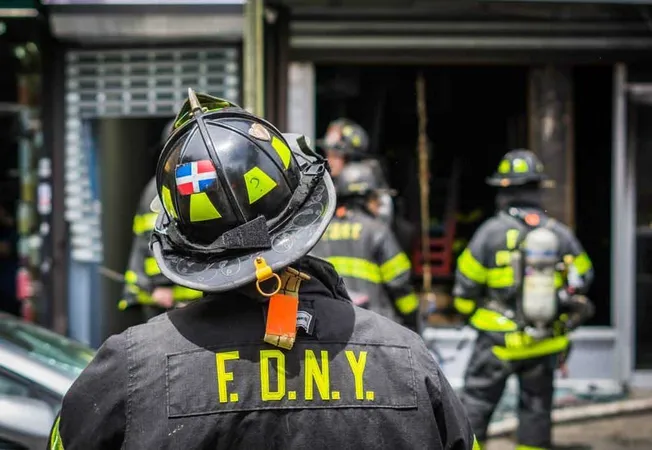
FDNY (Fire Department New York) Test: Your Guide
FDNY vs NYPD Hockey Game: Inside New York's Bravest vs Finest Heroes on Ice Rivalry

FDNY Podcast September 2025: Your Complete Guide to the Department's Audio Content

FDNY Battalion: Structure, Roles, and What Every Aspiring Firefighter Should Know
FDNY Rescue Companies: Inside Rescue 4 and New York City's Elite Special Operations Units
About the Author
Law Enforcement Trainer & Civil Service Exam Specialist
John Jay College of Criminal JusticeMarcus B. Thompson earned his Master of Arts in Criminal Justice from John Jay College of Criminal Justice and served 12 years as a law enforcement officer before transitioning to full-time academy instruction. He is a POST-certified instructor who has prepared candidates for police entrance exams, firefighter assessments, and civil service examinations across dozens of agencies.
Join the Discussion
Connect with other students preparing for this exam. Share tips, ask questions, and get advice from people who have been there.
View discussion (9 replies)