
FDNY Battalion: Structure, Roles, and What Every Aspiring Firefighter Should Know
Learn how an FDNY battalion works, what battalion chiefs do, and how the department is organized. 🎯 Complete guide for FDNY exam prep.

The FDNY battalion is the fundamental operational building block of the Fire Department of New York, one of the largest and most respected firefighting organizations in the world. Each battalion groups together several engine and ladder companies under the command of a battalion chief, creating a coordinated response unit capable of managing complex, multi-alarm incidents across New York City's five boroughs. Understanding how battalions work is essential not just for those already serving in the department, but also for anyone preparing for the FDNY entrance exam and hoping to build a career in fire service.
New York City is divided into nine divisions, each of which oversees multiple battalions. In total, the FDNY operates 64 battalions spread across Brooklyn, Manhattan, Queens, the Bronx, and Staten Island. This geographic distribution ensures that every neighborhood in the city has rapid, professional fire response available around the clock, every single day of the year. The battalion structure allows the department to scale its response efficiently, committing the right number of resources to each incident based on size and complexity.
A typical FDNY battalion consists of three to five fire companies, usually a mix of engine companies and ladder companies. Engine companies handle water supply and hose operations, while ladder companies perform search and rescue, ventilation, and forcible entry. Together, these units form a balanced team under battalion-level supervision. The battalion chief coordinates their actions at the scene, directing resources, calling for additional alarms, and communicating with division and department command as needed.
Battalion chiefs are among the most experienced and tested leaders in the FDNY. To reach this rank, a firefighter must pass a competitive civil service examination, accumulate significant field experience, and demonstrate strong leadership under pressure. The promotional path is rigorous and highly competitive, reflecting the enormous responsibility these officers carry. A battalion chief arriving at a major fire must rapidly assess conditions, account for civilian life safety, and commit companies in a tactically sound sequence that protects both residents and firefighters.
The FDNY's battalion system has evolved over more than 150 years of continuous operation. As the city grew from a small colonial port into a global metropolis, the department expanded and reorganized its geographic command structure to keep pace with population density, building types, and emerging hazards. Modern battalions must be prepared not only for traditional structural fires but also for hazardous materials incidents, water rescues, building collapses, and mass casualty events that require coordinated multi-agency response.
For candidates preparing for the fdny battalion exam and broader FDNY entrance testing, a solid understanding of the department's organizational structure is genuinely valuable. Exam questions frequently touch on chain of command, the roles of different company types, and the principles of incident command that govern how fires are managed. Knowing how battalions fit into the larger departmental picture gives test-takers important context that makes individual facts easier to remember and apply.
This guide walks through everything you need to know about FDNY battalions: their geographic layout, the role of the battalion chief, how companies within a battalion operate together, the promotional structure, and what all of this means for your exam preparation. Whether you are a prospective recruit trying to understand the department you hope to join, or a student looking to score higher on a knowledge-based practice test, this article provides the depth and detail you need to succeed.
FDNY Battalions by the Numbers

How FDNY Battalions Are Organized Across New York City
Manhattan hosts some of the FDNY's busiest battalions, including those covering Midtown, Harlem, and Lower Manhattan. High-rise density and enormous daytime population make Manhattan battalions among the most operationally demanding in the country.
Brooklyn has the highest number of FDNY fire companies of any borough, served by numerous battalions covering everything from dense brownstone neighborhoods to industrial waterfronts. Multiple battalions regularly respond together to multi-alarm incidents.
Queens battalions cover a geographically large borough with a mix of residential neighborhoods, commercial corridors, and JFK Airport. The diversity of building stock requires companies trained in multiple tactical approaches.
The Bronx has historically seen some of the highest fire call volumes in the city. Battalions here respond to dense residential areas, large public housing complexes, and commercial districts, requiring high operational tempo.
Staten Island battalions cover suburban-style residential areas along with coastal zones susceptible to weather-related emergencies. While call volume is lower, companies still train to the same FDNY-wide standards and tactical protocols.
The battalion chief is the first-line supervisor who commands all fire companies assigned to a given battalion. When a company responds to an alarm, the battalion chief is often simultaneously dispatched, arriving early enough to assume command, size up conditions, and begin directing operations before additional units arrive. This rapid command presence is one of the defining features of the FDNY's operational system and a major reason the department is able to manage complex fires in some of the world's most challenging urban environments.
At the scene of a structural fire, the battalion chief's primary responsibilities include performing a thorough size-up, establishing an incident command post, and deploying engine and ladder companies in tactically sound positions. Size-up means rapidly gathering information about building construction, fire location and extent, occupancy type, life hazard, and access conditions. From that assessment, the chief makes the initial strategic decision: offensive attack, defensive operations, or a transitional approach that starts inside and shifts to exterior as conditions change.
Battalion chiefs also bear responsibility for the safety of their personnel. The FDNY's Incident Command System, aligned with the national ICS framework, requires the battalion chief to maintain accountability for every firefighter operating on the fireground. This means tracking which companies are inside the building, what tasks they are performing, how long they have been operating, and whether conditions suggest they need to be withdrawn. In a rapidly deteriorating situation, the battalion chief must make the call to pull crews out before a collapse or flashover occurs.
Communication is another critical dimension of the battalion chief's role. During an active incident, the chief is simultaneously communicating with company officers inside the building, the dispatcher relaying additional resources, and higher command (division chief or deputy chief) who may be en route or monitoring remotely. Clear, concise radio traffic under stress is a skill that takes years to develop and is tested rigorously as part of the promotional process for candidates seeking the battalion chief rank.
Beyond the fireground, battalion chiefs handle administrative and supervisory functions within their geographic area. They conduct building inspections in conjunction with the Bureau of Fire Prevention, review fire incident reports submitted by company officers, and mentor junior officers and firefighters under their command. They are also responsible for ensuring that their companies meet training standards, maintain apparatus and equipment, and remain operationally ready at all times. This administrative load is substantial and often invisible to the public.
The rank of battalion chief sits at a pivotal point in the FDNY's promotional hierarchy. Below the battalion chief are the company officer ranks: lieutenant and captain. Above the battalion chief are division chiefs and deputy chiefs, who supervise multiple battalions and handle larger strategic decisions during major incidents or emergencies. Understanding this chain of command is directly relevant to FDNY exam preparation, as many test questions are built around scenarios that require candidates to understand who reports to whom and how authority flows during an emergency response.
For candidates studying the organizational structure of the department, it helps to think of the battalion as the city's basic fire response unit. Just as a military battalion groups companies into a coherent fighting force under a commanding officer, the FDNY battalion groups fire companies under a chief who can coordinate their actions in real time. This analogy makes the structure intuitive and easier to remember when answering exam questions under time pressure.
FDNY Battalion Operations: Engine, Ladder, and Rescue Companies
Engine companies are the primary water delivery units of the FDNY. When assigned to a battalion, their core mission is to stretch hose lines from a water source — typically a fire hydrant — to the seat of the fire. Each engine carries hundreds of feet of hose in various diameters, specialized nozzles, and a pump capable of delivering hundreds of gallons per minute. The engine officer determines hose stretch strategy based on building layout, fire location, and the battalion chief's tactical plan.
Inside the fire building, the engine crew advances the hose line toward the fire, maintaining water flow to knock down flames and protect the path of egress for occupants trying to escape. Engine firefighters must understand fire behavior, building construction, and the hydraulics that govern water pressure and flow. Their work is physically demanding, often performed in zero-visibility conditions with temperatures exceeding several hundred degrees. In a typical battalion, multiple engine companies may be committed simultaneously, each assigned to a different floor, wing, or exposure building.

Is Pursuing a Battalion Chief Rank Worth It? Pros and Cons
- +Significant increase in base salary compared to firefighter and lieutenant ranks
- +Greater authority and responsibility over multiple fire companies
- +Direct impact on fireground outcomes and firefighter safety decisions
- +Leadership role in mentoring and developing junior officers and firefighters
- +High job security as a civil service position in one of the country's largest departments
- +Prestige and professional respect within the fire service community
- −Highly competitive promotional exam with a large pool of qualified candidates
- −Substantial study commitment required over many months to prepare effectively
- −Increased administrative workload in addition to operational fireground duties
- −Greater personal accountability when incidents go wrong or firefighters are injured
- −Longer hours and on-call expectations at the battalion level
- −Years of field experience required before eligibility, making it a long-term goal
Pros and Cons at a Glance
| Pros | Cons |
|---|---|
| Significant increase in base salary compared to firefighter and lieutenant ranks | Highly competitive promotional exam with a large pool of qualified candidates |
| Greater authority and responsibility over multiple fire companies | Substantial study commitment required over many months to prepare effectively |
| Direct impact on fireground outcomes and firefighter safety decisions | Increased administrative workload in addition to operational fireground duties |
| Leadership role in mentoring and developing junior officers and firefighters | Greater personal accountability when incidents go wrong or firefighters are injured |
| High job security as a civil service position in one of the country's largest departments | Longer hours and on-call expectations at the battalion level |
| Prestige and professional respect within the fire service community | Years of field experience required before eligibility, making it a long-term goal |
FDNY Battalion Exam Prep Checklist
- ✓Study the FDNY's 9-division, 64-battalion geographic structure and know which boroughs each division covers.
- ✓Memorize the difference between engine company functions and ladder company functions at a structural fire.
- ✓Learn the chain of command from firefighter through lieutenant, captain, battalion chief, division chief, and deputy chief.
- ✓Understand the Incident Command System (ICS) and how it applies to FDNY multi-company operations.
- ✓Review building construction types (Type I through Type V) and how each affects fire spread and tactical approach.
- ✓Practice fireground scenario questions that ask you to allocate companies and prioritize tactical objectives.
- ✓Study the roles of the Bureau of Fire Prevention and how battalion chiefs interact with inspection duties.
- ✓Learn how mutual aid and multi-alarm assignments work and when a battalion chief can request additional resources.
- ✓Review FDNY standard operating procedures for high-rise fires, since NYC has a uniquely dense high-rise environment.
- ✓Take timed practice tests to build speed and accuracy under exam conditions before your test date.
Battalion Structure Questions Are High-Frequency on the FDNY Exam
Organizational structure and chain of command questions appear consistently across FDNY promotional examinations. Candidates who understand how battalion chiefs relate to division chiefs above them and company officers below them consistently outperform those who focus only on tactical procedures. Spend at least 20% of your study time on organizational knowledge — it delivers outsized returns on exam day.
The path to becoming an FDNY battalion chief begins long before any promotional exam is announced. The foundational step is becoming a firefighter, which itself requires passing the competitive FDNY entrance exam, completing a rigorous physical ability test, and graduating from the FDNY Fire Academy — a several-month training program that is widely considered one of the most demanding in American fire service. Only candidates who clear all these hurdles earn a place in a firehouse and begin accumulating the field experience that the promotional path requires.
After serving as a firefighter for a minimum number of years, candidates become eligible to sit for the lieutenant's exam. The lieutenant's exam is the first promotional test in the FDNY's civil service hierarchy and is known for its demanding material on fire tactics, building construction, department regulations, and emergency medical procedures. Candidates who pass and are promoted to lieutenant command a single fire company, typically four to six firefighters on a given tour. This is where most officers gain the hands-on command experience that forms the foundation for future promotional advancement.
From lieutenant, the next step is captain. The captain's exam builds on the lieutenant's exam material but adds more complex scenario-based questions and deeper administrative content. Captains typically command a company more permanently than lieutenants, who may be assigned to different units as vacancies require. Captains are also expected to take on greater mentorship responsibilities, preparing their most promising firefighters and lieutenants for their own promotional journeys. The time between making lieutenant and being eligible for the captain's exam varies based on the department's promotional schedule and civil service rules.
The battalion chief's exam represents a significant step up in both scope and difficulty. Candidates must demonstrate mastery not just of individual company operations but of multi-company coordination, resource management, personnel accountability, and strategic decision-making at the incident command level. The exam typically includes both a written component and an oral or practical component that simulates real fireground command scenarios. Study groups, mentorship from active battalion chiefs, and extensive use of FDNY training bulletins are all common preparation strategies among serious candidates.
Once promoted to battalion chief, officers begin a probationary period during which they work alongside experienced chiefs to develop their command skills in real operational settings. The FDNY provides formal training for newly promoted battalion chiefs, including tabletop exercises, high-rise fire simulations, and multi-agency coordination drills. This investment in leadership development reflects the department's recognition that command competence is not fully developed through examinations alone — it requires supervised practice in realistic, high-pressure environments.
Career advancement beyond battalion chief leads to division chief, then deputy chief, then assistant chief, and ultimately the position of Chief of Department — the highest uniformed rank in the FDNY. Each of these levels involves additional competitive examinations and increasingly broad responsibilities. A division chief, for example, may supervise eight to twelve battalions and be responsible for operational readiness, personnel management, and strategic planning across a significant portion of the city. The path is long, but for those with the commitment and aptitude, the FDNY offers a well-defined career ladder with meaningful advancement opportunities at each level.
Understanding this full promotional structure is useful not just for career planning but also for exam preparation. Many FDNY written exams test candidates' knowledge of the chain of command in scenario format: given a specific situation, who has authority, who must be notified, and what action must be taken first? Candidates who understand the structural logic of the promotional hierarchy answer these questions more confidently and accurately than those who have merely memorized isolated facts without understanding the system behind them.

FDNY promotional exams are announced on a cyclical schedule determined by city civil service rules, and eligible windows can close quickly. Firefighters who miss an exam cycle may wait several years before the next opportunity arises. Monitor official DCAS (Department of Citywide Administrative Services) announcements and maintain exam readiness even before a specific test date is publicized.
Preparing effectively for any FDNY-related exam requires a structured study approach that balances breadth and depth. The breadth dimension means covering all the major topic areas the exam is known to test: building construction, fire behavior, department organization, tactical operations, emergency medical response, and administrative procedures. The depth dimension means not just reading the material once but engaging with it through practice questions, scenario analysis, and self-testing that mirrors the actual exam format. Both dimensions matter, and neglecting either one limits performance.
Building construction is consistently one of the heaviest-weighted topics on FDNY exams, and for good reason: the type of building a fire company responds to fundamentally shapes every tactical decision from hose line placement to ventilation strategy to search priority. The five major construction types — Type I (fire-resistive), Type II (non-combustible), Type III (ordinary), Type IV (heavy timber), and Type V (wood frame) — each have distinct fire spread characteristics, collapse timelines, and tactical implications. Candidates who understand these distinctions at a functional level, not just a definitional level, are much better prepared for scenario-based exam questions.
Fire behavior is another foundational topic. Understanding how fires grow from incipient stage through growth, fully developed, and decay phases gives candidates the conceptual framework to answer questions about when offensive tactics are appropriate, when to transition to defensive operations, and what warning signs indicate imminent structural failure. Heat, flame, smoke, and gas behavior in confined spaces — especially relevant in the NYC high-rise environment — are topics that reward deep study rather than surface-level familiarity.
Department regulations and procedures represent the administrative side of the exam. The FDNY publishes training bulletins, operational guidelines, and department orders that establish standard procedures for a wide range of scenarios. Candidates are expected to know these procedures and apply them in scenario questions. Many test-takers underestimate the regulatory component and focus too heavily on tactical knowledge, leaving points on the table in questions that simply require knowing what the procedure says. Balance your study time accordingly.
Practice tests are the most efficient way to identify knowledge gaps and build exam-day confidence. Working through realistic practice questions — particularly those that present multi-step scenarios requiring you to apply several concepts simultaneously — trains the kind of analytical thinking the exam rewards. After completing a practice set, review every incorrect answer carefully and trace your error back to its source: was it a knowledge gap, a misreading of the question, or a reasoning error? Each type of error requires a different corrective strategy.
Study groups are another valuable resource, particularly for candidates working through scenario-based material. Discussing a complex fireground scenario with peers who bring different perspectives often reveals interpretations you would not have considered independently. The FDNY's own training division publishes after-action reports and training bulletins based on real incidents — these are primary source materials that give exam questions their grounding in actual departmental practice and are worth studying closely.
Time management on the exam itself is a skill that requires practice. Many FDNY exams are timed, and candidates who have not practiced under time pressure often find themselves rushing through later questions or running out of time before reaching the end of the test.
Simulating realistic exam conditions during your preparation — timed sessions, no phone, no breaks — builds the mental stamina and pacing discipline that separates candidates who perform up to their knowledge level from those who underperform due to test-day stress. Preparing well for an exam on the fdny battalion structure is one of the smartest investments you can make in your FDNY career.
One of the most practical tips for FDNY exam preparation is to study the department's own published materials rather than relying exclusively on third-party study guides. The FDNY training division produces a substantial library of training bulletins, operational guides, and after-action reviews that are directly referenced in exam development. Reading these materials gives you insight into how the department actually thinks about problems — the vocabulary it uses, the priorities it emphasizes, and the reasoning processes it expects officers to apply. This alignment between study materials and exam philosophy translates directly into better scores.
For candidates focused on battalion-level knowledge specifically, spending time studying real major incident reports is extremely valuable. The FDNY and organizations like the National Institute for Occupational Safety and Health (NIOSH) publish detailed accounts of serious fires and firefighter fatalities, including forensic analysis of what went right, what went wrong, and what tactical decisions were made at each stage of the incident. These case studies bring abstract principles to life and make them far easier to remember under pressure than isolated facts presented in a textbook format.
Physical preparation is equally important and often underemphasized in purely academic study guides. The FDNY Physical Ability Test (PAT) is a demanding obstacle course that simulates fireground tasks including hose advancement, stair climbing with equipment, ladder raises, and victim drags. Candidates who begin physical conditioning early — months before the exam cycle — are far better positioned than those who try to cram physical fitness in the weeks immediately before the test. Cardiovascular endurance, grip strength, and leg power are the three physical attributes most critical for PAT performance.
Mental preparation deserves equal attention. High-stakes testing produces anxiety in many candidates, and unmanaged anxiety is a significant performance limiter. Techniques like systematic breathing, visualization of successful performance, and deliberate practice under simulated pressure all help build the psychological resilience that exam day demands. Many successful FDNY candidates report that their mental preparation — building confidence through consistent practice and developing routines for managing stress — was as important as their technical study.
Networking with current FDNY members and recent promotional exam candidates is another strategy that pays dividends. People who have recently gone through the process can share insights about exam format, recommended study materials, and the practical realities of fireground operations that help make textbook knowledge concrete and memorable. The fire service community is generally supportive of motivated candidates, and many current members are willing to share their experience with those who ask respectfully and show genuine commitment to the job.
Finally, consistency beats intensity in exam preparation. Many candidates make the mistake of studying sporadically — cramming heavily for a few weeks, then losing momentum — rather than establishing a daily or weekly study routine that builds knowledge incrementally over many months. The material on FDNY exams, particularly at the lieutenant and battalion chief levels, is voluminous enough that it genuinely requires sustained engagement over time. A schedule of one to two hours of focused study daily, maintained consistently for six months or more, will outperform even the most intense cram session in the final weeks before the exam.
The FDNY battalion system represents the best of what professional urban fire service can be: structured, accountable, adaptable, and staffed by dedicated people who have invested years in developing genuine expertise. For candidates who aspire to be part of this organization — whether as a firefighter just starting out or as a lieutenant preparing to step up to battalion command — understanding the system deeply is both intrinsically valuable and practically important for exam success. The time you invest in truly understanding how battalions work will serve you throughout an entire career in the FDNY.
Sample Fire Department New York Practice Questions
Try these questions from our free Fire Department New York practice tests. The correct answer and an explanation follow each question.
The FDNY recommends placing a smoke alarm outside every sleeping area AND inside every bedroom for what primary reason?
- A. To comply with decoration requirements
- B. Because people may sleep with bedroom doors closed, reducing alarm audibility
- C. To meet FDNY union contract requirements
- D. Because bedroom smoke alarms are optional extras
Answer: B. Because people may sleep with bedroom doors closed, reducing alarm audibility
Sleeping with doors closed reduces the audibility of hallway alarms, so bedroom smoke alarms ensure sleeping occupants are awakened in time.
What type of organizational structure does the FDNY use to manage its various functions and divisions?
- A. Flat organizational structure with minimal hierarchy
- B. Matrix organizational structure with cross-functional teams
- C. Hierarchical organizational structure with clearly defined levels of authority
- D. Network organizational structure with decentralized decision-making
Answer: C. Hierarchical organizational structure with clearly defined levels of authority
The FDNY utilizes a hierarchical organizational structure, which is typical for large uniformed services. This structure features clearly defined levels of authority, command, and responsibility, from the Fire Commissioner down to individual firefighters. This hierarchy is essential for maintaining discipline, ensuring efficient decision-making, and coordinating complex operations during emergencies.
In FDNY rope rescue operations, what is the minimum tensile strength required for a life-safety rope used for rescue according to NFPA 1983?
- A. 2,000 lbs (8.9 kN)
- B. 4,500 lbs (20 kN)
- C. 9,000 lbs (40 kN)
- D. 20,000 lbs (89 kN)
Answer: B. 4,500 lbs (20 kN)
NFPA 1983 requires life-safety rope to have a minimum breaking strength of 4,500 lbs (20 kN) for general use rescue applications.
What is the primary mission of the FDNY's Special Operations Command (SOC)?
- A. Administrative oversight of all firehouses
- B. Response to technical rescues and hazardous materials incidents
- C. Recruitment and background investigations
- D. Managing civilian employee labor relations
Answer: B. Response to technical rescues and hazardous materials incidents
SOC handles complex emergencies including technical rescues, cave-ins, water rescues, and hazardous materials responses.
FDNY Questions and Answers
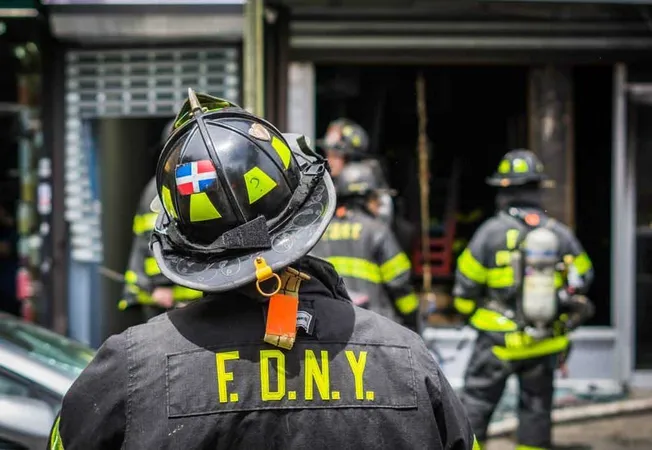
FDNY (Fire Department New York) Test: Your Guide
FDNY vs NYPD Hockey Game: Inside New York's Bravest vs Finest Heroes on Ice Rivalry
FDNY Runs and Workers: What the Numbers Really Mean

FDNY Podcast September 2025: Your Complete Guide to the Department's Audio Content
FDNY Firefighter Career: Roles, Heroes and How to Become One
About the Author

Law Enforcement Trainer & Civil Service Exam Specialist
John Jay College of Criminal JusticeMarcus B. Thompson earned his Master of Arts in Criminal Justice from John Jay College of Criminal Justice and served 12 years as a law enforcement officer before transitioning to full-time academy instruction. He is a POST-certified instructor who has prepared candidates for police entrance exams, firefighter assessments, and civil service examinations across dozens of agencies.
Join the Discussion
Connect with other students preparing for this exam. Share tips, ask questions, and get advice from people who have been there.
View discussion (9 replies)