
FDNY Fitness Test: Complete Training Guide and Requirements 2026 September
Master the FDNY fitness test with our complete training guide. Requirements, drills, schedules, and expert tips to pass. ✅

The fdny fitness test is one of the most demanding physical evaluations in American public service. Every year, thousands of candidates line up hoping to earn a spot in one of the world's most respected fire departments, and the physical component is often what separates those who advance from those who go back to the drawing board. Understanding exactly what the test demands — and building a training program specifically around those demands — is the single highest-leverage thing you can do to improve your chances of success.
The Candidate Physical Ability Test, commonly known as the CPAT, is the standardized fitness assessment used by the FDNY and fire departments across the United States. Unlike older, department-specific tests, the CPAT was designed through decades of research to simulate the actual physical demands firefighters face on the job. Every event on the test mirrors a real task: dragging a hose line, raising a ladder, carrying a victim to safety. If you can complete the CPAT, researchers determined, you have the baseline fitness needed to function safely as a firefighter in the field.
Preparation for the FDNY fitness test is not a last-minute sprint. Candidates who succeed typically begin structured training twelve to sixteen weeks before their scheduled exam date. This timeline allows you to build the cardiovascular base, functional strength, and muscular endurance the test requires without risking overtraining injuries that could sideline your career before it even begins. Starting early also gives you time to practice in full gear, which changes the experience dramatically compared to working out in shorts and a T-shirt.
The CPAT consists of eight sequential events completed while wearing a 50-pound weighted vest that simulates the weight of structural firefighting gear. Events include the stair climb, hose drag, equipment carry, ladder raise and extension, forcible entry, search, rescue, and ceiling breach and pull. Each event flows into the next with no rest between stations, and the entire sequence must be completed in under ten minutes and ten seconds. There is no partial credit — candidates either finish within the time limit or they do not pass.
Many candidates underestimate the role that mental preparation plays in passing the fitness test. The combination of heat, physical exhaustion, and time pressure creates a stress response that can break down even physically capable candidates. Building familiarity with the sequence, practicing in conditions that approximate test-day pressure, and developing a pacing strategy are all components of preparation that go beyond simply getting stronger. The best-prepared candidates treat the CPAT like a race with a known course — they study every turn before they run it.
New York City has additional requirements layered on top of the CPAT itself. Candidates must also pass a medical examination, a psychological evaluation, and a background investigation before receiving a conditional offer of employment. The fitness test is your first major hurdle, but knowing the full pathway helps you see where the CPAT fits in the larger process. Passing it with energy to spare — rather than barely scraping by — sends a signal to evaluators about your dedication and physical readiness for the academy.
This guide covers everything you need to know: what each CPAT event involves, how to train for peak performance, what scores and standards apply, common mistakes that derail candidates, and a week-by-week plan that will get you to the starting line ready to succeed. Whether you are just beginning your FDNY journey or returning after a previous attempt, the information here will sharpen your preparation and give you a clear, actionable path to passing the FDNY fitness test.
FDNY Fitness Test by the Numbers

The 8 CPAT Events Explained
Candidates climb a StepMill at 60 steps per minute for 3 minutes while carrying a 25-pound hose pack on each shoulder. This opening event is the most cardiovascularly demanding and sets the tone for the remaining seven stations.
Drag a charged 1¾-inch hose line 75 feet to a drum, then advance 25 additional feet around a cone while kneeling. Tests pulling strength, hip mobility, and the ability to work in a low, awkward position under load.
Carry two 12.5-pound saws from a cabinet, walk 75 feet to the cabinet, return them, then raise a 24-foot aluminum extension ladder and extend it to its full height. Both events test grip strength, shoulder stability, and coordination.
Strike a weighted device with a 10-pound sledgehammer until a buzzer sounds, then navigate a dark, winding tunnel on hands and knees. The rescue event requires dragging a 165-pound mannequin 35 feet around a barrel and back to the finish line.
Push a 60-pound hinged door overhead three times, then hook a 45-pound weighted system and pull it down five times — completing the full cycle four times total. This final event punishes candidates who exhausted their grip strength in earlier stations.
Building a training program for the CPAT requires understanding the difference between general fitness and event-specific fitness. Many candidates arrive with strong gym backgrounds and still struggle on test day because they have been training the wrong energy systems and movement patterns. The CPAT is not a weightlifting competition, a 5K race, or a CrossFit workout — it is a simulated rescue sequence that demands sustained moderate-to-high intensity output across a mix of pushing, pulling, dragging, climbing, and carrying movements. Your training must reflect that reality.
The foundation of your training should be cardiovascular conditioning at a level that keeps your heart rate between 80 and 90 percent of maximum for the full ten-minute test duration. The stair climb alone — lasting three minutes at the very start — is enough to push untrained candidates into oxygen debt before the first event is even complete. Building this base requires regular sessions of sustained effort: rowing, cycling, stair machine work, or weighted carries at a consistent, challenging pace for twenty to forty minutes at a time, three to four days per week.
Strength training for the CPAT should emphasize compound, functional movements rather than isolated machine exercises. Deadlifts and Romanian deadlifts build the posterior chain you need for the hose drag and rescue events. Overhead pressing and pull-ups develop the shoulder girdle strength required for the ladder events and ceiling breach. Farmer's carries and suitcase carries directly simulate the equipment carry and develop grip endurance. Kettlebell swings bridge the gap between strength and conditioning in a single movement pattern that closely resembles the hip-hinge mechanics of the hose drag.
Grip strength is one of the most commonly neglected training variables among CPAT candidates. The hose drag, ladder raise, equipment carry, and ceiling pull all require sustained grip strength, and by the time candidates reach the final event, their forearms are often fully fatigued. Dedicated grip training — using fat grips, dead hangs from a pull-up bar, plate pinches, and towel pull-ups — should be programmed at least twice per week from the beginning of your training cycle. Do not wait until six weeks out to discover your grip is your limiting factor.
Once you have eight to ten weeks of base training completed, begin practicing the CPAT sequence itself. Many fire departments and fitness facilities offer practice CPAT stations where you can run through the full sequence in a weighted vest. Even without official stations, you can simulate events: use a StepMill for the stair climb, a weighted sled for the hose drag, a sledgehammer and tire for forcible entry, and a sandbag for the rescue drag. Practicing the sequence trains your body to transition between movements without a recovery window, which is exactly what test day will demand.
Periodization — the deliberate cycling of training volume and intensity — is essential for a twelve-to-sixteen week preparation block. Spend the first four weeks building your aerobic base and establishing movement patterns with moderate loads. In weeks five through eight, increase intensity and begin incorporating event simulations.
Weeks nine through twelve should involve the highest training loads, including full-sequence practice runs in your weighted vest. Then, in the final two weeks before your test date, reduce volume significantly while maintaining intensity — this taper allows your body to recover and consolidate the adaptations from your hard training block, so you arrive on test day fresh, not depleted.
Nutrition and recovery are performance variables, not optional add-ons. Candidates training twice daily or following high-volume programs need adequate protein — roughly 0.7 to 1 gram per pound of bodyweight — to repair muscle tissue and adapt to the training load. Sleep is arguably the most powerful recovery tool available; seven to nine hours per night accelerates adaptation and reduces injury risk.
In the final week before the test, hydrate aggressively, prioritize sleep, reduce training volume, and eat foods that support stable energy levels. Arriving at the FDNY fitness test rested and properly fueled can make a meaningful difference in your finishing time.
FDNY Fitness Test Standards and Requirements
The CPAT uses a pass/fail scoring system with a single time standard: 10 minutes and 10 seconds for all eight events combined. There are no partial scores, no points for individual events, and no bonus credit for finishing faster — only a binary pass or fail result. This means that candidates who finish in 9:45 and those who finish in 10:05 receive identical results. Your goal is simply to complete the sequence correctly within the time limit, and then to celebrate afterward.
Automatic disqualification occurs if a candidate falls off the StepMill during the stair climb, receives more than two warnings for running during the test (the test must be completed at a walking pace or on hands and knees), fails to complete any single event correctly, or receives assistance from test personnel for physical support. Understanding the disqualification rules ahead of time prevents candidates from being caught off guard by regulations they could have read in the official CPAT candidate handbook, which is freely available from the FDNY recruitment office.

CPAT vs. Department-Specific Fitness Tests: Key Differences
- +Standardized nationally, making preparation materials widely available
- +Events directly simulate real firefighting tasks rather than arbitrary athletic benchmarks
- +Single time standard eliminates subjectivity in scoring decisions
- +Pass/fail format reduces test anxiety compared to competitive scoring
- +Weighted vest requirement closely mirrors actual gear weight in the field
- +Eight-event sequence tests sustained endurance, not just peak athletic performance
- −No rest between events penalizes candidates who pace poorly early in the sequence
- −50-pound vest can be difficult to source for training without purchasing one
- −Work boot requirement surprises candidates used to training in athletic footwear
- −Stair climb machine availability is limited at most commercial gyms
- −Single attempt pressure means one bad day can derail months of preparation
- −The test does not assess swimming ability, which is relevant to marine rescue operations
FDNY Fitness Test Preparation Checklist
- ✓Register for the CPAT through the FDNY recruitment office at least four weeks before your preferred test date.
- ✓Download and read the official CPAT candidate handbook to understand all rules and disqualification criteria.
- ✓Purchase or borrow a 50-pound weighted vest and begin wearing it during training at least six weeks out.
- ✓Break in your work boots by training in them for at least four weeks before test day.
- ✓Complete at least three full-sequence CPAT practice runs in the four weeks leading up to the exam.
- ✓Train on a StepMill at 60 steps per minute for three to five minutes per session at least twice per week.
- ✓Add dedicated grip training — dead hangs, plate pinches, and farmer carries — twice per week throughout your cycle.
- ✓Schedule a practice run with a stopwatch and have a training partner call your time at each event transition.
- ✓Taper your training volume by 40 to 50 percent in the final ten days before your test date.
- ✓Hydrate thoroughly for 48 hours before the test and eat a carbohydrate-rich meal the night before.
The First Event Determines Everything
The stair climb is the single highest-stakes moment in the CPAT. Going even slightly too fast in those first 90 seconds can push your heart rate into a zone that takes the entire remainder of the test to recover from. Practice the stair climb at exactly 60 steps per minute — not faster — until that pace feels completely automatic. A controlled start is worth far more than a fast start.
Common mistakes among FDNY fitness test candidates fall into predictable patterns, and understanding them in advance gives you a significant competitive edge. The most frequent error is neglecting the stair climb specifically. Because it is the first event and it occurs before fatigue has set in, many candidates attack the stair climb aggressively, assuming that their fresh legs can handle a fast pace.
The problem is that the stair climb is deliberately designed to elevate heart rate to near-maximum levels even at the required pace of 60 steps per minute. Going faster does not save meaningful time — it simply guarantees that you will enter every subsequent event already oxygen-depleted.
The second most common mistake is training exclusively with light weights and high repetitions in an attempt to build endurance. While muscular endurance is certainly important, the CPAT also requires genuine strength for events like the ladder raise, the rescue drag, and the ceiling pull.
A candidate who cannot deadlift 1.5 times their bodyweight will likely struggle to drag the 165-pound rescue mannequin across 70 feet of floor while wearing a weighted vest and already fatigued from six prior events. Include heavy compound strength training — working in the three-to-six repetition range at least once per week — to build the strength reserve the test demands.
Third, candidates frequently neglect the search event because it seems low-intensity: you are simply crawling through a dark tunnel on hands and knees. In isolation, it is relatively easy. But by the time you reach the search station, you have already completed six demanding events, and the act of crawling on your hands and knees while exhausted and spatially disoriented surprises many candidates.
Practice crawling for distance while fatigued — after a hard conditioning session, get on your hands and knees and crawl 50 to 100 feet — to prepare your wrists, shoulders, and hip flexors for the specific demands of this event.
Hydration errors before and during test day cause far more failures than most candidates realize. Arriving at the CPAT even mildly dehydrated — a state that is difficult to detect subjectively — measurably reduces cardiovascular performance and increases perceived exertion. Coffee and alcohol in the 24 hours before the test are diuretics that work against you. Drink at least half your bodyweight in ounces of water daily for the three days before the test, and consume an additional 16 to 20 ounces two hours before your test window begins. You cannot drink during the CPAT itself.
Failure to practice transitions between events is another gap in most training programs. When you train individual events in isolation, your body gets a natural rest between efforts. On test day, the transition from the hose drag to the equipment carry, or from the forcible entry to the search, happens with no pause.
Your cardiovascular system does not have the chance to downshift between events. Training transitions specifically — completing the hose drag simulation, then immediately moving to the equipment carry simulation without stopping — teaches your body to maintain output through the gear shifts rather than dropping off sharply when the movement pattern changes.
Many candidates also underestimate the psychological challenge of the test and arrive without any mental rehearsal strategy. Research in performance psychology consistently shows that athletes who mentally rehearse their performance — visualizing themselves completing each station calmly and efficiently — perform better under pressure than those who rely solely on physical preparation.
Spend five minutes each evening in the week before the test closing your eyes and walking through each CPAT event in sequence. Visualize your breathing, your pace, your body position. This is not magical thinking — it is evidence-based mental preparation used by military personnel, surgeons, and elite athletes worldwide.
Finally, a significant number of candidates arrive underprepared simply because they did not start training early enough. Twelve to sixteen weeks is a minimum for candidates with a solid fitness base. Candidates who are currently sedentary or only moderately active should give themselves twenty to twenty-four weeks. It is far better to arrive overtrained and needing a taper than to arrive undertrained and hoping for the best. The FDNY accepts candidates who demonstrate they are physically ready to serve New York City — and that readiness is built over months, not weeks.

CPAT test slots fill quickly once the FDNY opens its competitive examination cycle. Registration closes weeks before the testing window, and walk-in testing is not permitted under any circumstances. Monitor the FDNY recruitment website and set calendar reminders to register as soon as slots become available. Missing the registration window means waiting for the next exam cycle, which can delay your career by a year or more.
Race-day strategy for the FDNY fitness test begins the night before the exam. Lay out every item you will need — boots, identification, any allowed personal items — so that morning logistics do not add stress to an already high-pressure day. Eat a full dinner that includes complex carbohydrates and lean protein. Avoid alcohol entirely. Get to bed at your normal time or slightly earlier, and if nerves make sleep difficult, remind yourself that one poor night of sleep has minimal impact on physical performance; the anxiety about sleep deprivation causes more problems than the actual lost sleep.
On the morning of the test, eat a moderate-sized breakfast two to three hours before your scheduled start time. Options that work well for most candidates include oatmeal with banana and peanut butter, whole grain toast with eggs, or a smoothie with fruit, Greek yogurt, and oats.
Avoid high-fat meals that take longer to digest and can cause GI discomfort under physical stress. Bring a water bottle and a light carbohydrate snack — a banana or energy chews — to consume in the hour before the test begins. Do not try any food or supplement on test day that you have not practiced with in training.
Arrive at the testing facility at least 30 minutes before your scheduled start time. Use this time to check in, familiarize yourself with the layout, and complete a light dynamic warmup. A cold warmup before the stair climb is a recipe for a poor start. Your warmup should include leg swings, hip circles, arm circles, light jogging in place, and a few bodyweight squats and lunges to get blood moving into the major muscle groups you will use. Do not do anything that fatigues you — the goal is activation, not a workout.
During the test itself, maintain a controlled breathing pattern at every station. Many candidates hold their breath under exertion — a natural response to heavy loading — which accelerates fatigue and reduces oxygen delivery to working muscles. Practice exhaling forcefully on the exertion phase of every exercise in training, and bring that habit to test day. Breathe through the transitions between events rather than holding your breath in anticipation of the next station's demands. Your respiratory system is working for you as long as you let it.
Pacing during the rescue drag deserves specific attention. The mannequin drag is the event that most candidates underestimate in terms of physical demand. By station seven, your legs, hips, and grip will already be taxed, and the combination of a 165-pound dead weight and 70 feet of total travel is enough to derail a candidate who has not practiced specifically for it. Lean back aggressively during the drag to transfer the load to your legs rather than your back, take short powerful steps, and do not stop — a stopped mannequin is dramatically harder to restart than one in motion.
The ceiling breach and pull is the final event, and it requires specific tactical awareness. After completing the full sequence, many candidates experience a surge of adrenaline at the sight of the final station and push too hard, causing their already-fatigued grip to fail midway through the repetitions. Maintain a steady rhythm — push the ceiling panel up three times, pull the hook down five times, repeat four cycles total — and count your reps out loud if it helps you stay on track. With the finish line in sight, controlled effort beats reckless sprinting.
After completing the CPAT, allow yourself at least 48 hours of light recovery before returning to training. Walking, stretching, and gentle mobility work are appropriate. Use this window to reflect on what felt strong and where you felt undertrained — this reflection will inform your preparation if you face additional fitness evaluations later in the FDNY hiring process, including the academy's physical training program, which begins immediately upon enrollment and maintains high physical standards throughout the twenty-week training period.
Beyond the CPAT itself, candidates preparing for FDNY service should understand that physical fitness is not a box you check once during the hiring process — it is a career-long commitment. FDNY firefighters maintain demanding physical standards throughout their service, and the department provides resources including gyms at firehouses, physical training programs, and peer fitness trainers to support active members. Approaching the fitness test with this longer view in mind changes your preparation mindset from cramming for an exam to building a sustainable athletic lifestyle.
Cross-training across multiple fitness modalities protects you against overuse injury and prevents the adaptation plateaus that come from doing the same movements repeatedly. Candidates who swim, cycle, row, and lift — rather than only running and lifting — arrive at the CPAT with broader physical conditioning that serves them well across all eight events. Swimming in particular builds cardiovascular capacity and shoulder strength with zero impact stress, making it an excellent complement to the higher-impact training that CPAT preparation requires.
If you have failed a previous CPAT attempt, the most important first step is an honest event-by-event assessment of where your time went. Candidates who fail due to time rarely fail uniformly — there is almost always one or two events where a disproportionate amount of time was lost. Use your test feedback, if available, or reconstruct the sequence from memory and identify your weakest stations. Then restructure your training program to over-index on those specific events while maintaining your strength across the others.
Peer training partners dramatically improve CPAT preparation for most candidates. Training with a partner who has the same goal creates accountability, makes high-intensity simulation sessions safer by providing a spotter and safety observer, and introduces healthy competition that pushes both candidates to work harder than they would alone. Look for FDNY preparation groups in New York City — many are organized through community centers, firefighter union outreach programs, and the FDNY itself — and commit to a shared training schedule with at least one partner.
Flexibility and mobility training is another underinvested component of CPAT preparation. The search event requires extended time on hands and knees, the hose drag requires a deep hip hinge with trunk rotation, and the stair climb demands full ankle and hip flexor mobility over three minutes of continuous effort.
Candidates with tight hip flexors, limited ankle dorsiflexion, or restricted thoracic rotation will find these events harder than their cardiovascular fitness level would suggest. Spend ten to fifteen minutes after each training session working on mobility — hip flexor stretches, ankle circles, thoracic rotations, and hamstring stretches are a minimum starting point.
The written and cognitive components of the FDNY firefighter exam run parallel to the physical preparation process. While your body is training for the CPAT, your study time should be invested in the written exam's core subject areas: reading comprehension, mathematical reasoning, logical reasoning, spatial orientation, and information ordering. Passing both components is required for placement on the civil service eligible list, and candidates who split their preparation time effectively — training in the morning, studying in the evening — have demonstrated the highest overall success rates in the FDNY application process.
Ultimately, success on the FDNY fitness test comes down to specificity of preparation, consistency of effort, and intelligence of recovery. There is no shortcut that substitutes for twelve to sixteen weeks of dedicated, event-specific training.
But there is also no mystery about what the test demands — the CPAT is fully documented, practiced by thousands of candidates each year, and well within reach for anyone who prepares with focus and discipline. The firefighters who walk through the door on your first day at the FDNY Academy went through exactly this process, and they made it through. With the right preparation, so will you.
FDNY Questions and Answers
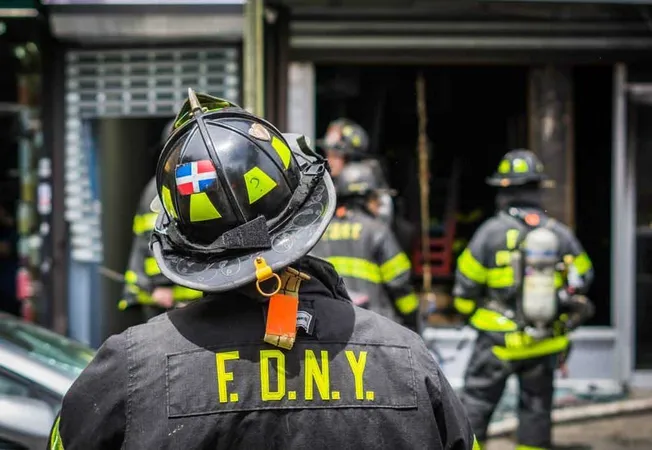
FDNY (Fire Department New York) Test: Your Guide
FDNY vs NYPD Hockey Game: Inside New York's Bravest vs Finest Heroes on Ice Rivalry
FDNY Runs and Workers: What the Numbers Really Mean

FDNY Podcast September 2025: Your Complete Guide to the Department's Audio Content

FDNY Battalion: Structure, Roles, and What Every Aspiring Firefighter Should Know
About the Author

Law Enforcement Trainer & Civil Service Exam Specialist
John Jay College of Criminal JusticeMarcus B. Thompson earned his Master of Arts in Criminal Justice from John Jay College of Criminal Justice and served 12 years as a law enforcement officer before transitioning to full-time academy instruction. He is a POST-certified instructor who has prepared candidates for police entrance exams, firefighter assessments, and civil service examinations across dozens of agencies.
Join the Discussion
Connect with other students preparing for this exam. Share tips, ask questions, and get advice from people who have been there.
View discussion (9 replies)