
FDNY on 9/11: The Heroic Response of New York's Bravest on September 11, 2001
FDNY on 9 11 — learn how 343 firefighters gave their lives on Sept 11, 2001. The full story of courage, sacrifice & legacy. ✅

When the world thinks about FDNY on 9 11, it thinks of the single greatest act of collective courage in the history of American firefighting. On the morning of September 11, 2001, hijacked commercial aircraft struck both towers of the World Trade Center in lower Manhattan, triggering a disaster unlike anything the Fire Department of New York had ever faced. Within minutes of the first impact at 8:46 a.m., hundreds of FDNY firefighters, officers, and emergency medical personnel were racing toward the burning towers while tens of thousands of civilians were evacuating downward past them on the stairwells.
The scale of the response was extraordinary by any measure. FDNY dispatched roughly 200 units — engines, ladders, rescue companies, and battalion chiefs — to the World Trade Center complex within the first hour alone. The Incident Command system was immediately overwhelmed by the sheer magnitude of a fire burning across dozens of floors simultaneously in two of the tallest buildings on earth. Commanders on the ground were making life-and-death decisions in real time with incomplete information, radio systems struggling under the load, and conditions changing by the minute as jet fuel-fed fires spread through the upper floors.
The firefighters who entered 1 World Trade Center and 2 World Trade Center knew the risks were severe, yet they climbed stairwells laden with 60-plus pounds of gear, floor by floor, to reach civilians who were trapped above the impact zones. Eyewitness accounts from survivors describe firefighters moving calmly and deliberately upward through crowded stairwells, offering reassurance to panicked office workers, administering first aid to the injured, and directing people toward the safest exit routes. Their professionalism under almost inconceivable stress remains one of the defining images of that day.
At 9:59 a.m., the South Tower collapsed. At 10:28 a.m., the North Tower followed. In those two catastrophic collapses, 343 members of the FDNY lost their lives — the largest single-day loss of firefighters in the department's history and, at the time, the largest loss of first responders in any event in United States history. Among the fallen were 60 fire lieutenants and captains, 23 battalion and deputy chiefs, and the department's Chief of Department Peter Ganci, who had personally positioned himself at the command post near the base of the North Tower.
The aftermath of September 11 transformed the FDNY in ways both visible and invisible. The department immediately launched the largest rescue and recovery operation ever conducted by a fire agency, sifting through millions of tons of debris at what became known simply as "The Pile" at Ground Zero. Firefighters worked in rotating shifts for months, many of them searching desperately for colleagues they had known for decades. The emotional and psychological toll was immense, compounding the physical dangers posed by toxic dust, unstable debris, and hazardous materials that permeated the 16-acre site.
The legacy of FDNY's actions on September 11 extends far beyond the tragedy itself. The department's response became a global benchmark for mass-casualty incident management, prompting sweeping reviews of radio communications, incident command protocols, and interagency coordination practices that have shaped fire service operations worldwide. Memorials, scholarship funds, training programs, and legislative initiatives bearing the names of fallen firefighters continue to honor their sacrifice. The story of fdny 9 11 lives not only in granite memorials but in the daily culture of a department that still carries the weight and the pride of that terrible morning.
For anyone preparing for an FDNY career examination or seeking to understand what it means to serve in this department, grasping the history and human cost of September 11 is foundational. The values that drove 343 firefighters into those towers — duty, brotherhood, selfless service — are the same values that FDNY instills in every new probie today. Understanding this history is not merely a matter of passing a test; it is a matter of understanding the soul of the organization you are seeking to join.
FDNY on 9/11 by the Numbers

Minute-by-Minute: FDNY's Response on September 11, 2001
8:46 a.m. — First Impact
9:03 a.m. — Second Impact
9:59 a.m. — South Tower Collapses
10:28 a.m. — North Tower Collapses
Afternoon — Search and Rescue Begins
May 2002 — Recovery Operation Concludes
The 343 FDNY members killed on September 11, 2001 came from every borough, every rank, and every type of unit in the department. They included probationary firefighters on the job for less than a year and veterans with three decades of experience. They were engine company firefighters, ladder company firefighters, rescue specialists, hazmat technicians, marine unit personnel, and fire marshals. What united them was not their rank or their assignment but their refusal to abandon civilians who needed help.
Among the most senior officers lost was Chief of Department Peter J. Ganci Jr., the highest-ranking uniformed officer in the FDNY and the second-highest-ranking uniformed fire officer in the United States. Ganci had positioned himself at the forward command post near the base of the North Tower — precisely where a chief of department in his position was supposed to be.
He was killed when the North Tower fell. First Deputy Commissioner William M. Feehan, a retired chief who had returned to public service, was also killed at the command post, making September 11 the day the FDNY lost its two most senior uniformed leaders simultaneously.
Father Mychal Judge, the FDNY's chaplain and a beloved figure throughout the department, was killed inside the lobby of 1 World Trade Center while administering last rites to a firefighter. He became officially listed as Victim No. 0001 of the September 11 attacks — the first body formally identified and removed from the site. Father Judge's death became one of the most iconic moments of the day, captured in a photograph that circled the globe showing firefighters and police officers carrying his body from the building.
Rescue Company 1, based in Midtown Manhattan, lost 11 of its members — among the highest losses of any single company. Rescue companies are the most technically trained units in the FDNY, handling the most dangerous and complex emergencies. Their expertise made them among the first units assigned to high-rise rescue operations in the towers, and their losses reflect the extraordinary danger they willingly ran toward. Each of the five FDNY rescue companies lost members that day, a testament to how comprehensively the department committed its most capable units to the rescue effort.
Many of the fallen were off-duty on September 11 and came in of their own volition after seeing the towers struck. They called their firehouses, drove in from home, showed up at staging areas, and joined the response without being ordered to do so. This voluntary sacrifice — running toward catastrophic danger without being told to — represents one of the most powerful expressions of the FDNY brotherhood. Several firefighters who died that day had been on their way home from overnight shifts and turned their cars around when they heard what was happening.
The families left behind faced not only grief but years of uncertainty as remains were identified slowly through forensic analysis. The medical examiner's office worked for years to make identifications through DNA matching, and some families waited more than a decade for confirmation. The FDNY's counseling unit, the Counseling Services Unit, expanded dramatically after September 11 to support both the families of the fallen and the thousands of surviving members grappling with survivor's guilt, post-traumatic stress, and the long-term health consequences of working at Ground Zero.
Today the names of all 343 fallen members are inscribed on memorials at FDNY headquarters in Brooklyn, at firehouses throughout the city, and most prominently at the National September 11 Memorial and Museum at Ground Zero. Each name on those memorials represents a life fully lived, a family forever changed, and a legacy that continues to shape the values and identity of the Fire Department of New York. Remembering who they were — not just how many there were — is the most important form of tribute the department and the public can offer.
Key Dimensions of FDNY's 9/11 Response
One of the most painful lessons from FDNY on 9/11 involved radio communications. The department's radios, which had known deficiencies inside the World Trade Center's steel-and-concrete structure, failed to reliably transmit evacuation orders from commanders to firefighters operating on upper floors. The 9/11 Commission later found that some firefighters never received the order to evacuate the North Tower before it collapsed, a finding that led to sweeping radio system overhauls across fire departments nationwide and directly accelerated the development of digital interoperable communications standards.
Incident command also faced unprecedented challenges. The sheer number of units responding — well over a hundred companies within the first 30 minutes — strained the span-of-control principles that modern incident command systems are built around. Post-incident reviews led to significant changes in how FDNY structures large-scale incident command, including clearer division-of-labor protocols, dedicated safety officers, and more rigorous staging procedures designed to prevent freelancing in dynamic collapse-risk environments.

FDNY's 9/11 Response: What Worked and What Needed Improvement
- +Rapid deployment of 200+ units within the first hour of the attacks demonstrated exceptional operational readiness
- +Estimated 25,000 civilian evacuations achieved before the towers collapsed, saving thousands of lives
- +Incident commanders adapted in real time to an unprecedented multi-building, multi-agency emergency
- +Rescue companies and specialized units performed technically complex operations under extreme duress
- +Interagency coordination with NYPD and Port Authority Police, though imperfect, functioned at a basic level
- +Off-duty members voluntarily responded, demonstrating the depth of FDNY's commitment to public safety
- −Radio communication failures prevented some firefighters from receiving critical evacuation orders
- −Unified command between FDNY, NYPD, and Port Authority Police was not fully established, causing coordination gaps
- −Span of control was exceeded as the number of responding units outpaced available command structure
- −Lack of real-time structural assessment data left commanders unable to predict collapse timing
- −Staging protocols were inconsistently applied, contributing to excessive personnel concentration near collapse zones
- −Interoperability between FDNY and NYPD radio systems was severely limited, hindering cross-agency communication
Pros and Cons at a Glance
| Pros | Cons |
|---|---|
| Incident commanders adapted in real time to an unprecedented multi-building, multi-agency emergency | Radio communication failures prevented some firefighters from receiving critical evacuation orders |
| Rescue companies and specialized units performed technically complex operations under extreme duress | Unified command between FDNY, NYPD, and Port Authority Police was not fully established, causing coordination gaps |
| Interagency coordination with NYPD and Port Authority Police, though imperfect, functioned at a basic level | Span of control was exceeded as the number of responding units outpaced available command structure |
| Off-duty members voluntarily responded, demonstrating the depth of FDNY's commitment to public safety | Lack of real-time structural assessment data left commanders unable to predict collapse timing |
Honoring the FDNY 9/11 Legacy: 10 Ways to Remember and Learn
- ✓Visit the National September 11 Memorial and Museum at Ground Zero to see the Firefighters' Memorial Wall.
- ✓Learn the names and stories of individual fallen firefighters through the FDNY Foundation's memorial resources.
- ✓Support the FDNY Foundation, which funds equipment, training, and community programs in honor of the 343.
- ✓Understand the Zadroga Act and advocate for continued funding of WTC Health Program benefits for responders.
- ✓Read firsthand accounts such as Dennis Smith's Report from Ground Zero for an authentic perspective on 9/11.
- ✓Attend a September 11 commemoration ceremony at your local firehouse or community center.
- ✓Study the 9/11 Commission Report's findings on FDNY communications and incident command to understand systemic lessons.
- ✓Donate to scholarship funds established in the names of fallen firefighters to support their children's education.
- ✓Follow the FDNY's official social media channels each September 11 for department tributes and educational content.
- ✓If pursuing an FDNY career, commit to understanding the history of September 11 as part of your professional formation.
More FDNY Members Have Died from 9/11 Illness Than on the Day Itself
As of 2023, the number of FDNY members who have died from September 11-related cancers and respiratory diseases surpasses the 343 killed on September 11, 2001. This means the attack's death toll for the FDNY is still rising more than two decades later — a sobering reminder that the consequences of that day extend far beyond what the world witnessed on the morning of September 11.
The recovery operation at Ground Zero was one of the most physically and emotionally demanding sustained operations in the FDNY's 150-year history. In the immediate days after September 11, the effort was driven by hope — the belief that survivors might still be found in voids beneath the rubble.
Urban Search and Rescue teams from across the country joined FDNY and NYPD personnel in carefully probing the debris field, using dogs, listening devices, and cameras to search for signs of life. The first confirmed survivor was pulled from the rubble on the afternoon of September 11, but as days passed without further live rescues, the operation transitioned from rescue to recovery.
Working conditions at Ground Zero were extraordinarily dangerous. The debris pile, which towered six stories high in some areas, was structurally unstable and subject to sudden shifts and partial collapses. Fires continued to burn underground in the debris for months, fueled by the enormous quantities of combustible material trapped beneath the surface.
Temperature readings in some areas of the pile exceeded 1,300 degrees Fahrenheit weeks after the collapse. Firefighters and recovery workers wore respirators, but masks were often removed in the heat of physical labor or when communication required it — decisions that would have devastating health consequences in the years to come.
The recovery operation was organized around a grid system that divided the 16-acre site into numbered sections, each assigned to specific units responsible for methodical excavation. FDNY personnel worked closely with structural engineers, medical examiners, and forensic specialists to ensure that human remains and personal effects were treated with the dignity they deserved. Every piece of material removed from the pile was screened for human remains before disposal, a process that required sifting through millions of tons of debris by hand and machine over a period of many months.
The emotional dimensions of the recovery operation were immense and largely invisible to the public. Firefighters were searching for colleagues, some of whom they had known for their entire careers. Finding a piece of a turnout coat, a tool, or a radio belonging to a fallen brother was both a small victory — confirmation of where someone had been — and a profound source of grief.
The department's peer support and counseling programs were stretched to their limits, and many members who participated in the recovery operation did not seek help until years later, when the accumulation of grief, physical illness, and post-traumatic stress finally became impossible to manage alone.
One of the most powerful symbols of the recovery effort was the raising of the American flag over Ground Zero — first the iconic photograph of three firefighters raising a flag taken by photographer Thomas E. Franklin on the afternoon of September 11, and then a series of formal flag ceremonies throughout the recovery period.
These ceremonies served as focal points for the grief and determination of the workers, providing moments of shared ritual in what was otherwise an overwhelming and isolating experience. The Ground Zero flag became one of the most replicated images in American history, appearing on murals, memorials, and firehouses across the country.
The recovery operation officially concluded on May 30, 2002, when a final formal ceremony was held at Ground Zero. A steel column — the last large structural element to be removed from the site — was draped in black cloth and carried out on a flatbed truck in a procession that thousands of first responders, family members, and New Yorkers lined the streets to witness.
The ceremony was both an ending and a beginning: the end of the immediate response to September 11 and the beginning of a decades-long process of healing, remembrance, and transformation for the FDNY and for New York City as a whole.
The lessons of the recovery operation have informed how fire departments plan and conduct large-scale, long-duration rescue and recovery missions. The importance of rotating personnel to prevent physical and emotional burnout, the need for strong psychological support programs embedded directly in operations, the value of systematic documentation and forensic protocols, and the critical role of family liaison units in keeping loved ones informed — all of these practices were refined or developed in direct response to the experience of working at Ground Zero and have since been incorporated into national incident management standards.

If you are a current or retired FDNY member who worked at Ground Zero after September 11, 2001, you may be eligible for free medical monitoring and treatment through the FDNY World Trade Center Health Program. Enrollment is ongoing, and coverage includes dozens of cancers and respiratory conditions linked to Ground Zero exposure. Contact the FDNY Bureau of Health Services for enrollment details and eligibility requirements.
The transformation of the FDNY in the years following September 11 has been profound and multidimensional. The department invested heavily in upgrading its radio systems, ultimately deploying a new digital radio infrastructure designed specifically to address the communication failures that contributed to losses on September 11. The new system includes signal repeaters within large buildings, redundant channels, and improved interoperability with NYPD and other agencies — changes that have already proven their value in subsequent major incidents in New York City.
Incident command training was overhauled at every level of the organization. The FDNY expanded its use of the National Incident Management System, trained additional incident commanders, and created new positions specifically dedicated to safety and accountability at large-scale incidents. Mandatory training exercises now include mass-casualty scenarios that test the full span of the incident command system, from company-level operations all the way through unified command with law enforcement and emergency medical services. These exercises are designed to stress-test coordination mechanisms before a real emergency exposes their weaknesses.
The department also deepened its focus on high-rise firefighting doctrine. The World Trade Center experience revealed that existing protocols for high-rise operations needed to be significantly revised to account for the possibility of structural failure caused by fire.
The FDNY developed new guidelines addressing when and how to commit personnel to high-rise operations, how to assess structural risk in real time, and when the calculus of life safety requires withdrawing firefighters from a building they might otherwise attempt to save. These are among the most difficult decisions in the fire service, and post-9/11 doctrine attempts to give commanders better frameworks for making them.
Interagency collaboration received enormous attention in the years following September 11. The creation of the New York City Office of Emergency Management as a more strong coordinating body, the development of joint FDNY-NYPD protocols for major incidents, and the establishment of shared radio channels and command post procedures have all improved the ability of the city's emergency services to work together. These improvements were tested and validated in subsequent events including Hurricane Sandy in 2012, various large-scale building fires, and the COVID-19 pandemic, during which FDNY and NYPD coordinated unprecedented joint operations.
The FDNY's commitment to honoring the fallen has also shaped its institutional culture in lasting ways. The department's annual September 11 memorial ceremony at FDNY Headquarters has become one of the most significant events in the department's calendar, attended by the Fire Commissioner, the Mayor, family members of the fallen, and firefighters from across the organization. Recruit classes at the FDNY's Fire Academy at Randalls Island are taught about September 11 as a foundational part of their training — not as a historical footnote but as a living part of the department's identity and values.
Scholarship programs funded by the FDNY Foundation and various private donors have provided educational support to hundreds of children of fallen firefighters, ensuring that the economic consequences of losing a parent in the line of duty do not prevent the next generation from pursuing their potential.
Several children of September 11 victims have themselves gone on to join the FDNY, carrying forward a legacy of service in the most direct possible way. These personal stories of continuity — of families choosing to serve despite everything they have lost — represent one of the most powerful expressions of what September 11 means to the department and to New York City.
For those aspiring to join the FDNY, understanding the September 11 legacy is not optional background knowledge — it is essential context for everything the department does. The protocols you will learn, the equipment you will carry, the command systems you will operate within, and the cultural values you will be expected to embody have all been shaped in significant ways by what happened on that morning and in the months that followed.
Serving in the FDNY today means inheriting a trust that 343 firefighters paid for with their lives, and honoring that trust is the most fundamental obligation of everyone who wears the department's uniform.
Preparing for an FDNY career examination requires more than memorizing facts and figures — it requires developing a genuine understanding of the organization's history, values, and operational culture. The written exam tests cognitive abilities, reading comprehension, and situational judgment, but the interview and psychological evaluation components probe for the qualities that September 11 showed the world matter most: composure under pressure, commitment to teammates, and an unwavering focus on serving the public even at great personal cost.
Study strategies that work for FDNY exam preparation share certain characteristics with the preparation that served firefighters well on September 11 itself: systematic, thorough, and conducted with genuine purpose rather than merely going through the motions. The best candidates treat every practice question as an opportunity to think through real scenarios, not just to identify the correct multiple-choice answer.
They build their knowledge from the ground up — understanding why building construction matters for firefighting, why community engagement is central to the FDNY mission, and why every component of the exam reflects something the department genuinely needs its members to know.
Building construction knowledge is one of the most heavily tested subjects on FDNY examinations for good reason. A firefighter who understands how different structural systems behave under fire conditions — which materials lose strength fastest, which configurations create the greatest collapse risk, how fire travels through concealed spaces — is a firefighter who can make better decisions under pressure. The World Trade Center collapses are the most dramatic possible illustration of why this knowledge matters, but it applies equally to the ordinary brownstones, warehouses, and high-rises that FDNY companies respond to every day.
Community engagement and public education content on FDNY exams reflects the department's recognition that firefighting is ultimately in the business of preventing emergencies, not just responding to them. Fire prevention education, smoke detector programs, school outreach initiatives, and community fire safety campaigns all save lives in ways that never appear in the response statistics but are no less important. September 11 underscored how deeply the FDNY is woven into the fabric of New York City communities, and the department's public education mission is one of the primary ways it maintains and strengthens those community bonds.
Time management during exam preparation is critical. Most candidates who fail FDNY written examinations do not fail because they lacked intelligence — they fail because they did not allocate enough time to genuinely understand the material. The recommended approach is to begin studying at least three to four months before the exam date, working through practice questions in timed sessions that replicate the pressure of the actual test environment. Reviewing incorrect answers carefully — not just noting that an answer was wrong but understanding precisely why — is the single most effective study technique for improving scores over time.
Physical preparation, while not directly part of the written examination, is relevant context for anyone serious about an FDNY career. The Candidate Physical Ability Test (CPAT) is a demanding physical examination that simulates the tasks a firefighter must perform on the job. Candidates who begin physical conditioning early, well before the written exam, position themselves to approach the entire application process with confidence. The physical and mental preparation processes reinforce each other — the discipline required to train consistently is the same discipline required to study effectively and to perform under pressure on examination day.
Finally, approach the entire FDNY examination process with the seriousness it deserves. You are seeking to join an organization that has 343 reasons embedded in its identity for why it takes its standards seriously. The men and women who gave their lives on September 11 held themselves to extraordinary standards of duty and professionalism. The best tribute you can offer them as an aspiring FDNY member is to match that standard of preparation, commitment, and purpose from the very first step of the application process through the last day of your career.
Sample Fire Department New York Practice Questions
Try these questions from our free Fire Department New York practice tests. The correct answer and an explanation follow each question.
In the FDNY's response to a vehicle extrication incident, what is the FIRST priority before initiating disentanglement of a trapped victim?
- A. Deploying air bags under the vehicle
- B. Stabilizing the vehicle to prevent movement
- C. Removing the vehicle's roof with hydraulic tools
- D. Assessing the victim's airway
Answer: B. Stabilizing the vehicle to prevent movement
Vehicle stabilization must occur before any disentanglement to prevent the vehicle from shifting and causing further injury to the victim or rescuers.
During a clandestine drug lab response, FDNY HazMat personnel should assume the presence of which hazardous condition?
- A. Biological agents only
- B. Flammable, explosive, and toxic chemical hazards
- C. Radiation sources
- D. Compressed gas cylinders exclusively
Answer: B. Flammable, explosive, and toxic chemical hazards
Clandestine drug labs typically involve flammable solvents, explosive precursor chemicals, and toxic byproducts, requiring full HazMat approach protocols.
How does the FDNY typically involve schools in its community outreach efforts?
- A. By offering scholarships to students pursuing firefighting careers
- B. By conducting fire safety workshops and demonstrations
- C. By providing free fire equipment to schools
- D. By organizing field trips to fire stations
Answer: B. By conducting fire safety workshops and demonstrations
The FDNY typically involves schools in its community outreach efforts by conducting fire safety workshops and demonstrations. These interactive sessions teach students about fire hazards, escape routes, and the importance of smoke alarms in a fun and engaging way. This direct engagement helps instill crucial fire safety knowledge in young people, who then share it with their families.
Which FDNY bureau oversees the department's emergency medical services operations?
- A. Bureau of Health Services
- B. Bureau of Emergency Medical Services
- C. Bureau of Operations
- D. Bureau of Communications
Answer: B. Bureau of Emergency Medical Services
The Bureau of Emergency Medical Services (EMS) manages all FDNY EMS operations, including dispatch and ambulance units.
FDNY Questions and Answers

FDNY Hockey: The Rich Tradition of New York's Bravest on the Ice

FDNY Super Pumper: The Massive Fire-Fighting System That Transformed New York City's Firefighting
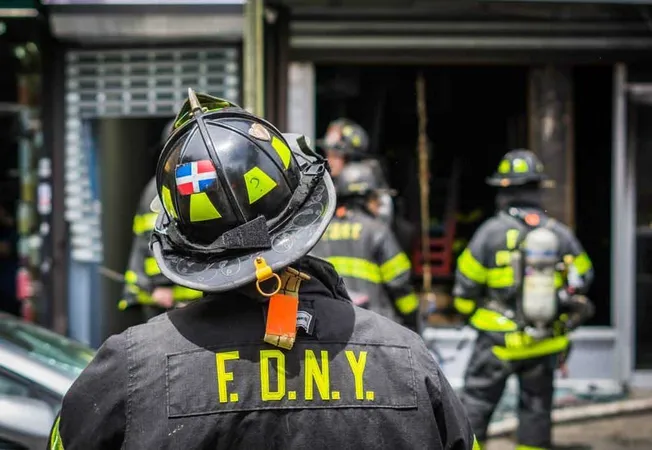
FDNY (Fire Department New York) Test: Your Guide
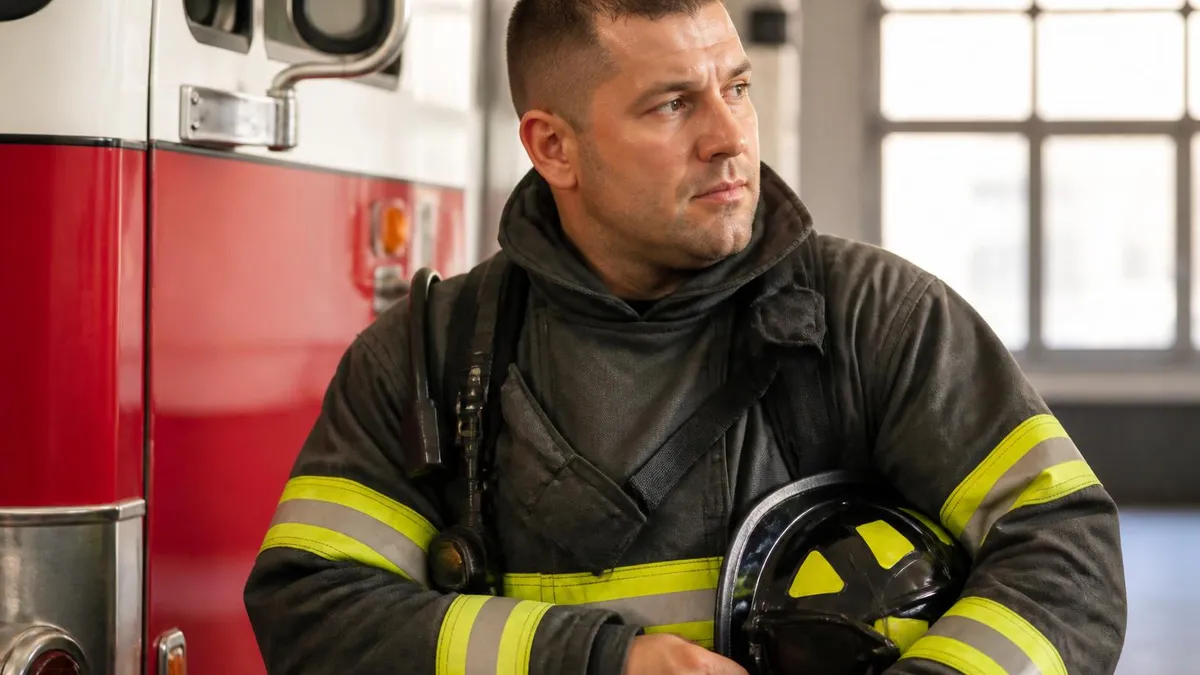
FDNY vs NYPD Hockey Game: Inside New York's Bravest vs Finest Heroes on Ice Rivalry
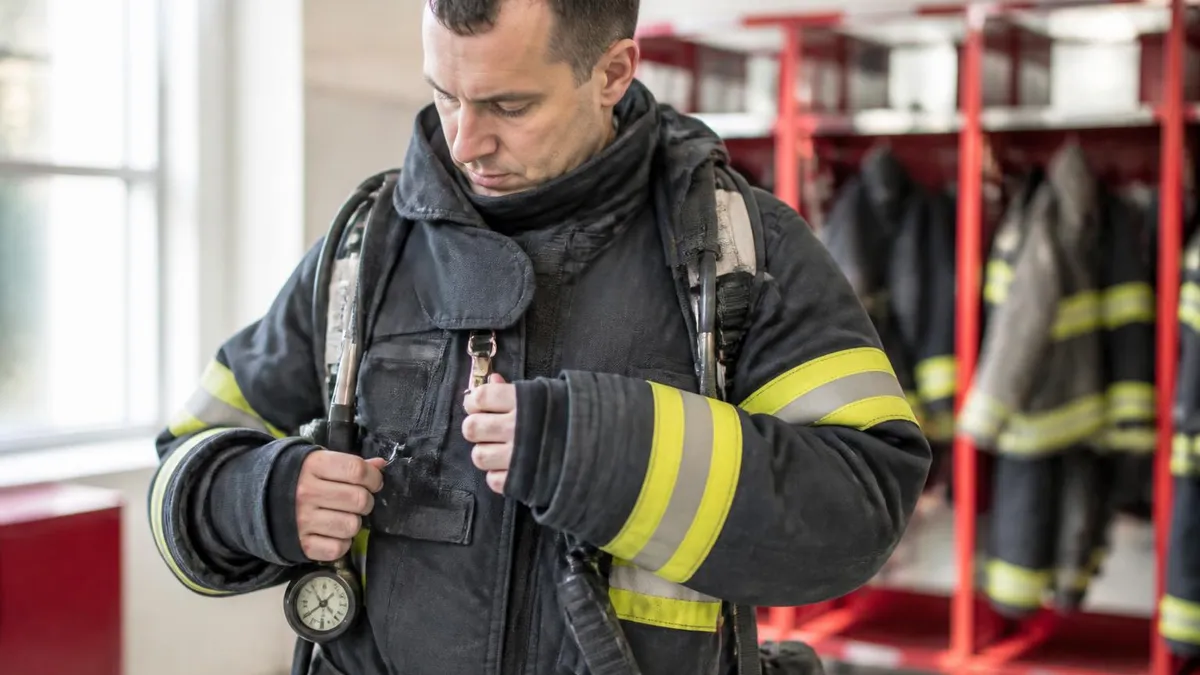
FDNY Runs and Workers: What the Numbers Really Mean
About the Author
Law Enforcement Trainer & Civil Service Exam Specialist
John Jay College of Criminal JusticeMarcus B. Thompson earned his Master of Arts in Criminal Justice from John Jay College of Criminal Justice and served 12 years as a law enforcement officer before transitioning to full-time academy instruction. He is a POST-certified instructor who has prepared candidates for police entrance exams, firefighter assessments, and civil service examinations across dozens of agencies.
Join the Discussion
Connect with other students preparing for this exam. Share tips, ask questions, and get advice from people who have been there.
View discussion (9 replies)