
Fast Math Practice Test: Free FAST Mathematics Prep Guide for Florida Students
🎯 A fast math practice test mirrors Florida's FAST Mathematics for grades 3-8. See dates, format, 10th grade facts and free practice questions.
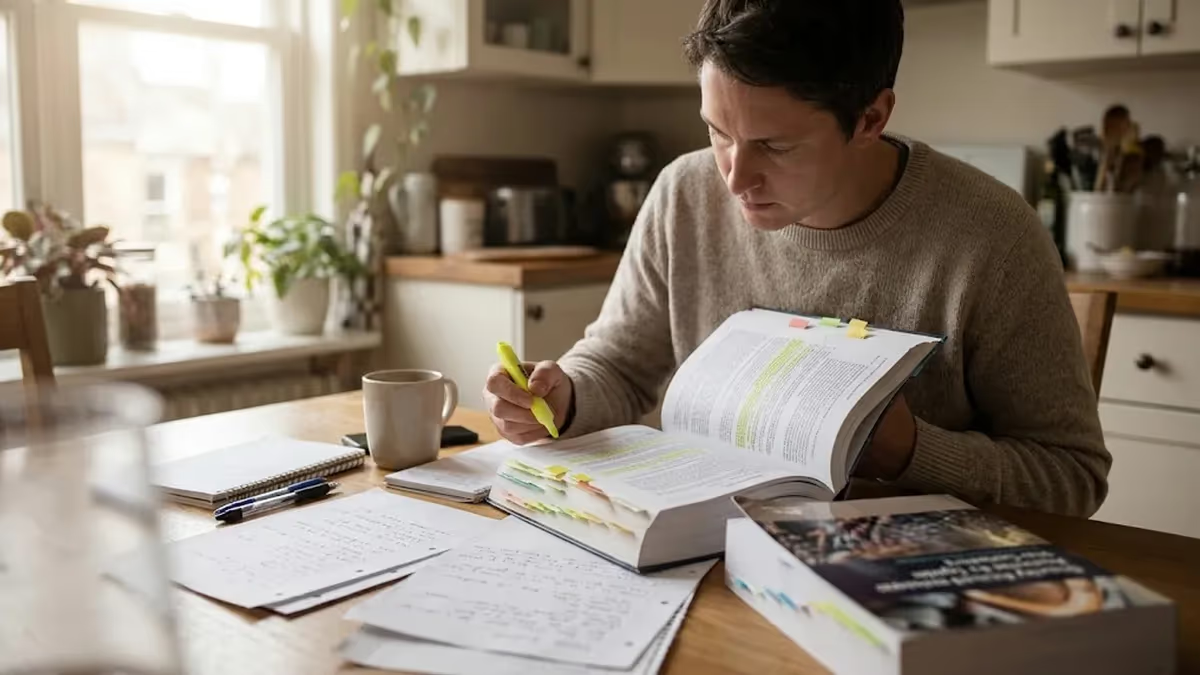
A fast math practice test is a set of sample questions that mirrors Florida's FAST Mathematics assessment for grades 3-8, which is computer adaptive and taken online. Use it to rehearse B.E.S.T. standards, digital tools and pacing before the PM2 and PM3 windows, then review every miss.
Fast Math Practice Test: Key Facts (Updated October 2026)
| Fact | Details | Source |
|---|---|---|
| Who takes FAST Mathematics | Grades 3-8 take computer-adaptive FAST Mathematics; grades K-2 take Star Math. | Florida Department of Education |
| Delivery | Online through the Test Delivery System (TDS) with the Secure Browser. | Florida Department of Education |
| K-2 Star Math length | 34 items per test, with up to 4 minutes allowed per item. | Florida Department of Education |
| PM2 window (grades 3-10 and K-2) | November 30, 2026 through January 22, 2027. | Florida Department of Education |
| PM3 window | May 3 through May 28, 2027 for grades 3-10; April 12 through May 28, 2027 for grades K-2. | Florida Department of Education |
| Score release | Grades 3-10 results appear in the Florida Reporting System within 24 hours of finishing. | Florida Department of Education |
| Remote testing | Grades 3-10 only in PM1 and PM2, and only for full-time virtual or hospital/homebound students. | Florida Department of Education |
| High school math graduation score | B.E.S.T. Algebra 1 EOC: 400 on a 325-475 scale (alternate score 398) for students first participating in Winter 2023 or later. | Florida Department of Education |
People searching for a fast math practice test usually fall into two groups: parents of students in grades 3-8 who want sample questions, and students who want a short warm-up before progress monitoring. The fast math practice test hub gathers Florida State Assessment Readiness resources in one place. This guide explains what FAST Mathematics measures, how its adaptive design changes preparation, and which free routines build confidence without adding stress.
FAST stands for Florida Assessment of Student Thinking. It replaced the old FSA with three progress monitoring windows, called PM1, PM2 and PM3, spread across the school year. Instead of one high-stakes sitting in spring, students see their growth three times. That structure matters for practice, because a fast math practice test works best when you take it a few weeks before a window opens, not the night before, so there is time to fix weak spots.
FAST Mathematics is computer adaptive, which means each answer influences the difficulty of the next question. A student who answers correctly sees harder items, while a student who struggles sees more accessible ones, and the system settles near the student's true level. Because of this design, there is no fixed form to memorize. Good practice therefore focuses on skills and reasoning habits rather than on guessing which exact questions will appear.
Content follows Florida's B.E.S.T. standards, so a strong practice test samples number sense, fractions, algebraic reasoning, geometry and measurement, and data analysis. Expect multiple-choice items alongside technology-enhanced formats such as drag-and-drop, equation entry and multi-select. Students also use on-screen tools, so practicing in the same digital layout matters. A paper worksheet builds skills, but an online session builds the clicking, typing and scrolling habits the real assessment demands.
Many families also search for ELA material, including a fast reading practice test grade 11 for students who are still retaking the graduation test. Those are separate assessments. Florida students in grade 10 take FAST ELA Reading, and high school math is tested through end-of-course exams such as Algebra 1 rather than a grade 10 FAST math test. Knowing which test your student actually faces prevents wasted study hours and keeps practice targeted.
Throughout this article you will find the official dates, a plain-language breakdown of the format, a pros and cons look at practice options, a ten-step checklist, and six free quiz sets. Every date and score comes from Florida Department of Education documents, linked in the table above. Where a detail differs by grade or is not published, we say so rather than guess, because a wrong fact does more harm than a missing one.
Set one realistic goal before you begin: familiarity, not perfection. A student who has seen the question types, practiced with digital tools and reviewed mistakes will feel calmer when the Secure Browser opens. Plan on two or three focused sessions of twenty to thirty minutes in the weeks before a window, rather than marathon cramming. Short, regular practice produces better retention, and it keeps math from feeling like a threat.
FAST Math by the Numbers
What Does a Fast Math Practice Test Cover?
Expect whole numbers, fractions, decimals, ratios and integers, depending on grade. Items test whether students understand why a procedure works, not only whether they can finish it. Practice explaining each step aloud, because that habit exposes hidden gaps quickly.
Younger grades see patterns and unknowns in simple equations, while grades 6-8 move to expressions, linear equations and functions. Questions often ask students to write an equation from a situation, so word-problem translation is a skill worth drilling.
Area, perimeter, volume, angles and unit conversions appear across grades. Many items use diagrams, so practice reading figures carefully and labeling missing values. Students who sketch the problem usually avoid careless mistakes with units.
Tables, graphs, mean and median, and simple probability round out the blueprint. These items reward careful reading of titles, scales and labels. Short daily practice with real-world charts, such as sports scores or weather data, builds speed.
Is There a FAST Math Practice Test for 10th Grade?
There is no grade 10 FAST math test, so a fast math practice test for 10th grade really means preparing for Algebra 1 or another end-of-course exam. FAST Mathematics covers grades 3-8. In grade 10, the FAST assessment students take is ELA Reading, which also counts toward the Florida graduation requirement.
Algebra 1 matters because it is the math gate for graduation. Florida's B.E.S.T. Algebra 1 end-of-course exam uses a 325-475 scale, and students who first participated in Winter 2023 or later need a score of 400 to meet the requirement. The alternate passing score is 398. Students who take Algebra 1 in middle school may sit this exam instead of the grade 8 FAST math test, depending on placement.
Grade 10 students must pass the PM3 administration of FAST ELA Reading to satisfy the graduation requirement. For students who entered grade 9 in 2022-23 or later, the passing score is 247 on the B.E.S.T. scale of 179-308, with an alternate score of 246. That is why so many families look for a fast ela practice test florida 10th grade resource alongside their math plan.
Students who do not pass in spring have four retake opportunities during the year and may retake the test each time it is administered until they pass. Upcoming windows include November 30 through December 18, 2026, May 3 through May 28, 2027, and July 12 through July 16, 2027. Early practice is valuable: a student who finds weak skills in October has weeks to improve before the winter retake.
For students in grades 3-8, practice should mirror grade-level standards. A fourth grader needs fraction equivalence and multi-digit multiplication; a seventh grader needs ratios, proportional relationships and integer operations; an eighth grader needs linear equations and functions. Pull the standards list for your child's grade and check off skills as you practice. This turns vague worry into a concrete list of topics you can measure.
For students heading into 9th grade, the overlap between FAST math skills and Algebra 1 is significant. Solving multi-step equations, graphing lines, working with exponents and interpreting data tables show up in both. Spending time in 8th grade on these topics pays twice: it improves progress monitoring scores and prepares students for the end-of-course exam. Treat middle school as a runway rather than a series of isolated tests.
Juniors sometimes ask about a fast reading practice test grade 11. Grade 11 has no new FAST ELA test, but students who have not yet earned a passing grade 10 score keep retaking that same assessment, so the grade 10 materials still apply. Math is handled separately through course exams, so do not mix the two plans. Keep one tracker for each subject to stay organized.
Which 10th Grade ELA FAST Practice Test or Math Practice Should You Take?
Students in grades 3-5 should use a fast math practice test that stresses place value, multiplication and division facts, fractions and basic geometry. Keep sessions to about twenty minutes, and mix two or three skills so the work stays fresh. Younger students benefit from reading each question aloud and underlining the number they must find, which cuts down on rushed answers.
Because the real test is adaptive, a young learner may see questions that feel hard even when doing well. Tell your child this ahead of time. A tough item is not a sign of failure, and it often means the system has moved them up a level. Praise effort and strategy rather than the number of correct answers.
Is Online Practice Better Than Paper for a Fast Math Practice Test?
- +Online practice mimics the Secure Browser layout, so test day feels familiar.
- +Technology-enhanced items such as drag-and-drop can only be rehearsed on screen.
- +Instant feedback shows right away which skills need more work.
- +Sessions are easy to repeat in short bursts on a laptop or tablet.
- +Results can be tracked over weeks to show real growth.
- +Digital practice builds comfort with scrolling, typing and on-screen tools.
- −Screen time can tire younger students, so sessions must stay short.
- −Paper allows easier sketching, which helps with geometry and word problems.
- −Unofficial sites may offer questions that do not match B.E.S.T. standards.
- −Instant feedback can tempt students to guess instead of reasoning.
- −Adaptive tests cannot be exactly copied by a fixed practice set.
- −Some families lack reliable devices or internet for regular online practice.
What Should You Do Before Taking a Fast Test Practice Session?
- ✓Confirm your student's grade and which FAST window is coming next.
- ✓Pull the B.E.S.T. standards list for that grade and highlight weak areas.
- ✓Choose a quiet space with a charged laptop or tablet and stable internet.
- ✓Set a timer for twenty to thirty minutes to build healthy pacing.
- ✓Keep scratch paper and a pencil ready for every problem.
- ✓Take one baseline practice set before any studying begins.
- ✓Record each missed question in an error log with the skill name.
- ✓Review every wrong answer and explain the correct method aloud.
- ✓Repeat missed skills in a new set three days later.
- ✓Finish with a short, easy set so the session ends on a win.
Review beats repetition
Taking ten more practice sets helps far less than carefully reviewing one. For every missed question, name the skill, find the exact step where the thinking broke down, and redo a similar problem two days later. Students who keep this error log usually show steadier growth between PM windows.
How Should You Run a Fast Test Practice Session?
Run a fast test practice session in three parts: a short warm-up, a focused set of questions, and a review. Begin with five easy problems to settle nerves, then give twelve to twenty questions on one or two skills, and end with a ten-minute review. This rhythm keeps attention high and gives you clear data about what to teach next, instead of leaving you with a vague sense that the student is okay.
Start with a baseline. Before any intensive studying, have your student complete one mixed set that covers every major strand: number sense, algebra, geometry, and data. Score it by strand, not just by total. A student who earns seventy percent overall may be strong in geometry and weak in fractions, and that difference changes the plan completely. Write the strand scores on one page and keep them visible.
Build an error log with four columns: the question, the skill, why the answer was missed, and the fix. Reasons usually fall into a few categories, such as a content gap, a misread question, a calculation slip, or running out of patience. Each category needs a different remedy. Content gaps need reteaching, misreads need annotation habits, slips need slower work, and patience problems need shorter sessions and breaks.
Video explanations can speed up reteaching, especially for students who learn by watching. A walkthrough of reading fast test practice questions shows how an adult thinks through a passage, and the same modeling approach works in math. Pause the video before each answer, have your student predict the next step, then compare. Active watching beats passive watching every time, and it takes only a few extra minutes.
Practice with time awareness, but without panic. The state's K-2 Star Math test allows up to four minutes per item, which tells you the assessment values thinking over speed. For older students, aim to spend about one to two minutes on most items and flag the ones that take longer. Learning when to move on is a skill, and it protects students from spending ten minutes on one stubborn question.
Teach students to use the tools on screen. Practice dragging and dropping answers, entering equations with the keyboard, and selecting multiple responses where directed. These formats are not hard, but they feel awkward the first time and can cost points through simple mistakes. A student who has performed each action a dozen times in practice will move through them without hesitation when the Secure Browser opens.
Keep the emotional temperature low. Avoid framing a practice test as a verdict. Describe it as a flashlight that shows where to look next. After each session, name one thing the student did well, such as checking units or rereading a question, and one thing to try next time. Students who feel safe making errors during practice tend to make fewer of them when the real window arrives.
Real FAST test items are secure, so no site can legitimately publish the actual questions or a true answer key. Searches for a fast fl answer often lead to unofficial sources that may be inaccurate or misleading. Rely on official Florida Department of Education materials and reputable practice sets that explain their answers.
What Do FAST Math Scores and Results Mean?
FAST results show how a student is performing against Florida's B.E.S.T. standards at a specific point in the year. Grades 3-10 results are reported in the Florida Reporting System within 24 hours of the student finishing the test, while grades K-2 results appear in the Family Portal after the first week of testing in each window. Fast reporting lets families act on results while there is still time to improve.
Because FAST has three windows, the most useful way to read a score is as a trend. A single result tells you where a student stands; two or three results tell you whether the current routine works. If PM1 shows weakness in fractions and PM2 shows improvement, the plan is working. If scores stay flat, change something, perhaps the length of sessions, the type of practice, or the support the student receives.
Florida's current PM2 window for grades 3-10 and K-2 runs from November 30, 2026 through January 22, 2027, and PM3 runs from May 3 through May 28, 2027 for grades 3-10. For K-2, PM3 opens earlier, on April 12. Use these dates to schedule practice backward: choose a baseline date four to six weeks ahead, then plan a review checkpoint two weeks before the window opens.
Remote testing is limited. For grades 3-10, remote administration is available only in PM1 and PM2, and only for full-time virtual school students or hospital and homebound students. Everyone else tests at school. If your student is eligible for remote testing, practice on the same device and browser setup they will use, and confirm technical requirements with the school well before the window opens.
Some scores carry consequences. Grade 3 students must achieve Level 2 or higher on PM3 of the FAST ELA Reading assessment to be promoted, and grade 10 students must pass FAST ELA Reading for graduation. Families who want a ready plan for those students can start with the 10th grade fast ela practice resources on the main FAST hub. Math results, by contrast, mainly guide instruction and support decisions.
When you receive a report, look past the headline level. Check strand-level performance, since it shows which parts of the blueprint need work. Compare it with your error log from practice. If both point to the same weakness, such as proportional reasoning, you have high confidence about where to spend the next two weeks. If they disagree, ask the teacher for classroom evidence before changing the plan.
Share results with your student in an honest but encouraging way. Children read adult reactions closely, and a tense response can make them dread the next window. Frame the score as information, set one small goal for the next month, and connect it to something concrete, like mastering fraction comparison or graph reading. Students who see progress as controllable usually stay motivated through the whole school year.
What Are the Best Final Tips Before a FAST Practice Test Day?
The best final tip is to practice consistently, not intensely. In the two weeks before a window, schedule four short sessions rather than one long one, and stop at least a day before the test. Families searching for fl florida fast advice often over-prepare in the final weekend, which raises anxiety and does little for skills. Sleep, breakfast and a calm morning will help more than a last-minute cram session.
Read every question twice. The most common avoidable errors on math tests come from misreading what is asked: finding the perimeter instead of the area, answering in the wrong unit, or choosing the first result instead of the final one. Teach your student to underline the question phrase, circle the numbers, and restate the task in their own words before calculating. This habit costs seconds and saves points.
Use estimation as a safety check. Before solving, students can guess a reasonable range for the answer. If a problem asks for the cost of three items priced near five dollars, an answer of ninety dollars should trigger an alarm. Estimation also helps on multiple-choice items, because it eliminates options that are clearly too large or too small. Practice this skill during every session until it becomes automatic.
Do not neglect reading. Word problems are reading tasks in disguise, and students with strong comprehension typically perform better on them. If your student is also preparing for ELA, a fast reading practice test 10th grade set from the fast reading practice test 10th grade guide can sharpen the same careful-reading habits. Pair one reading set with each math set so both skills grow together.
On the day itself, keep the routine ordinary. Make sure the student has a good night's sleep, a healthy breakfast and arrives at school on time. Remind them that the test adapts, that hard questions are normal, and that blank answers earn nothing, so they should always make a reasoned attempt. If a question seems impossible, they can eliminate wrong choices and make the best selection.
Afterward, resist the urge to quiz your student about every question. Many children cannot recall specifics, and the conversation can create worry. Ask a simple question, such as which part felt easiest, and leave it there. Results will arrive within a day for grades 3-10, and you can build the next plan from real data rather than from a tired child's memory.
Finally, keep perspective. FAST is a progress tool that sits alongside classroom grades, teacher feedback and a child's daily learning. A strong practice routine builds confidence, but it should never replace curiosity or rest. Use the free quiz sets below, keep your error log, and review often. Students who learn to treat mistakes as information tend to improve steadily and carry that mindset well beyond any single test.
FAST Questions and Answers


How this page was made: written with AI tools and published by Nathan Beja, founder of Practice Test Geeks, who is responsible for its content. Exam facts are checked against the official sources listed below. Not reviewed by a subject-matter expert. Editorial policy
Sources & references
Exam facts on this page (fees, format, dates, passing scores) are checked against these official sources; the date is our last check. Editorial policy
- fldoe.org — Test delivery, exam format, score release, test dates, eligibility, retake policy, time limit, exam information · verified Oct 2026
- origin.fldoe.org — Test dates · verified Oct 2026
- cdn.fldoe.org — Passing score · verified Oct 2026