
FAFSA Application PDF: Complete 2026-26 Guide to Downloading, Filing, and Submitting the Paper Form
✅ Download the FAFSA application PDF for 2026-26, learn deadlines, filing steps, and how to submit the paper form for federal student aid.

The fafsa application pdf is the official paper version of the Free Application for Federal Student Aid, released annually by the U.S. Department of Education for students who cannot or prefer not to file the online form at StudentAid.gov. While most applicants now complete fafsa 2025 digitally, the printable PDF remains a fully valid pathway to federal grants, work-study, and subsidized loans. Understanding how to download, complete, and mail this document correctly can mean the difference between receiving aid and missing critical funding for the upcoming academic year.
Many families turn to the PDF version when they lack reliable internet access, when the online portal experiences technical issues during peak filing periods, or when a parent contributor lives in a country without consistent connectivity. The paper form contains the same questions as the online application but requires manual completion and physical mailing to a federal processing center in Lawrence, Kansas. Processing typically takes seven to ten weeks compared to three to five days for electronic submissions.
Before starting, you should know when fafsa is due for both federal and state aid programs, because the paper form must arrive by the same deadlines that govern online filers. The federal deadline for the 2025-26 cycle is June 30, 2026, but state and institutional deadlines arrive much earlier, often in February or March. Mailing early ensures your application clears processing before colleges finalize their aid packages.
The fafsa id, formally known as the FSA ID, is not required to file the paper version, but you will still need your Social Security number, federal tax returns from 2023, current bank statements, and records of untaxed income. The 2025-26 fafsa application pdf is approximately ten pages long and includes detailed instructions, a worksheet for parental information, and the signature page that must be signed by both the student and at least one parent contributor when applicable.
This guide walks through every aspect of the paper FAFSA process, from finding the official PDF download link to tracking your Student Aid Index after submission. You will learn what is fafsa designed to accomplish, how the paper version differs from the online experience, and the most common errors that delay processing. We also cover state-specific considerations, dependency status requirements, and how to follow up if your form gets lost in transit or rejected for incomplete information.
Whether you are a first-time filer, a returning student renewing aid, or a parent helping a child navigate the process, the printable form gives you a tangible reference document you can review, photocopy, and store with your tax records. Many financial aid advisors recommend printing the PDF even if you plan to file online, since the layout makes it easier to gather documents in advance and avoid the session timeouts that frustrate so many web filers.
Throughout this article, we provide concrete numbers, exact mailing addresses, deadline calendars, and a step-by-step filing checklist. By the end, you will have a complete roadmap for using the fafsa application pdf to secure the maximum federal aid you qualify for during the 2025-2026 academic year.
Free FAFSA Study Tools
Interactive FAFSA resources on PracticeTestGeeks, free to start:
- FAFSA Practice Test 1 — 25 questions with instant scoring and answer explanations
- FAFSA flashcards — review key terms and concepts card by card
- FAFSA study guide — topic-by-topic overview of what the exam covers
- FAFSA cheat sheet — one-page printable summary for last-minute review
FAFSA Paper Application by the Numbers

How to Download and Access the FAFSA PDF
Visit StudentAid.gov
Confirm the Correct Year
Print on Standard Paper
Gather Required Documents
Complete in Black or Blue Ink
Mail to the Processing Center
Before you put pen to paper on the fafsa application pdf, gathering every required document in advance will save hours of frustration and prevent the most common processing delays. The 2025-26 cycle uses 2023 federal tax information, a concept known as prior-prior year reporting. This means you will reference returns filed in 2024 for the 2023 tax year, not your most recent 2024 filings. Having these documents organized before opening the form keeps you focused and accurate.
Students must provide their Social Security number, date of birth, driver's license number if applicable, and Alien Registration number for eligible non-citizens. You will also need a list of up to twenty colleges where you want your information sent. While the online form allows easy school code lookup, the paper version requires you to research and write each six-digit federal school code manually. The complete list is published at the FSA school code search tool.
Parent contributors of dependent students must provide their own Social Security numbers, marital status documentation, 2023 tax returns, and records of any untaxed income such as veterans benefits, child support received, or housing allowances. If parents are divorced or separated, only the parent who provided more financial support during the past twelve months should complete the parent section. Stepparent income must also be included if the custodial parent has remarried.
Financial documentation extends beyond tax returns. You will need current statements for checking accounts, savings accounts, brokerage accounts, money market funds, certificates of deposit, and the net worth of any businesses or investment real estate. Primary residences, retirement accounts, and family farms operated by the household are excluded from reportable assets. Understanding what is fafsa designed to assess helps you report assets accurately without overstating your financial position.
Knowing when is fafsa due is critical because the paper form requires significantly more lead time than online submission. For the 2025-26 cycle, the federal deadline is June 30, 2026, but most state deadlines fall between February and April 2026. Many state grant programs operate on first-come, first-served funding and exhaust their budgets months before published deadlines. Mailing your PDF by January 2026 is strongly recommended to maximize aid eligibility.
If you are a first-generation college student or filing without parental support, you may need additional documentation to establish independent status. The paper form includes a dependency override worksheet, but most students under 24 must include parental information unless they meet specific criteria such as being married, having dependents of their own, being a veteran, or being legally emancipated. Documentation supporting independent status should be submitted separately to the financial aid office at each school.
The fafsa phone number, 1-800-433-3243, connects you to federal student aid representatives who can answer questions about the paper application, confirm receipt of mailed forms, and help resolve processing errors. Representatives are available Monday through Friday from 8 a.m. to 11 p.m. Eastern time, and Saturday from 11 a.m. to 5 p.m. Eastern time. Have your Social Security number ready when calling for faster service.

FAFSA Practice Test Questions
Prepare for the FAFSA - Free Application for Federal Student Aid exam with our free practice test modules. Each quiz covers key topics to help you pass on your first try.
FAFSA Dependency Status
FAFSA Exam Questions covering Dependency Status. Master FAFSA Test concepts for certification prep.
FAFSA Deadlines and Renewal
Free FAFSA Practice Test featuring FAFSA Deadlines and Renewal. Improve your FAFSA Exam score with mock test prep.
FAFSA Verification Process
FAFSA Mock Exam on FAFSA Verification Process. FAFSA Study Guide questions to pass on your first try.
FAFSA Federal Aid Types
FAFSA Test Prep for Federal Aid Types. Practice FAFSA Quiz questions and boost your score.
FAFSA Federal Aid Types and Eligibility
FAFSA Questions and Answers on Federal Aid Types and Eligibility. Free FAFSA practice for exam readiness.
FAFSA Financial Aid Eligibility
FAFSA Mock Test covering Financial Aid Eligibility. Online FAFSA Test practice with instant feedback.
FAFSA Income and Asset Reporting
Free FAFSA Quiz on Income and Asset Reporting. FAFSA Exam prep questions with detailed explanations.
FAFSA Practice Test
FAFSA Practice Questions for Practice Test. Build confidence for your FAFSA certification exam.
Completing the FAFSA 2025 Paper Form Section by Section
The first section captures student identifying details including legal name exactly as it appears on your Social Security card, mailing address, email, and phone number. Discrepancies between the name on your FAFSA and your Social Security record will trigger a verification hold that can delay aid by several weeks. Double-check spelling and middle initials before mailing.
You will also indicate citizenship status, state of legal residence, high school completion status, and grade level for the upcoming academic year. The high school information must include the exact name and city, as this data is cross-referenced with state databases for grant eligibility. Selective service registration status is no longer required for males but remains a question on legacy versions of the form.
Paper FAFSA vs. Online: Which Is Right for You?
- +Works without internet access or computer availability
- +Allows offline review and physical document storage
- +No risk of session timeouts losing your progress
- +Easier for parents uncomfortable with online forms
- +Provides a tangible reference copy for future cycles
- +Bypasses online portal outages during peak filing periods
- −Processing takes 7-10 weeks vs. 3-5 days online
- −Higher risk of transcription and arithmetic errors
- −Requires manual school code lookup for each college
- −Cannot use the IRS Data Retrieval Tool for tax import
- −Missing signatures cause automatic form rejection
- −State grant deadlines often expire before paper forms process
Pros and Cons at a Glance
| Pros | Cons |
|---|---|
| Works without internet access or computer availability | Higher risk of transcription and arithmetic errors |
| Allows offline review and physical document storage | Requires manual school code lookup for each college |
| No risk of session timeouts losing your progress | Cannot use the IRS Data Retrieval Tool for tax import |
| Easier for parents uncomfortable with online forms | Missing signatures cause automatic form rejection |
| Provides a tangible reference copy for future cycles | State grant deadlines often expire before paper forms process |
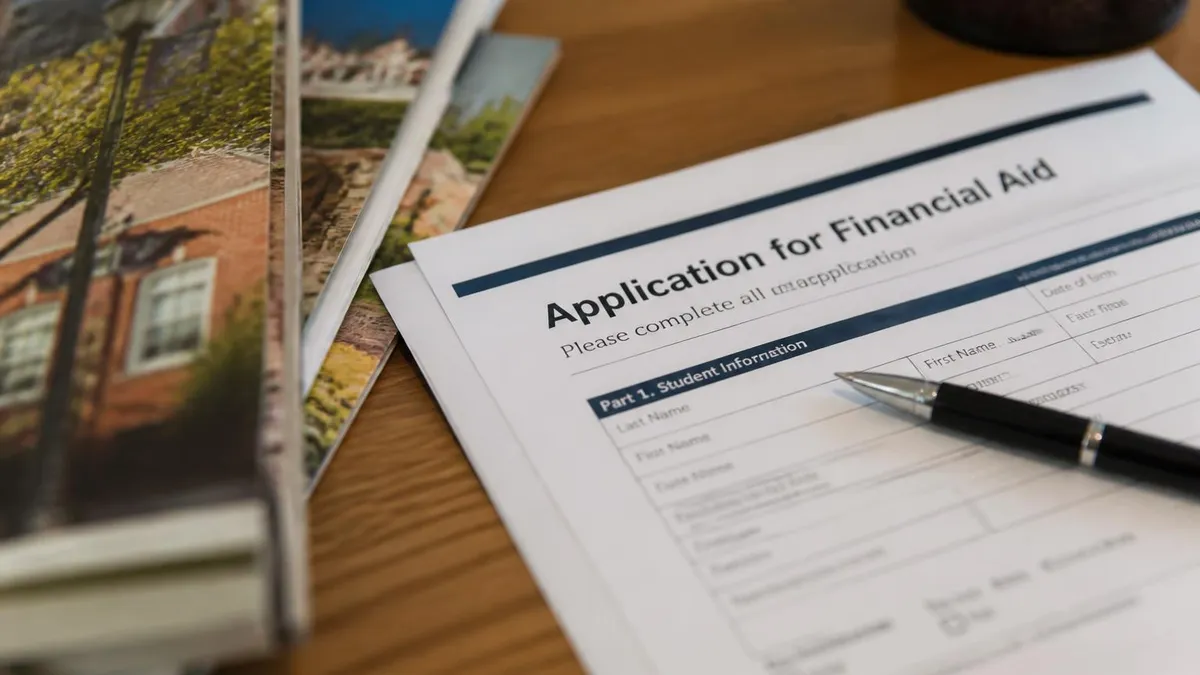
FAFSA Application PDF Pre-Submission Checklist
- ✓Confirm you downloaded the 2025-26 version, not a prior cycle
- ✓Gather 2023 federal tax return, W-2s, and untaxed income records
- ✓Collect current bank, investment, and asset statement balances
- ✓Verify Social Security numbers for student and parent contributors
- ✓Look up federal school codes for every college you may attend
- ✓Complete every required field in black or blue ink only
- ✓Cross-check transcribed tax figures against IRS form 1040 line numbers
- ✓Obtain student signature and at least one parent contributor signature
- ✓Make a photocopy of the completed form for your records
- ✓Mail via first-class postage with tracking to the Lawrence, Kansas processing center
Mail Your Paper FAFSA by January 31, 2026
While the federal deadline for 2025-26 is June 30, 2026, paper FAFSA processing takes seven to ten weeks. To meet state grant deadlines that often fall in February or March, mail your completed PDF no later than January 31, 2026. This buffer protects against postal delays, processing backlogs, and the chance that your form requires corrections before colleges can finalize aid packages.
Once you mail the completed fafsa application pdf, the processing journey begins at the federal student aid processing center in Lawrence, Kansas. Forms arrive by mail, are sorted by submission date, and then scanned using optical character recognition technology. Handwritten entries are verified by human reviewers when the scanner cannot interpret them clearly, which is one reason printing legibly in block letters matters so much. The entire process typically takes seven to ten weeks from the date the form is received.
After scanning, your data is transmitted to the Central Processing System where eligibility calculations are performed. The system computes your Student Aid Index, formerly known as Expected Family Contribution, based on income, assets, family size, and number of household members in college. This index determines how much federal aid you qualify for, including Pell Grants, subsidized loans, and work-study eligibility. The maximum 2025-26 Pell Grant is $7,395 for students with the lowest SAI calculations.
Once processing completes, you receive a Student Aid Report by mail at the address provided on the form. This report summarizes your responses and displays your calculated SAI. Review every line carefully because errors must be corrected promptly to avoid affecting your aid package. The same data is electronically transmitted to every college you listed, allowing financial aid offices to build award packages combining federal, state, and institutional aid sources.
If you provided a valid email address on the paper form, you will also receive electronic notifications about processing milestones. However, paper filers do not receive the same real-time updates available to online applicants who have an FSA ID linked to their account. To check status, call the fafsa phone number at 1-800-433-3243 with your Social Security number and date of birth ready. Representatives can confirm receipt, processing stage, and any holds or issues delaying your application.
Common reasons for processing delays include missing signatures, illegible handwriting, mismatched names between FAFSA and Social Security records, and arithmetic errors in financial calculations. The processing center will mail your form back with instructions for correction in serious cases, but minor issues may simply generate a comment code on your Student Aid Report requesting clarification. Respond to any requests within ten days to avoid losing your place in the aid queue.
For students whose colleges select them for verification, additional documentation will be requested directly by each school's financial aid office. Verification is a federal process that confirms the accuracy of reported income, assets, household size, and other key data points. Approximately 25 to 30 percent of FAFSA filers are selected for verification each year, and paper filers may face higher selection rates due to the increased likelihood of transcription errors. Respond promptly with requested tax transcripts and worksheets.
The deadline for the fafsa to be received by the federal processing center for the 2025-26 academic year is June 30, 2026. Corrections can be submitted through September 14, 2026, but late submissions cannot be used to claim aid for academic terms that have already ended. Plan to mail your paper form by mid-January 2026 to ensure all deadlines are met comfortably and to maximize your eligibility for limited-funding programs.
Never mail your original tax returns, W-2 forms, or Social Security card with the fafsa application pdf. The processing center does not need supporting documentation and these items will not be returned. Keep all original documents in a secure location at home, and only provide photocopies if a college's financial aid office specifically requests them during verification.
Even careful filers make mistakes on the fafsa application pdf, and understanding the most common errors can help you avoid weeks of unnecessary delay. The single most frequent issue is a missing or invalid signature. Both the student and at least one parent contributor must sign in ink on the designated lines, and the date must be the actual day of signing, not a future date or a date before the form was completed. Unsigned forms are returned without processing.
Name and Social Security number mismatches are the second most common error. The name on your FAFSA must exactly match the name on your Social Security card, including middle names, suffixes like Jr. or III, and hyphenated surnames. Recent name changes due to marriage or court order must first be updated with the Social Security Administration before they appear correctly on your FAFSA. This synchronization can take four to six weeks at SSA.
Financial transcription errors plague paper filers because the IRS Data Retrieval Tool, which auto-populates tax data on the online form, is unavailable for PDF submissions. Common mistakes include transposing digits, confusing adjusted gross income with total income, omitting education credits, and incorrectly calculating untaxed income. The fafsa application pdf includes a worksheet mapping each question to the corresponding line on IRS form 1040, and using this worksheet methodically prevents most transcription mistakes.
Asset reporting confusion causes both overpayment and underpayment of expected family contributions. Remember that primary residences, retirement accounts including 401(k) and IRA balances, life insurance cash value, and family farms operated by the household are not reportable assets. Conversely, second homes, investment properties, brokerage accounts, and 529 plans owned by parents must all be included. Check the latest guidance because rules have changed under the FAFSA Simplification Act.
Dependency status errors lead many independent students to mistakenly include parental information, while some dependent students try to skip parent sections to avoid involvement. The criteria for independent status are strict and include being 24 or older by January 1 of the award year, being married, having legal dependents, being a veteran, being a ward of the court, or being legally emancipated. Most undergraduates under 24 must include parental information regardless of whether they live at home or receive financial support.
Reading when fafsa is due guidance carefully prevents the most heartbreaking error of all: missing your state grant deadline. State grants from programs like Cal Grant, TAP in New York, and the Texas Grant operate on first-come, first-served funding pools that exhaust well before published deadlines. Paper filers must build in seven to ten weeks of processing time when planning their mailing date, which means January submission is essential for most state deadlines.
Finally, do not assume your form arrived safely. Use certified mail or a tracking service to confirm delivery to the Lawrence, Kansas processing center. Mail can be lost, misdirected, or damaged in transit, and without proof of delivery you have no recourse if the processing center claims they never received your application. Tracking numbers also help fafsa phone number representatives investigate missing forms more efficiently if questions arise about your submission status.
To maximize your success with the paper fafsa application pdf, adopt a systematic approach that treats the form like a tax return rather than a casual questionnaire. Set aside a quiet two-hour block when you can focus without interruption, gather every required document in a single folder, and complete the form in one sitting if possible. Splitting the work across multiple days increases the risk of inconsistent data, lost documents, and forgotten details that can derail your submission.
Create a complete photocopy of your finished form before mailing. This copy becomes your reference document for verification requests, correction submissions, and renewal applications in future years. Store it alongside your tax returns in a fireproof box or secure digital archive. If you need to call the fafsa phone number for status updates, having your exact responses on hand allows representatives to quickly verify your identity and locate your record in their system.
Practice writing in clean block letters before filling out the actual form. The processing center uses optical character recognition to scan handwritten entries, and unclear handwriting forces manual review that adds days or weeks to processing. Letters that work best are uppercase, evenly spaced, and contained entirely within the response boxes. Avoid cursive, slanted writing, or letters that extend above or below the printed guidelines on each line.
If you are a parent helping a dependent student file, treat the FAFSA as a family financial planning exercise rather than a chore. Walk through each financial question together so the student understands what information is being reported and why. This educational moment builds financial literacy and ensures the student can take ownership of renewal applications in future years. Most undergraduates must refile each year to maintain aid eligibility, and the renewal process is simpler when the original filer remembers the data sources.
Watch the calendar carefully. The 2025-26 fafsa application pdf opens for filing on December 1, 2025, and the federal deadline is June 30, 2026. However, state and institutional deadlines arrive much earlier, with some states like Connecticut and Tennessee using January or February deadlines for priority funding. Mark your calendar with the earliest deadline applicable to your situation, then count backward seven to ten weeks to determine your absolute latest mailing date for paper submission.
Consider whether an FSA ID and online filing might serve you better despite your initial preference for paper. The fafsa id takes about three business days to verify but unlocks the IRS Data Retrieval Tool, real-time status tracking, instant signature capture, and faster correction submissions. Many libraries, high schools, and community centers offer free computer access and FAFSA filing assistance specifically for families without home internet. Check with your local public library for scheduled FAFSA help sessions.
Finally, do not file alone if you have questions. The federal government funds free FAFSA assistance through programs like FAFSA Day events at high schools, College Goal Sunday in many states, and one-on-one help at TRIO Educational Opportunity Centers serving low-income and first-generation students. These resources are staffed by trained counselors who can review your paper form before mailing, catch common errors, and connect you to additional state and local aid programs you might otherwise miss entirely.
Sample FAFSA Practice Questions
Try these questions from our free FAFSA practice tests. The correct answer and an explanation follow each question.
What is an identity and statement of educational purpose form used in verification?
- A. A form verifying the student's enrollment status
- B. A document where the student confirms their identity and states they will use federal aid only for educational purposes
- C. A form used to verify the student's household size
- D. A form confirming the student's dependency status
Answer: B. A document where the student confirms their identity and states they will use federal aid only for educational purposes
The identity and statement of educational purpose form confirms who the student is and that they intend to use federal student aid solely for educational expenses.
What is the FAFSA income protection allowance (IPA)?
- A. A limit on how much income can be earned
- B. An amount of income excluded from the SAI calculation to cover basic living expenses
- C. A tax deduction for college expenses
- D. The minimum income required to receive aid
Answer: B. An amount of income excluded from the SAI calculation to cover basic living expenses
The Income Protection Allowance (IPA) is an amount of income that is shielded from the SAI calculation to account for basic living and family expenses.
Who selects students for FAFSA verification?
- A. The IRS only
- B. The student's bank
- C. The Department of Education and/or the school
- D. The state financial aid agency
Answer: C. The Department of Education and/or the school
Students can be selected for verification by the U.S. Department of Education or by the institution itself.
How many lifetime semesters of Pell Grant eligibility does each student receive?
- A. 8 semesters (4 years)
- B. 10 semesters (equivalent to 5 years)
- C. 12 semesters (6 years)
- D. Unlimited
Answer: B. 10 semesters (equivalent to 5 years)
Students are eligible for the equivalent of 12 semesters (6 years) of Pell Grant funding over their lifetime.
FAFSA Questions and Answers

FAFSA Deadline 2025-2026: Federal and State Dates You Cannot Miss

StudentAid.gov FAFSA: Complete 2025-26 Guide to Filing, Deadlines, and Aid

FAFSA Qualifications 2025-26: Complete Eligibility Requirements Guide

Do Retirement Accounts Count as Assets for FAFSA? Complete 2025-26 Guide

FAFSA Income Limit 2025-26: Complete Guide to Eligibility, Thresholds, and Aid Calculations
How this page was made: written with AI tools and published by Nathan Beja, founder of Practice Test Geeks, who is responsible for its content. Exam facts are checked against the official sources listed below. Not reviewed by a subject-matter expert. Editorial policy
Sources & references
Exam facts on this page (fees, format, dates, passing scores) are checked against these official sources; the date is our last check. Editorial policy
- studentaid.gov — Test delivery, registration deadline · verified Sep 2026