
FAA License: Types of FAA Certificates & How to Get Them 2026 September
FAA license guide: ❓ 8 pilot certificates, A&P mechanic, dispatcher, Part 107 drone. Costs, training hours, exams, and how to earn each FAA credential.

The phrase "FAA license" is one of the most searched terms in American aviation, and yet, technically speaking, the Federal Aviation Administration does not issue licenses. It issues certificates. The distinction matters more than you might think. A driver's license is a privilege granted by a state government.
An FAA certificate is a federal credential that says you have demonstrated the knowledge, skill, and judgment required to operate aircraft or maintain them inside the National Airspace System. Most pilots, mechanics, and aviation professionals still call them licenses in casual conversation, but every document you carry in your flight bag will read certificate.
That small linguistic quirk reflects a much bigger truth about aviation in the United States. The FAA's job is to make sure the people who fly, fix, and dispatch aircraft are qualified, and the agency does this through a sprawling system of certificates, ratings, and endorsements. Some take a weekend to earn. Others demand thousands of hours and tens of thousands of dollars.
A 17-year-old can solo a sailplane on a Sport Pilot path. A 23-year-old can sit in the right seat of a regional jet with an Airline Transport Pilot certificate. The same agency credentials both of them, plus the mechanic torquing the engine bolts, plus the dispatcher routing the flight around weather.
If you have ever wondered which FAA license you actually need, how long it takes, and what the test looks like, this guide walks through every major category. We'll cover the eight main pilot certificates, the mechanic credentials (A&P and IA), the Dispatcher Certificate, the Flight Engineer credential, Repairman certificates, and the newer drone or Part 107 Remote Pilot rating. Along the way, you'll see how training hours, written exams, oral checkrides, and practical tests fit together, and why your shiny new credential is technically a piece of paper, not the plastic card in your wallet.

FAA Certification by the Numbers
Key Facts at a Glance
| Item | Value | Details |
|---|---|---|
| Minimum for Private (Part 61) | 40 hrs | |
| Required for ATP | 1,500 hrs | |
| Part 107 Drone Exam Cost | $175 |
Before diving into each certificate, it helps to understand the architecture. Every FAA airman certificate sits on a three-legged stool: knowledge, experience, and skill. You prove knowledge with a computer-based written exam administered by an FAA testing partner like PSI. You prove experience with a logbook, signed and verified, showing the right mix of hours, maneuvers, and conditions. You prove skill with a practical test, the famous "checkride," which combines an oral examination and a flight or maintenance demonstration in front of a Designated Pilot Examiner (DPE) or an FAA inspector.
That same pattern, knowledge plus experience plus skill, repeats whether you are earning a Sport Pilot certificate over a few weekends or upgrading to an Airline Transport certificate after 1,500 hours. What changes is the depth. A Private Pilot oral might last 90 minutes. An ATP oral can stretch to four. A mechanic practical includes projects on real engines and airframes. The structure stays the same, the standards climb.
Certificate, Not License
The FAA does not issue "licenses." Every credential is technically a certificate, even though pilots and mechanics use both terms in everyday speech. Your wallet card will always say "certificate" because federal aviation credentials come from federal law, not state DMV-style licensing. The distinction has legal weight in enforcement and revocation cases.
The pilot certificate hierarchy is built like a ladder. You don't have to climb every rung, but each higher certificate generally requires you to hold a lower one first. The eight certificates most aviation candidates ask about are Student, Sport, Recreational, Private, Commercial, ATP, Instrument Rating, and Multi-Engine Rating. The last two are ratings rather than standalone certificates, but they're so commonly grouped with pilot licenses that we cover them here.
Think of Student Pilot as your learner's permit. It's free to apply for, requires a third-class medical (or BasicMed in some cases), and lets you fly with an instructor while you train. The Sport Pilot certificate, introduced in 2004, opened a lower-cost lane for hobbyists. Sport Pilots can fly Light Sport Aircraft, must stay in daytime VFR conditions, and are limited to one passenger. Recreational Pilots sit between Sport and Private, with restrictions on distance and complexity. Most career-minded students skip both and head straight to Private, which is the gateway to virtually everything else.
Private Pilot is where aviation gets serious. You're allowed to carry passengers, fly cross-country at night, and act as pilot in command. From there, the Commercial certificate lets you be paid to fly, and the Airline Transport Pilot certificate is the prerequisite for sitting in the captain's seat of a scheduled airline. Instrument and Multi-Engine ratings unlock weather flying and twin-engine aircraft respectively, and both are usually pursued alongside or after the Private.
The Pilot Certificate Ladder
Entry-level learner's permit. Free to apply through IACRA. Requires a third-class medical or BasicMed. Authorizes solo flight with instructor endorsements. Minimum age 16 (14 for gliders and balloons). Valid for 24 calendar months.
Sport Pilot lets you fly Light Sport Aircraft in daytime VFR, one passenger, no class B/C/D airspace without endorsement. Recreational Pilot is the older, more restricted cousin. Minimum 20 hours for Sport, 30 hours for Recreational.
The gateway certificate. Carry passengers, fly cross-country, night flying allowed with proper endorsements. Minimum 40 hours under Part 61 (35 under Part 141). Required for most higher certificates. Typical cost: $12,000-$22,000.
Commercial Pilot certificate lets you be compensated for flying (250 hours minimum). ATP is the captain's certificate for FAR 121 airlines: 1,500 hours total time, age 23 minimum, instrument and multi-engine ratings required.

The mechanic side of FAA certification is just as structured, only people talk about it less. The two pillars are the Airframe and Powerplant (A&P) certificate and the Inspection Authorization (IA). The A&P is the foundational mechanic credential, broken into two ratings, Airframe and Powerplant, that can be earned together or separately. With both ratings you can perform and supervise maintenance on most general aviation aircraft. Add an IA on top and you can return aircraft to service after annual inspections, sign off major repairs and alterations, and run your own shop.
Earning the A&P takes either 18 months of full-time experience for one rating, 30 months for both, or graduation from an FAA-approved Part 147 Aviation Maintenance Technician School. Then there are three written exams (General, Airframe, Powerplant), three oral exams, and three practical tests. The IA requires three years holding an A&P, recent experience, and an annual written test. Mechanic certificates do not expire as long as you stay current under FAR 65.83, but the IA must be renewed every two years.
Non-Pilot FAA Certificates
The Airframe and Powerplant certificate is the foundational mechanic credential. Earn it through 18-30 months of supervised experience or a Part 147 school, then pass three written exams, three orals, and three practicals. No expiration as long as you stay current under FAR 65.83. Privileges include performing and supervising maintenance on most general aviation aircraft.
Beyond pilots and mechanics, the FAA issues several specialty credentials that keep airlines and aviation businesses running. The Aircraft Dispatcher Certificate is required for the dispatchers at FAR 121 airlines who share legal responsibility with the captain for each flight. Dispatchers complete an approved course (typically five to seven weeks full-time), pass a written exam, and demonstrate flight planning and weather analysis during a practical test.
The Flight Engineer certificate has shrunk in relevance as three-pilot cockpits disappeared, but it still exists for older aircraft and certain cargo operations. The Repairman certificate is narrower still, issued to a specific person to perform specific maintenance on a specific aircraft, often used in experimental and Light Sport categories. And the newer Part 107 Remote Pilot certificate covers commercial drone operators, which we'll get into in depth shortly.
Your Private Pilot certificate from any year remains valid for life. What expires is your medical certificate (every 5 years under 40, every 2 over 40 for third-class) and your flight review currency, which must be completed every 24 calendar months. Lose currency, regain it with one hour of ground and one hour of flight with a CFI.
A common point of confusion is the difference between a certificate, a rating, and an endorsement. They are not interchangeable. Your certificate is the broad credential, Private Pilot, Commercial Pilot, ATP. Your ratings live on the certificate and define what category, class, or type of aircraft you can fly. Airplane Single-Engine Land is a class rating. Boeing 737 is a type rating. Instrument Airplane is an instrument rating.
An endorsement is a logbook signature from a certified flight instructor authorizing you to do something specific, like fly a complex airplane, operate a tailwheel, or act as pilot in command in high-performance aircraft. Endorsements are not on your certificate. They live in your logbook, and the FAA expects you to be able to produce them on request. This three-tier structure (certificate plus ratings plus endorsements) is why two pilots holding the same Private Pilot certificate can have wildly different privileges.
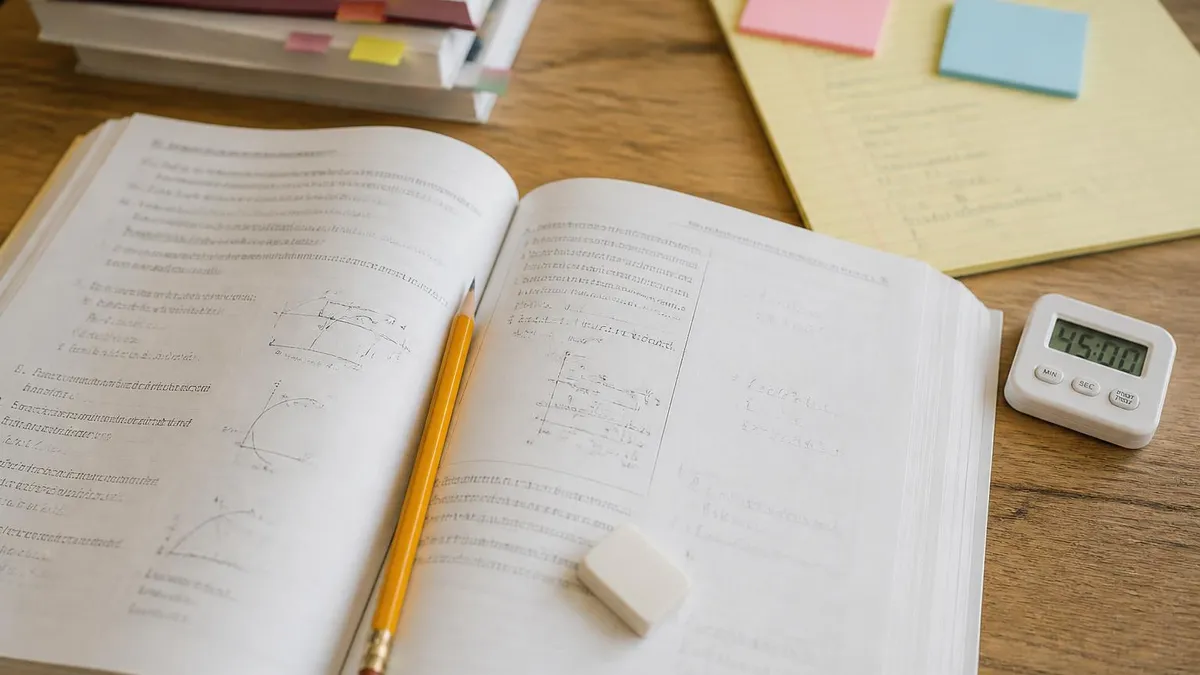
Step-by-Step: Earning an FAA Pilot Certificate
- ✓Meet the minimum age (16 for solo, 17 for Private, 18 for Commercial, 23 for ATP) and demonstrate basic English language proficiency
- ✓Obtain the required FAA medical certificate from an Aviation Medical Examiner, or qualify for BasicMed where applicable
- ✓Apply for and receive a Student Pilot certificate online via the FAA's IACRA system before your first solo flight
- ✓Log the required flight hours with a certified flight instructor, including dual instruction, solo time, cross-country, and night flying
- ✓Complete and pass the FAA written knowledge exam at a PSI testing center with a minimum score of 70 percent
- ✓Receive instructor endorsements for solo, solo cross-country, night flying, and checkride readiness in your logbook
- ✓Pass the practical test (oral exam plus flight test) with a Designated Pilot Examiner using the Airman Certification Standards
- ✓Receive your temporary 120-day paper certificate from the examiner and wait 4-6 weeks for the plastic card by mail
You may also hear pilots talk about the difference between their "paper certificate" and their "plastic." When you pass a checkride, the examiner hands you a temporary airman certificate printed on plain paper. It's valid for 120 days. During that window, the FAA mails you a permanent plastic ID card that looks roughly like a driver's license, except it has no photo.
Yes, your real FAA pilot certificate does not include a photo, which surprises a lot of people. The TSA requires you to carry a government-issued photo ID along with your certificate when you exercise pilot privileges, which is why most pilots stash their driver's license and certificate together.
Validity also depends on the type of certificate. Pilot certificates themselves don't expire. What does expire is your medical certificate and your flight review currency. A Private Pilot certificate from 1985 is still valid today, but you must have completed a flight review within the previous 24 calendar months and hold a current medical (or operate under BasicMed). Commercial pilots flying for hire must also meet recent experience requirements for the operations they conduct. ATP certificates are the same way, plus airline pilots are subject to additional currency requirements set by their carrier.
FAA Pilot License Pros and Cons
- +Pilot certificates never expire, only the medical and flight review need recurrent attention
- +Drones and Sport Pilot offer affordable entry points under $6,000 with limited prerequisites
- +Career paths to airlines are well-documented and supported by cadet programs and tuition reimbursement
- +FAA Airman Certification Standards make checkrides predictable, no surprises, all requirements public
- −Costs climb fast: $12,000-$22,000 for Private alone, $90,000+ to reach airline cockpits
- −First-attempt checkride failure rates hover around 20-25 percent, with weak oral performance the biggest culprit
- −Medical disqualifications for cardiac, mental health, or vision issues can end a career path overnight
- −Currency rules require continuous flying, lapsed pilots must retrain and complete proficiency checks
Costs vary as much as the certificates themselves. A Sport Pilot can finish for under $6,000 if they're disciplined and the aircraft rental rates are reasonable. A Private Pilot certificate typically runs $12,000 to $18,000 at a Part 61 flight school and $15,000 to $22,000 at a Part 141 program.
Add an Instrument rating for $9,000 to $13,000, a Commercial certificate for another $20,000 to $30,000 (including the new aircraft you'll need to fly), a Multi-Engine for $4,000 to $7,000, and a CFI for $5,000 to $10,000. The path from zero hours to a regional airline cockpit usually clocks in around $90,000 to $120,000, although accelerated programs and airline cadet partnerships can soften that number significantly.
Drone certification, by comparison, is the cheap seat. A Part 107 Remote Pilot certificate requires only a written exam at a PSI test center, no flight time, no medical, and no checkride. Total cost: $175 for the exam, plus whatever you spend on study materials. That's why the Part 107 has exploded in popularity. The barrier to entry is so low that real estate photographers, wedding videographers, inspectors, and farmers all hold one. The certificate must be renewed every 24 months with a free online recurrent training module.
The Part 107 itself is worth a closer look because it represents the FAA's newest major credential category. Introduced in 2016, the Remote Pilot certificate authorizes commercial drone operations of small unmanned aircraft (under 55 pounds) within visual line of sight, below 400 feet, and away from people. Operators must register their drone, follow airspace rules, and use Remote ID broadcasting. The exam covers regulations, airspace classification, weather, loading and performance, emergency procedures, crew resource management, and basic radio communications. Most candidates study for two to four weeks before testing.
Hobbyist drone pilots don't need a Part 107. They follow the Recreational UAS Safety Test (TRUST) rules, which is a free online quiz. If you ever sell a photo, get paid to inspect a roof, or use a drone in any business capacity, however, you need Part 107. The FAA has been increasingly active in enforcing this distinction, and fines for unauthorized commercial drone work can climb into the tens of thousands of dollars.
Once you understand the architecture, the actual path to any FAA license becomes a checklist. You pick the certificate, meet the eligibility (age, English proficiency, medical if required), log the experience, study for the written, pass the knowledge exam, complete the required dual and solo training, prepare for the checkride, and pass it. The FAA publishes Airman Certification Standards (ACS) for each certificate that spell out exactly what skills and knowledge areas the examiner will test. There are no surprises, and the standards are public.
The biggest variable is the human element. How fast you absorb new information, how often you can fly, and how well you and your instructor mesh determine whether your Private Pilot takes four months or fourteen. The FAA sets a minimum of 40 flight hours for Part 61 Private Pilot training (or 35 hours under Part 141), but the national average sits closer to 70 hours. Treat the minimums as a floor, not a target.
Practical test failure rates are higher than most students expect. The FAA publishes data showing roughly a 20 to 25 percent first-attempt fail rate for Private Pilot checkrides, and the most common reason is not poor flying, it's weak oral exam performance. Examiners want to hear you reason through regulations, weather, and aircraft systems out loud.
Memorizing flashcards rarely works. The students who pass on the first try are the ones who can teach the material back to themselves and others. If you're staring down a checkride, the best preparation is to practice explaining concepts out loud to a friend, ideally one who knows nothing about aviation. If they get it, the examiner will too.
Recurrent training and currency rules deserve a paragraph of their own. A flight review (formerly called a BFR) is required every 24 calendar months for any pilot exercising the privileges of any certificate. It's one hour of ground instruction plus one hour of flight with a CFI.
To carry passengers, you also need three takeoffs and landings in the previous 90 days in the same category and class (and at night if the flight is at night). Instrument rated pilots need six approaches, holding procedures, and intercepting and tracking in the previous six months to stay instrument current. Lose currency, and you must complete an Instrument Proficiency Check before flying IFR again.
Reciprocity with foreign licenses is another question that comes up often. Pilots holding an ICAO-compliant foreign license can apply for an FAA certificate based on that foreign license through a process called "verification of authenticity." It results in a Private Pilot certificate (Airplane Single-Engine Land usually), restricted to the limitations of the original license. To upgrade to Commercial or ATP, foreign pilots must pass the U.S. written exams and a checkride. Mechanics from outside the U.S. typically need to complete the full A&P process, since few foreign maintenance credentials map cleanly onto the FAA's structure.
The FAA has worked hard in recent years to digitize the application process. IACRA, the Integrated Airman Certification and Rating Application, lets you complete the paperwork online before your checkride. Your instructor and the examiner sign electronically. Your temporary certificate prints from the examiner's computer. The plastic card arrives by mail four to six weeks later. The days of mailing paper Form 8710 to Oklahoma City are gone, except for a few corner cases like flight engineer applications.
Choosing the right FAA certificate is ultimately about matching your goals to the credential. Private Pilot for the weekend family flier. Commercial for paid sightseeing. ATP for the airline cockpit. A&P for hangar work. Dispatcher Certificate for the operations center. Part 107 for drone photography. There's no shame in stopping low on the ladder if that's where your goals end. The credentials don't define you. What you do with them does.
FAA Questions and Answers
About the Author
Commercial Pilot & FAA Certification Specialist
Embry-Riddle Aeronautical UniversityCaptain Jennifer Walsh graduated with honors in Aerospace Engineering from Embry-Riddle Aeronautical University and holds FAA Airframe & Powerplant and Airline Transport Pilot certificates. With 11 years of commercial aviation experience and 6 years as a ground school instructor, she guides aviation mechanics and student pilots through FAA written exams and practical tests.
Join the Discussion
Connect with other students preparing for this exam. Share tips, ask questions, and get advice from people who have been there.
View discussion (9 replies)