
FAA Delayed Flight Compensation: Your Complete Rights Guide 2026 October
FAA delayed flight compensation explained: ✍🏼 DOT rules, refunds, tarmac limits, denied boarding payouts, EU 261, and how to file a complaint.

Your flight just got pushed back four hours. The gate agent shrugs. Other passengers are already on the phone, voices rising. So who's actually responsible here — and what are you owed? Most travelers assume the FAA handles this. They don't. The Federal Aviation Administration runs aviation safety, air traffic control, and pilot certification. Consumer compensation? That falls to the Department of Transportation (DOT) and its Office of Aviation Consumer Protection.
This distinction matters more than you'd think. When people search for "FAA delayed flight compensation," they're usually mixing two agencies. The FAA keeps planes in the sky safely. The DOT decides what your airline owes you when those planes don't move. Knowing which agency does what — and what the actual rules say — can mean the difference between a free hotel night and sleeping on a terminal floor.
It can also mean hundreds of dollars in refunds you didn't realize were waiting for you. Or thousands, if you're traveling internationally and qualify under multiple regulatory regimes at once. Travelers who understand both systems consistently come out ahead.
Here's the honest truth: the United States has no equivalent to Europe's EU 261 regulation. There's no automatic cash payout for delays. But there are real protections, especially after the DOT's 2024 rule overhaul. You just have to know how to use them. This guide walks through every angle — the agencies, the triggers, the rebooking rules, tarmac limits, denied boarding payouts, EU 261 crossover, complaint procedures, and the pro tips that frequent flyers swear by. Read it once and you'll never get blindsided at a gate again.

FAA Delayed Flight Compensation By The Numbers
So when does the clock actually start ticking on compensation? Under current DOT rules, two main triggers exist: cancellation and a significant schedule change. The DOT now defines "significant" — finally, after years of airlines making their own definitions. For domestic flights, that means a departure or arrival shift of three hours or more.
For international, it's six hours or more. Change your departure or arrival airport, downgrade your cabin class, add connections, or swap to a less accessible plane for disabled travelers? Also significant. Even baggage fees and seat-selection fees become refundable when the service you paid for doesn't get delivered as promised.
If any of those happen and you choose not to travel, you're entitled to an automatic cash refund — even on non-refundable tickets. This was the big shift. Before 2024, airlines could push travel vouchers and many passengers took them, not realizing they had a cash option.
Now refunds must be issued within seven business days for credit card purchases and twenty days for cash or check. No phone calls. No forms. No fighting. The refund goes back to the original payment method automatically. If the airline tries to push a voucher, say no and cite the DOT's automatic refund rule by name — they'll switch tracks immediately.
A delay alone, though? That's where things get murky. If your flight is just delayed but eventually departs, you're not automatically owed money. Compensation depends on the cause — and whether the airline considers it controllable. The difference between a maintenance issue and a weather hold can mean hundreds of dollars in meals and hotel rooms, or nothing at all.
The DOT Airline Customer Service Dashboard
The DOT runs a public dashboard at transportation.gov/airconsumer/airline-customer-service-dashboard showing exactly what each major US airline commits to when delays are their fault. Meals, hotel stays, rebooking on other carriers, ground transportation — every commitment is listed and legally enforceable. Bookmark this. It's your single most useful tool when negotiating at the gate.
The whole American system hinges on one phrase: controllable delay. If the delay or cancellation is the airline's fault, they owe you things. If it isn't, you're on your own. So what counts as controllable? Maintenance issues. Crew problems — pilots calling out, flight attendants stuck on another delayed inbound. Fueling delays. Cabin cleaning. Catering. Baggage loading. IT outages. Basically anything the airline could've planned for or fixed.
Uncontrollable means weather, air traffic control restrictions, security incidents, and certain medical emergencies. A thunderstorm grounding half the East Coast? Not controllable. A bird strike requiring inspection? Generally not controllable. But — and this trips people up — a maintenance issue caused by deferred service? Controllable, even if it surfaces mid-flight. The cause matters more than the timing. And cascading delays from earlier in the day, where the inbound aircraft was held up by an airline issue, stay controllable even when they hit you eight hours later.
You can ask the gate agent to put the delay reason in writing. Airlines hate this. Do it anyway. That documentation is gold if you later file a complaint or dispute a credit card charge. Some carriers list the cause in the app or on the gate display — screenshot it before the status changes, because reasons sometimes get "updated" after the fact to shift blame toward weather or ATC. The first reason posted is usually the truthful one.
Who Does What In Flight Delay Compensation
Federal Aviation Administration manages air traffic control, aviation safety standards, pilot licensing, and aircraft certification. They don't handle passenger refunds or airline customer service issues.
Department of Transportation enforces consumer protection rules through its Office of Aviation Consumer Protection. They set refund rules, tarmac delay limits, and handle complaints against airlines.
Each carrier publishes its own customer service plan and Contract of Carriage. These spell out what you get for controllable delays — meals, hotels, rebooking — and are legally binding once filed with the DOT.
Document everything. Save boarding passes, receipts, delay notifications, and any verbal promises in writing. The passenger who keeps records is the passenger who gets paid.

Let's talk specifics. When your flight gets canceled or significantly delayed for a controllable reason, here's what the major US airlines now commit to: rebooking on the same airline at no additional cost, and most also commit to rebooking on a partner or other airline. Meal vouchers kick in for delays of three hours or more. Complimentary hotel accommodations for overnight delays. Ground transportation between airport and hotel. Some carriers go further — Alaska and JetBlue, for instance, have historically offered the most generous commitments, including cash compensation for controllable cancellations in certain situations.
But these commitments only trigger when the airline acknowledges the delay is controllable. You'll need to ask, sometimes push, sometimes escalate. The agent at the desk has discretion. If you're polite, prepared, and quoting the airline's own published commitments back at them, you'll usually get what you're owed. If you're not — if you're yelling — you'll get nothing extra, and you may get less than the minimum. Agents share notes about difficult passengers in the system. The friendly traveler gets the upgrade or the last seat on the next flight. The angry one gets the standard treatment, slowly.
One overlooked tactic: rebooking through the airline's app or by calling the elite phone line (even as a non-elite, sometimes you get through) is often faster than waiting in the gate line. Three channels working at once is the smart play during meltdowns. Try the app first, dial reservations second, then physically queue for the gate agent — whichever channel processes you first is the winner. You can hang up or step out of line once you're rebooked elsewhere.
Compensation Scenarios Explained
Any cancellation — controllable or not — entitles you to a full cash refund if you choose not to fly. The airline cannot force you to take a voucher. They have seven business days (credit card) or twenty days (cash) to process it. They must also offer rebooking on the next available flight at no extra cost, including in a comparable cabin class. You pick which option works for you.
Involuntary denied boarding — what airlines call "bumping" — has the strongest passenger protections of any delay scenario. The rules are precise and dollar-specific. Before bumping anyone involuntarily, airlines must first ask for volunteers. If you volunteer, you negotiate your own compensation: cash, vouchers, future flight credits, whatever you can extract.
There's no cap on volunteer compensation. The airline wants warm bodies off the plane and will keep raising the offer until someone bites. The 2017 United-Dao incident — a passenger dragged off a flight — pushed every major carrier to start with much higher voluntary offers, sometimes $1,000 or more per seat for oversold flights.
If no one volunteers and you're picked for involuntary bumping, the math kicks in automatically. You're entitled to a written statement explaining your rights — most people never ask for it. Get it anyway. Compensation has to be paid by cash or check on the day of bumping, not as a voucher unless you specifically agree. The check is yours to keep even if the airline later rebooks you on a flight that gets you there only an hour or two later than originally planned.
Tarmac delays are the other area with hard legal teeth. The three-hour domestic and four-hour international limits aren't suggestions. Airlines that violate them face DOT fines up to $27,500 per passenger. That's why pilots so often return to the gate at the 2-hour-50-minute mark — they're not being nice, they're avoiding seven-figure penalties. A full Boeing 737 stuck on the tarmac for 3.5 hours could cost the airline over $4 million in fines if a complaint went the distance.
If your delay is caused by weather, air traffic control flow restrictions, or a security incident, airlines owe you almost nothing under US law. You'll still get rebooking on the next available flight, but meals, hotels, and ground transport are not guaranteed. This is the single biggest gap between US and EU passenger rights. Buy travel insurance for trips where weather risk is significant — December storms, hurricane season, regional snow patterns. Your credit card travel benefits may also cover meals and lodging in these scenarios.
Here's where things get interesting for international travelers. Europe's EU 261/2004 regulation gives passengers up to €600 in flat cash compensation for delays of three hours or more on flights operated by EU airlines or departing from EU airports. No bargaining. No "controllable vs uncontrollable" loophole — though extraordinary circumstances like severe weather still let airlines off the hook. The point is that EU passengers get money, period, in many delay situations where US passengers get nothing.
So when does EU 261 apply to you, an American? Anytime you're flying out of an EU airport, regardless of the airline. Or flying into the EU on an EU-based carrier. A Delta flight Atlanta to Paris — no EU 261. But the return Paris to Atlanta? Covered. A Lufthansa flight LAX to Munich? Covered both directions because Lufthansa is an EU airline arriving at an EU airport on the inbound leg too.
The catch: airlines won't proactively tell you. They'll offer rebooking and meal vouchers and hope you don't know about EU 261. File the claim yourself through the airline's website, or use a claims service that takes a cut of the payout. AirHelp, ClaimCompass, and similar services handle the paperwork for 25-35% of the recovered amount. Worth it for a €600 claim. Less so for €250.

Flight Delay Action Checklist
- ✓Screenshot your flight status, gate info, and any delay notifications from the airline app immediately
- ✓Ask the gate agent for the delay reason in writing — "controllable" vs "weather/ATC" determines everything
- ✓Save all receipts: meals, taxis, hotel stays, toiletries you had to buy because your bag was on the plane
- ✓Check the airline's published customer service commitments on the DOT dashboard before negotiating at the desk
- ✓Call the airline reservations line while standing in the gate queue — whichever channel rebooks you first wins
- ✓If denied boarding involuntarily, demand the written statement of passenger rights from the airline
- ✓File a DOT complaint at transportation.gov/airconsumer if the airline refuses to honor its own commitments
Filing a DOT complaint is easier than most travelers realize, and it's surprisingly effective. The Office of Aviation Consumer Protection takes complaints at transportation.gov/airconsumer/file-consumer-complaint. You'll need flight details, the airline, dates, what happened, what you're asking for, and ideally documentation. The DOT forwards your complaint to the airline and gives them sixty days to respond. Keep your tone factual. Quote rules. Attach receipts. Vague rants get vague responses.
Most complaints get resolved at this stage — not because the DOT can force a payout, but because airlines know that complaint volumes affect their public ratings and can trigger formal investigations. Repeated patterns lead to enforcement actions. United, American, Delta, and several others have paid eight-figure DOT penalties over the years for tarmac delay violations and refund processing failures. The Air Travel Consumer Report, published monthly, ranks airlines by complaint rates and on-time performance. Filing matters even if you don't get personal restitution — your complaint feeds into the pressure that forces system-wide change.
What the DOT won't do: get you specific cash compensation for a one-off delay. They're a regulator, not a small claims court. For that, your other tools are the airline's own customer relations department, your credit card's chargeback process (if services weren't delivered), travel insurance claims, and as a last resort, small claims court. People do win in small claims against airlines — it just takes time and willingness to follow through. Carriers often settle these cases before the hearing rather than spend lawyer hours on a $500 dispute.
US Flight Delay Rules: Pros and Cons
- +Automatic cash refunds now mandatory for cancellations and significant changes — no more voucher pressure
- +DOT dashboard makes airline commitments transparent and enforceable in plain language
- +Involuntary denied boarding pays out in cash up to $1,550 with no airline discretion
- +Tarmac delay rules carry serious financial penalties so airlines actively avoid violations
- +Free rebooking on partner airlines often available for controllable delays
- −No EU 261-style flat compensation for delays — meals and hotels only, no cash for inconvenience
- −Weather and ATC delays leave passengers with virtually no airline obligations
- −"Controllable" definition gives airlines wiggle room to deny meals and hotels
- −Refund processing can stretch to twenty days for cash payment methods
- −Most enforcement requires you to file complaints and follow up persistently
Pros and Cons at a Glance
| Pros | Cons |
|---|---|
| Automatic cash refunds now mandatory for cancellations and significant changes — no more voucher pressure | Weather and ATC delays leave passengers with virtually no airline obligations |
| DOT dashboard makes airline commitments transparent and enforceable in plain language | "Controllable" definition gives airlines wiggle room to deny meals and hotels |
| Tarmac delay rules carry serious financial penalties so airlines actively avoid violations | Refund processing can stretch to twenty days for cash payment methods |
| Free rebooking on partner airlines often available for controllable delays | Most enforcement requires you to file complaints and follow up persistently |
A few hard-won pro tips that don't make it into official guidance. Book on a credit card with travel protections. Chase Sapphire Reserve, Amex Platinum, and several other premium cards include trip delay insurance that reimburses meals and hotels for delays of six hours or more, regardless of cause. This fills the weather gap perfectly. Read the benefits guide once and you'll never travel without these coverages again. The annual fees pay for themselves on a single bad weather event.
Pick the right itinerary. The first flight of the day has the highest on-time rate — the plane and crew slept at your airport. Late afternoon connections through weather-prone hubs in summer? Recipe for disaster. Direct flights, when affordable, eliminate connection risk entirely. If you must connect, build in at least 90 minutes for international and 60 for domestic. Avoid the last flight of the day if missing it means an overnight; an afternoon backup flight is your safety net.
Know your status. Airline elite members get rebooked first, get hotel rooms first, and get the friendly phone line first. If you fly the same airline more than three times a year, the loyalty math probably works out. Even base-level status — earned through credit card spend on co-branded cards — moves you up the list during meltdowns. Status matching from other airlines is also worth trying if you switch carriers; most major US airlines will match your tier for 90 days as a courtesy.
Finally, stay calm and stay informed. The traveler who walks up to the desk with the airline's own commitments printed out and a polite request for the agent to honor them gets a different outcome than the one shouting about lawsuits. Airlines train agents to help reasonable passengers and to escalate everyone else to a manager — which costs you an hour you don't have. Be the person the agent wants to help, not the one they want to get rid of.
If you want more targeted practice, the faa written practice test page covers the same material with additional questions and explanations.
If you want more targeted practice, the faa practice test page covers the same material with additional questions and explanations.
The American flight delay system isn't going to feel as generous as Europe's. It probably never will — too much of the US airline lobby has fought EU 261-style automatic compensation for decades. But the DOT's 2024 refund rule was the biggest passenger-rights win in twenty years. Mandatory cash refunds for cancellations and significant changes. The customer service dashboard. Tighter definitions of "significant." These are real, enforceable protections that didn't exist for previous generations of travelers. More changes are likely coming, including potential family seating rules and disclosure mandates on fees.
Use them. Document everything. Know the difference between controllable and uncontrollable. Bookmark the DOT dashboard. File complaints when airlines stiff you. And buy the right credit card so weather delays don't sink your budget. The passenger who shows up prepared wins, every time. Whether you're a once-a-year flyer heading to a wedding or a road warrior cycling through three airports a week, your rights are the same — but only if you know how to invoke them. Print this guide. Save the dashboard URL to your phone. The next delay won't catch you off guard.
Sample FAA Practice Questions
Try these questions from our free FAA practice tests. The correct answer and an explanation follow each question.
During operations within controlled airspace at altitudes of more than 1,200 feet AGL, but less than 10,000 feet MSL, the minimum distance above clouds requirement for VFR flight is
- A. 500 feet.
- B. 1,000 feet.
- C. 1,500 feet.
Answer: B. 1,000 feet.
This question refers to VFR weather minimums in controlled airspace at specific altitudes. For operations within controlled airspace above 1,200 feet AGL but below 10,000 feet MSL, the minimum distance above clouds required for VFR flight is 1,000 feet. These regulations are in place to ensure adequate separation from clouds and potential IFR traffic, which may be operating in the same airspace, thereby enhancing safety.
How long would it take to complete a 360° turn if a standard rate turn were maintained?
- A. 3 minutes.
- B. 1 minute.
- C. 2 minutes.
Answer: C. 2 minutes.
A standard rate turn is defined as a turn that changes the aircraft's heading by 3 degrees per second. To complete a full 360-degree turn at this rate, you would divide 360 degrees by 3 degrees per second, which equals 120 seconds. 120 seconds is equivalent to 2 minutes.
For VFR flight operations above 10,000 feet MSL and more than 1,200 feet AGL, the minimum horizontal distance from clouds required is
- A. 1,000 feet.
- B. 2,000 feet.
- C. 1 mile.
Answer: C. 1 mile.
For VFR flight operations in controlled airspace above 10,000 feet MSL and more than 1,200 feet AGL, the minimum horizontal distance from clouds required is 1 statute mile. This is part of the more stringent VFR weather minimums at higher altitudes, which also include 5 statute miles visibility, 1,000 feet below, and 1,000 feet above clouds. These increased requirements account for higher airspeeds and reduced reaction times at these altitudes.
(Refer to Figure 22.) Determine the magnetic heading for a flight from St. Maries Airport (area 4) to Priest River Airport (area 1). The wind is from 340° at 10 knots, and the true airspeed is 90 knots.
- A. 329°.
- B. 320°.
- C. 345°.
Answer: A. 329°.
Calculating the magnetic heading begins with measuring the true course between the two points on the sectional chart. This true course is then combined with the true airspeed and wind information using a flight computer to determine the true heading, which includes the necessary wind correction angle. The final step is to convert the true heading to a magnetic heading by applying the local magnetic variation, found on the sectional chart, to align with the aircraft's magnetic compass.
FAA Questions and Answers
About the Author
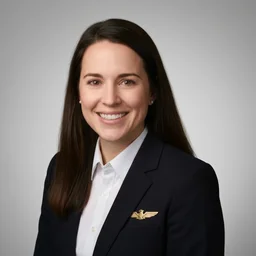
Commercial Pilot & FAA Certification Specialist
Embry-Riddle Aeronautical UniversityCaptain Jennifer Walsh graduated with honors in Aerospace Engineering from Embry-Riddle Aeronautical University and holds FAA Airframe & Powerplant and Airline Transport Pilot certificates. With 11 years of commercial aviation experience and 6 years as a ground school instructor, she guides aviation mechanics and student pilots through FAA written exams and practical tests.
Join the Discussion
Connect with other students preparing for this exam. Share tips, ask questions, and get advice from people who have been there.
View discussion (9 replies)