

Exhaust Practice Test
Updated for October 2026Exhaust Practice Test Questions
Prepare for the Exhaust exam with our free practice test modules. Each quiz covers key topics to help you pass on your first try.
Exhaust Diesel Exhaust & DPF Systems
Exhaust Exam Questions covering Diesel Exhaust & DPF Systems. Master Exhaust Test concepts for certification prep.
Exhaust EGR (Exhaust Gas Recirculation) Sy...
Free Exhaust Practice Test featuring EGR (Exhaust Gas Recirculation) Systems. Improve your Exhaust Exam score with mock test prep.
Exhaust Emissions & Catalytic Converters
Exhaust Mock Exam on Exhaust Emissions & Catalytic Converters. Exhaust Study Guide questions to pass on your first try.
Exhaust Manifolds & Headers
Exhaust Test Prep for Exhaust Manifolds & Headers. Practice Exhaust Quiz questions and boost your score.
Exhaust Mufflers & Exhaust Sound
Exhaust Questions and Answers on Mufflers & Exhaust Sound. Free Exhaust practice for exam readiness.
Exhaust Performance Exhaust Upgrades
Exhaust Mock Test covering Performance Exhaust Upgrades. Online Exhaust Test practice with instant feedback.
Exhaust System MCQ
Free Exhaust Quiz on System MCQ. Exhaust Exam prep questions with detailed explanations.
Exhaust Shop Near Me
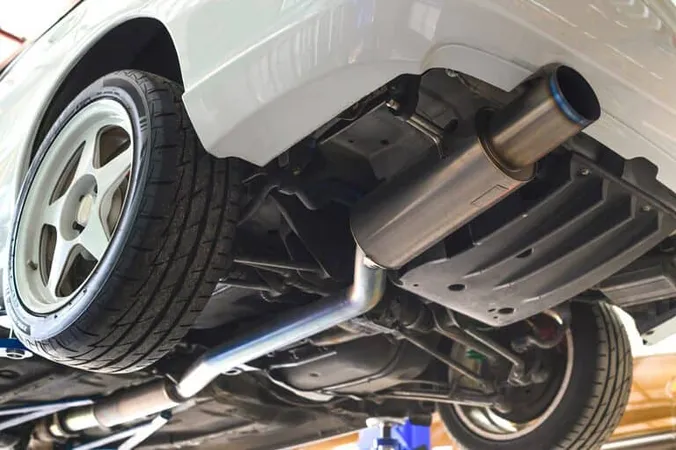
When you're in need of an exhaust repair, you can't just take your car to any auto shop. You can take your car to a shop that specializes in exhaust repairs. The services they provide range from installing a new muffler to installing a catalytic converter. They can also install new flex pipes. Many exhaust shops design and manufacture their own exhaust systems. These exhaust systems are typically made of stainless steel or 14 gauge pipes, and they work to eliminate unwanted noise and move noxious fumes out of the passenger compartment.
If you hear a hissing or knocking noise, your exhaust system could be suffering from a problem. While exhaust systems are typically constructed with rust-resistant components, exposure to water vapor and road salt can eventually cause them to rust and corrode. You should get your exhaust system checked as soon as possible, as a problem with it can lead to other issues.
- ✓Confirm your exam appointment and location
- ✓Bring required identification documents
- ✓Arrive 30 minutes early to check in
- ✓Read each question carefully before answering
- ✓Flag difficult questions and return to them later
- ✓Manage your time — don't spend too long on one question
- ✓Review flagged questions before submitting
Exhaust: Pros and Cons
- +Exhaust credential is recognized by employers and industry professionals
- +Higher earning potential compared to non-credentialed peers
- +Expanded career opportunities and professional advancement
- +Structured learning path builds comprehensive knowledge
- +Professional development that stays current with industry standards
- −Preparation requires significant time and study commitment
- −Associated costs for exams, materials, and renewal fees
- −Continuing education needed to maintain credentials
- −Competition for advanced positions can be challenging
- −Requirements and standards may vary by state or region
Pros and Cons at a Glance
| Pros | Cons |
|---|---|
| Exhaust credential is recognized by employers and industry professionals | Preparation requires significant time and study commitment |
| Higher earning potential compared to non-credentialed peers | Associated costs for exams, materials, and renewal fees |
| Expanded career opportunities and professional advancement | Continuing education needed to maintain credentials |
| Structured learning path builds comprehensive knowledge | Competition for advanced positions can be challenging |
| Professional development that stays current with industry standards | Requirements and standards may vary by state or region |
Sample Exhaust Practice Questions
Try these questions from our free Exhaust practice tests. The correct answer and an explanation follow each question.
What is a 'flex pipe' or 'flex section' in an exhaust system?
- A. A rubber coupling between the muffler and tailpipe
- B. A corrugated metal section that allows slight movement and absorbs vibration
- C. A variable-diameter pipe that adjusts to engine load
- D. A catalytic converter with a flexible substrate
Answer: B. A corrugated metal section that allows slight movement and absorbs vibration
A flex pipe is a corrugated or mesh-lined section of the exhaust that absorbs engine vibration and accommodates small movements between the engine and chassis without cracking rigid pipes.
What is a 'downpipe' in a turbocharged vehicle's exhaust system?
- A. The pipe that routes air down into the turbocharger
- B. The pipe connecting the turbocharger turbine outlet to the rest of the exhaust system
- C. The EGR pipe that routes exhaust gases downward into the intake
- D. The pipe that connects the exhaust manifold to the firewall
Answer: B. The pipe connecting the turbocharger turbine outlet to the rest of the exhaust system
The downpipe connects the turbine outlet of a turbocharger to the catalytic converter and the rest of the exhaust system, and is a critical upgrade point for turbocharged performance builds.
What area of the exhaust system is responsible for collecting the cylinder head gasses?
- A. mid-pipe
- B. resonator
- C. catalytic converter
- D. exhaust manifold
Answer: D. exhaust manifold
The exhaust manifold is the first component in the exhaust system, directly attached to the engine's cylinder head. Its primary responsibility is to efficiently collect the hot exhaust gases from each individual cylinder and combine them into a single stream, directing them towards the rest of the exhaust system.
How does EGR primarily reduce NOx formation in the combustion chamber?
- A. By adding oxygen to enrich the combustion charge
- B. By introducing inert exhaust gas that lowers peak combustion temperature
- C. By increasing the fuel-to-air ratio to cool combustion
- D. By injecting water vapor to absorb heat
Answer: B. By introducing inert exhaust gas that lowers peak combustion temperature
EGR dilutes the incoming air-fuel charge with inert exhaust gases, absorbing heat and lowering the peak combustion temperature at which NOx forms.
Exhaust Questions and Answers

About the Author

Licensed Contractor & Trades Certification Expert
Purdue UniversityMichael Torres earned his Bachelor of Science in Civil Engineering from Purdue University and holds master plumber and general contractor licenses in multiple states. With 18 years of field experience and 8 years teaching apprenticeship programs, he is a trusted resource for tradespeople preparing for journeyman and master-level licensing exams.