
ExCPT Exam 2026 October: Complete Guide to the Pharmacy Tech Certification
🎓 Master the ExCPT exam with our complete 2026 October guide. Format, content, pass rates, study tips, and free practice questions to pass the first time.

The ExCPT exam is the nationally recognized certification examination administered by the National Healthcareer Association (NHA) for aspiring pharmacy technicians who want to prove their competency and unlock better job opportunities across the United States. Standing for the Exam for the Certification of Pharmacy Technicians, this credential is accepted in nearly every state and is often a prerequisite for working at major retail chains, hospitals, and mail-order facilities. Passing it signals to employers that you have mastered the foundational knowledge needed to safely assist licensed pharmacists.
Whether you are a brand new candidate fresh out of a training program or an experienced technician seeking national certification, understanding the structure, content domains, and scoring methodology of the ExCPT is the first step toward a confident exam day. The test is computer-based, contains 100 scored questions plus 20 unscored pretest items, and gives you exactly two hours and ten minutes to complete it. This guide breaks down every component so you can study smarter, not harder.
One of the most common questions candidates ask is how this certification compares to its better-known competitor. We address the excpt vs ptcb debate in detail later, but the short answer is that both credentials open the same doors in most states, though application fees, exam difficulty, and renewal requirements differ in important ways that may sway your decision based on your state, employer preferences, and budget.
The current first-time pass rate hovers around 71 percent, which means roughly three in ten candidates walk out disappointed. The good news is that the gap between passing and failing almost always comes down to preparation strategy rather than intelligence. Candidates who use timed practice tests, review pharmacology systematically, and master pharmacy calculations consistently outperform those who rely on flashcards alone or last-minute cramming sessions the week before their scheduled appointment.
This 2026 guide reflects the latest content outline published by the NHA, including updated weighting for medication safety and the expanded emphasis on sterile compounding fundamentals. You will learn exactly which topics carry the most weight, how questions are structured, what passing score you need to hit, and where most candidates lose points unnecessarily. By the end, you will have a clear roadmap from registration through results day.
We also include free practice quizzes embedded throughout this article so you can test your knowledge as you read. These mirror the actual exam style, including scenario-based questions, calculations under time pressure, and law-and-regulation scenarios that frequently trip up otherwise prepared candidates. Use them as diagnostic tools to identify your weakest content areas before sinking another twenty hours into general review.
Finally, this guide is built for the busy adult learner. Most ExCPT candidates juggle full-time jobs, family obligations, or other coursework. The strategies you will find here emphasize efficiency, retention, and confidence-building so you can pass on your first attempt without burning out. Let us start with the numbers that define the exam.
ExCPT Exam by the Numbers
Key Facts at a Glance
| Item | Value | Details |
|---|---|---|
| Total Questions | 120 | 100 scored + 20 pretest |
| Time Allowed | 2h 10m | Computer-based testing |
| Passing Scaled Score | 390 | Out of 500 |
| Registration Fee | $117 | Standard 2026 pricing |

ExCPT Exam Format & Content Weighting
| Section | Questions | Time | Weight | Notes |
|---|---|---|---|---|
| Regulations & Pharmacy Duties | 25 | 27 min | 25% | Federal/state law, HIPAA, controlled substances |
| Drugs & Drug Therapy | 23 | 25 min | 23% | Top 200 drugs, classifications, indications |
| Dispensing Process | 22 | 24 min | 22% | Order entry, labeling, dispensing accuracy |
| Medication Safety & Quality | 15 | 16 min | 15% | Error prevention, USP standards |
| Pharmacy Calculations | 15 | 16 min | 15% | Dosing, ratios, conversions, IV rates |
| Total | 120 | 2 hours 10 minutes | 100% |
Understanding how the ExCPT distributes its 100 scored questions across five content domains is critical to building an efficient study plan. The largest domain, Regulations and Pharmacy Duties, accounts for 25 percent of your score and covers federal laws like the Controlled Substances Act, the FDA Modernization Act, HIPAA privacy rules, and the differences between schedule II through V medications. Many candidates underestimate this section because it feels like memorization, but the questions are often scenario-based and require you to apply the law in real pharmacy situations.
The Drugs and Drug Therapy domain represents 23 percent of the test and is where pharmacology knowledge pays dividends. You will see brand-to-generic conversions, drug classifications, common indications, major side effects, and clinically important drug interactions. The NHA pulls heavily from the top 200 most prescribed medications, so memorizing this list along with their therapeutic classes is non-negotiable. Expect questions like identifying which medication is a beta-blocker or recognizing the generic name of Lipitor.
Dispensing Process makes up another 22 percent and tests the practical workflow knowledge you would use daily behind the counter. This includes correctly interpreting a prescription, performing data entry, verifying NDC numbers, applying auxiliary labels, and understanding refill protocols. Candidates with hands-on pharmacy experience tend to dominate this section, while those coming straight from a classroom-only training program should spend extra time with realistic prescription scenarios and workflow simulations to close the experience gap.
Medication Safety and Quality Assurance covers 15 percent of the exam and has grown in emphasis over recent years as the industry doubles down on error reduction. Expect questions about tall-man lettering, look-alike-sound-alike medications, error reporting through MedWatch and ISMP, USP 795 nonsterile compounding standards, and USP 797 sterile compounding requirements. This is also where you will face questions about beyond-use dating and proper storage of refrigerated or hazardous medications.
Pharmacy Calculations rounds out the exam at 15 percent and is the single biggest reason candidates fail. You will face problems involving ratio and proportion, alligation, IV flow rates, days supply, business math, and unit conversions between household, apothecary, and metric systems. Calculator use is permitted through the on-screen testing platform, but understanding the underlying setup is what wins points. Our excpt examination printable resource has dozens of worked calculation examples to drill before test day.
One important note about scoring: the ExCPT uses a scaled scoring system from 200 to 500, with 390 set as the passing threshold. This means raw percentage scores do not translate directly to scaled scores. Two candidates answering the same number of questions correctly might receive slightly different scaled scores depending on the difficulty of the specific form they received, since the NHA equates forms statistically to ensure fairness across all candidates regardless of when they sit for the exam.
Finally, the 20 unscored pretest questions are scattered randomly throughout your test, and you will have no way of knowing which ones do not count. This means you must give every question your full effort and not waste mental energy trying to guess which ones are pretest items. Treat every question as if it matters, manage your time carefully, and use the on-screen flag feature liberally so you can return to tough questions if time permits at the end.
EXCPT Practice Test Questions
Prepare for the ExCPT Test exam with our free practice test modules. Each quiz covers key topics to help you pass on your first try.
EXCPT Medication Safety
EXCPT Exam Questions covering Medication Safety. Master EXCPT Test concepts for certification prep.
EXCPT Medication Safety and Errors
Free EXCPT Practice Test featuring Medication Safety and Errors. Improve your EXCPT Exam score with mock test prep.
EXCPT Pharmacology
EXCPT Mock Exam on Pharmacology. EXCPT Study Guide questions to pass on your first try.
EXCPT Pharmacology for Technicians
EXCPT Test Prep for Pharmacology for Technicians. Practice EXCPT Quiz questions and boost your score.
EXCPT Pharmacology MCQ
EXCPT Questions and Answers on Pharmacology MCQ. Free EXCPT practice for exam readiness.
EXCPT Pharmacy Law and Regulations
EXCPT Mock Test covering Pharmacy Law and Regulations. Online EXCPT Test practice with instant feedback.
EXCPT Pharmacy Operations
Free EXCPT Quiz on Pharmacy Operations. EXCPT Exam prep questions with detailed explanations.
EXCPT Prescription Dispensing Process
EXCPT Practice Questions for Prescription Dispensing Process. Build confidence for your EXCPT certification exam.
EXCPT Sterile and Non-Sterile Compounding
EXCPT Test Online for Sterile and Non-Sterile Compounding. Free practice with instant results and feedback.
EXCPT Test ExCPT Drug Storage and Inventor...
EXCPT Study Material on Test ExCPT Drug Storage and Inventory Management. Prepare effectively with real exam-style questions.
EXCPT Test ExCPT Pharmacy Calculations
Free EXCPT Test covering Test ExCPT Pharmacy Calculations. Practice and track your EXCPT exam readiness.
EXCPT Test Medication Safety
EXCPT Exam Questions covering Test Medication Safety. Master EXCPT Test concepts for certification prep.
EXCPT Test Pharmacology
Free EXCPT Practice Test featuring Test Pharmacology. Improve your EXCPT Exam score with mock test prep.
EXCPT Test Pharmacy Law and Regulations
EXCPT Mock Exam on Test Pharmacy Law and Regulations. EXCPT Study Guide questions to pass on your first try.
EXCPT Test Pharmacy Operations
EXCPT Test Prep for Test Pharmacy Operations. Practice EXCPT Quiz questions and boost your score.
EXCPT Test Prescription Dispensing Process
EXCPT Questions and Answers on Test Prescription Dispensing Process. Free EXCPT practice for exam readiness.
ExCPT Examination Eligibility & Registration
To sit for the ExCPT examination, you must be at least 18 years old, hold a high school diploma or GED, and have either completed a pharmacy technician training program within the past five years or accumulated at least 1,200 hours of supervised pharmacy work experience within the past three years. Employer-based training programs and accredited classroom programs both qualify, as do military pharmacy technician courses completed during your service.
You must also disclose any felony convictions, misdemeanor drug convictions, or pending charges on your application. The NHA reviews these case-by-case and may request additional documentation before approving your eligibility. State boards of pharmacy may have additional requirements, including background checks, fingerprinting, and state-specific registration before you can legally work as a technician, so verify your state rules before applying.

PTCB vs ExCPT: Which Certification Should You Choose?
- +Lower exam fee ($117 vs $129 for PTCB)
- +Shorter test duration (2h 10m vs 1h 50m for PTCB but fewer questions)
- +Accepted in nearly all states for pharmacy technician licensure
- +More flexible eligibility pathway via work experience
- +Renewal is straightforward with 20 CE hours every 2 years
- +NHA portal offers integrated study materials and practice exams
- +Live remote proctoring widely available from home
- −Less name recognition than PTCB among hospital employers
- −Some states still mandate PTCB specifically over ExCPT
- −Fewer third-party prep books published compared to PTCB
- −Pass rate slightly lower than PTCB national average
- −Continuing education must include patient safety hours
- −Smaller community of test takers means less peer support
- −Major chains occasionally favor PTCB in posting language
ExCPT Exam Practice Test Preparation Checklist
- ✓Download the official NHA ExCPT content outline and highlight your weakest domains
- ✓Create a 10-12 week study schedule with 8-10 hours of weekly study time blocked
- ✓Memorize the top 200 drugs with both brand and generic names plus drug class
- ✓Drill pharmacy calculations daily for at least 30 minutes using timed problems
- ✓Review federal pharmacy law including DEA forms 222, 41, and 106 thoroughly
- ✓Complete at least three full-length timed ExCPT practice tests before exam day
- ✓Master USP 795 and USP 797 standards including beyond-use dating requirements
- ✓Use flashcards for sig codes, abbreviations, and auxiliary label requirements
- ✓Schedule your exam during your peak energy time of day for maximum focus
- ✓Get a full night of sleep before exam day and eat a balanced breakfast
- ✓Bring two valid forms of government-issued ID to the testing center entrance
- ✓Review your incorrect practice questions one final time the night before
The 90-Second Rule
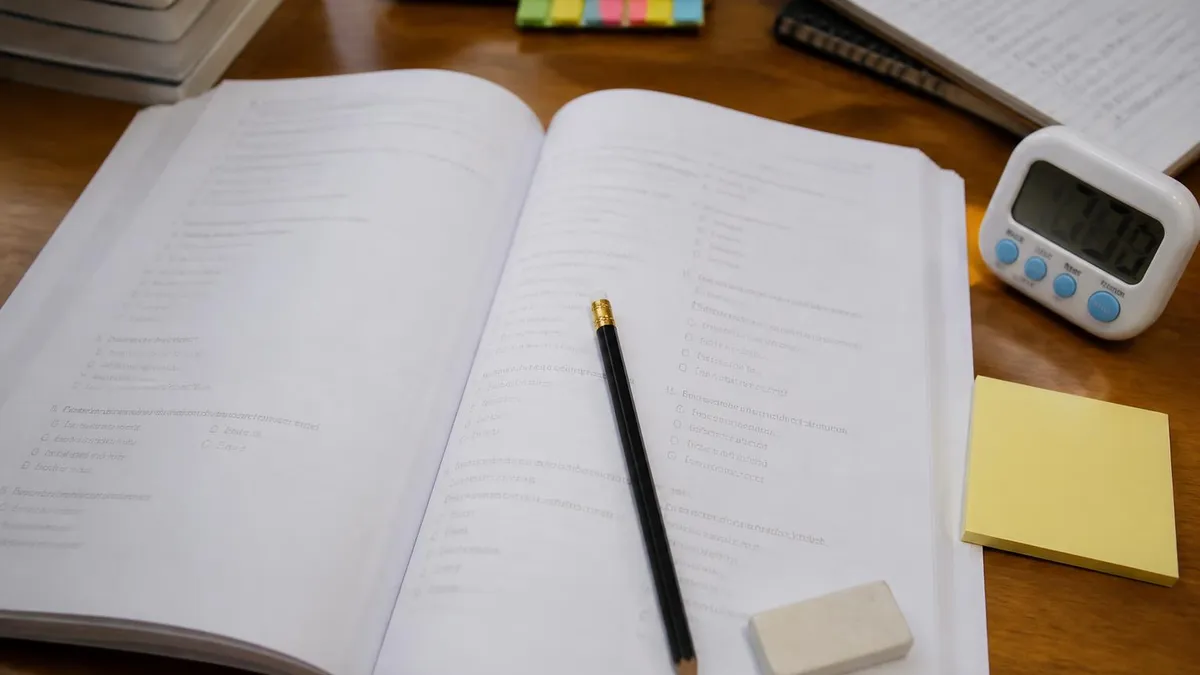
If a question takes you more than 90 seconds, flag it and move on. The ExCPT gives you roughly 65 seconds per question on average, so getting stuck on one calculation can cost you five easier questions at the end. Trust your first instinct on knowledge-based items and always return to flagged questions during the final 15 minutes of your testing window.
The total financial investment for becoming ExCPT certified is more modest than many candidates expect, but planning for both visible and hidden costs prevents surprises. The base registration fee is $117 as of 2026, which includes one attempt at the exam and access to your official score report. If you fail and need to retake, expect to pay the full fee again, which is why first-attempt preparation is so financially valuable compared to repeated retests over months.
Beyond the registration fee, most candidates spend between $200 and $600 on study materials and prep courses, depending on whether they choose free online resources, paid review books, or full-blown bootcamp courses. A solid middle-ground approach combines the free NHA study guide, one quality review book like the ExCPT Review Manual, and a subscription to an online question bank with 1,000-plus practice questions to drill weak areas before test day.
Scoring is reported as a scaled score from 200 to 500 with 390 as the passing threshold. The scaled system accounts for slight variations in difficulty between different exam forms, ensuring that a candidate who takes a tougher form is not unfairly penalized. You will see your unofficial pass or fail result on the screen immediately after submitting the exam, which provides instant emotional resolution after weeks or months of preparation work.
The official score report becomes available in your NHA portal within two business days, and the official certificate arrives by mail within four to six weeks. The report breaks down your performance by content domain, showing you which areas you mastered and which ones were borderline. Even if you pass, reviewing this breakdown is valuable because it highlights gaps you should fill during your first months on the job to build genuine professional competence.
If you do not pass, the NHA permits up to four attempts per twelve-month period, with a mandatory 30-day wait between attempts one and two and a 60-day wait between attempts two and three. The failure score report tells you exactly which domains pulled you below 390 so you can target those areas specifically rather than restudying everything from scratch. Most retakers pass on their second attempt when they focus their efforts on the specific weak areas identified in their detailed score report.
Once you pass, your CPhT credential is valid for two years, after which you must renew by completing 20 hours of continuing education and paying a $39 renewal fee. At least one CE hour must focus on patient safety, and at least one must focus on pharmacy law. The remaining hours can cover any pharmacy-related topic, and many employers provide free CE through their training departments, making renewal painless for most working technicians across the country.
Many employers reimburse the exam fee, study materials, and even paid study time as part of their employee benefits package. Before paying out of pocket, ask your manager or HR department whether your company offers a certification reimbursement program. Major chains like CVS, Walgreens, Walmart, and most hospital systems have formal reimbursement policies for technicians pursuing national certification, which can make the financial barrier essentially zero for currently employed technicians.
Passing the ExCPT does not automatically authorize you to work as a pharmacy technician in your state. Most states require a separate state registration, background check, and sometimes additional state-specific training. Check your state board of pharmacy website before applying for jobs, and budget an additional $25 to $100 and 30 to 60 days for state registration processing on top of your ExCPT certification.
A smart test-day strategy can lift your scaled score by 20 to 40 points compared to candidates with identical knowledge who just wing it. Start by visiting your testing center the day before your appointment to verify the route, parking, and entrance location, which removes morning-of stress and ensures you arrive calm and on time. If you are testing remotely, run the full system check at least 24 hours before your scheduled appointment to catch and fix any camera, microphone, or internet issues.
On the morning of the exam, eat a balanced breakfast with protein and complex carbohydrates, avoid excessive caffeine that might cause jitters during the test, and drink enough water to stay hydrated without needing constant bathroom breaks. Arrive at least 30 minutes early to complete check-in procedures including ID verification, palm vein scanning, and a thorough security check that includes pocket and pant cuff inspection at most PSI centers.
During the exam itself, attack the questions in three passes. On the first pass, answer every question you know confidently within 60 seconds and flag anything that requires deeper thinking or calculation. On the second pass, return to flagged calculation questions and work through them methodically with the on-screen calculator. On the third pass, tackle the remaining tough questions, eliminate obviously wrong answers, and make your best educated guess since there is no penalty for wrong answers.
For pharmacy calculations specifically, always write out your dimensional analysis on the scratch paper provided. The mental shortcut of trying to solve in your head leads to careless errors, especially for IV flow rates and pediatric weight-based dosing problems. Set up your units, cancel them systematically, and double-check that your final answer makes practical sense before clicking submit on any calculation question that costs as much as a knowledge question.
Use the on-screen calculator carefully and confirm every number you enter, since fat-fingered keystrokes are a leading cause of preventable point losses. For drug name questions, read every option before selecting, because the exam loves look-alike-sound-alike distractors like hydroxyzine versus hydralazine or Celexa versus Celebrex. Slowing down by an extra five seconds per drug question prevents the easy mistakes that quietly accumulate and push a passing score down into the failing range.
Our excpt exam practice test resource provides hundreds of timed calculation problems with detailed worked solutions, which is the single most efficient way to build calculation speed and accuracy in the final weeks before your exam. Candidates who complete at least 100 timed calculation problems consistently score higher on the calculations domain than candidates who only review concepts without active problem solving practice under real time pressure.
Finally, manage your mental energy throughout the two-hour and ten-minute test. Take a 15-second deep-breathing pause after every 25 questions to reset your focus and reduce decision fatigue. If you hit a difficult cluster of questions, do not let frustration snowball into rushed mistakes on the next ten questions. The ExCPT is a marathon of focus, and the candidates who finish strongest are the ones who pace their cognitive effort intentionally from question one all the way through question 120.
With less than two weeks to go before your exam date, your study strategy should shift from learning new material to consolidating what you already know and shoring up specific weak areas identified through practice tests. Spending three hours reviewing pharmacology you already know at 90 percent accuracy is far less valuable than spending one hour on the law concepts where you only score 60 percent. Be honest with yourself about your gaps and target them aggressively in your final preparation sprint.
Take at least two full-length timed practice exams during this final stretch, ideally one a week before your real exam and one three days before. Treat these as dress rehearsals with no phone, no notes, and no breaks beyond what the real exam allows. Reviewing your wrong answers in detail after each practice test is where the magic happens, because every missed question represents a specific knowledge gap that you can close before it costs you points on the real test.
Build a one-page cheat sheet of your personal trouble spots covering things like sig code abbreviations you keep confusing, DEA form numbers and their purposes, BUD requirements for compounded sterile preparations, and any drug names that consistently trip you up. Review this single sheet every morning for the final week so the information becomes automatic recall by exam day. Do not try to make the cheat sheet comprehensive, since the value lies in its focus on your specific weaknesses rather than general content.
For pharmacology, prioritize the top 200 drugs ruthlessly. Within those 200, the exam favors cardiovascular medications, antidiabetics, antibiotics, antidepressants, and controlled substances disproportionately. If your time is limited, focus on these high-yield therapeutic classes first. Use spaced repetition flashcard apps like Anki or Quizlet to ensure you can recall brand and generic names in both directions, since the exam tests in both formats throughout the drugs and drug therapy domain.
Our excpt test study guide breaks down the seven most important tips that consistently separate first-time passers from those who need a retake. The single most impactful tip is starting practice questions early in your study plan rather than waiting until you feel ready. Practice questions reveal what you actually know versus what you think you know, and that distinction is the difference between a confident pass and a discouraging fail with weeks of wasted study time behind it.
In the 48 hours before your exam, dial back the intensity rather than ramping it up. Cramming the night before causes mental fatigue that hurts your performance more than any last-minute review helps. Light review of your one-page cheat sheet, a moderate exercise session to manage anxiety, a normal-sized dinner, and a full eight hours of sleep will leave you sharper than any midnight study marathon ever could.
Walk into your testing center with confidence built on weeks of focused preparation, not nervous energy from last-minute scrambling. Trust your study plan, trust the practice tests that prepared you, and trust your ability to recognize the patterns in the questions you have seen hundreds of times during practice. The ExCPT rewards prepared candidates consistently, and you have everything you need to be one of them when you sit down at that workstation on test day.
Sample ExCPT Practice Questions
Try these questions from our free ExCPT practice tests. The correct answer and an explanation follow each question.
A patient's daughter calls the pharmacy asking for a list of her mother's current medications. The mother is a long-time patient at the pharmacy. To comply with the Health Insurance Portability and Accountability Act (HIPAA), what is the most appropriate action for the pharmacy technician?
- A. Provide the list, as she is an immediate family member.
- B. Deny the request unless the patient has provided prior written authorization to release information to the daughter.
- C. Ask the daughter to verify her mother's date of birth before providing the list.
- D. Tell the daughter to have her mother call the pharmacy directly.
Answer: B. Deny the request unless the patient has provided prior written authorization to release information to the daughter.
HIPAA's Privacy Rule protects a patient's Protected Health Information (PHI), which includes their medication list. PHI cannot be disclosed to family members without the patient's explicit authorization, typically through a signed consent form on file at the pharmacy. Simply verifying a date of birth is not sufficient, and while having the patient call is an option, the core HIPAA principle is the requirement of documented authorization.
A patient's profile shows they have prescriptions for both sertraline (Zoloft) and fluoxetine (Prozac). The pharmacy's computer system flags an alert. What is the most likely reason for this alert?
- A. Drug-allergy interaction
- B. Therapeutic duplication
- C. Incorrect dosage form
- D. Contraindicated in patient's age group
Answer: B. Therapeutic duplication
Sertraline and fluoxetine are both classified as Selective Serotonin Reuptake Inhibitors (SSRIs). Prescribing two drugs from the same therapeutic class is considered a duplication and increases the risk of adverse effects, such as serotonin syndrome. The technician should bring this alert to the pharmacist's attention.
What does the acronym FIFO mean in pharmacy inventory management?
- A. First In, First Out
- B. Fill In, Fill Out
- C. First Item, Final Order
- D. Fixed Inventory, Fixed Output
Answer: A. First In, First Out
FIFO (First In, First Out) means older stock is dispensed before newer stock to prevent expiration.
A pharmacy technician receives a prescription for metformin 500 mg but the label printed says metformin 1000 mg. What is the BEST action?
- A. Dispense the 1000 mg because it's a common dose
- B. Alert the pharmacist immediately before dispensing
- C. Change the label manually to 500 mg
- D. Call the patient to confirm their dose
Answer: B. Alert the pharmacist immediately before dispensing
Any discrepancy between the prescription and the label must be flagged to the pharmacist before dispensing.
Excpt Questions and Answers


About the Author

Educational Psychologist & Academic Test Preparation Expert
Columbia University Teachers CollegeDr. Lisa Patel holds a Doctorate in Education from Columbia University Teachers College and has spent 17 years researching standardized test design and academic assessment. She has developed preparation programs for SAT, ACT, GRE, LSAT, UCAT, and numerous professional licensing exams, helping students of all backgrounds achieve their target scores.