

ETC Practice Test
Updated for October 2026The Environmental Technician Certification (ETC) serves as a pivotal credential for professionals dedicated to environmental science and protection. This certification validates an individual's expertise in monitoring environmental conditions, conducting field and laboratory tests, and ensuring compliance with environmental regulations. As environmental concerns escalate globally, the demand for certified environmental technicians continues to rise, making the ETC a valuable asset for career advancement.
ETC Practice Test Questions
Prepare for the ETC - Environmental Technician Certification exam with our free practice test modules. Each quiz covers key topics to help you pass on your first try.
ETC Air Quality & Emissions Monitoring
ETC Exam Questions covering Air Quality & Emissions Monitoring. Master ETC Test concepts for certification prep.
ETC Environmental Monitoring & Instrumenta...
Free ETC Practice Test featuring Environmental Monitoring & Instrumentation. Improve your ETC Exam score with mock test prep.
ETC Environmental Site Assessment & Invest...
ETC Mock Exam on Environmental Site Assessment & Investigation. ETC Study Guide questions to pass on your first try.
ETC Hazardous Waste Management
ETC Test Prep for Hazardous Waste Management. Practice ETC Quiz questions and boost your score.
ETC Soil & Groundwater Remediation
ETC Questions and Answers on Soil & Groundwater Remediation. Free ETC practice for exam readiness.
ETC Water Quality & Treatment
ETC Mock Test covering Water Quality & Treatment. Online ETC Test practice with instant feedback.
ETC Environmental Regulations & Compliance
Free ETC Quiz on Environmental Regulations & Compliance. ETC Exam prep questions with detailed explanations.
ETC Environmental Sampling & Analysis
ETC Practice Questions for Environmental Sampling & Analysis. Build confidence for your ETC certification exam.
Key Takeaways
Free ETC Practice Test Online
The ETC validates expertise in environmental monitoring and compliance.
Certification enhances job prospects in various sectors, including government and private industry.
Preparation involves understanding environmental regulations, sampling techniques, and data analysis.
Hands-on experience is crucial for practical understanding and exam success.
Continuing education is essential to stay updated with evolving environmental standards.
Networking with professionals can provide insights and job opportunities.
The ETC is a stepping stone to advanced roles in environmental science and management.

Understanding the ETC Exam Structure
The Environmental Technician Certification exam assesses a candidate's proficiency in various aspects of environmental science. Key areas include environmental regulations, sampling methodologies, laboratory procedures, and data interpretation. The exam typically comprises multiple-choice questions, case studies, and practical assessments to evaluate both theoretical knowledge and practical skills.
Candidates are expected to demonstrate a thorough understanding of environmental laws, such as the Clean Air Act and the Clean Water Act, as well as proficiency in using equipment for sampling air, water, and soil. Familiarity with laboratory instruments and data analysis software is also essential.
Educational Pathways and Prerequisites
To be eligible for the ETC, candidates usually need a minimum of an associate degree in environmental science or a related field. Some positions may require a bachelor's degree, depending on the complexity of the role. Relevant coursework includes biology, chemistry, environmental regulations, and data analysis. Practical experience through internships or laboratory work is highly beneficial.
Institutions like Blue Ridge Community and Technical College offer certificate programs that prepare students for the ETC by providing hands-on training in environmental sampling and analysis.
Core Competencies and Skills
Certified environmental technicians are expected to possess a range of skills, including:
Analytical Skills: Ability to interpret data and identify trends in environmental samples.
Technical Proficiency: Familiarity with sampling equipment and laboratory instruments.
Regulatory Knowledge: Understanding of environmental laws and compliance requirements.
Communication Skills: Ability to document findings and communicate results effectively.
Problem-Solving Abilities: Capacity to identify environmental issues and propose solutions.
These competencies are crucial for tasks such as conducting environmental assessments, developing remediation plans, and ensuring adherence to environmental standards.
Career Opportunities and Advancement
Holding an ETC opens up various career paths, including roles as environmental technicians, compliance officers, and environmental consultants. Employment opportunities exist in government agencies, private consulting firms, and non-profit organizations. According to the U.S. Bureau of Labor Statistics, employment of environmental science and protection technicians is projected to grow 7 percent from 2026 to 2033, faster than the average for all occupations.
With experience and further education, certified technicians can advance to senior positions, such as environmental scientists or project managers, overseeing complex environmental projects and leading teams of technicians.
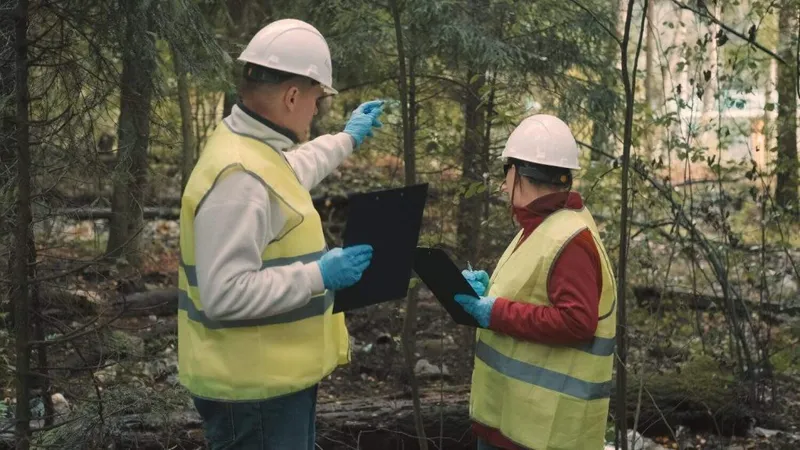
Continuing Education and Professional Development
Environmental regulations and technologies are continually evolving, making ongoing education essential for certified technicians. Engaging in workshops, seminars, and additional certifications ensures that professionals remain current with industry standards and best practices.
Organizations like the National Registry of Environmental Professionals (NREP) offer advanced certifications, such as the Registered Environmental Laboratory Technologist (RELT), for those seeking to specialize further.

Conclusion
The Environmental Technician Certification serves as a foundational credential for those aspiring to make a significant impact in environmental science and protection. It not only validates a professional's expertise but also opens doors to diverse and rewarding career opportunities.
Achieving the ETC requires a combination of formal education, practical experience, and a commitment to continuous learning. As environmental challenges become more complex, the role of certified technicians becomes increasingly vital in developing sustainable solutions and ensuring regulatory compliance.
For individuals passionate about safeguarding the environment and public health, the ETC offers a pathway to a fulfilling and impactful career. By staying informed, gaining experience, and pursuing ongoing education, environmental technicians can contribute significantly to the preservation and improvement of our natural world.
- +Industry-recognized credential boosts your resume
- +Higher earning potential (10-20% salary increase on average)
- +Demonstrates commitment to professional development
- +Opens doors to advanced career opportunities
- −Exam preparation requires significant time investment (4-8 weeks)
- −Certification fees can be $100-$400+
- −May require continuing education to maintain
- −Some employers may not require certification
Sample ETC - Environmental Technician Certification Practice Questions
Try these questions from our free ETC - Environmental Technician Certification practice tests. The correct answer and an explanation follow each question.
What is the first action an Environmental Technician should take in the event of a hazardous material spill?
- A. Attempt to clean up the spill
- B. Evacuate the area & notify a supervisor
- C. Record the incident in the logbook
- D. Ignore it if the spill seems minor
Answer: B. Evacuate the area & notify a supervisor
In the event of a hazardous material spill, the first priority is always safety. An Environmental Technician should immediately evacuate the area to ensure personal safety and prevent further exposure to others. Notifying a supervisor or emergency personnel is crucial for initiating proper spill response procedures, which may include containment, cleanup, and reporting.
Which of the following is the primary reason for using chain of custody documentation in environmental sampling?
- A. To ensure sample integrity and legal defensibility
- B. To track sampling equipment locations
- C. To record the weather conditions during sampling
- D. To monitor laboratory staff schedules
Answer: A. To ensure sample integrity and legal defensibility
The primary reason for using chain of custody documentation in environmental sampling is to maintain the integrity of the sample and ensure its legal defensibility. This detailed record tracks the sample's handling, transfer, and storage from collection to analysis, proving it has not been tampered with. This is crucial for regulatory compliance and potential litigation, ensuring data reliability.
Why is compliance with environmental regulations important for businesses?
- A. It increases advertising budgets
- B. It delays environmental reporting
- C. It avoids legal and environmental penalties
- D. It increases pollution output
Answer: C. It avoids legal and environmental penalties
Compliance with environmental regulations is crucial for businesses to avoid significant legal and financial repercussions. Non-compliance can lead to substantial fines, civil penalties, criminal charges, and costly cleanup requirements. Adhering to regulations also enhances a company's public image, fosters good community relations, and can lead to operational efficiencies.
Which of the following agencies enforces environmental regulations in the United States?
- A. Federal Emergency Management Agency (FEMA)
- B. Occupational Safety & Health Administration (OSHA)
- C. Environmental Protection Agency (EPA)
Answer: C. Environmental Protection Agency (EPA)
The Environmental Protection Agency (EPA) is the primary federal agency responsible for enforcing environmental regulations in the United States. Established to protect human health and the environment, the EPA develops and enforces environmental laws, sets national standards, and provides guidance to states and tribes. It plays a crucial role in ensuring compliance with acts like the Clean Air Act and Clean Water Act.
Take the full ETC - Environmental Technician Certification practice test
(ETC) Environmental Technician Certification Questions and Answers
About the Author

Environmental Scientist & Sustainability Certification Expert
UC Berkeley College of Environmental DesignDr. Laura Chen holds a PhD in Environmental Science and an MS in Chemistry from UC Berkeley. A Certified Hazardous Materials Manager with 15 years of environmental consulting experience, she specializes in ISO 14001 environmental management, HAZWOPER certification, and wastewater operator licensing. She has coached professionals through state and federal environmental certification programs nationwide.
Join the Discussion
Connect with other students preparing for this exam. Share tips, ask questions, and get advice from people who have been there.
View discussion (9 replies)