

EMG Practice Test
Updated for September 2026Electromyography (EMG) plays a crucial role in diagnosing and treating neuromuscular disorders. As healthcare advances, the demand for certified electromyography professionals continues to grow. Obtaining an Electromyography Certification validates expertise in conducting EMG tests, interpreting results, and ensuring patient safety.
Whether you are a physician, physical therapist, or technician specializing in neurology, obtaining an EMG certification can enhance your career and provide better diagnostic outcomes for patients. This guide explores what electromyography is, the certification process, the differences between EMG and acceleromyography, and the duration of an EMG test.
EMG Practice Test Questions
Prepare for the EMG - Electromyography Certification exam with our free practice test modules. Each quiz covers key topics to help you pass on your first try.
EMG Communication & Stakeholder Engagement
EMG Exam Questions covering Communication & Stakeholder Engagement. Master EMG Test concepts for certification prep.
EMG Clinical Applications & Pathology
Free EMG Practice Test featuring EMG Clinical Applications & Pathology. Improve your EMG Exam score with mock test prep.
EMG Documentation & Reporting
EMG Mock Exam on EMG Documentation & Reporting. EMG Study Guide questions to pass on your first try.
EMG Instrumentation & Data Interpretation
EMG Test Prep for Instrumentation & Data Interpretation. Practice EMG Quiz questions and boost your score.
EMG Nerve Conduction Studies
EMG Questions and Answers on Nerve Conduction Studies. Free EMG practice for exam readiness.
EMG Neuroanatomy & Physiology
EMG Mock Test covering Neuroanatomy & Physiology. Online EMG Test practice with instant feedback.
EMG Patient Safety & Protocols
Free EMG Quiz on Patient Safety & Protocols. EMG Exam prep questions with detailed explanations.
EMG Procedures & Techniques
EMG Practice Questions for Procedures & Techniques. Build confidence for your EMG certification exam.
EMG Professional Ethics & Standards
EMG Test Online for Professional Ethics & Standards. Free practice with instant results and feedback.
Key Takeaways
Free EMG Practice Test Online
Electromyography Certification is essential for professionals conducting EMG tests in neurology and rehabilitation.
Electromyography (EMG) measures muscle electrical activity to diagnose neuromuscular disorders.
A nerve conduction electromyography test evaluates both nerve and muscle function.
Acceleromyography vs. Electromyography – AMG measures muscle movement, while EMG assesses electrical activity.
The duration of an EMG test varies based on the complexity of the examination.
Understanding Electromyography Certification
An Electromyography Certification is a professional credential that demonstrates proficiency in performing and interpreting electromyography tests. EMG-certified professionals include neurologists, physiatrists, and trained technologists who use EMG to diagnose conditions affecting muscles and nerves.
- ✓Review the official EMG exam content outline
- ✓Take a diagnostic practice test to identify weak areas
- ✓Create a study schedule (4-8 weeks recommended)
- ✓Focus on your weakest domains first
- ✓Complete at least 3 full-length practice exams
- ✓Review all incorrect answers with detailed explanations
- ✓Take a final practice test 1 week before exam day
Why Is Electromyography Certification Important?
Ensures Clinical Competency – Validates skills in performing EMG and nerve conduction studies (NCS).
Enhances Career Opportunities – Recognized by medical institutions and diagnostic centers.
Improves Patient Safety – Certified professionals follow best practices for accuracy and patient care.
Meets Regulatory Standards – Many healthcare facilities require certification for performing EMG tests.
Who Offers Electromyography Certification?
Several professional organizations provide certification for electromyography, including:
American Board of Electrodiagnostic Medicine (ABEM)
American Association of Neuromuscular & Electrodiagnostic Medicine (AANEM)
Board of Registered Polysomnographic Technologists (BRPT) – for technologists performing nerve studies
What Is Electromyography?
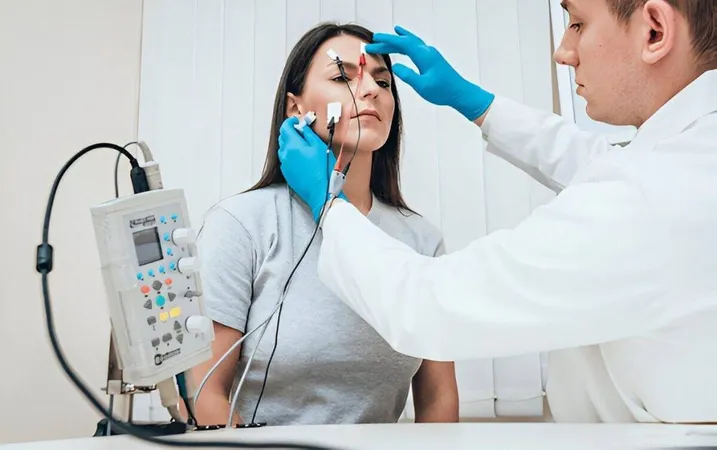
Electromyography (EMG) is a diagnostic procedure used to assess the health of muscles and motor neurons. It measures the electrical activity of muscles in response to nerve stimulation. Physicians use EMG to diagnose conditions such as muscular dystrophy, amyotrophic lateral sclerosis (ALS), and nerve damage.
How Does EMG Work?
A thin needle electrode is inserted into the muscle.
The electrode detects electrical activity when the muscle is at rest and during contraction.
The recorded signals help doctors evaluate nerve and muscle function.
Common Conditions Diagnosed with EMG
Carpal tunnel syndrome
Peripheral neuropathy
Muscle disorders such as myopathy
Spinal nerve compression (radiculopathy)
EMG is often performed alongside a nerve conduction study (NCS) to evaluate nerve function and identify abnormalities.
Nerve Conduction Electromyography Test: What to Expect
A nerve conduction electromyography (EMG) test is a two-part diagnostic procedure that includes nerve conduction studies (NCS) and needle EMG.
How Is the Test Performed?
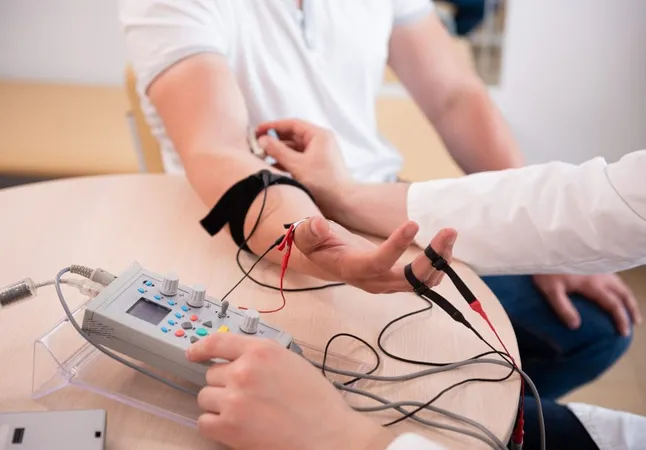
Nerve Conduction Study (NCS): Electrodes are placed on the skin to stimulate nerves and measure their electrical response.
Needle EMG: A small needle electrode is inserted into specific muscles to assess their electrical activity.
What Are the Applications of a Nerve Conduction EMG Test?
Diagnosing nerve injuries and disorders
Evaluating muscle diseases and conditions affecting nerve signals
Differentiating between nerve and muscle disorders
Is the Test Painful?
Patients may feel mild discomfort during the test due to needle insertion and electrical stimulation. However, the procedure is generally well-tolerated.
Acceleromyography vs. Electromyography: Key Differences
Both acceleromyography (AMG) and electromyography (EMG) are used in neuromuscular monitoring, but they serve different purposes.
Comparison Between Acceleromyography and Electromyography
| Feature | Electromyography (EMG) | Acceleromyography (AMG) |
|---|---|---|
| Function | Measures muscle electrical activity | Measures muscle movement via acceleration |
| Method | Uses needle electrodes | Uses surface sensors |
| Application | Diagnosing neuromuscular disorders | Monitoring neuromuscular blockade in anesthesia |
| Accuracy | High for neurological diagnosis | Useful for real-time muscle response monitoring |

When to Use Each Test
Use EMG for diagnosing neuromuscular disorders such as ALS, neuropathy, and myopathy.
Use AMG for intraoperative neuromuscular monitoring, particularly in anesthesia.
Both methods are valuable in clinical practice, depending on the diagnostic or monitoring needs.
How Long Does an Electromyography Take?
The duration of an electromyography (EMG) test depends on the complexity of the evaluation.
Typical Timeframe for an EMG Test
Nerve Conduction Study (NCS) Only: 15–30 minutes
Needle EMG Only: 30–60 minutes
Combined NCS and EMG Test: 45–90 minutes
Factors Affecting Test Duration
Number of Muscles and Nerves Examined – More areas require additional time.
Severity of Symptoms – Complex cases may need extended testing.
Patient Sensitivity – Some individuals may require breaks between procedures.
After the test, patients can resume normal activities, though some may experience temporary muscle soreness.
EMG: Pros and Cons
- +EMG certification validates expertise recognized by employers nationwide
- +Certified professionals typically earn 15-20% higher salaries
- +Opens doors to advanced positions and leadership roles
- +Demonstrates commitment to professional standards and ethics
- +Builds a strong professional network through certification communities
- −Exam preparation typically requires 2-4 months of dedicated study
- −Certification and exam fees can range from $150-$500+
- −Must complete continuing education to maintain active certification
- −Pass rates vary — thorough preparation is essential for success
- −Some certifications require prerequisite experience or education
About the Author

Certified Professional Development Expert & Niche Certification Advisor
University of Pennsylvania Graduate School of EducationDr. Alexandra Kim holds a PhD in Professional Studies from the University of Pennsylvania and is a Certified Professional in Learning and Performance (CPLP) and Certified Professional in Talent Development (CPTD). With 17 years of corporate training and professional certification advisory experience, she helps professionals navigate specialized, emerging, and cross-industry certification programs.
Join the Discussion
Connect with other students preparing for this exam. Share tips, ask questions, and get advice from people who have been there.
View discussion (8 replies)