
Grouping Strategies for ELL Students: A Complete Guide for Teachers 2026 October
Master grouping ELL students with proven strategies. 🎓 Learn flexible, heterogeneous & language-based grouping to boost achievement.

Grouping ELL students effectively is one of the most powerful instructional decisions a teacher can make. When English Language Learners are placed in thoughtfully organized groups, they gain far more than language practice — they develop academic confidence, content knowledge, and the social skills needed to thrive in American classrooms. Research consistently shows that purposeful grouping can accelerate language acquisition by up to 30% compared to whole-class instruction alone, making it a cornerstone practice for any educator working with linguistically diverse students.
The challenge, of course, is that there is no single correct way to group ELL students. A strategy that works brilliantly in a third-grade dual-language classroom may fall flat in a high school sheltered English content course. Variables such as proficiency level, home language, content demands, and social dynamics all interact in complex ways. Effective teachers treat grouping as a dynamic tool rather than a fixed arrangement, rotating configurations weekly or even daily to serve different instructional purposes and keep students engaged with fresh perspectives.
Understanding the research base behind grouping strategies for ell students helps teachers move beyond guesswork. Landmark studies from Krashen's comprehensible input hypothesis to Swain's output hypothesis both point toward the same conclusion: ELL students need structured opportunities to both receive and produce language in low-anxiety settings. Small groups create exactly this kind of environment, lowering the affective filter while simultaneously raising cognitive engagement with academic content.
Heterogeneous grouping — mixing students of different English proficiency levels — offers some of the richest learning opportunities available. When a newcomer sits alongside an intermediate-level peer who shares the same home language, code-switching becomes a legitimate academic scaffold rather than a classroom management problem. Meanwhile, the intermediate student reinforces their own understanding by explaining concepts, a process cognitive scientists call the protégé effect. Both students leave the interaction with stronger language and content skills than they entered.
Homogeneous grouping by proficiency level, on the other hand, allows teachers to deliver targeted instruction at a precise zone of proximal development. A group of three beginning-level students can work intensively on high-frequency vocabulary and sentence frames while the rest of the class engages with more complex text. This targeted approach is especially valuable during the first semester for newcomers who might otherwise feel lost and disengaged in mixed-level settings where conversations move too quickly for them to participate meaningfully.
Language-based grouping — placing students who share a native language together for specific tasks — is a strategy that many teachers underuse out of concern that students will simply speak their home language and avoid English practice. However, bilingual peer partnerships have been shown to accelerate comprehension of complex academic concepts, particularly in math, science, and social studies, because students can first build conceptual understanding in their stronger language before transferring that knowledge into English expression. Strategic use of home language is not a detour around English — it is a highway toward it.
This guide will walk you through the major grouping configurations available to ELL teachers, the research supporting each approach, practical implementation steps, and the common pitfalls to avoid. Whether you are a new teacher just beginning to build your toolkit or a veteran educator looking to refine your practice, the strategies covered here will give you concrete, classroom-ready techniques you can implement as soon as tomorrow morning.
ELL Grouping Strategies by the Numbers

Core Types of ELL Grouping Configurations
Students of varying English proficiency levels work together. Higher-proficiency peers model language use while beginners receive comprehensible input from near-peers. Builds academic talk and social belonging simultaneously across all content areas.
Students grouped by similar English proficiency receive targeted instruction at their exact developmental stage. Allows teachers to deliver focused vocabulary, grammar, and academic language support without leaving newcomers or advanced ELLs behind.
Students sharing a home language collaborate to build concept understanding before expressing ideas in English. Uses bilingualism as a cognitive asset, especially effective for complex STEM content and abstract social studies concepts.
Students grouped around shared academic interests or project topics. Highly motivating for all learners; ELLs gain authentic reasons to communicate in English while engaging deeply with content they genuinely care about and want to explore.
Groups change regularly based on formative assessment data, task type, or social needs. Prevents ELLs from being permanently labeled or sorted by proficiency, and ensures every student experiences multiple classroom roles throughout the week.
Forming effective ELL groups begins long before students ever sit down together. The foundation of good grouping practice is accurate, ongoing assessment of where each student stands in their language development journey. Teachers should draw on multiple data sources: formal proficiency assessments like WIDA ACCESS, informal running records, writing samples, speaking observations during structured activities, and even simple conversation checks. No single data point captures the full picture of an ELL student's abilities, and over-reliance on one measure often leads to groups that are mismatched for the actual instructional task.
Once you have a clear assessment picture, the next step is matching the grouping configuration to the specific learning goal of the lesson. Ask yourself: What is the primary purpose of this activity? If the goal is content comprehension, heterogeneous groups with built-in language scaffolds work well.
If the goal is targeted language skill development — say, practicing past-tense narration or academic transition words — homogeneous grouping lets you calibrate your instruction precisely. If the goal is deep conceptual understanding of a challenging science or math concept, bilingual pairs allow students to build that conceptual foundation in their strongest language first.
Physical arrangement of the classroom matters enormously for group work with ELL students. Research on second language acquisition emphasizes the importance of face-to-face interaction, so circular seating or knee-to-knee desk arrangements consistently outperform rows for promoting authentic language use. When students can see each other's faces, they naturally use more of the nonverbal communication cues — gestures, facial expressions, pointing to shared text — that support comprehension for students at beginning and intermediate proficiency levels. Even small adjustments like pushing two desks together rather than working side by side can meaningfully increase the quantity and quality of student interaction.
Assigning clear roles within groups is another essential implementation step that many teachers skip. Without defined roles, ELL students — especially beginners — often fall silent while more verbally confident students dominate the conversation. Roles such as Discussion Director, Vocabulary Recorder, Illustrator, and Reporter give every student a specific, manageable contribution to make.
Crucially, roles should be designed so that they require different language functions, not just different levels of language production. A beginning ELL can serve as Illustrator and still contribute intellectually to the group's work without needing to produce extended English output in the early stages of their language development.
Providing sentence frames and discussion starters is non-negotiable for ELL group work to succeed. A laminated card at each group's table with prompts like "I think... because...", "Can you explain what you mean by...?", and "Another way to say that is..." gives students the linguistic scaffolding they need to participate without derailing the group's momentum. Sentence frames should be differentiated by proficiency level: beginners need frames with heavy support such as fill-in-the-blank sentence starters, while advanced ELLs benefit from more open-ended academic discourse frames that push them toward complex argumentation and analysis.
Teacher monitoring during group work requires a fundamentally different approach with ELL groups than with monolingual classrooms. Rather than circulating to check task completion, effective ELL teachers circulate with specific language-focused listening goals. During a five-minute observation window, a teacher might focus exclusively on whether students are using the target academic vocabulary, whether sentence frames are being employed, or whether one student is doing all the talking. These targeted observations feed directly into formative assessment data that informs the next round of grouping decisions, creating a continuous improvement cycle that keeps instruction tightly aligned with student needs.
Finally, teachers must build in structured time for groups to share their work with the broader class. The public sharing moment is where ELL students practice the academic register and formal presentational language that they will need for standardized assessments and long-term academic success. Rotating which group member serves as spokesperson — rather than always defaulting to the most proficient English speaker — ensures that all students build this crucial skill. With consistent practice, even students at early intermediate proficiency levels develop the confidence and competence to present their group's ideas to the class in clear, organized English.
Grouping ELL Students by Proficiency Level: Strategies That Work
Beginning ELL students — those at WIDA levels 1 and 2 — benefit most from small, stable groups of two to three students where predictable routines reduce cognitive overload. Pairing newcomers with a bilingual buddy who shares their home language provides a critical comprehension bridge during the first weeks of school. Tasks should emphasize listening and pointing, matching, sorting, and labeling activities that allow meaningful participation without requiring extended English production, giving students a safe space to absorb language before producing it.
For beginning ELLs in heterogeneous groups, teachers must provide visual supports, graphic organizers, and realia (real objects) that allow these students to contribute meaningfully to the group's work without language barriers blocking their participation. A beginning ELL who cannot yet narrate a science experiment in English can still record data on a shared chart, arrange sequence pictures, or point to the correct illustration when a peer asks a yes/no question. These contributions are intellectually valid and help beginning students feel like legitimate members of the learning community from day one.
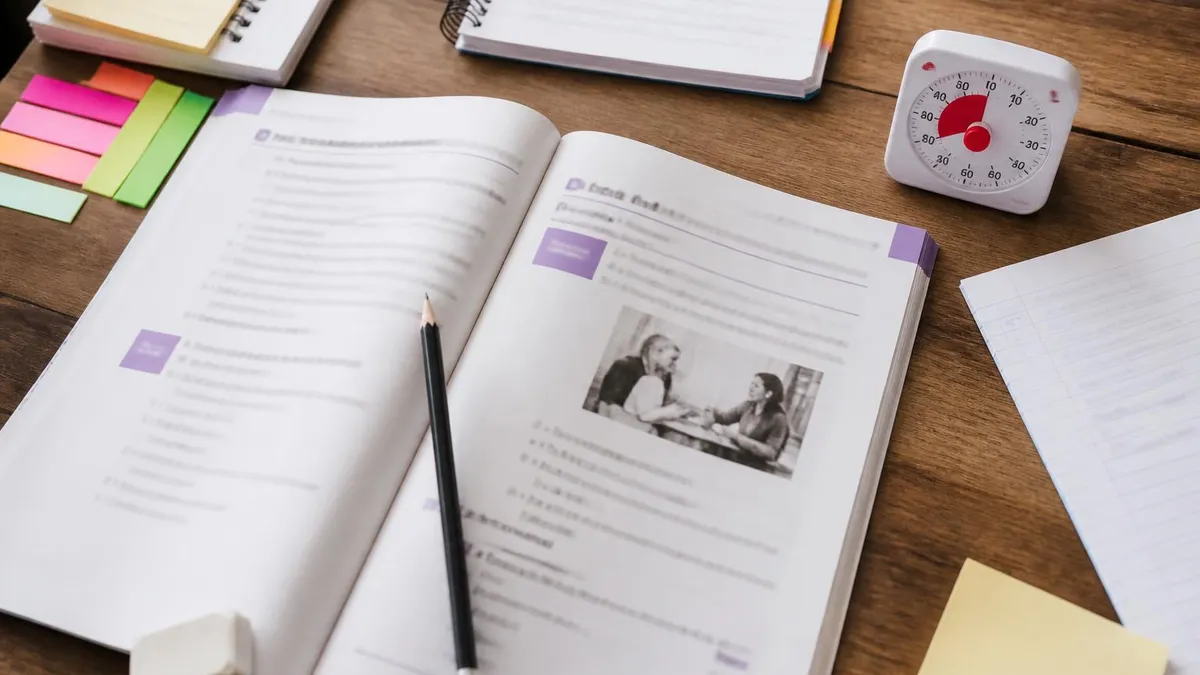
Heterogeneous vs. Homogeneous Grouping: Weighing the Trade-offs
- +Heterogeneous groups expose ELLs to a wider range of academic vocabulary and sentence structures from more proficient peers
- +Mixed-proficiency groups build social connections across language levels, reducing the isolation that many ELL newcomers experience
- +Higher-proficiency students reinforce their own understanding by explaining concepts to peers, strengthening retention for all group members
- +Heterogeneous grouping normalizes diverse language abilities as a classroom asset rather than a deficit to be remediated
- +Mixed groups prepare ELLs for real-world communication contexts where they will interact with speakers at many different language levels
- +Rotating heterogeneous groups prevent the social stigma and fixed identity that can come with permanent ability-level tracking
- −Without careful scaffolding, beginning ELLs in mixed groups can become passive observers rather than active participants in group discussions
- −More proficient students may dominate conversations, reducing the quantity of language practice available to ELL students who most need it
- −Homogeneous proficiency groups allow more precisely targeted vocabulary and grammar instruction that mixed groups cannot provide
- −Teachers may unconsciously lower expectations for ELLs in mixed groups by allowing proficient peers to handle the language-heavy components
- −Mixed groups can create frustration for advanced ELLs who feel their progress is slowed by accommodating the needs of beginning peers
- −Without assigned roles and structured protocols, heterogeneous group work often defaults to one student doing most of the talking and thinking
Pros and Cons at a Glance
| Pros | Cons |
|---|---|
| Heterogeneous groups expose ELLs to a wider range of academic vocabulary and sentence structures from more proficient peers | Without careful scaffolding, beginning ELLs in mixed groups can become passive observers rather than active participants in group discussions |
| Mixed-proficiency groups build social connections across language levels, reducing the isolation that many ELL newcomers experience | More proficient students may dominate conversations, reducing the quantity of language practice available to ELL students who most need it |
| Higher-proficiency students reinforce their own understanding by explaining concepts to peers, strengthening retention for all group members | Homogeneous proficiency groups allow more precisely targeted vocabulary and grammar instruction that mixed groups cannot provide |
| Heterogeneous grouping normalizes diverse language abilities as a classroom asset rather than a deficit to be remediated | Teachers may unconsciously lower expectations for ELLs in mixed groups by allowing proficient peers to handle the language-heavy components |
| Mixed groups prepare ELLs for real-world communication contexts where they will interact with speakers at many different language levels | Mixed groups can create frustration for advanced ELLs who feel their progress is slowed by accommodating the needs of beginning peers |
| Rotating heterogeneous groups prevent the social stigma and fixed identity that can come with permanent ability-level tracking | Without assigned roles and structured protocols, heterogeneous group work often defaults to one student doing most of the talking and thinking |
ELL Grouping Implementation Checklist for Teachers
- ✓Review current WIDA or state ELP assessment scores before forming groups for a new unit.
- ✓Identify the primary language learning goal of each group activity before choosing a grouping configuration.
- ✓Create differentiated sentence frames matched to each proficiency level present in your groups.
- ✓Assign specific roles to every group member, ensuring ELL students have defined, meaningful contributions.
- ✓Arrange seating to allow face-to-face interaction, not side-by-side arrangements that limit nonverbal communication.
- ✓Prepare visual supports, graphic organizers, and realia for each group task to support comprehension.
- ✓Establish a group rotation schedule and communicate it to students so they anticipate and embrace changes.
- ✓Conduct at least two focused monitoring observations per group per week, with specific language-focused listening goals.
- ✓Build in a structured public-sharing component where group members rotate the spokesperson responsibility.
- ✓Collect formative data during group work to inform the next round of grouping decisions and adjustments.
- ✓Communicate with families about grouping practices so they understand the instructional rationale and benefits.
The Protégé Effect Boosts Both Tutor and Learner
Research by Nestojko et al. published in Memory & Cognition found that students who expected to teach material to a peer remembered it 28% more accurately than those who expected a standard test. When higher-proficiency ELL students explain concepts to peers, both students benefit — the explainer deepens their own academic language mastery while the listener gains comprehensible input from a near-peer, making well-structured heterogeneous grouping one of the highest-use instructional investments available to ELL teachers.
Common challenges in ELL group work often stem from three root causes: inadequate scaffolding, insufficient role clarity, and a mismatch between the grouping configuration and the instructional goal. When teachers identify which root cause is driving a group's struggles, they can intervene precisely rather than abandoning the grouping strategy altogether. For instance, if a group is dominated by one student, the solution is not to dissolve the group but to strengthen the role structure so that each member has a clearly defined, non-negotiable contribution to make before the group can proceed to the next step.
Language anxiety is one of the most frequently overlooked barriers to ELL group participation. Many ELL students, particularly adolescents and adults, have experienced public humiliation related to language errors — whether in their home country or in their American school experience — and carry significant emotional baggage into group activities. Teachers can reduce language anxiety by establishing explicit group norms around error correction, making it clear that errors are expected, welcome, and treated as learning opportunities rather than sources of embarrassment. Modeling this norm yourself, by making intentional errors and self-correcting calmly, goes further than any posted classroom rule.
Cultural differences in communication styles present another significant challenge for ELL group work. Students from collectivist cultural backgrounds may be reluctant to express disagreement with a peer, making Socratic discussion protocols feel deeply uncomfortable or even disrespectful. Students from cultures with strong hierarchical norms around age or gender may defer automatically to older or male group members regardless of the task demands. Teachers who understand these cultural dynamics can design group protocols that make specific communication moves — like respectful disagreement or asking clarifying questions — explicit, practiced, and culturally normalized within the classroom community.
Managing the transition between group configurations is a practical challenge that catches many teachers off guard. When students know a routine, moving from whole-class instruction to small groups takes under ninety seconds. When the routine is unclear or inconsistently enforced, transitions can eat five to ten minutes of instructional time and leave students confused about expectations. Invest time during the first two weeks of school teaching group formation procedures as explicitly as any academic content. Number cards, color-coded folders, and assigned table positions all reduce the cognitive load of transitions and allow teachers to get groups working quickly and productively.
Assessment during group work requires creativity because traditional individual assessments cannot capture what happens in a collaborative learning environment. Exit tickets, individual written reflections, quick verbal checks with specific students, and observation notes using a simple tracking sheet all provide windows into individual ELL learning within the group context. Teachers should be particularly vigilant about ensuring that assessment data reflects the individual student's learning, not just the group's collective output. A group product that looks excellent may mask the fact that one ELL student contributed very little and learned even less from the experience.
Technology integration offers exciting new possibilities for ELL group work, particularly for students who are more comfortable expressing themselves in writing or visually than in spoken English. Collaborative digital tools like shared Google Docs, Padlet walls, and digital annotation platforms allow ELL students to contribute to group work asynchronously and at their own pace, reducing the real-time processing pressure that makes live oral discussion so challenging for many language learners. Teachers who combine face-to-face group discussion with a complementary digital collaboration component often find that their quietest ELL students produce their most sophisticated thinking in the digital space.
Progress monitoring at the group level, as well as at the individual level, helps teachers evaluate whether their grouping configurations are achieving their intended purposes. After each two-week grouping cycle, ask yourself: Did my beginning ELLs increase their use of the target vocabulary? Did my intermediate students attempt more complex sentence structures during discussions? Did my advanced ELLs engage with grade-level academic texts without defaulting to simplified versions? These targeted questions help you evaluate grouping effectiveness with the same rigor you bring to evaluating academic content mastery, turning grouping from an organizational decision into a genuine data-driven instructional practice.

Research consistently shows that placing ELL students in permanent low-level groups based on English proficiency — rather than flexibly rotating configurations — significantly reduces long-term academic achievement and narrows access to grade-level content. Proficiency in English is not a fixed trait but a developing skill that changes rapidly with effective instruction. Review and rotate your grouping configurations at minimum every two to three weeks to ensure no student becomes permanently defined by their current language level.
Practical strategies for day-to-day ELL group implementation begin with what many experienced teachers call the "grouping menu" — a deliberate repertoire of three to four grouping configurations that teachers cycle through based on formative assessment data. Rather than defaulting to the same grouping arrangement for every activity, teachers with a well-developed grouping menu make conscious, purposeful choices about which configuration best serves each specific lesson goal. Over time, students internalize the different group structures and can move between them smoothly, maximizing the instructional time available for actual learning rather than logistics.
One of the most practical and underutilized grouping strategies is the strategic partner pair, where each ELL student has a designated language partner — a student at a slightly higher proficiency level — who serves as their first source of peer support before the teacher intervenes.
These partners sit together during whole-class instruction, turn and talk together during discussion prompts, and serve as the ELL student's first resource for clarifying directions or understanding new vocabulary. The partnership is reciprocal: the language partner also benefits by developing patience, communication clarity, and the leadership skills that come from serving as a peer mentor.
Jigsaw grouping is particularly powerful for ELL students working with complex, content-rich texts. In a jigsaw structure, each student becomes an expert in one section of a text or one component of a concept, then teaches their expertise to peers from other groups.
For ELLs, the jigsaw model provides a double language learning opportunity: first, students develop deep understanding of their assigned section in an expert group where targeted scaffolding can be provided; second, they practice academic explanation and elaboration language when they return to their home group as the resident expert on their portion of the content. The social accountability of being the expert motivates even reluctant ELL speakers to prepare thoroughly.
Think-Pair-Share, one of the most widely used cooperative learning structures, becomes significantly more powerful for ELLs when the "think" time is extended and structured. Rather than simply thinking silently, ELL students benefit from writing or drawing their ideas during think time, giving them a concrete reference point to return to during the paired sharing.
During the pair phase, providing a specific academic language frame — "I think _____ because _____. For example, _____" — pushes students beyond simple one-word answers into the elaborated academic discourse that accelerates language development. The share phase then becomes a genuine academic conversation rather than a simple report-out.
Station rotation models work particularly well in classrooms with wide proficiency spans because they allow teachers to differentiate group work across multiple centers simultaneously. While one group of beginning ELLs works at a vocabulary-building station with visual supports, intermediate students practice academic discussion at a conversation station, and advanced ELLs engage with a complex text analysis station. The teacher can position themselves strategically — typically at the station requiring the most instructional support — while other stations run with greater student independence. This configuration allows a single teacher to serve multiple proficiency levels effectively within the same forty-five-minute class period.
Collaborative writing groups give ELL students structured opportunities to develop academic writing skills in a social, low-stakes environment. Rather than writing independently from the start, students in a collaborative writing group first co-construct a shared text — a paragraph, a report section, or an explanation — through discussion, negotiation, and peer feedback.
This process makes the invisible moves of academic writing visible and discussable, helping ELL students internalize the text structures, sentence patterns, and vocabulary choices of effective academic writing before they must replicate them independently on an assessment. The shared product also gives the teacher a rich window into where the group's collective language development currently stands.
Ultimately, the most effective grouping practice is the one that teachers implement consistently, assess regularly, and refine deliberately based on evidence of student learning. No grouping configuration is inherently superior to all others — what matters is the thoughtfulness with which the configuration is matched to the instructional goal, the quality of the scaffolding provided within the group structure, and the teacher's ongoing attention to whether the arrangement is actually producing measurable growth in academic language development.
Start with one or two configurations you feel confident implementing, collect data on student outcomes, and gradually expand your grouping repertoire as your evidence base and confidence grow.
Building a sustainable ELL grouping practice requires institutional support as well as individual teacher effort. When school leaders understand the research behind flexible grouping for ELL students, they can make scheduling, staffing, and professional development decisions that enable rather than undermine effective grouping practice. For example, scheduling ELL-designated co-taught sections with both a general education teacher and an ELL specialist doubles the teacher capacity available to monitor and support group work, making heterogeneous grouping far more manageable in classrooms with wide proficiency spans.
Professional learning communities focused on ELL grouping offer teachers a powerful structure for refining their practice collaboratively. When a grade-level team brings student work samples and observation notes to a monthly meeting to discuss what their grouping configurations are and are not producing, they create a continuous improvement cycle that individual teachers cannot replicate alone. Peer observation — where one teacher watches another's group work session and takes specific notes on language use, participation equity, and scaffolding effectiveness — provides the kind of concrete, specific feedback that accelerates professional growth far more effectively than generic professional development workshops.
Parent and family communication about grouping practices deserves more attention than most schools give it. Many ELL families come from educational traditions where ability grouping is permanent and highly stigmatized, and they may worry that their child's group placement reflects a low assessment of their potential. Proactive communication — through translated letters, family meetings with interpreters, and visual explanations of how grouping works — builds trust and helps families understand that flexible grouping is a strength-based, research-aligned practice designed to accelerate their child's English development and academic success.
Culturally responsive grouping considers not just language proficiency but also cultural funds of knowledge when forming groups. Students bring rich cultural knowledge, community expertise, and real-world experience to every classroom. When teachers group students in ways that allow diverse cultural knowledge to inform the academic task — for example, grouping students from agricultural families together to analyze a text about food systems, or drawing on a student's experience as an informal interpreter to teach about language registers — the group work becomes simultaneously more engaging and more equitable. Cultural knowledge becomes an academic asset rather than an irrelevant background detail.
Documentation of grouping decisions and outcomes creates an institutional memory that benefits students as they move from teacher to teacher and grade to grade. A simple grouping log — noting which configurations were used, for which tasks, with which outcomes — gives the next year's teacher a running start rather than requiring them to rediscover from scratch what works for each student.
This kind of longitudinal tracking of ELL student progress within group contexts is especially important for students with interrupted formal education or undiagnosed learning disabilities, where the pattern of group performance data over time may reveal needs that a single assessment cannot capture.
Technology platforms for teachers now offer data dashboards that can help inform grouping decisions with greater precision than was available even five years ago. Formative assessment tools that capture individual student responses during group work, speech analysis software that tracks the quantity and complexity of student language production, and digital portfolios that document growth over time all give teachers richer data for making grouping decisions.
While technology is never a substitute for the relational knowledge a skilled teacher develops through careful observation, these tools can help teachers spot patterns and make more confident grouping decisions, particularly in large classrooms with many ELL students at varied proficiency levels.
The long-term goal of all ELL grouping work is to develop students who can participate fully and confidently in the full range of academic and social contexts that American schooling and society present. Flexible, research-aligned grouping is not a permanent accommodation but a temporary scaffold that, when implemented well, becomes progressively less necessary as students develop the language, academic, and social competencies to thrive independently. Keeping this goal clearly in view — and measuring your grouping practice against it — ensures that the strategies you implement today are genuinely preparing your students for the independent, enabled academic futures they deserve.
Sample ELL - English Language Learners Practice Questions
Try these questions from our free ELL - English Language Learners practice tests. The correct answer and an explanation follow each question.
Why is professional development in ESL (English as a Second Language) strategies important for teachers working with ELL students?
- A. It helps teachers create a one-size-fits-all approach for all students.
- B. It equips teachers with the skills and knowledge to effectively support ELL students’ language development and academic achievement.
- C. It ensures that ELL students are separated from mainstream classes.
- D. It focuses exclusively on teaching grammar and vocabulary.
Answer: B. It equips teachers with the skills and knowledge to effectively support ELL students’ language development and academic achievement.
Professional development in ESL strategies is crucial for teachers working with ELL students because it provides them with specialized skills and knowledge. This training equips educators to understand the complexities of second language acquisition, implement effective instructional techniques, and differentiate instruction to meet the diverse linguistic and academic needs of ELLs. Ultimately, this leads to better support for ELL students' language development and overall academic success.
Which reading level grouping strategy is considered most equitable for ELL students in mainstream classrooms?
- A. Permanent ability-based reading groups
- B. Flexible grouping that changes based on purpose, task, and progress
- C. Grouping ELLs separately from all native speakers always
- D. Grouping only by English proficiency level
Answer: B. Flexible grouping that changes based on purpose, task, and progress
Flexible grouping allows ELL students to work with diverse peers in varied configurations based on academic tasks, preventing the stigma and limited input of permanent low-ability groups.
How can teachers support ELL students who have difficulty producing sounds that do not exist in their home language?
- A. Ignore pronunciation differences completely
- B. Use mouth diagrams, minimal pair practice, and explicit articulation instruction to target specific sound contrasts
- C. Require ELLs to repeat sounds 100 times silently
- D. Only address pronunciation in the home language
Answer: B. Use mouth diagrams, minimal pair practice, and explicit articulation instruction to target specific sound contrasts
Explicit instruction using visual mouth diagrams, minimal pairs, and guided articulation practice helps ELLs notice and practice sounds that are absent from their phonological repertoire.
Why is it important for ELL teachers to avoid 'cultural stereotyping' when working with diverse student populations?
- A. Stereotypes help teachers plan lessons more efficiently
- B. Stereotypes reduce ELLs to generalizations that ignore individual backgrounds, experiences, and within-group diversity
- C. All ELLs from the same country share the same cultural practices
- D. Stereotyping is only harmful in non-academic settings
Answer: B. Stereotypes reduce ELLs to generalizations that ignore individual backgrounds, experiences, and within-group diversity
Cultural stereotyping ignores the enormous diversity within any national, ethnic, or linguistic group, and treating ELLs as monolithic members of a culture fails to honor their individual identities.
ELL Questions and Answers

Colorin Colorado ELL Strategy Library: Complete Guide for Teachers in 2026

How Do Visuals Help ELL Students: A Complete Guide for Educators
ELL Meaning in Education: What Is an ELL and Why It Matters

ELL Endorsement: Complete Career Guide for Educators in 2026

BrainPOP ELL: Complete Guide to the English Language Learner Program in 2026
About the Author

Educational Psychologist & Academic Test Preparation Expert
Columbia University Teachers CollegeDr. Lisa Patel holds a Doctorate in Education from Columbia University Teachers College and has spent 17 years researching standardized test design and academic assessment. She has developed preparation programs for SAT, ACT, GRE, LSAT, UCAT, and numerous professional licensing exams, helping students of all backgrounds achieve their target scores.
Join the Discussion
Connect with other students preparing for this exam. Share tips, ask questions, and get advice from people who have been there.
View discussion (8 replies)