
EEG Tech: Career as an Electroneurodiagnostic Technologist 2026 October
✏️ EEG tech career guide: training programs, certification (R.EEG.T.), typical duties, salary range, and pathways into electroneurodiagnostic technology.
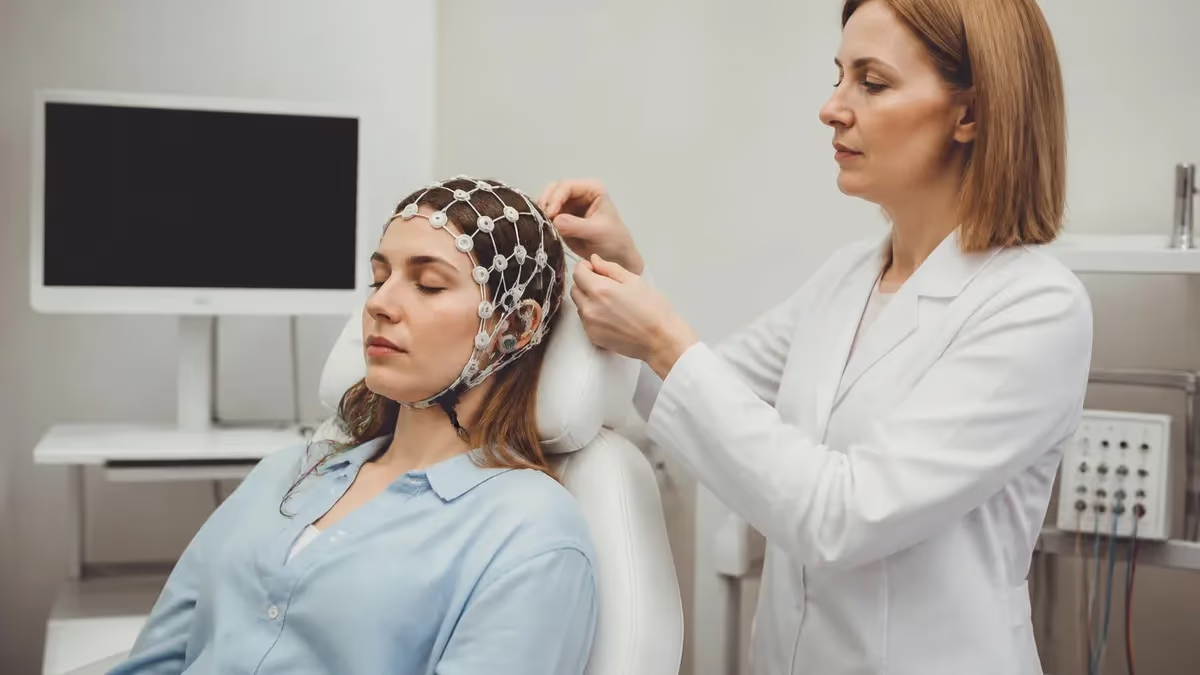
An EEG tech (electroencephalographic technologist or electroneurodiagnostic technologist) is a healthcare professional who performs electroencephalogram tests recording electrical activity in patients' brains. EEG tests support diagnosis of seizures, sleep disorders, brain injuries, dementia, and other neurological conditions. The work combines technical expertise operating sophisticated recording equipment, patient care skills working with diverse patient populations, and pattern recognition skills identifying significant findings during recordings. EEG techs work in hospitals, neurology clinics, sleep centers, and various other healthcare settings supporting neurologists and other physicians who interpret the recordings.
The field of electroneurodiagnostics (END) extends beyond EEG to include related testing such as evoked potential studies, polysomnography (sleep studies), nerve conduction studies, and intraoperative neuromonitoring. EEG tech entry-level work typically focuses on routine EEG recording, with career progression often including additional specialty training in related END areas. The combined END field employs approximately 30,000 technologists in the United States with steady projected growth as neurological conditions remain priority diagnostic area. EEG tech work offers stable healthcare careers with reasonable training investment compared to many medical fields.

EEG Tech Quick Facts
Education: Associate degree in END or related field, or on-the-job training. Certification: R.EEG.T. through ABRET (American Board of Registration of Electroneurodiagnostic Technologists). Training duration: 1-2 years for formal programs; 6-12 months on-the-job training in some settings. Salary range: $50,000-$80,000+ typical 2026 range varying by experience and location. Settings: Hospitals, neurology clinics, sleep centers, intraoperative monitoring services. Career progression: Specialty certifications, supervisory roles, education positions.
EEG technologist daily work involves preparing patients for testing (explaining procedures, applying electrodes), performing the recording (operating equipment, monitoring during test, photographing significant findings), and processing results (preparing report materials for physician interpretation, maintaining equipment, documenting in medical records). Patient interaction is substantial — many EEG patients are anxious about testing, have neurological conditions affecting communication, or are children requiring special handling.
Strong patient communication skills, patience, and ability to work calmly with diverse patients support successful EEG tech work. The technical aspects involve learning specific equipment operation, understanding electrode placement systems (typically 10-20 system or extended variations), recognizing artifacts versus genuine findings, and responding appropriately to events during recording.
EEG Tech Job Duties
Explaining procedures, applying electrodes using standardized placement systems, calming anxious patients.
Operating EEG equipment during tests, monitoring quality, adjusting settings as needed.
Identifying significant findings during recording, distinguishing artifacts from genuine activity.
Recording observations, preparing materials for physician review, maintaining medical records.
Cleaning equipment between patients, performing quality checks, troubleshooting issues.
Maintaining patient safety throughout recording, responding to events like seizures during testing.
Educational pathways into EEG tech work include formal training programs and on-the-job training. CAAHEP-accredited END programs at community colleges and technical schools provide associate degree-level training over 1-2 years combining classroom instruction with extensive clinical experience. These programs typically prepare students well for ABRET certification examinations and entry-level employment.
Program graduates have strong job placement records and are preferred by some employers over on-the-job-trained candidates. On-the-job training pathways exist particularly in hospital settings where existing healthcare workers (nursing assistants, medical assistants) transition into EEG tech roles through internal training. The OJT pathway typically takes 6-12 months under experienced technologist mentorship before independent practice.
ABRET certification (R.EEG.T. — Registered Electroencephalographic Technologist) validates technologist competence through examination. Eligibility requires either CAAHEP-accredited program completion or specific work experience hours. The certification examination tests knowledge across electroencephalography fundamentals, equipment operation, patient care, and pattern recognition. Most experienced employers strongly prefer or require ABRET certification for EEG tech positions. Beyond initial certification, advanced credentials exist including R.EP.T. for evoked potentials, RPSGT for sleep technology, and various others supporting career progression into specialty END areas.
Salary ranges for EEG techs reflect the specialized nature of the work and ongoing demand. Entry-level positions typically pay $50,000-$60,000 in most markets. Experienced technologists with several years of practice earn $60,000-$75,000. Specialty experience (sleep technology, intraoperative monitoring) pays premiums to $70,000-$90,000+. Travel positions sometimes pay $80,000-$100,000+ for short-term assignments at facilities with staffing shortages. Geographic variation matters substantially — major metropolitan areas typically pay more than rural areas, but cost of living adjustments may equalize purchasing power. Hospital positions sometimes pay differently than outpatient clinic positions.
Training pathway options: CAAHEP-accredited END programs (most thorough, 1-2 years, includes clinical hours, prepares for certification exam). Hospital-based on-the-job training (6-12 months under experienced tech mentorship, certification possible after qualifying experience). Combination programs (some classroom plus extensive clinical) offered by some healthcare employers. Verify program graduates pass certification exams and find employment before enrolling in programs. Quality varies dramatically across programs even within accredited ones.

The work environment for EEG techs varies substantially by setting. Hospital-based positions often involve diverse patient populations including emergency department, ICU, pediatric ward, and inpatient referrals. Routine EEG and long-term monitoring (LTM) for epilepsy diagnosis are common. Outpatient neurology clinics typically have more predictable scheduling with routine EEG focus. Sleep centers operate primarily overnight for polysomnography, requiring different work schedules than typical day-shift positions. Intraoperative monitoring positions involve operating room work supporting neurosurgery — high-stakes environment with substantial responsibility for monitoring brain function during surgery. Each setting offers different work patterns and patient populations affecting career satisfaction.
Career progression beyond entry-level positions typically involves specialty development. After 2-3 years of general EEG experience, many technologists pursue specialty certifications and move into specialty areas with higher pay and more interesting work. Some pursue management roles supervising other technologists. Education positions (teaching at END programs, providing manufacturer training) offer career change options. Industry positions with EEG equipment manufacturers, software companies, and clinical research organizations use EEG expertise in different contexts. The flexibility supports diverse career trajectories beyond pure clinical work for those wanting different challenges over careers.
Continuing education requirements maintain ABRET certification over time. The 5-year recertification cycle requires accumulating continuing education hours (typically 30 hours) through approved sources. Annual conferences (American Society of Neurodiagnostic Technologists) provide concentrated CE opportunities along with professional networking. Online CE courses, manufacturer training, journal-based CE, and various other sources contribute hours. Many employers cover continuing education costs as part of professional development support. Active engagement with continuing education supports career-long professional growth alongside maintaining basic certification currency.
Don't enter without verifying training quality — accredited programs with strong outcomes produce employable graduates; weak programs may not. Don't skip ABRET certification — it substantially affects employment options and pay. Don't ignore continuing education — letting certification lapse requires substantial work to recover. Don't overlook specialty options — pure routine EEG limits earning potential compared to specialty certifications. Be honest about work hours — some specialties (sleep tech) require non-traditional schedules.
For entering the field, several practical steps help. Research accredited programs in your area through CAAHEP or ABRET websites. Visit programs to evaluate facilities and meet faculty. Compare graduate outcomes including certification pass rates and employment placement. Verify financial aid options at programs you're considering. Some healthcare employers offer training partnerships supporting students through programs in exchange for employment commitments. For those near hospitals offering on-the-job training, applying for entry-level healthcare positions with eventual EEG tech transition can avoid program tuition while building practical experience. Each pathway has tradeoffs worth considering based on individual circumstances.
The intellectual interest of EEG work appeals to many practitioners. Each patient brings different brain activity patterns reflecting their specific neurological situation. Recognizing significant findings during recordings supports physician diagnosis and treatment. Understanding how brain function varies across awake/asleep states, normal/abnormal patterns, and various neurological conditions develops over years of practice. Many EEG techs find the work continually engaging because brain activity reveals fascinating physiology even after years of practice. The combination of technical skill, patient care, and intellectual engagement makes EEG work satisfying for those drawn to neuroscience-adjacent careers without medical school commitment.
For people considering whether EEG tech is right for them, several factors warrant honest assessment. Tolerance for healthcare environment elements (patient distress, occasional emergencies, exposure to neurological symptoms including seizures) is necessary. Physical aspects include applying electrodes which requires fine motor skills and attention to detail. Some heavy patient lifting may be involved in transferring patients to and from beds. Mental focus during long recordings is essential — brief inattention can miss significant findings. Communication skills with patients, families, and physicians matter daily. Honest fit assessment supports successful career entry and long-term satisfaction.
Pursuing EEG Tech Career
- ✓Research CAAHEP-accredited END programs in your area
- ✓Compare program quality through certification pass rates
- ✓Evaluate financial aid and total program cost
- ✓Consider on-the-job training pathways at local hospitals
- ✓Plan for ABRET certification after qualifying education or experience
- ✓Network with current EEG techs to understand realistic work conditions
- ✓Consider specialty interests for long-term career planning
- ✓Prepare for ongoing continuing education throughout career
Patient populations served by EEG techs span all ages and conditions. Pediatric EEG work involves substantial communication and behavioral management with anxious children. Adult routine EEG often relates to seizure evaluation, syncope investigation, or follow-up of known conditions. ICU monitoring serves critically ill patients including those with traumatic brain injuries, encephalopathy, or post-cardiac arrest. Long-term epilepsy monitoring supports surgical evaluation for treatment-resistant epilepsy. Each population requires different communication approaches, monitoring considerations, and clinical knowledge. Most EEG techs work with multiple populations rather than specializing exclusively.
Equipment evolution continues affecting EEG work. Digital EEG systems have replaced older analog systems with advantages including easier review, automated artifact detection, sophisticated quantitative analysis, and remote review capabilities. Wireless and portable EEG systems support recording outside traditional lab environments. Quantitative EEG analysis tools provide objective measurements supplementing traditional visual analysis. Long-term ambulatory EEG enables home monitoring beyond hospital limits. AI-assisted analysis is emerging area with potential to support technologist workflow and physician interpretation. Staying current with evolving equipment supports career-long relevance in the field.
Looking forward, EEG tech demand appears stable to growing through 2030 and beyond based on Bureau of Labor Statistics projections. Aging population drives demand for neurological diagnostic services. Increasing recognition of conditions like sleep disorders, mild traumatic brain injury, and dementia expands testing volume. Technological advancement may reduce time per patient (efficiency improvements) while expanding total testing capacity (broader applications). Workforce demographics show many current technologists approaching retirement, creating opportunities for newer entrants. The combination of demand stability and demographic transition supports continued strong job markets for new EEG techs entering the field.

For those considering EEG as second career or career change, the relatively short training timeline (1-2 years) compares favorably to many healthcare career changes requiring 4+ years. Existing healthcare experience (nursing, EMT, medical assistant) often provides foundation that accelerates EEG-specific training. Healthcare administrators, IT professionals supporting medical equipment, and others with adjacent backgrounds sometimes transition into EEG tech work successfully. Career changers typically bring valuable professional skills and maturity to the field. The combination of compressed training timeline and reasonable salary range makes EEG tech accessible second career option for committed candidates.
For students considering health sciences careers more broadly, EEG tech represents one option among many in allied health. Comparing across options including medical assisting, phlebotomy, radiologic technology, respiratory therapy, and various others helps identify best fit. EEG work appeals particularly to those interested in neurology and brain function. The technical specificity provides clear professional identity. The salary range is reasonable for the training investment. Career progression options including specialty certifications support long-term development. The work-life balance is generally good with predictable schedules in many settings (some specialties require irregular hours).
Networking and professional engagement support career development. ASET — The Neurodiagnostic Society provides professional community, continuing education, and career resources. Annual conferences offer in-person networking with technologists across specialties and regions. Online communities through ASET and various other forums support professional discussion and problem-solving. Local chapter meetings provide regional connections. Engagement with professional community throughout career supports both individual professional development and overall field advancement. Many career opportunities and advancement options come through professional networks rather than traditional job boards.
EEG Tech Quick Stats
EEG Tech Career Settings
Diverse patient populations including ICU, ED, pediatrics. Long-term monitoring and routine EEG. Stable employment.
Outpatient routine EEG focus. Predictable schedules. Specialized in neurological conditions.
Polysomnography for sleep disorders. Overnight schedules. Specialty certification (RPSGT) typically required.
Operating room work during neurosurgery. High-stakes environment. Specialty certification required.
Some skilled nursing facilities offer EEG services. Less common employment but available in some markets.
Temporary assignments at facilities with staffing shortages. Premium pay and travel benefits.
For students with interest in neuroscience but who don't want to pursue medical school or PhD-level education, EEG tech offers practical pathway to neurology-adjacent career with reasonable training timeline. Daily exposure to brain activity patterns provides intellectually engaging work without the years of additional education physician careers require. Professional development through specialty certifications and continuing education supports career-long learning. The combination of technical work with intellectual engagement appeals particularly to detail-oriented people who enjoy working with sophisticated equipment and understanding what data reveals about underlying physiology.
For those entering the field, expectations management supports successful adjustment. The first months involve substantial learning beyond what training programs cover — institution-specific procedures, EHR systems, equipment-specific operation, working with specific physicians' preferences. New technologists typically need 6-12 months to develop genuine independent competence beyond passing certification exams. Mentorship from experienced colleagues supports this development. Patience with personal development as practicing technologist, openness to learning from colleagues, and willingness to ask questions all support successful career entry. Most new technologists describe their first year as challenging but rewarding as they develop genuine professional competence.
Specific equipment and skills development continues throughout EEG tech careers. Standard EEG montage placement (10-20 system) is foundational skill. Beyond standard montage, modified placements for specific clinical questions require additional technique. Long-term monitoring uses different setup with extended recording capability and patient ambulation considerations. Pediatric EEG involves modified techniques for smaller heads and behavioral management. ICU monitoring may use limited montages adapted to acutely ill patients. Each variation requires specific learning beyond basic EEG technique. Quality EEG techs develop substantial repertoire of techniques applicable across diverse clinical situations encountered in practice.
Pattern recognition skills develop substantially over years of practice. New technologists initially struggle to distinguish artifacts from genuine activity, identify significant findings during real-time recording, and recognize various seizure types. Experience builds visual pattern recognition that becomes increasingly automatic. Senior technologists often spot subtle abnormalities that less experienced colleagues miss. Continuing education through case review courses, conferences, and professional reading supports ongoing pattern recognition development. The combination of technical skills and pattern recognition makes experienced EEG techs valuable beyond what equipment alone could provide.
Working with neurologists and other physicians forms substantial part of EEG tech work. Some neurologists prefer specific recording techniques, montages, or activation procedures supporting their diagnostic preferences. Building working relationships with frequently-encountered physicians supports efficient workflow and high-quality recordings. Clear communication of findings during recordings helps physicians plan interpretation efficiently. Some facilities have technologists routinely present preliminary findings before formal physician interpretation. The professional relationship combines technologist expertise in recording with physician expertise in interpretation, with each respecting the other's knowledge contribution to comprehensive diagnostic care.
For students considering EEG tech as one option among healthcare careers, several comparisons help clarify whether it suits your interests. Compared to nursing — EEG tech is more focused on technical work with less patient care responsibility, shorter training, lower salary ceiling, but reasonable salary range. Compared to medical assisting — EEG tech requires more specialized training and pays better. Compared to radiologic technology — EEG and rad tech have similar training timelines and salary ranges with different daily work content.
Compared to other allied health fields — each has different daily work that suits different personalities. Honest comparison across options helps identify best fit for individual interests and circumstances. The healthcare allied health field offers many entry points; choosing based on personal alignment with daily work content produces better long-term satisfaction than choosing based purely on salary or job availability.
EEG Tech Career: Pros and Cons
- +Reasonable training timeline (1-2 years)
- +Stable healthcare employment with continued demand
- +Intellectually engaging work involving brain function
- +Salary range supports comfortable middle-class lifestyle
- +Multiple specialty paths support career progression
- +Professional certification pathway supports advancement
- −Some specialties require non-traditional schedules (sleep tech overnight)
- −Patient interaction includes occasional emergencies (seizures during recordings)
- −Detail-oriented work requires sustained mental focus
- −Salary ceiling lower than physician careers
- −Continuing education requirements add ongoing time commitment
- −Geographic variation in employment opportunities
Pros and Cons at a Glance
| Pros | Cons |
|---|---|
| Stable healthcare employment with continued demand | Some specialties require non-traditional schedules (sleep tech overnight) |
| Intellectually engaging work involving brain function | Patient interaction includes occasional emergencies (seizures during recordings) |
| Salary range supports comfortable middle-class lifestyle | Detail-oriented work requires sustained mental focus |
| Multiple specialty paths support career progression | Salary ceiling lower than physician careers |
| Professional certification pathway supports advancement | Continuing education requirements add ongoing time commitment |
Sample EEG - Electroencephalography Practice Questions
Try these questions from our free EEG - Electroencephalography practice tests. The correct answer and an explanation follow each question.
A technologist notices that channel 3 shows a 50% smaller deflection than all other channels during the calibration square wave. The most likely cause is:
- A. A broken or high-impedance electrode on channel 3
- B. Gain set too low on the channel 3 amplifier
- C. The notch filter being activated on channel 3
- D. A 60 Hz artifact contaminating channel 3
Answer: B. Gain set too low on the channel 3 amplifier
When one channel shows a consistently smaller deflection than others during a known calibration signal, the amplifier gain for that channel is set too low.
Benzodiazepine administration typically produces which EEG change that a technologist should recognize and document?
- A. Prominent generalized theta slowing without faster activity
- B. Increase in frontocentral beta activity (14–30 Hz)
- C. Appearance of triphasic waves over frontal regions
- D. Suppression of all activity below 1 Hz
Answer: B. Increase in frontocentral beta activity (14–30 Hz)
Benzodiazepines (and other GABA-A agonists such as barbiturates at sub-anesthetic doses) characteristically increase fast-frequency beta activity, most prominent over frontocentral regions. Recognizing drug-induced beta prevents misinterpretation as normal or abnormal endogenous activity.
Which of the following actions by an EEG technologist is a direct violation of the Health Insurance Portability and Accountability Act (HIPAA)?
- A. Discussing a complex EEG record with the interpreting neurologist in a private reading room.
- B. Using a hospital-provided, encrypted tablet to review a patient's prior EEG report.
- C. Looking up the medical records of a celebrity who is a patient in another part of the hospital out of curiosity.
- D. Calling the patient's nurse to confirm their current list of medications.
Answer: C. Looking up the medical records of a celebrity who is a patient in another part of the hospital out of curiosity.
Accessing a patient's protected health information (PHI) without a legitimate, job-related reason is a serious HIPAA violation. Curiosity is not a valid reason for accessing records. The other options describe appropriate actions: consulting with the care team, using secure devices, and gathering necessary clinical information are all permissible uses of PHI for patient care.
During a routine EEG on a 25-year-old patient, the technologist observes intermittent bursts of 7-11 Hz, arch-shaped waves over the central head regions (C3, C4, Cz). This activity disappears when the patient is asked to make a fist. What normal EEG variant is being described?
- A. Lambda waves
- B. Mu rhythm
- C. Sleep spindles
- D. Posterior slow waves of youth
Answer: B. Mu rhythm
The Mu rhythm is a normal variant found in the alpha frequency range (typically 7-11 Hz) with a characteristic arch-like or comb shape. It is located over the central regions (sensorimotor cortex) and is uniquely blocked or attenuated by contralateral motor activity, the thought of movement, or tactile stimulation, but not by eye opening.
EEG Questions and Answers
About the Author

Educational Psychologist & Academic Test Preparation Expert
Columbia University Teachers CollegeDr. Lisa Patel holds a Doctorate in Education from Columbia University Teachers College and has spent 17 years researching standardized test design and academic assessment. She has developed preparation programs for SAT, ACT, GRE, LSAT, UCAT, and numerous professional licensing exams, helping students of all backgrounds achieve their target scores.