

DWO Practice Test
Updated for September 2026Starting your career in the maritime world means showing you’re good at many things. One big step is the DWO (Deck Watch Officer) Test. It checks if you know how to navigate ships and work on the bridge.
This guide will help you understand the DWO Test better. You’ll learn about what you need to know, the training and papers you must have, and how the test works. By the end, you’ll know how to tackle this important step towards becoming a certified deck officer.
DWO Practice Test Questions
Prepare for the DWO - Deck Watch Officer exam with our free practice test modules. Each quiz covers key topics to help you pass on your first try.
DWO Bridge Resource Management
DWO Exam Questions covering Bridge Resource Management. Master DWO Test concepts for certification prep.
DWO Bridge Watchkeeping
Free DWO Practice Test featuring Bridge Watchkeeping. Improve your DWO Exam score with mock test prep.
DWO Cargo Operations & Stability
DWO Mock Exam on Cargo Operations & Stability. DWO Study Guide questions to pass on your first try.
DWO Chart Work and Pilotage
DWO Test Prep for Chart Work and Pilotage. Practice DWO Quiz questions and boost your score.
DWO Emergency Procedures & Safety
DWO Questions and Answers on Emergency Procedures & Safety. Free DWO practice for exam readiness.
DWO Emergency Response
DWO Mock Test covering Emergency Response. Online DWO Test practice with instant feedback.
DWO Maritime Communication
DWO Practice Questions for Maritime Communication. Build confidence for your DWO certification exam.
DWO Maritime Law & Regulations
DWO Test Online for Maritime Law & Regulations. Free practice with instant results and feedback.
DWO Navigation and Safety
DWO Study Material on Navigation and Safety. Prepare effectively with real exam-style questions.
DWO Navigation Rules
Free DWO Test covering Navigation Rules. Practice and track your DWO exam readiness.
DWO Safety Procedures
DWO Exam Questions covering Safety Procedures. Master DWO Test concepts for certification prep.
DWO Security and Emergency Preparedness
Free DWO Practice Test featuring Security and Emergency Preparedness. Improve your DWO Exam score with mock test prep.
DWO Ship Handling
DWO Mock Exam on Ship Handling. DWO Study Guide questions to pass on your first try.
DWO Ship Operations and Maintenance
DWO Test Prep for Ship Operations and Maintenance. Practice DWO Quiz questions and boost your score.
Key Takeaways
Free DWO Practice Test Online
- The DWO Test evaluates your competency in maritime navigation and bridge operations.
- Understanding the certification prerequisites, required training, and test format is crucial for success.
- Mastering the key assessment areas, such as watchkeeping duties, ship maneuvering, and emergency response, is essential.
- Preparing thoroughly and developing a strong foundation in maritime knowledge will increase your chances of passing the DWO Test.
- Successful completion of the DWO Test is a significant milestone in your journey towards a rewarding career as a deck officer.
Understanding the DWO (Deck Watch Officer) Test Requirements
Those aiming to become Deck Watch Officers (DWOs) face a detailed assessment. This includes meeting certain maritime certification needs, rigorous training, and a structured test. Knowing the DWO test requirements helps candidates prepare well for their maritime career.
- ✓Review the official DWO exam content outline
- ✓Take a diagnostic practice test to identify weak areas
- ✓Create a study schedule (4-8 weeks recommended)
- ✓Focus on your weakest domains first
- ✓Complete at least 3 full-length practice exams
- ✓Review all incorrect answers with detailed explanations
- ✓Take a final practice test 1 week before exam day
Maritime Certification Prerequisites
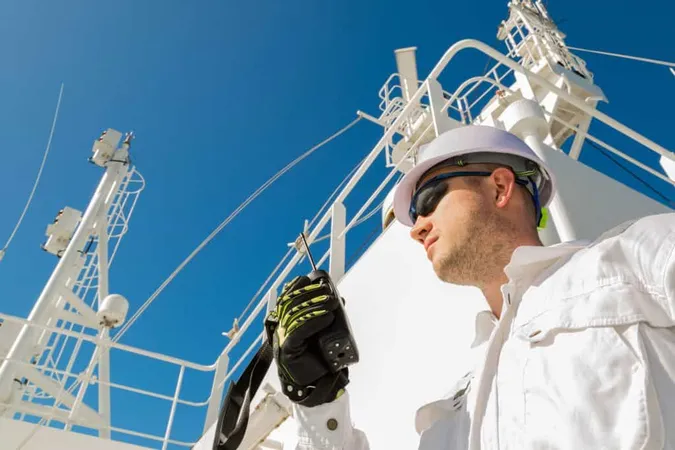
Before starting, candidates need the right maritime certifications. This means having a valid Merchant Mariner Credential (MMC), an Officer Endorsement, and a Transportation Worker Identification Credential (TWIC). These certifications show they’re ready for the job.
Training and Documentation Needed
Candidates also need to finish detailed training. This includes learning about ship procedures, emergency responses, safety, and navigation. They must show proof of this training with certificates and transcripts.
Test Structure and Format
The DWO test checks if candidates know maritime rules, procedures, and safety. It has written and practical parts. This ensures they can apply their knowledge in real situations.
Understanding the DWO test’s needs helps candidates prepare well. By meeting certification requirements, finishing training, and knowing the test format, they boost their chances. This is a key step towards becoming a qualified Deck Watch Officer.

Key Components and Assessment Areas
The DWO (Deck Watch Officer) Test checks a candidate’s knowledge and skills in maritime operations. It looks at important areas like coastal navigation, voyage planning, ship handling, emergency procedures, and bridge resource management.
Coastal navigation is key, as officers must safely guide ships in near-shore waters. They need to use charts, understand weather, and manage speed to avoid dangers.
Voyage planning is also vital. Candidates must plan voyages carefully, considering weather, tides, and obstacles. They create detailed itineraries for safe and efficient travel.
- Ship handling techniques: Candidates show they can handle ships in different situations, like docking and navigating tight spaces.
- Emergency procedures: The test checks how well candidates handle emergencies like fires, collisions, or engine failures.
- Bridge resource management: It’s about teamwork and communication on the bridge. Candidates must delegate tasks and stay alert.
| Assessment Area | Key Competencies Evaluated |
|---|---|
| Coastal Navigation | Proficiency in using navigational charts, interpreting weather data, managing vessel course and speed |
| Voyage Planning | Analyzing factors such as weather, tides, and obstacles to create a detailed voyage plan |
| Ship Handling | Demonstrating skills in docking, undocking, and maneuvering in confined waters |
| Emergency Procedures | Knowledge and preparedness in responding to maritime emergencies |
| Bridge Resource Management | Effective communication, task delegation, and maintaining situational awareness |
- +Industry-recognized credential boosts your resume
- +Higher earning potential (10-20% salary increase on average)
- +Demonstrates commitment to professional development
- +Opens doors to advanced career opportunities
- −Exam preparation requires significant time investment (4-8 weeks)
- −Certification fees can be $100-$400+
- −May require continuing education to maintain
- −Some employers may not require certification
(DWO) Deck Watch Officer Questions and Answers
About the Author

Certified Professional Development Expert & Niche Certification Advisor
University of Pennsylvania Graduate School of EducationDr. Alexandra Kim holds a PhD in Professional Studies from the University of Pennsylvania and is a Certified Professional in Learning and Performance (CPLP) and Certified Professional in Talent Development (CPTD). With 17 years of corporate training and professional certification advisory experience, she helps professionals navigate specialized, emerging, and cross-industry certification programs.
Join the Discussion
Connect with other students preparing for this exam. Share tips, ask questions, and get advice from people who have been there.
View discussion (8 replies)