
DSP Home Care: What Direct Support Professionals Do in Home and Community Settings
DSP home care explained — roles, daily duties, training requirements & how to get certified. Your complete guide to supporting people at home. ✅

DSP home care represents one of the fastest-growing and most meaningful career paths in the human services sector. Direct Support Professionals working in home and community settings provide essential assistance to individuals with intellectual and developmental disabilities, acquired brain injuries, mental health conditions, and physical disabilities — all within the comfort and dignity of the person's own home. Unlike institutional settings, home care DSPs build deep, one-on-one relationships with the people they support, making daily life more independent, safe, and fulfilling. If you are exploring this career, understanding what the role truly demands is your first step toward success. Practice with the free Direct Support Professional Certification practice test on PracticeTestGeeks (9 questions with answer explanations).
The demand for qualified home care DSPs has surged dramatically over the past decade. The United States is undergoing a long-term shift away from congregate care facilities toward community-based, person-centered support models. Federal policy, advocacy efforts by disability rights organizations, and the preferences of individuals and families have all pushed in this direction. As a result, states have expanded Medicaid waiver programs specifically designed to fund home and community-based services, creating tens of thousands of new DSP positions every year across the country.
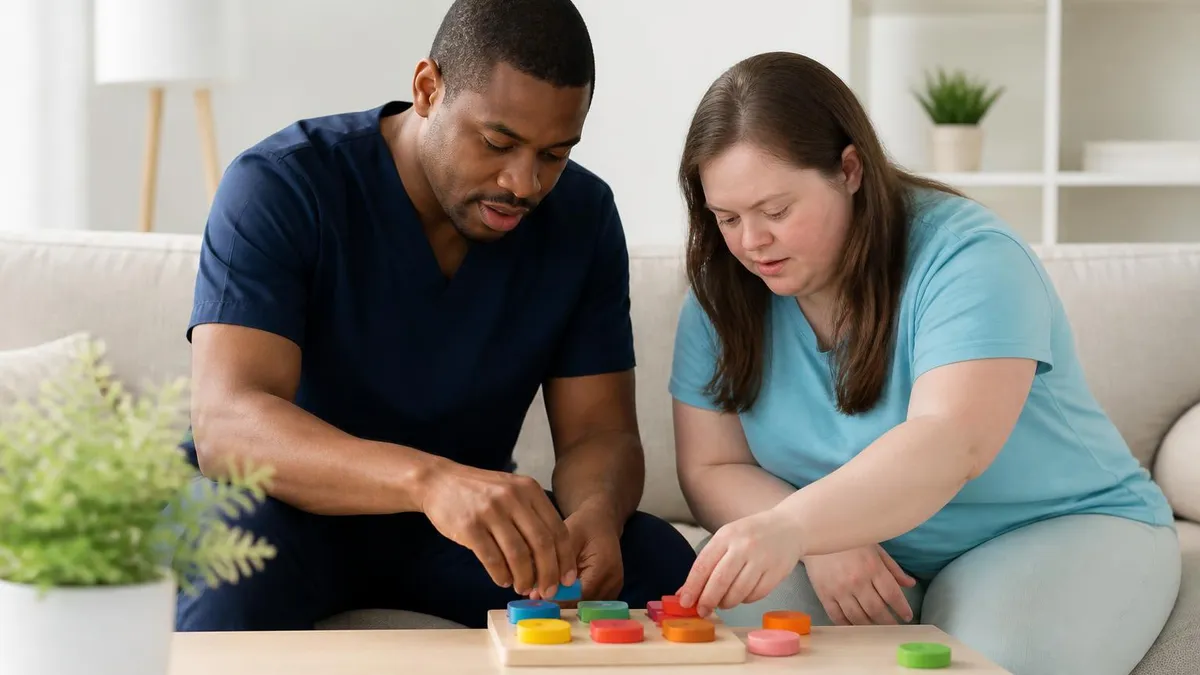
Working as a home care DSP is genuinely different from working in a group home or day program. You often work one-on-one with a single individual, sometimes for extended shifts. You must be highly self-directed, since there is rarely a supervisor on-site to guide your decisions in real time. You need strong communication skills, compassion, and a solid grasp of the individual's specific support plan. Every person you support has unique preferences, routines, health needs, and goals — and your job is to honor all of them consistently.
Training and certification requirements for home care DSPs vary by state, but the trend is toward greater standardization and rigor. Many states now require new DSPs to complete orientation training within their first few weeks on the job, followed by ongoing annual training to maintain competency. National credentialing programs, such as the National Alliance for Direct Support Professionals (NADSP) certification, are increasingly recognized and even required by some employers. Understanding which credentials apply in your state and setting is critical before you begin applying for positions.
One major area of training that all home care DSPs must master is abuse, neglect, and exploitation (ANE) prevention. Because home settings often involve isolated, one-on-one interactions, the risk of abuse — intentional or unintentional — is a serious concern for regulators and families alike. States and accrediting bodies require DSPs to recognize signs of abuse, understand mandatory reporting obligations, and know exactly what steps to take if they witness or suspect mistreatment. This training is not optional; it is foundational to the role and to the safety of the people you support.
Financial considerations are also important to understand before entering the field. Home care DSP wages have historically lagged behind other healthcare roles, though recent state and federal investments have improved pay in many markets. Some DSPs work full-time with benefits through agencies; others work part-time for multiple clients through self-directed programs, where individuals and families hire and manage their own staff. Each arrangement has distinct implications for pay, scheduling, training obligations, and professional development opportunities. Knowing which model fits your goals will help you make a smarter career decision from the start.
For those interested in learning more about the specific training pathways available, the dsp home care certification process outlines the competency areas, required hours, and documentation needed to work legally and effectively in most home and community-based service programs. This guide will walk you through the full landscape — from daily duties and required skills to certification steps, career advancement, and practical tips for excelling in a home care setting.
Free Direct Support Professional Certification Study Tools
Interactive Direct Support Professional Certification resources on PracticeTestGeeks, free to start:
- Direct Support Professional Certification Programs 1 — 9 questions with answer explanations
- Direct Support Professional Certification flashcards — review key terms and concepts card by card
- Direct Support Professional Certification study guide — topic-by-topic overview of what the exam covers
- Direct Support Professional Certification cheat sheet — one-page printable summary for last-minute review
- Access to the NADSP E-Badge Academy, which leads to DSP Certification, is an annual agency subscription that costs $95 to $150 per user under the pricing in effect from January 1, 2026. (National Alliance for Direct Support Professionals)
- NADSP DSP Certification at the DSP-I, DSP-II and DSP-III levels is valid for two years before recertification is required. (National Alliance for Direct Support Professionals)
- NADSP DSP Certification (DSP-I, DSP-II, DSP-III) must be renewed every two years with at least 20 hours of training and a $50 renewal application fee. (National Alliance for Direct Support Professionals)
- NADSP DSP Certification is earned online by submitting E-Badge evidence on the Web Courseworks platform after an employer enrolls the candidate, not by sitting a proctored exam. (National Alliance for Direct Support Professionals)
- To earn NADSP's DSP-I Direct Support Professional Certification, a candidate must earn 15 E-Badges in total through the NADSP E-Badge Academy, including a 50-hour Accredited Education E-Badge. (National Alliance for Direct Support Professionals)
- To earn NADSP's DSP-II Direct Support Professional Certification, a candidate must earn 30 E-Badges in total, including a 100-hour Accredited Education E-Badge. (National Alliance for Direct Support Professionals)
Facts verified Oct 17, 2026 against National Alliance for Direct Support Professionals. Dates that have passed are removed automatically.
DSP Exam at a Glance
| Item | Detail | Official source |
|---|---|---|
| Exam fee | $95–$150 per user per year (agency subscription) | National Alliance for Direct Support Professionals |
| Validity | 2 years | National Alliance for Direct Support Professionals |
| Renewal | Every 2 years; $50 application fee; 20 training hours | National Alliance for Direct Support Professionals |
| Delivery | Online E-Badge portfolio (Web Courseworks), agency-enrolled | National Alliance for Direct Support Professionals |
| Eligibility (DSP-I) | 15 total E-Badges | National Alliance for Direct Support Professionals |
| Eligibility (DSP-II) | 30 total E-Badges | National Alliance for Direct Support Professionals |
| Eligibility (DSP-III) | 50 total E-Badges | National Alliance for Direct Support Professionals |
Facts verified Oct 17, 2026 against National Alliance for Direct Support Professionals. Dates that have passed are removed automatically.
DSP Home Care by the Numbers

Core Responsibilities of a Home Care DSP
Home care DSPs assist with activities of daily living including bathing, dressing, grooming, toileting, and mobility. This hands-on support is delivered respectfully, following the individual's stated preferences and their written support plan at all times.
Many home care DSPs are trained to administer or prompt medications on schedule, document dosages accurately, and recognize signs of adverse reactions. Medication protocols must always follow state regulations and the individual's healthcare provider instructions.
Supporting people to participate in their communities — grocery shopping, attending appointments, recreational activities, and social events — is a central DSP function. This promotes independence, inclusion, and quality of life beyond the walls of the home.
Home care DSPs implement behavior support plans, use positive reinforcement strategies, and respond calmly to emotional crises. DSPs often receive specialized training in trauma-informed care, de-escalation, and person-centered communication techniques.
Accurate daily documentation of activities, health observations, incidents, and progress toward personal goals is legally required and professionally essential. Good documentation protects both the individual and the DSP in case of audits or investigations.
Training requirements for home care DSPs are more rigorous than ever, and for good reason. The complexity of the work demands that professionals enter the field prepared — not just willing. Most states mandate a formal orientation period covering topics such as person-centered practices, rights and dignity, health and safety procedures, abuse and neglect prevention, and documentation standards. Some states, like Virginia through its DBHDS framework, require specific hour thresholds and competency demonstrations before a DSP can work independently with a person receiving services.
National credentialing has become an important benchmark for demonstrating professional commitment and verified competency. The NADSP E-Badge Academy, for example, offers a tiered credentialing pathway: DSP-Trained, DSP-Specialist, and Certified DSP (CDSP). Each tier requires completion of defined competency areas, documentation of real-world practice, and, at higher levels, a knowledge assessment. Earning these credentials signals to employers, families, and regulators that you have met a recognized professional standard, which increasingly matters in hiring decisions.
Beyond initial certification, home care DSPs are expected to engage in ongoing professional development. Annual refresher training typically covers updated state regulations, new evidence-based practices, and recertification of specific skills like first aid and CPR. Many employers also offer specialized training modules on topics like autism support strategies, sensory processing, assistive technology, and chronic disease management. The more specialized your training profile, the more valuable you become to the individuals you support and to agencies seeking qualified staff.
Supervision structures in home care are fundamentally different from institutional settings, and this affects how training must be applied. In a group home or day program, supervisors are frequently present and can provide real-time coaching. In a home setting, you may go entire shifts without direct supervisor contact. This makes pre-service training even more critical: you need to have internalized protocols, decision-making frameworks, and emergency procedures before you walk through the door of someone's home for the first time. Simulation-based training and role-play scenarios are valuable preparation tools for this reason.
Health-related training is another area of intense focus for home care DSPs. You will often work with people who have complex medical needs — feeding tubes, seizure disorders, diabetes, heart conditions, or respiratory issues. Training in these areas is not optional when it is part of a person's support plan. States and agencies typically require documentation that a DSP has received condition-specific training before assuming responsibility for someone with that health condition. Failure to obtain appropriate training before providing care is both a safety risk and a professional liability.
Abuse, neglect, and exploitation (ANE) prevention training is universally required and directly relevant to the home care context. Home settings can create conditions where power imbalances, isolation, and lack of oversight increase vulnerability. DSPs must understand the legal definitions of abuse, neglect, and exploitation; the behavioral and physical signs that indicate someone may be experiencing harm; and the exact mandatory reporting procedures required in their state. Many states require this training to be completed within the first days of employment, not after a weeks-long orientation period.
For a structured overview of what training typically covers and how to navigate the certification process step by step, reviewing the requirements outlined for dsp home care programs provides a useful starting framework applicable across most state systems. Whether your state uses NADSP standards, its own credentialing body, or a hybrid approach, the core competencies you need to master remain remarkably consistent: person-centered values, health and safety protocols, rights protection, documentation accuracy, and emergency response readiness.
Home Care vs. Other DSP Settings: What Changes
In a home care setting, the DSP typically works directly in a person's private residence — whether that is their own apartment, a family home, or a supported living arrangement. Shifts can range from a few hours of morning support to overnight or even 24-hour live-in situations. The environment is intimate, and the support provided is deeply individualized. DSPs in this setting often develop close relationships with family members, navigate household dynamics, and adapt to the rhythms of a person's personal life in ways that group settings simply cannot replicate.
The autonomy required in home care is significant. Without on-site supervisors, home care DSPs must apply their training independently and make judgment calls in real time. Emergency preparedness is especially critical: knowing exactly what to do if a person has a seizure, a fall, a choking episode, or a mental health crisis — without a colleague or supervisor immediately available — is a professional responsibility that must be trained and rehearsed in advance. Home care DSPs often cite this combination of autonomy and intimacy as what makes the role both challenging and uniquely rewarding.

Pros and Cons of Working as a Home Care DSP
- +Deep one-on-one relationships with the people you support
- +Highly flexible scheduling options, including part-time and self-directed models
- +Meaningful, visible impact on an individual's daily quality of life
- +Growing demand means strong job security across most US markets
- +Variety of work — no two days or people are exactly the same
- +Opportunities for specialized training and career advancement in home settings
- −Lower average wages compared to many other healthcare roles
- −Limited on-site supervision means high personal responsibility
- −Physically and emotionally demanding work, with risk of burnout
- −Inconsistent hours depending on client availability or agency staffing needs
- −Exposure to complex medical and behavioral situations without immediate backup
- −Training requirements vary by state, creating confusion for job seekers
Pros and Cons at a Glance
| Pros | Cons |
|---|---|
| Deep one-on-one relationships with the people you support | Lower average wages compared to many other healthcare roles |
| Highly flexible scheduling options, including part-time and self-directed models | Limited on-site supervision means high personal responsibility |
| Meaningful, visible impact on an individual's daily quality of life | Physically and emotionally demanding work, with risk of burnout |
| Growing demand means strong job security across most US markets | Inconsistent hours depending on client availability or agency staffing needs |
| Variety of work — no two days or people are exactly the same | Exposure to complex medical and behavioral situations without immediate backup |
| Opportunities for specialized training and career advancement in home settings | Training requirements vary by state, creating confusion for job seekers |
Home Care DSP Readiness Checklist
- ✓Complete your state-required orientation training before your first independent shift
- ✓Obtain current CPR and First Aid certification from an approved provider
- ✓Review and understand the individual support plan for each person you support
- ✓Complete mandatory abuse, neglect, and exploitation prevention training
- ✓Learn all medication administration protocols specific to your clients' needs
- ✓Familiarize yourself with emergency procedures and local emergency contacts
- ✓Understand mandatory reporting laws and your obligations as a DSP in your state
- ✓Document all daily activities, health observations, and incidents accurately and promptly
- ✓Complete any condition-specific training required for a person's medical profile
- ✓Register for or begin working toward a national DSP credential such as NADSP CDSP
Person-Centered Practice Is Non-Negotiable
Every decision you make as a home care DSP — from how you assist with morning routines to how you support community outings — must reflect the individual's own goals, preferences, and choices. Person-centered practice is not a philosophy reserved for care plan meetings; it is the standard for every interaction, every day. DSPs who internalize this principle consistently receive higher satisfaction ratings from the people they support and are significantly more likely to advance in their careers.
Building strong professional skills in a home care setting requires deliberate effort, because the environment provides fewer of the structural cues that help workers in institutional settings stay on track. In a group home or facility, there are posted schedules, colleagues to consult, and supervisors walking the halls. In a home, you are often the primary structure in the room. This means developing your own organizational habits, communication rhythms with supervisors, and internal quality checks is not optional — it is what separates highly effective home care DSPs from those who struggle with the isolation and complexity of the role.
Communication is the single most important skill for home care DSPs to develop and continually refine. This encompasses multiple dimensions: verbal communication with the people you support (including those who use augmentative and alternative communication devices), written communication through documentation and incident reports, and professional communication with agency coordinators, family members, healthcare providers, and behavioral specialists. Misunderstandings in any of these channels can have real consequences for health, safety, and the continuity of support. Strong communicators consistently outperform technically skilled but verbally limited peers in home care settings.
Conflict resolution and boundary-setting are also underappreciated skills in the home care context. DSPs who work in private residences often develop warm, trusting relationships with the people they support and their families. This is a strength — but it can also blur professional boundaries in ways that create problems.
Families may ask DSPs to perform tasks outside their role description, share personal information that creates uncomfortable obligations, or make requests that conflict with the person's support plan. Knowing how to respond professionally, compassionately, and firmly to these situations is a skill that requires training, experience, and sometimes supervision or peer support to develop.
Self-care and burnout prevention deserve serious attention from anyone entering home care work. The emotional weight of supporting vulnerable people through health crises, behavioral challenges, grief, and daily frustrations accumulates over time. DSPs with no active self-care strategies — exercise, social connection, professional peer support, time away from work — are significantly more likely to leave the field within two years.
High DSP turnover is one of the most damaging problems in the disability services sector, precisely because continuity of relationships matters enormously to the people receiving support. Taking care of yourself is not a luxury; it is a professional responsibility.
Technology is increasingly part of the home care DSP toolkit. Electronic visit verification (EVV) systems — mandated by federal law for Medicaid-funded home care — require DSPs to clock in and out via smartphone apps, often using GPS confirmation. Electronic health records and care management platforms have replaced paper documentation in many agencies. Some individuals use smart home technology, communication apps, or remote monitoring systems that DSPs need to understand and support. Comfort with basic technology and a willingness to learn new systems are now practical job requirements in most home care positions.
Cultural competency is another dimension of home care work that is essential and often undertrained. DSPs work in people's most intimate spaces — their homes — and must be sensitive to family values, cultural practices around health and disability, religious observances, dietary restrictions, and household customs that differ from their own backgrounds.
A DSP who imposes their own cultural assumptions onto a client's household or dismisses practices they do not understand will damage the trust relationship that makes good care possible. Training in cultural humility — approaching each household as a learner rather than an expert — is a professional skill worth investing in deliberately.
Finally, understanding the systems of funding and services that make home care possible helps DSPs advocate more effectively for the people they support. Medicaid waiver programs, individual budgets, service coordination, and annual plan reviews all shape what services a person can access and how much support time is available. DSPs who understand this landscape can help individuals and families navigate system challenges, communicate more effectively with service coordinators, and spot when someone is not receiving all the support they are entitled to. System awareness transforms a competent caregiver into a genuine advocate.

In most states, providing Medicaid-funded home care services without completing mandatory orientation training — including abuse and neglect prevention — is a regulatory violation that can result in agency sanctions, termination, and loss of your ability to work in the field. Always confirm your training completion status with your supervisor before beginning independent work with any individual. Do not assume orientation can happen after your first shift.
Career advancement for home care DSPs is more structured and accessible than many people entering the field realize. The traditional image of direct support as a dead-end job has given way to a professional development ecosystem with multiple upward pathways. Starting as a front-line home care DSP, you can progressively move into specialist roles, supervisory positions, care coordination, training and staff development, program management, and even policy and advocacy work within the disability services sector. Each of these pathways typically requires a combination of experience, advanced certification, and in some cases post-secondary education.
The NADSP Certified DSP (CDSP) credential is one of the most respected stepping stones in this progression. Earning it requires demonstrating mastery across fifteen competency areas defined by the NADSP Code of Ethics, completing structured written reflections on your practice, and passing a knowledge assessment.
Many employers offer pay increases upon completion of NADSP credentials, and some states are beginning to incorporate them into Medicaid funding structures as a quality indicator. If you are planning a long career in home care or disability services broadly, starting your CDSP process early — even in your first or second year — sets you apart from peers who wait.
Supervisory advancement typically requires at least two to three years of front-line DSP experience plus demonstrated leadership ability. Roles such as House Manager, Program Supervisor, or Quality Assurance Coordinator involve overseeing DSP staff, conducting training, managing compliance documentation, and communicating with families and external stakeholders. Many professionals in these roles started as home care DSPs and built their expertise through a combination of on-the-job learning and targeted credentialing. Some states and agencies offer internal leadership development tracks that identify promising DSPs and provide mentorship toward supervisory roles.
Service coordination and case management represent another advancement pathway for experienced DSPs. Service coordinators work with individuals with disabilities to develop and manage their individual support plans, coordinate services across multiple providers, help annual planning meetings, and help people access community resources. In many states, this role requires a bachelor's degree in a human services field, but a background as a DSP provides a significant practical advantage over candidates with only academic training. DSPs who move into coordination roles often describe the combination of street-level experience and systems knowledge as uniquely powerful.
Training and staff development is a career path that uses your home care expertise to improve outcomes for others. Experienced DSPs who have strong communication skills and a passion for education often transition into roles as agency trainers, competency evaluators, or curriculum developers. Some pursue certification as NADSP trainers themselves, enabling them to deliver nationally recognized competency training within their organizations. This pathway allows you to multiply your impact by raising the quality of care delivered by every DSP you train, which has ripple effects across entire communities of people receiving support.
Policy and advocacy work represents the broadest impact a former DSP can have. Organizations like NADSP, state developmental disabilities councils, and disability rights nonprofits regularly hire individuals with direct support experience to inform policy development, advocate for wage equity, and represent the DSP workforce in legislative processes.
The staffing crisis in disability services — driven largely by low wages and limited career development — has brought DSP voices to state capitols and congressional hearings in ways that were rare a generation ago. If you care deeply about systemic change, your experience as a home care DSP is a genuine credential in these arenas.
Whatever path you choose, the foundation is the same: mastering your current role, building authentic relationships with the people you support, and continuously investing in your own professional development. Home care DSPs who treat their work as a profession rather than a job are the ones who build lasting careers and make lasting differences. For those ready to begin or deepen their certification journey, reviewing the full training requirements available for dsp home care programs is an excellent starting point for mapping your next steps with clarity and confidence.
Practical success in home care DSP work comes down to a set of habits and mindsets that can be deliberately cultivated from your very first shift. The most effective home care DSPs do not simply show up and respond — they prepare, plan, and reflect.
Before each shift, reviewing the individual's current support plan and any recent incident notes takes only a few minutes but can prevent significant problems. Knowing what happened during the previous shift, whether there were any health changes or behavioral incidents, and what activities are planned for the day allows you to arrive ready rather than reactive.
Building a reliable communication routine with your supervisor is essential when you work in isolated home settings. Most experienced home care DSPs establish a regular check-in schedule — a quick call or text at the start of a shift, and again at the end — that keeps their supervisor informed without requiring constant contact.
This routine creates accountability, gives you a channel for questions or concerns, and ensures that someone else knows what is happening in real time. If something unexpected occurs — a health emergency, a behavioral crisis, a safety concern — having an established communication relationship makes it easier to get the support you need quickly.
Documentation discipline separates competent DSPs from exceptional ones. Write your shift notes while details are fresh — not hours later from memory. Use objective, observable language: describe what you saw and heard, not your interpretations or assumptions. Note what the person did, what you provided, how the person responded, and any deviations from the expected routine. If an incident occurred, document it immediately and thoroughly. Accurate, timely documentation is the evidentiary foundation for the person's ongoing care and your own professional protection if questions arise later.
Physical safety awareness in home settings is a practical skill that new DSPs sometimes underestimate. Homes were not designed as care facilities, and environmental hazards — loose rugs, inadequate bathroom grab bars, poor lighting, cluttered pathways — are common. DSPs should conduct informal environmental safety scans at the start of any new placement and report hazards to their supervisor promptly.
Safe body mechanics for transfers, positioning, and personal care assistance must be practiced consistently to protect both yourself and the person you support from injury. Back injuries are among the most common occupational hazards for home care workers, and proper technique is the primary prevention.
Emotional attunement — the ability to read a person's mood, energy, and non-verbal signals accurately — is a skill that home care DSPs develop over time but can actively work to improve. For individuals who communicate primarily non-verbally, your ability to recognize subtle behavioral cues that signal pain, discomfort, anxiety, or happiness is literally the difference between meeting their needs and missing them entirely.
Pay attention during each interaction: how is this person different from yesterday? From an hour ago? What might explain that difference? Active observation, combined with knowledge of the person's history and patterns, builds the interpretive skill that makes excellent home care possible.
Staying current with professional developments in the field is a habit worth building early. Organizations like NADSP, the American Network of Community Options and Resources (ANCOR), and your state's developmental disabilities agency regularly publish guidance, training opportunities, and policy updates that affect your work.
Following relevant professional communities online, attending webinars or local training events, and networking with other DSPs in your area keeps your knowledge current and your professional identity connected to something larger than your individual caseload. Isolation — both physical and professional — is an occupational hazard in home care; intentional connection to the broader field is the antidote.
Finally, never underestimate the power of advocacy on behalf of the people you support. Home care DSPs are often the professionals with the deepest, most accurate knowledge of an individual's daily life, preferences, and emerging needs. When care plans need updating, when services are inadequate, when a family member's wishes conflict with the person's own preferences, your informed voice matters enormously.
Learning to advocate effectively — through proper channels, with documented evidence, in a professional tone — is one of the highest-value contributions you can make. The people you support are counting not just on your hands, but on your voice.
Sample Direct Support Professional Certification Practice Questions
Try these questions from our free Direct Support Professional Certification practice tests. The correct answer and an explanation follow each question.
Under the Home and Community Based Services (HCBS) Settings Rule, DSPs are required to support individuals in settings that promote which key principle?
- A. Maximum staff supervision
- B. Community integration and independence
- C. Institutional-level care standards
- D. Centralized medical monitoring
Answer: B. Community integration and independence
The HCBS Settings Rule requires that services be delivered in settings that maximize community integration, independence, and access to typical life activities.
What is an important skill that Direct Support Professionals should develop?
- A. The ability to manage the individual’s finances.
- B. Strong communication and interpersonal skills to effectively interact with individuals and other team members.
- C. The ability to diagnose medical conditions.
- D. The ability to prescribe medication.
Answer: B. Strong communication and interpersonal skills to effectively interact with individuals and other team members.
Strong communication and interpersonal skills are paramount for DSPs to build rapport and trust with the individuals they support, as well as to effectively collaborate with families and other team members. Clear and empathetic communication ensures that individuals' needs are understood, goals are supported, and a positive, respectful environment is maintained.
What is the role of a Direct Support Professional when working in a team environment?
- A. They work independently without any team collaboration.
- B. They contribute to team efforts by sharing observations and supporting individuals’ goals.
- C. They focus only on the physical needs of the individual.
- D. They make decisions for the team without consulting others.
Answer: B. They contribute to team efforts by sharing observations and supporting individuals’ goals.
In a team environment, DSPs are integral members who collaborate with other professionals, family members, and the individual themselves. Their role involves sharing valuable observations about the individual's progress and needs, actively participating in care planning, and working cohesively to support the individual's goals and overall well-being.
What is the main responsibility of a Direct Support Professional (DSP)?
- A. Providing medical diagnoses.
- B. Assisting with daily activities and promoting independence.
- C. Managing financial investments.
- D. Performing surgeries.
Answer: B. Assisting with daily activities and promoting independence.
The main responsibility of a Direct Support Professional (DSP) is to empower individuals with disabilities to live as independently and fully as possible. This involves providing respectful assistance with daily living activities, fostering skill development, and encouraging participation in community life. The ultimate goal is to enhance the individual's quality of life and self-sufficiency, rather than performing medical or financial roles.
Take the full Direct Support Professional Certification practice test
DSP Questions and Answers

DBHDS DSP Orientation Training: Complete Guide to Requirements and Certification
DSP Training: Direct Support Professional Programs and Credentials

How Much Does a DSP Earn? Direct Support Professional Salary Guide 2026

DSP Exam Questions and Answers: Complete Practice Test Guide for 2026

DSP Pay: What Direct Support Professionals Earn in 2026
How this page was made: written with AI tools and published by Nathan Beja, founder of Practice Test Geeks, who is responsible for its content. Exam facts are checked against the official sources listed below. Not reviewed by a subject-matter expert. Editorial policy
Sources & references
Exam facts on this page (fees, format, dates, passing scores) are checked against these official sources; the date is our last check. Editorial policy
- nadsp.org — Score validity, test delivery, eligibility · verified Oct 2026