
What Is a DSP in Healthcare? A Complete Guide to Direct Support Professionals
What is a DSP in healthcare? Learn the role, duties, salary, training, and certification of a Direct Support Professional in this complete 2026 guide. ✍🏼

What is a DSP in healthcare? A DSP, or Direct Support Professional, is a frontline caregiver who helps people with intellectual and developmental disabilities, physical disabilities, mental health conditions, or age-related needs live as independently as possible. Unlike clinical staff, a DSP focuses on daily living support rather than medical treatment. They help individuals eat, bathe, manage medication reminders, attend appointments, build social skills, and join their communities. The role sits where healthcare, social services, and human connection meet, making it a deeply meaningful entry point into the care economy.
The term "healthcare" can be misleading when applied to this job. DSPs rarely work in hospitals. Instead, they support people in group homes, supported-living apartments, day programs, and private family residences. Their work is classified under healthcare and home-and-community-based services because they directly affect a person's health, safety, and quality of life. A DSP might cook a diabetic-friendly meal, document a behavioral change for a nurse, or simply be the consistent, trusted presence that allows someone to thrive outside an institution every single day.
Demand for this role has exploded. As the United States shifts away from large institutions toward community-based care, the need for skilled dsp healthcare workers has grown faster than almost any other care occupation. Federal and state Medicaid programs fund the majority of these positions, and an aging population combined with longer lifespans for people with disabilities means the workforce gap keeps widening. For job seekers, that translates into stable, recession-resistant employment that rarely requires a college degree to begin.
So what does a Direct Support Professional actually do hour to hour? The honest answer is that no two shifts look alike. One morning may involve helping a young adult practice job-interview skills; that same afternoon could include managing a feeding-tube schedule, de-escalating an anxious episode, or driving someone to physical therapy. This variety is exactly what draws many people to the field. You are not stuck behind a desk. You are an advocate, a coach, a companion, and a safety net rolled into one demanding but rewarding position.
The DSP role also differs sharply from that of a Certified Nursing Assistant or home health aide, even though the jobs overlap. CNAs work under heavy medical supervision and concentrate on clinical tasks, while DSPs emphasize independence, choice, and community integration for the people they serve. A DSP is trained to ask "What does this person want for their life?" rather than simply "What does this patient need today?" That person-centered philosophy is the heart of the profession and what separates true support from basic custodial care.
This guide answers the core question of what a DSP in healthcare is, then goes deeper into duties, settings, pay, training, certification, and how to land your first role. Whether you are exploring a career change, supporting a family member, or studying for a certification exam, you will leave understanding exactly how this profession works. We will also point you toward free practice questions so you can test your knowledge and build confidence before stepping into your first interview or onto your first shift.
DSPs in Healthcare by the Numbers
Core DSP Duties & Responsibilities
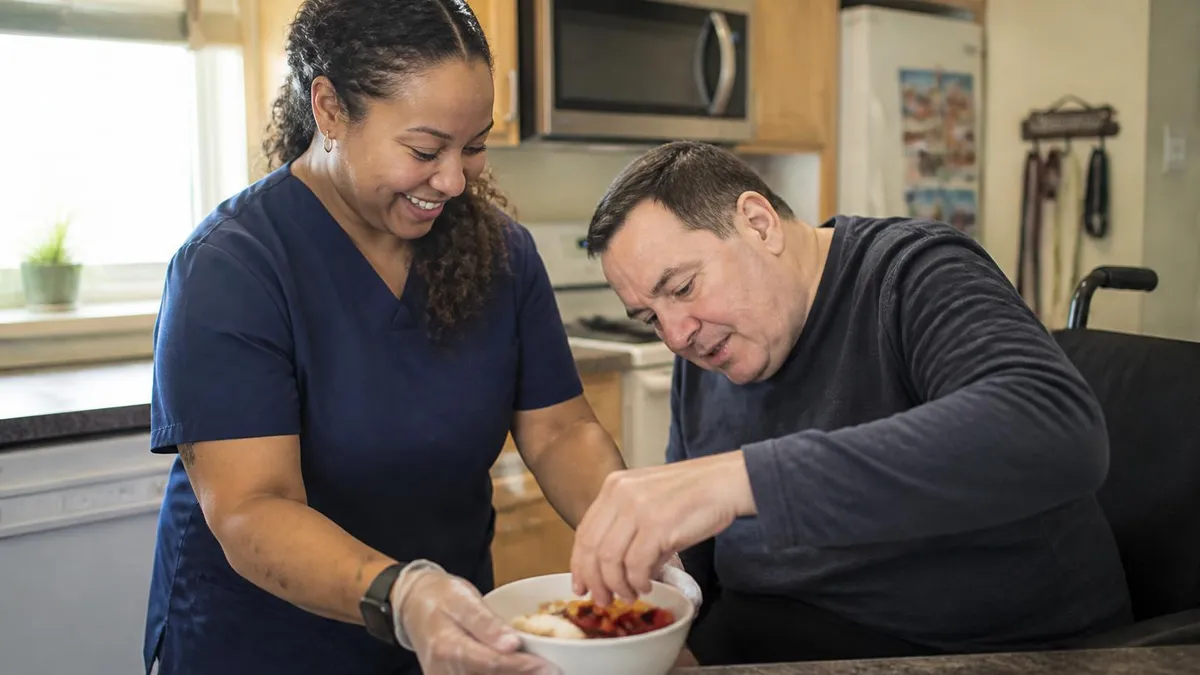
DSPs assist with bathing, grooming, dressing, toileting, and mobility. They preserve dignity while helping individuals complete activities of daily living that they cannot safely manage alone, always promoting as much independence as each person can handle.
Many DSPs are trained to deliver medication reminders or assist with self-administration under state rules. They track vital signs, watch for symptom changes, and document health concerns so nurses and physicians can intervene early when needed.
A central duty is helping people join community life: shopping, volunteering, attending events, and building friendships. DSPs provide transportation, coaching, and encouragement so individuals participate fully rather than remaining isolated at home.
DSPs teach budgeting, cooking, hygiene, and job-readiness skills. They also advocate for the person's rights and preferences in meetings, ensuring choices about daily life and long-term goals are respected by families and providers.
Accurate records are critical. DSPs log daily progress notes, incident reports, and behavioral data that satisfy Medicaid requirements and protect both the individual and the agency during audits, investigations, and care-plan reviews.
Understanding where DSPs work is key to understanding what the role truly involves. The most common setting is the group home, a residence shared by a small number of individuals with disabilities who receive around-the-clock support. In these homes, DSPs rotate through morning, evening, and overnight shifts, handling everything from cooking breakfast to managing nighttime medical needs. Group homes form the backbone of community-based care in the United States and employ a large share of the entire direct support workforce nationwide.
Supported-living and independent-living programs represent a second major setting. Here, individuals live in their own apartments and DSPs visit for scheduled hours to assist with whatever the person cannot manage alone. This model maximizes autonomy, and the DSP's job leans heavily on coaching and skill-building rather than constant hands-on care. A DSP in this environment might help a client pay bills online on Monday, plan a grocery list on Wednesday, and practice using public transit on Friday afternoon.
Day programs and vocational settings make up a third category. These daytime facilities focus on enrichment, education, and employment preparation for adults with disabilities. DSPs in day programs lead group activities, supervise community outings, and support individuals at job sites through what is often called supported employment. The work is energetic and social, and many people who dislike overnight shifts find day programs to be the most sustainable and enjoyable place to build a long career in direct support.
In-home and family-based care is the fourth and fastest-growing setting. Aging parents, busy families, and individuals who prefer to stay in their own residences increasingly rely on DSPs who come directly to the home. This intimate environment demands strong boundaries, cultural sensitivity, and self-direction because the DSP often works alone without an on-site supervisor. It also tends to build the deepest, most rewarding relationships between the professional and the person receiving support over time.
Some DSPs also work in specialized clinical-adjacent settings such as behavioral health facilities, residential treatment centers, and programs serving people with complex medical needs. These roles may require extra training in crisis prevention, feeding tubes, seizure protocols, or ventilator care. While more demanding, they often pay more and offer DSPs a path toward nursing, therapy, or case-management careers. The breadth of settings means there is almost certainly a DSP environment that fits your personality and schedule preferences.
Across every setting, the unifying thread is person-centered care. Whether a DSP works overnight in a group home or visits a private apartment for two hours, the mission is identical: support the individual's health, safety, dignity, and chosen goals. Pay, schedule, and intensity differ from place to place, so new DSPs should explore several settings before deciding where they fit best. Trying a few environments early in your career helps you discover which type of support work energizes you and which leads to burnout.
Direct Support Professional Certification & Training
Most DSP jobs begin with employer-provided orientation that covers agency policies, client rights, abuse prevention, infection control, and emergency procedures. New hires often complete CPR, first aid, and frequently a medication-administration course required by their state. This onboarding usually takes one to three weeks and is paid, meaning you can start earning while learning the fundamentals of safe, person-centered support from experienced trainers and supervisors.
On-the-job shadowing rounds out entry training. New DSPs pair with experienced staff to learn each individual's specific care plan, communication style, and routines. Because every person supported is unique, this hands-on phase matters as much as any classroom session. By the end of orientation, a new DSP should confidently handle a shift, document accurately, and recognize when to escalate a concern to a nurse or supervisor right away.
Is a DSP Career Right for You? Pros and Cons
- +Strong, recession-resistant demand with constant hiring nationwide
- +No college degree required to begin earning a paycheck
- +Deeply meaningful work that directly improves lives every day
- +Clear path to nursing, therapy, or case-management careers
- +Flexible shift options including overnight, weekend, and part-time
- +Builds transferable skills in communication, care, and crisis response
- −Wages remain low relative to the responsibility involved
- −Physically and emotionally demanding work that risks burnout
- −High industry turnover can mean understaffing and overtime pressure
- −Irregular schedules including holidays and overnight shifts
- −Exposure to challenging behaviors requires patience and training
- −Documentation and compliance paperwork can feel overwhelming at first
Direct Support Professional Certification Requirements Checklist
- ✓Hold a high school diploma or GED equivalent
- ✓Be at least 18 years old (some agencies require 21 for driving)
- ✓Pass a criminal background check and fingerprint screening
- ✓Clear the state abuse and neglect registry
- ✓Hold a valid driver's license and clean driving record
- ✓Complete CPR and first aid certification
- ✓Finish state-mandated pre-service training hours
- ✓Pass any required medication-administration course
- ✓Provide negative TB test and required immunization records
- ✓Enroll in the state DSP registry where applicable
Person-centered care is the entire job
Every duty, document, and decision a DSP makes circles back to one question: what does this person want for their life? Agencies hire for empathy and reliability first and train the technical skills second. If you lead with compassion, the rest follows.
DSP salary is one of the most important and most debated topics in the field. Nationally, the median hourly wage hovers around fifteen to seventeen dollars, though this number varies enormously by state, employer, and setting. In high-cost states like California, Massachusetts, and Washington, experienced DSPs can earn well over twenty dollars an hour, while rural areas in lower-cost states may start closer to the federal minimum. Overnight differentials, weekend premiums, and overtime can meaningfully boost annual take-home pay for those willing to work non-standard hours.
Because most DSP positions are funded through Medicaid, wages are heavily influenced by state reimbursement rates rather than open-market competition. This is why advocacy groups have pushed hard for higher Medicaid funding to address the chronic workforce crisis. When a state raises its reimbursement rate, DSP wages often rise across the board. Job seekers should pay attention to local funding news, because a single legislative session can change the earning landscape for thousands of direct support workers almost overnight.
Beyond base pay, benefits vary widely. Larger nonprofit and for-profit providers frequently offer health insurance, paid time off, retirement contributions, and tuition assistance, while smaller agencies may offer fewer perks but more flexible scheduling. Tuition assistance deserves special attention: many DSPs use it to pursue nursing, social work, or psychology degrees, turning a DSP role into a launchpad for a higher-paying healthcare career. Always weigh the full compensation package, not just the hourly rate, when comparing competing job offers carefully.
The career outlook is genuinely bright. The Bureau of Labor Statistics projects employment for personal care and home health roles, which include DSPs, to grow far faster than the average occupation through the next decade. An aging population, longer lifespans for people with disabilities, and the ongoing shift from institutions to community living all guarantee sustained demand. Simply put, DSPs will be needed in enormous numbers for the foreseeable future, giving workers strong job security and abundant choice in where they work.
Career advancement is very achievable for motivated DSPs. Common next steps include lead DSP, house manager, program coordinator, qualified intellectual disabilities professional, and trainer roles. Each rung brings higher pay and more responsibility. DSPs who earn the NADSP credential or pursue further education frequently move into nursing, occupational therapy, behavior analysis, or case management. The frontline experience gained as a DSP is invaluable in any of these advanced roles and is highly respected by hiring managers throughout the care sector.
For anyone weighing whether the pay justifies the demands, the honest assessment is nuanced. The work pays modestly but offers stability, purpose, and a clear ladder upward. Many DSPs describe a sense of meaning that office jobs rarely provide. If financial growth is the goal, treat the DSP role as a stepping stone, stack credentials, and pursue advancement deliberately. If purpose-driven stability is what you seek, a DSP career can be a deeply satisfying long-term home with real room to grow.
Training hours, medication-administration permissions, and registry requirements differ in every state. Starting a job before completing your state's mandated pre-service training can delay your start date or disqualify you. Confirm requirements with your state Medicaid or developmental disabilities office before applying.
Becoming a DSP is one of the most accessible entry points into healthcare, and the path is refreshingly straightforward. The first step is meeting the baseline eligibility requirements: a high school diploma or GED, minimum age, a clean background check, and usually a valid driver's license. Unlike nursing or therapy, no degree or licensing exam stands between you and your first paycheck. This low barrier to entry is precisely why so many career changers and recent graduates find their start in direct support work.
Next, search for openings strategically. Disability service agencies, group home providers, and home-care companies hire continuously because of high turnover, so positions are almost always available. Job boards, agency websites, and local job fairs are excellent starting points. When you explore options for DSP jobs near me, prioritize agencies with strong training programs and good staff retention, since these factors strongly predict whether you will enjoy the role and grow within it over time.
Prepare a resume that highlights soft skills even if you lack formal care experience. Patience, reliability, communication, problem-solving, and any volunteer or caregiving background all matter enormously to hiring managers. Many successful DSPs entered the field straight from retail, food service, or childcare, transferring their people skills directly. Emphasize times you stayed calm under pressure, helped someone in need, or showed up dependably. These stories resonate far more than technical jargon during a DSP interview with most agencies.
The interview itself focuses heavily on values and judgment. Expect scenario questions like "What would you do if someone you support refused their medication?" or "How would you handle a behavioral outburst in public?" Interviewers want to see empathy, sound judgment, and respect for the individual's rights and autonomy. Prepare by reviewing person-centered care principles and rehearsing calm, thoughtful responses. Demonstrating that you put the supported person's dignity first will set you apart from other candidates almost immediately.
Once hired, you will complete paid orientation and shadowing before working independently. Take this period seriously, because it is where you learn each individual's care plan, communication style, and routines. Ask questions, take notes, and build relationships with experienced coworkers who can mentor you. The first ninety days determine whether a new DSP thrives or burns out, so lean on your team, prioritize self-care, and remember that competence and confidence build steadily with every single shift you complete.
Finally, think about your long-term trajectory from day one. Set a goal to pursue the NADSP credential, master a specialty like crisis intervention, or eventually advance into a lead or management role. Track your training hours, save your evaluations, and document your growth. Treating the DSP role as a profession rather than a stopgap is the single best predictor of long-term success, fair compensation, and the deep job satisfaction that keeps the best support professionals in the field for decades.
Final preparation tips can make the difference between feeling overwhelmed and feeling ready on your first day as a DSP. Start by studying the core competencies most agencies and credentials emphasize: person-centered support, health and safety, communication, documentation, community integration, and crisis prevention. Free practice questions are an excellent way to test yourself on these domains before an interview or certification review. Working through realistic scenarios builds the mental muscle memory you will rely on when a real situation unfolds on shift.
Master the art of documentation early. Clear, objective, timely notes protect the individual, the agency, and you. Practice writing progress notes that describe observable facts rather than opinions, and learn the difference between a routine note and a reportable incident. Strong documentation skills are consistently undervalued by new DSPs and consistently prized by supervisors. Getting this right from your first week signals professionalism and dramatically reduces the stress of compliance audits and care-plan reviews down the road.
Develop your crisis-prevention toolkit before you need it. De-escalation is a learnable skill, and the best DSPs stay calm when others panic. Learn to recognize early warning signs of distress, give people space and choices, lower your voice, and avoid power struggles. Many agencies require formal crisis-intervention training, but you can begin building these instincts now by studying the principles and rehearsing calm responses. The ability to defuse tension safely is what separates good DSPs from truly exceptional ones every time.
Prioritize self-care and boundaries to avoid burnout, the field's biggest threat. The emotional weight of support work is real, and DSPs who neglect their own well-being rarely last. Build a routine that includes rest, support from coworkers, and clear separation between work and home life. Seasoned DSPs will tell you that sustainability, not heroics, defines a long career. Protecting your own health is not selfish; it is what allows you to keep showing up reliably for the people who depend on you.
Learn each person as an individual, because that knowledge is your most powerful tool. Two people with the same diagnosis can have completely different needs, triggers, and goals. Invest time in understanding routines, preferences, communication methods, and what brings each person joy. This relational knowledge improves outcomes, prevents incidents, and makes the work far more rewarding. The DSPs who build genuine trust with the people they support consistently report the highest job satisfaction and the lowest stress overall.
Finally, keep learning and stay connected to the broader profession. Pursue continuing education, follow advocacy organizations, and connect with other DSPs to share strategies and stay motivated. The field is evolving toward greater professionalism, better pay, and stronger recognition, and engaged DSPs help drive that change. By treating your role as a respected profession, investing in your skills, and caring for yourself along the way, you will build a career that is stable, meaningful, and genuinely rewarding for years to come.
DSP Questions and Answers

DSP Worker: The Complete Guide to Becoming a Direct Support Professional in 2026

DSP Meaning 2026: What Is a Direct Support Professional?

DSP Training: Direct Support Professional Programs and Credentials

DSP Jobs Near Me: How to Find Direct Support Professional Work Locally

DSP Job Fair Guide 2026: How to Find DSP Job Openings Near Me and Get Hired Fast
How this page was made: written with AI tools and published by Nathan Beja, founder of Practice Test Geeks, who is responsible for its content. Exam facts are checked against the official sources listed below. Not reviewed by a subject-matter expert. Editorial policy
Sources & references
Exam facts on this page (fees, format, dates, passing scores) are checked against these official sources; the date is our last check. Editorial policy
- nadsp.org — Score validity, test delivery, eligibility · verified Oct 2026