
DSP Caregiver: What It Means, What You Do, and How to Build a Career in Direct Support
🆕 Learn what a DSP caregiver does, daily responsibilities, pay, certification requirements, and how to build a rewarding career in direct support.

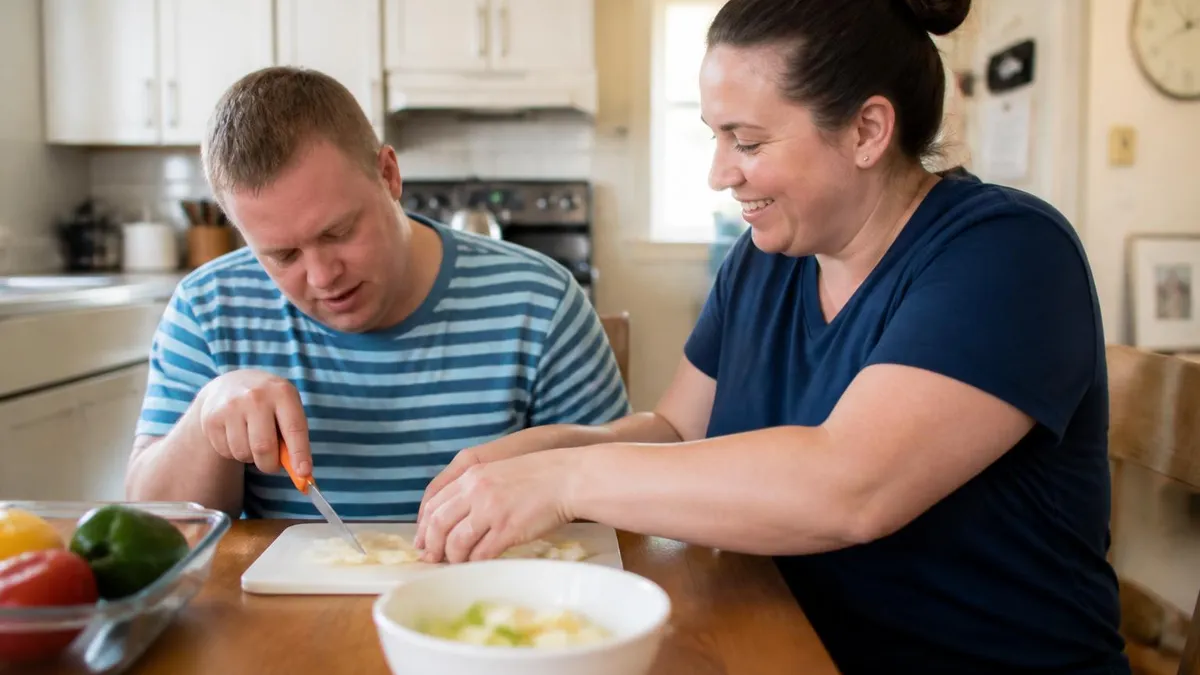
A DSP caregiver — short for Direct Support Professional caregiver — is one of the most important roles in the American human services system. These dedicated workers provide hands-on assistance to individuals with intellectual and developmental disabilities (IDD), acquired brain injuries, autism spectrum disorder, and other conditions that limit daily functioning. Every day, DSPs help their clients wake up, prepare meals, manage medications, navigate community spaces, and participate fully in society. Far from a simple job, the DSP caregiver role demands a unique mix of clinical awareness, emotional intelligence, and deep personal commitment.
The demand for qualified DSP caregivers has never been higher. According to the American Network of Community Options and Resources (ANCOR), the United States currently faces a workforce crisis in direct support, with turnover rates exceeding 45% annually at many agencies and hundreds of thousands of positions going unfilled nationwide. This shortage places enormous pressure on families, provider organizations, and state Medicaid programs. Understanding what the role actually entails — and how to succeed in it — is the first step toward building a meaningful, lasting career in this field.
Many people come to direct support caregiving without fully understanding its scope. They picture a simple aide position, then discover a profession that touches every aspect of a person's life: health monitoring, behavior support, community inclusion, financial literacy coaching, and rights advocacy. A DSP caregiver is not merely a helper; according to the NADSP (National Alliance for Direct Support Professionals), they function as a community connector, a crisis responder, and a lifelong advocate rolled into one role. This breadth is what makes the work both challenging and deeply rewarding.
From a compensation standpoint, DSP caregivers earned a national median wage of approximately $17.00 per hour in 2025, with wages ranging from $13.50 in lower-cost states to over $22.00 per hour in states like California, Massachusetts, and Washington. Many states have recently enacted wage increase legislation specifically targeting direct support workers, recognizing that poverty-level wages drive the chronic workforce shortage. Some experienced DSPs who take on supervisory responsibilities or specialize in behavioral support earn annual salaries exceeding $45,000 to $55,000.
If you are exploring whether a DSP caregiver career is right for you, this article will walk you through everything you need to know: daily job duties, required qualifications, certification pathways, realistic pay expectations, and strategies for long-term professional growth. You will also find practical tips for passing credentialing exams and building the competencies that set high-performing caregivers apart from the rest. Whether you are brand new to human services or a seasoned care worker looking to formalize your skills, understanding the full scope of the dsp caregiver role is the foundation for everything that follows.
The DSP caregiver workforce supports an estimated 7.3 million Americans with disabilities who rely on home and community-based services (HCBS) funded largely through Medicaid. These are not abstract statistics — they represent real people whose quality of life depends almost entirely on the consistency, competence, and compassion of the direct support professionals in their lives. That reality gives weight and purpose to every shift a DSP caregiver works, and it explains why this profession, despite its challenges, attracts people who find deep meaning in their work.
Throughout this guide, you will encounter honest discussions of the profession's difficulties alongside its rewards. The work can be physically and emotionally demanding, schedules are often irregular, and systemic underfunding creates resource constraints that frustrate even the most dedicated caregivers. But the opportunities for genuine human connection, skill development, and career advancement are real and growing. Certifications, specialized training, and policy changes are steadily raising the professional profile of direct support work across the country.
DSP Caregiver Role by the Numbers

Core Roles and Responsibilities of a DSP Caregiver
DSP caregivers assist with bathing, grooming, dressing, meal preparation, and mobility. They follow individualized support plans while promoting the person's independence and dignity, encouraging skill-building rather than creating dependency wherever possible.
Many DSPs are trained and certified to administer medications, monitor vital signs, and observe for health changes. They communicate concerns to nurses or physicians and document all health-related events accurately in agency records.
A central DSP function is supporting individuals to participate in their communities — shopping, recreation, employment, and social events. DSPs also advocate for their clients' rights, preferences, and access to services within systems that can be difficult to navigate.
DSPs implement behavior support plans developed by specialists, use de-escalation techniques, and respond calmly during crisis situations. Understanding the root causes of challenging behavior — unmet needs, sensory overload, communication barriers — is essential to this work.
Accurate documentation is a legal and ethical cornerstone of DSP work. Caregivers record daily activities, incidents, progress toward goals, and health observations using agency systems, ensuring continuity of care across shifts and staff.
Becoming a qualified DSP caregiver typically begins with meeting a baseline set of state-mandated requirements, which vary considerably across the country. Most states require applicants to be at least 18 years old, possess a high school diploma or GED, pass a criminal background check, and have a valid driver's license if the role involves transportation. Some states also require a pre-employment physical examination and verification of immunization status, particularly for positions involving medically complex individuals. These requirements exist to protect the people DSPs serve, who are among the most vulnerable members of society.
Beyond baseline eligibility, nearly every DSP caregiver must complete initial training before working independently with clients. The length and content of required training varies by state and employer, but a typical onboarding curriculum covers person-centered practices, abuse and neglect prevention, medication administration, emergency procedures, documentation standards, and disability awareness. Many states have adopted the NADSP's Competency Area framework, which identifies 15 core competency areas that DSPs should master over time, ranging from communication and individual support to safety and health care.
Formal certification is increasingly available and valued in the DSP field. The NADSP's DSP-C (Certified Direct Support Professional) and DSP-RS (Registered Support) credentials are nationally recognized credentials that demonstrate verified competency. To earn the DSP-C, candidates must complete a portfolio demonstrating mastery of the NADSP competency areas, pass a written examination, and obtain endorsements from a supervisor. The portfolio process typically takes six to twelve months and requires candidates to document real workplace experiences that illustrate each competency area with specific examples.
Some states have created their own certification structures. Minnesota's Direct Support Professional certification requires completion of the College of Direct Support curriculum, a widely used online training platform used by agencies nationwide. Virginia operates the REACH program. Texas requires annual in-service training tied to specific competency areas. These state-level requirements layer on top of — or sometimes substitute for — national credentials, creating a complex patchwork that candidates must navigate with guidance from their employer or state provider association.
Community colleges and vocational training programs increasingly offer certificate programs in direct support or human services that provide academic credit alongside practical training. These programs, which typically run one to two semesters, combine coursework in disability studies, ethics, health care basics, and communication with supervised field placements. Graduates enter the workforce with both theoretical grounding and hands-on experience, making them attractive candidates for agencies seeking stable, skilled employees. Some programs articulate into associate or bachelor's degree programs in social work, psychology, or human services for DSPs who want to advance further.
Continuing education is a professional expectation for DSPs, not an optional perk. Most states require a minimum number of annual training hours to maintain employment and, where applicable, certification. Topics commonly covered in continuing education include updated behavior support techniques, trauma-informed care, person-centered planning updates, technology systems, and changes in relevant law. Leading agencies invest in staff development as a retention strategy, offering tuition reimbursement, paid training time, and career ladder programs that reward DSPs who pursue advanced credentials and take on mentorship or leadership responsibilities.
For DSPs considering formal certification, preparing thoroughly for credentialing assessments pays significant dividends. Many candidates underestimate the depth of knowledge tested — the NADSP written exam covers not just procedural knowledge but conceptual understanding of ethics, rights, and person-centered values. Using structured practice materials, reviewing the NADSP Code of Ethics, and studying case scenarios that require applied judgment all strengthen exam readiness. Agencies that invest in exam preparation report higher first-time pass rates and better long-term retention among certified staff.
Work Settings and Specializations for DSP Caregivers
Residential DSP caregivers work in group homes, intermediate care facilities (ICFs), and supported living arrangements where individuals with disabilities live full-time or part-time. These settings require around-the-clock staffing, meaning DSPs work day, evening, and overnight shifts. Residential caregivers often develop the deepest relationships with those they support, since they are present for the most personal aspects of daily life including waking routines, mealtimes, leisure, and bedtime.
The residential setting demands strong teamwork because multiple DSPs rotate through the same home and must maintain consistency in how they implement individual support plans. Documentation is critical here — each shift must record what occurred, any health changes, behavioral observations, and goal progress. Residential DSPs who demonstrate reliability and leadership often advance to house manager or program coordinator roles, which carry supervisory responsibilities and increased compensation typically ranging from $20 to $28 per hour.

Is a DSP Caregiver Career Right for You?
- +Deeply meaningful work with measurable impact on individuals' quality of life
- +Strong and growing job market with hundreds of thousands of openings nationwide
- +Diverse work settings — residential, community, employment, medical — offering variety
- +Career advancement pathways into supervision, coordination, and program management
- +Transferable skills that apply to nursing, social work, psychology, and education
- +Flexible scheduling options including part-time, per diem, and live-in positions
- +Growing wage movement with many states enacting DSP-specific pay increases
- −Historically low wages relative to the skill and emotional demands of the work
- −High physical demands including lifting, personal care, and long hours on your feet
- −Emotional weight of supporting individuals through health crises, loss, and regression
- −Irregular scheduling including evenings, weekends, and overnight shifts in many roles
- −Documentation and administrative burden that consumes significant shift time
- −Systemic resource constraints and bureaucratic frustrations common in Medicaid-funded services
- −Risk of burnout without strong self-care strategies and organizational support structures
Daily Competency Checklist for DSP Caregivers
- ✓Review and follow the individual's current person-centered support plan before each shift
- ✓Complete all required documentation accurately and on time using agency systems
- ✓Administer medications according to the Medication Administration Record (MAR) and agency protocol
- ✓Observe and record any changes in health status, mood, or behavior for team awareness
- ✓Use positive, respectful communication that honors the person's dignity and preferences
- ✓Support community access activities that align with the individual's goals and interests
- ✓Implement behavior support strategies as written in the Behavior Support Plan (BSP)
- ✓Conduct safety checks of the living or program environment at the start of each shift
- ✓Communicate shift updates clearly during handoff to incoming staff or supervisors
- ✓Report any incidents, injuries, or rights violations to a supervisor as required by policy
Person-Centered Practice Is the Non-Negotiable Core
Every decision a DSP caregiver makes — from how to structure a morning routine to how to respond during a crisis — should flow from one guiding principle: the person being supported is the expert on their own life. Person-centered practice means starting with the individual's preferences, strengths, and goals rather than with the system's convenience. DSPs who genuinely internalize this value report higher job satisfaction and produce measurably better outcomes for the people they support.
Compensation for DSP caregivers has long been a source of frustration and policy debate across the United States. For decades, the median wage for direct support workers hovered around $11 to $13 per hour — barely above the federal poverty line for full-time workers — despite the significant skill, responsibility, and emotional labor the role demands. That picture has shifted meaningfully in recent years.
Federal and state investments in home and community-based services, accelerated by the American Rescue Plan Act of 2021 and subsequent state appropriations, have pushed wages higher in many markets. As of 2025, the national median sits at approximately $17.00 per hour, with a growing number of states targeting $20-plus per hour through dedicated wage enhancement funding.
Benefits vary considerably by employer type and size. Large provider organizations and county-run agencies typically offer health insurance, paid time off, and retirement savings plans, though employee contributions for health coverage can be substantial relative to DSP wages. Smaller community-based providers and self-directed support arrangements may offer fewer formal benefits but sometimes provide schedule flexibility or other quality-of-life advantages. DSPs considering job offers should evaluate the total compensation package — including training support, paid prep time, and advancement opportunities — rather than focusing solely on base hourly wage.
Career advancement within the direct support field is more structured than many new DSPs realize. A typical progression moves from Direct Support Professional to Senior DSP or Team Lead, then to House Manager or Program Coordinator, and potentially to Program Director or Operations Manager for those who complete relevant education. Each step typically brings a wage increase of $2 to $5 per hour and expanded responsibilities including supervision, scheduling, quality assurance, and budget oversight. DSPs who pursue degrees in social work, psychology, human services, or nonprofit management position themselves well for director-level roles that can pay $55,000 to $80,000 annually.
Specialization is another pathway to higher earnings and greater professional recognition. Behavior support specialists, who develop and oversee Behavior Support Plans for individuals with complex needs, often earn $22 to $30 per hour. Assistive technology specialists, employment support specialists, and certified medication aides all command wage premiums. Some DSPs transition into training and staff development roles within their agencies, using their frontline experience to prepare new hires — a role that typically pays at the coordinator level while drawing on the practical wisdom accumulated through years of direct care.
State-level policy is the single biggest driver of DSP caregiver wages, since the overwhelming majority of direct support is funded through Medicaid home and community-based services waivers. States like California, Minnesota, and Massachusetts have made sustained legislative investments in DSP workforce development, resulting in significantly higher wages and more structured career ladder programs than the national average. Advocates for the profession, including ANCOR and NADSP, have long called for a federal minimum wage floor specifically for Medicaid-funded direct support workers, a policy that would dramatically reduce interstate wage disparities and help stabilize the chronically understaffed workforce.
Tuition reimbursement and scholarship programs specifically for DSP caregivers are expanding as agencies and states invest in long-term workforce development. Programs like NADSP's Frontline Initiative, various state-funded scholarship funds, and community college workforce development grants can substantially reduce the cost of earning credentials or degrees. DSPs who pursue formal education while working often find that their real-world experience gives them a significant advantage in coursework on disability services, ethics, and person-centered planning — the theory clicks faster when you have lived its practical application.
The long-term career outlook for DSP caregivers is genuinely strong. The Bureau of Labor Statistics projects continued growth in home health and personal care aide positions — categories that encompass direct support work — driven by the aging of the American population, expansion of HCBS programs, and bipartisan political support for keeping people with disabilities in their communities rather than in institutional settings.
While the workforce shortage creates real hardship for providers and families today, it also means that qualified, credentialed DSP caregivers face a job market that strongly favors them, with employer competition for skilled workers driving wages and benefits upward in many regions.

All DSP caregiver positions require a thorough criminal background check, and many states disqualify applicants for a broad range of offenses — including some that occurred many years in the past. Federal law under the Affordable Care Act and state Medicaid regulations prohibit hiring individuals with certain abuse, neglect, and fraud convictions. If you have a criminal record, research your state's specific disqualifying offense list before investing in training, as eligibility rules vary significantly by state and offense type.
Thriving as a DSP caregiver over the long term requires a set of skills and habits that go beyond what initial training covers. The most effective DSPs — those who stay in the field for five, ten, or twenty years and build genuinely significant relationships with the people they support — share a recognizable set of professional characteristics. Understanding and intentionally developing these characteristics is the difference between a job that burns you out in two years and a career that sustains and fulfills you over a lifetime of service.
Communication is the foundation of everything in direct support work. This means not just verbal communication but active listening, nonverbal attunement, augmentative and alternative communication (AAC) system literacy, and the ability to interpret subtle behavioral cues from individuals who may not communicate through speech. Effective DSP caregivers learn to read the room — to notice when someone is becoming dysregulated before a crisis develops, to recognize when a client is in pain even if they cannot express it verbally, and to adapt their communication style to match each individual's unique needs and preferences.
Emotional regulation is another non-negotiable competency for DSP caregivers. The work regularly involves exposure to distress, aggression, grief, and the slow accumulation of small losses that accompany degenerative conditions. DSPs who cannot effectively manage their own emotional responses risk either burning out or unintentionally escalating the situations they are trying to de-escalate. Evidence-based approaches like mindfulness, reflective supervision, and trauma-informed self-care help DSPs build the internal resources they need to remain present and regulated even in difficult moments.
Documentation skills, while less emotionally resonant than direct care competencies, are critically important for professional success. Incomplete, inaccurate, or delayed documentation creates legal liability for agencies, undermines continuity of care, and can negatively affect the funding that supports individuals' services. DSPs who master efficient, accurate documentation — learning to capture essential information concisely during or immediately after interactions rather than reconstructing events at the end of a shift — stand out as professional assets to any agency. Many agencies now use electronic health record (EHR) systems, making basic digital literacy a practical requirement.
Cultural competence is increasingly central to DSP caregiver practice as the individuals served by disability services come from increasingly diverse backgrounds. Race, ethnicity, language, religion, sexual orientation, and gender identity all shape how individuals experience disability, what they want from their support, and how they relate to care workers. DSP caregivers who invest in understanding their own cultural assumptions — and who approach cross-cultural interactions with genuine curiosity rather than assumptions — build more effective, more respectful relationships and provide better person-centered support as a result.
Collaboration with the broader support team — supervisors, nurses, behavior specialists, speech-language pathologists, family members, and the individuals themselves — is a daily requirement of effective DSP practice. Frontline caregivers often have the most detailed, consistent knowledge of an individual's daily patterns, preferences, and changes in functioning. Bringing that knowledge effectively into team meetings, care planning sessions, and written reports is a critical professional skill that many DSPs develop over time with intentional coaching and mentorship.
Building a professional identity as a DSP caregiver — rather than viewing the role as a temporary stop on the way to something else — correlates strongly with long-term effectiveness and retention. DSPs who see themselves as skilled professionals, who pursue credentials, who engage with the broader disability rights movement, and who take pride in their specialized expertise are measurably more effective and report higher job satisfaction than those who treat the role instrumentally.
Professional organizations like NADSP, state provider associations, and local DSP recognition events all support this professional identity development in ways that individual agencies often cannot provide alone.
Preparing for a DSP caregiver certification exam requires a strategic approach that combines content review, practice testing, and reflective application of core principles. Many candidates make the mistake of focusing exclusively on memorizing facts and procedures while neglecting the ethical reasoning and values-based judgment that certification assessments heavily emphasize. The NADSP exam, for example, includes scenario-based questions where the correct answer is not the most efficient or procedure-compliant option but the one that best reflects person-centered values, rights protection, and professional integrity. Developing comfort with this type of reasoning takes deliberate practice.
Start your exam preparation by thoroughly reviewing the NADSP Code of Ethics, which articulates the professional values that should guide every DSP decision. The Code covers seven ethical commitments — to people supported, the profession, the employer, colleagues, self, society, and the field — and understanding how these commitments interact and sometimes create tension is essential for answering complex scenario questions correctly. Many candidates find it helpful to discuss the Code with a mentor or supervisor, working through real cases from their own experience to see how the ethical commitments apply in practice.
Content review should cover all 15 NADSP competency areas, with particular depth in the areas most heavily represented on the exam: communication, individual support planning, community inclusion, health and wellness support, and professional development. Review your agency's policies and procedures as well as state-specific regulations, since some exam questions reference regulatory requirements that vary by state. If your agency has a training library or subscribes to the College of Direct Support curriculum, use those structured resources as the backbone of your content review.
Practice testing is one of the highest-yield preparation strategies available. Completing sample questions under timed, exam-like conditions accomplishes several things simultaneously: it reveals content gaps you need to address, builds familiarity with the question format and difficulty level, reduces test anxiety through repeated exposure, and develops the time management habits you need to complete the full exam within the allotted window. Aim to complete at least 200 to 300 practice questions across multiple domains in the weeks before your exam, reviewing rationales for both correct and incorrect answers to build deeper understanding.
Peer study groups are an underutilized but highly effective preparation tool. Connecting with colleagues who are also preparing for certification creates mutual accountability, exposes you to perspectives and workplace experiences different from your own, and makes the preparation process more sustainable and enjoyable. Many agencies help formal study groups for staff pursuing certification; if yours does not, consider organizing one informally. Even two or three study sessions with trusted colleagues who can challenge your thinking and share their knowledge of specific competency areas can meaningfully improve your exam performance.
On exam day, apply test-taking strategies that maximize your performance regardless of content knowledge level. Read each question carefully before reading the answer choices, then predict what an ideal answer would look like before evaluating the options presented. For scenario-based questions, ask yourself which option best reflects person-centered values and professional ethics before considering procedural correctness. Eliminate obviously wrong answers first, then reason carefully between remaining options. If a question stumps you completely, mark it and return at the end — spending too long on a single difficult question can cost you time needed for questions you can answer confidently.
After earning your initial certification, maintain your credential through ongoing professional development that goes beyond the minimum required hours. Seek out training in emerging areas like trauma-informed care, positive behavior support, supported decision-making, and assistive technology — all rapidly evolving fields that shape how high-quality DSP caregivers practice. Attend state and regional conferences, read publications from NADSP and ANCOR, and engage with online professional communities where DSPs share experiences and resources. The field is evolving quickly, and caregivers who keep pace with that evolution position themselves for the most meaningful and well-compensated career opportunities available in direct support.
DSP Questions and Answers

DSP Worker: The Complete Guide to Becoming a Direct Support Professional in 2026

DSP Meaning 2026: What Is a Direct Support Professional?

DSP Training: Direct Support Professional Programs and Credentials

What Is a DSP in Healthcare? A Complete Guide to Direct Support Professionals
What Is a DSP? The Complete Guide to Direct Support Professionals in the US
How this page was made: written with AI tools and published by Nathan Beja, founder of Practice Test Geeks, who is responsible for its content. Exam facts are checked against the official sources listed below. Not reviewed by a subject-matter expert. Editorial policy
Sources & references
Exam facts on this page (fees, format, dates, passing scores) are checked against these official sources; the date is our last check. Editorial policy
- nadsp.org — Score validity, test delivery, eligibility · verified Oct 2026