
DLAB Practice Test: Free Online Questions and Complete Prep Guide 2026 October
Pass your DLAB exam on the first attempt. 💡 Practice questions with detailed answer explanations, hints, and instant scoring.
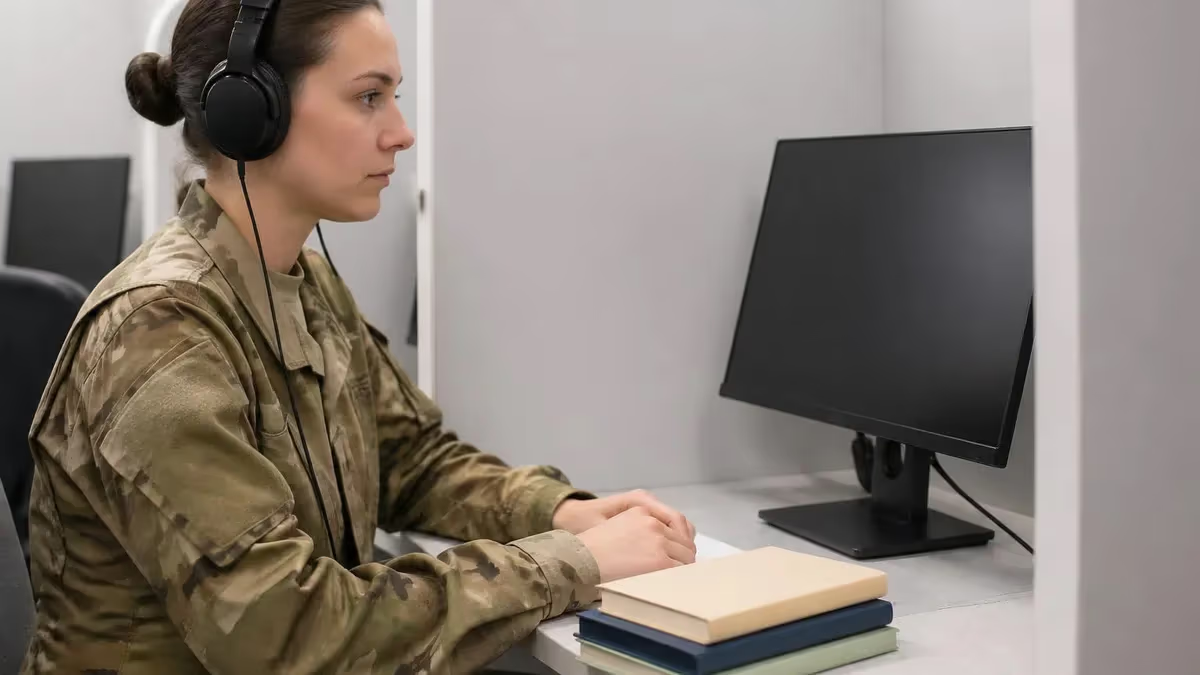
The DLAB — Defense Language Aptitude Battery — is the US military's standardized test for measuring language learning potential in candidates being considered for military linguist roles. Unlike a foreign language proficiency test, the DLAB doesn't test languages you already know. It measures your underlying aptitude to learn a new language by presenting you with an invented grammar system and audio-based phonological tasks. Preparing with DLAB practice test materials is the most effective way to enter the test ready to perform at your best.
The challenge the DLAB poses is unique in military testing. Because you can't study the content of the test the way you'd study for an ASVAB subject area, preparation has to focus on the format — understanding how the invented grammar rule questions work, what the phonology questions test, and how to process new linguistic information quickly. Candidates who practice with realistic DLAB-style questions consistently outperform candidates who go in cold, even when both groups have similar baseline language learning ability.
DLAB scores determine which language training programs you qualify for in the military. Different languages are classified by difficulty (Category I through IV), and the minimum qualifying DLAB score increases with each category. A score of 95 qualifies for Category I languages like Spanish and French; a score of 111 is required for Category IV languages like Arabic, Chinese, Japanese, and Korean. If your target language is in a higher category, you need a higher DLAB score — making deliberate preparation especially important.
The military linguist career field spans intelligence analysis, diplomatic translation, signal intelligence collection, and interrogation support roles across all branches of the armed forces. MOS (Military Occupational Specialty) and AFSC (Air Force Specialty Code) positions that require language training all begin with the DLAB as the first gating test in the selection pipeline. Candidates pursuing these roles — Army 35P, Navy CTI, Air Force 1N3, Marine Corps 2671, and others — need to approach DLAB preparation as seriously as they'd approach any other critical qualifying test in the enlistment process.
Importantly, the DLAB test is not scored on a curve or relative to other test-takers. Your DLAB score reflects your individual performance against fixed criteria — the score ranges that qualify for each language category are consistent regardless of how other candidates perform on the same test day.
This means your preparation investment directly affects your outcome without reference to anyone else's performance. There's no penalty for being well-prepared, and there's no advantage that other test-takers can take away from you by performing well on their own tests. Your result is entirely a function of your preparation and your performance on test day — two factors you can directly control.
This guide covers the DLAB's test format and sections, how to use practice tests to build the skills the test measures, what score you need for your target language category, and preparation strategies that work. Whether you're just starting to explore whether a military linguist career is right for you or you have a test date scheduled, using these practice resources alongside a structured study approach will give you the best shot at your target score.
DLAB practice tests work differently from most test prep materials because they can't reproduce the actual test content — the phonology section uses proprietary audio recordings, and the grammar rules used in the real test aren't publicly released. What effective DLAB practice tests do instead is simulate the cognitive demands of the grammar rule application section: presenting an invented grammar system with explicit rules and requiring you to apply those rules correctly under time pressure. This cognitive pattern — rapid rule learning and application — is exactly what the DLAB's grammar section tests.
The grammar rule application section is the largest section of the DLAB and the most trainable through practice. In this section, you're given a set of grammar rules for a fictional language and then asked to apply those rules to new sentences. Practice with similar fictional grammar rule questions builds the specific cognitive skill the DLAB tests: your ability to hold new grammatical rules in working memory, apply them correctly, and move through questions at speed. The more you practice this format, the faster and more accurate your rule application becomes.
Working through multiple sets of fictional grammar rules — not just reviewing the same set repeatedly — is the most effective preparation approach. Each new rule set the practice tests present trains your brain to handle novel grammatical structures rather than memorizing one specific set. This transfer of learning is exactly what the real DLAB requires: you'll face grammar rules you've never seen before, and your ability to process them quickly and correctly is what's being measured. Use dlab test prep resources that include multiple distinct rule sets rather than single-set repetition.
Phonological practice is harder to simulate without audio, but candidates can build related skills through active listening exercises. Listening to spoken languages you're completely unfamiliar with — particularly tonal languages or languages with phonemic distinctions not present in English — trains your ear to distinguish sounds that English-trained listeners typically blur together. This phonological attentiveness is the skill the DLAB's audio section tests. Even general exposure to foreign-language speech, engaged critically and actively, develops relevant auditory discrimination ability.
Timed practice matters as much as content practice. The DLAB is time-limited, and most candidates feel pressure from the clock on both sections. Running your DLAB practice sessions with a timer — and practicing the discipline of moving on from difficult questions rather than stalling — builds the pacing habits you need for the actual test. A practice session where you answer 85 grammar questions in 45 minutes trains your speed alongside your accuracy — both dimensions matter, and both improve together with consistent timed practice.
Treating every practice session as a performance rather than a study exercise is a mindset shift that accelerates preparation. When you sit down for practice, start the timer, commit to full effort for the session duration, and behave exactly as you would on the real test. This mental discipline — combined with genuine review and analysis afterward — is what separates candidates who improve quickly from those who plateau after a few sessions.

A structured preparation timeline makes DLAB practice more effective than sporadic studying. If you have three to four weeks before your test date, a daily 45-to-60-minute session focused on grammar rule application practice gives you enough repetitions to build meaningful speed and accuracy improvements. If you have less time, concentrate on the grammar section — it accounts for the majority of the test's 110 questions and is the most directly improvable through practice.
The first week of DLAB practice should focus on understanding how fictional grammar rule questions work rather than maximizing your score. Read through each rule set carefully before attempting questions. Identify the specific grammatical changes each rule requires — word order changes, inflection additions, case markers — and practice applying just that rule before combining rules. The grammar section presents multiple rules together and requires you to apply all relevant rules correctly, which requires comfortable fluency with each individual rule before combination practice starts.
In the second and third weeks, shift from careful rule analysis to speed building. Set a target of completing each question set within the time you'd have on the real test. Review every missed question and identify whether the error was a rule misapplication, a rule you forgot to apply, or a question you misread. Different error types require different corrections: rule misapplication needs targeted review of that specific rule; forgotten rules suggest you need to slow down your initial reading; misread questions suggest you need to pace more carefully rather than faster.
Don't neglect accuracy in favor of speed during practice. The DLAB's grammar section has many questions, and guessing aggressively to finish more questions often produces worse overall scores than working carefully through fewer questions with high accuracy. The optimal pacing is the fastest speed at which your accuracy remains high — find that speed through practice, not by defaulting to either extreme.
For candidates who've done language learning outside of standard school settings — learning a second language as an adult, studying linguistics, or working with language learning apps — that experience directly translates to DLAB preparation. The skills involved in adult language learning (pattern recognition, holding grammar rules in memory, applying rules to new material) are precisely what the DLAB tests. If you've studied a language formally, revisiting what the grammar learning process felt like can help you mentally calibrate for the rule-application demands of the test.
Building a consistent daily practice habit across the full preparation period consolidates the rule-application skill beyond what any single long session achieves. Five 45-minute sessions across a week produce better retention and speed development than one four-hour cramming block. Your brain consolidates pattern recognition between sessions — daily practice lets this consolidation process work in your favor, building the kind of cumulative improvement that a single-session cram approach simply can't replicate regardless of how hard you work in that one session.

DLAB Grammar Practice: What to Focus On Each Week
- ✓Week 1: Read each rule set fully before attempting questions — comprehension before speed
- ✓Week 1: Practice applying one rule at a time before combining multiple rules
- ✓Week 2: Begin timed sessions — target realistic pacing, track accuracy rate per session
- ✓Week 2: Review each missed question — identify whether the error was misapplication, omission, or misreading
- ✓Week 3: Complete full 45-minute practice blocks under strict time limits
- ✓Week 3: Drill specific rule types that you consistently miss
- ✓Week 4: Run one full timed simulation across all question types
- ✓Final 48 hrs: Light review only — sleep and cognitive rest matter more than cramming
DLAB Practice Test Questions
Prepare for the DLAB - Defense Language Aptitude Battery exam with our free practice test modules. Each quiz covers key topics to help you pass on your first try.
DLAB Applying Fictional Grammar Rules
DLAB Exam Questions covering Applying Fictional Grammar Rules. Master DLAB Test concepts for certification prep.
DLAB Applying Invented Grammatical Rules
Free DLAB Practice Test featuring Applying Invented Grammatical Rules. Improve your DLAB Exam score with mock test prep.
DLAB Comprehensive Rule Application
DLAB Mock Exam on Comprehensive Rule Application. DLAB Study Guide questions to pass on your first try.
DLAB Cross-Linguistic Comparison
DLAB Test Prep for Cross-Linguistic Comparison. Practice DLAB Quiz questions and boost your score.
DLAB Deducing Rules from Audio
DLAB Questions and Answers on Deducing Rules from Audio. Free DLAB practice for exam readiness.
DLAB - Defense Language Aptitude Battery A...
DLAB Mock Test covering - Defense Language Aptitude Battery Applying Fictional Grammar Rules. Online DLAB Test practice with instant feedback.
DLAB - Defense Language Aptitude Battery A...
Free DLAB Quiz on - Defense Language Aptitude Battery Applying Invented Grammatical Rules. DLAB Exam prep questions with detailed explanations.
DLAB - Defense Language Aptitude Battery C...
DLAB Practice Questions for - Defense Language Aptitude Battery Comprehensive Rule Application. Build confidence for your DLAB certification exam.
DLAB - Defense Language Aptitude Battery D...
DLAB Test Online for - Defense Language Aptitude Battery Deducing Rules from Audio. Free practice with instant results and feedback.
DLAB - Defense Language Aptitude Battery I...
DLAB Study Material on - Defense Language Aptitude Battery Interpreting Rules from Images. Prepare effectively with real exam-style questions.
DLAB - Defense Language Aptitude Battery N...
Free DLAB Test covering - Defense Language Aptitude Battery Noun and Adjective Agreement. Practice and track your DLAB exam readiness.
DLAB - Defense Language Aptitude Battery R...
DLAB Exam Questions covering - Defense Language Aptitude Battery Recombining Language Segments. Master DLAB Test concepts for certification prep.
DLAB - Defense Language Aptitude Battery S...
Free DLAB Practice Test featuring - Defense Language Aptitude Battery Syllabic Stress Identification. Improve your DLAB Exam score with mock test prep.
DLAB - Defense Language Aptitude Battery V...
DLAB Mock Exam on - Defense Language Aptitude Battery Visual Language Association. DLAB Study Guide questions to pass on your first try.
DLAB Contextual Word Order Rules
DLAB Test Prep for DLAB Contextual Word Order Rules. Practice DLAB Quiz questions and boost your score.
DLAB Sound-Symbol Correspondence
DLAB Questions and Answers on DLAB Sound-Symbol Correspondence. Free DLAB practice for exam readiness.
DLAB Grammar MCQ
DLAB Mock Test covering Grammar MCQ. Online DLAB Test practice with instant feedback.
DLAB Interpreting Rules from Images
Free DLAB Quiz on Interpreting Rules from Images. DLAB Exam prep questions with detailed explanations.
DLAB Knowledge
DLAB Practice Questions for Knowledge. Build confidence for your DLAB certification exam.
DLAB Language Structure Deduction
DLAB Test Online for Language Structure Deduction. Free practice with instant results and feedback.
DLAB Morphological Analysis
DLAB Study Material on Morphological Analysis. Prepare effectively with real exam-style questions.
DLAB Noun and Adjective Agreement
Free DLAB Test covering Noun and Adjective Agreement. Practice and track your DLAB exam readiness.
DLAB Phonetic Pattern Recognition
DLAB Exam Questions covering Phonetic Pattern Recognition. Master DLAB Test concepts for certification prep.
DLAB Recombining Language Segments
Free DLAB Practice Test featuring Recombining Language Segments. Improve your DLAB Exam score with mock test prep.
DLAB Syllabic Stress Identification
DLAB Mock Exam on Syllabic Stress Identification. DLAB Study Guide questions to pass on your first try.
Going into the DLAB test knowing what to expect from the grammar section mentally positions you to perform better than candidates who are surprised by the format. When you sit down for the grammar section and the rules for a fictional language appear on screen, your practiced response should be: read each rule carefully and completely, confirm you understand each rule before starting questions, then work through the questions at a consistent pace. Don't rush the rule-reading phase — time spent ensuring you understand the rules correctly before starting questions saves more time than it costs by reducing per-question errors.
Candidates sometimes underestimate the importance of environmental conditions when taking the DLAB, particularly for the phonology section. The audio portion requires you to clearly hear sound distinctions in an unfamiliar language — background noise, poor headphone quality, or audio processing issues can directly impair your ability to complete this section accurately. If you're taking the DLAB at a MEPS facility, the equipment is standardized, but ensuring you're seated comfortably and that the headphones fit properly before the audio section starts is worth the few seconds it takes to confirm.
When you encounter a question where you're uncertain which rules apply, start with the ones you're most confident about and eliminate answer choices that violate rules you know are correct. Process of elimination is a valid and effective strategy on the grammar section — narrowing four choices to two using firm rules you know, then choosing between the remaining two based on your best assessment of the less-certain rules. This is better than guessing randomly and faster than trying to be certain before selecting.
The phonology section requires a different mental posture than grammar. Rather than applying rules, you're listening and making judgments about what you hear. The key preparation insight is that the phonology section tests discrimination — whether you can hear a difference between sounds or stress patterns — not production.
You don't need to be able to speak the sounds; you need to hear the distinctions. Candidates who struggle with the phonology section typically aren't listening carefully enough to the stress and intonation signals that distinguish correct from incorrect answers. Slowing down perceptually — really listening to the full audio before responding — helps considerably.
Managing your mental energy across the full 60-minute test is a practical consideration that practice sessions help address. The grammar rule section is cognitively demanding — reading rules, holding them in memory, and applying them correctly requires sustained concentration. Candidates who've done long practice sessions find that the test's duration feels manageable; candidates who've only done short practice bursts often experience a cognitive energy drop in the second half of the grammar section. Build your preparation sessions up to full 45-minute grammar practice blocks at least once or twice before your test date.
Score reporting after the DLAB is typically immediate or same-day at most MEPS locations where the test is administered. Your score is reported to your recruiter, who will discuss which language programs you're eligible for based on your result. If your score falls short of the minimum for your target language category, retesting is permitted after a waiting period — typically 6 months. Candidates who fall just below their target score and are committed to a specific language category often find that additional structured practice during the wait period enables a meaningful score improvement on retake.
The DLAB is one of the few military qualification tests where targeted preparation has a well-documented and meaningful impact on scores. This isn't a test of accumulated knowledge that takes years to build — it's a test of a specific cognitive processing skill that improves rapidly with the right kind of practice.
Candidates who commit to four weeks of structured fictional grammar rule practice, combined with audio attentiveness development, routinely score in ranges that qualify them for language categories they wouldn't have reached without preparation. The investment is modest, the payoff is direct, and the career implications of achieving a higher DLAB score — access to more language programs, more competitive MOS assignments, more career advancement opportunity — are significant.
DLAB Pros and Cons
- +DLAB practice tests reveal knowledge gaps that content review alone can't identify
- +Timed practice builds the pace needed for the real exam
- +Reviewing wrong answers is the highest-ROI study activity
- +Multiple free sources available
- +Score tracking shows measurable readiness
- −Third-party tests vary in quality and exam alignment
- −Taking tests before content review produces misleading scores
- −Memorizing answers without understanding concepts doesn't transfer
- −Authentic official practice material is limited
- −Practice scores don't perfectly predict actual exam performance
Pros and Cons at a Glance
| Pros | Cons |
|---|---|
| DLAB practice tests reveal knowledge gaps that content review alone can't identify | Third-party tests vary in quality and exam alignment |
| Timed practice builds the pace needed for the real exam | Taking tests before content review produces misleading scores |
| Reviewing wrong answers is the highest-ROI study activity | Memorizing answers without understanding concepts doesn't transfer |
| Multiple free sources available | Authentic official practice material is limited |
| Score tracking shows measurable readiness | Practice scores don't perfectly predict actual exam performance |
DLAB Questions and Answers
About the Author

Educational Psychologist & Academic Test Preparation Expert
Columbia University Teachers CollegeDr. Lisa Patel holds a Doctorate in Education from Columbia University Teachers College and has spent 17 years researching standardized test design and academic assessment. She has developed preparation programs for SAT, ACT, GRE, LSAT, UCAT, and numerous professional licensing exams, helping students of all backgrounds achieve their target scores.
Join the Discussion
Connect with other students preparing for this exam. Share tips, ask questions, and get advice from people who have been there.
View discussion (8 replies)