
CWI Jobs: Certified Welding Inspector Job Market Guide 2026 September
💯 Free CWI Jobs: Certified Welding practice test with instant feedback and detailed answer explanations. Prepare for your exam.
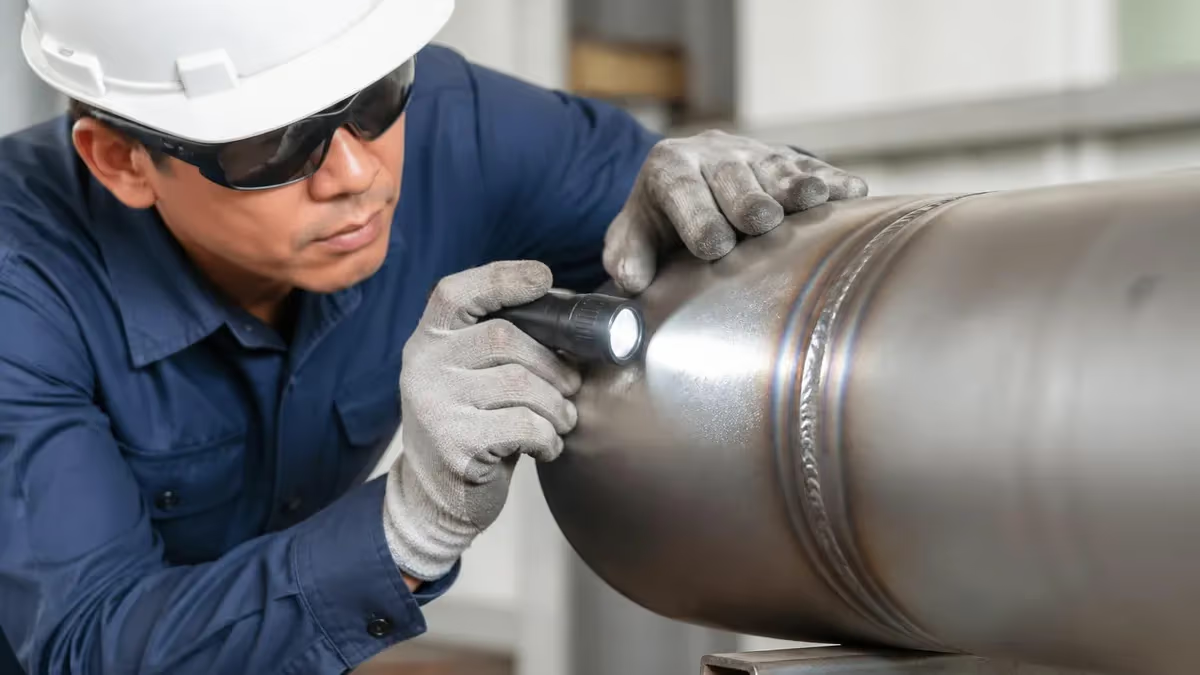
The Certified Welding Inspector (CWI) credential, awarded by the American Welding Society (AWS), is one of the most marketable quality assurance credentials in manufacturing, construction, and energy. CWI holders verify that welds meet applicable code and standard requirements — a function that's non-negotiable in industries where weld failures carry catastrophic consequences. This essential quality assurance role, combined with a limited supply of qualified inspectors, makes the CWI job market consistently strong across business cycles.
The industries that hire CWIs span virtually the entire industrial economy: oil and gas pipelines, petrochemical refineries, offshore platforms, structural steel fabrication, pressure vessel manufacturing, nuclear power plants, aerospace and defense manufacturing, shipbuilding, and heavy civil infrastructure. Each of these sectors has regulatory, contractual, or liability-driven requirements for qualified welding inspection that cannot be satisfied by uncertified personnel — creating stable, non-discretionary demand for CWI-credentialed professionals regardless of broader economic conditions.
CWI jobs come in two primary market configurations: permanent employment with a single company (typically a fabricator, contractor, owner-operator, or inspection company) and contract or per-diem work through inspection agencies or staffing firms. Both models have distinct advantages. Permanent roles offer stability, benefits, and career advancement within a single organization's quality program. Contract roles typically pay higher day rates ($600–$1,000+ per day on major projects), provide exposure to a variety of project types and industries, and allow experienced inspectors to build a diverse portfolio of code experience that makes them more competitive for higher-profile opportunities.
Understanding the CWI job market's structure helps both new CWIs and those with experience navigate their options strategically. Entry-level CWI positions — often called junior inspector, QC assistant, or weld technician roles — provide supervised field experience that builds the practical judgment the certification exam doesn't directly test. Senior CWI positions, particularly in oil and gas and nuclear sectors, often carry significant salary premiums and may require additional credentials (VT Level II, PT Level II, or specific code endorsements) that complement the base CWI certification.
Job postings for CWIs span a wide range of titles depending on employer industry and role scope. Common titles include Welding Inspector, QC Inspector, Quality Control Inspector, NDE Inspector, Field Inspector, and QA/QC Coordinator. Some employers use the title Third-Party Inspector (TPI) for contract inspection roles on their projects. Understanding that "welding inspector" encompasses these varied titles helps when searching job boards, agency portals, and employer career pages — limiting searches to "CWI" alone misses a substantial portion of available opportunities that are written by HR departments unfamiliar with the specific certification designation.
The AWS certification system's tiered structure gives CWIs a clear roadmap for long-term career development that most credentials in the skilled trades lack. Starting with the base CWI, inspectors can pursue endorsements in specific codes, Certified Radiographic Interpreter (CRI) designation, Certified Welding Educator (CWE) for those interested in training roles, and ultimately the Senior CWI (SCWI) designation. Each rung of this ladder corresponds to expanded job eligibility, higher compensation potential, and access to roles that require documented senior expertise — giving the CWI career path a distinctly engineering-like credential progression that increases market value predictably over time.
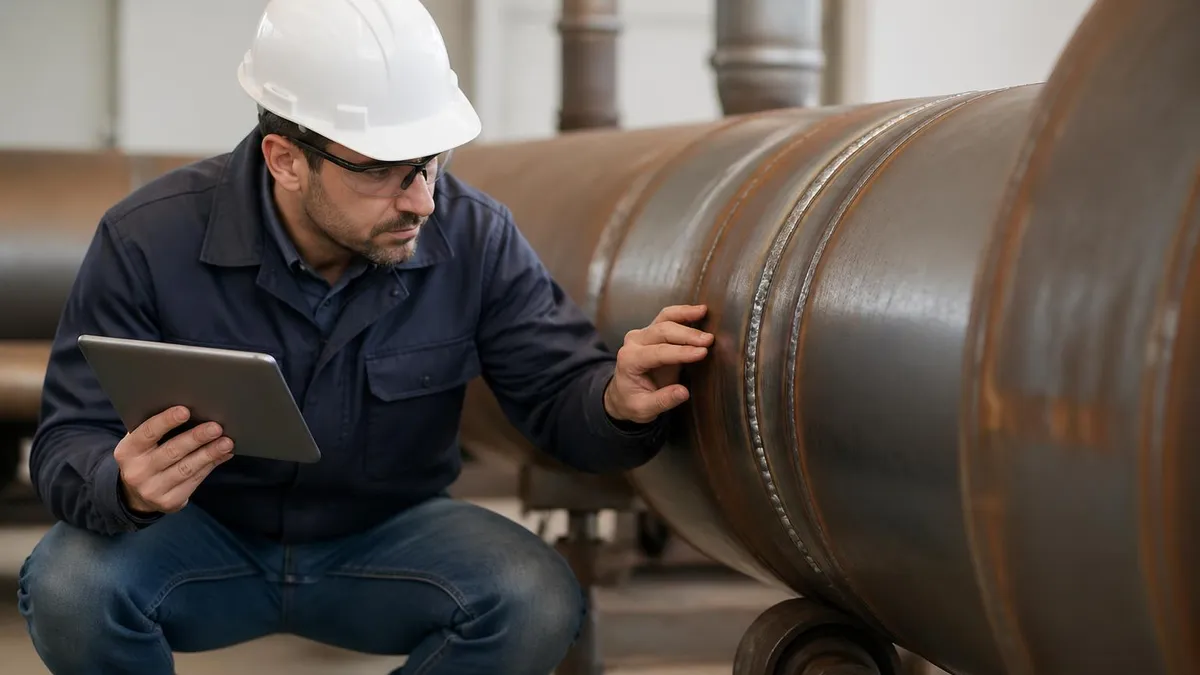
Salary ranges for CWI positions vary substantially by industry, region, experience level, and the specific codes the inspector is qualified to work under. Entry-level CWIs in general fabrication or structural construction typically earn $50,000–$65,000 annually. Mid-career CWIs with 5–10 years of experience and proficiency in multiple codes — particularly API 1104 (pipelines), ASME Section IX (pressure vessels), or AWS D1.1 (structural) — earn $70,000–$90,000 in permanent positions. Senior CWIs and lead inspectors at major industrial facilities, particularly in oil and gas or nuclear, routinely earn $95,000–$130,000 with comprehensive benefits packages.
Geographic location significantly influences CWI compensation. The Gulf Coast region — Texas, Louisiana, and Mississippi — consistently offers the highest CWI salaries and contract rates due to the concentration of petrochemical facilities, refineries, and pipeline infrastructure. The Permian Basin, Eagle Ford, and other domestic oil and gas production regions command premium rates for pipeline and facilities inspection. Industrial Midwest markets (Ohio, Indiana, Michigan) offer strong opportunities in manufacturing and structural fabrication but at lower rates than energy-sector hubs. Cost-of-living differences between regions affect the real purchasing power of salary differences.
Code endorsements and specialty certifications multiplied on top of the base CWI designation substantially increase earning potential and job flexibility. AWS offers endorsements in visual testing (VT), specific code areas (D1.1, D1.2, API 1104), and other specialized areas. Many CWIs also hold Level II certifications in NDE methods (UT, RT, PT, MT) through ASNT or ASME, which qualifies them for combined CWI/NDE roles that command premium compensation. Inspectors with CSWIP (UK-equivalent), IWI (International Welding Inspector), or specific nuclear qualifications access international markets that can significantly expand income potential.
The most common career trajectory for new CWIs begins in fabrication shop or structural steel inspection, where they develop code literacy and documentation practices under more controlled conditions than field construction. After 2–4 years of shop experience, many CWIs transition to field inspection roles on larger construction projects, pipeline work, or pressure vessel fabrication. Field experience broadens code exposure, builds professional reputation with contractors and inspection agencies, and positions inspectors for senior roles that require demonstrated ability to manage inspection programs independently on major projects.
Inspection service companies and third-party inspection organizations represent a distinct employment model worth understanding separately from direct employer hiring. Companies like Bureau Veritas, Intertek, MISTRAS Group, and Acuren employ CWIs internally and deploy them on client projects as a service — clients contract the inspection company rather than hiring an inspector directly. Working for an inspection service company provides stable W-2 employment while offering exposure to diverse project types across multiple industries and clients. Many experienced CWIs begin their contract careers by working for inspection service companies before transitioning to independent contracting as they build client relationships and project history.
Benefits and total compensation comparisons between permanent and contract CWI positions require careful accounting beyond the face-value numbers. Contract day rates look dramatically higher than permanent salaries, but independent contractors must pay self-employment taxes (approximately 15% on top of income tax), fund their own health insurance, cover professional liability insurance, account for unpaid time between projects, and contribute to their own retirement without employer matching.
After accounting for these costs, the effective compensation premium for contract versus permanent CWI work at equivalent experience levels is typically 20–40% — still significant, but more modest than the raw rate comparison suggests. Many CWIs keep a spreadsheet of their effective hourly rate after all costs when evaluating contract opportunities.
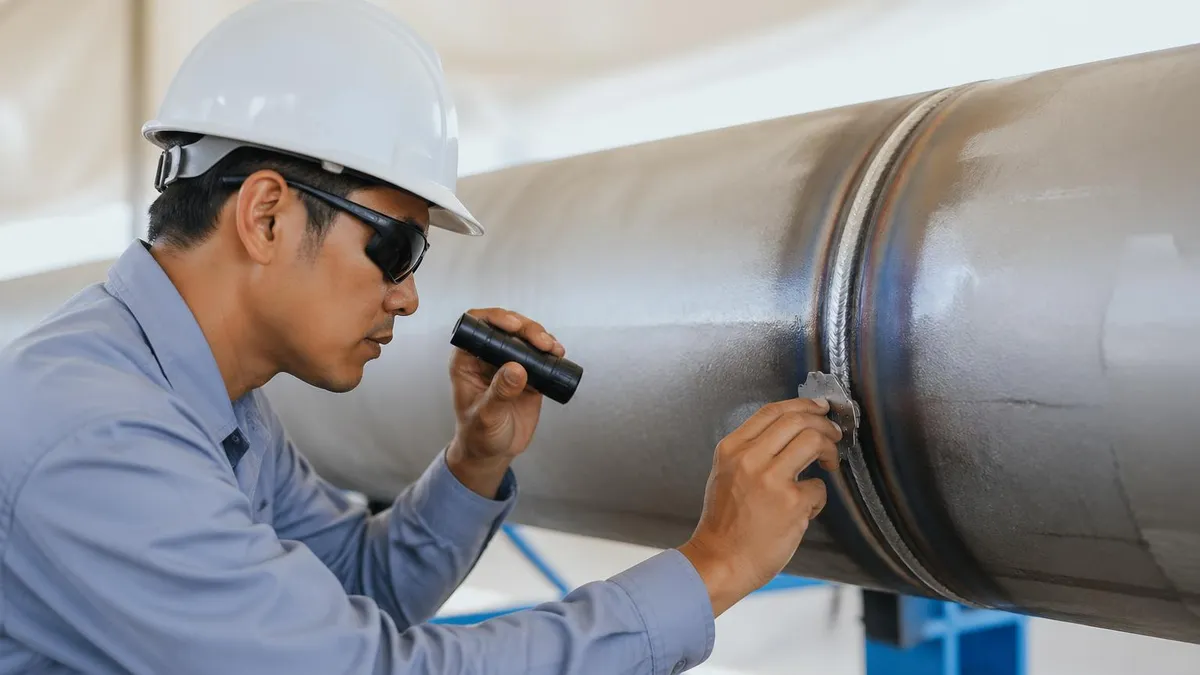
CWI Job Roles by Experience Level
QC Assistant / Junior Inspector: Works under senior CWI supervision. Focuses on documentation, dimensional inspection, visual examination, and learning applicable code requirements. Many roles at fabrication shops, structural steel contractors, and general construction firms.
Weld Technician: May not be full CWI but often has CWI certification while building experience. Handles weld procedure qualification, documentation control, and production inspection with oversight from senior staff.
Salary range: $45,000–$65,000. Focus this period on building code-specific experience, documentation proficiency, and relationships with inspection companies that hire contractors.
Contract inspection work through staffing agencies and inspection service companies offers significantly higher hourly or day rates than permanent employment, but requires active effort to maintain continuous work flow. Major inspection staffing companies — including Bureau Veritas, MISTRAS Group, Intertek, Acuren, TÜV Rheinland, and similar firms — employ large numbers of contract CWIs and place them on projects across industries. Building relationships with multiple agencies, maintaining a strong profile with documented project history, and cultivating a reputation for quality work and reliability are the key activities that keep contract CWIs continuously employed.
The per-diem structure common in oil and gas and pipeline inspection compensates CWIs for being away from home — often in remote locations — with a tax-advantaged daily allowance on top of base day rates. Experienced inspectors who are willing to travel and work away-from-home assignments can earn substantially more than their permanent-employed counterparts in the same region. Per-diem rates vary by project location and employer, but can add $100–$200/day to effective compensation in remote or high-cost-of-living project locations.
The outlook for CWI employment over the next decade reflects several structural demand drivers. The infrastructure investment wave — including bridge replacement, water system upgrades, and industrial facility construction — drives demand for structural and pressure vessel inspection. Energy transition projects including LNG export facilities, hydrogen infrastructure, and offshore wind turbine foundations create new inspection demand in specialized code areas. Aging workforce demographics within the inspection profession — many experienced CWIs are approaching retirement — create advancement opportunities for mid-career inspectors who develop senior expertise.
Emerging sectors within the energy and industrial economy are creating new CWI job categories that didn't exist a decade ago. LNG (liquefied natural gas) export facility construction requires extensive cryogenic welding inspection under ASME standards in ways that differ from conventional oil and gas pipeline work. Offshore wind installation and maintenance requires marine welding inspection combining AWS and offshore code knowledge.
Hydrogen infrastructure — storage vessels, distribution piping, and production facility construction — involves specialized materials and code requirements that early movers in this space will hold as premium qualifications. CWIs who identify emerging sectors and proactively develop relevant code knowledge before these markets fully mature tend to enter them ahead of competition and at premium rates.
Remote work trends have had limited impact on field inspection roles by nature — welding inspection requires physical presence at the weld being inspected. However, documentation-heavy roles within QA/QC management, WPS development review, and inspection coordination increasingly allow partial remote work through digital document management systems. Some inspection companies offer hybrid arrangements for senior QA coordinators and engineering support roles. For CWIs interested in greater schedule flexibility, developing expertise in documentation systems, digital radiography review, and quality management systems can open access to roles that mix field and remote work more effectively than pure field inspection positions.
International CWI opportunities represent a significant but often overlooked segment of the job market. Major oil and gas projects in the Middle East, Southeast Asia, West Africa, and Australia regularly recruit experienced CWIs from North American and European markets on rotational or project-based contracts. International assignments typically include substantially elevated day rates, tax advantages for extended international work under IRS rules (foreign earned income exclusion), and per-diem allowances for the project location.
CWIs considering international work should verify that their AWS CWI certification is recognized under the project's governing contract requirements — most international energy projects on U.S.-designed facilities accept AWS CWI — and confirm that their passport is current well in advance of pursuing these opportunities.
- ✓Review the official CWI exam content outline
- ✓Take a diagnostic practice test to identify weak areas
- ✓Create a study schedule (4-8 weeks recommended)
- ✓Focus on your weakest domains first
- ✓Complete at least 3 full-length practice exams
- ✓Review all incorrect answers with detailed explanations
- ✓Take a final practice test 1 week before exam day

Contract vs. Permanent CWI Employment
- +Contract: higher daily rates ($600–$1,000+) compared to equivalent permanent salary
- +Contract: per-diem tax advantages on away-from-home assignments
- +Contract: exposure to diverse project types, codes, and industries
- +Permanent: stable income, benefits (health insurance, 401k), and paid time off
- +Permanent: career advancement within a single organization's QA program structure
- −Contract: income gaps between project assignments — no guaranteed continuous work
- −Contract: no employer-provided benefits — health insurance cost comes out of contractor income
- −Contract: remote project locations requiring extended time away from home
- −Permanent: lower base compensation than contract rates in equivalent locations
- −Permanent: limited to the code environments of one employer — may narrow code breadth over time
Building a strong professional profile as a CWI requires systematic documentation of your inspection experience from day one. AWS and most employers want CWIs who can clearly articulate which codes they've worked under, which material types they've inspected, and what project scales they've handled. Maintaining a personal log of projects, codes worked, material types, and inspection quantities gives you the raw material for compelling resume entries and portfolio evidence when pursuing senior opportunities or high-value contracts.
Networking within the welding inspection community accelerates career opportunities significantly. AWS local sections, LinkedIn groups for welding professionals, and industry associations like the American Society for Nondestructive Testing (ASNT) all provide connection opportunities. Inspectors who are known within professional networks — who show up at technical meetings, present at local section events, or contribute to online discussions — access job opportunities before they're publicly posted. Many of the best CWI contract positions are filled through personal referrals rather than public job postings.
The combination of CWI with Senior Certified Welding Inspector (SCWI) credentials — available to CWIs with 15+ years of experience who pass a more advanced examination — represents the pinnacle of the AWS certification hierarchy. SCWIs command the highest inspection salaries and are sought for expert witness roles, major project QA leadership, and international inspection assignments. For CWIs early in their careers, the SCWI serves as a long-range career goal that provides direction for the experience-building and code-diversification decisions made throughout the preceding decade of practice.
Resume presentation for CWI positions differs from general employment contexts in important ways. Employers and agencies want to see specific codes worked (AWS D1.1, ASME IX, API 1104), material types inspected (carbon steel, stainless, chrome-moly, aluminum), project types (new construction vs. maintenance, shop vs. field), industries, and — critically — NDE methods and certifications.
Generic quality-focused resume language without this specific technical detail signals a candidate who lacks depth. The strongest CWI resumes read almost like a project history: employer, project type, code basis, materials, and approximate inspection scope for each position. This format allows technical hiring managers and agency recruiters to quickly assess fit for specific project requirements.
Professional development during employment gaps or between contracts sharpens competitive position and prevents knowledge stagnation. AWS offers online modules and local section technical presentations that count toward CWI continuing education requirements. ASNT certification preparation for additional NDE Level II methods — particularly UT (ultrasonic testing) and RT (radiographic testing) — dramatically expands the inspector's qualifying scope for combined inspection roles.
Technical reading of AWS Welding Journal, relevant code committee publications, and code revision summaries keeps inspection knowledge current in a field where applicable standards are regularly updated. Inspectors who treat professional development as an ongoing practice rather than a renewal-window activity consistently outpace their peers in career advancement timelines.
Finally, the job search process for CWIs benefits from simultaneously working multiple channels rather than relying on a single source. Public job boards (Indeed, LinkedIn, Glassdoor) surface employer direct postings. Inspection agency portals (Bureau Veritas, Acuren, MISTRAS, Intertek career pages) list both permanent and contract project openings directly. AWS local section networks surface word-of-mouth opportunities before public posting.
Engineering and construction staffing firms specializing in industrial sectors (many are not inspection-specific but place technical professionals including QC inspectors) represent an additional channel. Experienced CWIs typically find their best roles through a combination of sustained agency relationships and professional network referrals rather than cold applications to public postings — the investment in relationship-building pays outsized job market returns throughout a CWI career.
CWI Practice Test Questions
Prepare for the CWI - Certified Welding Inspector exam with our free practice test modules. Each quiz covers key topics to help you pass on your first try.
CWI Code Book Application
CWI Exam Questions covering Code Book Application. Master CWI Test concepts for certification prep.
CWI Codebook Navigation and Application
Free CWI Practice Test featuring Codebook Navigation and Application. Improve your CWI Exam score with mock test prep.
CWI Destructive Testing and Properties
CWI Mock Exam on Destructive Testing and Properties. CWI Study Guide questions to pass on your first try.
CWI Metallurgy and Weld Discontinuities
CWI Test Prep for Metallurgy and Weld Discontinuities. Practice CWI Quiz questions and boost your score.
CWI NDE Methods and Symbols
CWI Questions and Answers on NDE Methods and Symbols. Free CWI practice for exam readiness.
CWI Nondestructive Examination Methods
CWI Mock Test covering Nondestructive Examination Methods. Online CWI Test practice with instant feedback.
CWI Practical Visual Inspection
Free CWI Quiz on Practical Visual Inspection. CWI Exam prep questions with detailed explanations.
CWI Weld Discontinuities and Defects
CWI Practice Questions for Weld Discontinuities and Defects. Build confidence for your CWI certification exam.
CWI Welding Process Fundamentals
CWI Test Online for Welding Process Fundamentals. Free practice with instant results and feedback.
CWI Welding Process Principles
CWI Study Material on Welding Process Principles. Prepare effectively with real exam-style questions.
CWI WPS and PQR Qualification
Free CWI Test covering WPS and PQR Qualification. Practice and track your CWI exam readiness.
CWI WPS, PQR, and Welder Qualification
CWI Exam Questions covering WPS, PQR, and Welder Qualification. Master CWI Test concepts for certification prep.
CWI AWS CWI
Free CWI Practice Test featuring AWS CWI. Improve your CWI Exam score with mock test prep.
CWI Jobs Questions and Answers
About the Author

Educational Psychologist & Academic Test Preparation Expert
Columbia University Teachers CollegeDr. Lisa Patel holds a Doctorate in Education from Columbia University Teachers College and has spent 17 years researching standardized test design and academic assessment. She has developed preparation programs for SAT, ACT, GRE, LSAT, UCAT, and numerous professional licensing exams, helping students of all backgrounds achieve their target scores.
Join the Discussion
Connect with other students preparing for this exam. Share tips, ask questions, and get advice from people who have been there.
View discussion (8 replies)