
What Is a CWI? Certified Welding Inspector Career Guide 2026 September
✏️ Pass your What Is a CWI? Certified Welding exam on the first attempt. Practice questions with detailed answer explanations, hints, and instant scoring.

What Is a CWI?
A CWI — Certified Welding Inspector — is a professional certified by the American Welding Society (AWS) to inspect welds and welding procedures for quality, safety, and code compliance. The CWI credential is the most widely recognized welding inspection certification in the world. It's required by specification on countless construction, manufacturing, and fabrication projects — and it signals to employers, contractors, and regulatory agencies that the credential holder has demonstrated competence in welding inspection fundamentals.
CWIs don't do the welding. They inspect it. Their job is to verify that welds meet the requirements of applicable codes, standards, and project specifications — visually examining completed welds, reviewing documentation, witnessing tests, and writing reports. When a structural weld on a bridge, pipeline, or pressure vessel is approved for service, a qualified inspector typically signed off on it. That's a CWI.
If you're in welding, construction, manufacturing, or NDT (nondestructive testing), understanding what a CWI does — and whether the credential is right for your career — is worth your time.
What Does a Certified Welding Inspector Do?
CWI duties vary by industry and project, but the core responsibilities are consistent:
Visual Weld Inspection
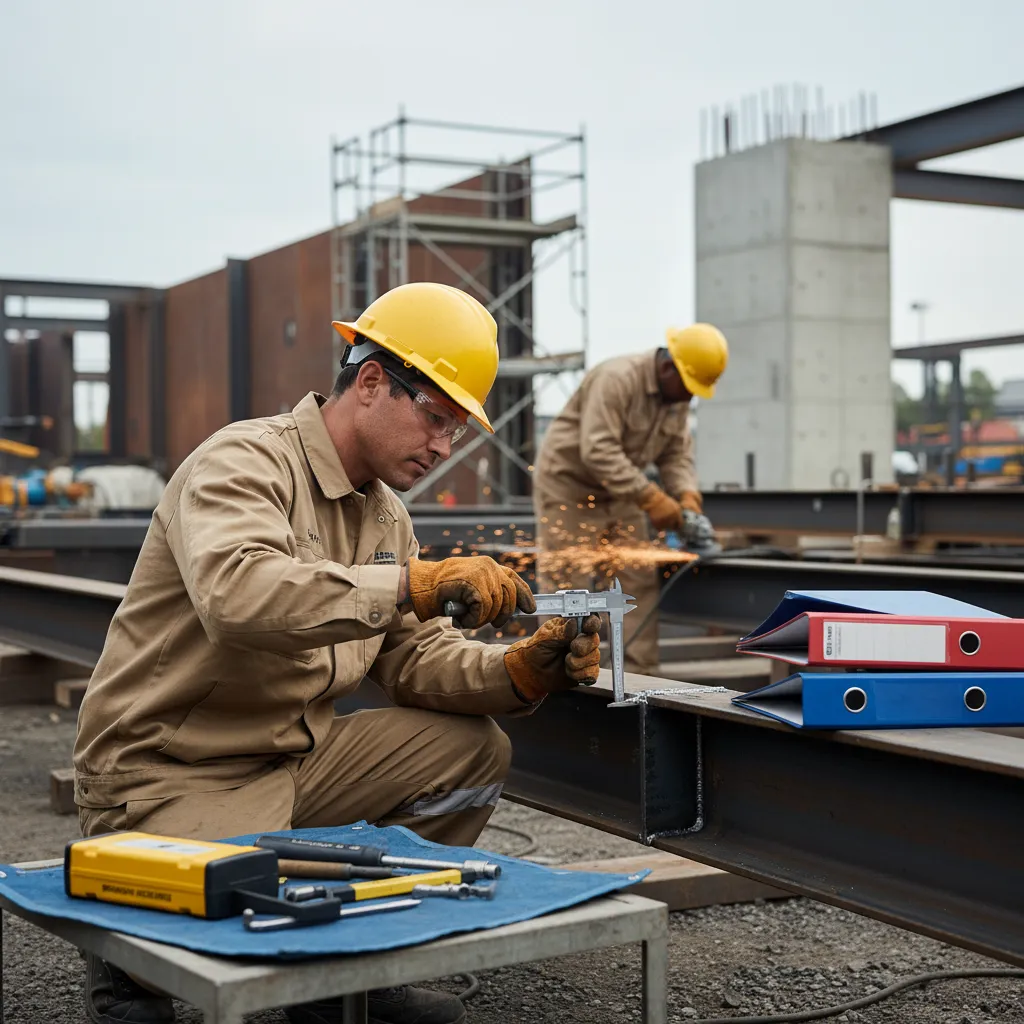
The primary tool of a CWI is their eyes — and a defined set of inspection gages and equipment. Visual inspection is the first and most fundamental weld examination method. A CWI examines welds for surface discontinuities: cracks, porosity, undercut, overlap, incomplete fusion, incorrect profile, and dimensional nonconformance. They use calibrated gages to measure weld size, throat, reinforcement, and other dimensional parameters.
Visual inspection happens at multiple stages: before welding (fit-up inspection, base metal condition, preheat verification), during welding (interpass inspection, procedure compliance), and after welding (final visual examination).
Procedure and Qualification Review
Welding codes require that welding be performed according to qualified Welding Procedure Specifications (WPS) by qualified welders. CWIs review WPS documents for completeness and code compliance, verify that welders are certified for the processes and positions being used, and confirm that procedure qualification records (PQRs) are accurate and current.
This documentation review is critical — a weld can look perfect but still be non-compliant if performed using an unqualified procedure or by an unqualified welder. CWIs catch these non-conformances before they become serious problems.
Witness Testing
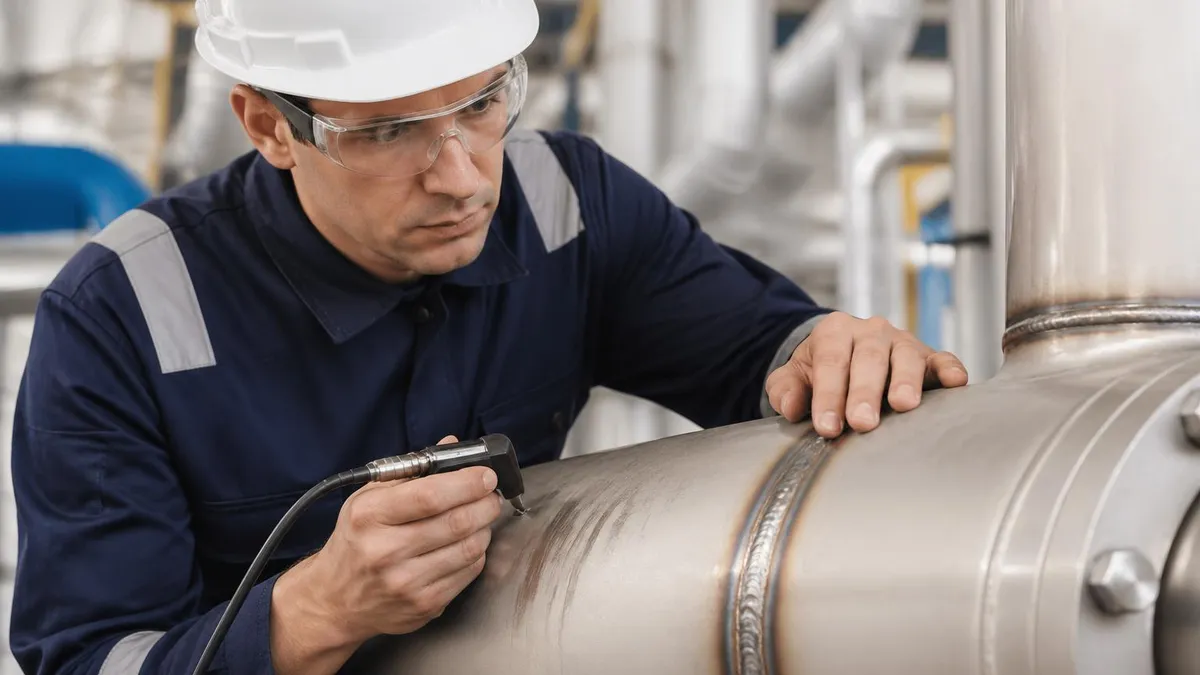
CWIs witness and document welder qualification tests, procedure qualification tests, and production weld tests. They verify that test conditions match the requirements, observe the welding process, and oversee sample preparation for mechanical testing. They may also witness nondestructive examination (NDE) — radiographic testing, ultrasonic testing, magnetic particle testing — to verify that NDE is performed correctly and that test results are properly interpreted and documented.
Reporting and Documentation
Inspection without documentation is just observation. CWIs generate written inspection reports documenting what was examined, what was found, and whether it complied with requirements. These records are legally and contractually significant — they're the evidence that inspection was performed and that work met (or didn't meet) quality requirements. Good CWIs are as proficient at clear technical writing as they are at weld examination.
Code and Standard Application
CWIs work to specific welding codes and standards depending on their industry. The most commonly applied codes include:
- AWS D1.1 — Structural Welding Code for Steel. The most widely referenced code; used on structural steel in buildings, bridges, and general structures.
- AWS D1.5 — Bridge Welding Code. More stringent than D1.1 for federally funded highway bridges.
- ASME Section IX — Welding and Brazing Qualifications. Used in pressure vessels, boilers, and piping covered by ASME codes.
- API 1104 — Welding of Pipelines and Related Facilities. Oil and gas pipeline welding standard.
- AWS D1.2 — Structural Welding Code for Aluminum.
A CWI doesn't need to memorize every code — they need to know how to navigate them efficiently and apply the right requirements to specific situations. Code knowledge is one of the three sections of the AWS CWI examination.
CWI Salary: What Welding Inspectors Earn
CWI compensation varies significantly by industry, geographic market, experience, and employment type (staff vs. independent contractor). Here's a realistic picture:
- Entry-level CWIs (0–3 years experience) — $55,000–$75,000 annually. Some entry-level positions start lower; positions in high-demand industries like oil and gas often start higher.
- Mid-career CWIs (5–10 years) — $75,000–$100,000. Experience in specific codes, NDE endorsements, and specialty credentials (CAWI, SCWI) increase earning power.
- Senior CWIs and independent consultants — $100,000–$150,000+. Independent CWIs in oil and gas, nuclear, or specialty fabrication can earn significantly more through contract rates.
The highest compensation is in the oil and gas sector — pipeline inspection and refinery work. Demand for CWIs in these environments tends to be project-driven, with significant travel expected. CWIs who are willing to travel to job sites earn meaningfully more than those who stay local.
Geographic variation is significant too. Gulf Coast states (Texas, Louisiana), industrial Midwest (Ohio, Pennsylvania, Michigan), and coastal construction markets pay more for CWIs than other regions. Remote and offshore work adds additional premiums.
CWI Career Paths and Advancement
The CWI credential is typically an entry point to inspection careers, not an endpoint. Advancement options include:
- Senior Certified Welding Inspector (SCWI) — AWS's advanced inspection credential. Requires CWI experience plus additional examination. SCWIs often move into supervision, management, or senior technical roles.
- NDE Certifications — Many CWIs add NDE credentials (UT, RT, MT, PT, ET) from ASNT (American Society for Nondestructive Testing). CWIs with NDE certifications can perform and oversee a broader range of inspection activities, significantly increasing their value and earning power.
- AWS Certified Welding Engineer (CWEng) — The engineering-level credential, requiring an engineering degree. For CWIs with engineering backgrounds.
- QC and Quality Management — Many experienced CWIs move into Quality Control Supervisor, Quality Manager, or Quality Director roles. The inspection background translates well into broader QC and QA management functions.
- Consulting and Third-Party Inspection — Independent CWIs and engineering consultants providing inspection services to contractors and owners. High-earning path for experienced professionals with strong industry networks.
How to Become a CWI: AWS Certification Requirements
The CWI credential is issued by the American Welding Society. To qualify, you must meet eligibility requirements based on education and experience, and then pass a three-part examination.
Eligibility Pathways
AWS uses different eligibility tracks depending on your education:
- Engineering or science degree — Bachelor's degree in engineering or physical science: eligible with only 1 year of welding experience
- Other bachelor's degree — 2 years of welding experience
- Associate degree or vocational training — 2 years of experience
- High school diploma or equivalent — 5 years of welding experience
- No diploma — 10 years of documented welding experience
Experience must be documented — AWS requires written verification of qualifying experience. Keep records of your welding-related work history from the beginning of your career; it's much harder to reconstruct documentation years later.
The CWI Examination
The AWS CWI exam has three parts:
- Part A — Fundamentals — 150 questions covering welding processes, metallurgy, symbols, codes, and inspection fundamentals. This is the broadest part and requires solid foundational knowledge across all areas of welding technology.
- Part B — Practical — A hands-on examination where candidates examine actual weld samples and document discontinuities. You must correctly identify and measure discontinuities to demonstrate practical inspection competence.
- Part C — Code Book — An open-book examination using a specific welding code (typically AWS D1.1 for first-time candidates, though other codes are available). Tests your ability to navigate the code efficiently and apply requirements to specific situations. You supply the code book; knowing how to find information quickly is the critical skill.
Each part is scored separately, and all three must be passed (some with a minimum score of 72%). A failed part can be retaken while retaining passing scores in the other parts — you don't have to retake all three if you fail only one.
Preparing for the CWI Exam
The CWI exam is genuinely challenging — many candidates underestimate it, particularly the code book part, which rewards candidates who've practiced navigating the code quickly rather than those who've just read it.
For Part A (Fundamentals)
Study all areas of the content blueprint: welding processes (SMAW, GMAW, GTAW, SAW, FCAW), welding metallurgy, weld symbols (AWS A2.4), NDE methods, welding terms (AWS A3.0), and quality systems fundamentals. AWS publishes a body of knowledge document listing the topics covered — use it as your study guide.
High-volume practice questions are essential. Part A requires both memorized knowledge and application. Candidates who do 500+ practice questions before the exam perform consistently better than those who rely on passive reading.
For Part B (Practical)
Hands-on practice is everything here. If you have access to weld samples with known discontinuities, practice identifying and measuring them. Know how to use standard inspection tools: fillet weld gages, undercut gages, rulers, magnifying lenses. Practice writing clear, complete discontinuity reports. The practical exam tests your ability to do the job — there's no substitute for practice with actual welds.
For Part C (Code Book)
This is where many candidates struggle — not because they don't understand the code, but because they can't find information quickly enough. Practice by working through sample questions with the code book, timing yourself. Learn the structure: where welding procedure requirements live, where qualification requirements are, where acceptance criteria appear. Tab your code book with logical bookmarks before the exam.
Industries That Employ CWIs
CWIs are needed wherever critical welding is performed:
- Oil and gas — Pipeline construction, refineries, offshore platforms. High demand, project-based work, significant travel. Top-paying sector for CWIs.
- Nuclear power — Nuclear construction and maintenance work under ASME Section III and Section XI. Very stringent requirements; CWIs with nuclear experience command premium rates.
- Structural steel — Building construction, bridges, infrastructure. The most common CWI employment sector by volume.
- Shipbuilding and marine — Ship construction and repair, offshore structures. Military and commercial shipyards employ significant numbers of CWIs.
- Aerospace — Aircraft structures and components. Often requires additional aerospace-specific certification beyond CWI.
- Manufacturing — Industrial equipment, pressure vessels, heat exchangers, process equipment. Third-party inspection firms serve manufacturers who don't employ staff CWIs.

Starting Your CWI Preparation
The CWI credential is a meaningful career investment — it opens higher-paying roles, provides professional recognition, and creates the foundation for advancement into senior inspection and quality management positions. The exam is challenging enough that preparation really matters, but structured, systematic study over 2–4 months produces strong first-attempt results for most candidates.
Start with the AWS Body of Knowledge document to understand exactly what Part A covers. Get your code book and begin practicing navigation while you study Part A content. Build hands-on inspection practice with actual weld samples as early as possible — Part B is the hardest component to improve without physical practice.
Use our free CWI practice tests to build your fundamentals knowledge and practice the types of questions the exam asks. The more familiar you are with the question style and content distribution, the more confidently you'll perform on exam day.
About the Author

Educational Psychologist & Academic Test Preparation Expert
Columbia University Teachers CollegeDr. Lisa Patel holds a Doctorate in Education from Columbia University Teachers College and has spent 17 years researching standardized test design and academic assessment. She has developed preparation programs for SAT, ACT, GRE, LSAT, UCAT, and numerous professional licensing exams, helping students of all backgrounds achieve their target scores.
Join the Discussion
Connect with other students preparing for this exam. Share tips, ask questions, and get advice from people who have been there.
View discussion (8 replies)