

CTS Practice Test
Updated November 2026Facts verified Nov 1, 2026 against AVIXA
The CTS has 115 questions and takes about 2.5 hours[1] (AVIXA, verified Oct 17, 2026).
- The CTS exam has 115 four-option multiple-choice questions, 15 of which are non-scoring pilot questions.[1]
- The CTS exam time limit is 150 minutes, with the tutorial and end survey not counted in that time.[1]
- The CTS exam passing score is a scaled 350 on a 0–500 scale.[1]
- The CTS exam fee is $490 USD for non-members, effective January 1, 2025, excluding applicable VAT and taxes.[2]
- The CTS retest fee is $150 USD.[1]
- A CTS exam application is approved for 120 days from the eligibility approval notice, and the candidate must be tested within that period.[1]
- AVIXA exams, including the CTS, are delivered only at secure, in-person Pearson VUE testing centers, and scheduling by phone costs $10 per call while online scheduling is free.[2]
- There are no prerequisites to apply for the CTS exam, though AVIXA recommends at least six months of experience.[2]
Numbers in brackets link to the official sources listed under Sources & last verified. Dates that have passed are removed automatically.
CTS Exam at a Glance
| Item | Detail | Source · Verified |
|---|---|---|
| Number of questions | 115 questions (100 scored + 15 pilot)[1] | AVIXA · Oct 17, 2026 |
| Time limit | 150 minutes[1] | AVIXA · Oct 17, 2026 |
| Passing score | 350 on a 0–500 scale[1] | AVIXA · Oct 17, 2026 |
| Exam fee (Non-member) | $490 (USD) for non-members[2] | AVIXA · Oct 18, 2026 |
| Exam fee (Premium/Elite member) | $390 (USD) for Premium and Elite members[2] | AVIXA · Oct 18, 2026 |
| Retake fee | $150 (USD) retest fee[1] | AVIXA · Oct 17, 2026 |
| Validity | 120 days to test after eligibility approval[1] | AVIXA · Oct 17, 2026 |
| Delivery | Pearson VUE test centers only; $10 per phone-scheduling call[2] | AVIXA · Oct 18, 2026 |
| Eligibility | No prerequisites; 6 months' experience recommended[2] | AVIXA · Oct 18, 2026 |
| Score release | Score report given at the test center immediately after the exam[1] | AVIXA · Oct 17, 2026 |
What changed for CTS in 2026
- Oct 16, 2026: Passing score changed to 350 on a 0–500 scale (previously Passing score is a scaled 350 on a 0-500 scale. AVIXA does not report the number or percentage of questions answered correctly; failing candidates receive per-section percentages only.).[1]
- Oct 16, 2026: Number of questions changed to 115 questions (100 scored + 15 pilot) (previously The CTS exam is 115 multiple-choice questions (100 scored + 15 unscored pilot items), four answer options each, in 150 minutes; the tutorial and end survey do not count against the 150 minutes (CTS Candidate Handbook, version dated 08/27/2026).).[1]
- Oct 16, 2026: Retake fee changed to $150 (USD) retest fee (previously Retake policy: candidates who fail may retest two more times at a reduced retest fee of $150 (USD), with a minimum 30-day wait between attempts; after two retests there is a 90-day wait before reapplying at the full fee.).[1]
- Oct 16, 2026: Eligibility changed to No prerequisites; 6 months' experience recommended (previously Eligibility: no prerequisites, courses, or degree are required to apply; AVIXA recommends at least six months of AV experience. After approval, candidates have 120 days from the Eligibility Notice email to test.).[2]
The Certified Technology Specialist (CTS) credential is the leading professional qualification for audio-visual professionals worldwide. Administered by AVIXA, the CTS certification test validates your expertise in creating, operating, and servicing AV solutions. Try our AWS practice test. Practice with the free Certified Technology Specialist practice test on PracticeTestGeeks (300+ questions with answer explanations).
If you are searching for a CTS practice exam, start with the free questions on this page: every answer comes with an explanation, and the study notes below cover the CTS exam topics in order.
Free Certified Technology Specialist Study Tools
Interactive Certified Technology Specialist resources on PracticeTestGeeks, free to start:
- CTS General 1 — 11 questions with instant scoring and answer explanations
- Certified Technology Specialist flashcards — review key terms and concepts card by card
- Certified Technology Specialist study guide — topic-by-topic overview of what the exam covers
- Certified Technology Specialist cheat sheet — one-page printable summary for last-minute review
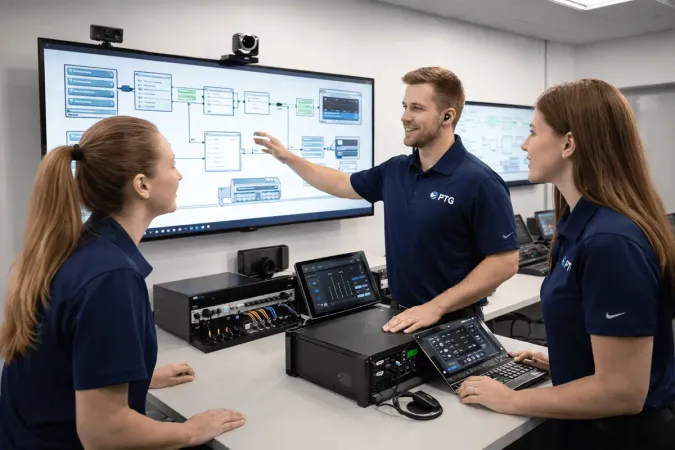
According to AVIXA, “Candidates are currently provided 150 minutes for 115 questions, 15 of which are non-scoring pilot questions.”[1]
CTS content outline and where to practise each area
The content areas below are copied from the official CTS content outline published by AVIXA. The right-hand column shows which of our practice sets covers it.
| Official content area | Practice on this site |
|---|---|
| Duty A: Creating AV Solutions[3] | CTS AV Design Documentation and Drawings Practise reading and producing design documentation and drawings, and linking site survey findings to design choices. |
| Duty B: Implementing AV Solutions[3] | CTS Installation and Systems Integration Practise installation order, cabling, power and grounding practice, and how to verify that integrated equipment works as designed. |
| Duty C: Supporting AV System Operation[3] | CTS AV Control Systems Practise control system behavior, user support situations, and how operators interact with a finished system. |
| Duty D: Servicing AV Solutions[3] | CTS AV System Troubleshooting and Maintenance Practise a logical fault-finding sequence, from isolating the symptom to confirming the fix, and routine maintenance tasks. |
CTS Practice Test Questions
Prepare for the CTS - Certified Technology Specialist exam with our free practice test modules. Each quiz covers key topics to help you pass on your first try.
CTS AV Signal Flow and Distribution
CTS Questions and Answers on AV Signal Flow and Distribution. Free CTS practice for exam readiness.
CTS AV Site Surveys
CTS Mock Test covering AV Site Surveys. Online CTS Test practice with instant feedback.
CTS AV System Troubleshooting and Maintenance
Free CTS Quiz on AV System Troubleshooting and Maintenance. CTS Exam prep questions with detailed explanations.
CTS - Certified Technology Specialist Cond...
CTS Practice Questions for - Certified Technology Specialist Conducting AV Site Surveys Questions and Answers. Build confidence for your CTS certification exam.
Worked examples: how to reason through CTS questions
These are practice questions written for this site, not questions from the real exam. Each explanation shows why the right answer is right and why the others are wrong.
Example 1
Question: What is the primary advantage of using balanced audio cabling over unbalanced in a long AV cable run?
- Higher bandwidth
- Rejection of common-mode noise and interference
- Lower cost
- Smaller connector size
Answer: B. Rejection of common-mode noise and interference
Explanation:
Balanced cabling carries the signal on a pair of conductors with opposite polarity. Interference lands on both conductors almost equally along the run, so the receiving input subtracts one from the other. The noise cancels and the wanted signal remains. That makes B correct.
Higher bandwidth is wrong because balancing does not change how much signal a cable can carry; that depends on the cable and the electronics. Lower cost is wrong because balanced cable and connectors generally cost more, not less. Smaller connector size is wrong because both types come in many connector sizes, and size is not the reason to choose one.
Rule to remember: long runs and electrically noisy spaces call for balanced lines, because their benefit is rejecting common-mode noise.
Example 2
Question: During a site survey, a room appears to suffer from reverberation. What treatment could be recommended to improve the acoustics in the room?
- Install additional speakers
- Use soft furnishings and flooring
- Increase the volume of audio outputs
- Add more amplifiers
Answer: B. Use soft furnishings and flooring
Explanation:
Reverberation is caused by sound reflecting off hard surfaces and lingering in the room. The fix is to add sound-absorbing material, so B is correct: soft furnishings, carpet, curtains and acoustic panels absorb energy and reduce reflections, which improves speech intelligibility.
Installing additional speakers is wrong because more sources add more sound to reflect and do not remove the reflections. Increasing the volume of audio outputs is wrong for the same reason; louder sound produces louder reverberation. Adding more amplifiers is wrong because amplifiers only provide power to the speakers and do nothing about room surfaces.
Rule to remember: when the problem is the room, treat the room. Electronics cannot fix poor acoustics.
Example 3
Question: What method can a technician use onsite to verify that the AV device is set to the proper IP address?
- Connect directly to the CPU using an XLR connector and the Ping program
- Use an S-video hook-up on a DVD drive and the Mac program
- Use a USB connection to the CPU and the HyperTerminal program
- Use a DVI-D connector and dial in on a phone device
Answer: C. Use a USB connection to the CPU and the HyperTerminal program
Explanation:
A technician on site can connect to the device's CPU over USB and use a terminal program such as HyperTerminal to read its settings directly, including the IP address. That works even when the device is not yet on the network, so C is correct.
Option A is wrong because XLR is an audio connector and is not used for data connections to a CPU. Option B is wrong because S-video is an analog video connection, and a DVD drive with a Mac program has no link to device network settings. Option D is wrong because DVI-D carries digital video, and a phone dial-in is not a way to read a device's address.
Rule to remember: match the connector to the signal it carries, and use a control or data port with a terminal tool to read device settings.
How to use these practice tests
Start with the AVIXA CTS handbook and the content outline so you know what each duty area covers. Then take one of our general sets cold, such as CTS General Technology, without looking anything up. Note which questions you missed and which you guessed correctly; both show weak spots.
Next, work through the topic sets that match the duty areas in the table above. For each missed question, read the explanation, then write down the rule in a sentence of your own. Return to the same set after a few days and see whether the rule holds when the wording changes.
Give extra time to the areas where you work least in real life. A technician who installs daily may be weaker on design documentation, and a designer may be weaker on troubleshooting. Use the specialist sets on audio, networking, signal flow, site surveys and power for those gaps.
In the last days before your appointment, do a timed run through a full set, then reread your own rule notes rather than starting new material. Check the Pearson VUE rules on identification and arrival, and confirm that your 120-day window has not run out.
CTS Exam Flashcards
Quick review for key audio-visual concepts
💡What is a Lumen?
A lumen is a unit of measurement for the total amount of visible light emitted by a source.
TRY CTS MOCK EXAM🏗️What is a Scope of Work?
A document that details the specific tasks, deliverables, and timeline for an AV project.
ACCESS CTS STUDY GUIDECTS Exam Study Guide
Our comprehensive CTS test preparation guide covers everything you need to know about the certification. Learn about the format, registration process, and what scores you need to pass.
While the CTS test cost may seem significant, the potential salary increase typically pays for the exam fee within the first few months of certification. Try our PMP practice test.
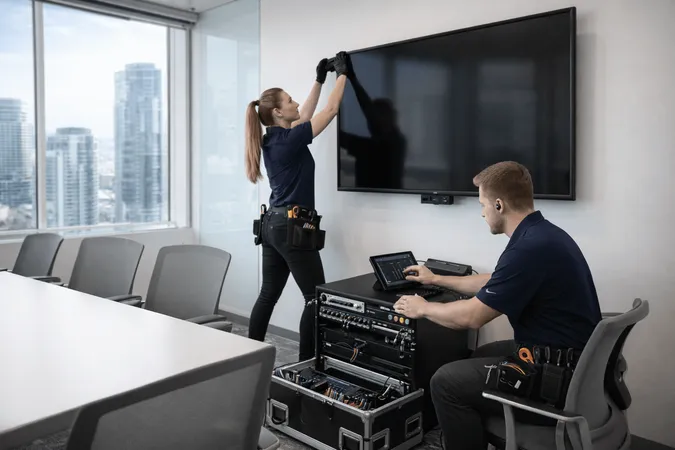
CTS Career Opportunities
Holders of the CTS credential are qualified for various specialized roles in the AV industry.
AV Technician
Install, configure, and maintain audio-visual systems for corporate, educational, and entertainment clients. Essential hands-on role.
Systems Integrator
Design and implement complex AV networks, ensuring seamless communication between different technologies and platforms.
AV Project Manager
Oversee AV installation projects, managing budgets, timelines, and teams. Requires strong organizational and technical skills.
AV Designer
Create technical drawings and schematics for AV systems. Often requires the advanced CTS-D certification for senior roles.
Live
Event TechManage audio and visual equipment for concerts, conferences, and live productions. Fast-paced and dynamic environment.
CTS Test Day Checklist
- ✓Two forms of valid ID
- ✓Confirmation email
- ✓Arrive 30 mins early
- ✓Review exam rules
- ✓Leave electronics in locker
- ✓Light sweater (layers)
- ✓Water (if allowed)
- ✓Positive mindset!
Ready for the CTS Exam?
Get started with our free practice questions and comprehensive study resources. Pass your AVIXA certification on the first try.
Earning RUs is easy through AVIXA webinars, trade show attendance (like InfoComm), and online courses. Keep your CTS proficiency test knowledge sharp.
CTS: Pros and Cons
- +CTS exam preparation strengthens your knowledge across all domains
- +Passing the exam proves competency to employers and clients
- +Study materials and practice tests are widely available
- +Exam-based credentials are portable across states and employers
- +Clear exam objectives help focus your study plan effectively
- −Exam anxiety can affect performance — practice tests help reduce it
- −Registration fees are non-refundable if you miss your test date
- −Limited retake opportunities may apply with waiting periods
- −Exam content updates periodically — use current study materials
- −Testing center availability may require advance scheduling
Pros and Cons at a Glance
| Pros | Cons |
|---|---|
| CTS exam preparation strengthens your knowledge across all domains | Exam anxiety can affect performance — practice tests help reduce it |
| Passing the exam proves competency to employers and clients | Registration fees are non-refundable if you miss your test date |
| Study materials and practice tests are widely available | Limited retake opportunities may apply with waiting periods |
| Exam-based credentials are portable across states and employers | Exam content updates periodically — use current study materials |
| Clear exam objectives help focus your study plan effectively | Testing center availability may require advance scheduling |
Official Resources
- AVIXA CTS Certification page — the official overview of the AVIXA CTS credential, eligibility, exam fees, and how to apply for eligibility.
- AVIXA Training & Certification hub — the full AVIXA certification catalog (CTS, CTS-D, CTS-I) plus renewal units, handbooks, and the exam content outline.
- Pearson VUE — AVIXA testing — the official Pearson VUE portal to schedule, reschedule, or locate a secure CTS testing center once AVIXA approves your eligibility.
Sample Certified Technology Specialist Practice Questions
Try these questions from our free Certified Technology Specialist practice tests. The correct answer and an explanation follow each question.
When managing a remote AV project where the CTS cannot be on-site daily, which practice BEST ensures quality control?
- A. Shipping all equipment directly to the client without inspection
- B. Designating a qualified on-site lead with clear checkpoints and daily reporting
- C. Relying solely on the general contractor to manage AV subcontractors
- D. Reducing the scope to minimize on-site requirements
Answer: B. Designating a qualified on-site lead with clear checkpoints and daily reporting
Designating a qualified on-site lead with structured checkpoints and reporting maintains quality standards and keeps the remote project manager informed without requiring constant presence.
Which test should a CTS technician perform after completing all cable terminations in a structured wiring installation to verify proper connectivity and signal integrity?
- A. A visual inspection of connector colors only
- B. A cable certification test using a field tester that measures insertion loss, return loss, and NEXT
- C. A simple continuity check with a multimeter
- D. An audio frequency sweep test only
Answer: B. A cable certification test using a field tester that measures insertion loss, return loss, and NEXT
Cable certification testing with a field tester validates all transmission parameters (insertion loss, NEXT, return loss) against TIA/ISO standards, confirming the installation will support the intended application.
When terminating Cat6 cable to a keystone jack, which practice ensures the best signal integrity?
- A. Strip 6 inches of jacket to allow easier termination
- B. Maintain pair twist as close to the termination point as possible, untwisting no more than 0.5 inches
- C. Untwist all pairs fully before inserting into the jack
- D. Use a T568A wiring scheme on one end and T568B on the other
Answer: B. Maintain pair twist as close to the termination point as possible, untwisting no more than 0.5 inches
Maintaining pair twist up to within 0.5 inches of the termination point minimizes crosstalk and preserves the cable's noise-canceling properties.
During a post-installation test, audio is heard from only one side of a stereo speaker system. What is the MOST likely cause?
- A. The amplifier is too powerful
- B. A wiring fault, incorrect channel assignment, or failed component on the silent channel
- C. The room acoustics are poor
- D. The source file is corrupted
Answer: B. A wiring fault, incorrect channel assignment, or failed component on the silent channel
One-sided audio almost always points to a physical fault — loose connection, miswired terminal, faulty cable, or a failed amplifier channel — on the non-functioning side.
Take the full Certified Technology Specialist practice test
You can continue preparing with the cts practice test, which includes answer explanations for every question.
CTS Questions and Answers
Sources & last verified
- AVIXA — number of questions, time limit, passing score, retake fee (official source). “Candidates are currently provided 150 minutes for 115 questions, 15 of which are non-scoring pilot questions.” Verified Oct 17, 2026 · source checked Oct 17, 2026.
- AVIXA — exam fee, delivery, eligibility (official source). “Nonmembers pay: $490 (USD), 475€ (EUR), £395 (GBP), or AU$780 (AUD)” Verified Oct 18, 2026 · source checked Oct 18, 2026.
- a-us.storyblok.com — other (official source). “duty a creating av solutions” Verified Nov 1, 2026.
How we verify: editorial & fact-checking policy. Report an error: contact us.
How this page was made: written with AI tools and published by Nathan Beja, founder of Practice Test Geeks, who is responsible for its content. Exam facts are checked against the official sources listed below. Not reviewed by a subject-matter expert. Editorial policy
Sources & references
Exam facts on this page (fees, format, dates, passing scores) are checked against these official sources; the date is our last check. Editorial policy
- a-us.storyblok.com — Exam information · verified Nov 2026
- avixa.org — Test delivery, eligibility, fees · verified Oct 2026
- cdn.avixa.org — Exam format, passing score, retake fee, score release, time limit, score validity · verified Oct 2026