
CPO Meaning: Certified Pool Operator Certification, Exam Guide, and Career Overview
Get ready for your CPO Meaning: Certified Pool Operator certification. Practice questions with step-by-step answer explanations and instant scoring. 🏆
CPO stands for Certified Pool Operator — a professional credential issued by the Pool & Hot Tub Alliance (PHTA, formerly the National Swimming Pool Foundation) that certifies your knowledge of pool and spa water chemistry, equipment operation, health code compliance, and chemical handling.
The CPO credential is recognized by health departments in all 50 US states and is required by law for commercial pool operators in many jurisdictions. If you manage a hotel pool, municipal aquatics facility, apartment complex pool, water park, or health club spa, the CPO is the industry-standard credential that regulators, employers, and insurers expect you to hold.
The PHTA developed the CPO program in 1972 to standardize operator training across the commercial pool industry. Today, more than 350,000 CPO-certified professionals work in aquatics facilities nationwide. The credential is delivered through a two-day classroom course (approximately 16 hours of instruction) culminating in a closed-book exam. Unlike many professional certifications that require years of experience or a degree, the CPO is accessible to anyone who can complete the course and pass the exam — making it one of the most practical certifications in facility management, hospitality, and aquatics.
The CPO credential matters because improperly maintained pool water causes serious public health consequences. Recreational water illnesses (RWIs) — including infections from Cryptosporidium, E. coli, and Pseudomonas — kill and hospitalize pool users every year in the US. Certified Pool Operators understand how to maintain proper chlorine and pH levels, interpret water chemistry readings, operate filtration and circulation systems, and respond to water quality emergencies. Health departments require CPO certification precisely because the science of safe pool water isn't intuitive — and the consequences of getting it wrong affect the public.

The CPO course covers six primary domains: Pool and Spa Water Chemistry, Filtration and Circulation Systems, Pool and Spa Equipment, Facility Operations and Maintenance, Chemical Handling and Safety, and Regulatory Compliance and Health Codes. Each domain maps to a section of the PHTA's Certified Pool/Spa Operator Handbook — the official course textbook, which is provided as part of registration. The handbook is the primary reference for both the course instruction and the exam; familiarity with its structure helps you locate information quickly during study sessions.
Water chemistry is the most technically demanding domain and carries the most weight on the exam. You need to understand the relationships between pH (target 7.2–7.8), free chlorine residual (minimum 1 ppm for pools, 3 ppm for spas), combined chlorine, total alkalinity (80–120 ppm), calcium hardness (200–400 ppm for pools), and cyanuric acid (stabilizer, typically 30–50 ppm for outdoor pools). The Langelier Saturation Index — a calculation that determines whether water is corrosive, scale-forming, or balanced — appears consistently on CPO exams and requires understanding how each chemistry parameter contributes to the final index value.
Chemical handling and storage is the domain that has the most direct safety implications. Pool chemicals — chlorine compounds, pH adjusters, algaecides, and oxidizers — must be stored in separate areas to prevent dangerous reactions. Calcium hypochlorite and trichlor (both chlorine compounds) stored together can cause fire or explosion. CPO certification ensures operators understand SDS (Safety Data Sheet) requirements, proper PPE use when handling pool chemicals, emergency response procedures for chemical spills, and first aid for chemical exposure. This isn't theoretical knowledge — pool chemical accidents injure hundreds of operators annually in the US.
The CPO exam consists of 50 multiple-choice questions drawn from the course content, with a 75% passing score (38 correct answers). The exam is closed-book and administered at the end of the two-day course. Most providers give you 90 minutes to complete it, though the time pressure is modest — the limiting factor is knowledge, not speed. Questions test both factual recall (specific chemistry values, equipment specifications, code requirements) and application (what should you do if the free chlorine reading is 0.5 ppm in a public pool at peak hours?).
CPO courses are offered in-person by PHTA-licensed instructors across the country, and PHTA also offers an online course option (CPO Online) for candidates who can't attend a scheduled classroom session. The in-person course runs Friday–Saturday or similar two-day blocks at hotels, community colleges, parks and recreation departments, and aquatics facilities. The online option provides equivalent content but requires self-pacing through video modules and readings before taking the proctored exam at a testing center. In-person courses consistently report higher first-attempt pass rates, largely because the instructor can answer real-time questions on complex chemistry calculations.
International versions of the CPO certification exist for operators in Europe, the Middle East, and Asia-Pacific regions, with courses translated into multiple languages. The core content is adapted for local regulatory requirements — for example, European Union pool standards differ from US state health codes in specific chemistry thresholds. However, the PHTA credential is most directly relevant to US operators; international candidates should verify whether local health authorities specifically recognize the PHTA CPO or prefer a nationally issued credential.
CPO Exam Content Deep Dive
Pool water chemistry questions dominate the CPO exam. Key values: pH 7.2–7.8 (low pH causes corrosion and eye irritation; high pH reduces chlorine effectiveness), free chlorine 1–3 ppm for pools (4–6 ppm recommended for spas), combined chlorine below 0.2 ppm (combined chlorine = total chlorine minus free chlorine; high combined indicates chloramines and poor sanitation). Total alkalinity at 80–120 ppm buffers pH against rapid swings.
Breakpoint chlorination — adding enough chlorine to destroy chloramines (typically 10× the combined chlorine reading) — is a critical procedure CPO candidates must understand. Superchlorination or shocking brings free chlorine to 5–10 ppm temporarily to destroy organic contamination and restore water clarity. Cyanuric acid (stabilizer/conditioner) protects outdoor chlorine from UV degradation but reduces chlorine's killing power at high concentrations — above 90 ppm, the CDC recommends draining and diluting. The Langelier Saturation Index combines pH, calcium hardness, alkalinity, temperature, and TDS into a single balanced-water indicator.
Pool equipment operation questions cover the practical skills CPO holders need for daily facility management. Pump priming procedures, pressure gauge reading, flow rate calculations, chemical dosing calculations (how many pounds of calcium hypochlorite to raise free chlorine by 1 ppm in a 50,000-gallon pool?), and backwash procedures are all fair game. The PHTA handbook includes dosage tables and formulas — CPO candidates who memorize the calculation approach rather than just the table values handle novel scenario questions more confidently.
Automatic chemical controllers — ORP (oxidation-reduction potential) sensors and pH controllers that feed chemicals continuously based on real-time readings — appear in the advanced equipment section. These systems don't replace operator knowledge; they require the operator to understand setpoint selection, calibration procedures, and what to do when the controller malfunctions. A pool maintained by an automatic controller with a miscalibrated ORP sensor can have dangerous water despite the controller showing normal readings — manual testing is always required alongside automation.
Secondary disinfection systems (UV and ozone) reduce the chlorine demand needed to maintain safe water, particularly for indoor pools where combined chlorine (chloramine) buildup causes the familiar eye and respiratory irritation. UV systems destroy Cryptosporidium — a chlorine-resistant parasite responsible for the most common recreational water illness outbreaks — within seconds of exposure. CPO candidates should understand how UV and ozone supplement (but don't replace) chlorine residual, and why a free chlorine residual must be maintained even in UV-equipped facilities.

The career implications of CPO certification are direct and practical. In the hospitality industry, hotels with pools are required by most state health codes to have a CPO-certified operator either on staff or on retainer. Properties that don't maintain CPO certification risk health department fines, permit suspension, and pool closure orders that directly impact revenue. Many hotel management companies list CPO certification as a minimum requirement for facility maintenance supervisors and chief engineers — making it a prerequisite for advancement, not just a nice-to-have.
Municipal parks and recreation departments, school districts operating indoor pools, fitness clubs, and water park operators face the same regulatory requirements. In states like Florida, California, and Texas — which have among the highest concentrations of commercial pools — the demand for CPO-certified operators is consistently high. Aquatics directors, pool managers, and facilities managers who hold CPO certification command meaningfully higher salaries than uncertified counterparts, with the credential often translating to $5,000 to $10,000 in additional annual compensation in competitive markets.
Beyond salary, CPO certification provides legal protection for operators and their employers. When a pool-related illness, injury, or chemical incident occurs, investigators examine whether operators were properly trained and certified. A CPO-certified operator who followed PHTA guidelines and maintained proper records is in a fundamentally stronger legal and regulatory position than an uncertified operator who relied on informal training. The certification doesn't guarantee you'll never have an incident — but it demonstrates the professional standard of care that regulators, courts, and insurers recognize.
CPO Certification: Pros and Cons
- +Required by health departments in many states — non-negotiable for legal commercial pool operation
- +Two-day course format is highly accessible — no degree or prior experience required to enroll
- +PHTA credential recognized in all 50 states by health regulators and employers
- +Directly improves water quality outcomes and reduces risk of recreational water illness incidents
- +Required for advancement in hotel engineering, aquatics management, and facilities director roles
- +CPO-certified operators earn $5,000–$10,000 more annually than uncertified peers in competitive markets
- −Two-day course can feel rushed — complex chemistry domains need follow-up self-study after class
- −Exam is closed-book but the calculations require memorization of formulas and target values
- −5-year renewal requires attending another renewal course — ongoing time and cost commitment
- −Course cost ($225–$375) plus travel to a scheduled course location adds up for rural candidates
- −CPO covers pool water chemistry thoroughly but less depth on HVAC, structural, and electrical systems that facility managers also need
- −Online CPO course has lower first-attempt pass rates than in-person for candidates who struggle with self-paced chemistry content
Preparing for the CPO exam in the week before your course maximizes your two days of classroom time. Download or purchase the current PHTA CPO Handbook before the course, read the table of contents, and skim the water chemistry and chemical handling chapters. Walking into Day 1 with some familiarity with terms like ORP, TDS, Langelier Index, and breakpoint chlorination lets you follow along during instruction rather than spending mental energy on basic terminology. Most instructors teach at a pace that assumes no prior knowledge — you'll absorb more if you've already encountered the concepts.
Bring a calculator to the CPO exam. While the exam is closed-book, PHTA permits calculators (non-programmable) for the chemistry dosage calculations. Candidates who practice dosage calculations by hand during course preparation and then bring a calculator to the exam report faster completion times and higher confidence on the calculation questions. If your course provider doesn't explicitly mention whether calculators are permitted, ask before exam day — policies vary slightly between licensed providers, though PHTA's official guidance permits them.
After passing the CPO exam, your certificate card arrives by mail within 4 to 6 weeks. PHTA also provides a digital certificate suitable for printing. Post your certificate prominently in your pool equipment room — many health departments verify during routine inspections that a current CPO certificate is on display. Keep a digital copy in your email and on a shared drive; the certificate number and expiration date are what health inspectors actually verify, and having them accessible prevents delays when a surprise inspection occurs.

CPO Certification Preparation Checklist
- ✓Register for a PHTA-licensed CPO course through the PHTA website (phta.org/education/cpo) — choose in-person for best pass rates
- ✓Download or order the current PHTA CPO Handbook before your course date and read the chemistry and chemical handling chapters
- ✓Memorize the target ranges for pH, free chlorine, combined chlorine, total alkalinity, calcium hardness, and cyanuric acid
- ✓Practice the Langelier Saturation Index calculation using the formula and table in the handbook
- ✓Review chemical compatibility rules — know which pool chemicals must be stored separately and why
- ✓Bring a non-programmable calculator to the exam for chemical dosage calculations
- ✓Study federal requirements including the Virginia Graeme Baker Pool Safety Act (anti-entrapment drain covers)
- ✓Review CDC's Fecal Incident Response recommendations — these appear frequently as scenario questions
- ✓Attend all course hours — PHTA requires full attendance before you're eligible to sit the exam
- ✓After passing, post your CPO certificate in the pool equipment room and log the renewal date in your calendar 4.5 years out
CPO renewal is required every five years and cannot be completed by retaking the original exam — PHTA requires candidates to attend a CPO Renewal Course, which is approximately 8 hours (one day) of updated content covering regulatory changes, new chemistry research, and equipment advances since your original certification. The renewal course is offered at lower cost ($100–$200) than the original course and is available online. Missing your renewal deadline requires retaking the full two-day CPO course rather than the abbreviated renewal, making prompt renewal a practical priority.
State-specific requirements sometimes exceed PHTA's baseline CPO standards. Florida's Department of Health requires CPO or Aquatic Facility Operator (AFO) certification and mandates operator presence during all operating hours above certain bather loads. California's Title 22 code has its own pool operator training requirements. Texas requires a licensed pool/spa inspector (separate from CPO) for certain commercial pool types. CPO certification satisfies operator training requirements in most states, but you should verify your specific state's requirements through your state health department — PHTA's website maintains a state-by-state regulatory summary.
The Aquatic Facility Operator (AFO) credential, also offered by PHTA, is comparable to the CPO and accepted by most of the same health departments. Some candidates choose the AFO because its exam is open-book (though content is similar in depth). The CPO has broader name recognition nationally — particularly in hotel and hospitality settings — but either credential satisfies regulatory requirements in the vast majority of US jurisdictions. Confirm which credential your specific employer or local health department prefers before enrolling in either course.
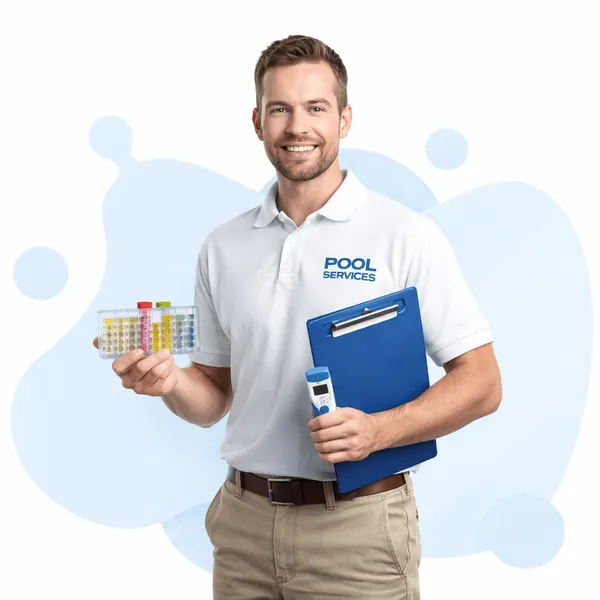
On-site testing of pool water should become a daily habit for CPO-certified operators — not just a compliance checkbox. The DPD (N,N-diethyl-p-phenylenediamine) colorimetric test kit is the most common tool for testing free chlorine, combined chlorine, pH, and bromine. Digital photometers and multiparameter probes provide more precision for facilities with high bather loads or automated control systems. Regardless of method, test results should be logged immediately with the date, time, test values, and any corrective actions taken — not recorded at the end of a shift from memory.
Recreational water illness (RWI) prevention is ultimately the mission behind CPO certification. Cryptosporidium, which causes the most common pool-related illness outbreaks in the US, is resistant to normal chlorine levels — a 1 ppm free chlorine residual won't kill it within any reasonable contact time.
CPO operators learn that the primary defenses against Crypto are filtration (it's large enough to be captured by sand and DE filters), UV disinfection (inactivates Crypto almost instantly), and preventing contaminated bathers from entering the water (pre-swim hygiene signage, diaper policies, illness exclusion policies). Understanding these multi-barrier strategies separates competent CPO-certified operators from those who think maintaining chlorine residual alone makes a pool safe.
The CPO credential is achievable, directly applicable to real-world pool operations, and recognized across the entire US commercial aquatics industry. Whether you're a maintenance technician looking to advance into pool management, a hospitality professional responsible for hotel amenities, or a parks and recreation administrator overseeing a community aquatic center, CPO certification signals to employers, regulators, and the public that you take pool safety seriously — and that you have the technical knowledge to back it up.
Chemical inventory management is a practical skill the CPO course covers that has immediate operational value. Pool facilities maintain stocks of chlorine compounds (liquid sodium hypochlorite, granular calcium hypochlorite, or trichlor tablets), pH adjusters (muriatic acid or sodium bicarbonate), algaecides, clarifiers, and specialty products. Each chemical has a finite shelf life — liquid chlorine (sodium hypochlorite) degrades significantly within 60 days and loses potency faster in heat. Ordering in quantities that match consumption prevents the waste and safety hazards of storing large volumes of degraded chemicals.
Waterborne pathogen response is where CPO certification proves its real-world value under pressure. When a confirmed or probable fecal contamination event occurs — a formed fecal incident vs. a diarrheal fecal incident have fundamentally different response protocols — the CDC's Fecal Incident Response Recommendations provide step-by-step guidance.
Formed fecal incidents require raising free chlorine to 2 ppm at pH 7.5 or lower and maintaining a 30-minute contact time. Diarrheal incidents — potentially Crypto-contaminated — require raising chlorine to 20 ppm and maintaining for 12.75 hours at pH 7.5, or longer at higher pH. Getting this wrong exposes subsequent bathers to infection risk, and pool operators who respond incorrectly face regulatory liability regardless of their intent.
Maintaining a pool operator log isn't just a regulatory requirement — it's a professional practice that protects you personally. When a health inspector visits and finds your log current, accurate, and showing appropriate corrective actions taken when values were out of range, that record demonstrates professional competence. When an illness claim or liability investigation occurs after an incident, a complete, accurate log is the most powerful evidence that you operated the facility to code. Every CPO-certified operator should treat the daily log as a legal document, not paperwork.
CPO Practice Test Questions
Prepare for the CPO Exam exam with our free practice test modules. Each quiz covers key topics to help you pass on your first try.
CPO Chemical Handling and Storage
CPO Exam Questions covering Chemical Handling and Storage. Master CPO Test concepts for certification prep.
CPO Chemical Handling and Storage Question...
Free CPO Practice Test featuring Chemical Handling and Storage Questions and Answers. Improve your CPO Exam score with mock test prep.
CPO Pool Equipment and Mechanical Systems
CPO Mock Exam on CPO Pool Equipment and Mechanical Systems. CPO Study Guide questions to pass on your first try.
CPO Pool Equipment and Mechanical Systems ...
CPO Test Prep for CPO Pool Equipment and Mechanical Systems Questions and Answers. Practice CPO Quiz questions and boost your score.
CPO Regulatory Compliance and Health Codes
CPO Questions and Answers on CPO Regulatory Compliance and Health Codes. Free CPO practice for exam readiness.
CPO Regulatory Compliance and Health Codes...
CPO Mock Test covering CPO Regulatory Compliance and Health Codes Questions and Answers. Online CPO Test practice with instant feedback.
CPO Disinfection and Sanitizers
Free CPO Quiz on Disinfection and Sanitizers. CPO Exam prep questions with detailed explanations.
CPO Disinfection and Sanitizers Questions ...
CPO Practice Questions for Disinfection and Sanitizers Questions and Answers. Build confidence for your CPO certification exam.
CPO Filtration and Circulation Systems
CPO Test Online for Filtration and Circulation Systems. Free practice with instant results and feedback.
CPO Filtration and Circulation Systems Que...
CPO Study Material on Filtration and Circulation Systems Questions and Answers. Prepare effectively with real exam-style questions.
CPO Operation and Maintenance Questions an...
Free CPO Test covering Operation and Maintenance Questions and Answers. Practice and track your CPO exam readiness.
CPO Operation and Maintenance Test
CPO Exam Questions covering Operation and Maintenance Test. Master CPO Test concepts for certification prep.
CPO Pool Calculations and Formulas
Free CPO Practice Test featuring Pool Calculations and Formulas. Improve your CPO Exam score with mock test prep.
CPO Pool Calculations and Formulas Questio...
CPO Mock Exam on Pool Calculations and Formulas Questions and Answers. CPO Study Guide questions to pass on your first try.
CPO Pool Maintenance and Troubleshooting
CPO Test Prep for Pool Maintenance and Troubleshooting. Practice CPO Quiz questions and boost your score.
CPO Pool Maintenance and Troubleshooting Q...
CPO Questions and Answers on Pool Maintenance and Troubleshooting Questions and Answers. Free CPO practice for exam readiness.
CPO Pool Safety and Regulations
CPO Mock Test covering Pool Safety and Regulations. Online CPO Test practice with instant feedback.
CPO Pool Safety and Regulations Questions ...
Free CPO Quiz on Pool Safety and Regulations Questions and Answers. CPO Exam prep questions with detailed explanations.
CPO Pool Water Chemistry
CPO Practice Questions for Pool Water Chemistry. Build confidence for your CPO certification exam.
CPO Pool Water Chemistry Questions and Ans...
CPO Test Online for Pool Water Chemistry Questions and Answers. Free practice with instant results and feedback.
CPO Safety and Risk Management Questions a...
CPO Study Material on Safety and Risk Management Questions and Answers. Prepare effectively with real exam-style questions.
CPO Safety and Risk Management Test
Free CPO Test covering Safety and Risk Management Test. Practice and track your CPO exam readiness.
CPO Spa and Hot Tub Operations
CPO Exam Questions covering Spa and Hot Tub Operations. Master CPO Test concepts for certification prep.
CPO Spa and Hot Tub Operations Questions a...
Free CPO Practice Test featuring Spa and Hot Tub Operations Questions and Answers. Improve your CPO Exam score with mock test prep.
The CPO's relevance extends beyond traditional pool environments. Therapeutic pools in physical therapy clinics, aquatic therapy centers for rehabilitation, hydrotherapy tubs in luxury spa settings, and wave pools at water parks all fall under CPO credential scope. Each application has slightly different chemistry requirements — therapeutic pools maintained at 92–96°F require higher chlorine residuals because heat accelerates chlorine decomposition. Spa and hot tub chemistry runs tighter ranges for the same reason: 104°F water at high bather density depletes sanitizer rapidly and creates ideal conditions for Legionella, the bacterium responsible for Legionnaires' disease in inadequately maintained hot tubs.
Cross-training in both CPO and HVAC systems benefits facility managers responsible for natatoriums — indoor pool buildings with complex air handling requirements. Indoor pools produce significant chloramine vapor (the gas responsible for the 'pool smell' and respiratory irritation in indoor facilities), which requires dedicated air handling systems designed for high humidity and corrosive environments. ASHRAE standard 62.1 governs ventilation rates for natatoriums; while HVAC design is outside the CPO scope, a facilities manager who understands both pool water chemistry and the ventilation requirements that manage the vapor makes better decisions when air quality complaints arise.
Long-term career development for CPO-certified professionals can lead to the Aquatic Facility Manager (AFM) credential — PHTA's advanced certification for aquatics directors and facilities managers who oversee multiple pools or large aquatic complexes. The AFM requires the CPO plus additional training in personnel management, budgeting, programming, and risk management. Combined, the CPO and AFM credentials create a professional pathway from entry-level pool operator to aquatics director at municipal recreation centers, resort properties, and large fitness club chains — a career track with consistent demand and stable employment across a wide range of facility types.
CPO Questions and Answers


About the Author

Educational Psychologist & Academic Test Preparation Expert
Columbia University Teachers CollegeDr. Lisa Patel holds a Doctorate in Education from Columbia University Teachers College and has spent 17 years researching standardized test design and academic assessment. She has developed preparation programs for SAT, ACT, GRE, LSAT, UCAT, and numerous professional licensing exams, helping students of all backgrounds achieve their target scores.
Join the Discussion
Connect with other students preparing for this exam. Share tips, ask questions, and get advice from people who have been there.
View discussion (9 replies)