
CPL vs ATPL: The Complete Difference Guide for Aspiring Commercial Pilots (2026 October)
CPL and ATPL explained: key differences, requirements, costs & study tips. 🎓 Your complete 2026 October guide to commercial pilot licences.

Understanding the cpl and atpl difference is one of the most important steps any aspiring aviator must take before committing time and money to pilot training. The Commercial Pilot Licence (CPL) and the Airline Transport Pilot Licence (ATPL) represent two distinct milestones on the professional flying career ladder, each with its own requirements, privileges, and limitations. Knowing exactly where each licence fits will help you map out a realistic, cost-effective path from student pilot to the flight deck of a commercial airliner. For a full breakdown of what training actually costs, see our guide on cpl and atpl difference.
The CPL is the first professional-level certificate a pilot earns after completing private pilot training. It grants the holder the legal authority to act as pilot-in-command of an aircraft carrying passengers or cargo for compensation, provided that aircraft falls within specific weight and configuration limits. In the United States, the FAA governs CPL issuance under 14 CFR Part 61, and candidates must accumulate at least 250 total flight hours, pass a rigorous written knowledge test, and demonstrate practical skills in an FAA checkride with a Designated Pilot Examiner.
The ATPL, by contrast, is the highest level of pilot certification available and is required to serve as Pilot-in-Command (PIC) of any aircraft operating under Part 121 air carrier rules — which covers virtually every major commercial airline in the United States. To earn an unrestricted ATPL, a pilot must log a minimum of 1,500 total flight hours, including specific cross-country, night, and instrument time. The written knowledge exam is also considerably more demanding, covering advanced aerodynamics, high-altitude systems, crew resource management, and multi-crew operations.
Many pilots enter the industry under a Restricted ATPL (R-ATP), which was introduced by the FAA in 2013 following the Colgan Air Flight 3407 accident. The R-ATP allows graduates of FAA-approved aviation degree programs to qualify with as few as 1,000 to 1,250 flight hours, depending on the institution. This pathway has become increasingly popular at university-based flight programs where cadets earn both a degree and an aviation certificate simultaneously, reducing overall training timelines and sometimes total costs.
A key distinction that often confuses new students is the difference between holding an ATPL certificate outright versus holding an ATPL in a frozen state. In the FAA system, you either hold an ATP or you do not — there is no formal "frozen" status as there is under EASA (European Aviation Safety Agency) regulations. European pilots frequently discuss their "frozen ATPL," meaning they have passed all 14 ATPL theory exams but lack the required flight hours to exercise full ATP privileges. American pilots should be aware of this terminology when reading international study materials or job postings.
For those searching for cpl classes near me or trying to navigate a cpl 2025 schedule, the distinction between CPL and ATPL matters enormously for planning purposes. CPL training can typically be completed in 12 to 18 months at an accelerated Part 141 flight school, while building the additional hours needed for an ATP can take another two to four years of regional airline flying or instructing. Understanding this timeline upfront allows aspiring pilots to set realistic expectations and financial plans before they ever step into a cockpit.
Whether you are reviewing a cpl table of certification requirements or trying to decipher cpl meaning on an airline job application, the goal of this guide is to give you a clear, accurate, and actionable comparison of both licences. We will cover eligibility requirements, written test formats, privileges and limitations, salary implications, and study strategies so you can make the most informed decision possible about your aviation career path in 2025.
CPL and ATPL by the Numbers

CPL vs ATPL: Core Requirement Differences
Requires 250 total flight hours, including 100 hours as PIC and 50 hours of cross-country flight. Candidates must pass the FAA Commercial Pilot written exam and complete a practical checkride demonstrating proficiency in complex aircraft operations.
Demands 1,500 total flight hours (or 1,000–1,250 via R-ATP pathway), plus 500 hours of cross-country time, 100 hours of night flight, and 75 hours of actual or simulated instrument time. An FAA ATP-CTP course must be completed before sitting the written exam.
Available to graduates of FAA-approved aviation programs. Allows PIC of Part 121 operations with 1,000 hours (4-year degree) or 1,250 hours (2-year degree), acting as an interim step between CPL and full ATP certification.
CPL requires a Second-Class FAA Medical Certificate minimum. ATP operations under Part 121 mandate a First-Class Medical, which includes more stringent cardiovascular, vision, and neurological standards renewed every 12 months for pilots under age 40.
The privileges granted by a Commercial Pilot Licence are substantial but come with clear boundaries that every CPL holder must understand. With a CPL, you are legally permitted to act as pilot-in-command of an aircraft carrying passengers or property for hire, to serve as second-in-command on any aircraft requiring two pilots, and to instruct students if you also hold a Certified Flight Instructor (CFI) certificate. These privileges open the door to a wide range of flying jobs, including charter operations, banner towing, aerial photography, pipeline patrol, agricultural aviation, and regional feeder routes.
However, the CPL has meaningful limitations that cap earning potential and career advancement. A CPL holder cannot serve as captain of an aircraft operating under 14 CFR Part 121, which governs scheduled air carrier service for aircraft with more than nine passenger seats or a maximum payload exceeding 7,500 pounds.
This means that the vast majority of airline captain positions — from regional carriers like SkyWest and Endeavor Air up to the legacy majors like Delta, United, and American — require an ATP certificate. Without the ATP, a CPL pilot is essentially capped at the first officer seat in Part 121 operations.
The ATP certificate removes most of these restrictions. An unrestricted ATP allows the holder to act as PIC in any category and class of aircraft for which they are rated, including multi-crew Part 121 transport category aircraft. It also serves as a commercial privilege in its own right — an ATP holder does not need a separate CPL. In practice, most airline pilots upgrade to ATP status after accumulating the requisite hours as a first officer at a regional carrier, a process that typically takes two to four years depending on the airline's scheduling and the pilot's hourly accumulation rate.
Understanding the privileges of each licence is also important when reviewing cpl labs materials or working through practice questions from a cpl test directory. Many exam prep resources cover both CPL and ATP subject matter simultaneously, which can be confusing if you do not have a clear mental map of which rules apply to which certificate. Always confirm whether a regulation or privilege applies to Part 61 commercial operations, Part 135 on-demand charter, or Part 121 scheduled air carrier service, as the rules differ significantly across these operating contexts.
One area where CPL and ATPL holders frequently differ is crew resource management (CRM). ATP-level training places enormous emphasis on CRM skills — communication, situational awareness, decision-making under pressure, and workload management in a multi-crew environment. CPL training touches on these concepts but does not emphasize them to the same degree, since many CPL operations are single-pilot. If you aspire to the airlines, deliberately seeking out multi-crew flying experience and formal CRM training well before you apply for your ATP will give you a significant competitive advantage during airline interviews and line-oriented flight training (LOFT).
Pilots who use a cpl filter to narrow job listings on aviation employment platforms will quickly notice that most entry-level airline positions list ATP as a requirement — or at minimum, ATP eligibility. This means employers want candidates who have, or will soon have, the 1,500 hours needed for full certification. First officer candidates at regional airlines are typically hired at 1,250 to 1,500 hours and complete their ATP checkride shortly after being hired, often with company-sponsored training in a full-flight simulator approved for ATP certification.
For those currently building hours toward the ATP, the most efficient strategy is to obtain a CFI, CFII (instrument), and MEI (multi-engine) certificate immediately after the CPL and begin instructing full-time. Flight instructing remains the fastest and most cost-effective way to build hours in the United States, typically generating 600 to 800 flight hours per year at busy flight academies. Some pilots accumulate the full 1,500 hours needed for an unrestricted ATP within 24 months of earning their CPL by instructing aggressively and taking on additional flying whenever available.
CPL Schedule, Labs, and Study Strategies
Building a realistic cpl 2025 schedule starts with understanding the FAA's minimum hour requirements and mapping them against your available flying days. Most Part 141 accelerated programs condense CPL training into 12 to 14 months with five flying days per week, while Part 61 students on flexible schedules may take 18 to 24 months. Your written knowledge exam should ideally be completed within the first four months, leaving the remaining time for practical flight training, complex aircraft endorsement, and checkride preparation.
When scheduling your written exam, allow at least six to eight weeks of dedicated ground study after completing your instrument rating. The FAA Commercial Pilot Knowledge Test covers 100 questions drawn from a pool covering weather, navigation, regulations, and aircraft performance. Scheduling through PSI Exams online is straightforward, and test centers are widely available nationwide. Aim to score above 85 percent on practice tests before booking your real exam date — a score in that range typically translates to a comfortable passing result on test day.

CPL vs ATPL: Advantages and Trade-offs
- +CPL can be earned in as little as 250 flight hours, making it achievable within 12-18 months
- +CPL opens immediate revenue-generating flying jobs including charter, instruction, and aerial work
- +ATPL unlocks captain positions at regional and major airlines with salaries exceeding $300K at legacy carriers
- +R-ATP pathway reduces minimum ATP hours to 1,000 for qualifying university program graduates
- +ATP certification demonstrates the highest level of aviation competency recognized worldwide
- +CPL training cost is significantly lower than full ATP preparation, easing financial burden early in career
- −CPL alone prohibits serving as PIC under Part 121 air carrier rules, limiting airline advancement
- −ATP requires 1,500 flight hours that typically take 3-5 years to accumulate after CPL
- −ATP-CTP course adds cost and time — approximately $5,000 and 30 hours before the written exam
- −First-Class Medical required for ATP adds more rigorous health standards and annual renewal obligations
- −ATPL theory is significantly harder than CPL written exams, requiring months of dedicated study
- −Building hours for ATP often means years of low-pay instructing or regional flying before major airline salaries
ATPL Preparation Checklist: 10 Steps to ATP Certification
- ✓Earn your FAA Commercial Pilot Certificate with instrument rating as the foundation for ATP eligibility.
- ✓Obtain CFI, CFII, and MEI certificates immediately after CPL to begin building hours through instruction.
- ✓Track all flight hours meticulously in an approved logbook, noting PIC, cross-country, night, and instrument time separately.
- ✓Accumulate 500 hours of cross-country flight time, 100 hours of night flight, and 75 hours of actual or simulated instrument conditions.
- ✓Complete the mandatory FAA ATP-CTP course (30 hours academic + simulator) at an approved training provider.
- ✓Begin ATP written exam prep with a structured course at least six weeks before your planned test date.
- ✓Score consistently above 90% on full-length ATP practice exams from Gleim, ASA, or similar providers.
- ✓Schedule and pass the FAA ATP Airline Transport Pilot Knowledge Test at a PSI-approved testing center.
- ✓Apply for an FAA First-Class Medical Certificate and ensure all health standards are met before your ATP checkride.
- ✓Complete the ATP Practical Test in an approved Level C or D full-flight simulator with a Designated Pilot Examiner.
University Aviation Graduates Can Qualify for ATP 500 Hours Earlier
Graduates of FAA-approved four-year aviation degree programs qualify for the Restricted ATP at just 1,000 flight hours — a 500-hour reduction from the standard 1,500-hour requirement. This can shorten the time from CPL to airline first officer by 12 to 18 months, translating to an earlier start on the airline pay scale and significantly faster career progression toward the left seat.
The career and salary implications of the CPL versus ATPL distinction are substantial and deserve careful analysis before you commit to any training pathway. A pilot who holds only a CPL will typically find themselves earning between $35,000 and $60,000 per year in entry-level roles such as flight instruction, banner towing, pipeline patrol, charter flying, or regional turboprop operations. While these positions provide valuable experience and steady hour accumulation, they are rarely lucrative enough on their own to offset the significant cost of flight training without strategic financial planning.
Once a pilot earns their ATP and lands a first officer position at a regional airline, compensation rises meaningfully. Regional airline first officers in 2025 typically start between $65,000 and $95,000 annually, depending on the carrier and aircraft type. After two to four years at a regional, pilots who upgrade to captain status can earn $110,000 to $160,000. The career trajectory accelerates dramatically upon transitioning to a major airline, where first officers typically earn $120,000 to $180,000 in their first year, with captain salaries at legacy carriers routinely exceeding $300,000 to $400,000 after ten or more years of seniority.
These salary figures highlight why the ATPL is ultimately the target for any pilot serious about a commercial aviation career. The CPL is a necessary stepping stone, but it should be viewed as part one of a two-part certification journey rather than a final destination. Pilots who approach their CPL training with this perspective are better positioned to make smart decisions about hour-building strategies, simulator training investments, and timing of their ATP certification relative to airline hiring cycles.
Airline hiring in 2025 continues to reflect the pilot shortage that has characterized the industry since 2021. Major and regional carriers are actively recruiting, and many have established pathway programs that provide conditional job offers to student pilots who are still completing their flight training. Programs like United Aviate, Delta Propel, and American Airlines Cadet Academy offer structured pipelines from flight training to airline employment, with financial incentives including tuition assistance, signing bonuses, and guaranteed interviews upon meeting ATP minimums. Researching these programs early in your CPL training is strongly advisable.
International pilots navigating the EASA system will encounter the frozen ATPL concept mentioned earlier. Under EASA regulations, a student pilot who passes all 14 ATPL theoretical knowledge exams receives credit that remains valid for seven years from the date of passing the last exam.
During this period, the ATPL theory is considered frozen because the pilot has not yet accumulated the flight hours required to exercise full ATP privileges. Once the pilot reaches 1,500 hours and passes the ATP skill test, the frozen status is lifted and the full ATPL is issued. American pilots studying with EASA materials or pursuing careers with international carriers should understand this system thoroughly.
Networking within the aviation community is an often-underestimated component of career advancement from CPL to ATPL. Professional organizations such as the Aircraft Owners and Pilots Association (AOPA), the Airline Pilots Association (ALPA), and Women in Aviation International (WAI) provide mentorship programs, scholarship opportunities, job boards, and industry connections that can meaningfully accelerate a pilot's career trajectory. Attending industry events, air shows, and regional pilot meetups while still in CPL training plants the seeds for professional relationships that pay dividends when interview season arrives.
Pilots who want to understand exactly how CPL and ATPL requirements translate to real-world career decisions can find detailed salary data, hiring forecasts, and training cost breakdowns from Boeing's annual Pilot and Technician Outlook, the FAA Aerospace Forecast, and industry salary surveys published by organizations like Professional Pilot magazine. Cross-referencing these resources with current airline hiring minimums gives the most accurate picture of where the industry stands and what preparation is needed to meet those standards in the current hiring environment.

The FAA requires all ATP candidates to complete an approved ATP Certification Training Program (ATP-CTP) before they are eligible to take the ATP Knowledge Test. The course costs approximately $4,500 to $6,000 and must be completed at an FAA-approved training center. Skipping this requirement or attempting to book the written exam without an ATP-CTP completion certificate will result in automatic disqualification from the testing process.
Choosing the right training pathway between CPL and ATPL depends on several personal factors including your budget, timeline, career goals, and family obligations. There is no single correct answer for every pilot, but there are principles that consistently apply to successful aviation careers. The most important principle is to maintain forward momentum — every month spent at a plateau rather than building toward the next certificate represents real opportunity cost in terms of career progression and lifetime earnings. Reviewing resources like our detailed guide on cpl and atpl difference can help you model total training investment against projected earnings.
For pilots on a budget, the integrated CPL-ATP pathway offered by many university aviation programs represents the most financially efficient route. These programs typically deliver a student from zero hours to CPL with instrument rating in two to three years, with ATP eligibility built into the curriculum through structured hour-building programs, simulator time, and academic coursework that satisfies the FAA's R-ATP degree requirements.
While the upfront cost of a four-year aviation degree program can reach $80,000 to $120,000 or more including tuition and flight fees, the accelerated timeline to airline employment and the availability of regional airline tuition reimbursement programs can make it cost-competitive with alternative routes over a full career.
Modular CPL training — where a student earns certificates incrementally through Part 61 instruction rather than enrolling in an integrated program — offers more flexibility but typically results in a longer overall timeline. Pilots who pursue this route often begin with their private pilot certificate, add instrument and commercial certificates over several years while working full-time in an unrelated field, and ultimately transition to full-time flying once they have accumulated sufficient credentials to land an entry-level aviation job. While slower, this approach minimizes debt accumulation and allows pilots to test their commitment to aviation before making a full financial commitment.
Simulator training plays an increasingly important role in both CPL and ATPL preparation. Advanced aviation training devices (AATDs) and full-flight simulators are now used for a meaningful portion of instrument currency, procedure training, and checkride preparation.
Many pilots find that simulator sessions focused on unusual attitude recovery, engine failures, and IFR procedures in complex airspace are the highest-value training activities per dollar spent, as they can be repeated until mastered without the weather, maintenance, and fuel cost variability of actual aircraft. Incorporating regular simulator sessions throughout your CPL hour-building phase also directly prepares you for the ATP checkride, which is conducted exclusively in a full-flight simulator.
The importance of CRM training cannot be overstated for pilots targeting an airline career. Nearly every major airline accident in the past four decades has involved a breakdown in crew communication, decision-making, or situational awareness rather than a pure technical failure. The FAA's emphasis on CRM in ATP-CTP curriculum reflects this reality. Pilots who proactively seek out multi-crew flying opportunities — whether through multi-engine training with a safety pilot, glider tow operations, or Part 135 twin turboprop charter work — arrive at airline interviews with practical CRM experience that single-pilot instructors sometimes lack.
Physical fitness and mental wellness are also legitimate career considerations for pilots pursuing long-term aviation careers. The demands of shift work, irregular schedules, time zone changes, and high-stakes decision-making can affect both physical health and cognitive performance over time. Developing sustainable exercise habits, sleep hygiene practices, and stress management techniques during your CPL training years builds the resilience needed for a decades-long airline career. Pilots who ignore these factors early often find themselves struggling with medical certificate renewals or occupational burnout at exactly the wrong moment in their career trajectory.
Finally, staying current with FAA regulatory changes is a professional obligation for both CPL and ATPL holders. The FAA periodically updates minimum flight hour requirements, training program standards, and medical certification rules, and keeping informed through resources like the FAA Safety Team (FAASTeam), AOPA's online resources, and aviation legal counsel ensures you remain in compliance and take advantage of any beneficial regulatory changes as they occur. The aviation regulatory landscape in 2025 continues to evolve in response to new aircraft technologies, remote pilot operations, and lessons learned from air carrier accident investigations worldwide.
Practical exam preparation for both the CPL and ATP checkrides requires a structured, deliberate approach that goes beyond simply accumulating the required flight hours. The FAA Airman Certification Standards (ACS) for the Commercial Pilot and ATP certificates spell out exactly what tasks, knowledge areas, and risk management elements will be evaluated during each practical test.
Downloading and thoroughly studying the relevant ACS document — available free from the FAA website — is the single most important preparation step any checkride candidate can take. Examiners are required to test from the ACS, so knowing it inside and out eliminates surprises on test day.
Oral examination preparation is where many CPL and ATP candidates feel the most anxiety, and for good reason — a skilled Designated Pilot Examiner can probe deep into any knowledge area covered in the ACS. Effective oral prep involves not just memorizing answers but understanding the underlying principles well enough to discuss them conversationally and apply them to novel scenarios the examiner might present. Study groups, mock oral exams with a CFI, and online forums where candidates share recent examiner questions are all valuable preparation resources that complement formal ground school materials.
Weather knowledge is tested rigorously at both the CPL and ATP levels, and it represents one of the most practically important knowledge areas in commercial aviation. Understanding METARs, TAFs, SIGMETs, AIRMETs, pilot reports (PIREPs), and graphical weather products well enough to make confident go/no-go decisions is a core competency expected of every commercial pilot. The ATP-level weather curriculum adds upper-level chart analysis, jet stream dynamics, and high-altitude meteorological phenomena to the CPL foundation, requiring additional study time and resources beyond what most CPL candidates initially expect.
Aircraft systems knowledge deepens considerably from CPL to ATP. Commercial pilots are expected to understand the operating principles of complex single-engine and multi-engine aircraft systems, but ATP candidates must demonstrate mastery of transport category aircraft systems including pressurization, hydraulics, pneumatics, flight management systems, and TCAS. Airlines test this knowledge extensively during ground school indoctrination, and candidates who arrive with a strong systems foundation from their ATP preparation adapt more quickly and receive better performance evaluations during initial operating experience (IOE) — the supervised line flying period that follows initial type rating training.
Instrument proficiency is the technical backbone of both CPL and ATP operations. Every commercial flight operates under IFR or with IFR capability as a backup, and the ability to navigate accurately in instrument meteorological conditions (IMC) is non-negotiable for professional pilots.
CPL candidates must demonstrate instrument approaches, holds, and partial panel flying during their checkride, while ATP candidates face an even higher standard in the full-flight simulator, including Category II and Category III ILS approaches, rejected landings, and engine failures at critical phases of flight. Maintaining instrument currency through regular simulator practice throughout the hour-building years is the most reliable way to ensure these skills are sharp when the ATP checkride arrives.
Emergency procedure mastery is another area where ATP preparation builds significantly on the CPL foundation. While CPL candidates must demonstrate engine-out procedures in multi-engine aircraft, ATP candidates are expected to execute complex emergency checklists for a wide range of abnormal and emergency scenarios including engine fires, hydraulic failures, pressurization loss, windshear encounter, and TCAS resolution advisories. Memorizing the immediate action items for the most critical emergencies — typically called bold-face procedures — and developing smooth, systematic checklist discipline under pressure takes months of deliberate practice in a realistic simulator environment.
As you work through your CPL to ATPL journey, remember that the aviation community is remarkably supportive of pilots who demonstrate genuine commitment, intellectual curiosity, and professional humility. Seeking feedback from experienced captains, staying engaged with aviation publications and podcasts, and volunteering for challenging flying assignments rather than always taking the easiest available routes all signal the kind of professional growth mindset that airlines, check airmen, and chief pilots notice and reward over the course of a career.
CPL Questions and Answers

CPL Training Cost: Complete Guide to Commercial Pilot Licence Expenses in 2025

CPL Commercial Pilot Licence Practice Test PDF (Free Printable 2026)
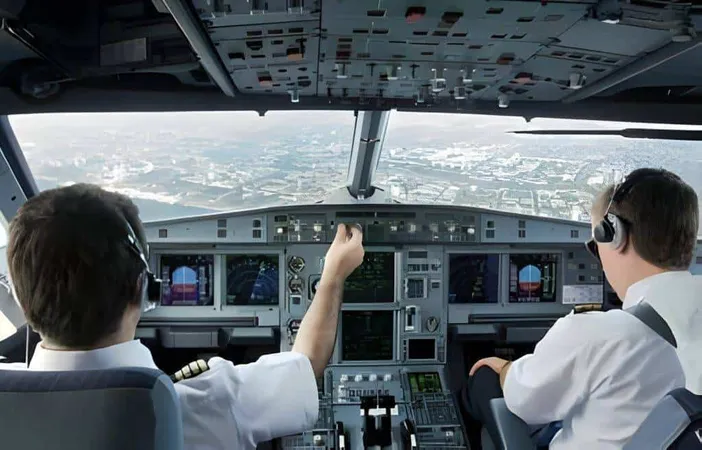
Earn Your Commercial Pilot License Today 2026

CPL (Commercial Pilot License) Test: Your Path to Flight
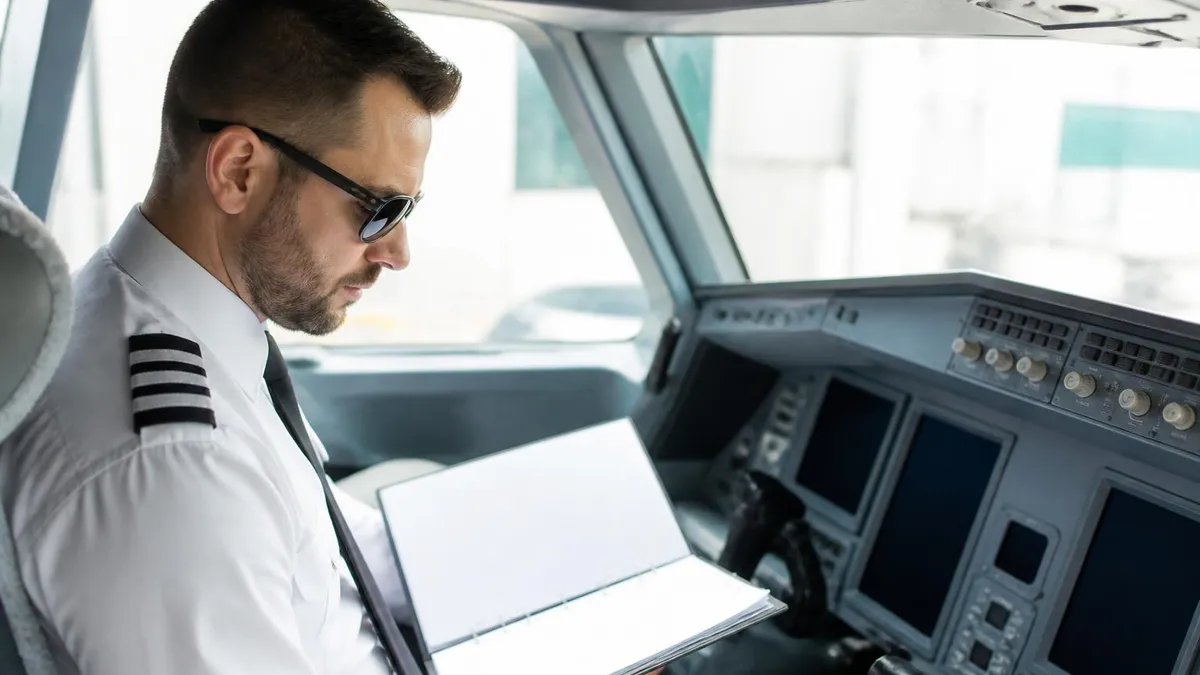
CPL Training: Commercial Pilot Licence Requirements and How to Get Started
About the Author

Educational Psychologist & Academic Test Preparation Expert
Columbia University Teachers CollegeDr. Lisa Patel holds a Doctorate in Education from Columbia University Teachers College and has spent 17 years researching standardized test design and academic assessment. She has developed preparation programs for SAT, ACT, GRE, LSAT, UCAT, and numerous professional licensing exams, helping students of all backgrounds achieve their target scores.
Join the Discussion
Connect with other students preparing for this exam. Share tips, ask questions, and get advice from people who have been there.
View discussion (9 replies)