
CPC Medical Coding Training: Complete Guide to Becoming a Certified Professional Coder
Master CPC medical coding training: requirements, costs, timeline & salary data. Your complete certified professional coder certification roadmap. 🎯

CPC medical coding training is the structured educational pathway that prepares healthcare professionals to earn the Certified Professional Coder (CPC) credential issued by the American Academy of Professional Coders (AAPC). This credential is widely regarded as the gold standard in outpatient and physician-based coding, and it signals to employers that a candidate has mastered CPT, ICD-10-CM, and HCPCS Level II code sets. Whether you are entering the healthcare field for the first time or transitioning from a clinical role, understanding the full training landscape is the critical first step toward a rewarding, long-term career in medical billing and coding.
The demand for credentialed coders has risen steadily over the past decade, driven by regulatory complexity, the expansion of value-based care contracts, and the ongoing digitization of health records. Employers ranging from large hospital systems to small specialty practices now routinely require or strongly prefer the certified professional coder designation when hiring.
This means that investing time and money in quality CPC medical coding training is not merely an academic exercise — it is a direct investment in your employability and earning potential in a field that the Bureau of Labor Statistics projects will add thousands of new positions through 2032.
Training programs vary widely in format, length, and cost. Some students enroll in community college programs that combine anatomy, medical terminology, and coding coursework over two semesters, while others pursue accelerated certified professional coder training options that can be completed in as few as four to six months. Online self-paced courses have become especially popular because they let working adults study around shift schedules or family obligations, removing the geographic barriers that once limited access to reputable instruction. The flexibility of modern delivery formats means there is genuinely a viable path for nearly every type of learner.
Before selecting a program, it is important to understand what the AAPC actually tests on the CPC exam. The 150-question, five-hour and 40-minute examination covers evaluation and management coding, surgical procedures across every body system, anesthesia, radiology, pathology, laboratory, medicine, and compliance guidelines. A strong training program will map its curriculum directly to these domains, ensuring that students practice with real operative notes and encounter the kind of complex, multi-system cases that appear on the actual exam. Curriculum alignment is one of the most important factors to evaluate when comparing your options.
Cost is another practical reality to weigh. Full-length training programs can range from roughly $1,500 for a streamlined online course to more than $5,000 for a comprehensive community college certificate program that includes textbooks, practice exams, and career services. The AAPC's own online training program falls in the middle of that range and is specifically designed to align with exam content, making it a popular choice for candidates who want a single source of truth for both preparation and credentialing. Financial aid, employer tuition assistance, and AAPC payment plans can significantly reduce the out-of-pocket burden.
Once you complete training and pass the CPC exam, the professional doors that open are substantial. The certified professional coder salary averages approximately $58,000 to $70,000 annually depending on specialty, experience, and location, with experienced coders in high-demand specialties such as cardiology or orthopedics earning well above that range.
Remote work is also a major draw — a growing share of certified professional medical coder jobs remote since yesterday listings appear on major job boards every day, reflecting employer confidence in credentialed coders to work independently from home. Understanding the full picture — training, exam, credential, and career outcomes — is what this guide is designed to provide.
Throughout this article, you will find a structured breakdown of training program types, eligibility requirements, study strategies, cost considerations, and the practical steps you need to take to go from aspiring coder to credentialed professional. Each section is designed to give you specific, actionable information rather than vague generalizations, so you can make confident decisions about the investment you are about to make in your career. Let us start with the numbers that define this profession.
CPC Medical Coding Training by the Numbers

CPC Training Program Types: Which Path Is Right for You?
The official training program offered directly by the credentialing body. Includes video lectures, coding exercises, and practice exams aligned precisely to the CPC exam blueprint. Self-paced format suits working adults.
Semester-based programs lasting 6–12 months that cover anatomy, medical terminology, and coding together. Often eligible for federal financial aid and may include externship placements with local providers.
Intensive hands-on programs designed for fast career entry. Typically 4–9 months in length, focusing on CPT, ICD-10-CM, and HCPCS coding with direct exam preparation built into the schedule.
Some hospitals, physician groups, and billing companies provide internal training or tuition reimbursement for employees seeking CPC certification. This path often comes with a post-certification employment commitment.
Experienced billers or clinicians sometimes prepare for the CPC exam through independent study using AAPC's recommended texts, practice exams, and local chapter study groups, keeping overall costs low.
Choosing the right CPC training program is arguably the most consequential decision you will make in your credentialing journey, because program quality directly impacts both your exam pass rate and the speed at which you become job-ready. The sheer number of options available — from community colleges to private online platforms to the AAPC's own curriculum — can feel overwhelming, but evaluating programs along a consistent set of criteria will clarify the decision quickly. The most important factors are curriculum alignment with the CPC exam blueprint, instructor credentials, student support resources, and program cost relative to outcomes.
Curriculum alignment deserves particular emphasis. The AAPC publishes a detailed exam content outline that breaks down the percentage of questions devoted to each coding domain — for example, surgery consistently accounts for roughly 30% of the exam, while evaluation and management coding represents about 18%. A high-quality training program will explicitly map its modules to these percentages, ensuring that students spend proportional study time on the highest-weight domains. If a program's syllabus does not clearly reference the AAPC exam blueprint, that is a significant red flag worth investigating before you enroll.
Instructor credentials matter more than many prospective students realize. Look for programs taught by active CPCs, preferably those who also hold specialty credentials such as the CPC-H (hospital outpatient) or who have real-world production coding experience in physician practices. Instructors who coded professionally before transitioning to teaching bring a practical perspective that textbooks alone cannot replicate — they can explain why a particular CPT code combination triggers an edit in a payer's claim processing system, or how a real operative report differs from the sanitized examples found in study guides. This practical knowledge translates directly into better exam performance.
Student support resources are especially important for online learners who do not have daily in-person access to instructors. The best online programs offer live weekly Q&A sessions, dedicated discussion forums, and direct email or chat access to instructor support staff. Some platforms also provide mentored coding exercises where a credentialed coder reviews your answers and explains the rationale behind correct selections. These touchpoints are not luxuries — for students working through complex surgical coding chapters, access to expert feedback on practice assignments can be the difference between a passing and failing exam score.
For students who want the most direct preparation experience, certified professional coder training online through the AAPC's official platform offers a curriculum built specifically for the exam, including scenario-based coding exercises that mirror the format and difficulty of actual test questions. This eliminates the guesswork about whether your preparation is aligned with what AAPC actually tests, which is a genuine advantage for first-time candidates who cannot afford to retake the $399 exam fee multiple times.
Cost and return on investment should be evaluated together rather than in isolation. A $5,000 community college program that results in a 90% first-attempt pass rate among graduates and strong employer relationships in your local market may represent a better investment than a $1,200 online course with no job placement support and limited instructor access.
Gather data on each program's graduate pass rates if possible, check whether the program is affiliated with the AAPC or AHIMA, and ask specifically about student outcomes such as average time to first job and median starting salary. Programs that cannot or will not provide this data should be evaluated cautiously.
Finally, consider the support structure each program provides after exam failure — a reality that affects roughly 46% of first-time CPC candidates. Some programs include unlimited access to course materials for 12 months, allowing students who fail on their first attempt to continue studying before a retake. Others offer a single access period with no post-exam support. Understanding what happens if you do not pass on your first try is an essential part of the enrollment conversation, and programs that proactively address this question tend to have stronger overall student success rates.
Certified Professional Coder Certification: Exam, Eligibility & Costs
The AAPC requires CPC candidates to hold a high school diploma or GED as the minimum educational requirement. There is no mandatory prior work experience to sit for the exam, though candidates who pass without two years of professional coding experience receive the CPC-A (apprentice) designation until they document the required experience. The CPC-A designation is fully functional and widely accepted by employers, making the exam accessible to career changers and recent graduates alike.
Candidates must register through the AAPC website and select a testing center or remote proctored exam option. Remote proctoring has become the dominant choice, allowing candidates to test from home with a webcam-monitored session. You are permitted to bring your physical CPT, ICD-10-CM, and HCPCS Level II code books into the exam — tabbed and annotated — which is a critical strategic advantage that distinguishes the CPC from other standardized tests and rewards students who invest time in organizing their reference materials during training.
Is CPC Medical Coding Training Worth It? Honest Pros and Cons
- +High demand credential recognized by virtually every US healthcare employer
- +Remote work opportunities are abundant, with 40%+ of postings offering work-from-home
- +Relatively affordable training compared to clinical healthcare degrees (typically under $5,000)
- +No prior healthcare experience required to sit for the CPC exam
- +Clear continuing education pathway with specialty certifications available post-CPC
- +Stable career outlook with BLS projecting sustained demand through the 2030s
- −First-time pass rate of approximately 54% means many candidates must retake the exam
- −Entry-level salaries in some markets start below $40,000 before experience is gained
- −Exam allows physical code books but requires extensive tabbing and annotation preparation
- −CPC-A apprentice status limits some job opportunities until two years of experience is documented
- −Continuing education (36 CEUs every two years) requires ongoing time and money investment
- −Training program quality varies significantly, making program selection a high-stakes decision
CPC Medical Coding Training Readiness Checklist
- ✓Research and compare at least three accredited CPC training programs before enrolling
- ✓Verify that your chosen program's curriculum maps directly to the AAPC CPC exam blueprint
- ✓Purchase or confirm access to the current-year CPT, ICD-10-CM, and HCPCS Level II code books
- ✓Join the AAPC as a student or professional member to access member exam pricing and resources
- ✓Set a realistic study schedule of at least 10–15 hours per week throughout your training program
- ✓Attend a local AAPC chapter meeting or online chapter event to build your professional network
- ✓Complete at least three full-length timed practice exams before scheduling your actual CPC exam
- ✓Tab and annotate your code books during training so they are exam-ready before your test date
- ✓Review your practice exam score reports to identify and address your weakest coding domains
- ✓Confirm your exam registration at least four weeks before your target test date to secure your preferred slot
Tabbing Your Code Books Is a Training Activity, Not an Afterthought
Candidates who invest time tabbing, color-coding, and annotating their CPT and ICD-10-CM code books during their training program consistently outperform those who wait until the week before the exam. Your organized code books are your primary tool during the five-hour-40-minute CPC exam — treat building them as a core part of your preparation strategy, not a last-minute chore.
The certified professional coder salary landscape is one of the most compelling arguments for pursuing CPC medical coding training, and understanding the full range of earning possibilities helps prospective coders set realistic expectations while also recognizing the genuine upside of career advancement.
According to AAPC's annual salary survey, the median salary for a CPC in the United States is approximately $58,000 to $64,000, but that figure masks enormous variation based on specialty, geographic market, years of experience, and additional certifications held. Coders who specialize in cardiology, orthopedics, or neurosurgery consistently command salaries in the $70,000 to $85,000 range, while those who add management credentials or transition into compliance roles can exceed $90,000 annually.
Geographic variation is substantial and should factor into your career planning from the beginning of your training. Coders in high cost-of-living metropolitan areas such as San Francisco, New York City, and Boston earn significantly more in nominal terms than colleagues in rural markets, though the gap narrows considerably when adjusted for local cost of living.
Remote work has introduced a meaningful disruption to this dynamic: a coder living in rural Tennessee with low housing costs who lands a remote position with a national insurance company or large health system can earn a metropolitan-scale salary while enjoying a rural cost of living — a combination that was largely unavailable to medical coders before approximately 2018.
Remote opportunities represent one of the most significant structural advantages of the CPC credential in the current job market. Because coding work is fundamentally document-based — reviewing electronic health records and applying standardized code sets — it translates naturally to remote delivery. Major employers including large physician management companies, health information management firms, coding outsourcing companies, and payer organizations actively hire remote CPCs. Candidates who want to explore certified professional medical coder career options will find that the remote job market has expanded dramatically since 2020 and shows no signs of contracting.
Career progression for credentialed coders follows several distinct tracks. The most common path moves from entry-level coder to senior coder to coding lead or supervisor, with corresponding salary increases at each step. A parallel track leads toward compliance and audit roles, where coders use their technical expertise to review claims for accuracy, prepare for payer audits, and develop internal compliance programs. A third track leads toward health information management, where CPCs combine their coding knowledge with skills in data analytics, clinical documentation improvement, and EHR optimization. Each track offers meaningful income growth and continued professional development opportunities.
Specialty certifications are the single most reliable lever for salary advancement after the initial CPC credential. The AAPC offers specialty credentials in more than 20 clinical areas, including the Certified Cardiology Coder (CCC), Certified Orthopedic Surgery Coder (COSC), Certified Professional Medical Auditor (CPMA), and Certified Professional Compliance Officer (CPCO). Each specialty credential signals a higher level of domain expertise that commands premium compensation. Most experienced coders pursue their first specialty credential within two to three years of earning the CPC, and many ultimately hold two or three specialty designations alongside their core certification.
The certified professional coder jobs market has remained remarkably resilient even during periods of broader economic uncertainty, reflecting the non-discretionary nature of medical billing and coding in the healthcare revenue cycle. Healthcare providers cannot collect reimbursement from payers without accurate, timely coded claims, which means coding positions are among the least vulnerable to layoffs during industry downturns. This employment stability, combined with the flexibility of remote work and the clear credentialing pathway, makes the CPC one of the most risk-adjusted career investments available to workers seeking healthcare careers without clinical licensure requirements.
Finally, it is worth noting that the CPC credential does not require renewal through re-examination. Instead, the AAPC requires certified coders to earn 36 continuing education units (CEUs) every two years, with at least 12 units earned through AAPC-approved sources.
This ongoing education requirement keeps credentialed coders current with annual CPT, ICD-10-CM, and regulatory changes — an important practical benefit given that code sets are updated annually and payer policies evolve continuously. The investment in continuing education is modest compared to the career benefits it sustains, and AAPC chapter meetings, webinars, and online courses make it straightforward to accumulate CEUs around a full-time work schedule.
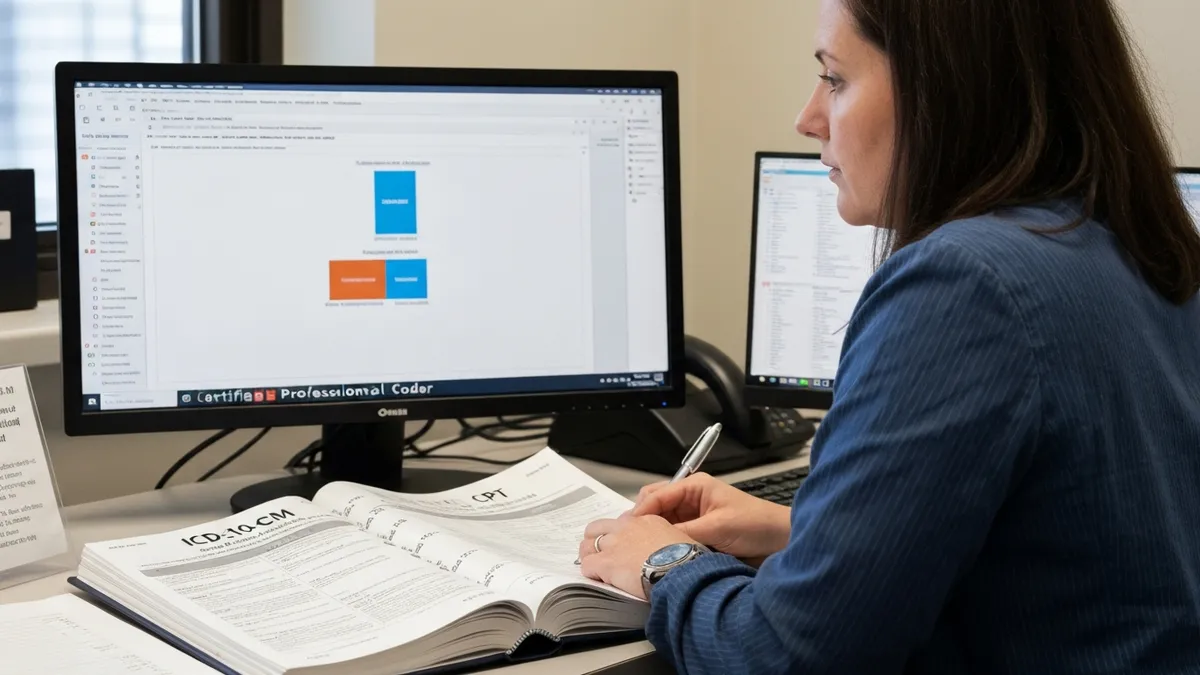
If you pass the CPC exam without two years of documented professional coding experience, the AAPC will issue your credential as CPC-A (Apprentice). While most employers accept CPC-A candidates, some positions explicitly require the full CPC designation. Document your experience carefully from day one and submit your experience verification to AAPC as soon as you reach the two-year threshold to have the -A suffix removed from your credential.
Once you have earned your CPC credential, the continuing education and professional development landscape opens up in ways that significantly compound the initial value of your certification. The AAPC ecosystem is remarkably rich with resources for credentialed members: local chapter meetings, national conference access, specialty study groups, and an extensive library of webinars covering annual code changes, compliance updates, and emerging coding scenarios in new treatment modalities. Engaging actively with these resources from the beginning of your career distinguishes coders who plateau at entry-level salaries from those who advance steadily toward senior and leadership roles.
Annual code set updates represent the most immediate continuing education obligation for practicing CPCs. The American Medical Association releases new and revised CPT codes each January, while the Centers for Medicare and Medicaid Services implements ICD-10-CM and HCPCS Level II updates on October 1 of each year.
These are not minor revisions — recent CPT update cycles have introduced hundreds of new codes, revised dozens of existing code descriptions, and deleted codes that providers had been billing for years. A coder who does not stay current with these changes risks submitting incorrect claims, generating denials, and creating compliance liability for their employer.
Clinical documentation improvement (CDI) is an adjacent field where credentialed coders increasingly find career opportunities, particularly in hospital and health system settings. CDI specialists work directly with physicians and other providers to ensure that clinical documentation accurately captures the specificity needed for precise diagnosis and procedure coding. Because CDI directly impacts hospital reimbursement, quality metrics, and risk adjustment accuracy, CDI roles typically command higher salaries than traditional coding positions — often in the $70,000 to $85,000 range even at mid-career levels. Many CDI specialists hold both a CPC and a clinical credential, making the combination particularly marketable.
For those interested in expanding their expertise through certified professional coder training online, the post-CPC learning journey is well-supported by both the AAPC and independent platforms. Specialty certification preparation courses, annual update webinars, and advanced coding workshops are available in fully asynchronous formats that integrate smoothly into busy professional schedules. Some employers pay for specialty certification preparation as part of their professional development benefits, making it worth asking your employer about available support before committing personal funds to additional coursework.
Mentorship is an underutilized but highly effective accelerant for CPC career development. Many AAPC local chapters run formal mentorship programs that pair newer coders with experienced members, providing guidance on everything from navigating difficult coding scenarios to negotiating salary increases.
If your local chapter does not have a formal program, consider approaching experienced members directly at chapter meetings — most credentialed coders are genuinely enthusiastic about supporting the next generation of professionals and will invest real time in mentoring relationships that develop organically. The coding community is notably collegial, and building strong professional relationships early in your career creates a support network that pays dividends for decades.
Healthcare compliance is another natural evolution for experienced CPCs. The intersection of coding expertise and regulatory knowledge makes credentialed coders highly effective compliance officers, internal auditors, and risk assessment specialists. The AAPC's Certified Professional Compliance Officer (CPCO) credential provides a formal pathway for coders seeking to expand into this domain, with preparation courses and an exam specifically focused on OIG compliance guidance, False Claims Act exposure, HIPAA requirements, and payer audit defense strategies. Compliance roles frequently come with management responsibilities and compensation packages that reflect the elevated risk profile of the work.
Ultimately, the trajectory of a CPC career is as expansive as the coder's ambition and willingness to continue investing in professional development. The credential itself is the foundation, but the real value lies in the cumulative knowledge, professional network, and specialized expertise that accumulate over a career spent at the intersection of clinical care and healthcare finance. Starting with solid CPC medical coding training, passing the exam with genuine mastery, and then deliberately building on that foundation through specialty credentials, continuing education, and professional engagement is the formula that consistently produces the most successful and well-compensated medical coding professionals.
Practical preparation strategies can make the difference between a first-attempt pass and a costly, time-consuming retake, and the most successful CPC candidates combine structured training with deliberate, exam-specific practice habits. One of the highest-impact strategies is to begin working with actual operative reports and clinical documentation from early in your training, rather than waiting until the final weeks before the exam.
Real clinical notes are more complex, ambiguous, and information-dense than textbook examples, and regular exposure to authentic documentation builds the analytical pattern recognition that the CPC exam rewards. Many AAPC chapter members share redacted practice cases through local chapter study groups, which are available in virtually every metropolitan area and online.
Time management during the exam itself is a skill that must be practiced explicitly, not assumed. With 150 questions in 340 minutes, candidates have an average of 2.27 minutes per question — enough time for straightforward questions, but a budget that disappears quickly when you encounter a lengthy surgical vignette requiring multiple code lookups.
Experienced CPC coaches recommend establishing a personal pacing benchmark during practice exams: aim to complete 50 questions per 90 minutes, and mark difficult questions for review rather than spending five or six minutes on a single challenging item. This disciplined approach ensures you reach the end of the exam with time remaining for a meaningful review pass.
Code book organization is both a training activity and a competitive advantage on exam day. The CPC is an open-book exam, which sounds like a safety net but is actually a precision instrument — candidates who have not invested time building a well-organized, annotated code book will lose significant time hunting for guidelines, parenthetical notes, and instructional conventions buried in the index.
Highly effective tabbing strategies include color-coded body system tabs in the CPT book, bookmarked ICD-10-CM chapter guidelines, and handwritten notes on frequently tested code descriptions. Many successful candidates describe their annotated code books as the single most valuable artifact of their training program.
Study group participation correlates strongly with first-attempt pass rates, according to AAPC survey data. The social accountability of a study group motivates consistent preparation, while the collaborative discussion of difficult cases exposes each member to reasoning approaches they might not have developed independently. Online study groups have proliferated since 2020, making it easy to find coding peers regardless of your location. AAPC's online communities, Facebook groups dedicated to CPC exam prep, and study rooms hosted by major training programs all provide viable options for candidates who benefit from peer learning alongside individual study.
Mock exam simulation is non-negotiable for serious candidates. Completing at least three full-length, timed practice exams under realistic conditions — including a physical test environment with only your code books and no digital resources — is the most accurate predictor of actual exam performance available to candidates.
AAPC sells official practice exams that closely mirror the content distribution of the live exam, and several third-party platforms offer additional question banks with detailed rationale explanations. After each mock exam, analyze your score report systematically: identify the two or three domains where you missed the highest percentage of questions, and allocate the majority of your remaining study time to closing those specific gaps.
Anatomy and medical terminology are often underestimated components of CPC preparation, particularly by candidates who come from administrative rather than clinical backgrounds. The exam includes questions that require you to identify the correct anatomical site for a procedure, understand the relationship between a diagnosis and the body system affected, and recognize medical terms embedded in clinical documentation.
Spending dedicated time with anatomy flashcards, body system diagrams, and medical terminology workbooks during your training — especially if you do not have a clinical background — pays dividends not just on the exam but throughout your coding career, where accurate anatomical understanding is the foundation of every coding decision you make.
Finally, do not underestimate the value of rest and stress management in the final days before your exam. CPC candidates who arrive at the testing session well-rested, with a familiar code book they have used extensively during training, and with a clear time-management strategy perform measurably better than those who cram through the night before the exam.
The CPC is an endurance test as much as a knowledge test — five hours and 40 minutes of sustained concentration requires a brain that is recovered and ready to perform, not one that is running on caffeine and anxiety after a sleepless night of last-minute review.
CPC Questions and Answers

CPC Certification: Complete Guide to Becoming a Certified Professional Coder

What Is a CPC-A? The Entry-Level Certified Professional Coder Credential Explained

CPC Certification Online Courses: Your Complete Training Guide for Becoming a Certified Professional Coder

Online CPC Training: Your Complete Guide to Becoming a Certified Professional Coder

CCS vs CPC Certification: Which Medical Coding Credential Is Right for You?
About the Author

Certified Internal Auditor & Compliance Certification Expert
University of Illinois Gies College of BusinessBrian Henderson is a Certified Internal Auditor, Certified Information Systems Auditor, and Certified Fraud Examiner with an MBA from the University of Illinois. He has 19 years of internal audit and regulatory compliance experience across financial services and healthcare industries, and coaches professionals through CIA, CISA, CFE, and SOX compliance certification programs.
Join the Discussion
Connect with other students preparing for this exam. Share tips, ask questions, and get advice from people who have been there.
View discussion (8 replies)