
CPC Cheat Sheet: The Complete Certified Professional Coder Study Guide
Master the certified professional coder exam with our CPC cheat sheet. Key charts, coding tips, salary data & free practice tests. 🎯

The certified professional coder credential, awarded by the American Academy of Professional Coders (AAPC), is the gold standard for medical billing and coding professionals across the United States. Whether you are just beginning your journey or returning for a refresher before exam day, having a reliable CPC chart and structured reference guide can make the difference between passing on your first attempt and spending months retaking the exam. This cheat sheet compiles the most critical concepts, code categories, and exam strategies into one authoritative resource.
Medical coding is a precision discipline where a single wrong character on a claim can trigger a denial, audit, or compliance flag. The CPC exam tests your ability to apply ICD-10-CM diagnosis codes, CPT procedure codes, and HCPCS Level II supply codes accurately and efficiently under timed conditions. Understanding the logic behind each code set — not just memorizing lists — is what separates candidates who pass from those who struggle. This guide walks you through the conceptual frameworks that make correct code selection intuitive.
Before diving into the content, it helps to understand what the AAPC actually measures. The exam contains 100 questions drawn from 17 distinct content areas, ranging from surgery and anesthesia to evaluation and management, pathology, and compliance. No single section dominates the test, so balanced preparation is essential. Candidates who over-invest in one area while neglecting others consistently underperform, even when they know their favorite topics cold. A balanced CPC chart covering all domains is your best tool for closing those gaps.
One of the most common mistakes new CPC candidates make is treating preparation as a passive reading exercise. Effective study requires active retrieval — quizzing yourself, working through timed practice sets, and reviewing the rationale behind every answer, including the ones you get right. Our cpc cheat sheet framework integrates these active learning principles so that the material sticks under pressure, not just in the quiet of your study room.
The financial reward for earning the certified professional coder (CPC) credential is substantial. The Bureau of Labor Statistics reports median wages for medical records specialists hovering around $47,000 nationally, but AAPC's own salary survey consistently shows credentialed coders earning $58,000 to $72,000 depending on specialty, geography, and years of experience. Remote certified professional medical coder jobs have exploded since 2020, with major health systems and outsourcing firms actively recruiting credentialed professionals who can work from home without sacrificing accuracy or compliance.
Preparation timeline matters enormously. AAPC recommends 80 to 120 hours of focused study spread over eight to sixteen weeks for candidates with no prior coding experience. Those with a background in medical terminology, anatomy, or healthcare administration may compress that timeline to six to ten weeks. The key variable is not raw study time but structured review — moving systematically through each content domain, completing topic-specific practice questions, and simulating full-length timed exams in the final two weeks before your scheduled test date.
This guide is organized to mirror your actual exam journey. We start with the numbers that define the credential, move through the core coding domains, cover study strategies and common pitfalls, and close with career and salary insights for newly credentialed coders. Every section is designed to give you actionable information you can apply immediately, whether your exam is three months away or three weeks away. Let us get started.
Certified Professional Coder Certification by the Numbers
Key Facts at a Glance
| Item | Value | Details |
|---|---|---|
| Exam Questions | 100 | 17 content areas covered |
| Time Allowed | 5 hrs 40 min | ~3.4 minutes per question |
| Passing Score | 70% | 70 correct out of 100 |

CPC Exam Study Schedule: 12-Week Preparation Plan
- ▸Review body systems: cardiovascular, musculoskeletal, digestive, respiratory
- ▸Learn root words, prefixes, and suffixes used across all code sets
- ▸Complete AAPC anatomy modules or equivalent textbook chapters
- ▸Study ICD-10-CM Official Guidelines, Sections I through IV
- ▸Practice coding from operative reports and clinic notes
- ▸Memorize sequencing rules: principal diagnosis, first-listed diagnosis, and combination codes
- ▸Navigate the CPT Surgery section: code ranges 10000–29999
- ▸Practice wound repair, excision, and fracture care scenarios
- ▸Study add-on codes and their parent code requirements
- ▸Code ranges 30000–49999: thoracic, cardiac, GI procedures
- ▸Practice bundling scenarios and NCCI edit logic
- ▸Review endoscopy base code rules and scope hierarchy
- ▸Code ranges 50000–69999: urologic, OB/GYN, and neurosurgery
- ▸Study laparoscopic versus open procedure coding distinctions
- ▸Practice coding from operative reports in these specialties
- ▸Learn the base unit + time unit + modifier formula
- ▸Study qualifying circumstances codes: 99100–99140
- ▸Practice anesthesia scenarios with physical status modifiers P1–P6
- ▸Master the 2021 revised E/M guidelines for office visits
- ▸Practice MDM (Medical Decision Making) level determination
- ▸Code outpatient, inpatient, and consult visit scenarios
- ▸Study technical vs. professional component coding (modifier -26 and -TC)
- ▸Review clinical laboratory panels and when to unbundle
- ▸Practice Medicine section: immunizations, infusions, injections
- ▸Learn HCPCS Level II structure: A-codes through V-codes
- ▸Memorize the 20 most commonly tested CPT modifiers
- ▸Practice modifier application scenarios: -25, -51, -59, -LT, -RT, -50
- ▸Review HIPAA, False Claims Act, and OIG compliance basics
- ▸Study Medicare coverage policies and ABN requirements
- ▸Practice claim form (CMS-1500) completion scenarios
- ▸Complete two full 100-question timed practice exams
- ▸Review every incorrect answer with rationale and cross-reference to guidelines
- ▸Identify your three weakest content areas for targeted review
- ▸Focus on your three identified weak areas with targeted question banks
- ▸Complete one final timed practice exam to confirm readiness
- ▸Prepare exam-day materials: code books, pencils, valid ID, snacks
The CPT code set is organized into six major sections, and understanding the internal logic of each section dramatically speeds up your look-up time during the exam. Surgery is the largest section, running from code 10004 through 69990, and it is subdivided by body system. The AAPC tests surgery coding more heavily than any other CPT section, so your CPC chart should include a quick-reference map showing which body system corresponds to which numeric range. Integumentary starts at 10000; musculoskeletal at 20000; respiratory at 30000; cardiovascular at 33000; digestive at 40000; urinary at 50000; and eye/ear at 65000.
ICD-10-CM coding follows a completely different logic from CPT. Where CPT asks what was done, ICD-10-CM asks why it was done and what the patient's condition is. The ICD-10-CM Official Guidelines divide coding instructions into four sections. Section I covers general coding guidelines and conventions. Section II covers selection of the principal diagnosis for inpatient hospital claims.
Section III addresses reporting of additional diagnoses in the inpatient setting. Section IV covers diagnostic coding and reporting for outpatient services. The CPC exam tests all four sections, with particular emphasis on Sections I and IV because they govern outpatient professional fee billing — the primary practice setting for most certified professional coder (CPC) holders.
HCPCS Level II codes fill the gap that CPT leaves open. CPT covers physician procedures, but HCPCS Level II covers supplies, equipment, drugs, and services that Medicare and other payers require to be separately identified. The most commonly tested HCPCS categories on the CPC exam include A-codes (ambulance and medical supplies), E-codes (durable medical equipment), J-codes (injectable drugs), and G-codes (Medicare-specific procedures). Knowing when to use a HCPCS code instead of or in addition to a CPT code is a frequently tested concept that many candidates underestimate.
Evaluation and Management coding underwent a major revision in 2021, and that update is now fully embedded in the CPC exam. Under the revised guidelines, office and outpatient visit levels for established patients are determined by either total time or medical decision making (MDM) — whichever the provider chooses.
MDM is assessed across three elements: the number and complexity of problems addressed, the amount and complexity of data reviewed, and the risk of complications from the management decision. A straightforward visit lands at 99202/99212; a high-complexity visit reaches 99205/99215. Knowing these thresholds cold is essential for passing the E/M portion of the exam.
Anesthesia coding operates on a formula-based system unlike any other CPT section. The total anesthesia units billed equal the sum of the base units assigned to the specific procedure (found in the ASA Relative Value Guide) plus time units (typically one unit per 15 minutes of anesthesia administration) plus any qualifying circumstance units. Physical status modifiers — P1 through P6 — may add additional units depending on payer policy. The CPC exam typically presents two to four anesthesia questions, and candidates who understand the formula can solve them quickly while those who have only memorized codes struggle significantly.
Modifier usage is one of the most nuanced skills the CPC exam measures. Modifiers explain to the payer that a service was altered from its standard description without changing the code itself. The most frequently tested modifiers include -25 (significant, separately identifiable E/M on the same day as a procedure), -51 (multiple procedures), -59 (distinct procedural service), -LT and -RT (left and right side), and -50 (bilateral procedure). Misapplying these modifiers causes claim denials and can trigger compliance scrutiny — which is why the AAPC weighs modifier knowledge heavily across multiple content areas of the exam.
Medical necessity is the thread that runs through every coding decision. A service may be medically appropriate, correctly coded, and properly documented — but if the ICD-10-CM diagnosis codes submitted with the claim do not establish medical necessity under payer policy, the claim will be denied. Understanding coverage indicators, LCD (Local Coverage Determination) policies, and NCD (National Coverage Determination) policies helps coders anticipate and prevent denials before they happen. The CPC exam includes compliance questions that test your ability to recognize medical necessity violations and select corrective actions.
CPC Study Strategies by Experience Level
Candidates entering the certified professional coder certification path without a healthcare background should plan for a 16-week preparation window. Begin with a structured anatomy and medical terminology course before touching any code books. The AAPC's own CPC preparation course is a solid starting point, but many candidates supplement it with anatomy coloring books, online terminology modules, and condition-specific videos that show how diagnoses connect to the procedures used to treat them. Building this foundation prevents the frustrating experience of staring at an operative report with no idea what the surgeon actually did.
Once your foundational knowledge is solid — typically around weeks three to four — begin working through CPT sections in the same order they appear in the book. This sequential approach trains your eye to navigate quickly, which is critical during the timed exam. Start with Surgery, work through Anesthesia, then Radiology, Pathology, and Medicine, and finish with E/M. Budget extra time for E/M and Surgery, as they represent the highest question density on the exam. Complete at least 500 practice questions total before your exam date, reviewing every incorrect answer with the official guideline rationale.

Is Pursuing the Certified Professional Coder Certification Worth It?
- +CPC credential is recognized by virtually every payer, health system, and coding employer in the United States
- +Certified professional coder salary averages $14,000–$20,000 higher than non-credentialed coders annually
- +Remote work opportunities have expanded dramatically — certified professional medical coder jobs remote options are widely available
- +AAPC membership provides ongoing education, networking, and local chapter support nationwide
- +Credential opens pathways to specialty certifications (cardiology, orthopedics, risk adjustment) that command premium salaries
- +The CPC exam is offered year-round at testing centers and remotely, allowing flexible scheduling
- −Exam preparation requires 80–120 hours of dedicated study — a significant time commitment for working adults
- −Code books (CPT, ICD-10-CM, HCPCS Level II) must be purchased separately and cost $150–$250 depending on edition
- −AAPC membership and exam fees total approximately $400–$500 before study materials are factored in
- −The 70% passing threshold means roughly 30% of first-time candidates do not pass and must reschedule
- −Annual CEU requirements (36 credits) mean the credential requires ongoing investment to maintain
- −Specialty-specific experience requirements can delay new graduates from meeting full certification eligibility
CPC Exam Day Preparation Checklist
- ✓Confirm your testing appointment 48 hours in advance and note the exact location or ProctorU login details.
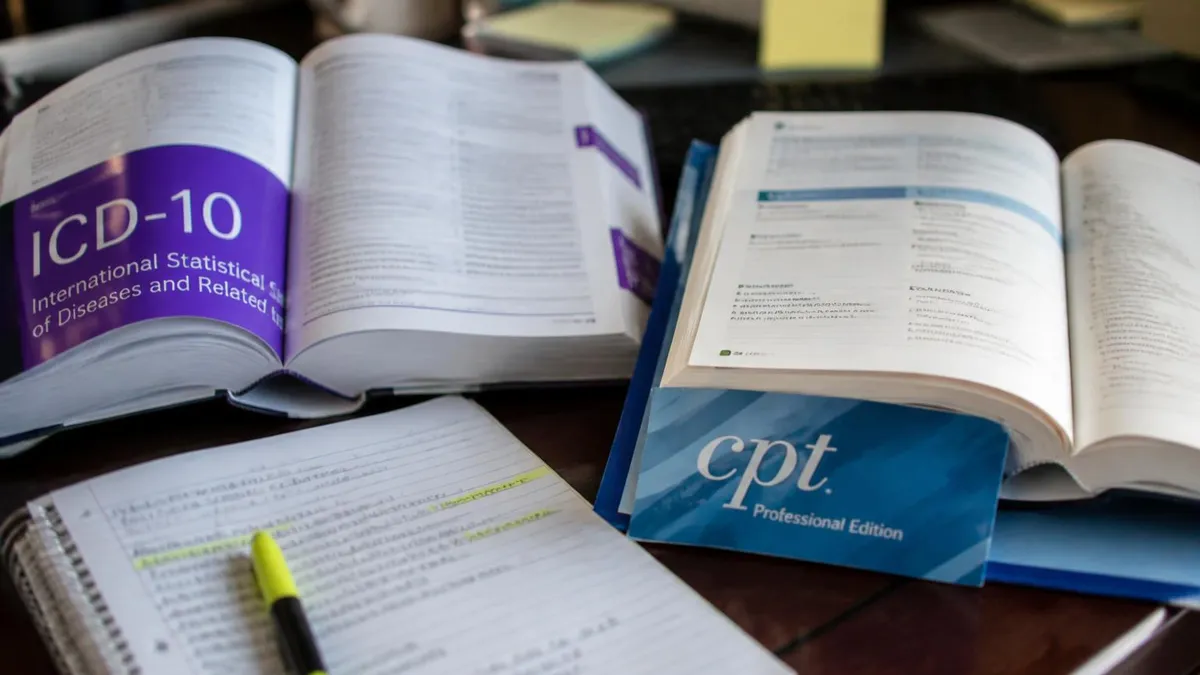
- ✓Bring your current CPT Professional Edition, ICD-10-CM, and HCPCS Level II code books — no digital versions are permitted.
- ✓Use only pencils and highlight markers in approved colors (no sticky tabs on covers; only internal page tabs allowed).
- ✓Eat a protein-rich meal before the exam to sustain focus through the full 5 hours and 40 minutes.
- ✓Arrive at the testing center 30 minutes early to complete check-in, store belongings, and settle before the clock starts.
- ✓Skip questions you cannot answer in 90 seconds — mark them for review and return after completing the rest.
- ✓For surgery questions, go directly to the operative report body and identify the definitive procedure before opening CPT.
- ✓For ICD-10-CM questions, always verify your alphabetical index selection against the tabular list before finalizing.
- ✓Use the process of elimination aggressively — ruling out two wrong answers often makes the correct one obvious.
- ✓In the final 30 minutes, review all flagged questions, confirm no answer sheet items are blank, and trust your first instinct.
The 90-Second Rule Saves Scores
AAPC data shows that candidates who run out of time on the CPC exam score an average of 8 to 12 percentage points lower than those who finish with time to review. If any question takes longer than 90 seconds, flag it and move on immediately. Unanswered questions score zero; an educated guess scores 20 percent on average. Never leave a question blank — the CPC has no penalty for wrong answers.
The certified professional coder salary landscape in 2026 reflects the growing complexity of healthcare reimbursement and the persistent shortage of qualified coders. According to AAPC's most recent salary survey, the national median salary for a credentialed CPC is approximately $58,000, with the top quartile earning $72,000 or more. Coders specializing in high-complexity areas such as interventional cardiology, orthopedic surgery, and neurosurgery command salaries above $80,000 in many markets. Geography plays a significant role — coders in California, New York, Massachusetts, and Washington state consistently outpace the national median by 15 to 25 percent.
Remote work has fundamentally reshaped the certified professional coder job market. Prior to 2020, the majority of coding positions were facility-based, requiring coders to work on-site in hospitals, physician offices, or billing companies. Today, an estimated 60 to 70 percent of coding positions are fully remote or hybrid.
This shift has created genuine geographic arbitrage opportunities — a coder living in a low cost-of-living state can now earn a salary set by California or New York market rates while maintaining a far lower cost of living. Certified professional medical coder jobs remote listings now dominate job boards including AAPC's own career center, Indeed, and LinkedIn.
Entry-level CPC salaries typically fall between $42,000 and $52,000, depending on the employer type. Hospital systems and large health networks tend to pay on the higher end of that range, while small physician practices may start at the lower end. However, entry-level positions rarely stay entry-level for long. Most credentialed coders report reaching $55,000 to $65,000 within three to five years of earning their initial CPC, particularly if they add a specialty credential, take on auditing responsibilities, or move into a coding supervisor or compliance analyst role.
The certified professional coder program ecosystem has expanded significantly, with AAPC, AHIMA, and numerous community colleges and online platforms offering preparation courses. AAPC's own CPC preparation course is the most widely recognized, covering all 17 exam content areas with instructor support and practice questions. Independent online courses through platforms like Coursera, edX, and dedicated medical coding schools range from $299 to $1,200 and vary considerably in depth and exam alignment. When evaluating a certified professional coder online course, look for programs that include updated 2025/2026 code sets, realistic practice exams, and access to instructor feedback on coding scenarios.
Advancement from the CPC credential follows predictable pathways. The most common next step is adding a specialty-specific credential such as the CPC-P (Payer), COC (Outpatient Facility Coding), or a specialty board certification from AAPC covering cardiology, dermatology, emergency medicine, or another high-demand area. Each additional credential expands your marketable expertise and negotiating use with employers. Coders holding two or more credentials earn an average of 18 percent more than single-credential peers, according to AAPC survey data.
Compliance and auditing roles represent the most lucrative career trajectory for experienced CPCs. Clinical documentation improvement (CDI) specialists, coding auditors, and revenue integrity consultants routinely earn $75,000 to $110,000 annually, with senior positions in large health systems reaching $130,000 or more. These roles blend coding accuracy with regulatory expertise, requiring deep familiarity with OIG work plans, RAC audit targets, and payer-specific coverage policies. The CPC credential is the baseline qualification for almost all of these advanced roles, making it a genuine career investment rather than just an entry-level credential.
For those considering the investment of time and money required to earn the CPC, the return is compelling. AAPC data consistently shows credentialed coders earn $14,000 to $20,000 more annually than non-credentialed peers performing the same work. At that salary differential, the total cost of preparation — exam fees, study materials, and course enrollment — is typically recovered within 45 to 90 days of employment as a credentialed coder. Few professional certifications in healthcare deliver a comparable return on investment in such a short timeframe.
The CPC credential requires either two years of professional coding experience OR completion of an AAPC-approved training program. Candidates who pass the exam without meeting the experience requirement receive an apprentice designation (CPC-A) and must complete 12 months of verified coding experience to remove it. Plan your exam date accordingly — submitting an application before confirming your eligibility status can result in delays that push your credentialing timeline back by months.
The CPC exam's most challenging questions are not about knowing which code is correct — they are about knowing which code is most correct given the specific documentation provided. This distinction is critical. Many answer choices on the exam are technically valid codes that could describe a service; the question is whether they accurately describe the service as documented in the scenario. Developing the habit of reading the question stem completely before opening your code books — and annotating the key clinical details before you look anything up — dramatically improves accuracy and speed simultaneously.
Surgery operative reports are the most complex documents you will encounter on the CPC exam, and learning to read them efficiently is a skill that must be practiced before exam day. An operative report typically includes a preoperative diagnosis, a postoperative diagnosis, the procedure performed, the surgeon's detailed narrative of the procedure, and a findings section. For coding purposes, you code the postoperative diagnosis (what was found and confirmed), not the preoperative diagnosis (the working hypothesis). Candidates who accidentally code the preoperative diagnosis consistently miss surgery questions that they understood clinically.
Bundling rules and the National Correct Coding Initiative (NCCI) edits are a source of consistent difficulty for CPC candidates. The NCCI defines code pairs where one procedure is considered inherently included in another, making separate billing inappropriate without a specific modifier and documentation of distinctly separate services. The CPC exam does not require you to memorize every NCCI edit, but it does expect you to understand the underlying principles: a lesser procedure is bundled into a major procedure when both are performed on the same site at the same session, unless a recognized exception applies.
Understanding global surgical packages is equally important for the exam and for daily coding practice. Medicare and most commercial payers define a global period for surgical procedures — 0 days, 10 days, or 90 days — during which post-operative care is considered bundled into the surgical payment.
Separately billing E/M visits, minor procedures, or dressing changes during the global period is a common compliance error that the CPC exam tests explicitly. Modifier -24 (unrelated E/M during global period) and modifier -79 (unrelated procedure during global period) are the appropriate tools for legitimately unbundling services that genuinely fall outside the global package.
The compliance section of the CPC exam covers federal fraud and abuse statutes that every certified professional coder must understand thoroughly. The False Claims Act imposes civil penalties of up to $27,000 per false claim plus treble damages, making improper billing an existential risk for any healthcare organization. The Anti-Kickback Statute prohibits remuneration intended to induce referrals for items or services covered by federal healthcare programs.
The Stark Law (Physician Self-Referral Law) restricts certain financial relationships between referring physicians and designated health services. The CPC exam tests conceptual understanding of these statutes — not the ability to recite penalty amounts — so focus on recognizing prohibited arrangements in scenario-based questions.
Payer-specific policies add another layer of complexity that the CPC exam addresses through Medicare and Medicaid scenarios. Medicare's Coverage Determination process creates two types of coverage rules: Local Coverage Determinations (LCDs), issued by Medicare Administrative Contractors for their specific jurisdictions, and National Coverage Determinations (NCDs), issued by CMS and binding nationwide. When a service falls outside coverage policy, the coder must assess whether an Advance Beneficiary Notice of Noncoverage (ABN) was issued before the service was rendered — if yes, the patient is financially responsible; if no, neither the provider nor the patient can be billed.
Hands-on practice with real operative reports, clinic notes, and discharge summaries is the single most effective preparation strategy for advanced CPC candidates. Abstract knowledge of coding guidelines does not automatically translate into accurate code selection from complex clinical documentation. The AAPC's Practicode platform offers access to thousands of real de-identified coding scenarios with answer rationales, and many candidates report that 60 to 90 hours on Practicode alone significantly improved their exam performance. Pair Practicode with a current edition of a CPC study guide and timed full-length practice exams for the most comprehensive preparation available.
Tabbing and annotating your code books before exam day is one of the highest-use preparation activities available to you. AAPC permits candidates to use tabbed and highlighted code books during the exam, and candidates who have well-organized, annotated books solve questions significantly faster than those navigating unmarked books cold. Effective tabbing strategy includes a tab for each CPT section header, a tab for the E/M guidelines, a tab for the ICD-10-CM Official Guidelines, and additional tabs for high-frequency appendices such as the CPT Modifier list and the ICD-10-CM Table of Drugs and Chemicals.
Annotation strategy matters as much as tabbing. Write abbreviations and cross-references in the margins — not full sentences that slow you down, but targeted notes like "must report separately" next to a code that is frequently excluded from bundling, or "bilateral = one unit" next to a surgical code where bilateral reporting rules differ from the standard.
Some candidates annotate their CPT books with NCCI edit flags next to commonly bundled code pairs, turning a complex mental lookup into a single glance at a margin note. This kind of strategic annotation is built through practice, not through reading about it — the only way to know which notes are worth making is to work through hundreds of practice questions and notice where you slow down or make errors.
Time management during the exam follows a predictable optimization pattern. The 100 questions must be completed in 340 minutes — an average of 3.4 minutes per question. In practice, questions vary enormously in time demand. Simple compliance or terminology questions can be answered in 60 seconds. Complex operative report scenarios with multiple procedures, modifiers, and diagnosis sequencing can take five to seven minutes. The optimal strategy is to complete a first pass of all questions, spending no more than 90 seconds on any single question, then use remaining time for flagged questions in order of your confidence level.
Practice exam analysis — not just completing practice exams, but systematically analyzing your results — is what separates candidates who improve from those who plateau. After each practice exam, categorize your wrong answers by content area, error type, and code set.
Error types include: misread question stem, wrong code range navigated, correct code range but wrong specific code, correct code but wrong modifier, and correct code and modifier but wrong sequencing. Each error type requires a different corrective intervention. Misread question stems improve with attention training; wrong code range errors improve with book navigation drills; modifier errors improve with focused modifier study.
The week before your exam should include zero new material and maximum review of your strongest content areas. This counterintuitive strategy works because anxiety before a high-stakes exam is best managed by reinforcing confidence, not by frantically trying to fill knowledge gaps in the final 72 hours.
Spend the last week reviewing your annotated notes, completing one final timed practice exam, and confirming your logistics: where you are going, what you are bringing, what you will eat, and how much sleep you will get. Well-rested candidates consistently outperform equally prepared but sleep-deprived candidates — cognitive performance on complex reasoning tasks drops measurably with less than seven hours of sleep.
After you pass the CPC exam, your first 90 days as a credentialed coder establish habits that will define your career trajectory. Join your local AAPC chapter and attend monthly meetings — the network you build there will surface job opportunities, answer niche coding questions, and keep you current on regulatory changes that do not make national headlines.
Begin accumulating CEU credits immediately rather than waiting until your renewal deadline approaches. Coders who stay continuously current with coding updates — new CPT codes effective January 1, ICD-10-CM updates effective October 1, and ongoing NCCI edit revisions — make fewer errors and face fewer audits than those who study only at renewal time.
Finally, approach your early career as a credentialed coder with the same discipline that got you through the exam. Document your coding decisions, build a personal reference library of payer-specific policies that affect your specialty, and ask senior coders to review your work periodically.
The CPC credential opens the door — the expertise you build in the first two to three years of credentialed practice is what makes you genuinely valuable to any organization and positions you for the salary and career advancement that the credential promises. The best coders never stop studying; they simply shift from studying to pass an exam to studying to master their craft.
Sample Certified Procedural Coder Practice Questions
Try these questions from our free Certified Procedural Coder practice tests. The correct answer and an explanation follow each question.
Which modifier indicates that a procedure was performed by an assistant surgeon?
- A. -62
- B. -66
- C. -80
- D. -81
Answer: C. -80
Modifier -80 indicates assistant surgeon services; the assistant surgeon appends this to the primary procedure code.
How are anesthesia time units typically calculated by most payers?
- A. One unit per 15 minutes of anesthesia time
- B. One unit per 30 minutes of anesthesia time
- C. One unit per 10 minutes of anesthesia time
- D. One unit per 60 minutes of anesthesia time
Answer: A. One unit per 15 minutes of anesthesia time
Most payers, including Medicare, use one time unit per 15 minutes, counting from anesthesia induction until the patient is safely transferred to post-anesthesia care.
What are the main causes of claim denials?
- A. Coding errors, incorrect information, and lack of documentation
- B. Incorrect patient behavior
- C. Improper treatment plans
- D. Delayed submissions
Answer: B. Incorrect patient behavior
While many claim denials stem from administrative or coding errors, 'incorrect patient behavior' can also contribute to denials in certain situations. For instance, if a patient fails to adhere to pre-authorization requirements, misses appointments, or does not follow prescribed treatment plans, the insurance company might deny coverage for services rendered, deeming them medically unnecessary or non-compliant with policy terms. This highlights how patient actions can indirectly impact billing outcomes.
What is the purpose of procedure coding?
- A. To monitor patient behavior
- B. To document services, treatments, and procedures
- C. To track medical supplies
- D. To track prescription refills
Answer: B. To document services, treatments, and procedures
Procedure coding, primarily using CPT and HCPCS codes, is essential for translating the specific medical services and interventions provided to a patient into a standardized alphanumeric format. This documentation is critical for accurate billing, allowing healthcare providers to be reimbursed for the work performed. It also serves as a vital record for patient care, research, and public health statistics.
CPC Questions and Answers

AAPC CPC Exam Dates 2026: Complete Guide for Certified Professional Coder Certification

CPC Exam Mock Test: Free Certified Professional Coder Practice Questions 2026

CPC Certification Online Courses: Your Complete Training Guide for Becoming a Certified Professional Coder

Online CPC Training: Your Complete Guide to Becoming a Certified Professional Coder

CCS vs CPC Certification: Which Medical Coding Credential Is Right for You?
About the Author

Certified Internal Auditor & Compliance Certification Expert
University of Illinois Gies College of BusinessBrian Henderson is a Certified Internal Auditor, Certified Information Systems Auditor, and Certified Fraud Examiner with an MBA from the University of Illinois. He has 19 years of internal audit and regulatory compliance experience across financial services and healthcare industries, and coaches professionals through CIA, CISA, CFE, and SOX compliance certification programs.
Join the Discussion
Connect with other students preparing for this exam. Share tips, ask questions, and get advice from people who have been there.
View discussion (8 replies)