

CNC Practice Test
Updated October 2026A CNC (Computer Numerical Control Machinist Technical) plays a pivotal role in manufacturing, combining technology with precision engineering to produce parts for various industries. CNC machinists use computer-controlled equipment to create components from materials like metal and plastic, ensuring high levels of accuracy and consistency. With the demand for skilled machinists growing, understanding CNC machining and the certification process is essential for anyone interested in this field. This article will guide you through what CNC machining is, the responsibilities of a CNC machinist, and how to start a successful career in this technical role. Practice with the free Computer Numerical Control Machinist Technical practice test on PracticeTestGeeks (9 questions with answer explanations).
Free Computer Numerical Control Machinist Technical Study Tools
Interactive Computer Numerical Control Machinist Technical resources on PracticeTestGeeks, free to start:
- Computer Numerical Control Machinist Technical flashcards — review key terms and concepts card by card
- Computer Numerical Control Machinist Technical study guide — topic-by-topic overview of what the exam covers
- Computer Numerical Control Machinist Technical cheat sheet — one-page printable summary for last-minute review
CNC Practice Test Questions
Prepare for the CNC - Computer Numerical Control Machinist Technical exam with our free practice test modules. Each quiz covers key topics to help you pass on your first try.
CNC Blueprint Reading & Technical Drawing ...
CNC Exam Questions covering Blueprint Reading & Technical Drawing Interpretation. Master CNC Test concepts for certification prep.
CNC Lathe Turning Operations
Free CNC Practice Test featuring CNC Lathe Turning Operations. Improve your CNC Exam score with mock test prep.
CNC Mill Setup & Operation
CNC Mock Exam on CNC Mill Setup & Operation. CNC Study Guide questions to pass on your first try.
CNC Coordinate Systems & Datum Setup
CNC Test Prep for Coordinate Systems & Datum Setup. Practice CNC Quiz questions and boost your score.
CNC Cutting Tool Geometry & Selection
CNC Questions and Answers on Cutting Tool Geometry & Selection. Free CNC practice for exam readiness.
CNC Ferrous & Non-Ferrous Material Properties
CNC Mock Test covering Ferrous & Non-Ferrous Material Properties. Online CNC Test practice with instant feedback.
CNC G-Code & M-Code Programming
Free CNC Quiz on G-Code & M-Code Programming. CNC Exam prep questions with detailed explanations.
CNC GD&T Symbol Interpretation
CNC Practice Questions for GD&T Symbol Interpretation. Build confidence for your CNC certification exam.
CNC Precision Measurement & Quality Control
CNC Test Online for Precision Measurement & Quality Control. Free practice with instant results and feedback.
CNC Preventive Maintenance Schedules
CNC Study Material on Preventive Maintenance Schedules. Prepare effectively with real exam-style questions.
CNC Programming & Machine Operation
Free CNC Test covering Programming & Machine Operation. Practice and track your CNC exam readiness.
CNC Safety Standards & Maintenance Practices
CNC Exam Questions covering Safety Standards & Maintenance Practices. Master CNC Test concepts for certification prep.
CNC Speeds, Feeds & Machining Parameters
Free CNC Practice Test featuring Speeds, Feeds & Machining Parameters. Improve your CNC Exam score with mock test prep.
Free CNC Practice Test Online
Key Takeaways
- CNC Machinists play a vital role in manufacturing, combining technical skills with precision engineering to create high-quality components.
- CNC Training: Aspiring machinists need a mix of education, hands-on training, and experience with CNC programming languages.
- Career Paths: CNC machinists can pursue roles such as entry-level machinist, setup machinist, CNC programmer, quality inspector, and tool and die maker.
- Job Demand: Skilled CNC machinists are in demand in industries ranging from automotive to aerospace.
What is a CNC Machinist?
A CNC Machinist is a professional trained in operating CNC machines, which are used to automate and execute complex cutting, drilling, and shaping tasks with high precision. CNC machining is widely used in industries like automotive, aerospace, electronics, and manufacturing to produce components with exacting specifications. Machinists must have an understanding of both the CNC equipment and the computer software that controls it.
Primary Skills of a CNC Machinist:
- Proficiency in CNC programming languages (such as G-code)
- Strong mathematical skills for calculating dimensions and tolerances
- Problem-solving abilities to troubleshoot machinery and optimize processes
- Knowledge of blueprint reading and mechanical drawings
Becoming proficient in CNC machining often requires formal education, hands-on training, and a strong foundation in machining principles. With the right experience and credentials, CNC machinists can find career opportunities across numerous high-tech sectors.
- ✓Review the official CNC exam content outline
- ✓Take a diagnostic practice test to identify weak areas
- ✓Create a study schedule (4-8 weeks recommended)
- ✓Focus on your weakest domains first
- ✓Complete at least 3 full-length practice exams
- ✓Review all incorrect answers with detailed explanations
- ✓Take a final practice test 1 week before exam day
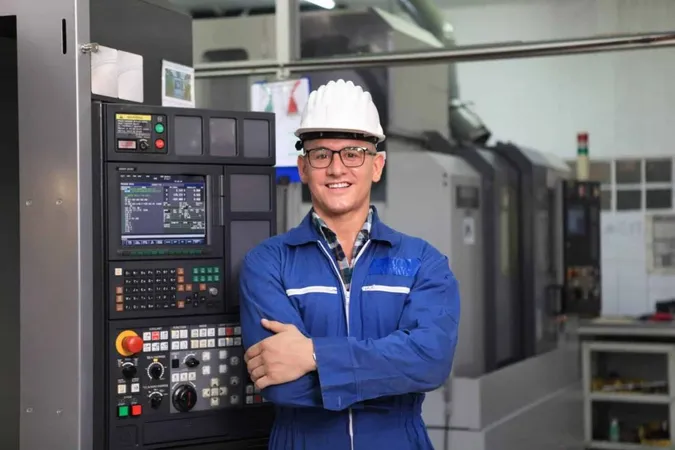
What Do CNC Machinists Do?
CNC machinists have a variety of tasks that involve setting up, operating, and maintaining CNC machines to produce high-precision parts. Here are some typical responsibilities of a CNC machinist:
- Interpreting Technical Drawings: Machinists review blueprints and CAD designs to understand the specifications for each part.
- Machine Setup and Calibration: CNC machinists program machines according to specific instructions and adjust settings to ensure parts meet quality standards.
- Operating CNC Equipment: They monitor CNC machinery during the machining process, making real-time adjustments to enhance accuracy and performance.
- Quality Control: After each part is produced, machinists inspect it for accuracy and quality, often using precise measuring instruments.
- Troubleshooting and Maintenance: CNC machinists are responsible for diagnosing machine issues, performing routine maintenance, and ensuring equipment operates smoothly.
This combination of technical skill, precision, and attention to detail is essential for producing high-quality parts that meet stringent industry standards.
How to Learn CNC Machining
Learning CNC machining requires a combination of education, hands-on training, and practical experience. Here are the steps to begin a CNC machining career:
- Enroll in a Technical Program: Many vocational schools and community colleges offer CNC machining programs that teach the fundamentals of machining, computer-aided design (CAD), and computer-aided manufacturing (CAM) software.
- Complete an Apprenticeship: Apprenticeships provide hands-on training under the guidance of experienced professionals, allowing you to develop practical skills in a work environment.
- Learn CNC Programming: Proficiency in CNC programming languages, especially G-code, is essential. This skill can be acquired through courses or practice on CNC simulators.
- Obtain Certification: Certifications like those from the National Institute for Metalworking Skills (NIMS) can enhance job prospects and demonstrate expertise.
- Gain On-the-Job Experience: As with most technical roles, the best way to master CNC machining is through experience. Many machinists start as trainees and work their way up as they gain proficiency.
This combination of education, hands-on training, and continued learning is crucial for a successful career in CNC machining.
CNC Machinist Jobs
CNC machinists can find jobs in various industries, each requiring different levels of expertise and experience. Here’s a look at some career paths available for CNC machinists:
- Entry-Level Machinist: Entry-level positions typically involve basic machine operation and part inspection. Many companies provide on-the-job training for beginners.
- Setup Machinist: A setup machinist is responsible for configuring machines and adjusting settings before production. This role often requires a deeper understanding of CNC programming.
- CNC Programmer: In addition to running machines, CNC programmers develop the code and commands that guide the CNC equipment. This position usually requires advanced technical knowledge and experience with G-code.
- Quality Control Inspector: Quality control roles involve inspecting machined parts to ensure they meet industry standards and specifications.
- Tool and Die Maker: This role requires extensive knowledge of CNC machines and involves creating specialized tools, dies, and molds used in the manufacturing process.
Each of these roles offers a unique perspective on CNC machining and may require specialized skills depending on the industry.
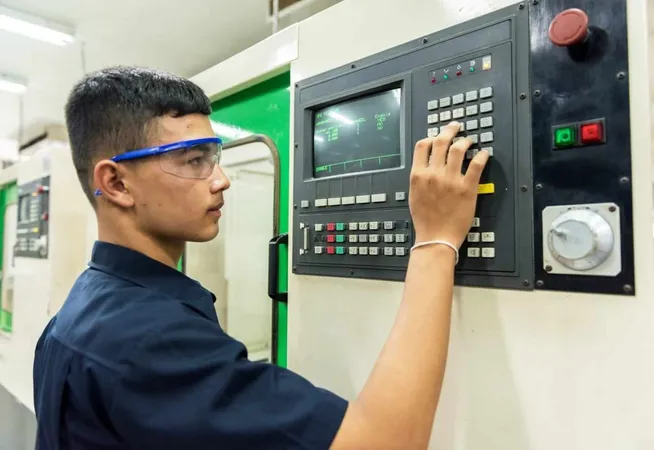
Finding CNC Training and Jobs Near Me
If you’re interested in pursuing a career as a CNC machinist, several resources can help you locate training programs and job openings in your area:
- Local Community Colleges and Vocational Schools: Many community colleges and technical schools offer CNC training programs that provide both classroom instruction and hands-on experience.
- Manufacturing Companies: Some companies offer apprenticeship programs or on-the-job training for CNC machinists, allowing you to learn while working.
- Online Job Boards: Websites like Indeed and LinkedIn list CNC machinist positions and training opportunities, making it easy to search for job openings near you.
- Government and Non-Profit Resources: Organizations like the U.S. Department of Labor (www.dol.gov) and Manufacturing.gov offer resources and information on training programs in various states.
A combination of formal education, on-the-job training, and networking can help you find the right CNC training and job opportunities in your area.
Conclusion
CNC (Computer Numerical Control Machinist Technical) is a rewarding career for those with an interest in technology, mechanics, and precision engineering. CNC machinists are essential in various industries and enjoy a range of career options, from basic machine operation to advanced programming and quality control. With the growing demand for skilled machinists, obtaining the necessary training and certification is a valuable investment in a stable and well-paying career.
Whether you're just starting or looking to advance, CNC machining offers numerous opportunities for growth and specialization. By following the steps outlined above and gaining experience, you can build a successful career as a CNC machinist and contribute to innovations in manufacturing and engineering.

CNC Questions and Answers
CNC: Pros and Cons
- +CNC exam preparation strengthens your knowledge across all domains
- +Passing the exam proves competency to employers and clients
- +Study materials and practice tests are widely available
- +Exam-based credentials are portable across states and employers
- +Clear exam objectives help focus your study plan effectively
- −Exam anxiety can affect performance — practice tests help reduce it
- −Registration fees are non-refundable if you miss your test date
- −Limited retake opportunities may apply with waiting periods
- −Exam content updates periodically — use current study materials
- −Testing center availability may require advance scheduling
Pros and Cons at a Glance
| Pros | Cons |
|---|---|
| CNC exam preparation strengthens your knowledge across all domains | Exam anxiety can affect performance — practice tests help reduce it |
| Passing the exam proves competency to employers and clients | Registration fees are non-refundable if you miss your test date |
| Study materials and practice tests are widely available | Limited retake opportunities may apply with waiting periods |
| Exam-based credentials are portable across states and employers | Exam content updates periodically — use current study materials |
| Clear exam objectives help focus your study plan effectively | Testing center availability may require advance scheduling |
Sample Computer Numerical Control Machinist Technical Practice Questions
Try these questions from our free Computer Numerical Control Machinist Technical practice tests. The correct answer and an explanation follow each question.
What does an isometric drawing show?
- A. Side view
- B. 2D dimensions
- C. 3D view of the part
- D. Surface finish
Answer: C. 3D view of the part
An isometric drawing is a type of pictorial drawing that shows a three-dimensional view of an object. It presents the object with all three axes (length, width, and height) equally foreshortened and at 120-degree angles to each other. This provides a realistic and easily understandable representation of the part's overall shape, making it useful for visualization and communication.
What is the purpose of the M03 command in a CNC program?
- A. Stop the spindle
- B. Start the spindle in a clockwise direction
- C. Start the spindle in a counterclockwise direction
- D. Activate the coolant system
Answer: B. Start the spindle in a clockwise direction
M03 starts the spindle in the clockwise (forward) direction, which is the standard direction for most milling and turning operations.
What is the correct disposal method for used CNC cutting fluid (coolant) containing metal fines?
- A. Drain into the municipal sewer system
- B. Filter out solids and reuse indefinitely
- C. Follow EPA and local regulations for industrial waste disposal
- D. Pour into an outdoor gravel pit to drain naturally
Answer: C. Follow EPA and local regulations for industrial waste disposal
Used metalworking fluid with metal fines is a regulated industrial waste requiring disposal per EPA 40 CFR Part 262 and applicable local environmental regulations.
On a feature control frame, what does placing a datum reference in the third compartment (tertiary datum) accomplish?
- A. It constrains the remaining rotational degree of freedom not fixed by primary and secondary datums
- B. It provides a backup datum if the primary datum is inaccessible
- C. It specifies a higher tolerance for that datum's orientation
- D. It overrides the secondary datum when both conflict
Answer: A. It constrains the remaining rotational degree of freedom not fixed by primary and secondary datums
The tertiary datum eliminates the last remaining degree of freedom (usually rotation about an axis), fully constraining the part for measurement.
Take the full Computer Numerical Control Machinist Technical practice test
About the Author

Certified Professional Development Expert & Niche Certification Advisor
University of Pennsylvania Graduate School of EducationDr. Alexandra Kim holds a PhD in Professional Studies from the University of Pennsylvania and is a Certified Professional in Learning and Performance (CPLP) and Certified Professional in Talent Development (CPTD). With 17 years of corporate training and professional certification advisory experience, she helps professionals navigate specialized, emerging, and cross-industry certification programs.