
COMPASS Assessment Test: Complete Guide to Scores, Format & Prep 2026 September
Master the COMPASS assessment test 🎯 — format, scoring, math sections, and proven study strategies to place into the right college course.

The compass assessment test is a computerized, adaptive placement exam developed by ACT, Inc. and used by thousands of community colleges and universities across the United States to determine which entry-level courses are the right fit for incoming students.
Unlike the SAT or ACT, the COMPASS is not a high-stakes admissions test — it is a placement tool designed to match students with math, reading, and writing courses that align with their current skill level. Understanding how to use a compass in the academic sense means knowing exactly what to expect on test day and building a targeted study plan well in advance.
The exam covers several subject areas, with mathematics being the most extensive. Students are evaluated in pre-algebra, algebra, college algebra, geometry, and trigonometry depending on their performance. The adaptive nature of the test means the difficulty of each question adjusts based on whether you answered the previous question correctly. This design allows the exam to zero in on your precise skill level faster than a fixed-format test ever could, which is why many institutions rely on it so heavily for academic advising.
One of the most common misconceptions about the COMPASS assessment test is that students cannot prepare for it. In reality, strategic preparation makes a meaningful difference in placement outcomes. Students who review core math concepts, practice reading comprehension strategies, and work through sample writing prompts consistently outperform those who walk in cold. Treating the exam as an opportunity rather than an obstacle gives students the mindset they need to place into credit-bearing courses from day one — saving both time and tuition money.
The reading section evaluates your ability to understand, interpret, and analyze prose passages drawn from a variety of genres including literary narrative, social science, and natural science texts. Questions focus on identifying main ideas, understanding vocabulary in context, drawing inferences, and recognizing an author's purpose and tone. You do not need any prior subject knowledge for the reading section; everything you need to answer the questions is contained within the passage itself.
The writing skills section, sometimes called the English section, tests grammar, punctuation, sentence structure, and rhetorical effectiveness. Many students find this section approachable because it builds on skills developed throughout high school English courses. However, it is worth reviewing comma usage, subject-verb agreement, pronoun antecedent agreement, and parallel sentence construction before your exam date. Small errors in these areas can push a student into a developmental writing course rather than a college-level composition class.
If you are preparing for the math portion and want structured practice, learning how to use a compass through guided practice tests is one of the most efficient approaches available. Full-length practice sessions help you build stamina, identify weak areas, and simulate the adaptive testing experience in a low-pressure environment. The more familiar you are with the question formats before test day, the calmer and more focused you will be when the actual exam begins.
This guide covers every aspect of the COMPASS assessment test, from its format and scoring system to proven preparation strategies and commonly asked questions. Whether you are taking the exam for the first time or retesting to improve your placement, the information here will give you a clear roadmap to performing your best and starting college in the right courses from day one.
COMPASS Assessment Test by the Numbers
Key Facts at a Glance
| Item | Value | Details |
|---|---|---|
| Time per Section | No Limit | Untimed, adaptive format |
| Test Format | Adaptive | Difficulty adjusts to your answers |
| Typical Test Fee | $0–$25 | Varies by institution |

COMPASS Exam Format & Structure
| Section | Questions | Time | Weight | Notes |
|---|---|---|---|---|
| Pre-Algebra / Numerical Skills | 30 | Untimed | Entry Math | Covers integers, fractions, decimals, ratios, percentages |
| Algebra | 30 | Untimed | Core Math | Linear equations, inequalities, polynomials, factoring |
| College Algebra | 25 | Untimed | Advanced Math | Functions, exponentials, logarithms, matrices |
| Geometry / Trigonometry | 20 | Untimed | Advanced Math | Angles, area, volume, right triangles, unit circle |
| Reading | 25 | Untimed | Placement | Prose passages, main idea, inference, vocabulary in context |
| Writing Skills | 40 | Untimed | Placement | Grammar, mechanics, rhetorical skills |
| Total | 12–40 per section (adaptive) | Untimed (typically 2–3 hours) | 100% |
The mathematics portion of the COMPASS assessment test is structured as a series of sequential sub-tests, each covering a progressively higher level of mathematical complexity. The exam begins with Pre-Algebra and Numerical Skills, which evaluates a student's command of whole numbers, fractions, decimals, percentages, ratios, and basic number properties. Students who perform well on this initial sub-test automatically advance to the Algebra section, while those who struggle are placed into developmental math courses designed to build foundational skills before college-level coursework begins.
The Algebra section is where most students invest the greatest portion of their preparation time, and for good reason. It is the gateway sub-test that determines whether a student places into credit-bearing math. Topics covered include solving linear equations and inequalities in one and two variables, working with polynomials, factoring expressions, understanding rational expressions, and interpreting word problems that require setting up algebraic equations. Mastering these topics is absolutely essential for any student who wants to avoid repeating developmental coursework that neither earns credit nor satisfies degree requirements.
College Algebra on the COMPASS assessment test introduces more abstract mathematical thinking, covering topics such as functions and their graphs, exponential and logarithmic equations, systems of equations, and introductory matrix operations. The questions in this sub-test are designed to assess whether a student is ready for calculus-track coursework or other STEM-adjacent math requirements. Students pursuing degrees in engineering, computer science, nursing, or business often need to reach this level of math placement to stay on track with their program requirements.
The Geometry and Trigonometry sub-test rounds out the advanced math sequence. It covers plane geometry concepts including angle relationships, the Pythagorean theorem, area and perimeter formulas, and three-dimensional volume problems. The trigonometry component addresses right triangle ratios, the unit circle, and basic trigonometric identities. Students who reach this level of the COMPASS exam are typically well-prepared for pre-calculus or calculus courses at the college level.
One important feature of the COMPASS that affects how you should study is its non-calculator restriction on certain sections. While some sub-tests allow the use of a calculator, the pre-algebra and early algebra sections may not. This means that number sense and mental math fluency are genuinely useful skills to develop before test day. Practicing arithmetic operations by hand — especially fraction manipulation, order of operations, and basic percent calculations — can shave minutes off your completion time and reduce careless errors on simpler problems.
The compass rose of the COMPASS math curriculum is the algebra section — it sits at the center of the entire assessment and points toward every direction a student's academic career might take. Students who place directly into College Algebra save a semester or more compared to those who start in developmental math, and that time savings translates directly into lower tuition costs and faster degree completion. Investing thirty to sixty hours in focused algebra review before your COMPASS test date is one of the highest-return academic investments you can make.
Beyond simple topic review, effective COMPASS math preparation includes working through timed practice sets to build problem-solving speed, reviewing your errors carefully to identify recurring conceptual gaps, and using adaptive practice platforms that mimic the exam's branching structure. The goal is not just to recognize the types of problems that appear on the test but to be able to solve them quickly and accurately under the mild pressure of a formal testing environment.
Reading, Writing & Compass Rose Navigation Skills
The COMPASS Reading section presents students with four or five prose passages drawn from literary narrative, social science, humanities, and natural science texts. Each passage is followed by multiple-choice questions that assess your ability to identify the main idea, understand the author's tone and purpose, draw logical inferences, and interpret vocabulary in context. The passages are typically 200 to 400 words long, and all answer choices are grounded in the text rather than outside knowledge — meaning careful reading is your most powerful tool.
Effective strategies for the Reading section include previewing the questions before reading the passage so you know what to look for, annotating the text mentally by noting topic shifts and key arguments, and eliminating answer choices that misrepresent or overstate the passage's claims. Many test-takers lose points not because they misunderstand the passage but because they select answers that are plausible-sounding but not directly supported by the text. Training yourself to demand textual evidence for every answer choice will significantly improve your accuracy rate on this section.

COMPASS Assessment Test: Advantages and Limitations
- +Adaptive format zeros in on your true skill level faster than fixed tests
- +Untimed structure reduces test anxiety and lets you work at your own pace
- +Covers the full range from basic arithmetic to trigonometry in one session
- +Results are available immediately after testing for same-day advising
- +Preparation materials are widely available online, including free practice tests
- +Placing well can save thousands of dollars by skipping non-credit developmental courses
- −Scores vary by institution — a good score at one college may not transfer to another
- −Adaptive branching means you cannot skip difficult questions and return later
- −Calculator restrictions on some sub-tests disadvantage students with weak mental math
- −No partial credit — each question is either right or wrong, with no gradations
- −Limited official practice materials compared to high-profile tests like the SAT
- −Retesting policies vary widely and may involve waiting periods or mandatory prep courses
COMPASS Assessment Test Prep Checklist
- ✓Confirm your institution's specific placement cut scores with an academic advisor before you start studying.
- ✓Complete at least two full-length COMPASS practice tests to establish a baseline score in each subject area.
- ✓Review pre-algebra fundamentals including fractions, decimals, ratios, and percent calculations thoroughly.
- ✓Work through at least fifty algebra practice problems covering linear equations, inequalities, and factoring.
- ✓Study college algebra topics — functions, exponentials, and logarithms — if you are aiming for advanced placement.
- ✓Review grammar rules for comma usage, subject-verb agreement, and parallel sentence structure before the writing section.
- ✓Practice reading comprehension with timed passage sets to build both accuracy and efficiency.
- ✓Bring a valid photo ID and any required documentation to the testing center on exam day.
- ✓Get a full night of sleep the night before your test and eat a protein-rich breakfast the morning of.
- ✓Arrive at the testing center 15 minutes early to complete check-in procedures without feeling rushed.
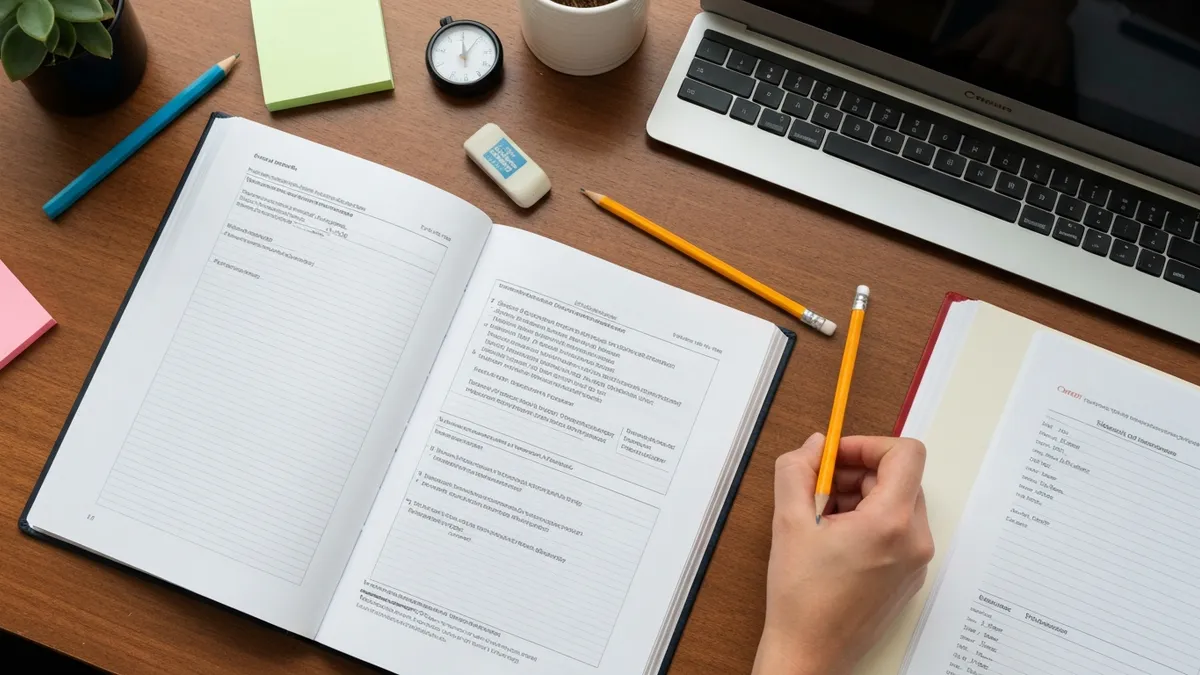
One Better Math Score Can Save You an Entire Semester
At the average community college, a single developmental math course costs between $800 and $1,500 in tuition and fees and takes a full 16-week semester to complete — without earning a single transferable credit. Students who invest six weeks of focused COMPASS preparation and place directly into College Algebra instead of Elementary Algebra save that entire semester, along with the associated tuition costs. The return on preparation time is exceptionally high.
Once you understand the format of the COMPASS assessment test, the next challenge is developing a placement strategy that aligns with your specific academic goals. Students pursuing a STEM degree, nursing program, or business administration often need higher math placement than students in liberal arts or early childhood education programs. Before you begin studying, talk with your academic advisor or review your program's course sequence to determine the minimum placement score you need to stay on track. This single conversation can save you hours of unnecessary study on topics that will not affect your placement outcome.
For students retesting to improve their math placement, the most important question to answer is: why did I score where I did the first time? If your original low score was due to test anxiety and a lack of familiarity with the format, additional practice tests may be sufficient to improve significantly. If the score reflected genuine gaps in your mathematical knowledge, you will need to invest time in actual content review — working through algebra or pre-algebra topics systematically rather than simply re-taking practice tests and hoping for a better outcome.
Many colleges offer free COMPASS preparation workshops, math review labs, or online tutoring resources specifically designed to help students improve their placement scores before retesting. Taking advantage of these institutional resources makes sense from both a financial and an academic standpoint. The tutors and instructors running these programs are familiar with the specific cut scores at your institution and can help you target your preparation with precision. Do not overlook these resources in favor of generic online materials that may not match the exact version of the COMPASS used at your college.
The reading and writing sections of the COMPASS tend to be less intimidating for most students, but they deserve focused attention nonetheless. A placement into developmental English means spending a semester in a non-credit course before you can take College Composition, which is a core requirement at virtually every institution. Students who brush up on grammar, practice reading challenging academic prose, and review essay structure before their COMPASS exam typically place into credit-bearing English without difficulty — but this outcome requires deliberate preparation rather than simple confidence.
One aspect of COMPASS preparation that students often overlook is vocabulary development. While the exam does not test isolated vocabulary words in the way the SAT used to, it does frequently ask about the meaning of words and phrases in context. Expanding your reading vocabulary by reading articles from academic, scientific, or journalistic sources in the weeks before your exam will pay dividends on test day. Words that might seem unfamiliar in isolation become much clearer when you encounter them embedded in a well-constructed passage alongside contextual clues.
Strategic time management also plays a role in COMPASS success, even though the exam is technically untimed. Students who spend too long on a single difficult question often experience a cascading loss of focus and confidence that affects their performance on subsequent questions. Developing the habit of making your best guess on challenging problems and moving forward — rather than fixating — is a valuable metacognitive skill that improves not just COMPASS performance but academic performance throughout college.
The dollar tree compass approach to test preparation — picking up free or low-cost resources and using them consistently — is actually one of the most effective strategies available. Free online practice tests, public library tutoring resources, and YouTube instructional videos covering algebra and grammar topics can collectively provide all the preparation you need without spending a dollar on expensive test prep courses or materials.
Most colleges impose a mandatory waiting period of 30 to 90 days between COMPASS testing attempts, and some require students to complete a preparation course or academic workshop before they are eligible to retest. In some cases, your highest score is used for placement; in others, your most recent score applies. Confirm your institution's exact retest policy with the testing center before you invest time in preparation for a second attempt — you do not want to arrive for a retest only to discover you are not yet eligible.
Building an effective study schedule for the COMPASS assessment test requires an honest assessment of how much time you have before your exam date and which subject areas need the most attention. Students with four to six weeks of preparation time are in an ideal position to cover all three subject areas thoroughly. Those with only one to two weeks should prioritize the sections that matter most for their specific academic program and focus intensively on the topics most likely to appear in the placement range they are targeting.
A realistic four-week COMPASS study plan for the math sections might look like this: Week one focuses on pre-algebra review — fractions, decimals, percentages, and ratios — with one to two hours of practice per day. Week two shifts to algebra, covering linear equations, inequalities, systems, and factoring. Week three addresses college algebra topics including functions and exponential equations, along with geometry fundamentals. Week four is reserved for full-length practice tests, error analysis, and targeted review of any remaining weak areas identified during the first three weeks.
For the reading and writing sections, a two-week review is typically sufficient for most students. Spend the first week reading academic passages and practicing the process of identifying main ideas, tones, and inferences. Spend the second week on grammar review, focusing specifically on the error types most commonly tested on COMPASS writing sections — comma errors, agreement issues, and sentence structure problems. Supplement this review with at least two full-length writing skills practice sets under realistic testing conditions.
Practice test analysis is arguably more valuable than the practice tests themselves. After completing a practice session, spend as much time reviewing your wrong answers as you did taking the test. For each incorrect answer, ask yourself: Did I misread the question? Did I make a computational error? Did I not know the underlying concept? The answers to these questions tell you exactly where to direct your remaining study time. Students who skip this analysis step tend to make the same types of errors repeatedly, while students who review carefully make measurable progress from one practice session to the next.
Online resources for COMPASS preparation range from free practice question banks to comprehensive video tutorial series covering every math topic tested on the exam. When evaluating a preparation resource, look for materials that are specifically designed for the COMPASS rather than generic math review. The vocabulary, question formats, and difficulty levels on the COMPASS are distinct from those on other standardized tests, and materials calibrated to the actual exam will serve you better than general academic review tools.
The tips outlined in compass dollar tree — a set of practical, proven strategies for COMPASS success — include everything from how to manage your time during the untimed exam to how to handle adaptive branching when questions suddenly become significantly harder or easier. These strategies address the psychological and logistical aspects of test-taking that content review alone cannot prepare you for. Reading through a structured set of tips from experienced COMPASS test-takers can dramatically shorten your learning curve, especially if this is your first time encountering an adaptive placement exam.
Ultimately, the students who perform best on the COMPASS assessment test are those who prepare specifically and purposefully rather than generally and haphazardly. Knowing the exam format, practicing with realistic materials, reviewing errors carefully, and maintaining a consistent study schedule across four to six weeks will put you in the strongest possible position to achieve the placement score you need to start your college career on a strong and confident footing.
On the day of your COMPASS assessment test, your goal is simple: perform as close to your true ability level as possible. Everything in your preparation has been building toward a single, relatively short testing session, and maximizing your performance on that day requires attention to both logistical details and mental readiness. Arriving early, bringing all required materials, and taking a few minutes to breathe and center yourself before the test begins can meaningfully reduce the anxiety that causes careless errors and poor recall even among well-prepared students.
During the exam, read every question carefully before looking at the answer choices. On adaptive tests like the COMPASS, misreading a question can send the difficulty algorithm in the wrong direction, which can affect the questions that follow and ultimately your placement outcome. Pay special attention to qualifying words like "not," "except," "always," and "only" — these small words frequently change the meaning of a question entirely and are easy to miss when reading quickly under pressure.
For math questions specifically, always write out your work even when the problem seems straightforward enough to solve in your head. Mental calculation errors are one of the leading causes of incorrect answers on standardized math tests, and the simple habit of writing down each step of your solution forces you to verify your work as you go. If your answer does not match any of the choices, you know to recheck your arithmetic before selecting the closest option and moving on.
On the writing skills section, trust your ear alongside your grammatical knowledge. Many grammar errors on standardized tests are recognizable by the way a sentence sounds when read aloud — awkward constructions, redundant phrases, and agreement errors often feel wrong before you can articulate precisely what the grammatical rule is. If you have spent time reviewing grammar concepts, your instinctive sense of what sounds correct will generally align with the technically correct answer, especially when you use it in combination with deliberate rule-checking rather than instead of it.
After your COMPASS assessment test is complete, your scores will typically be displayed on screen and provided to you in printed form before you leave the testing center. Take a moment to record your scores and make note of the specific sub-tests you completed. This information will be used by your academic advisor to help you register for the appropriate courses, so having it readily available at your advising appointment will streamline the process significantly and prevent delays in course registration.
If your scores are not where you hoped, resist the temptation to feel discouraged. A COMPASS placement score reflects your current preparation level, not your potential. Students who begin in developmental math and commit to mastering foundational concepts before advancing often develop deeper mathematical understanding than students who placed high from the start. Every academic starting point is a valid starting point, and the path from any COMPASS placement to a college degree is well-traveled by students who applied consistent effort and sought help when they needed it.
Whether you are using this guide as part of an initial preparation push or as a refresher before a retest, the core message is the same: the COMPASS assessment test responds to preparation, and that preparation is entirely within your control. Set a goal score, build a realistic study schedule, work through practice materials consistently, and show up on test day ready to demonstrate the skills you have genuinely developed. The placement you earn will open the academic doors that match your preparation — and with strong preparation, those doors can be very wide indeed.
COMPASS Questions and Answers


About the Author

Educational Psychologist & Academic Test Preparation Expert
Columbia University Teachers CollegeDr. Lisa Patel holds a Doctorate in Education from Columbia University Teachers College and has spent 17 years researching standardized test design and academic assessment. She has developed preparation programs for SAT, ACT, GRE, LSAT, UCAT, and numerous professional licensing exams, helping students of all backgrounds achieve their target scores.
Join the Discussion
Connect with other students preparing for this exam. Share tips, ask questions, and get advice from people who have been there.
View discussion (7 replies)