
CogAT Test 2nd Grade: Complete Guide to Cognitive Abilities Testing for 7-Year-Olds
Master the CogAT test 2nd grade with free practice tests, score guides & expert tips. 🎯 Full breakdown of verbal, quantitative & nonverbal sections.

The cogat test 2nd grade is one of the most important academic assessments your child will face in early elementary school. Administered to students around age 7 or 8, the cogat test measures three core areas of cognitive reasoning: verbal ability, quantitative reasoning, and nonverbal spatial thinking. Unlike achievement tests that measure what a child has already learned, the CogAT — formally known as the Cognitive Abilities Test — assesses how a child thinks and reasons, making it a powerful predictor of academic potential and gifted program eligibility.
Understanding why this assessment matters can help parents take the right preparatory steps. Schools across the United States use CogAT scores to identify students for gifted and talented programs, advanced coursework, and enrichment opportunities. A strong performance on the cogat test 2nd grade can open doors to specialized instruction that accelerates a child's learning trajectory for years to come. Conversely, students who score below the gifted threshold are rarely re-evaluated in the same grade, so preparation genuinely counts the first time around.
The CogAT is published by Riverside Insights and is currently in its Form 8 edition, which introduced updated item types and improved norming. For 2nd graders, the test is typically Level 8 (corresponding to a student's age in years). The assessment is group-administered in a school setting, usually over two or three separate sessions to prevent fatigue. Each of the three batteries — Verbal, Quantitative, and Nonverbal — contains three sub-tests, giving nine sub-scores in total alongside composite scores.
One reason parents often underestimate the cogat test 2nd grade is that it looks deceptively simple on the surface. The questions use pictures, shapes, and patterns rather than dense reading passages, which can make adults think little preparation is needed. In reality, many of the item types — such as number analogies, figure matrices, and sentence completion tasks — are genuinely unfamiliar to most 7-year-olds, even very bright ones. Exposure through structured cogat practice test sessions can significantly reduce test anxiety and improve performance.
Parents often wonder how the CogAT differs from IQ tests or state-standardized assessments. The key distinction is that the CogAT is specifically normed against a nationally representative student population and produces both age-based and grade-based standard scores. A student's Standard Age Score (SAS) is compared to peers born within the same three-month window, while the Stanine score (1–9) and Percentile Rank communicate where a child lands relative to the broader grade-level population. Scores at the 97th percentile or higher are commonly used as gifted identification thresholds.
Preparation for the cogat testing season generally begins six to twelve weeks before the scheduled exam date. This window gives children enough time to become comfortable with the format, practice each of the nine question types, and develop test-taking stamina without burning out. Research on test preparation for cognitive assessments consistently shows that the greatest gains come from familiarization with the task format and timing rather than intensive drilling on academic content — an important distinction that shapes how effective study plans are built.
This guide provides a comprehensive, parent-friendly walkthrough of everything you need to know about the cogat test 2nd grade: the exact structure of the assessment, strategies for each battery, a realistic study schedule, common pitfalls to avoid, and links to the highest-quality free and paid practice resources available. Whether your child's test date is four weeks or four months away, the information here will help you build an informed, effective preparation plan starting today.
CogAT 2nd Grade by the Numbers
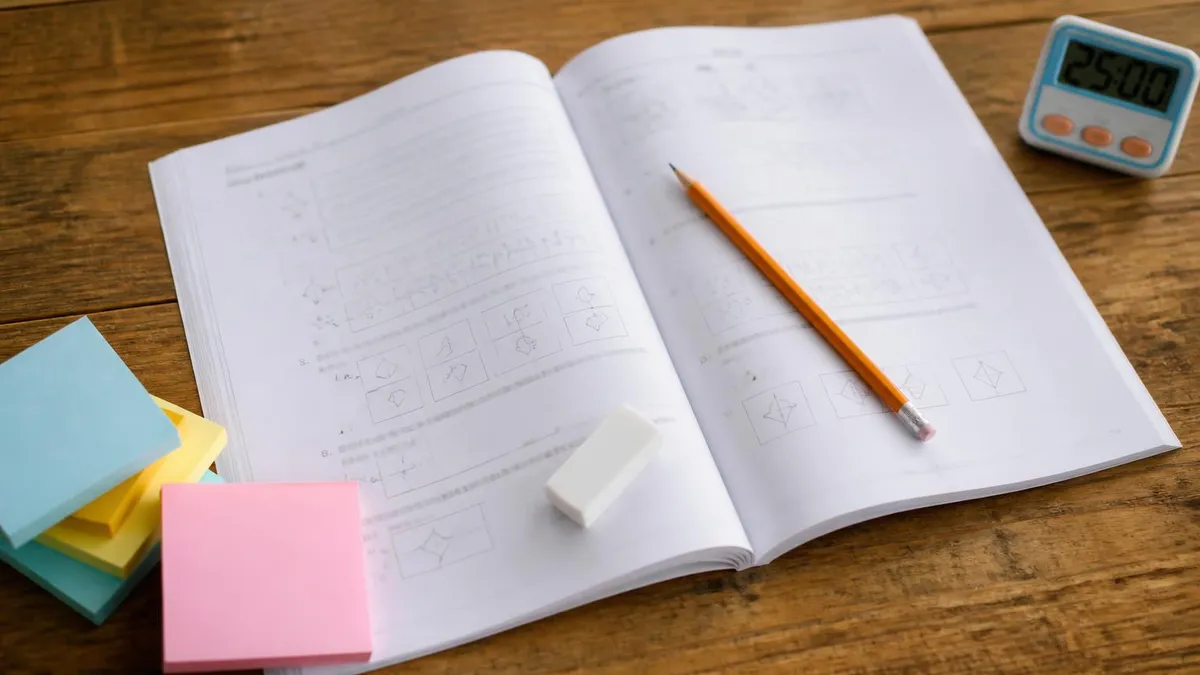
CogAT 2nd Grade (Level 8) Exam Format
| Section | Questions | Time | Weight | Notes |
|---|---|---|---|---|
| Verbal Battery | 54 | ~45 min | 33% | Picture Analogies, Sentence Completion, Picture Classification |
| Quantitative Battery | 48 | ~40 min | 33% | Number Analogies, Number Puzzles, Number Series |
| Nonverbal Battery | 52 | ~45 min | 33% | Figure Matrices, Paper Folding, Figure Classification |
| Total | 154 | ~150 minutes (split across sessions) | 100% |
The Verbal Battery of the cogat test 2nd grade consists of three sub-tests designed to measure a child's ability to reason using language concepts, even when reading ability is deliberately kept to a minimum. Picture Analogies present four images in an A:B :: C:? format, asking students to identify which of four answer choices completes the visual relationship. This task is particularly interesting because it demands abstract reasoning about relationships — size, function, category membership — rather than vocabulary recall alone.
Sentence Completion is the one verbally loaded sub-test in the battery. A sentence is read aloud by the test administrator, and students must choose from four pictured options the word or concept that best completes the meaning. Students who have been read to regularly and who possess a rich oral vocabulary typically excel here. Parents can meaningfully help by engaging children in conversation about books, using precise vocabulary during daily activities, and asking questions that require explanations rather than yes/no answers.
Picture Classification rounds out the Verbal Battery by presenting three images that share a common characteristic and asking students to pick a fourth image that belongs to the same group. The categories can be semantic (things you find in a kitchen), functional (things used for cutting), or perceptual (things that are cylindrical). Children who approach this task with a deliberate "what do all three have in common?" mindset before evaluating the answer choices consistently outperform those who guess impulsively. The cogat study resources on our site include detailed walkthroughs of all three verbal sub-test formats with annotated examples.
The Quantitative Battery is where many parents are surprised to learn that traditional math skill is far less important than mathematical reasoning. Number Analogies work exactly like Picture Analogies but with numerical relationships: 2:4 :: 5:? The child must identify the rule (doubling, adding 3, squaring) and apply it to a new pair. Students who have played number pattern games or explored mathematical puzzles tend to have a strong intuitive grasp of these relationships even before formal instruction reaches that level.
Number Puzzles present simple equations with a missing value, often using a picture of a scale to represent balance. Students might see that three apples balance six oranges, then be asked how many apples balance two oranges. This sub-test rewards logical step-by-step thinking and is highly trainable with structured practice. Number Series asks students to identify the next number in a sequence — a task that rewards both pattern recognition and the ability to hold multiple values in working memory simultaneously.
The Nonverbal Battery measures spatial reasoning and pattern recognition using shapes and figures that have no connection to language or prior academic learning. This makes it the most "culture fair" of the three batteries and is often considered the purest measure of fluid reasoning ability.
Figure Matrices present a 2x2 or 3x3 grid of shapes where one cell is missing; students select the figure that logically completes the pattern. Paper Folding shows a square being folded one or more times and then punched with a hole; students must visualize where the holes appear when the paper is unfolded — a genuinely challenging spatial task even for adults.
Figure Classification mirrors Picture Classification but uses entirely abstract geometric figures. Students must identify the rule that unites three shapes — perhaps they all have exactly four sides, or all contain a diagonal line — and find the answer choice that follows the same rule. Regular exposure to tangram puzzles, origami, pattern blocks, and similar spatial play activities builds the kind of mental rotation and spatial visualization skills that make these problems feel approachable rather than overwhelming on test day.
CogAT Practice Test Strategies by Battery
The most effective verbal preparation strategy for 2nd graders is daily read-aloud practice paired with targeted analogy exercises. Read a picture book together, then ask your child to explain how two characters or objects are similar and different. This builds the analogical reasoning muscles that Picture Analogies directly assess. Flashcard sets organized by semantic category — animals, tools, foods, vehicles — also help children internalize the categorical thinking that Picture Classification demands. Fifteen minutes of focused verbal work per day yields more improvement than hour-long weekend cramming sessions.
For Sentence Completion, the most direct preparation is simply expanding oral vocabulary through conversation. Ask your child open-ended questions during meals or car rides: "What does sturdy mean? Can you use it in a sentence?" When reading together, pause to explain unfamiliar words in context rather than skipping over them. Children who have had these conversations regularly find that Sentence Completion feels like a natural extension of things they already do, rather than a foreign test format. Practice with our english verbal cogat practice test for 3rd grade materials to preview the item difficulty level your child will face.

CogAT 2nd Grade: Benefits and Challenges of Early Testing
- +Identifies gifted learners who may be underserved in standard classrooms
- +Scores open doors to enrichment programs and advanced coursework
- +Assesses reasoning ability independent of socioeconomic or linguistic background
- +Provides detailed sub-score profiles that help teachers differentiate instruction
- +Results are valid for multiple grade-level placement decisions
- +Exposes students to problem-solving formats that build critical thinking skills
- −Test anxiety can significantly suppress scores in young children
- −Results can be over-relied upon for gifted identification, missing talented students
- −Limited re-testing opportunities within the same academic year
- −Score gaps persist between racial and socioeconomic groups due to access to prep resources
- −Nonverbal battery items can be genuinely confusing for children without spatial play experience
- −Single testing session may not capture a child's true ability on an off day
Pros and Cons at a Glance
| Pros | Cons |
|---|---|
| Identifies gifted learners who may be underserved in standard classrooms | Test anxiety can significantly suppress scores in young children |
| Scores open doors to enrichment programs and advanced coursework | Results can be over-relied upon for gifted identification, missing talented students |
| Assesses reasoning ability independent of socioeconomic or linguistic background | Limited re-testing opportunities within the same academic year |
| Provides detailed sub-score profiles that help teachers differentiate instruction | Score gaps persist between racial and socioeconomic groups due to access to prep resources |
| Results are valid for multiple grade-level placement decisions | Nonverbal battery items can be genuinely confusing for children without spatial play experience |
| Exposes students to problem-solving formats that build critical thinking skills | Single testing session may not capture a child's true ability on an off day |
2nd Grade CogAT Prep Checklist: 10-Point Action Plan
- ✓Confirm your child's test date with the school and mark it on a family calendar with prep milestones.
- ✓Download or purchase at least one full-length cogat sample test and complete it under timed conditions.
- ✓Identify your child's weakest battery by reviewing sub-scores and allocate extra weekly practice there.
- ✓Practice verbal analogies daily for 10 minutes using flashcards or online exercises.
- ✓Play number pattern games three times per week to build quantitative reasoning fluency.
- ✓Do hands-on paper folding exercises to build spatial intuition for the Nonverbal Battery.
- ✓Read aloud together every evening and discuss vocabulary, categories, and relationships in the text.
- ✓Simulate test conditions at least twice — quiet room, timed sections, no interruptions.
- ✓Talk with your child about the test in positive, low-pressure terms to reduce test anxiety.
- ✓Review every incorrect practice answer together to understand the reasoning error, not just the right answer.

The 97th Percentile Threshold — And What It Really Means
Most U.S. school districts require a CogAT score at or above the 97th percentile (Stanine 9) for automatic gifted program placement, though many districts use a composite cutoff of the 90th to 95th percentile when paired with other evidence such as teacher recommendations and achievement test scores. A Standard Age Score (SAS) of 128 or higher typically corresponds to the 97th percentile for 2nd graders. Knowing your district's specific threshold before testing helps you set realistic expectations and understand exactly what your child needs to achieve.
Understanding how the CogAT is scored is essential for parents who want to interpret results accurately and advocate effectively for their child. The primary score reported is the Standard Age Score (SAS), which has a mean of 100 and a standard deviation of 16. Scores are computed separately for each of the three batteries and combined into a Composite SAS. A child scoring 116 or above (one standard deviation above the mean) is performing in the top 16% of peers; a score of 132 or above (two standard deviations) places a child in the top 2%.
The Stanine score, ranging from 1 to 9, is often the number school administrators reference most directly because it is easy to communicate to teachers and parents. Stanines 7, 8, and 9 represent above-average to superior performance, with Stanine 9 corresponding roughly to the 96th to 99th percentile range. Many gifted programs require a Stanine 9 on at least one battery and a composite Stanine of 8 or above. Some programs, particularly in highly competitive urban districts, require even higher thresholds, making it worth a direct conversation with your school's gifted coordinator before test day.
Percentile Ranks are perhaps the most intuitive score for parents to understand: a student at the 85th percentile scored higher than 85% of students in the norming sample. It is critically important to understand whether the percentile rank being reported is age-based or grade-based, as these can differ by several percentage points for students who are younger or older than typical for their grade. The CogAT report typically shows both, and districts may use either depending on their identification policy.
Score profiles — the pattern of relative strengths and weaknesses across the three batteries — are often as diagnostically useful as absolute scores. A child with a very high Nonverbal score but average Verbal score may be an English language learner whose spatial and mathematical reasoning far exceeds what their language proficiency currently allows them to demonstrate in verbal formats. Conversely, a child with exceptional verbal scores but lower nonverbal scores may benefit from enriched spatial learning opportunities even if their composite score does not qualify for a gifted designation. Advocating for your child means understanding and communicating these nuances.
It is also worth understanding that the CogAT is specifically designed to be resistant to short-term coaching for content knowledge, because it does not test knowledge at all — it tests reasoning processes. However, research consistently shows that familiarization with item formats, pacing strategies, and the physical and cognitive demands of sustained testing does improve scores, particularly for students who have never encountered these question types before. The goal of preparation is not to teach children to cheat the test; it is to ensure that their score reflects their actual reasoning ability rather than confusion or anxiety about the format.
The cognitive abilities test is also used in the Canadian school system through a closely related instrument called the Canadian Cognitive Abilities Test (CCAT). While the item types and structure are very similar, the norming population differs, and some item content has been adapted for the Canadian curriculum and cultural context. Families in Canada preparing for the CCAT will find that CogAT practice materials are highly transferable, though they should also seek out Canada-specific norming information and sample materials to calibrate expectations accurately.
Finally, it is worth noting that the cognitive abilities test is one of several assessments schools may use in a multi-criteria gifted identification process. Many districts also consider the Naglieri Nonverbal Ability Test (NNAT), the Iowa Assessments achievement test, teacher observation checklists, and parent questionnaires. Families whose children narrowly miss the CogAT threshold should inquire about the full portfolio of identification criteria, as a particularly strong teacher recommendation or exceptional achievement test performance may still result in gifted placement through a holistic review process.
Most schools require teacher nomination or parent request for CogAT testing several weeks before the test window opens — some districts close nominations as early as October for winter testing. Contact your child's teacher and the school counselor at the start of the academic year to confirm the nomination process, deadlines, and any required forms. Missing the nomination window typically means waiting a full year for the next testing cycle, so early action is essential.
Building an effective study schedule for the cogat test 2nd grade requires balancing thoroughness with the reality that 7-year-olds have limited attention spans and significant competing demands on their time. The most research-supported approach is distributed practice — short, frequent sessions spread over several weeks — rather than intensive cramming in the days immediately before the test. A six-week preparation plan with three to four 20-minute practice sessions per week is a highly effective and child-friendly framework that most families can realistically maintain.
During weeks one and two, the primary goal is familiarization. Introduce your child to one sub-test format per session, explaining what the question is asking and working through several examples together without time pressure. At this stage, the focus is on building a mental model of each task type, not on speed or accuracy.
Use think-aloud strategies where both you and your child verbalize your reasoning as you work through problems: "I notice that the first shape is a square and it becomes a circle, so what does the triangle become?" This metacognitive modeling is one of the highest-impact things parents can do.
Weeks three and four shift the focus to independent practice with increasing time awareness. Have your child attempt short practice sets — five to eight questions per sub-test — independently, then review answers together. The review conversation is the most valuable part: for each wrong answer, ask your child to explain their reasoning and then gently guide them to see where the reasoning went astray. Avoid simply providing the correct answer; instead, ask questions that help them discover the error themselves. This approach builds durable reasoning skills rather than just test-specific patterns.
In weeks five and six, transition to simulated testing conditions. Complete full-length sections under timed conditions in a quiet space with no parental assistance during the active testing period. After each simulated session, review performance data: Which sub-tests took the longest? Where did accuracy drop under time pressure? Use this diagnostic information to target the remaining practice sessions on the areas of greatest need. The cognitive ability test preparation resources on our platform include full-length simulations with detailed performance analytics.
One often-overlooked element of test preparation for young children is physical and emotional readiness on test day itself. Children who are tired, hungry, or anxious will underperform regardless of how well they have prepared. In the week before the test, prioritize consistent bedtimes, nutritious breakfasts, and low-stress mornings.
Talk with your child about the test in matter-of-fact terms: it is a puzzle-solving activity where there are no wrong answers in the sense of getting in trouble, and doing their best is all that is asked. Reframing the experience as an opportunity rather than a high-stakes evaluation significantly reduces performance anxiety in most young children.
Many parents ask whether private tutoring for the CogAT is worth the investment. The answer depends heavily on the quality of the tutoring, the child's current baseline, and how much time remains before the test. A well-qualified tutor who specializes in cognitive assessments can provide customized practice, identify specific reasoning gaps, and deliver the kind of immediate, targeted feedback that is difficult for parents to provide without professional training.
However, for most families, a combination of high-quality self-directed practice using resources like cogat sample test materials, consistent parental engagement, and the strategies outlined in this guide will yield excellent results without the added expense.
It is also worth considering the role of enrichment activities in long-term cognitive development versus short-term test preparation. Chess clubs, robotics programs, coding for kids, math circles, and debate programs all build the reasoning, pattern recognition, and logical thinking skills that the CogAT measures.
While these activities will not dramatically move scores in a six-week window, children who engage in them consistently over years tend to perform exceptionally well on the CogAT because the test is measuring precisely the kinds of thinking these activities develop. For families with younger children or those looking beyond the immediate test cycle, investment in these enrichment activities is among the highest-return educational choices available.
Test day preparation begins the night before. Lay out comfortable, non-distracting clothing, pack any required materials (pencils are usually provided, but confirm with the school), and ensure your child has a full night of sleep — 10 to 11 hours is the recommended range for children ages 6 to 8. A consistent pre-sleep routine that your child finds calming — a bath, a story, quiet time — should be maintained without deviation.
Last-minute cramming the evening before the test is counterproductive and should be avoided entirely; the cognitive benefits of additional sleep far outweigh any marginal benefit from extra practice problems.
The morning of the test, serve a breakfast that includes both protein and complex carbohydrates: eggs with whole-grain toast, oatmeal with nuts and fruit, or a smoothie with Greek yogurt are all excellent options. Avoid high-sugar foods that cause a blood sugar spike and crash during the testing window. Arrive at school slightly early so your child has time to settle, visit the restroom, and decompress before the testing session begins. A rushed, stressful arrival can trigger cortisol release that impairs the working memory and processing speed the CogAT measures.
During the test itself, encourage your child to use the process of elimination actively. For any question where the answer is not immediately obvious, crossing out (mentally or by mark) the one or two options that are clearly wrong before evaluating the remaining choices significantly improves accuracy. This strategy is particularly effective on Figure Classification and Picture Analogies, where distractor items are carefully designed to attract children who skip systematic analysis. Teach your child to ask: "Which answer am I most confident is wrong?" before committing to a final selection.
Time management is another critical test-day skill that is best practiced in advance. The CogAT is not highly speeded — most students complete the sections within the allotted time — but occasionally students get stuck on a particularly challenging item and spend too long before moving on. Teach your child the "skip and come back" strategy: if an item feels impossible after 20-30 seconds of genuine effort, mark it and move forward, returning if time permits. Losing two or three minutes on a single confusing item can cost accuracy on several easier items at the end of the section.
After the test, resist the urge to immediately debrief your child about specific questions. Children often misremember items, and a detailed post-test analysis can create unnecessary anxiety if your child feels they got things wrong that they actually got right. Instead, celebrate the effort and experience with a small treat or special activity. The wait for official score reports — typically two to six weeks depending on the district — is difficult for eager parents, but maintaining a calm, positive attitude during this period models healthy performance management for your child.
When scores arrive, approach them as information, not judgment. A score below the gifted threshold does not mean a child is not gifted; it means their score on this particular assessment on this particular day did not meet a specific administrative cutoff.
Many highly intelligent, creative, and academically successful children score in the 80th to 95th percentile range on the CogAT and go on to exceptional academic careers. Conversely, a very high CogAT score is not a guarantee of effortless academic success — it is an indicator of reasoning potential that still requires cultivation through hard work, curiosity, and the right educational environment.
The most important long-term takeaway from the entire CogAT experience is the value of a growth mindset. Children who understand that their intelligence is not fixed — that practice, effort, and strategic thinking can grow their abilities — are better positioned for lifelong academic success than those who internalize either high or low test scores as defining statements about who they are.
Use the CogAT preparation process as an opportunity to model and reinforce the message that thinking carefully, learning from mistakes, and persisting through challenges are the skills that matter most, both on standardized tests and in the wider world.
Sample CogAT Practice Questions
Try these questions from our free CogAT practice tests. The correct answer and an explanation follow each question.
Look at the two pairs of numbers: [8 → 4] [12 → 6]. Following the same rule, what number should complete the third pair: [18 → ?]
- A. 14
- B. 9
- C. 36
- D. 10
Answer: B. 9
The rule for each pair of numbers is to divide the first number by 2 to get the second number. In the first pair, 8 ÷ 2 = 4. In the second pair, 12 ÷ 2 = 6. Applying this rule to the third pair, 18 ÷ 2 = 9.
Choose the best word to complete the sentence: "The dog wagged its tail when it saw the _____."
- A. Ball
- B. Bird
- C. Mirror
- D. Bone
Answer: D. Bone
Dogs commonly wag their tails when they are excited, and bones are often associated with their excitement.
Verbal analogy: Author is to book as composer is to ___?
- A. Symphony
- B. Orchestra
- C. Violin
- D. Audience
Answer: A. Symphony
An author creates a book, just as a composer creates a symphony.
What number comes next in the series: 1, 4, 9, 16, __?
- A. 20
- B. 25
- C. 21
- D. 24
Answer: B. 25
These are perfect squares (1², 2², 3², 4²), so the next is 5² = 25.
Cogat Questions and Answers




About the Author

Educational Psychologist & Academic Test Preparation Expert
Columbia University Teachers CollegeDr. Lisa Patel holds a Doctorate in Education from Columbia University Teachers College and has spent 17 years researching standardized test design and academic assessment. She has developed preparation programs for SAT, ACT, GRE, LSAT, UCAT, and numerous professional licensing exams, helping students of all backgrounds achieve their target scores.