
Correctional Officer Jobs Houston TX: Complete Career Guide 2026 October
Explore correctional officer jobs Houston TX: duties, salary, hiring steps & prep tips. ✅ Full guide for Harris County & TDCJ careers.

If you are searching for correctional officer jobs Houston TX, you are entering one of the most active correctional hiring markets in the entire United States. Houston sits in Harris County, which operates one of the largest county jail systems in the country, and it sits within reach of dozens of Texas Department of Criminal Justice facilities spread across Southeast Texas. Demand for qualified officers has grown steadily over the past decade, and agencies are actively competing to attract candidates with strong character, physical fitness, and the right temperament for the job.
Working as a correctional officer is not simply about locking and unlocking cell doors. Officers in Houston-area facilities manage inmate populations that can number in the thousands, coordinate daily schedules, respond to emergencies, document behavioral incidents, and serve as the frontline of institutional safety. The role demands emotional resilience, situational awareness, and a command of written communication that many applicants underestimate before they begin the application process.
The Houston metropolitan area offers pathways through multiple employers. Harris County Sheriff's Office runs the Harris County Jail, one of the ten largest jails in the nation. TDCJ operates numerous prison units within a two-hour drive of Houston, including units in Huntsville, Richmond, Sugar Land, and Beaumont. The Federal Bureau of Prisons also maintains a low-security facility in Houston itself. Each employer has its own testing, physical fitness, and background-check standards, which means preparation must be thorough and employer-specific.
Compensation is a major draw. Entry-level TDCJ officers currently earn a base salary that, combined with longevity pay, overtime opportunities, and state benefits, can push total compensation well above the statewide median income within a few years of service. Harris County offers a competitive pay structure with step increases and shift differentials that reward officers who build seniority. Understanding the full pay picture — not just base salary — is essential when evaluating which agency fits your financial goals.
Career advancement is another reason Houston draws so many applicants. The correctional system rewards tenure and performance with promotions through a clear rank structure. Officers who demonstrate leadership, complete advanced training, and pursue higher education can move into supervisory roles, investigative units, classification departments, or training academies. Exploring houston tx correctional officer jobs at every rank level gives you a realistic picture of where a career in corrections can take you over a twenty- or thirty-year span.
The application timeline for most Houston-area correctional jobs runs between sixty and one hundred twenty days from initial submission to academy enrollment. Candidates who understand this timeline — and who prepare systematically for each screening stage — have a dramatically higher success rate than those who apply impulsively. The written exam, physical fitness test, psychological evaluation, polygraph, and background investigation each carry real weight, and failing any single stage typically results in disqualification for a waiting period of six to twelve months.
This guide walks you through every aspect of pursuing correctional officer jobs in the Houston area: what the job actually looks like day to day, how to qualify, what to expect in each stage of the hiring process, how the pay and benefits compare across employers, and how to build the study habits and physical conditioning that put you ahead of the competition. Whether you are a first-time applicant or returning after a previous attempt, the information here will help you approach the process with confidence and clarity.
Houston-Area CO Careers by the Numbers

Who Hires Correctional Officers in Houston
The state's primary prison agency operates dozens of units within driving distance of Houston, including major facilities in Huntsville, Richmond, and Beaumont. TDCJ is the largest employer of correctional officers in Texas with standardized statewide hiring.
Runs the Harris County Jail in downtown Houston — one of the ten largest county jails in the nation. HCSO offers competitive pay, shift differentials, and a full county benefits package with strong promotional opportunities for high performers.
Operates FCI Houston, a low-security federal facility. Federal CO positions offer the highest base salaries of any correctional employer, plus federal retirement, health insurance, and locality pay adjustments for the Houston metro cost of living.
Companies such as CoreCivic and GEO Group operate contract detention and correctional facilities in and around Houston under state or federal contracts. These positions often have faster hiring timelines and can serve as a stepping stone to public-sector employment.
Understanding the full compensation picture for correctional officers in the Houston area requires looking beyond the base salary line on a job posting. TDCJ currently starts officers at approximately $40,600 per year, but the state builds in automatic longevity increases every two years, and officers who work night shifts, holidays, or high-security assignments receive additional pay differentials. When you factor in paid academy time, housing allowances available at remote units, and the strong Teacher Retirement System–adjacent state pension, the total compensation package is considerably more valuable than the headline number suggests.
Harris County Sheriff's Office operates on a separate pay scale tied to the county budget cycle. Entry-level detention officers at the Harris County Jail typically start in the $45,000–$50,000 range, with step increases kicking in at the six-month and one-year marks. The county's health insurance plan covers the officer and dependents at a low monthly cost, and the county participates in the Texas County and District Retirement System, which provides a defined-benefit pension after a qualifying period of service. Overtime is abundant at the jail given staffing pressures, which allows motivated officers to significantly boost their annual earnings.
Federal Bureau of Prisons positions at FCI Houston command the highest base pay of any correctional employer in the region. The federal pay scale places Houston CO positions in the GL-5 or GL-6 grade range, which translates to a starting salary between $49,000 and $58,000 before locality pay adjustments.
Federal employees also receive the Federal Employees Health Benefits program, Thrift Savings Plan with agency matching, and the Federal Employees Retirement System — a three-part retirement package that includes a pension, Social Security, and a 401k-style account. For officers willing to navigate a longer and more rigorous hiring process, federal employment represents a substantial long-term financial advantage.
Private sector correctional employers operating in the Houston area typically pay modestly less than government agencies but compensate with faster hiring, more flexible scheduling, and sometimes signing bonuses during high-demand periods. CoreCivic and GEO Group have both offered recruitment incentives ranging from $1,000 to $3,000 in recent years to attract candidates. These positions do not include government pension benefits, but they often provide 401k plans with employer matching and health coverage through private carriers.
Career advancement multiplies earning potential significantly in the correctional field. An officer who promotes to sergeant within five years can expect a 15–20 percent salary increase at most agencies. Moving into investigative roles, training positions, or classification specialist roles opens additional pay grades. Officers who pursue associate's or bachelor's degrees in criminal justice, psychology, or public administration often qualify for educational incentive pay at both TDCJ and HCSO. Several Houston-area community colleges, including San Jacinto College and Lone Star College, offer criminal justice programs specifically designed for working corrections professionals.
Benefits beyond salary are a defining feature of government correctional employment. Texas state employees receive medical and dental coverage through the Employee Retirement System of Texas at subsidized rates. TDCJ officers accrue sick leave at eight hours per month and vacation leave at a rate tied to years of service, reaching maximum accrual after twelve years.
Life insurance, short-term disability, and access to the TexFlex flexible spending account round out the benefits package. These perks, combined with strong union representation through the Texas Municipal Police Association in some Houston jurisdictions, give correctional officers a safety net that few private-sector jobs can match at equivalent education levels.
The retirement picture deserves particular attention when comparing correctional officer careers to other public-safety or service-sector jobs. TDCJ officers participate in the Employees Retirement System of Texas, which provides a defined-benefit pension calculated on years of service and final average salary.
Officers who spend a full career in corrections — twenty-five to thirty years — can retire with a pension equal to fifty to seventy-five percent of their final salary, plus continued access to group health insurance. Combined with Social Security benefits, a long-serving Houston-area correctional officer can retire with a genuinely comfortable income that does not depend on investment market performance.
Houston CO Hiring Process: Time in CO Applications Explained
The first phase of any Houston-area correctional officer application begins with an online submission through the relevant agency's careers portal. TDCJ uses the Work in Texas portal managed by TWC, while HCSO processes applications through the Harris County jobs website. Both require detailed employment history going back ten years, residential history, and disclosure of any criminal or civil legal history. Incomplete applications are screened out automatically, so accuracy and thoroughness at this stage are critical to advancing.
The written examination tests reading comprehension, basic math, situational judgment, and in some cases report-writing ability. TDCJ administers its own standardized test, while HCSO uses a modified version of a law enforcement aptitude battery. Scores above 70 percent are typically required to advance, but candidates who score in the top quartile receive scheduling priority for the physical fitness test. Study guides, practice tests, and flashcard sets focused on CO exam content are widely available and make a measurable difference in scores for candidates who prepare consistently over four to six weeks.
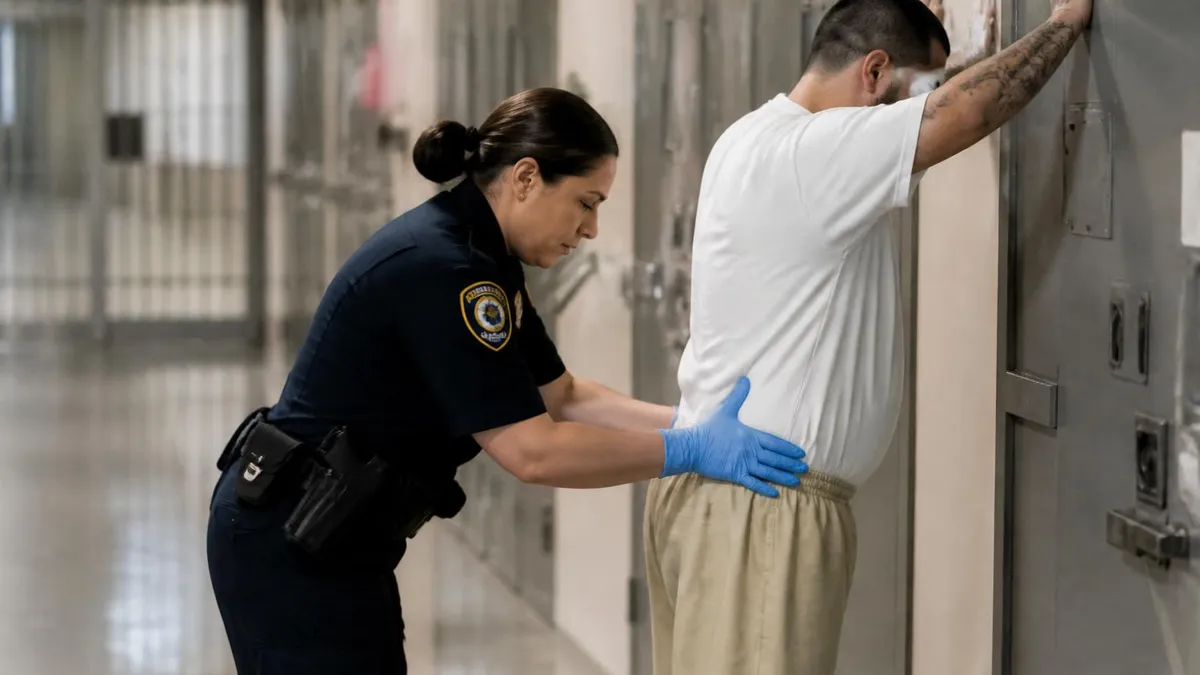
Is a Correctional Officer Career in Houston Right for You?
- +Stable government employment with strong job security and union protections at many agencies
- +Competitive salary with automatic step increases, longevity pay, and overtime availability
- +Defined-benefit pension after 25 years that provides reliable retirement income
- +Paid pre-service academy training means you earn while you learn the job
- +Clear promotional pathway from officer to sergeant, lieutenant, captain, and above
- +Comprehensive health, dental, vision, and life insurance for officer and dependents
- −High-stress environment with daily exposure to conflict, manipulation, and potential violence
- −Shift work including nights, weekends, and holidays is mandatory for most new hires
- −Mandatory overtime and staffing shortages can disrupt work-life balance significantly
- −Emotional toll of working with incarcerated individuals can contribute to burnout over time
- −Physical fitness requirements must be maintained throughout career, not just at hiring
- −Background disqualifiers are strict and non-negotiable, limiting applicant pool significantly
Pros and Cons at a Glance
| Pros | Cons |
|---|---|
| Stable government employment with strong job security and union protections at many agencies | High-stress environment with daily exposure to conflict, manipulation, and potential violence |
| Competitive salary with automatic step increases, longevity pay, and overtime availability | Shift work including nights, weekends, and holidays is mandatory for most new hires |
| Paid pre-service academy training means you earn while you learn the job | Mandatory overtime and staffing shortages can disrupt work-life balance significantly |
| Clear promotional pathway from officer to sergeant, lieutenant, captain, and above | Emotional toll of working with incarcerated individuals can contribute to burnout over time |
| Comprehensive health, dental, vision, and life insurance for officer and dependents | Physical fitness requirements must be maintained throughout career, not just at hiring |
Correctional Officer Application Checklist for Houston TX
- ✓Confirm you meet the minimum age requirement (18 for TDCJ, 21 for most federal positions) before applying
- ✓Obtain a certified copy of your high school diploma or GED from the issuing institution
- ✓Pull your own criminal background report to identify any records you need to disclose upfront
- ✓Compile a complete ten-year employment history with accurate supervisor names and contact information
- ✓Gather five professional references who can speak to your character and work ethic under pressure
- ✓Begin a structured physical fitness training plan targeting the specific benchmarks for your target agency
- ✓Download and study the written exam prep guide or practice test published by the hiring agency
- ✓Review TDCJ or HCSO automatic disqualifier lists and honestly assess your eligibility before investing time
- ✓Prepare a detailed residential history going back ten years with landlord contact information
- ✓Schedule a DMV records pull to verify your driving history is clean or disclose any issues proactively
- ✓Draft clear, honest written explanations for any gaps in employment or minor legal history before the interview
The Background Check Decides More Applications Than the Written Exam
Most Houston-area CO applicants focus their preparation energy on the written exam and physical fitness test — but investigators report that background investigation findings eliminate more candidates than any single test. Review your own history thoroughly before you apply, disclose everything accurately, and never assume an investigator will miss something. Transparency at every stage is your strongest asset in the Houston correctional hiring process.
The daily duties of a correctional officer in a Houston-area facility are more varied and cognitively demanding than most outsiders expect. A typical shift begins with a formal briefing from the outgoing watch supervisor, who updates incoming officers on any incidents, medical holds, administrative segregation changes, or inter-inmate conflicts that occurred during the previous shift. Officers must absorb this information quickly and apply it to their post assignments, because situational awareness built from briefing intelligence can prevent incidents before they escalate into emergencies.
Inmate count is one of the most critical daily procedures in any correctional facility. TDCJ and HCSO facilities conduct formal head counts multiple times per shift, and every count must reconcile perfectly before normal operations can resume. An officer who miscounts or fails to verify identification documents during count creates a security gap that can mask an escape or an unreported medical emergency. Count procedure is drilled relentlessly in the pre-service academy because the consequences of error are severe and the standard is unambiguous: the numbers must match every single time.
Incident reporting and documentation occupy a significant portion of every officer's shift. When an altercation occurs, a contraband item is found, a medical event happens, or an inmate makes a threat, the responding officer must write a detailed, factual incident report before the end of the shift. These reports feed into the institutional record, inform classification decisions, and may be used as evidence in disciplinary hearings or criminal prosecutions. Officers with strong writing skills have a measurable advantage in performance evaluations, and agencies increasingly offer report-writing training as part of their in-service curriculum.
Houston-area facilities house diverse inmate populations with a wide range of mental health diagnoses, substance use histories, and behavioral patterns. Officers are trained in de-escalation techniques, crisis intervention, and basic mental health awareness, but applying those techniques in a noisy, crowded housing unit requires practiced calm and clear verbal communication. Officers who default to force rather than verbal resolution create liability for their agencies and often face more inmate resistance, not less. The most effective Houston-area COs describe their primary tool as consistent, fair enforcement of the rules rather than intimidation or favoritism.
Special assignments available to experienced Houston-area officers include the Emergency Response Team, K-9 unit, classification and records office, transportation detail, and the investigations unit. Each requires additional training and, in most cases, a competitive application process within the agency. The ERTeam, sometimes called a tactical unit, responds to facility-wide disturbances and high-risk extractions and requires improved physical fitness standards. Transportation officers escort inmates to court appearances, medical appointments, and inter-facility transfers, which involves its own set of security protocols and judgment demands outside the controlled facility environment.
Mentorship and field training are built into the onboarding process at TDCJ and HCSO. New officers typically spend four to eight weeks working alongside a Field Training Officer who evaluates their performance against a standardized checklist before certifying them for solo post assignments. The FTO period is the moment when academy knowledge meets operational reality, and officers who ask questions, accept feedback without defensiveness, and demonstrate adaptability during this phase tend to build the strongest professional reputations. Supervisors remember who their strongest FTO trainees were when promotion lists are being considered years later.
Long-term career development in Houston corrections frequently involves lateral moves as well as vertical promotions. An officer who develops expertise in facility programming — educational courses, vocational training, cognitive behavioral therapy groups — may move into a programming coordinator role that offers regular hours and a different kind of professional challenge.
Others find their niche in staff training, working as academy instructors who teach incoming classes the same skills they mastered during their own early careers. The breadth of available roles means that officers who stay engaged and continue developing their skills rarely face a career plateau before reaching retirement eligibility.
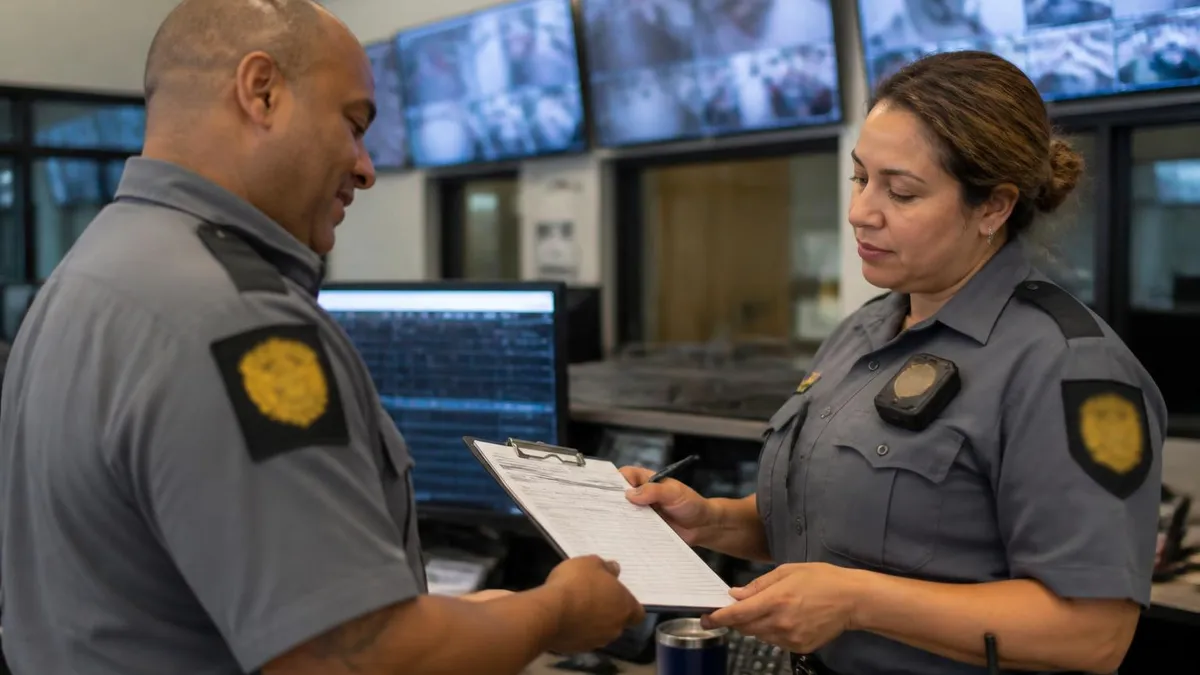
TDCJ and HCSO open hiring windows on rolling or periodic cycles, and positions can close quickly when enough qualified applications are received. Candidates who wait to apply after fully preparing sometimes find the window closed. Monitor the Work in Texas portal and the HCSO careers page weekly, and submit a complete application as soon as a position opens rather than waiting for a perfect moment. An early, complete submission is always better than a late, polished one.
Preparing for the correctional officer written examination is where most Houston-area applicants underinvest their time, and it shows in pass rates. The written exam is not a test of specialized knowledge you would need years of experience to acquire — it is a test of reading comprehension, logical reasoning, basic arithmetic, and situational judgment applied to correctional scenarios. That means the exam is highly responsive to focused study, and candidates who spend four to six weeks working through practice materials consistently outscore those who walk in cold by a wide margin.
Reading comprehension sections present passages about policy, procedure, or incident descriptions and ask the candidate to identify main ideas, draw inferences, or recognize correct paraphrases. The key skill is reading carefully and resisting the temptation to answer from general knowledge rather than the specific passage provided. Officers do this exact cognitive task dozens of times per shift when reading post orders, inmate files, or agency directives, so the exam is measuring a genuine job skill rather than abstract intelligence. Practice with timed reading exercises using law enforcement and corrections-related text improves performance on this section reliably.
Situational judgment questions present a scenario — an inmate making a threat, an officer witnessing a rule violation by a colleague, a new policy that conflicts with a supervisor's verbal instruction — and ask which response option is most appropriate. These questions are designed to assess integrity, procedural adherence, and sound judgment. Candidates who research the agency's core values and code of conduct before the exam can orient their answers toward the institutional framework the agency actually uses, rather than guessing about organizational culture from scratch.
Mathematical sections on CO exams are typically limited to arithmetic, percentage calculations, and basic data interpretation from tables or charts. Officers routinely calculate medication dosages, inmate counts as fractions of total capacity, and evidence inventory quantities on the job. Khan Academy and similar free resources provide targeted practice for applicants who have been out of a formal math environment for several years. Spending thirty minutes a day on math practice for three weeks before the exam is sufficient to sharpen skills that may have gone unused since high school or community college.
Report writing assessment, when included in the exam, evaluates grammar, sentence structure, spelling, and the ability to organize factual information into a clear narrative. Many candidates are surprised by how heavily this section is weighted at agencies that include it, because the connection between writing skill and correctional work is not immediately obvious to someone who has never worked in a facility. In practice, a poorly written incident report can undermine a prosecution, expose the agency to liability, or result in an inmate receiving inappropriate housing. Agencies take writing seriously, and the exam reflects that priority.
Physical fitness preparation deserves the same structured approach as written exam study. The TDCJ Physical Readiness Test requires candidates to complete a 1.5-mile run within a specified time, perform a minimum number of push-ups and sit-ups within one minute each, and sometimes complete a flexibility or strength component.
Candidates who begin a structured running program eight to twelve weeks before their scheduled physical test consistently hit the benchmarks more reliably than those who ramp up training in the final two weeks. Interval training three days per week combined with strength work targeting the core and upper body covers the major components of the test effectively.
Mental preparation for the psychological evaluation is equally important. The evaluator is not looking for perfection — they are looking for honesty, self-awareness, and emotional stability. Candidates who have sought mental health treatment in the past should not attempt to conceal it; showing that you recognized a problem and addressed it proactively is a sign of maturity rather than a disqualifier at most agencies. Reviewing the agency's stated values around integrity and then reflecting honestly on whether your personal history aligns with those values is the best preparation you can do for this phase of the process.
Building a sustainable career as a correctional officer in Houston requires intentional planning from your very first day in the pre-service academy. Officers who arrive with a clear picture of where they want to be in five and ten years — whether that is a sergeant's stripes, a specialized assignment, or a transition into probation or law enforcement — make better decisions about training, education, and professional relationships throughout their early career. Ambition and planning are not liabilities in corrections; they are signs of the kind of commitment that supervisors notice and reward.
Networking within your facility and agency is a practical career tool that many officers overlook in the early years of service. Building genuine professional relationships with field training officers, shift supervisors, training staff, and officers in specialized units gives you insight into how promotions actually work, what supplemental training opportunities exist, and which leadership styles earn respect within the institutional culture. The correctional world in Houston is smaller than it looks from the outside; people remember those who treated colleagues with respect and performed their duties reliably under pressure.
Continuing education is increasingly important for officers who want to reach the supervisory or administrative levels of the Houston correctional system. TDCJ offers tuition reimbursement for criminal justice, psychology, and social work coursework taken through accredited Texas institutions. Harris County provides a similar benefit for full-time employees. Taking advantage of these programs while working full-time is demanding, but officers who complete an associate's degree within their first four years of service frequently report that it made them genuinely more effective at their jobs, not just more promotable on paper.
Stress management and officer wellness are topics that have received substantially more institutional attention over the past decade than they did in previous generations of correctional practice. TDCJ and HCSO both maintain employee assistance programs that provide free, confidential counseling for officers dealing with job-related stress, family difficulties, or substance use concerns. Using these programs early — before stress becomes a crisis — is a mark of professional self-management rather than weakness. Officers who ignore mounting stress until it affects their performance or conduct on the job face far more serious consequences than those who proactively seek support.
Peer support programs have emerged as one of the most effective wellness tools in Houston-area correctional agencies. Officers who have been trained in psychological first aid serve as informal points of contact for colleagues who experience traumatic incidents on the job.
These peer supporters are not therapists, but they understand the work environment in a way that outside counselors cannot, and their availability in the immediate aftermath of a critical incident significantly improves recovery outcomes. Participating in peer support training is a way to invest in your colleagues' wellbeing while building your own credibility as a trusted, mature professional within the agency.
Physical wellness is inseparable from professional performance in corrections. Officers who maintain the fitness habits they developed during academy preparation — regular cardiovascular exercise, adequate sleep, attention to nutrition — perform better under the physical and cognitive demands of shift work than those who allow conditioning to lapse after certification.
Many Houston-area facilities have on-site fitness equipment available to officers before or after shifts, and agencies increasingly offer wellness incentive programs tied to annual health screenings. Treating physical fitness as a professional obligation rather than a personal preference is a mindset that distinguishes career officers from those who burn out within the first two to three years.
Finally, stay current on changes to policy, law, and best practice in the correctional field. Texas legislative sessions regularly affect officer authority, facility standards, inmate rights, and use-of-force policy. Officers who read their agency's policy update notices, attend available in-service training, and follow professional associations such as the American Jail Association or the Texas Jail Association are better positioned to respond correctly when novel situations arise on their post.
In a field where a single wrong decision can result in injury, liability, or career-ending discipline, ongoing professional development is not optional — it is a fundamental requirement of doing the job well for the long term.
Sample Correctional Officer Practice Questions
Try these questions from our free Correctional Officer practice tests. The correct answer and an explanation follow each question.
When an inmate begins showing signs of a medical emergency such as a seizure, what is the FIRST action a correctional officer should take?
- A. Restrain the inmate immediately to prevent injury
- B. Call for medical staff and ensure the area is safe
- C. Move the inmate to a holding cell
- D. Wait for a supervisor before acting
Answer: B. Call for medical staff and ensure the area is safe
The officer's first priority is to summon medical personnel while keeping the environment safe for the inmate and others.
In the event a fire within the facility, what is the first action a correctional officer should take?
- A. Attempt to extinguish the fire alone
- B. Evacuate all inmates immediately
- C. Activate the fire alarm and notify control
- D. Gather personal belongings before leaving the area
Answer: C. Activate the fire alarm and notify control
In a correctional facility, the immediate priority during a fire is to alert the proper authorities and initiate emergency protocols. Activating the fire alarm and notifying control ensures a coordinated response, allowing for inmate safety procedures and professional fire suppression efforts to begin promptly.
Which behavior by a correctional officer BEST supports inmate participation in rehabilitation programs?
- A. Using program attendance as a reward for informants only
- B. Treating program participation as a privilege earned through good behavior
- C. Encouraging eligible inmates to attend and enforcing punctuality fairly
- D. Allowing inmates to skip programs without consequence
Answer: C. Encouraging eligible inmates to attend and enforcing punctuality fairly
Encouraging attendance and enforcing fair policies around programming supports the rehabilitative mission of the facility.
An officer overhears an inmate make a vague statement about 'not being around much longer.' The officer should:
- A. Ignore it since the statement is not a direct threat
- B. Engage the inmate with direct questions about their wellbeing and report findings to mental health staff
- C. Tell other inmates to watch the individual
- D. Write a report only if the inmate says something more specific
Answer: B. Engage the inmate with direct questions about their wellbeing and report findings to mental health staff
Vague statements may indicate suicidal ideation; officers must assess, engage, and immediately report to mental health staff per suicide prevention protocols.
CO Questions and Answers

Correctional Officer Ranks: Complete Guide to CO Hierarchy, Insignia & Promotion Paths 2026

Correctional Officer Physical Test: Complete Training Guide & Requirements 2026

Correction Officer: Career Guide, Duties, Salary & How to Apply

Colorado Correctional Officer — Corrections Career Guide 2026
Correctional Officer Practice Test PDF 2026
About the Author

Educational Psychologist & Academic Test Preparation Expert
Columbia University Teachers CollegeDr. Lisa Patel holds a Doctorate in Education from Columbia University Teachers College and has spent 17 years researching standardized test design and academic assessment. She has developed preparation programs for SAT, ACT, GRE, LSAT, UCAT, and numerous professional licensing exams, helping students of all backgrounds achieve their target scores.
Join the Discussion
Connect with other students preparing for this exam. Share tips, ask questions, and get advice from people who have been there.
View discussion (9 replies)