
Colorado Bar Rep: Complete Training Guide & Requirements for CO Bar Success
Master the colorado bar rep process. Requirements, study schedules, tips & free practice tests. 📚 Everything you need to pass.
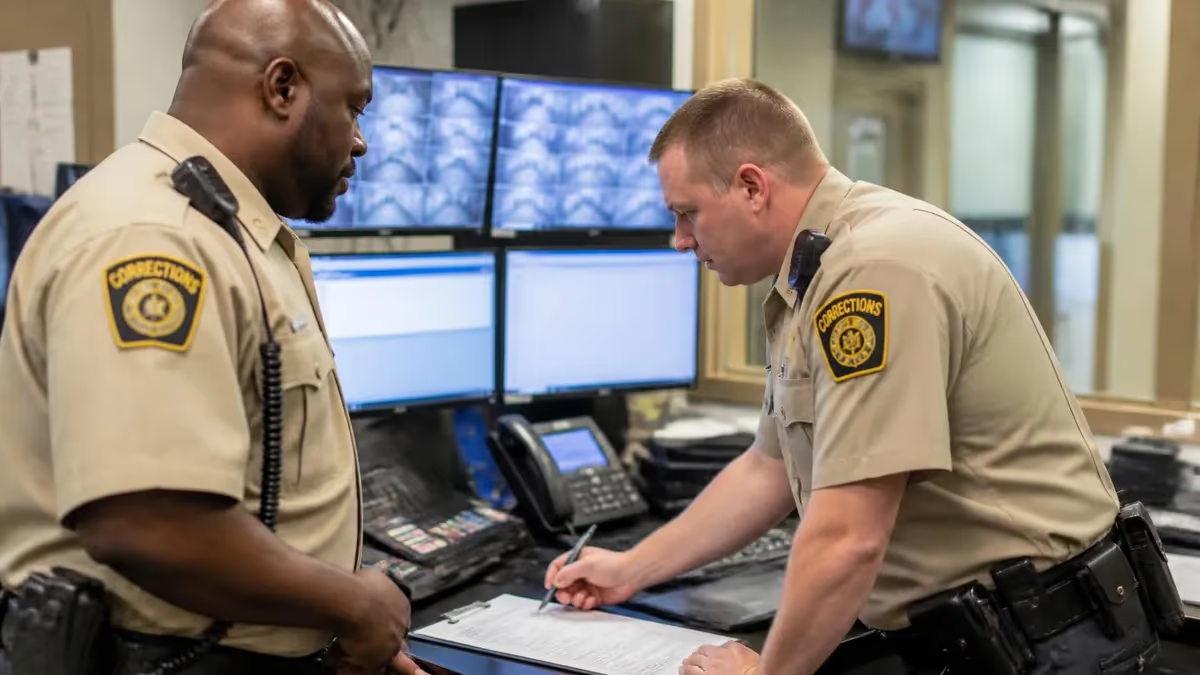
The colorado bar rep process is one of the most demanding professional licensing journeys in the United States, requiring law school graduates to demonstrate mastery across a wide range of substantive and procedural legal topics. Colorado administers the Uniform Bar Examination (UBE), which means your score is portable to other UBE jurisdictions — but passing still demands a rigorous, structured preparation strategy tailored to Colorado's specific passing threshold of 276 out of 400 points.
Understanding what the Colorado bar rep process entails is the essential first step for any serious candidate. You are not just preparing for a two-day written examination; you are preparing to demonstrate that you can competently handle the practice of law in Colorado's courts and administrative agencies. This requires familiarity with both nationally tested subjects and Colorado-specific rules, procedures, and statutory frameworks that distinguish Colorado practice from that of other states.
Many first-time candidates underestimate how much the bar rep process differs from law school exam preparation. In law school, you typically have weeks to study a single subject before being tested on it. On the bar exam, you must command roughly 16 different subject areas simultaneously, often switching between topics within the same testing session. Building the mental flexibility to move fluidly between Constitutional Law, Contracts, Torts, Evidence, and Civil Procedure within hours is a skill that must be deliberately trained.
Colorado's bar examination is administered twice each year — in February and July — and results are typically released approximately eight to ten weeks after the exam date. This timeline means that candidates who sit in February and do not pass still have the opportunity to retake in July, giving them five to six months of additional preparation time. Understanding the full calendar of deadlines, score release dates, and character and fitness review timelines is critical to managing your bar rep year effectively.
The bar rep process in Colorado encompasses far more than just the written examination. Candidates must also complete a thorough character and fitness investigation conducted by the Colorado Supreme Court Office of Attorney Registration. This background review examines academic history, employment records, financial responsibility, criminal background, and any prior professional discipline. Beginning the character and fitness portion of your application early — ideally six months before your intended examination date — is strongly recommended by the Colorado Board of Law Examiners.
Effective bar rep strategy in Colorado begins with an honest self-assessment of your strengths and weaknesses across the tested subject areas. Most commercial bar prep programs provide diagnostic tools that identify which topics need the most attention. Use these diagnostics seriously: the data they generate should directly inform how you allocate your daily study hours across the weeks leading up to the exam. Candidates who spend equal time on every subject regardless of their actual performance gaps tend to score lower than those who target their weak areas aggressively.
This comprehensive guide will walk you through every stage of the Colorado bar rep process — from eligibility requirements and application steps, to study schedules, exam format breakdowns, and practical strategies that have helped thousands of candidates earn their Colorado law license. Whether you are a first-time taker or a repeater seeking a stronger approach, the information in this guide is designed to give you a clear, actionable roadmap to exam day success.
Colorado Bar Rep by the Numbers
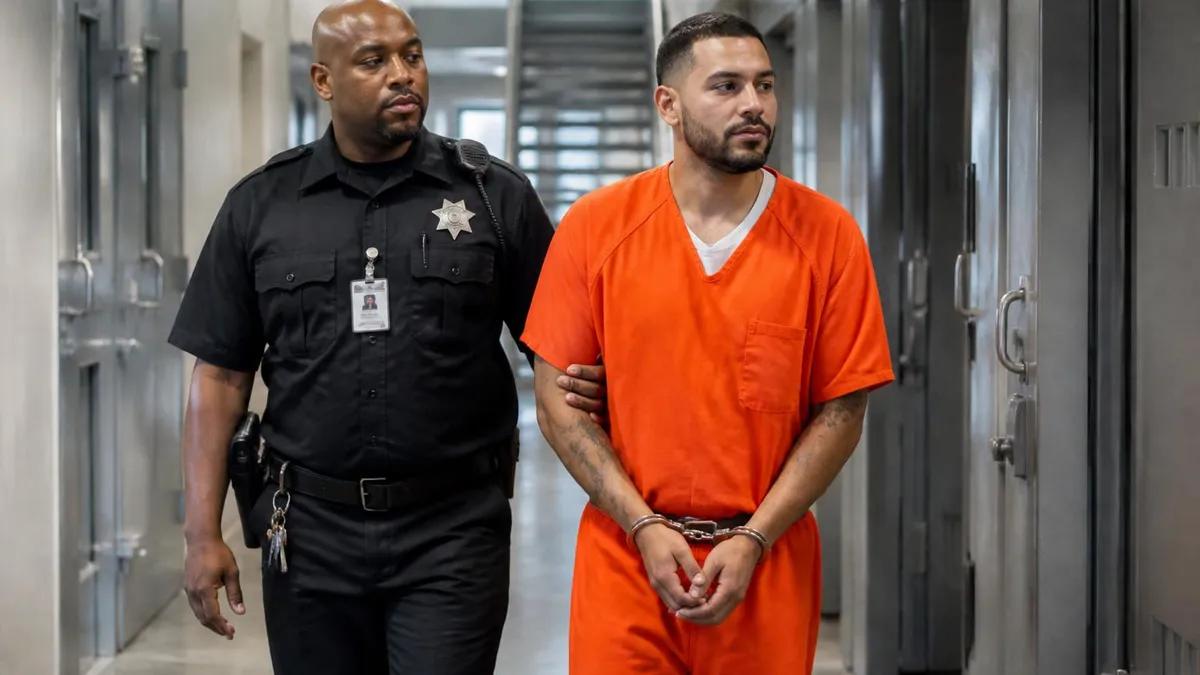
Colorado Bar Rep: Eligibility Requirements & Application Steps
Colorado requires applicants to hold a Juris Doctor degree from a law school fully accredited by the American Bar Association at the time of graduation. Foreign law school graduates may qualify under alternative pathways reviewed individually by the Board of Law Examiners.
All applicants undergo a thorough background investigation covering criminal history, academic integrity, employment record, financial responsibility, and prior professional discipline. Begin this process at least six months before your exam date to avoid delays in licensure.
Colorado requires a Multistate Professional Responsibility Examination score of at least 85. The MPRE is offered three times per year and can be completed before or after the bar exam, but must be on file before admission to the Colorado bar.
Applications must be submitted by the Colorado Board of Law Examiners' published deadline — typically four to five months before the exam. Late applications may be accepted with an additional fee but are not guaranteed. Application fees vary by exam date and applicant status.
Colorado administers a separate Colorado Law Component exam testing Colorado-specific rules on topics like civil procedure, evidence, and professional conduct. This computer-delivered exam must be passed within three years of passing the UBE to be admitted to the Colorado bar.
Building a winning study strategy for the Colorado bar rep process starts with understanding exactly how the Uniform Bar Examination is structured and scored. The UBE consists of three components: the Multistate Bar Examination (MBE), which contributes 50% of your score; the Multistate Essay Examination (MEE), which contributes 30%; and the Multistate Performance Test (MPT), which contributes 20%. Colorado's passing score of 276 means you need to earn strong, consistent marks across all three components — there is no way to compensate for a truly weak performance in one area by excelling in another.
The MBE is a 200-question multiple-choice exam administered over two sessions on the first day of testing. Each session contains 100 questions covering seven core subject areas: Civil Procedure, Constitutional Law, Contracts, Criminal Law and Procedure, Evidence, Real Property, and Torts. Of the 200 questions, 175 are scored and 25 are unscored pretest questions mixed in randomly. You will not be told which questions are pretest items, so treat every question as if it counts. The MBE is notoriously difficult because questions are designed to test nuanced distinctions between closely related legal rules, not broad general knowledge.
The MEE is administered on the second day of testing and consists of six 30-minute essay questions covering a broader range of subjects than the MBE. MEE subjects include the seven MBE subjects plus Agency and Partnership, Conflict of Laws, Corporations and LLCs, Family Law, Secured Transactions, Trusts and Estates, and Federal Civil Procedure. Essays are graded on a national scale by trained NCBE graders, and strong performance requires clear issue identification, precise rule statements, and disciplined application of law to the given facts.
The MPT consists of two 90-minute tasks that test lawyering skills rather than substantive legal knowledge. Each task provides a closed universe of materials — a case file with facts and a library of legal authorities — and asks you to produce a specific work product such as a client memo, a brief, or a contract clause analysis. The MPT rewards candidates who can organize information efficiently, communicate clearly under time pressure, and follow the task instructions precisely. Many candidates underprep for the MPT; treating it seriously can meaningfully boost your total UBE score.
Commercial bar prep programs like Barbri, Themis, and Kaplan offer comprehensive Colorado bar rep courses that provide structured study schedules, thousands of MBE practice questions, MEE model answers, and MPT graded feedback. These programs are expensive — typically ranging from $1,500 to $4,000 — but the structure they provide is genuinely valuable for most candidates. If cost is a barrier, self-study using NCBE's released past exams combined with a strong outline set can be an effective alternative, provided you are disciplined about following a consistent daily schedule.
Your study schedule should be organized around a 10-to-12-week intensive preparation period, assuming you have no significant competing obligations during that time. Candidates who study while working full-time typically need a longer runway — 16 to 20 weeks — and should aim for at least three to four focused study hours on weekdays and six to eight hours on weekends. The key is consistency: three focused hours every day outperforms a chaotic schedule of ten-hour weekend marathons followed by two days of burnout and no progress.
Practice testing is the single most important study activity in your Colorado bar rep arsenal. Passive reading of outlines is helpful for building initial familiarity with the law, but it does not train the retrieval and application skills the exam actually tests. Dedicate at least 40% of your total study time to active practice — answering MBE questions under timed conditions, writing out full essay answers from scratch, and completing full MPT simulations. Review every wrong MBE answer in depth, identifying not just why the correct answer is right but why each wrong answer is wrong.
Colorado Bar Rep: Exam Subjects Breakdown by Component
The Multistate Bar Examination tests seven core subjects across 175 scored questions. Civil Procedure and Evidence typically generate the most questions, while Constitutional Law and Torts follow closely. To succeed on the MBE portion of your Colorado bar rep preparation, you must drill each subject area to the point where you can identify the relevant rule within seconds of reading a question stem — hesitation on rule identification is the leading cause of time pressure problems in both testing sessions.
Effective MBE prep means completing at minimum 1,500 to 2,000 practice questions before exam day, with a heavy emphasis on questions released by the NCBE itself. Third-party question banks vary significantly in quality; NCBE's own released questions are the gold standard because they reflect the actual difficulty level, style, and trap patterns of the real exam. Track your performance by subject using a spreadsheet or your prep program's analytics dashboard to identify which areas need additional drilling in the final two weeks of preparation.

Pros and Cons of Major Commercial Bar Rep Programs vs. Self-Study
- +Structured daily schedules eliminate decision fatigue about what to study each day
- +Access to thousands of practice MBE questions with detailed explanations
- +MEE and MPT grading services provide personalized written feedback
- +Video lectures allow efficient initial learning of unfamiliar subjects
- +Progress analytics dashboards help identify weak subject areas early
- +Simulated full-length practice exams build test-day stamina and timing skills
- −Commercial programs cost $1,500–$4,000, a significant financial burden for new graduates
- −Lecture-heavy formats can encourage passive learning rather than active practice
- −Standardized schedules may not adapt well to individual learning pace or work obligations
- −Some programs use low-quality third-party MBE questions that do not reflect real exam difficulty
- −Overreliance on outlines provided by the program can substitute for genuine understanding
- −Self-discipline is still required — a paid program cannot force you to follow the schedule
Colorado Bar Rep Checklist: Complete These Steps Before Exam Day
- ✓Submit your bar application and all required documentation by the Board of Law Examiners' deadline.
- ✓Begin the character and fitness application at least six months before your exam date.
- ✓Register for and pass the MPRE with a score of 85 or higher before your admission date.
- ✓Complete a diagnostic assessment to identify your weakest MBE subject areas in week one of prep.
- ✓Build a written daily study schedule covering all 13 MEE subjects and all 7 MBE subjects.
- ✓Complete at least 1,500 MBE practice questions before the final week of preparation.
- ✓Write at least 12 full timed MEE essay responses from scratch and review against model answers.
- ✓Complete at least four full MPT simulations under 90-minute timed conditions.
- ✓Take at least two full-length simulated bar exams replicating actual testing-day conditions.
- ✓Review Colorado-specific procedural rules that may appear on the Colorado Law Component exam.
The Colorado Law Component Is a Separate Required Exam
Colorado is one of the few UBE jurisdictions that requires candidates to pass a state-specific supplement called the Colorado Law Component (CLC) in addition to the UBE. The CLC must be passed within three years of passing the UBE, and it covers Colorado-specific rules in areas like civil procedure, evidence, and professional responsibility. Do not overlook this requirement — failing to pass the CLC within the three-year window means your UBE score expires and you must retake the full exam.
Understanding how the Colorado bar rep examination is scored gives candidates a meaningful strategic advantage. The UBE uses a scaled scoring system that equalizes results across different administrations and jurisdictions, meaning that a score of 276 in Colorado represents the same level of performance regardless of whether you took the exam in February or July, or whether that particular administration happened to be more or less difficult than average. This scaling process is conducted by the NCBE and ensures that bar passage standards remain consistent over time.
The MBE is scored on a scale of 200 to 800 by the NCBE, then converted to a scaled score that contributes 50% of your total UBE score. The MEE and MPT components are scored by trained graders in your home jurisdiction — Colorado — using standardized rubrics provided by the NCBE. Each MEE essay is graded on a scale of 1 to 6, with raw essay scores converted to a scaled score contributing 30% of your total. Each MPT task is similarly graded and contributes 10% each, for a combined MPT contribution of 20%.
Colorado's overall first-time pass rate for the bar exam has historically hovered between 50% and 65% depending on the administration, with July exams typically seeing higher pass rates than February exams. This pattern is consistent nationally and reflects the fact that most July takers are recent May graduates with ten to twelve weeks of intensive bar prep completed, while many February takers are either repeaters or candidates who graduated in December with less structured preparation time. If you are a first-time taker sitting in July, your statistical odds are meaningfully better than the all-candidate pass rate suggests.
Repeater candidates face specific challenges in the Colorado bar rep process that first-time takers do not encounter. When you receive a failing score, you receive a score report that shows your MBE scaled score and your essay/MPT component scores. Analyzing this report carefully is essential before beginning a second preparation attempt. If your MBE score was below 130 (roughly corresponding to 65% correct), then MBE drilling should be your primary focus. If your MBE was adequate but your written scores were low, then your essay structure, rule articulation, and time management during the writing sessions need the most attention.
One of the most valuable and underutilized resources for Colorado bar rep candidates is the NCBE's published data on subject-area difficulty. The NCBE releases statistics showing average performance on each MBE subject area across all test takers, allowing you to see which subjects your peer group also struggles with and calibrate your expectations accordingly. Evidence and Civil Procedure tend to be among the most challenging MBE subjects nationally, while Torts and Criminal Law tend to yield higher average scores. Knowing this lets you set realistic performance targets for each subject in your practice testing.
The relationship between practice test performance and actual exam performance is one of the most frequently asked questions among bar rep candidates. Research consistently shows that candidates who score in the mid-60% range on timed MBE practice sets under realistic testing conditions tend to pass the bar exam at high rates, while candidates consistently scoring below 55% are at significant risk of failing. The key phrase here is "under realistic testing conditions" — open-book, untimed, or distracted practice does not generate predictive data the way a properly simulated session does.
Mental and physical preparation in the final two weeks before the Colorado bar rep exam is as important as substantive review. Candidates who continue pushing themselves to learn new material in the last week often perform worse than those who shift to light review and active recovery.
Sleep is a genuine performance factor: studies of high-stakes examination performance consistently show that sleep deprivation in the 48 hours before testing reduces cognitive performance significantly, even when candidates feel subjectively alert. Prioritize sleep, reduce caffeine intake to sustainable levels, and practice the logistics of exam day — parking, materials permitted, meal timing — so that nothing surprises you when the stakes are real.

If you pass the UBE but have not yet passed the Colorado Law Component, you have exactly three years from your UBE passing date to pass the CLC. If you miss this deadline, your UBE score is no longer valid for Colorado admission purposes and you must retake the full bar examination. The CLC is administered multiple times per year, so there is no excuse for delay — schedule it as soon as possible after receiving your UBE passing score.
Once your Colorado bar rep examination is complete, the waiting period for results can be one of the most psychologically challenging phases of the entire process. Colorado typically releases UBE results approximately eight to ten weeks after the examination date, meaning July takers generally receive results in late September or early October, while February takers receive results in April or May. During this period, many candidates find it helpful to engage in light continuing legal education, begin researching practice areas of interest, or simply decompress after months of intensive preparation.
When results are released, Colorado publishes individual score reports through the Board of Law Examiners' online portal. Your report will show your total scaled UBE score, your MBE scaled score, and your written component scaled scores. If you passed, you will receive instructions for the next steps in the admission process, including scheduling your swearing-in ceremony. Colorado holds admission ceremonies on a rolling basis, and some jurisdictions also permit remote sworn-in procedures for candidates who cannot attend in person on the scheduled date.
If you did not pass on your first attempt, Colorado law imposes no absolute limit on the number of times you may retake the bar examination, though candidates must reapply and pay the full application fee for each subsequent attempt. Your character and fitness clearance from a prior application typically remains valid for a defined period, but you should confirm current Board policy on this question before relying on it.
Some jurisdictions that have adopted the UBE also impose retake limits or require additional supervised practice after multiple failed attempts — Colorado's rules on this have evolved and should be verified at the time of your retake application.
The transferability of your UBE score is one of the most significant advantages of the Colorado bar rep examination system. A passing UBE score of 276 or higher earned in Colorado can be transferred to any other UBE jurisdiction that accepts transferred scores, subject to that jurisdiction's own minimum score requirements and any applicable time limits.
As of 2025, more than 40 jurisdictions have adopted the UBE, though minimum passing scores vary — some states require scores as high as 280, while others accept scores as low as 260. This portability makes a Colorado UBE score one of the most versatile professional credentials in the legal industry.
After passing the bar exam and the Colorado Law Component, candidates must complete the admission application process, which includes a formal petition for admission, a review of the character and fitness report by the Colorado Supreme Court, and the swearing-in ceremony itself. The Colorado Supreme Court Oath of Admission requires candidates to swear to support the Constitution of the United States and the Constitution of the State of Colorado, and to discharge the duties of an attorney with fidelity to their clients and the court. The formal admission ceremony marks the transition from bar candidate to licensed attorney.
Post-admission requirements in Colorado include registration with the Colorado Supreme Court Office of Attorney Registration, payment of annual attorney registration fees, and compliance with Colorado's mandatory continuing legal education requirements. Colorado requires licensed attorneys to complete 45 CLE credits every three years, including specific requirements for ethics, professionalism, and — for attorneys who handle client funds — trust account management training. New admittees should familiarize themselves with these obligations early to avoid inadvertent compliance failures that could result in administrative suspension of their license.
Building a sustainable legal career after surviving the Colorado bar rep process requires deliberate planning beyond the examination itself. Many new Colorado attorneys pursue clerkships, associate positions at law firms, public defender or prosecutor roles, or government agency positions as their first professional experience. Regardless of which practice setting you enter, the analytical skills, work ethic, and resilience that carried you through the bar rep process are the same qualities that will define your effectiveness as a practicing attorney. The bar exam is the beginning of your professional journey, not the end of it.
Practical preparation strategies for the final stretch of your Colorado bar rep journey can make an enormous difference in your exam-day performance. In the last two weeks before the exam, shift your focus from learning new material to solidifying what you already know.
Run through condensed one-page outlines of each MBE subject area daily, answer 50 to 75 MBE questions per day under timed conditions, and write out at least two essay responses per week to keep your writing fluency sharp. Avoid the temptation to dive into new topics that feel unfamiliar — time spent on new material at this stage yields diminishing returns compared to reinforcing your existing foundation.
One of the most effective and overlooked exam-day strategies is managing your MBE pacing precisely. Each MBE session gives you 100 questions in 180 minutes, which works out to 1 minute and 48 seconds per question. Most candidates find they can answer straightforward questions in 60 to 90 seconds, which creates a small buffer for harder questions.
Practice maintaining this pace during your timed drills so that it becomes automatic — the worst outcome on exam day is running out of time on the final 10 to 15 questions because you spent too long on earlier questions you were unsure about.
For the MEE sessions, time management is equally critical. You have 30 minutes per essay, and the discipline to move on when your time is up is essential. A common error is spending 40 or 45 minutes on an essay that feels difficult, leaving only 15 minutes for the next one.
Graders give partial credit, so a complete but imperfect 30-minute answer typically outscores a beautifully argued but incomplete answer that ran long. Build the habit of writing a brief outline in the first three minutes of each essay, then writing your full response in the remaining 27 minutes, ending with a clear conclusion.
Your physical setup on exam day should replicate your practice testing environment as closely as possible. Wear comfortable clothing, bring permitted snacks and water, and arrive at the testing location early enough to get settled before the session begins. The Colorado bar exam is administered at approved testing centers, and Prometric or similar facilities have strict rules about what you can bring into the testing room. Review the current testing center policies from the Board of Law Examiners well in advance — policies on calculators, scratch paper, approved earplugs, and permitted snacks can change between administrations.
Stress management during the bar rep period is not a luxury — it is a performance requirement. Candidates who neglect their physical and mental health during the study period often experience diminishing returns from their study time as the exam approaches. Incorporate at least 30 minutes of moderate physical activity into your daily routine, maintain a consistent sleep schedule, and build at least one full rest day into each week of your study schedule. Social connection matters too: brief, intentional time with friends or family can restore cognitive resources that pure solitary study depletes.
The Colorado bar rep community is larger and more accessible than many first-time candidates realize. Online forums, law school alumni networks, and state bar association resources all provide community support, study group opportunities, and access to attorneys who have recently navigated the same process. Many law school career services offices maintain relationships with practicing Colorado attorneys who are willing to answer questions from bar candidates about the examination experience, practice area expectations, and the admission process. Do not study in complete isolation when a supportive community is available.
Finally, approach your Colorado bar rep examination with the confidence that your preparation has earned. Test anxiety is real and can suppress performance below your actual capability level, but it is manageable. Candidates who have completed 1,500-plus MBE questions, written dozens of essays, and taken multiple full simulated exams have built genuine competence.
On exam day, that competence shows up — not as certainty on every question, but as the trained ability to identify issues, retrieve relevant rules, apply them systematically, and move forward without being paralyzed by uncertainty. That is exactly what the bar examiners are looking for, and it is within your reach.
CO Bar Questions and Answers
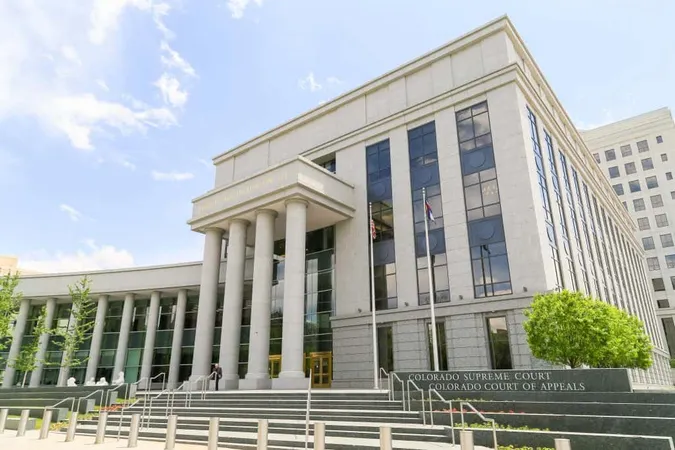
Colorado Bar Exam: Your Guide to CO Bar Test Success

Colorado Bar Exam Dates: Complete Schedule, Deadlines & Prep Guide

Colorado Bar Pass Score: Complete Guide to Scoring Requirements & What It Takes to Pass

Colorado Bar Exam Results: What to Expect, How to Read Them & What Comes Next
CO Bar Practice Test PDF (Free Printable 2026)
About the Author

Educational Psychologist & Academic Test Preparation Expert
Columbia University Teachers CollegeDr. Lisa Patel holds a Doctorate in Education from Columbia University Teachers College and has spent 17 years researching standardized test design and academic assessment. She has developed preparation programs for SAT, ACT, GRE, LSAT, UCAT, and numerous professional licensing exams, helping students of all backgrounds achieve their target scores.