
Natural Gas Compression: How It Works, Why It Matters, and What Every CNG User Should Know
📝 Learn how natural gas compression works, the equipment involved, safety standards, and how it powers CNG vehicles and fueling stations across the US.

Natural gas compression is the foundational process that makes compressed natural gas (CNG) viable as a vehicle fuel and industrial energy source. In its raw pipeline form, natural gas travels at relatively low pressures — typically between 0.25 and 200 psi depending on the pipeline tier. To become useful as a transportation fuel, that gas must be compressed to pressures of 3,000 to 3,600 psi, a process that squeezes the same energy content into a much smaller storage volume. Without compression, it would be physically impossible to store enough natural gas onboard a vehicle to travel meaningful distances.
The compression process involves a series of mechanical stages that progressively raise the pressure of natural gas while managing the heat generated as a byproduct. Each stage of a multi-stage compressor raises the pressure by a specific ratio, and intercoolers between stages remove the heat before the next compression cycle begins. This staged approach is more efficient than trying to compress gas in a single step and helps protect the equipment from thermal stress that would otherwise shorten its service life significantly.
Understanding how natural gas compression works is essential for fleet managers, station operators, mechanics, and drivers who depend on CNG infrastructure every day. The compressor is the heart of any CNG fueling station, and its performance directly determines whether vehicles can be fueled quickly, safely, and cost-effectively. A properly specified and maintained compressor can run continuously for years; a neglected or undersized unit creates bottlenecks that undermine the entire value proposition of switching to natural gas.
Compressor technology has evolved considerably over the past two decades as CNG adoption has grown in the United States. Early installations often relied on reciprocating piston compressors borrowed from industrial gas applications. Today, fleet operators can choose from reciprocating compressors, rotary screw compressors, and linear compressors, each with distinct trade-offs in terms of pressure capability, flow rate, maintenance intensity, and energy consumption. The right choice depends on the daily fueling volume, the number of vehicles in the fleet, the available utility infrastructure, and the acceptable noise level at the installation site.
CNG compression is not just a technical curiosity — it has real economic consequences. Electricity is the primary operating cost of a compressor, and in high-volume applications, power consumption can represent a substantial share of the total cost per gasoline gallon equivalent. Modern variable-speed drive compressors can reduce electricity consumption by 15 to 30 percent compared to fixed-speed units by matching motor output to actual demand rather than running at full power continuously. Over a ten-year compressor lifespan, those savings can easily exceed the initial premium paid for more efficient equipment.
Safety is another dimension that cannot be separated from a discussion of natural gas compression. Compressors operate at high pressures with a flammable gas, and every component in the system — from the inlet filters to the pressure relief valves to the discharge piping — must meet strict codes set by organizations including NFPA, ASME, and CSA. Modern compressor packages include multiple layers of automated safety shutdowns that respond to high pressure, high temperature, gas leaks, and lubrication failures within milliseconds, long before a hazardous condition can develop into a serious incident.
This article provides a thorough look at how natural gas compression works from the pipeline inlet all the way to the vehicle's fuel tank. We cover the types of compressors used in CNG applications, how fueling station design affects compression performance, the key safety systems every operator should understand, maintenance best practices that extend equipment life, and the economic factors that determine whether a compression investment delivers a strong return. Whether you are evaluating a new CNG fleet, managing an existing station, or simply studying for a certification exam, this guide gives you the knowledge foundation you need.
Natural Gas Compression by the Numbers

Types of CNG Compressors Used in Fueling Stations
The most common type in CNG applications. Uses pistons driven by a crankshaft to compress gas in cylinders. Handles the high pressures required for CNG storage (up to 3,600 psi) efficiently and is well-suited for high-volume fleet fueling stations.
Uses two intermeshing helical rotors to compress gas continuously rather than in pulses. Quieter and smoother than reciprocating units, with lower maintenance demands. Best suited for lower-pressure applications or as the first stage in a multi-stage system.
A newer technology where pistons move in a straight line driven by a linear motor, eliminating the crankshaft and reducing mechanical complexity. Offers high efficiency and very low vibration. Currently used primarily in small-scale and home refueling applications.
Uses hydraulic pressure rather than an electric motor to drive the compression pistons. Commonly found on mobile or temporary CNG fueling units. Tolerates harsh outdoor environments well and can be powered by a vehicle's hydraulic system in remote deployments.
A CNG fueling station is an integrated system that begins at the natural gas utility meter and ends at the nozzle that connects to a vehicle's fuel inlet. The compressor package sits at the center of this system, but it is surrounded by inlet filtration equipment, gas dryers, storage cascades, dispenser units, and an extensive network of high-pressure piping and instrumentation. Each element of the station must be correctly sized and configured to work with the others, or the result is a station that underperforms, requires constant maintenance, or creates safety hazards.
Gas enters the station from the local distribution system through a service line that is typically regulated to a pressure between 0.25 psi for low-pressure residential service and up to several hundred psi for commercial or high-pressure industrial feeds. Before the gas reaches the compressor, it passes through a coalescing filter that removes liquid water, oil mist, and particulate matter that could damage compressor internals. Some installations also include a gas dryer using desiccant technology to achieve the extremely low dew point required to prevent moisture from freezing in vehicle fuel systems at high pressure.
The compressor raises the gas pressure through multiple stages, with intercooling between each stage to remove the heat of compression. After the final compression stage, the high-pressure gas passes through an aftercooler and then enters the station's buffer storage system. This storage cascade — typically a bank of high-pressure cylinders or tubes rated to 4,500 psi or higher — acts as a reservoir that allows the dispenser to deliver gas to vehicles quickly without waiting for the compressor to compress each cubic foot in real time. Without adequate buffer storage, fast-fill dispensers cannot achieve the fill times that drivers expect.
Dispensers draw gas from the storage cascade through a priority panel that manages which storage bank is used at any given moment. When the cascade pressure is high, the dispenser draws from the lowest-pressure bank first to maximize the pressure differential driving gas into the vehicle cylinder. As cascade pressure drops, the system switches to progressively higher-pressure banks, a sequence that maximizes the amount of gas delivered before the compressor must intervene. This cascade management strategy is one of the key engineering decisions that determines fast-fill station performance and user experience.
Time-fill stations, by contrast, bypass much of the cascade system entirely. In a time-fill configuration, vehicles are connected to low-flow dispensing posts overnight, and the compressor slowly fills each vehicle's onboard tank directly over six to ten hours. Time-fill eliminates the need for large buffer storage and reduces compressor sizing requirements, making it the most cost-effective solution for fleets that return to a central depot each night. The trade-off is inflexibility — time-fill stations cannot accommodate unscheduled fueling or vehicles that return early with low tanks.
Combination stations offer both fast-fill and time-fill capability, allowing fleets to serve most vehicles overnight through time-fill posts while maintaining a fast-fill lane for vehicles that need immediate fueling. Designing a combination station requires careful analysis of the fleet's actual fueling patterns, peak demand windows, and duty cycles to size the compressor, storage, and dispenser capacity appropriately without over-investing in infrastructure that will rarely be fully utilized. Many fleet operators work with CNG equipment suppliers to model their specific operation before committing to a station design.
Control systems tie the entire station together. Modern CNG stations use programmable logic controllers (PLCs) that monitor dozens of variables simultaneously — compressor discharge pressure, storage bank levels, temperature at multiple points, gas leak detector readings, dispenser transaction data, and utility power quality. The PLC automatically starts and stops the compressor based on storage pressure set points, manages the priority panel sequencing, and triggers emergency shutdowns when any monitored parameter exceeds safe limits. Remote monitoring capabilities allow station operators and service technicians to observe real-time station status and receive alarm notifications from anywhere, dramatically reducing response times when issues arise.
Compression Stages, Pressures, and Performance
Single-stage compression takes gas from inlet pressure to final delivery pressure in one step. This approach is simple and inexpensive but generates tremendous heat and is only practical for modest pressure ratios — typically no more than 6:1. For CNG applications that require raising gas from pipeline pressure of around 60 psi to storage pressure of 3,600 psi, a pressure ratio exceeding 60:1 is required, making single-stage compression completely impractical without excessive heat buildup and energy waste.
Multi-stage compressors divide the total compression ratio across three to five stages, each handling a smaller ratio of around 3:1 to 4:1. Intercoolers between stages cool the gas back toward ambient temperature before the next stage, which reduces the work required in subsequent stages and significantly extends seal and valve life. A four-stage reciprocating compressor handling 60 psi inlet gas might operate at stage discharge pressures of roughly 200 psi, 700 psi, 2,000 psi, and 3,600 psi, with each stage optimized for its specific pressure range through cylinder bore sizing and valve design.

Advantages and Disadvantages of CNG Compression for Fleet Fueling
- +Dramatically reduces fuel cost per mile — CNG typically costs 30 to 50 percent less than diesel on an energy-equivalent basis across US markets
- +Onsite compression gives fleet operators complete control over fueling availability and eliminates dependence on public fueling infrastructure
- +Modern variable-speed compressors adapt to demand automatically, reducing electricity waste during off-peak hours and overnight slow-fill periods
- +Compressor technology is mature and well-supported, with a broad network of manufacturers, dealers, and certified service technicians across the country
- +High-pressure storage cascades allow fast-fill stations to handle peak demand bursts without requiring an oversized compressor that runs mostly at part load
- +Natural gas compression equipment qualifies for various federal and state incentives, including ALTF grants and utility rebate programs that reduce capital costs
- −High upfront capital cost — a complete fast-fill station with adequate storage can cost between $500,000 and $1.5 million depending on capacity and site conditions
- −Compressors require skilled maintenance personnel familiar with high-pressure systems; routine service intervals involve specialized tools and manufacturer-trained technicians
- −Electricity consumption for compression adds a significant operating cost that must be factored into the true cost per GGE calculation for accurate ROI analysis
- −Compressor downtime directly affects fleet operations — a failed compressor at a captive fleet station means vehicles cannot be fueled until repairs are complete
- −Natural gas supply pressure from the local utility can vary seasonally, affecting compression efficiency and station throughput in ways that are difficult to predict
- −Permitting requirements for high-pressure gas compression systems are complex and vary by jurisdiction, often extending project timelines by six months or more
CNG Compression Safety and Operations Checklist
- ✓Verify all pressure relief valves are set to the correct relief pressure and have not exceeded their last inspection date before placing the compressor in service.
- ✓Confirm that the gas detection system is calibrated, functional, and connected to the emergency shutdown circuit that stops the compressor on gas leak detection.
- ✓Inspect all high-pressure hoses, fittings, and manifold connections for signs of wear, corrosion, or leaks using an approved combustible gas detector monthly.
- ✓Check compressor oil level and oil quality before each operating shift; dirty or degraded oil accelerates seal and cylinder wear at high operating pressures.
- ✓Verify that the automatic high-temperature shutdown is functional by reviewing the last test date in the station maintenance log and confirming the setpoint is correct.
- ✓Ensure the inlet filter differential pressure gauge reads within the acceptable range; a clogged filter restricts flow, reduces efficiency, and can cavitate compressor valves.
- ✓Confirm that storage cascade pressure is within operating range and that the priority panel is sequencing correctly between low, medium, and high storage banks.
- ✓Review the PLC alarm log for any fault codes or warning conditions that occurred during the previous operating period and document any corrective actions taken.
- ✓Test the emergency stop button monthly to confirm it interrupts compressor operation and activates the station's visual and audible alarms as designed.
- ✓Verify that all station personnel have current training on CNG emergency response procedures, including the location of the emergency shutoff valve and when to use it.
Electricity Is Your Largest Operating Cost — Choose Compressor Efficiency Wisely
A mid-size CNG compressor consuming 50 kW continuously at $0.10/kWh costs over $43,000 per year in electricity alone. Upgrading to a variable-speed drive unit that averages 35 kW under real-world demand patterns saves more than $13,000 annually — enough to pay back the efficiency premium in under three years while improving compressor longevity by reducing thermal cycling stress on internal components.
Maintenance is the single most important factor determining whether a CNG compressor delivers its rated service life and performance. Reciprocating compressors operating at 3,600 psi are precision machines with tight clearances, and the failure of a small component like a discharge valve or piston ring can cascade into much larger and more expensive damage if the problem is not caught early. Establishing a rigorous preventive maintenance program based on the manufacturer's recommendations — and actually following it — is the foundation of reliable station operation.
Oil changes are one of the most critical routine maintenance tasks for reciprocating CNG compressors. Unlike industrial compressors in lower-pressure applications, CNG compressors typically require specially formulated synthetic oils that resist degradation at high temperatures and pressures, resist contamination by natural gas condensate, and maintain viscosity across a wide temperature range. Following the manufacturer's oil change intervals precisely — typically every 1,000 to 2,000 operating hours — prevents the accelerated wear that results from degraded lubrication and protects warranty coverage on expensive compressor components.
Valve maintenance is the next critical item. The intake and discharge valves in a reciprocating compressor open and close thousands of times per minute under high differential pressure, and they are among the highest-wear components in the system. Worn or damaged valves reduce volumetric efficiency, increase operating temperature, and can fragment and damage cylinder walls if they fail catastrophically. Many station operators track valve performance through inter-stage pressure monitoring and schedule proactive valve inspections at every scheduled maintenance interval rather than waiting for performance degradation to become obvious.
Piston rings and rod packing are wear items that require replacement on a schedule determined by operating hours, gas quality, and the presence of moisture or contaminants. Dry-running compressors used in CNG applications — which use no oil in the compression cylinder to avoid contaminating the gas supply — typically have shorter ring replacement intervals than oil-lubricated designs because the rings must handle all the sealing function without the benefit of an oil film.
Monitoring interstage pressures, listening for changes in compressor sound, and conducting periodic compression efficiency tests all provide early warning of ring wear before it causes expensive secondary damage.
Cooling systems are frequently overlooked until a problem develops. Intercoolers and aftercoolers that are fouled with mineral deposits, dust, or oil mist cannot remove heat effectively, which raises operating temperatures throughout the compression train and accelerates wear on every component downstream. Cleaning or replacing heat exchanger elements on a scheduled basis — typically annually for most installations — is a low-cost intervention that pays dividends in extended equipment life and reduced energy consumption. In regions with hard water, scale inhibitors and periodic chemical cleaning are essential parts of the cooling system maintenance plan.
Instrumentation and control system maintenance is an area where shortcuts have serious safety implications. Pressure transducers that have drifted out of calibration may allow the compressor to operate outside safe pressure ranges. Temperature sensors that read low may fail to trigger a protective shutdown when the compressor is overheating. Flow meters that have accumulated errors will cause the station's billing and usage tracking to diverge from actual dispensed volumes. Annual calibration verification of all critical instrumentation, performed by qualified technicians using traceable calibration standards, is both a best practice and a requirement under most station operating permits.
Documentation is the final element of a complete maintenance program. A well-maintained maintenance log recording every service action, every oil change, every inspection finding, and every corrective repair creates a historical record that is invaluable for diagnosing intermittent problems, justifying capital replacement decisions to management, demonstrating regulatory compliance during inspections, and supporting warranty claims with the manufacturer. Stations that operate without systematic documentation typically spend more time troubleshooting recurring problems and are at greater risk of surprise failures that disrupt fleet operations at the worst possible moment.

Pressure relief valves are the last line of defense against catastrophic overpressure events in a CNG compression system. NFPA 52 and most jurisdictional codes require annual testing or replacement of PRVs, and many manufacturers recommend replacement every three years regardless of condition. A PRV that fails to open at its set point — a common failure mode in corrosive environments — can allow system pressure to exceed design limits with potentially serious consequences for station personnel and property.
The economics of CNG compression have improved dramatically over the past decade as equipment costs have fallen, natural gas prices have remained competitive with diesel, and the industry has accumulated enough operational data to build accurate ROI models for fleet applications.
A well-designed CNG compression installation at a medium or large fleet depot typically achieves payback in four to seven years, and the operating savings over a ten to fifteen year equipment life are substantial. However, the financial case depends critically on the details of the specific fleet, the local gas and electricity rates, and the capital cost structure of the installation.
The fuel cost differential between CNG and diesel is the primary driver of financial returns. In most US markets, CNG is priced at $1.50 to $2.50 per gasoline gallon equivalent, compared to diesel prices that have ranged from $3.00 to $5.00 over the past several years.
For a fleet of heavy-duty trucks consuming an average of 15,000 GGE per year per vehicle, the annual savings per truck range from $7,500 to $37,500 depending on the specific price spread in the local market. Multiply those savings across a fleet of 50 trucks and the annual fuel savings alone can exceed $1 million — easily justifying the capital investment in a dedicated compression facility.
Electricity costs for the compressor represent the most significant operating expense beyond routine maintenance. Calculating the true cost per GGE dispensed requires knowing the compressor's actual power consumption at typical load levels, not just its nameplate rating. A compressor rated at 75 kW may average only 45 kW in operation if it cycles off during low-demand periods.
At $0.10 per kWh, that 45 kW average translates to $0.045 per minute of operation, and a compressor that runs 18 hours per day accumulates roughly $29 in daily electricity cost. Dividing that by the volume of gas compressed per day yields the electricity contribution to the cost per GGE, which typically ranges from $0.20 to $0.50 depending on efficiency and local utility rates.
Capital cost recovery requires understanding the full scope of the investment, which extends well beyond the compressor package itself. Site preparation, utility upgrades for the electrical service, high-pressure gas piping from the utility meter to the compressor, storage vessels and cascades, dispenser equipment, concrete pads, canopy structures, safety systems, permitting fees, and engineering costs all add to the total project cost.
Turnkey CNG station projects for fleet applications routinely range from $400,000 for a small time-fill installation to over $2 million for a large fast-fill station with significant storage capacity, making accurate total cost estimation a critical step in the feasibility analysis.
Federal and state incentive programs can materially improve the economics of CNG compression investments. The Alternative Fuel Infrastructure Tax Credit under Section 30C of the IRS code has historically provided a 30 percent tax credit on qualifying fueling equipment, though availability and terms have varied with federal legislation.
Many states offer additional incentives through air quality programs, particularly in non-attainment areas where CNG's lower NOx and particulate emissions make it an attractive tool for regulators trying to reduce transportation sector emissions. Some natural gas utilities also offer rebates or low-cost financing for on-site compression equipment to encourage residential and commercial customers to add compressed natural gas fueling capacity.
Lease and financing structures provide another avenue for making CNG compression accessible to fleets that cannot absorb the full capital cost upfront. Several companies offer CNG-as-a-service arrangements where they install, own, and maintain the compression equipment at the fleet's facility and charge a per-GGE fuel price that is typically still well below diesel costs.
These arrangements transfer the capital burden and maintenance responsibility to the service provider while giving the fleet operator immediate access to on-site fueling. The trade-off is that the fleet does not capture the full economic benefit of owning the equipment outright, but for many operators the lower risk and simpler management make the per-GGE service model the better financial choice.
Long-term natural gas price stability is one of the most compelling economic arguments for CNG compression investment. Unlike diesel, which is priced in a globally traded commodity market and subject to geopolitical disruptions, domestic natural gas prices are driven primarily by North American supply and demand fundamentals.
The United States has enormous proven natural gas reserves, and production from shale formations has kept prices relatively stable for over a decade. Fleet operators who lock in natural gas supply contracts can achieve a degree of fuel cost predictability that is simply not available in the diesel market, making budget planning and fleet operating cost forecasting substantially more reliable.
Practical success with CNG compression comes down to decisions made well before the first vehicle pulls up to the dispenser. The most common mistake fleet operators make is undersizing the compressor or storage system based on current fleet size without accounting for planned growth. Adding compression capacity after a station is built is expensive and disruptive — it often requires additional utility service upgrades, additional permitting, and significant civil construction work. Building in a modest capacity buffer of 25 to 30 percent above current peak demand is a cost-effective hedge against future expansion needs.
Selecting the right equipment manufacturer and service partner is equally important as selecting the right compressor specification. CNG compression is a specialized field, and the quality gap between leading manufacturers and budget alternatives is significant. Look for manufacturers with a strong track record in the specific application type — fleet fueling, transit, or refuse — and a nationwide service network capable of providing emergency response within 24 hours. References from current operators in similar applications, not just manufacturer-provided case studies, are the most reliable indicator of real-world reliability and service quality.
Driver training on CNG fueling procedures is an underappreciated element of station reliability. Improper connection of the fueling nozzle, attempting to overfill beyond the vehicle's rated tank pressure, or failure to follow proper breakaway hose procedures are common sources of equipment damage and potential safety incidents at CNG stations. A structured driver orientation program that covers the mechanics of CNG fueling, the correct procedure for connecting and disconnecting the nozzle, what to do if a fueling error or leak occurs, and the location of emergency shutoffs pays dividends in reduced equipment damage and improved safety culture across the fleet.
Monitoring and data analytics are increasingly valuable tools for CNG station operators. Modern compressor control systems generate large volumes of operational data — pressures, temperatures, flow rates, alarm histories, and efficiency metrics — that can reveal developing problems before they cause failures. Operators who regularly review trend data, rather than reacting only to alarms and breakdowns, consistently achieve better equipment availability and lower maintenance costs. Some compressed natural gas equipment suppliers now offer cloud-based monitoring platforms that aggregate data from multiple stations and flag anomalies automatically, allowing a single technician to effectively manage a large portfolio of fueling assets.
Emergency preparedness planning is a non-negotiable element of responsible CNG station operations. Every station should have a written emergency response plan that covers gas leak response, fire response, overpressure events, utility power failure, and medical emergencies. That plan should be reviewed with all station personnel annually and with any new employee before they are authorized to work at the station independently.
Local fire departments should be familiar with the station layout and emergency shutoff locations — proactive coordination with the fire marshal's office, rather than waiting for a mandated inspection, builds the relationship needed for fast, effective emergency response if an incident ever occurs.
Regulatory compliance is an ongoing obligation, not a one-time permit exercise. CNG compression facilities are subject to a web of federal, state, and local regulations covering pressure vessel inspection, gas detection, electrical classification, fire suppression, employee safety training, and environmental reporting. Keeping current with regulatory changes requires active participation in industry associations like NGVAmerica and regular communication with the local Authority Having Jurisdiction. The cost of proactive compliance is far lower than the cost of a regulatory violation that results in mandatory station shutdown while corrective actions are completed.
Finally, build relationships within the CNG industry community. Fleet operators who share operational experiences, maintenance tips, and supplier assessments with peers accumulate practical knowledge that no training course or equipment manual can fully replace.
Industry conferences, regional fleet associations, and online forums for CNG operators are all valuable sources of real-world insight about what works, what fails, and what new technologies are worth evaluating. The CNG industry in the United States is large enough to have deep expertise but small enough that the community is genuinely collaborative — leveraging that community is one of the smartest investments any CNG fleet operator can make.
CNG Questions and Answers
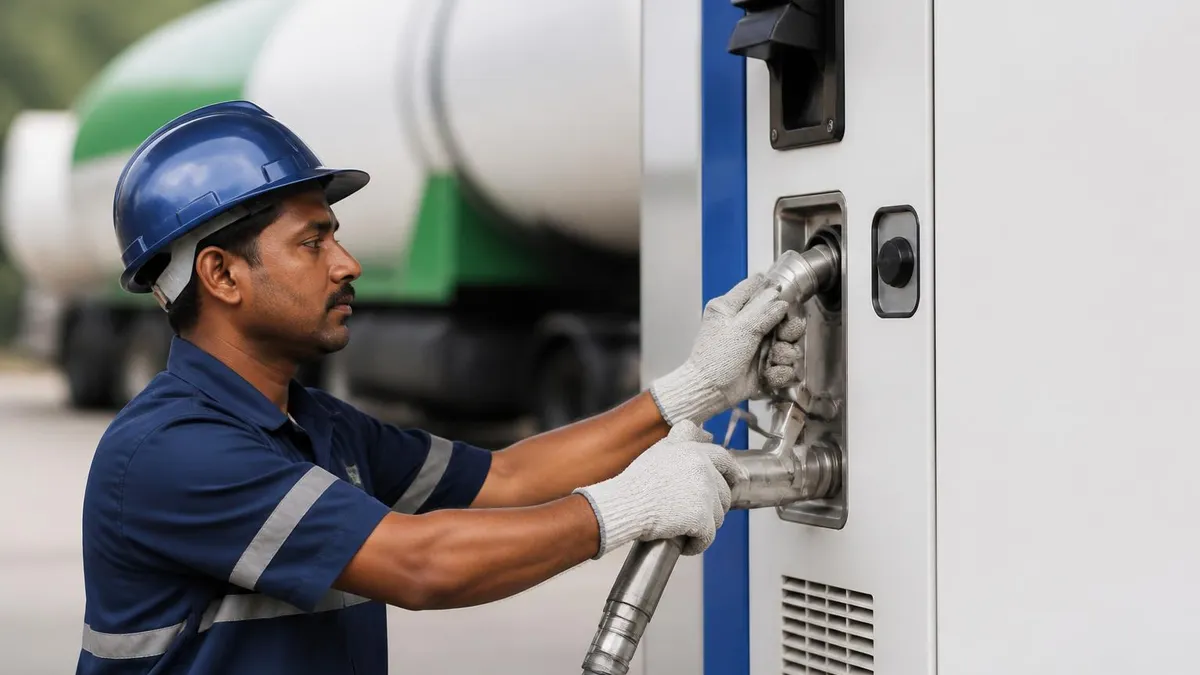
CNG Trucks for Sale: Complete Buyer's Guide to New and Used Compressed Natural Gas Vehicles

What Is Compressed Natural Gas (CNG)? The Complete Guide for US Drivers and Fleet Managers
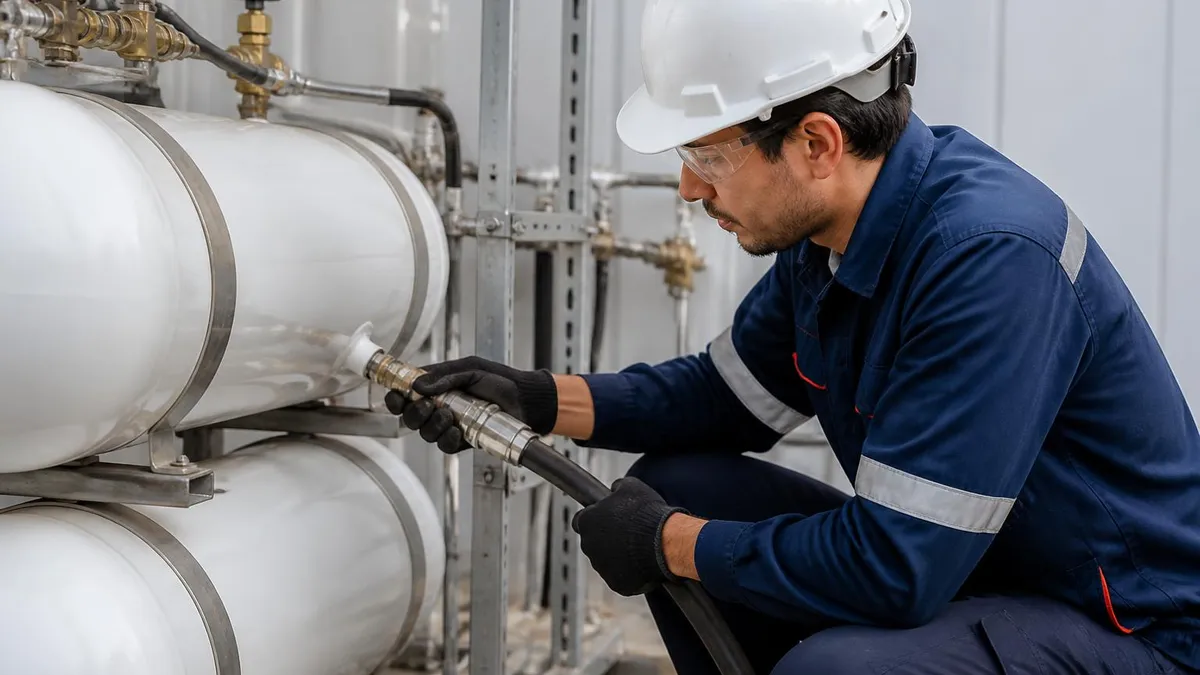
CNG Stations: How They Work, Where to Find Them, and Real-World Fuel Costs

What Is CNG? A Plain-English Guide to Compressed Natural Gas

CNG Pump: How Compressed Natural Gas Fueling Works, What to Expect, and Why It Matters
About the Author

Educational Psychologist & Academic Test Preparation Expert
Columbia University Teachers CollegeDr. Lisa Patel holds a Doctorate in Education from Columbia University Teachers College and has spent 17 years researching standardized test design and academic assessment. She has developed preparation programs for SAT, ACT, GRE, LSAT, UCAT, and numerous professional licensing exams, helping students of all backgrounds achieve their target scores.
Join the Discussion
Connect with other students preparing for this exam. Share tips, ask questions, and get advice from people who have been there.
View discussion (8 replies)