
CNA vs CMA: Salary, Duties, Training & Career Comparison (2026 October)
⏳ CNA vs CMA compared: salary, duties, training time, and job outlook. See which healthcare career fits your goals in 2026 October.

The cna vs cma debate is one of the most common career questions in entry-level healthcare, and for good reason. Both roles let you start working with patients within a year, both offer steady demand, and both serve as launching pads into nursing, medical school, or hospital administration. But despite the similar acronyms, these two careers diverge sharply in daily duties, work settings, training length, and earning potential. Choosing the right path can mean the difference between burnout and a long, satisfying career.
A Certified Nursing Assistant (CNA) typically works under a registered nurse in hospitals, long-term care facilities, or home health settings. Their work is hands-on and physical, focused on activities of daily living such as bathing, feeding, transferring, and monitoring vital signs. A Certified Medical Assistant (CMA), by contrast, usually works in outpatient clinics and physician offices, splitting time between clinical tasks like drawing blood and administrative duties like scheduling and insurance verification.
The training pipelines reflect this difference. CNA programs run roughly 4 to 12 weeks and cost between $500 and $2,000. A certified medical assistant program typically lasts 9 to 24 months and costs $1,500 to $20,000, depending on whether you choose a community college diploma, an associate degree, or an accelerated certificate. The longer runway pays off — CMAs earn an average of $42,000 per year, while CNAs average around $36,000.
Job settings also shape the experience. CNAs spend most shifts on their feet, lifting and turning patients, working 8- to 12-hour rotations including nights and weekends. CMAs generally work Monday-to-Friday daytime hours in climate-controlled clinics, taking patient histories, performing EKGs, administering injections, and managing electronic health records. If you crave a predictable schedule, CMA wins. If you want to build clinical bedside skills before nursing school, CNA may be the smarter on-ramp.
Demand for both roles is strong through 2032. The Bureau of Labor Statistics projects 15% growth for medical assistants and 4% growth for nursing assistants — both faster or comparable to the average across all occupations. An aging population, expanded outpatient care, and a chronic shortage of primary care providers are fueling steady hiring, especially in suburban and rural markets where competition for talent is fierce.
This guide breaks down every dimension of the cna vs cma decision: training cost, certification process, scope of practice, salary ranges by state, daily responsibilities, advancement pathways, and the personality traits that fit each role. By the end, you will know which credential matches your goals, your timeline, and your bank account — and how to move from research to enrollment in the next 30 days.
We also flag the hidden trade-offs nobody mentions on glossy program brochures. From physical injury rates to scope-of-practice limits to the political fight over CMA-administered vaccines, you will get a realistic picture of what each job feels like five years in, not just on day one.
CNA vs CMA By the Numbers

How CNA & CMA Roles Are Defined
A state-licensed direct care worker who assists patients with activities of daily living under RN supervision. Works in hospitals, nursing homes, hospice, and home health. Training is 75 to 150 hours minimum, depending on state regulations.
A nationally certified professional who performs both clinical and administrative tasks in outpatient settings. Draws blood, gives injections, manages records, and bills insurance. Requires accredited program completion plus passing the CMA or RMA exam.
A subset of medical assistant focused exclusively on clinical duties — vitals, EKGs, phlebotomy, sterile field setup, and patient education. Certified by NHA. Pay typically runs $1-$3/hour higher than general MAs.
The administrative counterpart to CCMA. Handles scheduling, insurance verification, medical coding, patient intake, and front-desk reception. No clinical duties. Ideal for those who prefer office work over patient touch.
Salary is often the deciding factor in the cna vs cma conversation, and the numbers favor CMAs by a meaningful margin. The Bureau of Labor Statistics reports a median annual wage of $42,000 for medical assistants in 2024, with the top 10% earning over $54,000. Nursing assistants earn a median of $36,220, with top earners reaching $48,000. Over a 30-year career, that $6,000 annual gap compounds to roughly $180,000 in lifetime earnings — enough to fund a child's college tuition.
Geographic location can flip the math, however. In high-cost states like California, Washington, Alaska, and Massachusetts, CNAs in union hospitals can earn $50,000 to $60,000 with full benefits and pension. Meanwhile, CMAs in rural Mississippi or Alabama may start at $14 per hour, or $29,000 annually. Always check your state and metro area on the BLS Occupational Employment Statistics page before committing to either training pipeline.
Specialty experience boosts CMA earnings dramatically. Medical assistants in cardiology, dermatology, fertility, and ophthalmology clinics often earn $48,000 to $55,000 because they handle specialized procedures like assisting with biopsies, injecting Botox, or running cardiac stress tests. A general CMA who pivots into a specialty after two years can see a 20% bump in pay. CNAs face a lower ceiling because their scope is limited by state nurse practice acts.
The path to higher certified medical assistant salary typically runs through three levers: certification stacking, specialty practice, and supervisory roles. A CMA who adds phlebotomy certification, EKG technician credentials, and bilingual capability can command $4 to $7 more per hour. CNAs who advance often do so by transitioning to LPN or RN programs rather than staying at the assistant level.
Benefits matter as much as wages. Hospital-based CNAs frequently receive tuition reimbursement up to $5,250 annually, retirement matching, health insurance, and shift differentials of $2 to $5 per hour for nights and weekends. Outpatient CMAs may get smaller bonuses but often enjoy paid holidays off — a rarity in 24/7 nursing homes. Calculate the total compensation package, not just the hourly rate, when comparing offers.
Side income opportunities also differ. CMAs can pick up per diem shifts at urgent care chains paying $25 to $32 per hour. CNAs frequently work agency contracts in skilled nursing facilities at $22 to $30 per hour, with travel CNA contracts paying $1,800 to $2,400 per week including housing stipends. For someone willing to relocate, travel CNA work can rival entry-level RN pay.
Finally, certified medical assistant income tends to grow faster in the first five years. A new CMA earning $17 per hour can realistically reach $22 to $24 per hour within three years if they pursue specialty work and a second certification. CNA pay grows more slowly without bridging to LPN, which requires another 12 to 18 months of school.

CMA Practice Test Questions
Prepare for the Certified Medical Assistant Exam exam with our free practice test modules. Each quiz covers key topics to help you pass on your first try.
CMA Certified Medical Assistant Administra...
CMA Exam Questions covering Certified Medical Assistant Administrative Office Procedures. Master CMA Test concepts for certification prep.
CMA Certified Medical Assistant Clinical P...
Free CMA Practice Test featuring Certified Medical Assistant Clinical Procedures and Specimen Handling. Improve your CMA Exam score with mock test prep.
CMA Certified Medical Assistant Infection ...
CMA Mock Exam on Certified Medical Assistant Infection Control and Safety. CMA Study Guide questions to pass on your first try.
CMA Certified Medical Assistant Medical Bi...
CMA Test Prep for Certified Medical Assistant Medical Billing and Coding. Practice CMA Quiz questions and boost your score.
CMA Certified Medical Assistant Medical La...
CMA Questions and Answers on Certified Medical Assistant Medical Law and Ethics. Free CMA practice for exam readiness.
CMA Certified Medical Assistant Pharmacolo...
CMA Mock Test covering Certified Medical Assistant Pharmacology for Medical Assistants. Online CMA Test practice with instant feedback.
CMA Certified Medical Assistant Diagnostic...
Free CMA Quiz on Certified Medical Assistant Diagnostic Testing and Laboratory Procedures. CMA Exam prep questions with detailed explanations.
CMA Certified Medical Assistant Diagnostic...
CMA Practice Questions for Certified Medical Assistant Diagnostic Testing and Laboratory Procedures Questions and Answers. Build confidence for your CMA certification exam.
CMA Certified Medical Assistant Patient Co...
CMA Test Online for Certified Medical Assistant Patient Communication and Education. Free practice with instant results and feedback.
CMA Certified Medical Assistant Patient Co...
CMA Study Material on Certified Medical Assistant Patient Communication and Education Questions and Answers. Prepare effectively with real exam-style questions.
CMA Certified Medical Assistant Anatomy an...
Free CMA Test covering Certified Medical Assistant Anatomy and Physiology. Practice and track your CMA exam readiness.
CMA Certified Medical Assistant Knowledge
CMA Exam Questions covering Certified Medical Assistant Knowledge. Master CMA Test concepts for certification prep.
CMA Certified Medical Assistant MCQ
Free CMA Practice Test featuring Certified Medical Assistant MCQ. Improve your CMA Exam score with mock test prep.
CMA Certified Medical Assistant Medical Pr...
CMA Mock Exam on Certified Medical Assistant Medical Procedures and Techniques. CMA Study Guide questions to pass on your first try.
Comparing Certified Medical Assistant Jobs vs CNA Roles
CNAs perform direct patient care under RN delegation — bathing, dressing, ambulating, toileting, feeding, and measuring vitals every two to four hours. They reposition immobile patients to prevent pressure ulcers and report changes in condition to nursing staff. Most CNA work involves bedside tasks in inpatient or long-term care settings, with significant physical lifting and bending throughout each 8- to 12-hour shift.
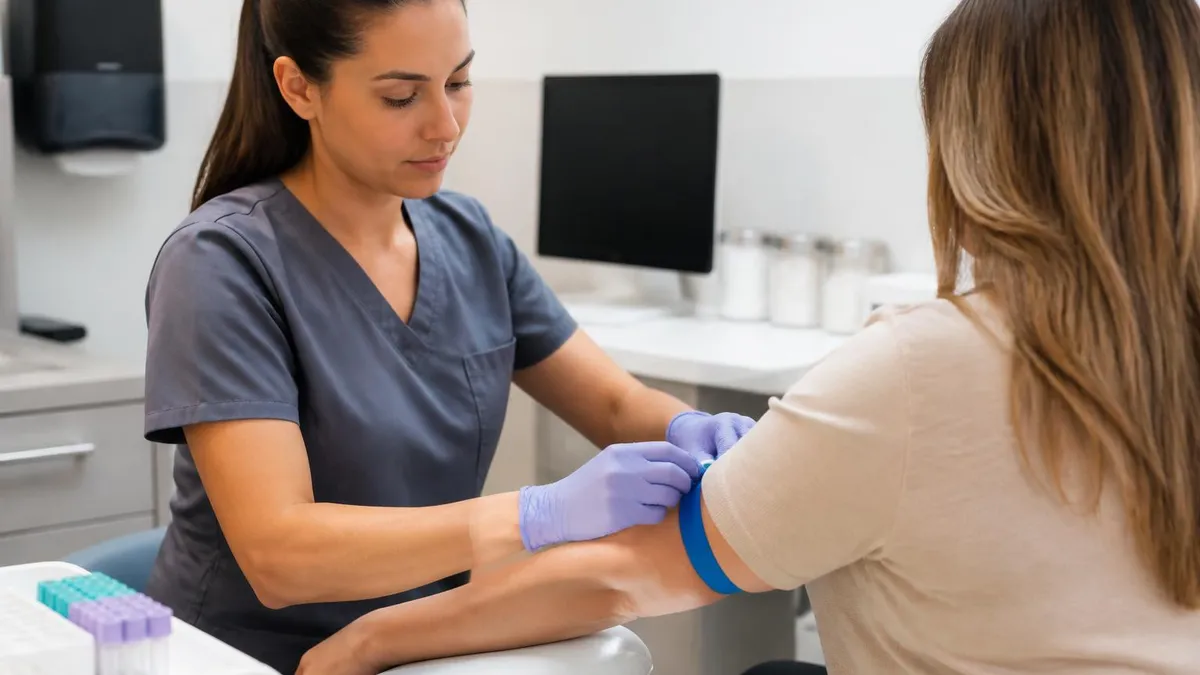
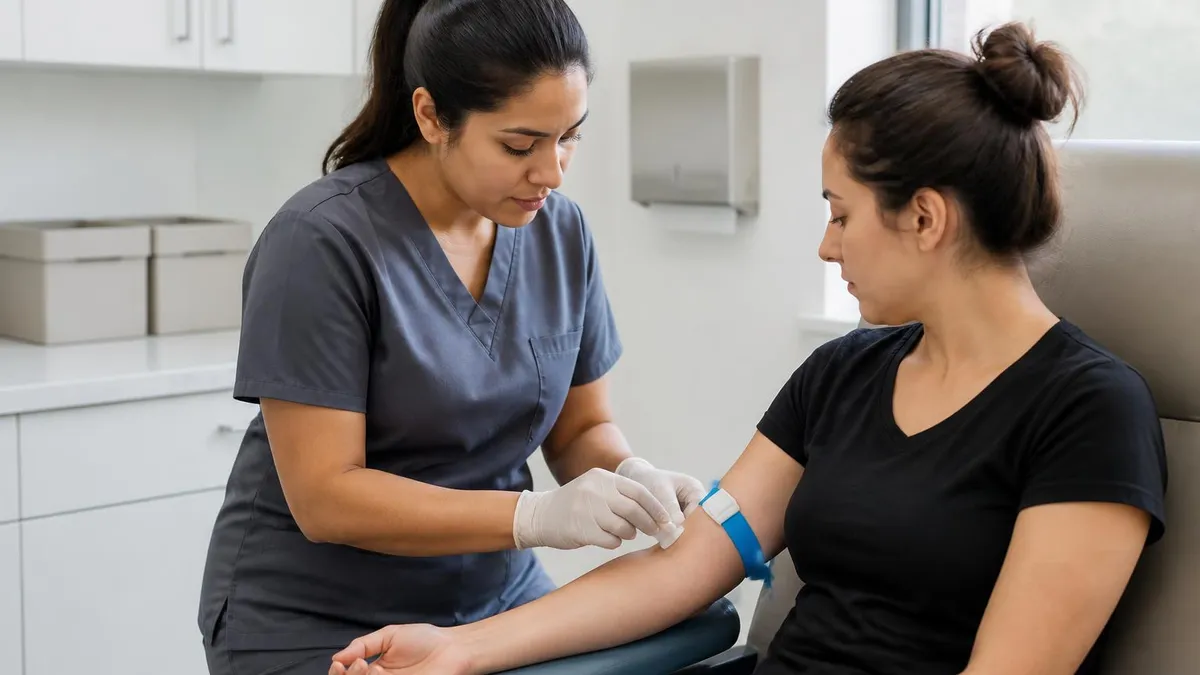
CMAs perform a broader clinical mix in outpatient settings: drawing blood, giving IM and subcutaneous injections, running 12-lead EKGs, administering nebulizer treatments, removing sutures, applying dressings, and assisting providers during minor procedures. They also collect throat swabs, prepare specimens for the lab, and educate patients on medication regimens. The work is varied, technical, and intellectually engaging.
CMA vs CNA: Honest Pros and Cons
- +CMA offers higher starting pay and faster wage growth in specialty clinics
- +CMA work is more varied — clinical, administrative, and patient education combined
- +CMA schedule is typically Monday-Friday daytime with weekends off
- +CMA credential transfers easily to phlebotomy, EKG tech, or medical billing roles
- +CMA work is less physically demanding, lowering injury and burnout risk
- +CMA career ladder leads naturally to office management or healthcare administration
- −CMA training is 9-24 months — much longer than CNA's 4-12 week pipeline
- −CMA program costs $1,500-$20,000 vs CNA's $500-$2,000
- −CMA scope of practice varies by state, creating confusion in hiring
- −CMA roles rarely include hospital bedside experience needed for nursing school
- −CMA jobs are concentrated in outpatient clinics, limiting hospital exposure
- −CMA exam (CMA, RMA, or CCMA) requires passing a national standardized test
Pros and Cons at a Glance
| Pros | Cons |
|---|---|
| CMA offers higher starting pay and faster wage growth in specialty clinics | CMA scope of practice varies by state, creating confusion in hiring |
| CMA work is more varied — clinical, administrative, and patient education combined | CMA roles rarely include hospital bedside experience needed for nursing school |
| CMA schedule is typically Monday-Friday daytime with weekends off | CMA jobs are concentrated in outpatient clinics, limiting hospital exposure |
| CMA credential transfers easily to phlebotomy, EKG tech, or medical billing roles | CMA exam (CMA, RMA, or CCMA) requires passing a national standardized test |

Steps to Become a Certified Medical Assistant
- ✓Earn a high school diploma or GED before applying to any accredited program
- ✓Research CAAHEP- or ABHES-accredited medical assistant programs in your state
- ✓Compare tuition, length, and externship hours across at least three schools
- ✓Apply for FAFSA and program-specific scholarships to reduce out-of-pocket cost
- ✓Complete classroom coursework in anatomy, pharmacology, and medical law
- ✓Finish a 160-200 hour supervised externship in a real clinical setting
- ✓Register for the CMA (AAMA), RMA (AMT), or CCMA (NHA) certification exam
- ✓Pass the exam with a scaled score of 430 or higher (AAMA standard)
- ✓Apply for state-specific licensure if required (only a few states require it)
- ✓Maintain certification with 60 CEUs every 60 months or retest as required
CMA Is the Faster Path to $20+ Per Hour
While CNA training is shorter and cheaper to start, CMA graduates typically hit $20 per hour within their first 18 months on the job — a milestone that takes most CNAs three to five years without bridging to LPN. If your goal is a livable wage within two years and you can absorb a 9-12 month program, CMA delivers better ROI on tuition and time invested.
Career pathways diverge after the first credential. CMAs often advance into office manager, practice administrator, clinical lead, or medical biller roles within five to seven years. With an associate degree added on, they qualify for healthcare administration positions paying $55,000 to $70,000. Some pursue registered health information technician (RHIT) certification or move into pharmaceutical sales, using their clinical familiarity to earn $80,000+ in field representative roles.
CNAs typically advance by becoming Licensed Practical Nurses (LPN) after 12 to 18 months of additional schooling, then Registered Nurses (RN) after two more years. The LPN-to-RN bridge is a well-worn path, and many hospitals will pay 50% to 100% of tuition for qualifying CNAs. Some CNAs pivot into surgical tech, respiratory therapy, or paramedic training, all of which value bedside experience and pay $50,000 to $70,000 after certification.
For people whose ultimate goal is nursing school, CNA may be the smarter starting point. Most accelerated BSN and ADN programs require or strongly prefer CNA experience because it proves you can handle bodily fluids, death, and 12-hour shifts. CMA experience, by contrast, is rarely required for nursing admission but counts as healthcare experience for PA school, medical school, and physical therapy doctorate programs.
For people whose ultimate goal is healthcare business — practice management, medical office administration, or healthcare consulting — CMA is the better launching pad. The blend of clinical and administrative exposure prepares you to understand revenue cycle, scheduling, and compliance from day one. Many CMAs go on to earn an associate or bachelor's in healthcare administration while working full-time, then transition into management roles.
Online learning has opened new advancement options for both roles. Working CNAs can complete LPN coursework online through programs like Achieve Test Prep or Excelsior University, with clinicals scheduled near home. Working CMAs can stack credentials in medical coding, billing, or HIPAA compliance through self-paced certificates that take 8 to 16 weeks. Stacking three credentials typically lifts pay by $4 to $6 per hour.
Geographic mobility matters too. CMA certifications from AAMA, AMT, and NHA are nationally recognized, so moving between states is seamless. CNA licensure is state-specific, requiring reciprocity applications or even retraining in states like California with stricter rules. If you anticipate relocating for a spouse's job or personal reasons, CMA's portability is a real practical advantage worth factoring into your decision.
Finally, both paths can lead to leadership. Many nursing home directors started as CNAs three decades ago. Many medical group COOs started as CMAs at solo physician offices. The credential opens the door — your work ethic and continuing education determine how high you climb. Pick the path that matches your daily preferences, and the long-term ceiling will take care of itself.
CMAs cannot legally administer vaccines, perform venipunctures, or give injections in some states without additional state-specific authorization. Always verify your state's medical board rules before assuming what duties you can perform. A clinic may post a job requiring tasks your state forbids — and you, not the clinic, bear the legal risk.
Choosing between CNA and CMA comes down to four practical questions: How fast do you need to start working? How much can you invest in training? What kind of daily work energizes you? And where do you want to be in five years? Answer those honestly and the right path usually becomes obvious. If you are unsure, shadow a CNA and a CMA for a half-day each — the visceral reality clarifies decisions faster than any salary chart.
If you have under $2,000 and need income within three months, CNA is the answer. State-funded programs at community colleges and Red Cross sites can have you certified in 4 to 8 weeks, with starting wages of $15 to $18 per hour. Many nursing homes will even pay for your training if you commit to working for them for six months after passing the state exam, a deal that costs nothing out of pocket.
If you have 9 to 24 months and want a higher ceiling with better work-life balance, CMA is the answer. Community college diploma programs run $3,000 to $6,000 and lead to outpatient clinic jobs paying $18 to $24 per hour to start. For those who want the credential without classroom time, accredited online programs from Penn Build, U.S. Career Institute, and Ashworth College deliver the curriculum in 9 to 12 months for under $2,500.
If you plan to bridge to nursing, lean CNA first — the bedside experience makes you a stronger nursing school applicant and exposes you to the realities of inpatient care before you commit to a BSN. If you plan to move into healthcare business, medical office management, or specialty clinic work, lean CMA. The administrative exposure builds skills you cannot learn in a CNA-only role, and many certified medical assistant jobs serve as direct stepping stones to practice manager positions paying $60,000+.
Consider physical demands too. CNA work involves lifting patients up to 200 pounds, frequent bending, and standing for 12-hour shifts. Back injuries are common, and the Bureau of Labor Statistics consistently ranks nursing assistant among the most physically demanding healthcare roles. If you have a back condition, joint issues, or limited mobility, CMA is the safer long-term choice. CMA work is mostly seated or standing in short bursts, with no patient lifting required.
Think about your introvert/extrovert preferences as well. CNAs spend their entire shift in physical contact with vulnerable patients, often in intimate care situations. The emotional and physical intensity suits people who thrive on close human connection. CMAs see 25 to 40 patients per day in short rooming and procedure encounters, mixed with administrative quiet time at a computer. The variety suits people who prefer task-switching over deep one-on-one care.
Family responsibilities shape the math too. Parents of young children often prefer CMA schedules because they align with school hours and avoid weekend rotations. Single people or empty-nesters may not mind CNA's 12-hour shifts and shift differentials, which can push annual earnings 20% higher through weekend and overnight premiums. Be honest about which lifestyle you can sustain for 5 to 10 years without burning out.
Finally, talk to working professionals in both roles before you decide. LinkedIn, Reddit's r/medicalassistant and r/CNA communities, and TikTok are full of candid day-in-the-life content. A 30-minute coffee with a current CMA or CNA will give you more useful information than 30 hours of online research. Most are happy to share — they remember being in your shoes and want to help newcomers make a smart choice.
Once you have chosen your path, the next 90 days determine momentum. For aspiring CMAs, the first step is applying to two or three accredited programs to compare financial aid offers. Programs accredited by CAAHEP or ABHES are the only ones that qualify graduates for the AAMA CMA exam, the gold-standard credential. Avoid unaccredited online programs that promise certification in six weeks — they rarely lead to legitimate jobs and may not qualify you to sit for national exams.
For aspiring CNAs, the first step is contacting your state's nurse aide registry to confirm approved training programs and exam requirements. Most states require 75 hours of training minimum, but California requires 150 hours and includes a state-specific competency exam. Search the registry by zip code to find programs near you, and call three before enrolling to compare clinical placement quality.
Funding strategies differ. CMA students can use Pell Grants, Stafford Loans, and state workforce grants because accredited programs qualify for federal financial aid. Many programs also partner with hospitals offering tuition reimbursement after graduation. CNA students typically cannot access federal aid because programs are too short, but state Workforce Investment Act funds, employer-sponsored training, and Red Cross scholarships fill the gap. Apply for everything — even small awards stack.
Exam preparation is the final hurdle. The CMA (AAMA) exam covers 200 multiple-choice questions across general, administrative, and clinical content areas, with a 75% pass rate among first-time test-takers from accredited programs. The CNA state exam includes a written test and a clinical skills demonstration with five randomly selected skills like handwashing, vital signs, and transferring. Both exams reward consistent daily practice over last-minute cramming. Use a free how to become a certified medical assistant resource to drill question patterns and identify weak areas.
Build a study routine that mirrors the exam. Set aside 60 to 90 minutes per day for six to eight weeks before your test date. Use spaced repetition with flashcard apps like Anki or Quizlet to lock in pharmacology drug names, lab value ranges, and CPT codes. Take a full-length practice test every Sunday and review every missed question — the patterns of your mistakes reveal exactly where to focus the following week. Most candidates underestimate medical law, ethics, and HIPAA, so dedicate extra time to those domains.
Your first job application matters more than you think. Apply to 10 to 15 positions in your second month of school, not after graduation, to lock in offers contingent on certification. Externship sites often hire their best students directly, so treat your unpaid externship like a 200-hour job interview. Show up early, ask thoughtful questions, document your skills, and ask for a letter of recommendation before your last day on site.
Finally, plan your continuing education from day one. CMAs need 60 CEUs every five years to maintain AAMA certification — about 12 hours per year. CNAs need 12 hours of in-service training annually in most states. Stack one specialty certification per year — phlebotomy in year one, EKG technician in year two, billing in year three — and your earning potential will grow consistently. The credential you earn this year is the floor of your career, not the ceiling.
Sample Certified Medical Assistant Exam Practice Questions
Try these questions from our free Certified Medical Assistant Exam practice tests. The correct answer and an explanation follow each question.
The SOAP format for documenting a patient visit stands for:
- A. Symptoms, Observations, Assessment, Plan
- B. Subjective, Objective, Assessment, Plan
- C. Summary, Orders, Actions, Progress
- D. Subjective, Outcome, Analysis, Prescription
Answer: B. Subjective, Objective, Assessment, Plan
SOAP notes organize the patient encounter as Subjective (patient's complaints), Objective (exam findings), Assessment (diagnosis), and Plan (treatment).
When a primary care physician determines that a patient needs to see a cardiologist for a specialized heart condition, the physician provides the patient with a formal recommendation. This process is known as:
- A. An insurance pre-authorization
- B. A patient referral
- C. A medical consultation
- D. A network transfer
Answer: B. A patient referral
A patient referral is a formal recommendation from one healthcare professional, typically a primary care provider (PCP), to another specialist for further care or evaluation. This process ensures that patients receive the specialized care they need and is a key part of coordinated healthcare.
When performing a subcutaneous injection, the correct angle of insertion is:
- A. 10-15 degrees
- B. 45-90 degrees depending on tissue depth
- C. Exactly 90 degrees always
- D. 30 degrees
Answer: B. 45-90 degrees depending on tissue depth
Subcutaneous injections are given at 45 degrees for thin patients and 90 degrees for those with adequate subcutaneous tissue.
Which color-coded sharps container should be used for disposal of used insulin syringes in the clinical setting?
- A. Green container for biohazardous waste
- B. Red or orange puncture-resistant sharps container
- C. Regular trash receptacle with a lid
- D. Blue container for pharmaceutical waste
Answer: B. Red or orange puncture-resistant sharps container
All contaminated needles and syringes must be placed immediately into red or orange puncture-resistant sharps containers.
Take the full Certified Medical Assistant Exam practice test
CMA Questions and Answers
CMA Certification: Requirements, Exam & Career Guide

Non-Certified Medical Assistant Jobs: Complete 2026 Guide to Entry-Level Healthcare Careers
CMA Exam: Format, Content, Cost, and Pass Strategy (2026)

CMA Practice Test PDF (Free Printable 2026)

CMA Certification Online: Complete 2026 Guide to Programs, Exam, and Career
About the Author

Educational Psychologist & Academic Test Preparation Expert
Columbia University Teachers CollegeDr. Lisa Patel holds a Doctorate in Education from Columbia University Teachers College and has spent 17 years researching standardized test design and academic assessment. She has developed preparation programs for SAT, ACT, GRE, LSAT, UCAT, and numerous professional licensing exams, helping students of all backgrounds achieve their target scores.