
CMA Skills: The Complete Guide to Certified Medical Assistant Duties, Training, and Career Outlook
Explore CMA skills, salary, jobs, and training. Learn how to become a certified medical assistant and pass your exam. 🎯

A certified medical assistant program prepares students to master a wide range of clinical and administrative skills that are essential in modern healthcare settings. From taking patient vital signs to processing medical billing codes, CMA skills span two very different worlds — the front office and the exam room.
Whether you are just starting to explore this career or are preparing to sit for the AAMA certification exam, understanding what skills are expected of you is the foundation of your success. The demand for qualified medical assistants has never been higher, and employers increasingly prefer candidates who hold a recognized credential.
When most people think about cma skills, they picture clinical tasks like drawing blood or administering injections. While those hands-on competencies are certainly important, the administrative side of the role is equally demanding. Certified medical assistants answer phones, schedule appointments, verify insurance eligibility, handle medical records, and navigate electronic health record (EHR) systems every single day. The best CMAs develop both skill sets simultaneously, which is exactly what an accredited certified medical assistant program is designed to teach you.
The certified medical assistant salary is one of the most searched terms for anyone considering this career, and for good reason. According to the U.S. Bureau of Labor Statistics, medical assistants earned a median annual wage of approximately $42,000 in recent data, with experienced CMAs in high-cost metropolitan areas often exceeding $55,000 to $64,000. Certified medical assistant income climbs further when you factor in shift differentials, overtime, and specialization bonuses in fields like ophthalmology, cardiology, or dermatology. Certification directly impacts your earning potential from day one.
Certified medical assistant jobs are available in physician offices, outpatient clinics, urgent care centers, specialty practices, hospitals, and even telehealth companies. The occupational outlook for medical assistants is projected to grow by 14 to 16 percent over the next decade, which is substantially faster than the average for all occupations. This growth is driven by an aging population that requires more preventive and chronic disease management services. If you are evaluating certified medical assistant jobs in your region, you will likely find strong demand in both urban and suburban healthcare markets.
Understanding how to become a certified medical assistant starts with enrolling in an accredited program. Most programs take between nine months and two years to complete, resulting in either a diploma, certificate, or associate degree. Coursework includes anatomy and physiology, medical terminology, pharmacology, clinical procedures, and healthcare law and ethics. Practical externship experience is typically required before graduation. After completing your program, you become eligible to sit for the AAMA's CMA (AAMA) exam or the NHA's CCMA credential, both of which validate your competencies to potential employers.
Classes for certified medical assistant training cover a carefully structured blend of theory and hands-on lab work. Students learn phlebotomy, electrocardiography (EKG), sterile technique, patient intake, prescription processing, and ICD-10 and CPT coding. Many programs also include modules on communication skills, cultural competency, and patient education — soft skills that employers consistently rank among the most important qualities in a new hire. Practical externship placements give students real-world experience before graduation, bridging the gap between classroom learning and professional practice.
Whether you are pursuing the certified clinical medical assistant credential through the NHA or the CMA (AAMA) through the American Association of Medical Assistants, the skill sets overlap significantly. Both credentials test your knowledge of clinical procedures, infection control, pharmacology, administrative duties, and medical law. Preparing for either exam requires disciplined study, hands-on practice, and high-quality review resources including practice tests, flashcards, and structured review courses. This guide walks you through every major skill area so you can approach your career — and your certification exam — with confidence.
CMA Skills & Career by the Numbers

What a Certified Medical Assistant Program Covers
Hands-on skills including phlebotomy, EKG interpretation, vital signs measurement, medication administration, wound care, and sterile technique practiced in campus labs and clinical externship sites.
Front-office training covering appointment scheduling, insurance verification, medical billing, ICD-10 and CPT coding, patient intake forms, and electronic health record software navigation.
Core academic subjects including anatomy and physiology, medical terminology, microbiology, pharmacology, and pathophysiology that underpin every clinical and administrative task you will perform.
Modules covering HIPAA compliance, patient rights, informed consent, cultural competency, professional communication, and workplace safety — skills that distinguish excellent CMAs from average ones.
A supervised clinical placement — typically 160 to 240 hours — in a real healthcare setting where students apply classroom knowledge and build professional networks before graduation.
The clinical side of CMA skills encompasses everything that happens in the exam room and the laboratory. A certified clinical medical assistant must be proficient in measuring and recording vital signs, including blood pressure, pulse rate, respiratory rate, temperature, and oxygen saturation. These baseline measurements help physicians identify abnormal trends and make clinical decisions. Accuracy matters enormously — an incorrectly recorded blood pressure reading or a mislabeled specimen can have serious consequences for patient safety and treatment outcomes.
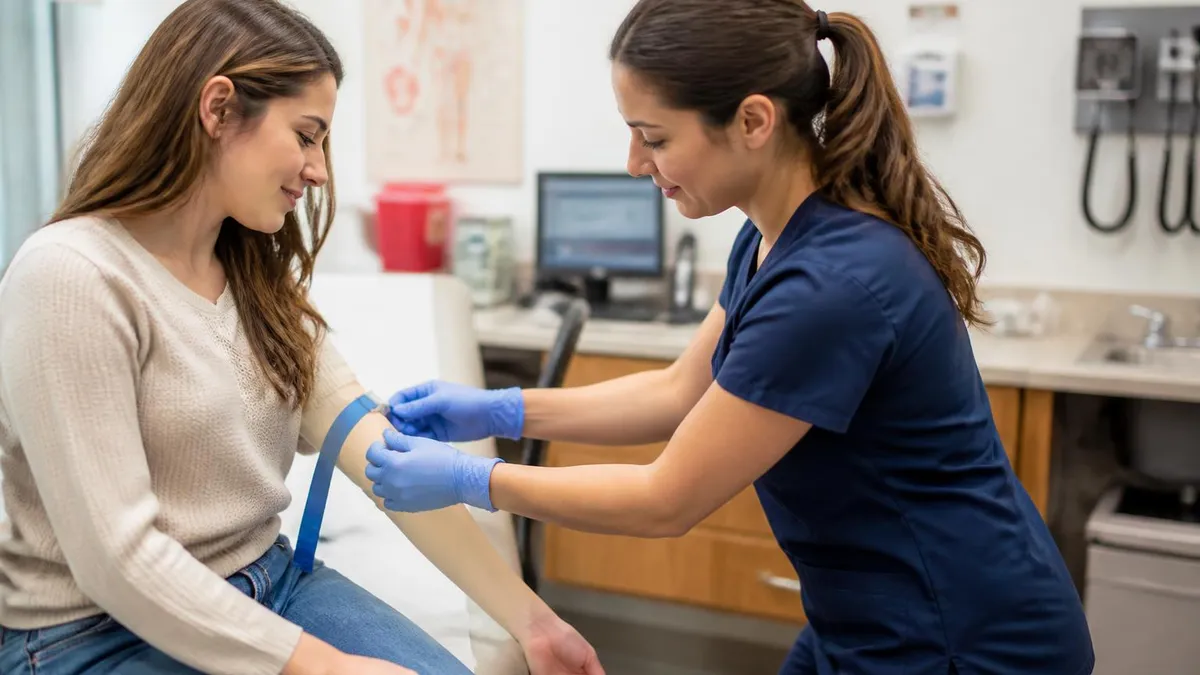
Phlebotomy is one of the most frequently performed clinical skills for CMAs working in primary care, internal medicine, and specialty clinics. Proper venipuncture technique requires knowledge of vein anatomy, correct tourniquet application, appropriate needle gauge selection, and precise specimen labeling and handling. Students in classes for certified medical assistant training typically complete dozens of supervised blood draws during their program before they are considered proficient. Speed and patient comfort both improve significantly with consistent practice and feedback from experienced preceptors.
Electrocardiography is another core clinical competency tested on the CMA (AAMA) exam. CMAs must be able to attach a 12-lead EKG correctly, recognize artifacts caused by poor electrode placement or patient movement, and identify basic rhythms such as normal sinus rhythm, atrial fibrillation, and premature ventricular contractions. While CMAs do not interpret EKGs — that is the physician's role — they must understand what constitutes an acceptable tracing and when to repeat the test before the provider review it.
Medication administration is a closely regulated CMA skill that varies by state law. In states where CMAs are permitted to administer injections, they must know how to calculate dosages, select the correct route of administration (intramuscular, subcutaneous, or intradermal), and use proper injection technique. They also assist with medication reconciliation, patient education about prescriptions, and tracking controlled substance logs. Understanding pharmacology basics — drug classes, common side effects, and contraindications — is essential for both patient safety and exam success.
On the administrative side, certified medical administrative assistant skills include mastery of practice management software platforms such as Epic, Athenahealth, eClinicalWorks, and Kareo. CMAs are often the first point of contact for patients, which means excellent phone communication, empathy, and scheduling efficiency directly affect patient satisfaction scores. Insurance verification — confirming a patient's active coverage, copays, deductibles, and referral requirements before an appointment — prevents billing delays and reduces claim denials that hurt a practice's revenue cycle.
Medical billing and coding is an area where certified medical assistant income and opportunities expand significantly. CMAs who earn additional credentials in medical coding — such as the CPC from the AAPC — become highly valuable in billing departments and revenue cycle management firms. ICD-10-CM diagnosis codes and CPT procedure codes must be applied precisely to every encounter. Even minor coding errors can trigger insurance audits, claim denials, or compliance investigations. Many CMA programs include dedicated billing and coding coursework that prepares students for this dual-competency role.
Electronic health records (EHR) proficiency is now considered a baseline expectation rather than a bonus skill. CMAs document patient encounters, update problem lists, process prescription refill requests, and route messages between patients and providers using EHR systems. Proficiency with these platforms reduces documentation errors, speeds up care workflows, and supports the quality metrics that determine a practice's reimbursement rates under value-based care contracts. Employers consistently list EHR experience as a top criterion when evaluating certified medical assistant jobs applicants.
Certified Medical Assistant Jobs: Work Settings & Specialties
Primary care offices are the most common employers of CMAs, offering stable hours, diverse daily tasks, and consistent patient relationships. In these settings, CMAs handle everything from rooming patients and updating medication lists to performing point-of-care lab tests and administering flu vaccines. The volume and variety of work make primary care an excellent starting point for new graduates looking to build a broad clinical foundation quickly.
Family practice CMAs often become deeply familiar with their patient panel over time, which creates opportunities to contribute meaningfully to chronic disease management programs. They flag overdue screenings, coordinate referrals, and educate patients about lifestyle modifications for conditions like diabetes, hypertension, and obesity. This continuity of care role is one of the most professionally rewarding aspects of working in a primary care environment as a certified medical assistant.

Pros and Cons of Pursuing a Certified Medical Assistant Career
- +Fast entry into healthcare — most programs complete in 9 to 24 months
- +Strong job growth projected at 14 to 16 percent over the next decade
- +Versatile skill set spanning both clinical and administrative domains
- +Multiple certification pathways including AAMA, NHA, and AMT credentials
- +Opportunities to specialize in high-demand fields like cardiology or dermatology
- +Clear pathway to advance into nursing, health administration, or coding careers
- −Starting salaries are modest compared to RNs and other licensed clinicians
- −Scope of practice varies significantly by state, limiting some clinical tasks
- −Physical demands — long periods of standing and frequent patient contact
- −Recertification every 60 months requires ongoing continuing education credits
- −Non certified medical assistant jobs often pay less and offer fewer growth prospects
- −Emotional labor from working with ill or distressed patients can cause burnout
CMA Exam Readiness Checklist: Are You Prepared?
- ✓Confirm eligibility — verify your program is CAAHEP or ABHES accredited before applying
- ✓Submit your AAMA exam application at least 30 days before your target test date
- ✓Complete a full content-area review using the AAMA's official exam content outline
- ✓Score at least 70% consistently on full-length practice tests before scheduling
- ✓Review all pharmacology drug classes, routes of administration, and common side effects
- ✓Study infection control — standard precautions, PPE, and OSHA bloodborne pathogen standards
- ✓Practice medical billing scenarios including ICD-10 diagnosis coding and CPT selection
- ✓Memorize normal lab reference ranges for CBC, BMP, urinalysis, and lipid panels
- ✓Review medical law topics including HIPAA, informed consent, advance directives, and mandatory reporting
- ✓Take a timed practice test under real exam conditions one week before your scheduled date
Certification Raises Your Earning Power by 20% or More
Research consistently shows that CMAs with active AAMA or NHA credentials earn significantly more than their non-certified peers. Employers view certification as evidence of validated competency, and many healthcare systems now require it for hiring or promotion. Investing time in exam preparation pays measurable financial dividends over the course of your career — often recouping the cost of the exam and prep materials within the first few months of employment at a higher pay grade.
Understanding how to become a certified medical assistant requires a clear-eyed look at the steps involved, the time commitment required, and the financial investment you will need to make. The process begins with selecting an accredited program. In the United States, programs accredited by the Commission on Accreditation of Allied Health Education Programs (CAAHEP) or the Accrediting Bureau of Health Education Schools (ABHES) are the only ones whose graduates are eligible to sit for the CMA (AAMA) examination. This distinction matters enormously, so verify accreditation status before enrolling in any program.
Classes for certified medical assistant students typically cover around 30 to 40 credit hours of coursework, depending on whether you pursue a diploma, certificate, or associate degree pathway. Diploma and certificate programs offered by vocational schools and community colleges often move faster, compressing the core competencies into 9 to 12 months of intensive study. Associate degree programs at community colleges take the full two years but provide a broader educational foundation that can support future advancement into nursing, health information management, or healthcare administration roles.
After completing your program, you become eligible to apply for the AAMA's CMA (AAMA) exam, which consists of 200 questions (180 scored items and 20 pretest questions) administered via computer at Prometric testing centers nationwide. The exam covers three broad content domains: general medical knowledge, administrative skills, and clinical skills. You have three hours to complete the exam, which works out to approximately 54 seconds per question. Time management during the exam is a skill unto itself that must be practiced during your preparation phase.
The National Healthcareer Association (NHA) offers an alternative credential called the CCMA (Certified Clinical Medical Assistant), which is also widely recognized by employers. The NHA CCMA exam has 150 scored questions with a 3-hour time limit and focuses more heavily on clinical skills than administrative functions. Some employers and healthcare systems prefer one credential over the other, so research the predominant credential in your target job market before deciding which exam to prioritize. Many CMAs ultimately hold both credentials to maximize their marketability.
The American Medical Technologists (AMT) organization offers the RMA (Registered Medical Assistant) credential, another recognized option for medical assistant certification. The RMA exam is sometimes considered slightly more accessible than the CMA (AAMA) but carries equivalent professional standing with most employers. Understanding the differences between RMA vs. CMA credentials helps you make an informed decision about which certification pathway best aligns with your career goals, geographic market, and the specific employers you hope to work for.
Non certified medical assistant jobs do exist and may be appropriate as a temporary stepping stone while you complete your education. Positions such as medical receptionist, patient service representative, or clinical support technician allow you to gain healthcare exposure and earn income while finishing your program. However, these roles typically pay less, offer fewer advancement opportunities, and provide limited scope for developing the clinical skills you will need on the CMA exam. Most career advisors recommend pursuing certification as quickly as possible rather than remaining in non-certified roles long-term.
Continuing education is a permanent feature of the CMA career, not just a pre-certification requirement. The AAMA requires CMAs to complete 60 continuing education units (CEUs) every 60 months to maintain their credential, covering topics in general, administrative, and clinical content areas. CEUs can be earned through webinars, conferences, employer-sponsored training, journal-based learning, and formal coursework. Staying current with CEU requirements ensures your credential remains valid and keeps your skills aligned with evolving clinical and regulatory standards in the healthcare industry.

Graduates of CAAHEP- or ABHES-accredited programs must apply to sit for the CMA (AAMA) exam within 60 months of their graduation date. After that window closes, you may still apply but must meet alternate eligibility requirements, including documentation of work experience in a medical assisting role. Do not delay your application — early certification maximizes your earning potential and avoids the administrative burden of proving work-based eligibility later in your career.
Building a successful study strategy for the CMA exam starts with understanding exactly what the test covers and how much weight each domain carries. The AAMA's official content outline assigns approximately 10 percent of exam content to general medical knowledge, 28 percent to administrative skills, and 62 percent to clinical skills. This distribution means that clinical competency — including patient care, infection control, pharmacology, and laboratory procedures — is by far the largest portion of the exam. Many students mistakenly focus heavily on administrative content because it feels more familiar, leaving clinical topics under-studied.
A structured 12-week study schedule is appropriate for most students who are preparing for the CMA (AAMA) exam immediately after graduation. During the first four weeks, focus on reviewing the clinical content domains: anatomy and physiology, infection control, clinical procedures, pharmacology, and laboratory testing. During weeks five through eight, shift your attention to administrative content including medical law, ethics, billing, coding, and office management. Reserve the final four weeks for mixed practice tests, timed simulations, and targeted review of your weakest content areas identified by earlier practice sessions.
A practice test for certified medical assistant preparation is one of the most evidence-backed study tools available. Research in educational psychology consistently shows that retrieval practice — answering questions from memory rather than passively rereading notes — produces significantly stronger long-term retention than any other study method. Taking multiple full-length practice exams under timed conditions accomplishes three things simultaneously: it reinforces content knowledge, builds test-taking stamina, and trains your brain to work efficiently within the exam's time constraints. Aim to complete at least five full-length practice tests before your scheduled exam date.
Flashcard-based review is particularly effective for pharmacology and medical terminology, two content areas that require memorization of discrete facts. Digital flashcard platforms allow you to create customized decks organized by drug class, body system, or administrative procedure. Spaced repetition algorithms in platforms like Anki automatically surface cards you find difficult more frequently than cards you know well, optimizing the efficiency of every study session. Twenty to thirty minutes of daily flashcard review, sustained over eight to twelve weeks, produces measurable improvement in exam performance.
Study groups can accelerate preparation when managed effectively. The most productive CMA study groups meet weekly, assign specific content domains to individual members for presentation, and use practice questions as the centerpiece of each session rather than open-ended discussion.
Explaining a concept to a peer — whether it's the steps for a proper venipuncture or the difference between an HMO and a PPO — forces you to organize your knowledge in a way that passive reading does not. Teaching others is one of the strongest indicators that you truly understand a topic well enough to answer exam questions about it correctly.
Managing test anxiety is a skill that deserves explicit attention during your CMA preparation. Many students who are fully prepared for the exam still underperform because anxiety disrupts working memory and decision-making during the test. Techniques that research has shown to reduce exam anxiety include deep breathing exercises practiced in the days before the exam, positive self-talk routines, adequate sleep in the 72 hours before testing, and avoiding last-minute cramming the night before your scheduled exam date. Arriving at the Prometric testing center early, with all required identification documents, eliminates logistical stress on test day.
After passing your exam, the work of building your professional skill set continues. Many new CMAs discover that the gap between textbook knowledge and real-world clinical practice requires an adjustment period of three to six months. Seek out mentors in your first job who are willing to answer questions, observe your procedures, and provide corrective feedback.
Volunteer for cross-training opportunities in different departments of your practice. Request to shadow in specialty areas that interest you. The CMAs who build the most successful careers are those who approach every shift as a learning opportunity, regardless of how many years of experience they have accumulated.
The certified medical administrative assistant role has grown substantially in importance as healthcare practices have shifted toward value-based reimbursement models that reward documentation accuracy, care coordination, and patient engagement. In this environment, CMAs who excel at front-office tasks are not simply schedulers and file clerks — they are integral members of the care team who directly influence quality metrics, patient satisfaction scores, and revenue cycle performance. Employers increasingly invest in training and retaining CMAs who demonstrate both clinical competence and administrative excellence.
Patient communication is a soft skill that dramatically separates good CMAs from exceptional ones. The ability to explain a procedure clearly to an anxious patient, deliver sensitive health information with compassion, and de-escalate a frustrated caller without losing professionalism are competencies that cannot be fully taught in a classroom. They develop through deliberate practice, self-reflection, and mentorship in real clinical environments. Programs that include standardized patient simulations — where students practice patient interactions with trained actors — give graduates a meaningful advantage in developing these critical interpersonal skills before their first day on the job.
Health information technology is reshaping the CMA skill set at an accelerating pace. Artificial intelligence tools are now being integrated into EHR platforms to flag abnormal lab results, suggest diagnoses, and predict which patients are at risk for hospital readmission. CMAs who develop basic health IT literacy — understanding how these tools work, when to trust their outputs, and when to escalate to a provider — will be better positioned for the healthcare jobs of the next decade. Some forward-thinking CMA programs are already incorporating AI literacy modules into their curricula to prepare graduates for this technological shift.
Infection control and patient safety are non-negotiable CMA skills that receive heavy emphasis on certification exams because lapses in these areas can be catastrophic. Standard precautions — assuming all blood and body fluids are potentially infectious and using appropriate personal protective equipment accordingly — must become second nature. Hand hygiene compliance, proper sharps disposal, surface disinfection protocols, and understanding of transmission-based precautions for patients on isolation are all tested on the CMA (AAMA) exam and enforced rigorously in clinical settings by OSHA and accrediting bodies like The Joint Commission.
Career advancement for CMAs who want to increase their certified medical assistant income typically follows one of several pathways. Some CMAs pursue additional certifications in phlebotomy, EKG interpretation, or medical coding to qualify for higher-paying specialized roles. Others pursue formal higher education — completing a bridge program into licensed practical nursing (LPN) or earning an associate or bachelor's degree in nursing, health administration, or healthcare informatics. Some experienced CMAs transition into medical assistant educator roles at community colleges and vocational schools, sharing their clinical expertise with the next generation of healthcare workers.
Leadership opportunities within the medical assisting profession include positions such as lead medical assistant, office manager, clinical supervisor, and practice administrator. These roles require the full range of CMA skills plus project management, personnel supervision, budgeting, and strategic planning abilities. Many healthcare organizations offer internal leadership development programs that identify high-performing CMAs early in their careers and invest in their management training. Pursuing these opportunities requires proactivity — expressing interest to your supervisor, volunteering for committee work, and consistently demonstrating reliability and clinical excellence in your current role.
The certified medical assistant profession is one of the most accessible, versatile, and rewarding entry points into the U.S. healthcare system. With the right combination of accredited training, targeted exam preparation, and ongoing professional development, CMAs can build long, impactful careers that touch the lives of thousands of patients.
Whether your goal is to work in a small family practice in a rural community or in a large urban academic medical center, the core CMA skills outlined in this guide form the foundation that will carry you there. Start with an accredited certified medical assistant program, study with purpose, pass your certification exam, and commit to lifelong learning in the field you have chosen.
CMA Questions and Answers

CMA Pass Rate: What to Expect and How to Pass the First Time

CMA Nursing: Your Complete Guide to a Certified Medical Assistant Program in Healthcare

CMA Abbreviation: What It Means and How to Become a Certified Medical Assistant
CMA Certification Cost: The Complete 2026 Price Breakdown

RMA vs CMA: Complete 2026 Comparison of Medical Assistant Certifications
About the Author

Educational Psychologist & Academic Test Preparation Expert
Columbia University Teachers CollegeDr. Lisa Patel holds a Doctorate in Education from Columbia University Teachers College and has spent 17 years researching standardized test design and academic assessment. She has developed preparation programs for SAT, ACT, GRE, LSAT, UCAT, and numerous professional licensing exams, helping students of all backgrounds achieve their target scores.