
Purdue Civics Literacy Test: Complete Study Guide & Practice Questions
Master the purdue civics literacy test with practice questions, study tips & exam strategies. 🎓 Full guide to civics test prep for 2026 October.

The purdue civics literacy test has become one of the most discussed benchmarks for measuring what college students actually know about American government, history, and democratic institutions. Originally modeled after the naturalization civics test used by U.S. Citizenship and Immigration Services, Purdue University's version of this assessment gained national attention when research revealed that many graduating seniors could not pass the same civics test that immigrants are required to pass before becoming citizens. Understanding what this exam covers — and how to prepare for it — is essential for any student who wants to demonstrate genuine civic knowledge.
The civics test landscape in the United States has evolved significantly over the past two decades. At the federal level, the naturalization civics test consists of 100 official questions covering American history, government structure, and fundamental rights. USCIS officers ask applicants up to 10 of these questions orally, and applicants must answer at least 6 correctly to pass. Purdue's research-based literacy test draws from this same pool of civic knowledge, evaluating whether college-educated Americans meet the same basic threshold expected of new citizens.
Why does civic knowledge matter so much? Democracy functions best when citizens understand their rights and responsibilities, know how their government operates, and can identify the branches of power. Civic literacy is not just academic trivia — it shapes how people vote, how they engage with local government, whether they serve on juries, and how they interpret news about legislation and court decisions. Studies have consistently shown that higher civic knowledge correlates with greater civic participation, including voting rates and community involvement.
If you are preparing for a civics exam practice test, this guide will walk you through everything you need to know: the topic areas covered, the format and difficulty level of questions, strategies for building your knowledge base quickly, and the most common areas where test-takers struggle. Whether you are a college student required to take a civics assessment, an immigrant preparing for naturalization, or simply a citizen who wants to improve their civic knowledge, the strategies in this guide apply equally well.
One of the most striking findings from Purdue's civics literacy research is the gap between perceived and actual knowledge. Many students believe they know more about civics than they do, often because they took a government class in high school and assume that information has stuck. In reality, without ongoing engagement with civics content, much of that knowledge fades. This is why structured practice through targeted civics test questions is so valuable — it exposes the specific gaps in your knowledge before an actual assessment does.
This guide is organized to take you from a baseline understanding of the test format all the way through advanced preparation strategies. We cover the exact topic categories tested, provide study schedules, explain common pitfalls, and point you toward the best free practice resources available. The goal is not just to help you pass a civics test but to help you build the kind of durable civic knowledge that serves you throughout your life as an informed and engaged citizen.
Throughout this guide, you will find practical advice grounded in what research tells us about effective learning and test preparation. Spaced repetition, active recall, and practice under realistic conditions are far more effective than passive reading or cramming. We will show you how to apply these proven techniques to civics content so that your preparation is as efficient and effective as possible, helping you feel genuinely confident — not just memorized — when you sit down for your civics test.
Civics Literacy by the Numbers

4-Week Civics Test Study Schedule
- ▸Read through all 100 USCIS civics questions and mark unfamiliar ones
- ▸Study colonial period, Declaration of Independence, and the Constitution
- ▸Complete a baseline civics practice test to identify your weakest areas
- ▸Review causes and effects of the Civil War and Reconstruction
- ▸Memorize the three branches of government and their functions
- ▸Study the roles of Congress, the President, and the Supreme Court
- ▸Practice civics test questions on checks and balances
- ▸Learn the process for how a bill becomes a law
- ▸Review the Bill of Rights and all 27 Constitutional amendments
- ▸Study the rights protected by the First Amendment in detail
- ▸Learn all 50 state capitals and major U.S. geographic features
- ▸Memorize national symbols, the national anthem, and the Pledge of Allegiance
- ▸Practice civics test questions on elections and political parties
- ▸Take three full-length timed civics practice tests
- ▸Review all questions you got wrong and re-study those topics
- ▸Practice oral responses for key civics questions aloud
- ▸Do a final review of your 20 most difficult questions
- ▸Rest and light review the night before your test
The civics test questions on any standard assessment — whether from Purdue, USCIS, or a state-level Florida civic literacy exam — cluster into five major content domains. The first and largest domain is American History, which covers events from the colonial period through the modern era.
Within this category, you can expect questions about the causes of the American Revolution, the significance of the Declaration of Independence, the Constitutional Convention, the Civil War and its aftermath, World War I, World War II, and the civil rights movement. Understanding not just the facts but the causes and consequences of these events is essential.
The second major domain is American Government and Political Structure. This covers the three branches of the federal government — legislative, executive, and judicial — and the specific powers granted to each.
You need to know how Congress is structured (the House of Representatives and the Senate), how many senators each state has (two), how many voting members are in the House (435), and what the major responsibilities of the executive branch are. You also need to understand the Supreme Court's role in interpreting the Constitution and how the system of checks and balances prevents any single branch from accumulating too much power.
The third domain covers Constitutional Rights and Principles. The Bill of Rights — the first ten amendments to the Constitution — is heavily tested. You should be able to list the freedoms protected by the First Amendment (speech, religion, press, assembly, petition), explain what the Fourth Amendment protects against (unreasonable searches and seizures), and understand the due process protections of the Fifth and Sixth Amendments.
Beyond the Bill of Rights, you should know about landmark amendments like the 13th (abolishing slavery), 14th (equal protection and citizenship), 15th (voting rights regardless of race), 19th (women's right to vote), and 26th (lowering the voting age to 18).
The fourth domain is American Geography and National Symbols. This includes identifying the states that border Canada, the states that border Mexico, the two major political parties, the national capital, and key national symbols. Questions in this category often feel easier for native-born Americans, but they trip up many test-takers who have never formally studied geography. Taking a civic literacy test focused specifically on geography and symbols can help you close gaps in this area quickly with targeted practice.
The fifth domain, often underestimated by students, covers Civic Principles and Democratic Values. This includes questions about the meaning of self-governance, the rule of law, equal protection under the law, federalism, and the importance of free elections. These questions tend to be conceptual rather than fact-based, asking you to explain why something matters or how a democratic principle is put into practice. Understanding the philosophy behind American democracy — not just its mechanics — is what separates students who merely pass the civics test from those who score at the top.
One important note about the 2008 civics test study guide: in 2008, USCIS introduced a revised set of 100 questions that replaced an older version. The 2008 version is more conceptual and less focused on rote memorization than its predecessor. However, in 2020, USCIS briefly introduced a 128-question version before reverting back to the 2008 100-question version in 2021. For all current practice purposes, the 2008 version with 100 questions is the standard, and all major civics practice resources — including the Purdue assessment — are aligned to this version.
State-level civics requirements add another layer of complexity to civic literacy testing. Florida, for example, passed legislation requiring college students to pass a civic literacy exam as a graduation requirement. The florida civic literacy exam practice test follows a similar structure to the federal naturalization test but includes some state-specific content. If you are a Florida student, make sure your study resources include state government content alongside the federal civics material. Many other states are considering or have already passed similar civic literacy graduation requirements, following Florida's lead.
Civics Test Practice: Strategies for Every Learner
Visual learners benefit enormously from turning civics content into charts, maps, and diagrams. Create a color-coded diagram of the three branches of government showing which powers belong to each branch. Draw a timeline of major constitutional amendments so you can see how rights expanded over time. Use a blank U.S. map to practice labeling states that border Canada and Mexico, and create flashcard sets with images paired with definitions for key terms like federalism, bicameral, and judicial review.
Another effective visual strategy is to watch documentaries or video lectures about key civics topics. There are dozens of free, high-quality civics videos available that explain the Constitutional Convention, the Civil War, and the structure of Congress in engaging ways. After watching, pause and sketch out what you just learned in a simple diagram. Combining visual input with visual output — drawing what you watched — reinforces retention far more effectively than simply watching passively or reading a textbook. Review your diagrams the following morning to consolidate the memory.

Is the Purdue Civics Literacy Test a Good Benchmark?
- +Uses the same validated 100-question bank as the federal naturalization test, ensuring content credibility
- +Provides measurable, comparable data on civic knowledge across student populations
- +Motivates colleges to integrate civic education into curricula rather than treating it as optional
- +Identifies specific knowledge gaps early enough for students to address them before graduation
- +Aligns with broader state-level civic literacy graduation requirements gaining traction nationally
- +Helps institutions benchmark whether students meet the same civic knowledge standard expected of new citizens
- −The 100-question format may not capture nuanced civic reasoning or critical thinking skills
- −Standardized civics test questions can favor students from well-resourced high schools with strong civics programs
- −Passing a civics test does not guarantee that students will actually participate civically after graduation
- −Some questions reflect a narrow interpretation of American history that omits marginalized perspectives
- −Test anxiety can cause knowledgeable students to underperform, producing misleading results
- −A single test score may oversimplify the complex, multidimensional nature of genuine civic literacy
Pros and Cons at a Glance
| Pros | Cons |
|---|---|
| Provides measurable, comparable data on civic knowledge across student populations | Standardized civics test questions can favor students from well-resourced high schools with strong civics programs |
| Motivates colleges to integrate civic education into curricula rather than treating it as optional | Passing a civics test does not guarantee that students will actually participate civically after graduation |
| Identifies specific knowledge gaps early enough for students to address them before graduation | Some questions reflect a narrow interpretation of American history that omits marginalized perspectives |
| Aligns with broader state-level civic literacy graduation requirements gaining traction nationally | Test anxiety can cause knowledgeable students to underperform, producing misleading results |
| Helps institutions benchmark whether students meet the same civic knowledge standard expected of new citizens | A single test score may oversimplify the complex, multidimensional nature of genuine civic literacy |
Civics Practice Test Preparation Checklist
- ✓Download the official USCIS list of 100 civics questions and answers as your primary study document
- ✓Take a baseline civics practice test before studying to identify your current knowledge gaps
- ✓Memorize the three branches of government and the specific powers of each branch
- ✓Learn all 27 Constitutional amendments, paying special attention to the Bill of Rights
- ✓Study the causes and outcomes of the American Revolution, Civil War, and both World Wars
- ✓Practice answering civics test questions aloud as if in an oral examination setting
- ✓Use spaced repetition flashcards to review facts you find most difficult to retain
- ✓Complete at least three full-length timed civics practice tests before your actual assessment
- ✓Review the specific rights protected by the First, Fourth, Fifth, Sixth, and Fourteenth Amendments
- ✓Study the roles of the Speaker of the House, the Vice President, and the Chief Justice of the Supreme Court

The 6 Most Commonly Missed Civics Questions
Research from multiple civic literacy studies shows that the most commonly missed questions involve the economic system of the United States, the number of amendments in the Constitution, the role of the judiciary in interpreting laws, which branch declares war, and who the current Chief Justice is. Prioritize these topics in your final week of preparation — getting these right can be the difference between passing and failing your civics test.
Common mistakes on the civics test are well-documented by educators and test-preparation experts, and understanding them in advance gives you a significant advantage. The single most common error is confusing the roles and powers of the three branches of government. Many students know the names of the branches — legislative, executive, and judicial — but struggle to correctly assign specific powers.
For example, many test-takers incorrectly attribute the power to declare war to the President, when in fact this power belongs to Congress. Similarly, the power to confirm presidential appointments belongs to the Senate, not the full Congress or the President.
A second major area of confusion involves the amendment process. Many students know that the Constitution can be amended but cannot accurately describe how. The process requires a two-thirds vote in both houses of Congress (or a constitutional convention called by two-thirds of states), followed by ratification by three-fourths of state legislatures.
This two-stage process — proposal and ratification — trips up many students who only remember one of the two requirements. Additionally, students frequently confuse the 13th, 14th, and 15th Amendments, which were all passed during Reconstruction. Remembering them in order (slavery abolished, equal citizenship, voting rights regardless of race) can help keep them straight.
A third common mistake involves historical timelines. The civics test often asks about the sequence of major events, and confusing the order of the Civil War, Reconstruction, World War I, the Great Depression, and World War II is a frequent error. Creating a simple chronological timeline and reviewing it regularly is one of the most effective ways to prevent this type of error. Understanding why events happened in the order they did — not just when — makes the timeline much more intuitive and memorable.
Vocabulary is another area where many test-takers stumble. Words like federalism, bicameral, judicial review, due process, and enumerated powers appear frequently in civics test questions, and a misunderstanding of any one of these terms can cause multiple incorrect answers. Building a personal glossary of civics vocabulary and reviewing it regularly — especially focusing on formal definitions rather than casual interpretations — is time well spent. Some students create mnemonic devices to remember tricky vocabulary distinctions, and these can be highly effective for test-day recall.
One frequently overlooked area is the civics content related to state and local government. Many students focus exclusively on federal civics content — Congress, the President, the Supreme Court — and neglect questions about the role of state governments, what powers are reserved to the states under the Tenth Amendment, and how state laws relate to federal laws under the Supremacy Clause. The Purdue civics literacy assessment, like the naturalization test, includes questions in this area, and students who skip it often find themselves losing easy points on topics they could have mastered quickly.
Finally, many students underestimate the importance of current-event civic knowledge. While the core 100 questions are fixed, some versions of the civics test include questions about current officeholders — such as the current President, Vice President, Speaker of the House, and the two U.S. Senators from the test-taker's state. These questions are updated regularly and cannot be memorized from a study guide without verifying current information. Before your test, confirm the names of current federal and state officeholders to ensure you are providing accurate, up-to-date answers on these items.
Understanding these common mistake patterns allows you to approach your preparation more strategically. Rather than studying everything with equal intensity, focus your most concentrated review time on the areas where research and educator experience show that test-takers most frequently stumble. The result will be a more efficient study process and a higher level of confidence when you sit down to take the actual civics test. If you want a downloadable resource to support your preparation, check out the citizenship civics test PDF for printable practice questions you can use anywhere.
As of 2025, multiple states including Florida, Arizona, North Carolina, and South Carolina have passed laws requiring students to pass a civic literacy exam to graduate from a public college or university. If you are enrolled in a public institution in one of these states, verify your school's specific requirement — some require a minimum score, others require only that you attempt the exam. Failing to check these requirements before your final semester can delay graduation, so confirm your school's policy early.
Test-day performance on the civics test depends heavily on what you do in the 48 hours before your assessment. Many students make the mistake of cramming intensively the night before, staying up late to review questions. This approach consistently backfires. Sleep deprivation impairs memory retrieval, slows cognitive processing, and increases anxiety — all of which hurt test performance.
The research on this is unambiguous: a student who sleeps seven to eight hours the night before a test performs significantly better than one who sacrificed sleep for extra study time. Plan your preparation so that your most intensive review happens three to five days before the test, leaving the final day for light review only.
On the morning of your civics test, eat a balanced meal with protein and complex carbohydrates. Blood glucose stability during an exam has a measurable effect on sustained attention and working memory. Avoid high-sugar foods that cause a rapid spike and crash. Caffeine in moderate amounts can enhance alertness, but too much increases anxiety, which is already a significant challenge for many test-takers. If you regularly drink coffee, have your usual amount — now is not the time to double your intake in hopes of a performance boost.
When you are actually taking the civics test, read each question fully before selecting an answer. Many errors happen because test-takers skim questions and answer what they expected to see rather than what was actually asked. Pay close attention to qualifiers like "NOT," "EXCEPT," and "MOST LIKELY," which completely change the meaning of a question. On multiple-choice civics tests, these qualifier words are responsible for a disproportionate share of incorrect answers from well-prepared students who simply read too quickly.
If you encounter a question you are not confident about, use the process of elimination aggressively. Even if you cannot identify the correct answer immediately, you can often rule out two of four options as clearly wrong. This raises your probability of guessing correctly from 25% to 50%, a meaningful advantage. Mark these questions for review and return to them after completing the questions you are confident about. Anxiety can cloud your thinking on difficult questions early in the test, but often the correct answer becomes clearer after you have settled into the exam rhythm.
For the civic test 2025 preparation cycle, one of the most valuable things you can do is to connect civics content to current events. The questions may be fixed, but understanding how the principles they test are playing out in real political life makes them far more memorable and meaningful. When you read about a Supreme Court decision, connect it to the judicial review powers you studied. When you hear about a budget debate in Congress, think about the constitutional spending powers you reviewed. This real-world connection transforms civics from abstract memorization into living knowledge.
Practice tests deserve a special mention as the single most effective preparation tool available. Research on test-enhanced learning consistently shows that taking practice tests is more effective than re-reading notes or watching lectures. Each time you retrieve information under test conditions — even if you get the answer wrong — you strengthen the neural pathways associated with that information. Aim for at least three full practice tests with realistic time constraints before your actual civics assessment. Review every wrong answer carefully, not just to learn the right answer but to understand why the wrong answer seemed plausible.
Finally, approach your civic test preparation with a mindset of genuine curiosity rather than pure test strategy. The most successful civics test-takers are those who develop an authentic interest in how American democracy works, why the Constitution was structured the way it was, and how historical events shaped the rights and institutions we have today.
This kind of engaged learning produces deeper, more durable knowledge than surface memorization. When you understand the story behind the civics content, the facts become much easier to remember — and you emerge from the experience as a more informed and capable citizen. You can find more context and background in our guide to the civic test 2025 preparation landscape.
Building a long-term civic knowledge habit is just as important as passing any single civics test. Many students invest weeks in civics test preparation, pass their assessment, and then let that knowledge fade within months. The goal should be to convert your test preparation into lasting civic engagement.
Subscribe to a reputable news outlet and make a habit of reading about legislative developments, Supreme Court decisions, and presidential actions. When you see these stories, apply the civics framework you learned — think about which branch is acting, what constitutional authority they are exercising, and whether any checks and balances are in play.
Voter registration and participation is one of the most concrete ways to apply civic knowledge. If you are eligible to vote and are not registered, take care of that as soon as possible. Understanding the voting process — registration deadlines, polling locations, how to request an absentee ballot — is itself a form of civic literacy that goes beyond what any standardized test measures. Studying for the civics test should inspire you to participate in the democratic processes you are learning about, not just to demonstrate knowledge for a grade or graduation requirement.
Community involvement is another dimension of civic literacy that formal tests do not capture. Attending a city council meeting, serving on a jury, volunteering for a local political campaign, or simply discussing policy issues with neighbors and colleagues are all expressions of civic engagement that require and reinforce civic knowledge. The civics test measures your knowledge of democratic institutions; civic participation is how you actually use that knowledge to contribute to those institutions and strengthen your community.
For students preparing for the naturalization civics test specifically, the stakes are particularly high. Passing the civics test is a required step in the naturalization process, and failing it means waiting at least 60 days before retaking the oral examination. USCIS allows applicants two opportunities to take the civics test during their naturalization interview — if you fail both attempts, you must reapply and start the process over. Understanding the consequences of being underprepared is a powerful motivator to invest adequate time and effort in your preparation before the interview date.
The support resources available for civics test preparation have never been more plentiful or accessible. In addition to the official USCIS study materials, there are dozens of free apps, websites, and YouTube channels dedicated to civics test preparation. Many public libraries offer free civics preparation classes, particularly in communities with large immigrant populations preparing for naturalization. If you prefer structured learning, community colleges and adult education programs often offer civic literacy courses that combine content instruction with practice testing in a supportive classroom environment.
Study groups are an underutilized but highly effective preparation tool for the civics test. When you study with others, you benefit from hearing different explanations of the same content, catching each other's errors, and quizzing each other in ways that build retrieval practice. The social accountability of a study group also helps maintain study consistency over the weeks leading up to the test. Even meeting virtually with one or two other people preparing for the same civics assessment can significantly improve your preparation outcomes compared to studying alone.
As you build toward your test date, keep in mind that the purdue civics literacy test and similar assessments are not designed to trick you or catch you on obscure historical trivia. They measure whether you know the fundamentals of American government and history that an engaged citizen should know.
If you study consistently, practice under realistic conditions, and approach the material with genuine curiosity, you will not just pass the civics test — you will emerge from the experience with a stronger, more meaningful understanding of the democracy you live in and the rights and responsibilities that come with citizenship.
Sample Civics Test Practice Questions
Try these questions from our free Civics Test practice tests. The correct answer and an explanation follow each question.
How many civics questions are included in the official USCIS naturalization test bank?
- A. 50
- B. 75
- C. 100
- D. 125
Answer: C. 100
USCIS maintains a bank of 100 civics questions from which officers draw during the naturalization interview.
To pass the civics portion of the naturalization interview, an applicant must correctly answer how many questions?
- A. 6 out of 10
- B. 7 out of 10
- C. 8 out of 10
- D. 10 out of 10
Answer: A. 6 out of 10
An applicant must answer at least 6 of the 10 civics questions asked by the officer to pass the naturalization civics test.
What is one responsibility that is only for U.S. citizens?
- A. Serve on a jury
- B. Obey the law
- C. Pay taxes
- D. Register for Selective Service
Answer: A. Serve on a jury
Serving on a jury is a civic duty and a responsibility unique to U.S. citizens. It ensures that trials are decided by a jury of peers, a fundamental right guaranteed by the Sixth Amendment. While non-citizens must obey laws and pay taxes, only citizens are eligible to participate in the judicial process as jurors.
The principle that powers not specifically given to the federal government are reserved for the states or the people is established by which constitutional amendment?
- A. A. First Amendment
- B. B. Tenth Amendment
- C. C. Fifth Amendment
- D. D. Fourteenth Amendment
Answer: B. B. Tenth Amendment
The Tenth Amendment is a key part of the Bill of Rights that defines the principle of federalism. It states that the federal government has only those powers delegated to it by the Constitution, and all other powers are reserved to the states or the people.
Civics Questions and Answers

100 Questions and Answers for the Citizenship Test: Complete Study Guide

Unlocking the Value of a Civics Class: A Comprehensive Guide

2008 Naturalization Civics Test: Complete Study Guide & Practice Questions
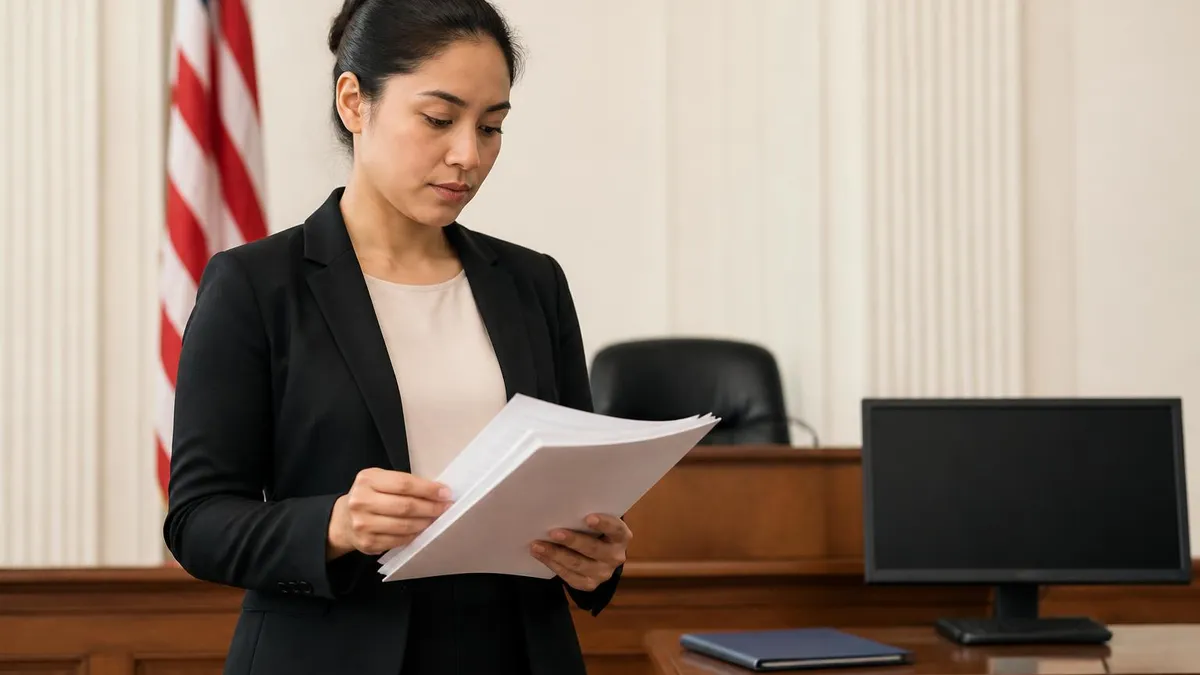
Civics Practice Test PDF (Free Printable 2026)

United States Civics Test: Complete Study Guide for 2026
About the Author

Educational Psychologist & Academic Test Preparation Expert
Columbia University Teachers CollegeDr. Lisa Patel holds a Doctorate in Education from Columbia University Teachers College and has spent 17 years researching standardized test design and academic assessment. She has developed preparation programs for SAT, ACT, GRE, LSAT, UCAT, and numerous professional licensing exams, helping students of all backgrounds achieve their target scores.