
2026 October Civics Test: Complete Practice Guide with Questions & Answers
Ace the 2026 October civics test with free practice questions, study tips, and full exam prep. 📚 Covers all 100 USCIS topics for naturalization.

The 2025 civics test is a cornerstone of the U.S. naturalization process, and understanding exactly what to expect can make the difference between passing confidently and having to reschedule your interview. Administered by U.S. Citizenship and Immigration Services (USCIS), the civics test requires applicants to answer up to 10 questions drawn from a pool of 100 official questions covering American history, government structure, and fundamental rights. A passing score means answering at least 6 of those 10 questions correctly — a 60 percent threshold that rewards focused, consistent preparation.
Each year, hundreds of thousands of applicants sit for the naturalization civics exam, making it one of the most widely taken civic knowledge assessments in the country. The civic exam test evaluates knowledge across four broad domains: Principles of American Democracy, System of Government, Rights and Responsibilities, and American History. These categories mirror the values and institutions that define the United States, so studying them not only prepares you for the test but also deepens your understanding of the country you are joining as a citizen.
Many applicants wonder whether the test has changed since they first started preparing. While USCIS briefly piloted a revised 128-question test in 2021, that version was rescinded in early 2021 and the agency returned to the original 100-question format. As of 2025, the standard 100-question pool remains in effect, so any reputable 2008 civics test study guide built around that list is still fully applicable for today's candidates.
Civics test practice is the single most effective strategy for raising your score. Research consistently shows that active recall — answering practice questions rather than passively reading answers — produces significantly stronger long-term retention. Studies on test preparation broadly find that students who use practice tests score, on average, 15 to 20 percent higher than those who only review notes. For a test with such clear, predictable content, that advantage is even more pronounced because the exact questions are publicly available.
The format of the civics interview is oral: a USCIS officer reads the questions aloud and you respond verbally. There is no written multiple-choice component. This means your preparation should include speaking answers out loud, not just recognizing them on a page. Practice with a friend, record yourself, or use online tools that simulate the oral format. The more comfortable you are saying the answers confidently, the better you will perform under the mild pressure of the actual interview setting.
Applicants who are 65 years of age or older and have been lawful permanent residents for 20 or more years qualify for a reduced set of 20 questions, marked with an asterisk in the official USCIS materials. These individuals only need to answer 6 of the 10 questions correctly, just like standard applicants, but the officer draws exclusively from that shorter 20-question subset. If you qualify for this accommodation, focus your civics test practice exclusively on those starred questions to use your study time efficiently.
Whether you are preparing for your first attempt or returning after a deferred result, this guide covers everything you need: the test format, the most commonly missed questions, proven study schedules, topic-by-topic breakdowns, and free practice resources. Work through each section carefully, take the practice quizzes embedded throughout, and you will arrive at your naturalization interview ready to answer every question the officer asks.
2025 Civics Test by the Numbers
Key Facts at a Glance
| Item | Value | Details |
|---|---|---|
| Official USCIS Questions | 100 | The complete question pool |
| Passing Score | 6/10 | Must answer 6 of 10 correctly |
| Civics Portion Duration | 10–15 min | Within the full N-400 interview |

8-Week Civics Test Study Schedule
- ▸Read and memorize questions 1–12 on democracy and the Constitution
- ▸Learn the six amendments in the Bill of Rights most frequently asked
- ▸Take one timed 10-question practice quiz
- ▸Study questions 13–47 covering Congress, senators, and representatives
- ▸Memorize current senators for your state and the Speaker of the House
- ▸Practice answering out loud with a study partner
- ▸Study questions 48–70 on the President, Cabinet, and Supreme Court
- ▸Memorize current President, Vice President, and Chief Justice
- ▸Quiz yourself daily using flashcards
- ▸Study questions 71–80 on rights and responsibilities
- ▸Understand the difference between rights guaranteed to citizens vs. all persons
- ▸Complete a full 100-question written review
- ▸Study questions 81–95 covering history from colonization through Civil War
- ▸Memorize key dates: 1776, 1787, 1861, 1865
- ▸Take two full timed practice tests and review wrong answers
- ▸Study questions 96–100 and all geography questions
- ▸Learn bordering countries, oceans, and territories
- ▸Practice all 100 questions in random order
- ▸Identify and focus on questions answered incorrectly in prior weeks
- ▸Simulate the oral interview: have someone read questions aloud
- ▸Take three complete timed practice tests
- ▸Light review only — avoid cramming new information
- ▸Run through your 10 most difficult questions twice
- ▸Rest well the night before your interview
The 100 civics test questions are organized into three major thematic areas: American Government, American History, and Integrated Civics. Understanding how the questions break down by theme helps you allocate your study time strategically, focusing more hours on the sections with the most questions and the most commonly tested content. American Government questions make up the largest share, covering 57 of the 100 items, so mastering this section alone puts you well within reach of a passing score.
Within American Government, questions address the Principles of American Democracy (questions 1–12), the System of Government (questions 13–70), and Rights and Responsibilities (questions 71–80). The Principles section asks about the Supreme Law of the Land, the rule of law, separation of powers, checks and balances, and the concept of self-governance. These foundational concepts underpin everything else on the test, and USCIS officers frequently begin interviews with questions from this section because the answers reveal whether an applicant has genuine understanding rather than rote memorization.
The System of Government section is the most detailed portion of the test and the one that trips up the most applicants. It covers the three branches of government, the composition of Congress, the roles of senators and representatives, the powers of the President, the structure of the federal court system, and the functions of individual states within the federal framework. The sheer number of questions in this category means that even a handful of missed items here can put your total score at risk, so drill these thoroughly using timed civics test practice sessions.
American History questions span three sub-themes: Colonial Period and Independence (questions 81–86), the 1800s (questions 87–91), and Recent American History and Other Important Historical Information (questions 92–100). These questions test knowledge of the causes of the American Revolution, the founding documents, the Civil War and its aftermath, World War I and II, the Cold War, civil rights movements, and the contributions of key historical figures. Knowing not just the facts but the sequence and context of these events will help you answer confidently even when a question is phrased in an unexpected way.
Integrated Civics covers Geography, Symbols, and Holidays (questions 96–100 overlap here). Geography questions ask about the bordering countries (Canada and Mexico), the two major rivers (Mississippi and Missouri), the two major oceans on U.S. coasts, and the capital city. Symbol and holiday questions test knowledge of the national anthem, the flag, Independence Day, and other civic milestones. While this section is smaller, it is among the easiest to master quickly — a few hours of focused review is usually sufficient for most candidates.
One of the most important civics test questions — and one that changes regularly — involves current officeholders. The names of the current President, Vice President, Speaker of the House, and Chief Justice of the Supreme Court must be memorized using the most up-to-date information available at the time of your interview. USCIS updates its official answer list when new officials take office, and their answer key is publicly available. Always verify these answers within a month of your scheduled interview date. Preparing for your civic test 2025 means using the freshest information, not a guide printed two years ago.
It is also worth noting that some questions have multiple acceptable answers. For example, when asked to name one right guaranteed by the First Amendment, any of the following is correct: freedom of speech, freedom of religion, freedom of the press, freedom of assembly, and freedom of petition. The USCIS officer will accept any one valid answer. Understanding which questions have single correct answers versus multiple acceptable answers gives you flexibility during the interview and removes unnecessary anxiety about giving the exact phrasing found in study materials.
Civics Test Practice: Strategies That Work
Active recall is the most scientifically validated study method for memorizing the civics test questions. Instead of reading through the answer sheet, cover the answers and force yourself to produce the correct response from memory. Start with 10 questions per session, check your answers, mark the ones you missed, and return to those missed items at the start of your next session. This spaced repetition approach ensures that weak answers get more repetition while strong ones are reinforced efficiently.
Within two to three weeks of consistent daily practice using active recall, most applicants find that they can answer 85 to 90 of the 100 questions from memory. At that point, shift your focus entirely to the remaining difficult items rather than cycling through everything equally. Use index cards, a mobile flashcard app, or one of the many free online civics quiz simulators to keep sessions short — 15 minutes of focused active recall beats 90 minutes of passive reading every time.
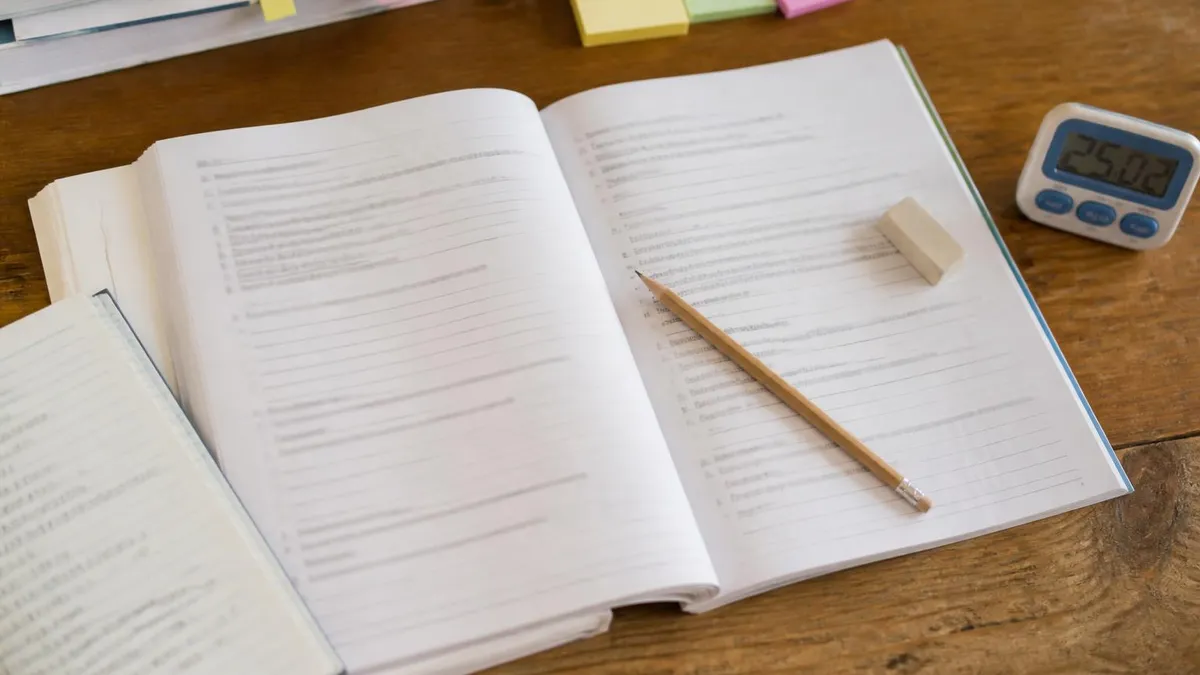
Preparing for the Civics Test: Self-Study vs. Formal Class
- +Self-study is completely free using USCIS official materials and online practice quizzes
- +Study at your own pace and schedule around work and family obligations
- +Flexible format — use flashcards, apps, videos, or written review as preferred
- +Many free civics practice test tools simulate the oral format with audio questions
- +The 100-question pool is publicly available, making self-study highly predictable
- +Online resources are updated quickly when officeholders change, keeping content current
- −Self-study requires strong self-discipline and consistent daily commitment
- −No instructor to clarify confusing questions or provide personalized feedback
- −Some applicants struggle with English-language materials without guided support
- −It can be difficult to simulate the oral interview pressure without a practice partner
- −Risk of using outdated materials with wrong current-officeholder answers
- −Without a schedule, preparation may be uneven, leaving some topics undertested
Complete Civics Test Preparation Checklist
- ✓Download the official USCIS list of 100 civics questions and answers from uscis.gov.
- ✓Verify the current names of the President, Vice President, Speaker of the House, and Chief Justice.
- ✓Look up the two current U.S. senators representing your state of residence.
- ✓Identify your U.S. House representative based on your congressional district.
- ✓Practice answering all 100 questions out loud at least five times before your interview.
- ✓Complete a minimum of 10 timed 10-question practice tests using randomized question order.
- ✓Focus extra review time on any question you miss more than twice across practice sessions.
- ✓If you qualify for the 65+/20-year accommodation, drill only the 20 starred questions.
- ✓Take a civics exam practice test that simulates the oral format with audio questions.
- ✓Review the correct answers for multi-answer questions so you know all acceptable responses.

You Only Need 6 Correct Out of 10
The USCIS officer draws 10 questions from the 100-question pool. You pass the moment you answer your sixth question correctly — the officer stops asking. This means strong performance on the first six questions can end the civics portion early. Focus on mastering your most confident topics so you can answer the opening questions quickly and accurately, giving yourself a buffer even if you stumble on one or two later questions.
Even well-prepared applicants consistently miss a handful of specific civics test questions. Knowing which ones are hardest lets you invest extra preparation time where it pays off most. The most frequently missed question categories involve the names of current officeholders, the specific powers of each branch of government, the amendments to the Constitution beyond the first ten, and geography questions about U.S. territories and borders. A targeted review of these four areas alone can lift a borderline score well above the passing threshold.
Questions about amendments beyond the Bill of Rights catch many applicants off guard. The 13th Amendment abolished slavery, the 14th Amendment granted citizenship and equal protection, the 15th Amendment gave all citizens the right to vote regardless of race, the 19th Amendment gave women the right to vote, and the 26th Amendment lowered the voting age to 18. USCIS asks about these specific amendments by number and effect. A simple mnemonic or timeline chart helps lock in the numbers so you do not confuse the 13th with the 15th or the 19th with the 26th during your interview.
The question "What is the economic system of the United States?" trips up many applicants because there are two acceptable answers: capitalist economy and market economy. Both are correct, and either will be accepted. Similarly, the question about the name of the Speaker of the House requires the current officeholder's name — this information changes with each new Congress, so verify it within a month of your interview. The USCIS website posts updated answer sheets whenever a relevant change in leadership occurs, and this is the authoritative source you should use rather than any third-party guide.
Geography questions often feel easier than they are under pressure. The United States borders Canada to the north and Mexico to the south. The Atlantic Ocean is on the East Coast and the Pacific Ocean is on the West Coast. The two longest rivers in the United States are the Missouri River and the Mississippi River.
The capital of the United States is Washington, D.C. These facts are straightforward, but applicants who have not explicitly drilled them sometimes hesitate or confuse river names. Including geography in every practice session, even just one or two geography questions per sitting, prevents this kind of avoidable hesitation.
The question about the name of the national anthem — "The Star-Spangled Banner" — is simple but easy to fumble if you have been focusing exclusively on government and history questions. Similarly, knowing that Francis Scott Key wrote the words to the national anthem and that it was inspired by the War of 1812 adds context that can help you remember the answer even if the phrasing of the question is slightly unexpected.
USCIS civics test questions about symbols and holidays tend to be among the easiest to answer correctly, so ensure you do not lose easy points by neglecting this category.
For the civics test questions about the Civil War, applicants must know both that it was fought during the 1860s and that it was fought over the issues of slavery and states' rights. The war lasted from 1861 to 1865, Abraham Lincoln was President during the Civil War, and the Emancipation Proclamation declared enslaved people in Confederate states free in 1863.
These related facts often appear in multiple questions, and understanding how they connect makes it easier to recall any individual fact when the officer asks about it in isolation. Historical context anchors individual facts far more effectively than rote memorization alone.
One of the best ways to identify your personal weak spots is to use a timed civics exam practice test that tracks which questions you consistently miss across multiple attempts.
Pattern recognition is key: if you miss the same question three times in a row, that is not bad luck — it is a signal that this item needs a different memorization approach, such as writing it on a sticky note in a visible location, creating a rhyme or association, or finding a short video explanation that gives you a mental image to attach to the fact. Diverse encoding strategies create more retrieval pathways in memory, making correct recall faster and more reliable when it counts.
Several civics test questions require the name of the current President, Vice President, Speaker of the House, or Chief Justice of the Supreme Court. These answers change when new officials are sworn in, and USCIS updates its official answer key accordingly. If you memorized names from a study guide printed more than six months ago, verify them against the current USCIS answer sheet at uscis.gov before your interview date — an outdated name will be marked incorrect even if it was right when you studied it.
While the USCIS naturalization civics test is the most widely known civic knowledge exam in the United States, it is far from the only one. Several states have enacted their own civic literacy requirements for high school graduation, and college students in some states must pass a civics assessment before receiving their degree. Understanding the landscape of state-level civic exams helps students, educators, and administrators identify the right preparation resources for their specific requirements.
Florida's civic literacy requirement is among the most prominent state-level programs. The Florida Civic Literacy Exam (FCLE) is required for all students entering Florida public colleges and universities. Students who did not pass the Florida EOC Civics Assessment in middle school must pass the FCLE before graduating from a Florida state college or university.
The exam tests knowledge of U.S. and Florida government, history, and constitutional principles at a level comparable to the naturalization civics exam, though with additional focus on Florida-specific government structures and history. Applicants preparing for the civic literacy test in Florida will find significant overlap with the USCIS 100 questions, making combined preparation highly efficient.
Other states with notable civic education requirements include Arizona, North Dakota, and Louisiana, which require students to pass a civics test modeled closely on the USCIS 100-question exam before graduating from high school. In Arizona, for example, students must answer at least 60 of 100 questions correctly — the same passing standard as the naturalization test. This parallel standard means that the official USCIS materials are directly applicable to these state graduation requirements, and any practice tool designed for naturalization candidates is equally useful for high school students in these states.
The overlap between state civic literacy exams and the federal naturalization civics test reflects a broader national consensus that civic knowledge is foundational to informed participation in democracy. Educators, policymakers, and civic organizations have long argued that the same factual baseline should be expected of all citizens regardless of how they arrived at that status. The growing alignment between naturalization standards and K-12 graduation requirements suggests that the 100-question format is likely to remain the dominant framework for assessing civic literacy for the foreseeable future.
For college students facing the Florida Civic Literacy Exam, the preparation strategy mirrors what works for naturalization candidates: active recall using the official question list, timed practice tests, and oral rehearsal of answers. The FCLE is offered in a computer-based multiple-choice format rather than oral question-and-answer, which means test-takers need not practice speaking answers aloud — but they do need to be careful not to be tricked by plausible-sounding wrong answer choices. Multiple-choice preparation should include reviewing all four options for each question, not just confirming the correct answer, so that recognizing distractors becomes automatic.
Teachers and instructors looking for classroom-ready civics resources will find that a structured civics exam practice test tool provides ready-made assessments that map directly to both the USCIS question bank and state graduation standards. These resources save significant planning time while ensuring that classroom practice aligns precisely with the content students will encounter on their official exam. Many platforms offer customizable quiz modes that allow instructors to filter by topic category, difficulty, or question number range, making it easy to build targeted review sessions for specific units of instruction.
Regardless of whether you are preparing for the federal naturalization test, a state graduation exam, or a college civic literacy requirement, the foundational study approach is the same: learn the 100 official USCIS questions thoroughly, practice retrieving answers under timed conditions, verify current officeholder names close to your exam date, and simulate the test format as accurately as possible in your preparation sessions. The content is standardized, publicly available, and fully learnable with consistent effort over six to eight weeks of focused preparation.
In the final two weeks before your naturalization civics interview, your preparation strategy should shift from broad learning to targeted consolidation. Stop introducing new memory techniques or unfamiliar materials — your brain needs time to consolidate what it has already learned, not room for new confusion. Run through all 100 questions twice in the first week of this final phase, marking any answer you cannot produce within 30 seconds. Those marked questions become your exclusive focus for the second week.
Simulate the interview setting at home as realistically as you can. Dress in the clothes you plan to wear to your appointment. Sit across a table from a practice partner. Have them read questions without showing you the text. Answer aloud, one question at a time, and move on without dwelling on any single answer for more than 60 seconds. This dress rehearsal approach reduces interview-day anxiety by converting the unknown into the familiar. The brain performs better in novel situations when it has already processed similar conditions through deliberate simulation.
Pay special attention to how you handle a question you genuinely do not know. During the actual interview, the USCIS officer is permitted to ask up to 10 questions, and you may move past one you cannot answer — the officer will continue asking until you have either passed (6 correct) or failed (5 incorrect out of the questions asked). If you do not know an answer, it is better to give your best attempt than to say nothing.
A partial answer may be accepted if it contains the core correct element, and an honest effort reflects well on your preparation even if the specific answer is incomplete.
Nutrition and sleep in the 48 hours before your interview are underrated preparation factors. Research on exam performance consistently finds that sleep deprivation reduces recall accuracy by 20 to 40 percent on memory-dependent tasks. A well-rested brain retrieves stored information faster and more accurately than an exhausted one. Plan to get at least seven to eight hours of sleep the night before your interview, eat a normal breakfast, and arrive at the USCIS office 15 to 20 minutes early so you have time to settle and focus before being called in.
On interview day, listen carefully to each question before beginning to answer. USCIS officers read from the official list, but phrasing and emphasis can vary slightly depending on the individual officer. If a question is unclear, it is entirely appropriate to ask the officer to repeat it — this is a normal part of the interview, not a negative signal. Take a brief breath before answering complex questions. The few seconds it takes to gather your thoughts is much shorter than it feels, and a composed, confident answer is always better than a rushed, partially correct one.
If your first interview results in a deferred decision on the civics portion, USCIS will schedule a second appointment typically within 60 to 90 days. Use that time intensively, focusing only on the questions you were unable to answer correctly. Request feedback from the officer if possible — some officers will indicate which topics were problematic, giving you precise targets for your second attempt. Many applicants who initially struggle with three or four specific questions pass comfortably on their second attempt after targeted review of just those items.
Remember that passing the civics test is entirely achievable with consistent, structured preparation. The questions are known in advance, the passing threshold is attainable, and the resources to prepare are free and widely available. Thousands of applicants pass every week after studying with the same publicly available materials you are using right now. Trust your preparation, verify your current-officeholder answers one final time the week of your interview, and approach the appointment with the confidence that comes from knowing you have done the work required to succeed.
Civics Questions and Answers

100 Questions and Answers for the Citizenship Test: Complete Study Guide

Unlocking the Value of a Civics Class: A Comprehensive Guide

2008 Naturalization Civics Test: Complete Study Guide & Practice Questions
Civics Practice Test PDF (Free Printable 2026)

United States Civics Test: Complete Study Guide for 2025
About the Author

Educational Psychologist & Academic Test Preparation Expert
Columbia University Teachers CollegeDr. Lisa Patel holds a Doctorate in Education from Columbia University Teachers College and has spent 17 years researching standardized test design and academic assessment. She has developed preparation programs for SAT, ACT, GRE, LSAT, UCAT, and numerous professional licensing exams, helping students of all backgrounds achieve their target scores.