

Certified Photogrammetrist Practice Test
Updated for September 2026Photogrammetry is a specialized field within geospatial science that involves deriving precise measurements and spatial data from photographs. As technology advances and the demand for high-precision mapping grows, the need for qualified professionals in photogrammetry is on the rise. Achieving the Certified Photogrammetrist designation, awarded by the American Society for Photogrammetry and Remote Sensing (ASPRS), is a significant credential for professionals in this field. The certification confirms a photogrammetrist’s expertise in capturing, analyzing, and interpreting aerial and satellite imagery to produce accurate maps and 3D models used in various sectors, from environmental conservation to urban planning.
Certified Photogrammetrist Practice Test Questions
Prepare for the Certified Photogrammetrist exam with our free practice test modules. Each quiz covers key topics to help you pass on your first try.
Certified Photogrammetrist Aerial Triangul...
Certified Photogrammetrist Exam Questions covering Aerial Triangulation & Bundle Adjustment. Master Certified Photogrammetrist Test concepts for certification prep.
Certified Photogrammetrist Camera Calibrat...
Free Certified Photogrammetrist Practice Test featuring Camera Calibration & Sensor Geometry. Improve your Certified Photogrammetrist Exam score with mock test prep.
Certified Photogrammetrist Digital Photogr...
Certified Photogrammetrist Mock Exam on Digital Photogrammetry & Point Clouds. Certified Photogrammetrist Study Guide questions to pass on your first try.
Certified Photogrammetrist Photogrammetric...
Certified Photogrammetrist Test Prep for Photogrammetric Product Generation. Practice Certified Photogrammetrist Quiz questions and boost your score.
Certified Photogrammetrist Quality Control...
Certified Photogrammetrist Questions and Answers on Quality Control & Standards in Photogrammetry. Free Certified Photogrammetrist practice for exam readiness.
Certified Photogrammetrist Stereo Compilat...
Certified Photogrammetrist Mock Test covering Stereo Compilation & 3D Modeling. Online Certified Photogrammetrist Test practice with instant feedback.
Certified Photogrammetrist Geodesy & Map P...
Free Certified Photogrammetrist Quiz on Geodesy & Map Projections. Certified Photogrammetrist Exam prep questions with detailed explanations.
Certified Photogrammetrist Photogrammetric...
Certified Photogrammetrist Practice Questions for Photogrammetric Data Acquisition. Build confidence for your Certified Photogrammetrist certification exam.
Key Takeaways
Free Photogrammetrist Practice Test Online
- High Demand: Certified photogrammetrists are in demand across industries like government, engineering, and environmental science.
- Lucrative Career: With the certification, professionals can access higher salaries and more advanced job opportunities.
- In-Depth Knowledge Required: The test requires extensive knowledge of photogrammetry principles, software tools, and analytical techniques.
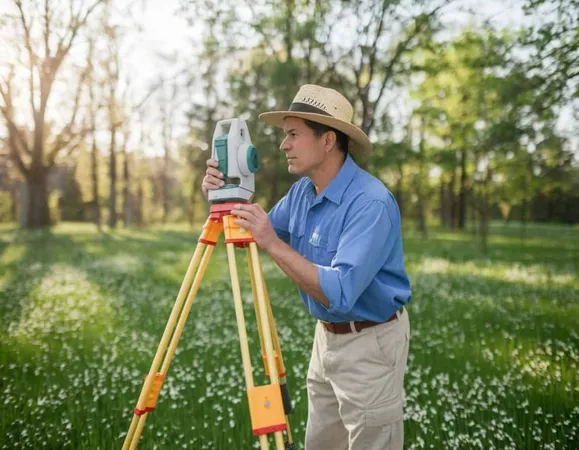
What is a Certified Photogrammetrist?
A (Certified Photogrammetrist) is a professional skilled in creating detailed, accurate maps and models from aerial images and other geospatial data. Certified by the American Society for Photogrammetry and Remote Sensing (ASPRS), the credential signifies a high level of expertise in photogrammetry, a branch of science focused on obtaining measurements and 3D spatial data from photographs. This certification ensures professionals are well-versed in methods that support industries like construction, engineering, and environmental management.
Photogrammetry is pivotal in today’s geospatial landscape, with leveraging images, software, and analytical techniques to develop accurate spatial representations used in mapping, urban planning, and land management.
- Utilizing aerial and satellite imagery to create high-precision maps and 3D models
- Analyzing geographic data to support planning and development projects
- Collaborating with GIS specialists, surveyors, and urban planners
Certified Photogrammetrist Study Tips
What's the best study strategy for Certified Photogrammetrist?
Focus on weak areas first. Use practice tests to identify gaps, then study those topics intensively.
How far in advance should I start studying?
Most successful candidates begin 4-8 weeks before the exam. Create a structured study schedule.
Should I retake practice tests?
Yes! Take each practice test 2-3 times. Focus on understanding why answers are correct, not memorizing.
What should I do on exam day?
Arrive 30 min early, bring required ID, read questions carefully, flag difficult ones, and review before submitting.
Responsibilities and Job Description of a Photogrammetrist
Photogrammetrists play a crucial role in the fields of geospatial science, cartography, and land surveying. Their expertise is indispensable for accurately mapping and modeling large geographical areas.
Core Responsibilities:
- Data Collection: Gathering and processing aerial imagery and other geospatial data to create maps and 3D models
- Image Analysis: Using specialized software to analyze and interpret photographic data, making adjustments for scale, rotation, and lens distortions
- 3D Modeling: Creating and refining 3D representations of geographic areas, which serve as critical resources for urban planning, environmental studies, and construction projects
- Collaboration: Working closely with professionals from related fields, such as surveyors, geographers, and environmental scientists
- Quality Assurance: Ensuring high accuracy in spatial data, which is crucial for projects where precision is critical, such as infrastructure development
Career Opportunities for Photogrammetrists
Certified Photogrammetrist can explore a wide range of career paths across industries, including:
- Government Agencies: Many federal, state, and local agencies hire photogrammetrists to assist with land management, urban planning, and environmental conservation efforts. Agencies like the U.S. Geological Survey (USGS) often employ photogrammetrists to develop mapping systems and conduct geographical surveys.
- Private Sector: Engineering firms, construction companies, and environmental consulting firms are among the many private organizations that rely on photogrammetrists to create accurate spatial data. They play a key role in projects involving site development, urban planning, and environmental assessments.
- Academic and Research Institutions: Many universities and research centers employ photogrammetrists to advance spatial analysis and contribute to fields like archeology, environmental studies, and climate science.
Salary Expectations for Photogrammetrists
The average salary for a photogrammetrist varies by location, experience level, and industry. Certified photogrammetrists generally earn higher salaries due to their advanced qualifications and specialized skills.
- Entry-Level: Entry-level photogrammetrists can expect an average salary ranging from $50,000 to $65,000 per year.
- Mid-Level to Experienced: With several years of experience and certification, mid-level photogrammetrists typically earn between $65,000 and $85,000 per year.
- Senior-Level: Highly experienced photogrammetrists or those in managerial positions may earn upwards of $90,000, especially if working for major engineering firms or government agencies.
The certification can positively impact earning potential, as certified professionals are recognized for their expertise and credibility in the field, making them more attractive to employers.
Preparing for the Test: Key Information
Becoming a Certified Photogrammetrist involves passing the test, a rigorous exam that assesses an individual's knowledge of photogrammetry concepts, software, and analytical techniques.
Eligibility Requirements:
- A minimum of four years of experience in photogrammetry or a related field is typically required to qualify for the exam.
- Candidates should have a solid understanding of aerial imagery analysis, 3D modeling, geospatial data management, and related technical skills.
Exam Content: The test covers a wide range of topics, including:
- Fundamentals of Photogrammetry: Principles of remote sensing, image interpretation, and 3D mapping
- Data Processing Techniques: Knowledge of software tools and methodologies for refining aerial images
- Analytical Skills: Understanding of scale, resolution, and other variables critical to creating accurate geospatial data

Study Resources:
- ASPRS Handbook: A valuable study resource for candidates, detailing the principles, practices, and standards in photogrammetry.
- Workshops and Seminars: ASPRS and various academic institutions offer specialized workshops to help candidates prepare for the exam.
- Practice Exams: Sample questions and practice tests can help candidates familiarize themselves with the exam format and identify areas for improvement.
Conclusion
A Certified Photogrammetrist credential opens doors to a rewarding career in geospatial science, enabling professionals to work on crucial projects across multiple industries. With the right training and experience, certified individuals can make significant contributions to infrastructure development, urban planning, and environmental conservation. This certification not only enhances career prospects but also builds credibility and expertise that are highly valued in the workforce.
- +Validates your knowledge and skills objectively
- +Increases job market competitiveness
- +Provides structured learning goals
- +Networking opportunities with other certified professionals
- −Study materials can be expensive
- −Exam anxiety can affect performance
- −Requires dedicated preparation time
- −Retake fees apply if you don't pass
Certified Photogrammetrist Questions and Answers
About the Author

Certified Professional Development Expert & Niche Certification Advisor
University of Pennsylvania Graduate School of EducationDr. Alexandra Kim holds a PhD in Professional Studies from the University of Pennsylvania and is a Certified Professional in Learning and Performance (CPLP) and Certified Professional in Talent Development (CPTD). With 17 years of corporate training and professional certification advisory experience, she helps professionals navigate specialized, emerging, and cross-industry certification programs.