

CEI Practice Test
Updated for October 2026In today’s world, safeguarding the environment has become a critical concern, and Certified Environmental Inspectors (CEIs) play a vital role in this mission. These professionals ensure compliance with environmental laws, regulations, and standards by inspecting sites, monitoring pollution, and assessing potential hazards. The certification not only validates technical knowledge but also affirms a commitment to protecting natural resources and public health.
If you are passionate about environmental protection and want to pursue a career where your work has a tangible impact, becoming a Certified Environmental Inspector offers a path to professional growth and fulfillment. This article explores what a CEI is, how to become certified, typical job responsibilities, salary prospects, and the costs involved in obtaining certification.
CEI Practice Test Questions
Prepare for the CEI - Certified Environmental Inspector exam with our free practice test modules. Each quiz covers key topics to help you pass on your first try.
CEI Air Quality Management
CEI Exam Questions covering Air Quality Management. Master CEI Test concepts for certification prep.
CEI Assessment & Evaluation
Free CEI Practice Test featuring Assessment & Evaluation. Improve your CEI Exam score with mock test prep.
CEI Environmental Monitoring & Testing
CEI Mock Exam on CEI Environmental Monitoring & Testing. CEI Study Guide questions to pass on your first try.
CEI Hazardous Materials & Remediation
CEI Test Prep for CEI Hazardous Materials & Remediation. Practice CEI Quiz questions and boost your score.
CEI Communication & Collaboration
CEI Questions and Answers on Communication & Collaboration. Free CEI practice for exam readiness.
CEI Core Principles & Fundamentals
CEI Mock Test covering Core Principles & Fundamentals. Online CEI Test practice with instant feedback.
CEI Leadership & Management
Free CEI Quiz on Leadership & Management. CEI Exam prep questions with detailed explanations.
CEI Professional Standards & Ethics
CEI Practice Questions for Professional Standards & Ethics. Build confidence for your CEI certification exam.
CEI Quality Assurance & Improvement
CEI Test Online for Quality Assurance & Improvement. Free practice with instant results and feedback.
CEI Safety & Compliance
CEI Study Material on Safety & Compliance. Prepare effectively with real exam-style questions.
CEI Technology & Tools
Free CEI Test covering Technology & Tools. Practice and track your CEI exam readiness.
CEI Environmental Regulations & Compliance
CEI Exam Questions covering Environmental Regulations & Compliance. Master CEI Test concepts for certification prep.
CEI Pollution Control & Waste Management
Free CEI Practice Test featuring Pollution Control & Waste Management. Improve your CEI Exam score with mock test prep.
Key Takeaways
Free CEI Practice Test Online
The Certified Environmental Inspector (CEI) designation certifies professionals trained in evaluating compliance with environmental regulations.
Becoming a CEI requires relevant education, practical experience, and passing a standardized certification exam.
CEIs conduct inspections related to air, water, soil quality, waste management, and environmental hazards.
Salaries for CEIs typically range from $45,000 to $75,000, influenced by experience and geographic location.
Exam fees and certification costs vary but generally range from $200 to $600.
What is a Certified Environmental Inspector?
A Certified Environmental Inspector (CEI) is a trained and credentialed professional who conducts inspections and assessments to ensure that organizations comply with environmental laws and regulations. The CEI focuses on a broad range of environmental issues including air and water quality, hazardous waste management, soil contamination, and ecosystem protection.
CEIs are often employed by government agencies, environmental consulting firms, industrial companies, and non-profit organizations. Their role involves both on-site inspections and documentation, ensuring that environmental standards are met to protect public health and ecosystems.
The certification confirms the inspector’s technical competence and familiarity with regulations such as the Clean Air Act, Clean Water Act, Resource Conservation and Recovery Act (RCRA), and state-level environmental codes. By earning the CEI credential, professionals demonstrate their readiness to effectively monitor and enforce environmental compliance.
- ✓Review the official CEI exam content outline
- ✓Take a diagnostic practice test to identify weak areas
- ✓Create a study schedule (4-8 weeks recommended)
- ✓Focus on your weakest domains first
- ✓Complete at least 3 full-length practice exams
- ✓Review all incorrect answers with detailed explanations
- ✓Take a final practice test 1 week before exam day
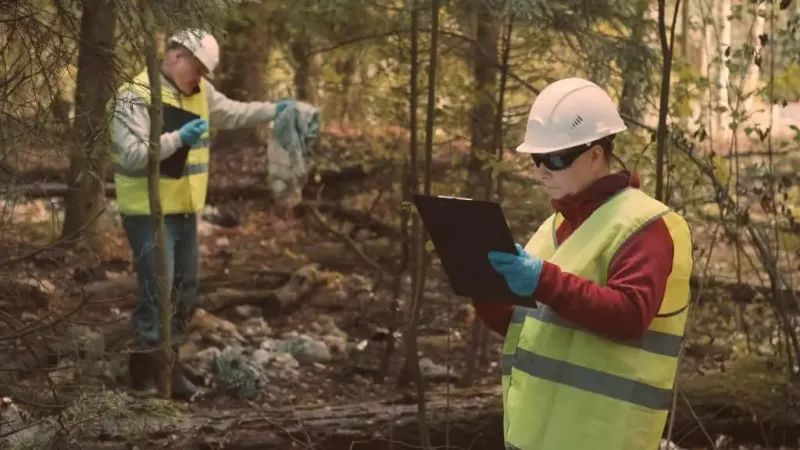
How to Become a Certified Environmental Inspector
The path to becoming a CEI typically involves a mix of education, experience, and examination:
-
Obtain Relevant Education
A degree in environmental science, biology, chemistry, engineering, or a related field is usually required. Some positions accept an associate degree combined with relevant work experience. -
Gain Practical Experience
Hands-on experience through internships, entry-level environmental roles, or fieldwork is essential. Many certification programs require a minimum number of work hours in environmental inspection or compliance.
Enroll in a Certification Program
Various organizations offer CEI certification programs, including the National Association of Environmental Professionals (NAEP) and other regional bodies. These programs cover inspection techniques, environmental regulations, report writing, and safety practices.
Prepare for the Certification Exam
Candidates must study environmental laws, inspection protocols, sampling methods, and enforcement procedures. Study guides and preparatory courses are available to enhance readiness.
Pass the Certification Exam
The exam typically combines multiple-choice questions and scenario-based problems that test knowledge and practical application.
Maintain Certification
Most certifications require periodic renewal through continuing education credits and adherence to ethical standards.
Job Description for Certified Environmental Inspectors
Certified Environmental Inspectors play a critical role in environmental stewardship. Their core responsibilities include:
Conducting Site Inspections
Visit industrial, commercial, and natural sites to assess compliance with environmental laws.Collecting Samples
Gather air, water, soil, and waste samples for laboratory analysis to detect pollution or contamination.
Documenting Findings
Prepare detailed inspection reports outlining compliance status, violations, and recommendations.
Enforcing Regulations
Work with regulatory agencies to ensure violations are corrected and penalties are imposed if necessary.
Providing Technical Guidance
Advise companies and organizations on best practices for environmental management and pollution prevention.
Staying Updated on Regulations
Continuously monitor changes in environmental laws and ensure inspection protocols align with current standards.
CEIs often collaborate with engineers, scientists, legal teams, and government officials to promote environmental compliance.
Salary Expectations for Certified Environmental Inspectors
Salary ranges for Certified Environmental Inspectors vary based on experience, location, and employer type:
Entry-Level Inspectors
Usually earn between $40,000 and $50,000 per year, often working under supervision.Mid-Level Inspectors
With experience, salaries typically range from $50,000 to $65,000. Inspectors with specialized skills or certifications may command higher pay.Senior Inspectors and Managers
Those overseeing inspection teams or managing environmental compliance programs can earn $70,000 to $90,000+ annually.Government vs. Private Sector
Government roles may offer stable salaries with benefits, while private consulting positions may offer higher compensation but with variable workload.
Exam Costs for Certified Environmental Inspectors
Costs for certification can vary by provider but generally include:
Application and Exam Fee
Ranges from $200 to $500, depending on the certifying body and geographic location.Training and Study Materials
Optional preparatory courses and manuals typically cost between $100 and $300.Renewal Fees
Annual or biennial renewal fees may range from $50 to $150, often requiring proof of continuing education.
Many candidates find that employers subsidize or reimburse certification expenses.

Conclusion
Becoming a Certified Environmental Inspector offers a fulfilling career focused on protecting the environment and public health through rigorous inspection and enforcement. The certification affirms your expertise in environmental laws, technical inspection methods, and ethical practice. With increasing regulatory demands and growing awareness of environmental issues, CEIs are in high demand across sectors.
By investing in education, gaining hands-on experience, and passing the certification exam, you can build a rewarding career that makes a real difference. The salary prospects and diverse job opportunities make this an attractive path for those passionate about environmental stewardship.
- +Industry-recognized credential boosts your resume
- +Higher earning potential (10-20% salary increase on average)
- +Demonstrates commitment to professional development
- +Opens doors to advanced career opportunities
- −Exam preparation requires significant time investment (4-8 weeks)
- −Certification fees can be $100-$400+
- −May require continuing education to maintain
- −Some employers may not require certification
Sample CEI - Certified Environmental Inspector Practice Questions
Try these questions from our free CEI - Certified Environmental Inspector practice tests. The correct answer and an explanation follow each question.
Which element is ESSENTIAL for an effective professional standards & ethics program in Certified Environmental Inspector?
- A. Regular audits and continuous monitoring processes
- B. Annual review without interim checks
- C. Compliance responsibility assigned to one individual only
- D. Documentation stored without regular updates
Answer: A. Regular audits and continuous monitoring processes
Regular audits and continuous monitoring enable early detection of compliance gaps and ensure ongoing adherence to standards.
Which competency is MOST essential for professionals working in core principles & fundamentals in Certified Environmental Inspector?
- A. Critical thinking combined with practical application of knowledge
- B. Memorization of procedures without understanding principles
- C. Speed of task completion above all else
- D. Seniority-based decision making
Answer: A. Critical thinking combined with practical application of knowledge
Critical thinking allows professionals to apply knowledge effectively in varied situations, leading to better outcomes than rote procedures.
What is the MOST important skill for effective leadership & management in Certified Environmental Inspector?
- A. Clear communication and the ability to align team efforts with objectives
- B. Technical expertise alone without people skills
- C. Maintaining strict authority over all decisions
- D. Avoiding conflict at all costs
Answer: A. Clear communication and the ability to align team efforts with objectives
Clear communication is essential for aligning team efforts, building consensus, and ensuring everyone understands and works toward shared objectives.
What is the MOST effective way to stay current with developments in core principles & fundamentals for Certified Environmental Inspector?
- A. Participating in professional development, industry events, and peer collaboration
- B. Reading only internal communications
- C. Relying on experience gained early in career
- D. Following a single expert opinions
Answer: A. Participating in professional development, industry events, and peer collaboration
A multi-faceted approach including formal development, industry events, and peer collaboration provides the broadest perspective on current developments.
Take the full CEI - Certified Environmental Inspector practice test
(CEI) Certified Environmental Inspector Questions and Answers
About the Author

Environmental Scientist & Sustainability Certification Expert
UC Berkeley College of Environmental DesignDr. Laura Chen holds a PhD in Environmental Science and an MS in Chemistry from UC Berkeley. A Certified Hazardous Materials Manager with 15 years of environmental consulting experience, she specializes in ISO 14001 environmental management, HAZWOPER certification, and wastewater operator licensing. She has coached professionals through state and federal environmental certification programs nationwide.