
CCTC Certified Clinical Transplant Coordinator Practice Test PDF (Free Printable 2026 September)
✍🏼 Pass your CCTC Certified Clinical Transplant exam on the first attempt. Practice questions with detailed answer explanations, hints, and instant scoring.
Free CCTC Practice Test PDF
The CCTC (Certified Clinical Transplant Coordinator) credential from ABTC (American Board for Transplant Certification) validates the expertise of healthcare professionals who coordinate transplant patients across all phases of care — from pre-transplant evaluation and listing through organ procurement, surgery, and long-term post-transplant follow-up. Our free printable PDF lets you study offline with realistic exam-style questions drawn from every major domain tested by ABTC.
The CCTC examination covers transplant immunology, organ allocation systems and UNOS/OPTN policy, pre-transplant evaluation and listing, organ procurement and preservation, post-transplant management including immunosuppression protocols, and patient education and care coordination. Download the PDF once and use it to review concepts, test yourself, and flag areas for deeper study before your certification exam.
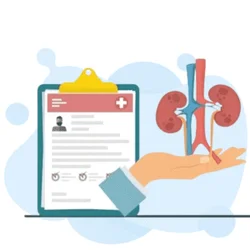
What the CCTC Exam Covers
Transplant Immunology
The HLA system is foundational. The exam tests HLA Class I antigens (HLA-A, HLA-B, HLA-C) and Class II antigens (HLA-DR, HLA-DQ, HLA-DP) as well as how HLA matching and mismatching affect outcomes in kidney and other organ transplants. Antibody-related concepts are heavily tested: panel reactive antibody (PRA) percentage reflects degree of sensitization, and donor-specific antibodies (DSA) are a critical risk factor for rejection. Crossmatch types — complement-dependent cytotoxicity (CDC) crossmatch and flow cytometry crossmatch — must be distinguished. Rejection types including hyperacute, acute cellular, antibody-mediated rejection (AMR), and chronic allograft nephropathy all appear on the exam.
Organ Allocation Systems
UNOS/OPTN allocation policy varies by organ. For kidney, the Kidney Donor Profile Index (KDPI) assesses donor quality and the Estimated Post-Transplant Survival (EPTS) score determines recipient priority. Liver allocation uses the MELD score (Model for End-Stage Liver Disease). Heart allocation uses medical urgency statuses 1A, 1B, and 2. Lung allocation is determined by the Lung Allocation Score (LAS). Exams also test waiting list management: listing criteria, active versus inactive status, and geographic allocation tiers.
Pre-Transplant Evaluation and Organ Procurement
Pre-transplant evaluation includes medical, surgical, and psychosocial clearances along with insurance and financial counseling. Listing criteria vary by organ — renal candidates are listed based on eGFR thresholds, hepatic candidates on MELD score thresholds, and cardiac candidates on ejection fraction and hemodynamic criteria. Organ procurement questions cover brain death criteria, the apnea test, donation after cardiac death (DCD) versus donation after brain death (DBD), organ preservation solutions (UW solution, Custodiol/HTK), cold ischemia time limits by organ, and machine perfusion concepts.
Post-Transplant Management and Immunosuppression
Induction agents tested include anti-thymocyte globulin (ATG) and basiliximab. Maintenance immunosuppression covers calcineurin inhibitors (tacrolimus with target level monitoring; cyclosporine), antiproliferative agents (mycophenolate mofetil), and corticosteroids. Monitoring involves renal function testing, drug level surveillance, and allograft biopsies. Acute rejection treatment with pulse steroids and ATG is tested. Opportunistic infections — CMV, BK virus, EBV/PTLD, and PJP — along with their prophylaxis protocols are consistently included. Non-adherence risk factors and consequences round out this domain.
- ✓Review HLA Class I and Class II antigens and their role in transplant compatibility
- ✓Study PRA percentage interpretation and donor-specific antibody (DSA) significance
- ✓Memorize crossmatch types: CDC crossmatch vs. flow cytometry crossmatch
- ✓Learn rejection types: hyperacute, acute cellular, AMR, and chronic allograft nephropathy
- ✓Study organ allocation tools: KDPI/EPTS (kidney), MELD (liver), urgency status (heart), LAS (lung)
- ✓Review brain death criteria, apnea test procedure, and DCD vs. DBD distinctions
- ✓Memorize cold ischemia time limits: kidney <36 hrs, liver <24 hrs, heart <6 hrs
- ✓Study immunosuppression protocols: induction agents, tacrolimus target levels, MMF dosing
- ✓Review opportunistic infection prophylaxis: CMV, BK virus, EBV/PTLD, PJP protocols
- ✓Practice patient education scenarios covering medication adherence and post-transplant dietary guidelines
Free CCTC Practice Tests Online
Complement the PDF with full-length interactive questions on our site. Our CCTC practice test provides instant scoring and detailed explanations for every answer, helping you understand not just what the correct answer is but why — the level of understanding ABTC tests on the actual certification exam.
- +Industry-recognized credential boosts your resume
- +Higher earning potential (10-20% salary increase on average)
- +Demonstrates commitment to professional development
- +Opens doors to advanced career opportunities
- −Exam preparation requires significant time investment (4-8 weeks)
- −Certification fees can be $100-$400+
- −May require continuing education to maintain
- −Some employers may not require certification
Join the Discussion
Connect with other students preparing for this exam. Share tips, ask questions, and get advice from people who have been there.
View discussion (9 replies)