
CCHT Exam: Complete Study Guide & Practice Test Prep 2026 September
Master the CCHT exam with our complete 2026 September study guide. 💡 Practice test questions, exam format, pass rates, and expert prep tips for hemodialysis technicians.

The CCHT exam is the nationally recognized credential that separates entry-level dialysis workers from formally certified clinical hemodialysis technicians. Administered by the Nephrology Nursing Certification Commission (NNCC), the ccht exam tests your mastery of dialysis equipment operation, patient care procedures, water treatment, and infection control across 140 scored questions. Earning this ccht credential opens doors to higher pay, travel contracts, and career advancement that non-certified technicians simply cannot access.
Understanding what the ccht exam covers—and how it is scored—is the single most important step you can take before sitting for the test. Many candidates underestimate the exam's breadth, assuming that on-the-job experience is enough. In reality, the NNCC draws questions from four content domains, each weighted differently, so a technician who is excellent on the floor but weak in water treatment theory can still fail if they have not studied systematically. A structured study plan built around the official NNCC content outline dramatically improves your odds of passing on the first attempt.
Passing rates for the ccht exam hover near 54 percent for first-time candidates, which means roughly one in two test-takers does not pass. That statistic sounds discouraging, but it also reveals an opportunity: the candidates who treat this like any other professional examination—setting a 10–12 week study schedule, taking timed practice exams, and reviewing every wrong answer—pass at rates well above the average. The exam rewards deliberate preparation, not simply years of experience at the chair.
This guide walks you through everything you need to know about the ccht exam in 2026: the eligibility requirements, the exact exam format and domain weights, realistic study timelines, the most tested content areas, and how to use practice questions strategically. Whether you are just beginning your study journey or looking for a final push in the last two weeks before your test date, you will find actionable advice tailored to where you are right now in your preparation.
One important point about exam logistics: the NNCC administers the ccht exam at Prometric testing centers throughout the United States. You must schedule your appointment through Prometric's online portal after your application is approved, and you will need to bring two forms of valid government-issued identification on test day. The exam window is typically 180 minutes, and there are no scheduled breaks once the clock starts—so practicing under timed conditions is not optional, it is essential for building the mental endurance the exam demands.
The credential itself does not expire automatically, but ccht-certified technicians must earn 45 continuing education hours every three years to maintain active certification status. This means that earning your credential is the beginning of a professional development journey, not the end of it. Many certified technicians use those CE hours strategically—pursuing advanced nephrology coursework, water treatment certifications, or leadership training—to position themselves for supervisor and clinical educator roles down the road.
Throughout this guide we reference practice resources, study schedules, and exam-day strategies backed by the most current NNCC content outline. Bookmark this page, work through each section in order, and you will arrive at your exam date with the knowledge base and test-taking confidence that a credential like this demands. Let's start by looking at the numbers that define the ccht exam landscape in 2026.
CCHT Exam by the Numbers

CCHT Exam Format & Domain Weights
| Section | Questions | Time | Weight | Notes |
|---|---|---|---|---|
| Dialysis Equipment Operation | 49 | ~53 min | 35% | Machine setup, alarms, water treatment systems |
| Dialysis Procedures | 42 | ~45 min | 30% | Cannulation, patient monitoring, emergency response |
| Dialyzer Reprocessing & Reuse | 21 | ~23 min | 15% | Cleaning protocols, testing, labeling |
| Professional Responsibilities | 28 | ~30 min | 20% | Ethics, infection control, documentation, OSHA |
| Total | 170 | 3 hours | 100% |
Before you can register for the ccht exam, you must confirm that you meet the NNCC's eligibility requirements. The primary pathway requires that you hold a current, valid license (where applicable by state law) and have completed at least 6 months of full-time clinical experience performing hemodialysis on patients within the 24 months immediately preceding your application.
Part-time experience is accepted but must be documented as the equivalent of 6 full-time months. Your employer or clinical supervisor must sign the application form verifying your hours, so build that relationship early rather than scrambling to find a supervisor signature at the last minute.
The ccht certification application is submitted online through the NNCC portal at nncc-exam.org. The application fee for first-time candidates is $200 for ANNA members and $240 for non-members (rates current as of 2026). Once your application is approved—typically within 2–3 weeks—you will receive an Authorization to Test (ATT) letter by email. The ATT is valid for 90 days, so schedule your Prometric appointment promptly rather than waiting until the last week of your testing window.
Many candidates underestimate the documentation burden of the application. You will need your Social Security number (or equivalent government ID), your employer's name and address, your supervisor's professional credentials, and a precise accounting of your clinical hours by category. If you have worked at multiple dialysis facilities, you may need letters from multiple supervisors. Gathering these documents can take one to two weeks, so start the application process well before you plan to sit for the exam—ideally 6–8 weeks before your intended test date.
International applicants and candidates who completed their clinical training outside the United States should contact the NNCC directly to discuss equivalency documentation. The NNCC reviews foreign credentials on a case-by-case basis, and the review process can add four to eight weeks to your application timeline. Do not assume that your training will be accepted without verification; the NNCC has specific requirements about the clinical settings in which your hours were earned, and outpatient chronic hemodialysis is the gold standard environment for most of the exam content.
If you fail the ccht exam on your first attempt, you may reapply after a 90-day waiting period. You will need to pay the full application fee again, and there is no limit to the number of times you can retake the exam—but repeated failures are costly in both time and money. This is why a rigorous practice test regimen before your first attempt is so valuable. Candidates who take at least five full-length timed practice exams before test day report significantly higher confidence and, anecdotally, better pass rates than those who rely on reading alone.
The NNCC also offers a CCHT-A (Advanced) credential for experienced technicians who want to demonstrate advanced clinical competency. The CCHT-A has additional eligibility requirements—including 18 months of post-CCHT clinical experience—and covers more advanced content. For most candidates reading this guide, the standard ccht exam is the appropriate first goal, and the CCHT-A becomes a natural next step after two to three years of certified practice.
Your preparation strategy should begin with a diagnostic assessment. Take one full-length ccht practice test under timed conditions before you study anything, and score it by domain. This diagnostic will reveal exactly which of the four content domains—equipment operation, procedures, reprocessing, or professional responsibilities—needs the most attention. Most candidates discover that they are stronger in the clinical procedures domain (reflecting their day-to-day work experience) and weaker in water treatment and dialyzer reprocessing theory. Knowing this at the outset lets you allocate your study hours strategically rather than treating all domains equally.
CCHT Practice Test Strategies by Domain
Dialysis equipment operation accounts for 35% of the ccht exam—the largest single domain. Focus your study on the complete machine setup sequence, conductivity and temperature monitoring, alarm interpretation, and the reverse osmosis water treatment system. Understand why each alarm fires, what the safe response is, and what patient risk the alarm is designed to prevent. Reviewing machine-specific troubleshooting scenarios from your clinical facility alongside the generic NNCC content gives you two layers of reinforcement for the same concepts.
When practicing ccht practice test questions in this domain, pay special attention to calculation-based questions on ultrafiltration rates, blood flow rates, and dialysate sodium modeling. These quantitative questions trip up many candidates because they require both formula recall and unit conversion under time pressure. Write the three or four core formulas on a flashcard, practice the calculations until they become automatic, and you will gain a meaningful edge over candidates who rely solely on recognition-based memorization for the equipment domain.

Is the CCHT Certification Worth Pursuing?
- +Higher earning potential — certified technicians earn 10–20% more than non-certified peers on average
- +Required or preferred for travel CCHT jobs, which pay $30–$45/hr with housing stipends
- +Demonstrates clinical competency to employers, patients, and state regulators
- +Portability — the NNCC credential is recognized at dialysis facilities nationwide
- +Strengthens your application for supervisory, clinical educator, and charge technician roles
- +Provides a structured knowledge baseline that improves patient safety outcomes
- −$200–$240 application fee plus study material costs can total $400–$600 upfront
- −54% first-time pass rate means preparation must be deliberate and time-intensive
- −45 CE hours every 3 years requires ongoing time and financial investment
- −Renewal fee applies every 3 years regardless of continuing education completion
- −Exam eligibility requires 6 months of supervised clinical experience — not purely academic
- −Some states add their own certification or registry requirements on top of the NNCC credential
CCHT Exam Readiness Checklist
- ✓Confirm you meet the 6-month clinical experience eligibility requirement before applying.
- ✓Gather supervisor signatures and hour documentation from all relevant clinical sites.
- ✓Submit your NNCC application at least 6–8 weeks before your intended test date.
- ✓Schedule your Prometric appointment as soon as you receive your Authorization to Test letter.
- ✓Complete a diagnostic practice exam under timed conditions to identify your weakest domains.
- ✓Build a 10–12 week study schedule allocating extra hours to your lowest-scoring domain.
- ✓Take at least five full-length timed ccht practice exams before your actual test date.
- ✓Review every wrong answer with the correct rationale — not just the right answer letter.
- ✓Memorize the four or five core dialysis calculation formulas and practice them without a calculator.
- ✓Confirm your Prometric testing center location, parking, and required ID two days before your exam.

The 35% Equipment Domain Is Your Biggest Lever
Because dialysis equipment operation accounts for 35% of scored questions, improving your score in this one domain by 10 percentage points raises your overall exam score by 3.5 percentage points — more than any other domain. If your diagnostic practice exam shows weakness in equipment, attack it first and attack it hard. Every hour spent mastering alarms, water treatment, and ultrafiltration calculations has outsized return compared to equal time in any other domain.
Earning your ccht certification meaningfully expands your career options, and nowhere is that more visible than in the travel dialysis technician market. Travel CCHT jobs have surged in demand since 2022, driven by persistent staffing shortages at outpatient dialysis centers operated by DaVita, Fresenius, US Renal Care, and dozens of regional independent operators.
Certified technicians who are willing to accept 13-week travel contracts routinely earn $30–$45 per hour in taxable wages, plus a non-taxable housing stipend of $1,200–$1,800 per month and a weekly meals-and-incidentals per diem. For a technician earning $22–$26 per hour in a staff position, the financial difference over a single 13-week contract can exceed $10,000.
Travel CCHT jobs require that candidates hold an active, unencumbered NNCC credential at the time of placement. Most staffing agencies—among the largest are Aya Healthcare, AMN Healthcare, and Cross Country Nurses—will not submit a candidate profile to a client facility without verified ccht certification. Some high-demand states such as California, Florida, and Texas have additional state-specific registration requirements for dialysis technicians, so confirm your state's rules before accepting a travel contract in an unfamiliar market. The NNCC offers a ccht verification service that allows employers and credentialing teams to confirm your certification status in real time through their online portal.
Beyond travel work, ccht-certified technicians who build clinical experience over two to three years become strong candidates for charge technician and clinical coordinator roles. These supervisory positions typically pay $28–$38 per hour and carry responsibility for training new technicians, managing equipment maintenance schedules, and serving as the clinical resource person during complex patient situations. Some multi-site operators also hire clinical educators—essentially traveling trainers—who work across a regional network of clinics. These roles almost always require ccht certification as a baseline, plus demonstrated communication and teaching skills.
The connection between certification and patient outcomes is also worth understanding from a professional identity perspective. Research published in nephrology nursing journals consistently shows that facilities with higher proportions of certified staff report lower rates of catheter-associated bloodstream infections, fewer treatment complications, and better patient-reported satisfaction scores.
When you earn your ccht credential, you are not just improving your resume — you are joining a community of practitioners who have demonstrated a commitment to evidence-based care standards. That matters to the patients who sit in those chairs for three to four hours, three days a week, trusting the technician on the other side of the machine.
The NNCC also offers a pathway to the CCHT-Advanced (CCHT-A) designation for technicians who want to further differentiate themselves. Eligibility for the CCHT-A requires a current active CCHT, at least 18 months of full-time clinical experience as a certified technician, and passing a separate advanced examination. The CCHT-A exam is more clinically complex and includes a higher proportion of critical-thinking scenario questions compared to the standard ccht exam. Salaries for CCHT-A holders average 8–12% above standard CCHT salaries, and the designation is increasingly listed as preferred in job postings for lead technician and supervisory roles at major dialysis operators.
Geographic salary variation is significant in the dialysis technician field. States with strong union representation or high cost of living—California, New York, Washington, Massachusetts—tend to pay certified technicians at the top of the national range, with base hourly rates of $26–$35 for staff positions. Southern and Midwestern states typically pay $18–$24 per hour in staff roles but offer abundant travel contract opportunities that elevate total compensation substantially. Rural dialysis facilities often pay competitive rates and offer sign-on bonuses of $2,000–$5,000 to attract certified staff, a dynamic that creates interesting options for technicians who are geographically flexible.
For candidates wondering about long-term career trajectories beyond the technician role, the ccht credential also serves as a bridge credential toward nephrology nursing. Many ccht-certified technicians pursue their LPN, RN, or even advanced practice nursing degrees while working in dialysis, and their clinical background in hemodialysis gives them a meaningful head start in nephrology rotations. Dialysis facilities actively recruit nurse graduates from their own technician ranks because those individuals already understand the clinical environment, the equipment, and the patient population — a combination that dramatically shortens onboarding time.
Once the NNCC approves your application and issues your Authorization to Test (ATT), you have exactly 90 days to schedule and sit for the ccht exam at a Prometric center. If you let the ATT expire without testing, you must reapply and pay the full application fee again. Schedule your appointment within the first two weeks of receiving your ATT to give yourself maximum flexibility in case you need to reschedule due to illness or an emergency.
Maintaining your ccht certification after you pass the exam requires earning 45 continuing education hours every three years. The NNCC accepts CE from a variety of sources: employer-sponsored in-services, nephrology nursing conferences, accredited online CE platforms, and formal academic coursework in relevant clinical sciences. At least some of your CE hours should come from topics outside your daily clinical routine — water treatment advances, vascular access management updates, or infection prevention protocols — to ensure that your knowledge base stays current with evolving standards of care.
The renewal fee as of 2026 is $90 for ANNA members and $120 for non-members, payable online through the NNCC portal. You will receive renewal reminder notices at 6 months and 3 months before your expiration date. Do not wait for those reminders to start earning your CE hours — spread them across the three-year cycle at a pace of about 15 hours per year. This approach prevents the stressful last-minute scramble to complete 45 hours in the 90 days before renewal, which is an unfortunately common pattern among certified technicians who let CE accumulation slide.
The NNCC's online verification system allows employers, staffing agencies, and credentialing bodies to confirm the active status of your ccht practice exam credential in real time. This ccht verification feature is widely used in travel staffing placements and by hospital credentialing departments when adding dialysis technicians to their acute care or ICU continuous renal replacement therapy (CRRT) teams.
Keep your contact information current in the NNCC portal so that verification requests and renewal notices reach you promptly — an expired credential caused by a missed renewal notice can disrupt employment and, in some states, create a compliance issue for your employer.
If your credential lapses — either because you missed the renewal deadline or failed to document sufficient CE hours — the NNCC offers a reinstatement pathway. Reinstatement within one year of expiration requires paying a late fee plus the standard renewal fee and documenting the required CE hours. Reinstatement after more than one year of lapse requires retaking and passing the ccht exam from scratch. This policy creates a strong incentive to stay current: losing your credential and having to retest is far more expensive in time and money than maintaining it consistently.
Continuing education also provides a vehicle for keeping pace with changes in dialysis technology and clinical guidelines. The kidney disease field has seen significant advances in recent years — high-volume hemodiafiltration, wearable artificial kidney prototypes, home hemodialysis expansion, and updated KDOQI vascular access guidelines all represent knowledge areas that a certified technician who graduated from training five years ago may not have encountered formally. Investing in CE that covers these emerging areas makes you more valuable to employers and more capable in the clinical setting, not just compliant with a credential requirement.
Some employers offer tuition reimbursement or paid time off for CE activities as part of their benefits package. If your employer offers these benefits, use them strategically — attend the American Nephrology Nurses Association (ANNA) national symposium, enroll in a dialysis technology update course, or pursue a water treatment operator certificate. These activities simultaneously fulfill your NNCC CE requirement, deepen your clinical knowledge, and signal professional ambition to the supervisors and clinical managers who make promotion decisions.
Finally, consider joining ANNA or a comparable professional association as part of your post-certification development plan. ANNA membership provides discounted CE courses, access to the Nephrology Nursing Journal, peer networking at regional chapter events, and a community of practice that keeps you connected to the evolving science and policy landscape of kidney care. Membership dues run $120–$160 per year — a modest investment compared to the career and salary benefits that active professional engagement delivers over a certified technician's career.
Exam-day strategy matters as much as content knowledge, and the candidates who perform best on the ccht exam are those who treat test-taking itself as a skill to develop during preparation. Begin each practice session under realistic conditions: use a timer set to 180 minutes, sit at a desk without distractions, and do not pause to look up answers mid-exam.
The discipline of finishing a full-length practice test in one sitting builds the cognitive stamina the real exam demands and reveals pacing problems — such as spending too long on equipment calculation questions — that you can correct before test day.
When you encounter a question you are unsure about, use the process of elimination aggressively. The ccht exam uses a four-option multiple-choice format, and most wrong answers contain at least one obvious clinical error. By eliminating two clearly incorrect options, you raise your odds on a guess from 25% to 50%. More importantly, eliminating wrong answers forces you to engage with the content more actively than simply reading all four options and guessing, which improves the learning value of every practice question you review.
Time management during the actual exam deserves specific attention. With 170 total questions in 180 minutes, you have an average of approximately 63 seconds per question. Most questions should take you 45–55 seconds, which leaves buffer time for the 10–15% of questions that require calculation or careful scenario analysis. If you find yourself spending more than 90 seconds on a single question, mark it and move on. Return to marked questions after you have answered everything else — a fresh perspective after completing the rest of the exam often makes the initially confusing question click into place.
Physical preparation in the 48 hours before your exam is as important as any last-minute review. Sleep deprivation measurably impairs recall, attention, and decision-making — the exact cognitive functions the ccht exam tests. Prioritize 7–8 hours of sleep the night before your exam over late-night cramming.
Eat a substantial breakfast the morning of your test. Arrive at the Prometric center at least 30 minutes early to complete check-in procedures without rushing. Bring two valid government-issued IDs, including one with a photo. Leave your phone and study materials in your car — Prometric does not allow personal items at the testing station.
In the final two weeks of preparation, shift your focus from learning new content to consolidating what you already know. Review your flashcards, re-take your weakest domain's practice questions, and read through the NNCC content outline one more time to confirm you have covered every listed topic. Avoid introducing entirely new study materials in this final stretch — unfamiliar content creates anxiety without proportional benefit. Trust the preparation work you have done across your 10–12 week study plan, and use these final weeks to sharpen and confirm rather than cram.
After you complete the exam, you will receive a preliminary pass/fail result at the Prometric testing center before you leave. Official score reports are mailed to your address on file within 4–6 weeks and include domain-level performance data.
If you passed, your certificate and wallet card arrive with the official score report — congratulations are in order, but remember that the renewal clock starts immediately. If you did not pass, the domain-level score breakdown tells you exactly where to focus your preparation for the retake, and the 90-day waiting period gives you time for a targeted study push in your weakest areas.
The investment you make in earning and maintaining your ccht certification pays dividends throughout your career in nephrology. Whether your goal is a staff position with better benefits, a travel CCHT contract that doubles your income, a supervisory role, or a bridge toward advanced nursing practice, the credential is the foundation on which those goals are built. Use the practice resources, study strategies, and exam-day tips in this guide as your roadmap, and approach the ccht exam with the confidence that comes from thorough, structured preparation.
CCHT Questions and Answers
CCHT Practice Test PDF (Free Printable 2026)

CCHT Meaning: What Is a Certified Clinical Hemodialysis Technician?

CCHT Certification: How to Become a Hemodialysis Technician 2026

How to Pass the CCHT Exam in 2026 — Complete Study Guide
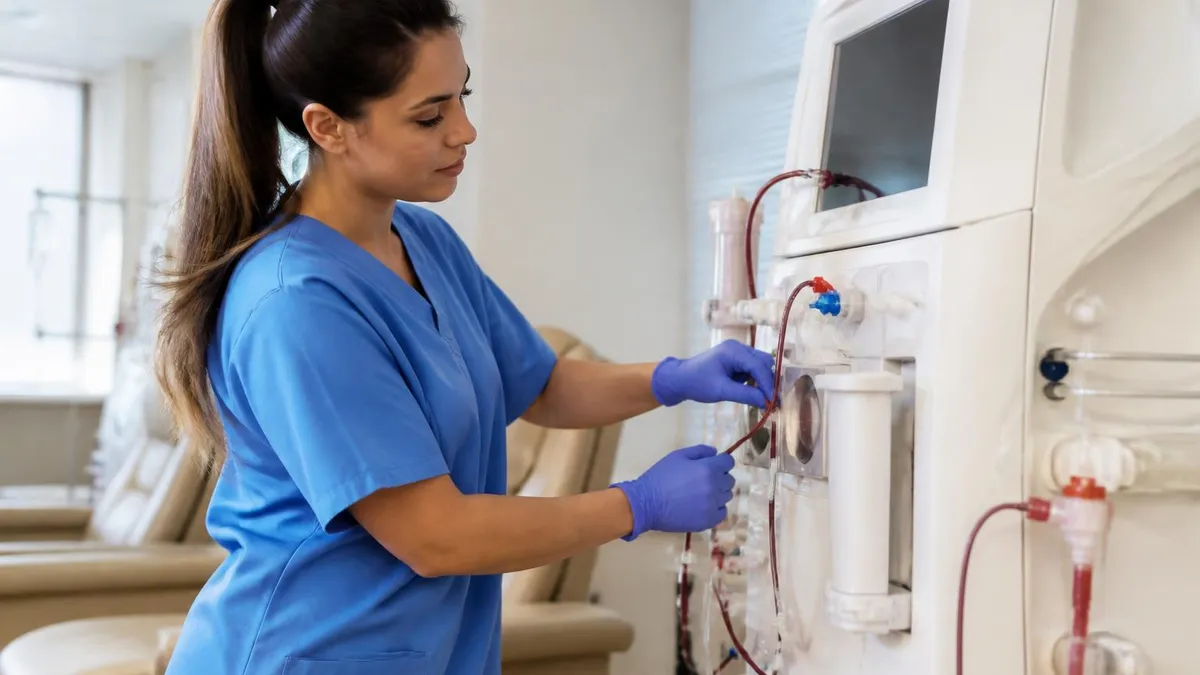
Travel CCHT Jobs: Complete 2026 Guide to Salary, Requirements & Top Agencies
About the Author

Educational Psychologist & Academic Test Preparation Expert
Columbia University Teachers CollegeDr. Lisa Patel holds a Doctorate in Education from Columbia University Teachers College and has spent 17 years researching standardized test design and academic assessment. She has developed preparation programs for SAT, ACT, GRE, LSAT, UCAT, and numerous professional licensing exams, helping students of all backgrounds achieve their target scores.
Join the Discussion
Connect with other students preparing for this exam. Share tips, ask questions, and get advice from people who have been there.
View discussion (7 replies)