
What Is the CBEST Test? Complete Guide to the California Basic Educational Skills Test
What is the CBEST test? 🎯 Learn exam format, scoring, prep tips & free practice tests for the California Basic Educational Skills Test.

If you are planning a career in education in California or Oregon, understanding what is the CBEST test is your first critical step. The California Basic Educational Skills Test — commonly called the cbest — is a standardized assessment required for individuals seeking a teaching credential, school administrator license, or other educational service credential in California. Administered by the California Commission on Teacher Credentialing (CTC) and developed by Pearson, the exam measures foundational academic competencies rather than subject-specific knowledge, making it the gateway test for anyone entering the education profession.
The CBEST examination was designed with a specific purpose: to ensure that every adult who works in California's public schools possesses the core reading, mathematics, and writing skills necessary to model academic excellence for students. Unlike content-area credential exams such as the CSET, the CBEST does not test what you know about history, science, or literature. Instead, it assesses whether you can read and interpret a passage critically, solve practical math problems, and communicate clearly through written prose — three competencies essential to every educator regardless of grade level or subject.
Thousands of aspiring teachers, paraprofessionals, substitute teachers, and school administrators take the CBEST exam every year across California and Oregon. The test is offered in two formats: a computer-based version available year-round at Pearson VUE testing centers, and a paper-based version offered on specific Saturday dates. This flexibility makes it easier for working adults and recent graduates to schedule the exam at a convenient time, removing one logistical barrier that often delays credentialing timelines.
One common misconception is that the CBEST is only for classroom teachers. In reality, a wide range of education professionals must pass the test before obtaining their credentials. This includes school counselors, speech-language pathologists working in school settings, reading specialists, library media teachers, and resource specialists. If your goal involves any kind of credentialed role within a California public school district, there is a strong chance the CBEST stands between you and that position.
Preparing effectively for the California CBEST test is entirely achievable with the right resources and a realistic study plan. Most candidates who struggle on their first attempt do so not because the content is impossibly difficult, but because they underestimate how long it has been since they engaged deeply with foundational math concepts like estimation, statistical reasoning, and number sense. Reading comprehension requires active engagement with unfamiliar passages under timed conditions, which is a specific skill that sharpens with practice rather than passive familiarity.
This guide walks you through everything you need to know about the CBEST: the exam format, the three test sections, scoring requirements, registration procedures, preparation strategies, and how to access free practice materials. Whether you are taking the exam for the first time or retaking after a previous attempt, the goal of this article is to give you an honest, complete, and actionable understanding of what lies ahead. With the right preparation and realistic expectations, passing the CBEST on your first attempt is well within reach.
Throughout this article you will find links to free practice questions, study guides, and score breakdowns that align directly with the official exam blueprint. Understanding the structure of the cbest exam before your test date dramatically increases your confidence on exam day and helps you allocate your preparation time to the areas where you need it most. Let us start with the numbers that define this exam.
CBEST by the Numbers
Key Facts at a Glance
| Item | Value | Details |
|---|---|---|
| Total Questions | 170 | Multiple choice + 2 essays |
| Maximum Test Time | 4 hrs | Flexible time per section |
| Passing Score Per Section | 123 | Out of 180 scaled score |
| Registration Fee | $41 | Per section retake available |

CBEST Exam Format & Structure
| Section | Questions | Time | Weight | Notes |
|---|---|---|---|---|
| Reading | 50 | Flexible | 33% | Multiple choice; passage-based comprehension and analysis |
| Mathematics | 50 | Flexible | 33% | Multiple choice; computation, estimation, measurement, statistics |
| Writing | 2 | Flexible | 33% | Two essay prompts: analytical and personal experience |
| Total | 170 | 4 hours | 100% |
Understanding how the CBEST is scored is just as important as knowing what material appears on the test. The exam uses a scaled scoring system rather than a simple percentage correct. Each of the three sections — Reading, Mathematics, and Writing — is scored on a scale of 20 to 80, with a section passing score of 41.
The total passing score across all three sections is 123, which means you can earn a combined score at or above 123 even if one individual section falls below 41, provided no single section scores below 37. This compensatory scoring structure gives candidates flexibility and reduces the pressure of achieving perfection on any one section.
One of the most common questions candidates ask is how to get my CBEST score after test day. If you take the computer-based version of the exam, you receive unofficial scores for the Reading and Mathematics sections immediately upon completing the test. Official scores for all three sections, including the Writing essays — which must be scored by human raters — are released approximately three to five weeks after your test date. Scores are made available online through your Pearson account and are also sent electronically to any institution you designated during registration.
Score reports are detailed and useful for planning. If you do not pass one or more sections, your report shows your scaled score for each section along with a performance breakdown by subarea. For example, the Mathematics score report indicates how you performed in Computation and Problem Solving versus Estimation and Measurement versus Statistics and Probability. This granular feedback is invaluable when you are preparing to retake a section, because it tells you exactly where to focus your additional study time rather than reviewing all material equally.
Retaking the CBEST after a failed attempt is straightforward. You can register to retake only the section or sections you did not pass, which saves both time and money. There is no limit to the number of times you can retake the exam, and there is no mandatory waiting period between attempts, though practical scheduling constraints at testing centers may mean a wait of several weeks. Many candidates pass all three sections on a second or third attempt after targeted preparation using a cbest practice test aligned to their weak subareas.
Score validity is an important practical consideration. CBEST scores are valid for life in California — they do not expire. Once you have passed all three sections, your scores remain on file with the California Commission on Teacher Credentialing indefinitely. This means candidates who passed the CBEST years ago do not need to retest when applying for a new credential type, as long as their original passing score is on record. Oregon, which also accepts CBEST scores for educator licensing, follows the same perpetual validity policy.
Writing section scoring deserves special attention because it differs fundamentally from the multiple-choice sections. Each of the two essays is scored by at least two trained human raters on a scale of 1 to 4, producing a combined essay score of 2 to 16. These raw scores are then converted to the 20-to-80 scaled score.
Raters assess your ability to organize ideas logically, support a thesis with relevant evidence, vary sentence structure, and maintain appropriate academic tone. They are not grading for perfection; a clearly organized essay with minor mechanical errors typically scores better than a technically flawless essay with a weak or underdeveloped argument.
The compensatory scoring rule is particularly helpful for candidates whose writing skills are significantly stronger than their math skills, or vice versa. For instance, if you earn a 45 on Mathematics and a 45 on Writing, you need only a 33 on Reading to achieve the minimum combined score of 123 — provided your Reading score is at least 37. Strategic awareness of this rule can reduce test-day anxiety and help you allocate time wisely across sections when the clock is running.
What Each Section of the CBEST Test Covers
The CBEST Reading section contains 50 multiple-choice questions based on passages ranging from approximately 100 to 200 words each. Passages cover a variety of topics including education, social sciences, humanities, and general interest subjects. Questions assess your ability to identify the main idea, understand the meaning of words in context, draw inferences, evaluate the author's purpose and tone, and locate specific information within a text. Approximately 60 percent of questions focus on comprehension and research skills, while the remaining 40 percent assess critical analysis and evaluation skills.
Effective preparation for the Reading section involves practicing active reading strategies rather than passive re-reading. Time yourself on individual passages to build the pace needed to complete all 50 questions within a comfortable window. Pay particular attention to questions that ask you to distinguish between a stated fact and an inference, or between the author's opinion and an objective claim — these are the question types where candidates most frequently lose points. Using a cbest test resource that mirrors the passage style and question format of the official exam is the most efficient preparation method.
CBEST Exam: Advantages and Challenges for Test-Takers
- +Compensatory scoring allows a strong performance in one section to offset a weaker section
- +Scores are valid for life — no expiration date once you pass all three sections
- +Computer-based testing available year-round with flexible scheduling at hundreds of Pearson VUE centers
- +No subject-specific content required — tests foundational skills applicable to all credential types
- +Individual section retakes allowed, so you only retest sections you did not pass
- +Accessible math level (roughly grade 8-10) for candidates who review core concepts in advance
- −No calculator permitted on the Mathematics section, which surprises many candidates
- −Writing essays are scored by human raters, creating a 3-to-5-week delay for official results
- −The compensatory rule requires a minimum score of 37 on each section, limiting flexibility
- −Test anxiety and time management under a 4-hour window can negatively affect performance
- −Registration fees apply per attempt, and retakes add up financially over multiple sittings
- −Preparation resources of inconsistent quality online make it difficult to identify the most effective study materials
CBEST Study Checklist: 10 Steps Before Test Day
- ✓Review the official CBEST Candidate Information Bulletin from Pearson to confirm current exam policies and registration procedures.
- ✓Complete a full-length diagnostic practice test under timed conditions to identify your strongest and weakest subareas.
- ✓Build a study schedule of at least 8-12 weeks that allocates more daily time to your lowest-scoring section.
- ✓Practice arithmetic operations by hand daily since calculators are not permitted on the Mathematics section.
- ✓Read 2-3 short nonfiction passages per day and summarize the main idea and author's purpose to build Reading section stamina.
- ✓Write at least one timed analytical essay and one timed personal experience essay each week during your preparation period.
- ✓Score your practice essays against the official CBEST Writing rubric and identify specific weaknesses in organization or development.
- ✓Complete section-specific practice quizzes for each CBEST math subarea: computation, estimation, and numerical relationships.
- ✓Register for your preferred test date at least 4-6 weeks in advance to secure a seat at your nearest Pearson VUE center.
- ✓On test day, bring your valid government-issued photo ID, arrive 30 minutes early, and review your allowable breaks policy in advance.
The Compensatory Scoring Rule Can Save Your Exam
Many candidates do not realize that the CBEST uses a compensatory total score of 123 across all three sections, meaning an above-average performance on two sections can offset a borderline score on the third — as long as no single section falls below 37. Strategic time allocation and awareness of this rule can be the difference between passing and retaking the entire exam.
Registering for the CBEST examination is a straightforward process managed entirely through Pearson's website. You create an account at the Pearson VUE portal designated for California educator tests, select the CBEST, choose your preferred test format (computer-based or paper-based), and select a date and location. For the computer-based exam, hundreds of Pearson VUE testing centers across California and Oregon offer testing on most weekdays and many weekends throughout the year. Paper-based administrations occur on specific Saturday dates announced annually by the California Commission on Teacher Credentialing.
Eligibility for the CBEST is intentionally broad. You do not need a college degree, a specific GPA, or prior teaching experience to register for the exam. Any adult who needs to fulfill a CBEST requirement as part of a California credentialing application can register. This includes undergraduate students completing teacher preparation programs, career changers transitioning into education mid-career, retired professionals seeking to serve as substitute teachers, and recent graduates of out-of-state credential programs applying for a California reciprocal credential.
The registration fee for the CBEST is $41 per section when registering for all three sections simultaneously, which brings the total to approximately $123 for a full first-time sitting. If you register for individual sections separately — for example, when retaking only Mathematics after passing Reading and Writing — the per-section fee structure applies. Fee waivers are available for eligible candidates who demonstrate financial hardship; details are outlined in the official Candidate Information Bulletin and must be requested at the time of registration rather than after the fact.
Accommodations for candidates with documented disabilities are available and follow procedures consistent with ADA requirements. To request accommodations such as extended testing time, a screen reader, enlarged print, or a separate testing room, you must submit documentation from a qualified professional through the Pearson accommodations request system. Processing these requests typically requires three to six weeks, so candidates who anticipate needing accommodations should initiate the process well before their desired test date to avoid scheduling delays.
The identification requirements on test day are strict and non-negotiable. You must present a valid, government-issued photo ID — such as a driver's license, state ID card, or passport — that includes both your name and photograph. The name on your ID must match exactly the name used during registration. If there is any discrepancy, test center staff have the authority to turn you away without a refund, requiring you to reschedule and pay the registration fee again. Double-check your registration details carefully before submitting your application.
California also accepts the CBEST as a substitute for the Reading Instruction Competence Assessment (RICA) requirement in certain narrow circumstances, and the test is recognized by Oregon as a qualifying exam for the Basic Skills requirement in that state's educator licensing framework. If you are applying for a credential in Oregon or holding credentials in both states simultaneously, confirm the current policy with each state's licensing authority, as reciprocity rules can change and the details matter for your specific credential type and grade level authorization.
For candidates who have previously taken educator licensing exams in other states, it is worth checking whether California accepts scores from alternative tests such as the SAT, ACT, GRE, or PRAXIS Core as a CBEST substitute. As of the current policy cycle, California does accept certain minimum scores on these exams in lieu of the CBEST for specific credential types. Reviewing the CTC's Basic Skills Requirement documentation ensures you are not paying for an exam you may already have satisfied through prior testing history.
Many candidates are surprised to learn that calculators are strictly prohibited on the CBEST Mathematics section, including on the computer-based version of the exam. All arithmetic, fraction conversions, and estimation must be performed mentally or on your scratch paper. If you have relied on a calculator for daily math for years, build daily hand-calculation practice into your study schedule at least 6-8 weeks before your test date to rebuild this essential skill.
Developing an effective study strategy for the CBEST requires honest self-assessment and disciplined follow-through. The single most important first step is taking a full-length diagnostic practice exam under realistic timed conditions. Many candidates skip this step because they are nervous about seeing a low score, but your diagnostic score is not a judgment — it is a map. A low diagnostic score in Mathematics tells you exactly where to invest the next several weeks of study time, which is infinitely more valuable than spending equal time reviewing material you already understand well.
For the Mathematics section, candidates who have been out of school for more than five years often find that their biggest challenge is not the conceptual difficulty of the content but the lack of automaticity with basic operations. When you cannot quickly estimate that 37 percent of 240 is approximately 89, or that 3/8 expressed as a decimal is 0.375, every problem takes longer than it should, and time pressure compounds across 50 questions. Rebuilding number sense through daily mental math exercises — not just practice tests — is the most efficient way to raise your Math score.
Reading preparation benefits enormously from structured active reading practice. Rather than simply reading articles and assuming comprehension, practice by reading a passage and then immediately writing down the main idea, the author's purpose, one inference that can be drawn, and one detail that supports the main argument. This four-point annotation habit forces the kind of analytical engagement that CBEST Reading questions directly test. Nonfiction passages from newspapers, academic journals, and policy documents provide the closest match to the tone and complexity of official CBEST reading passages.
Writing preparation is most effective when it combines timed practice with structured feedback. Write at least one essay per week on a timed schedule — set a 30-minute timer and complete a full essay from prompt to conclusion without stopping.
After writing, review your essay against the four-point CBEST Writing rubric, focusing on whether your introduction clearly states a position, whether each body paragraph develops a single distinct idea with specific supporting evidence, and whether your conclusion adds closure without simply repeating your introduction. Identifying the same weakness across multiple essays is a signal to target that specific skill with focused exercises.
Spacing your study sessions over 8 to 12 weeks produces significantly better retention than cramming in the final week before the exam. Research in cognitive science consistently shows that distributed practice — reviewing material across multiple shorter sessions separated by days — produces stronger long-term memory encoding than massed practice of the same total hours. A realistic 10-week plan might allocate 45 minutes per day five days per week: two days on Mathematics, two days on Reading, and one day on Writing, rotating based on your current performance gaps.
In the weeks immediately before your test date, shift your focus from learning new material to consolidating what you already know. Run timed section-by-section practice under conditions that mirror the real exam as closely as possible: a quiet room, no calculator, scratch paper only. After each practice session, review every question you answered incorrectly — not just to learn the right answer, but to understand the reasoning process that distinguishes the correct answer from the distractors. This metacognitive review step is what separates candidates who plateau at a borderline score from those who break through to a comfortable pass.
On the day of your actual California CBEST test, apply systematic time management across the full four-hour window. A practical approach is to allocate roughly 70 to 75 minutes per multiple-choice section, leaving approximately 50 minutes for the two Writing essays — 25 minutes per essay is sufficient for a well-planned response if you outline for the first five minutes. Flag difficult questions in the multiple-choice sections and return to them rather than spending disproportionate time on a single problem. This pacing strategy ensures you attempt every question while maintaining composure throughout the exam.
One of the most overlooked aspects of CBEST preparation is understanding the question format at a granular level. The multiple-choice questions on the CBEST are carefully written to include plausible distractors — wrong answers that reflect common errors or misunderstandings.
On the Mathematics section, for example, a question about calculating a percentage increase might include an answer that represents the absolute change (not the percentage change) and another that represents the percentage decrease. Recognizing these distractor patterns — and slowing down to make sure you are answering the question that is actually being asked — prevents a significant number of avoidable errors.
Reading section questions frequently test the distinction between what a passage explicitly states and what can only be inferred. A question asking what the author implies is fundamentally different from a question asking what the author states. Candidates who read quickly without distinguishing between these two question types tend to choose answers that are explicitly stated in the passage when the question requires inference, or vice versa. Practicing this distinction consciously during your preparation makes it second nature on test day and eliminates a common source of lost points.
The Writing section rewards planning more than speed. Candidates who spend the first five minutes of each essay brainstorming and outlining — rather than starting to write immediately — consistently produce better-organized essays than those who begin writing at once and discover midway through that their argument is circular or that they have run out of supporting points. A simple outline of three bullet points (main argument + two or three supporting reasons or examples) takes less than five minutes and provides a structural roadmap that prevents the most common essay-writing mistake: losing coherence under time pressure.
Vocabulary is less central to CBEST success than many candidates assume, but context-clue questions do appear on the Reading section and require you to determine the meaning of a word or phrase as it is used in a specific passage. These questions are best approached by covering the answer choices, predicting a definition based on the surrounding sentences, and then selecting the answer closest to your prediction. This strategy prevents the common error of selecting a dictionary definition that is technically correct in isolation but does not match the specific meaning the author intends in context.
Practice test selection matters enormously. Not all CBEST practice materials available online accurately reflect the difficulty level, question format, or content distribution of the official exam. The most reliable practice sources are those aligned to the official CBEST Test Framework published by Pearson and the CTC. Official preparation materials from Pearson include sample questions and a full-length practice test that are directly calibrated to the real exam. Supplementing these official resources with high-quality third-party platforms that clearly specify alignment to the official framework maximizes the efficiency of your preparation time.
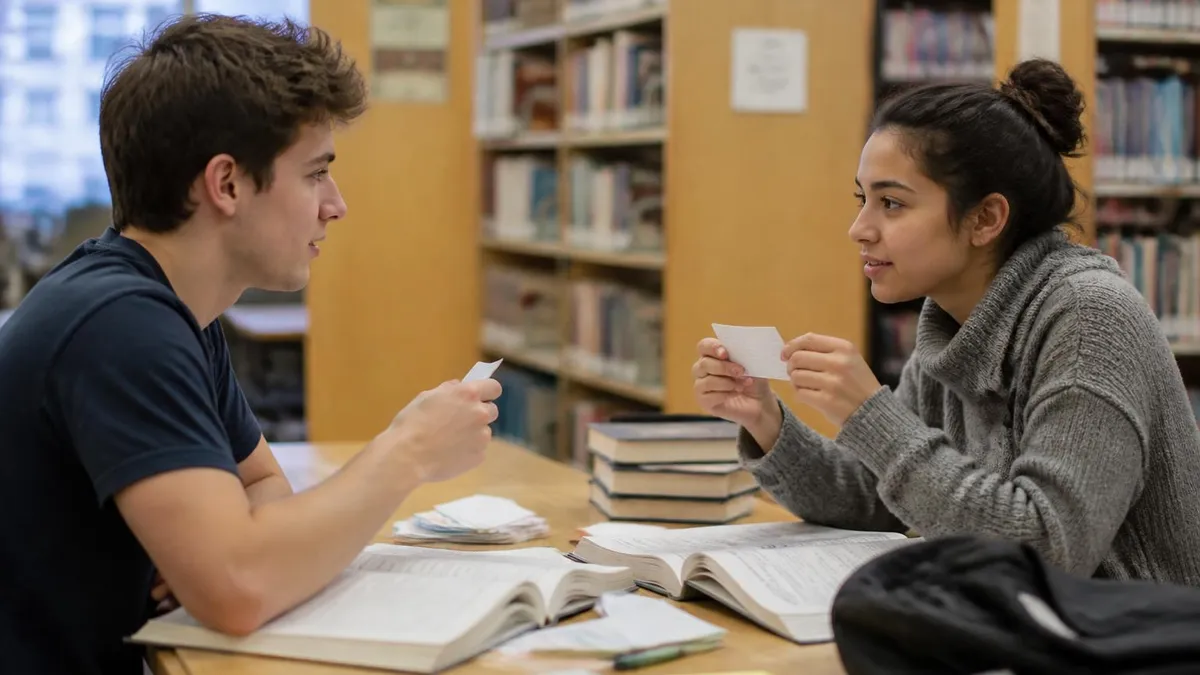
Group study can be a powerful tool for CBEST preparation, particularly for the Writing section. Having a study partner read and provide feedback on your practice essays — using the official scoring rubric as a guide — simulates the human rater scoring process in a way that self-assessment alone cannot fully replicate. For Mathematics, working through practice problems aloud with a partner forces you to verbalize your reasoning process, which often reveals gaps in understanding that silent practice obscures. Even two or three collaborative study sessions can accelerate progress significantly compared to studying entirely in isolation.
Finally, physical and mental readiness on test day should not be treated as secondary concerns. Arriving at the testing center rested after a full night of sleep produces measurably better cognitive performance than arriving after a late-night cramming session. Eat a balanced meal before the exam to maintain steady energy across the four-hour window.
Bring a water bottle if permitted by the testing center. Take the available scheduled breaks to stretch, reset your focus, and approach each new section with renewed concentration. The CBEST is a marathon, not a sprint, and managing your energy strategically across the full exam is itself a preparation strategy worth taking seriously.
CBEST Questions and Answers


About the Author

Educational Psychologist & Academic Test Preparation Expert
Columbia University Teachers CollegeDr. Lisa Patel holds a Doctorate in Education from Columbia University Teachers College and has spent 17 years researching standardized test design and academic assessment. She has developed preparation programs for SAT, ACT, GRE, LSAT, UCAT, and numerous professional licensing exams, helping students of all backgrounds achieve their target scores.
Join the Discussion
Connect with other students preparing for this exam. Share tips, ask questions, and get advice from people who have been there.
View discussion (7 replies)