
What Can You Do With a BSN? Careers, Salaries, and Opportunities 2026 August
Discover what you can do with a BSN degree — 🆕 top careers, salaries, specializations, and how to advance your nursing career in 2026 August.
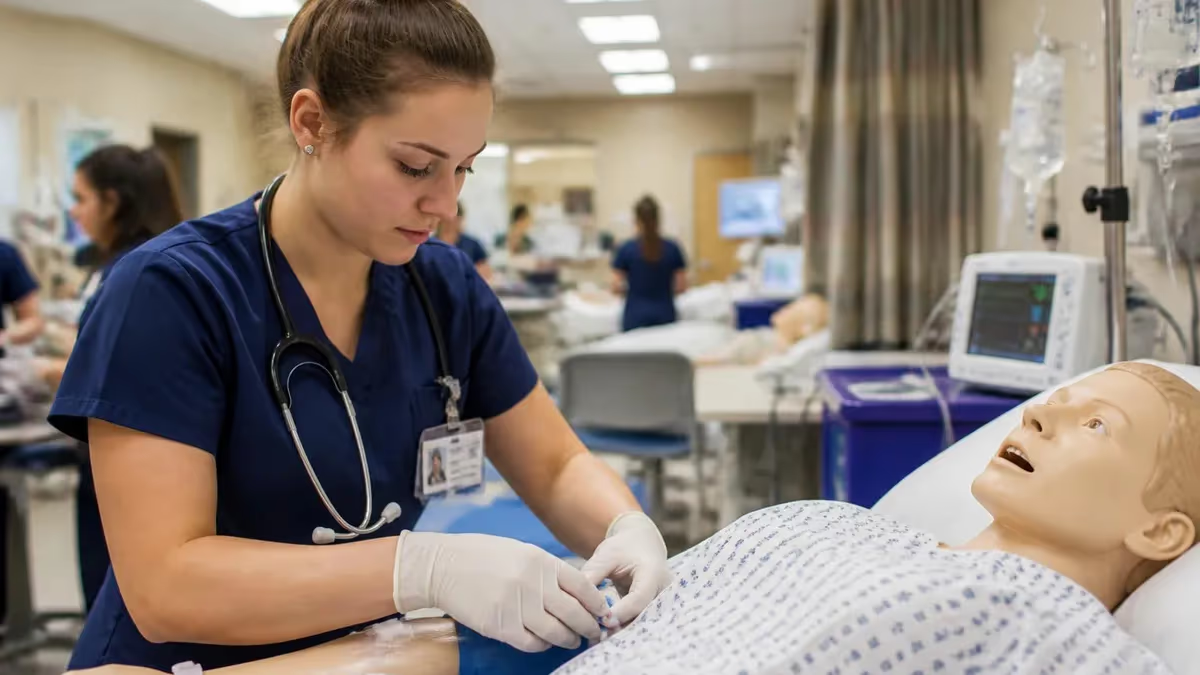
If you are wondering what can you do with a BSN, the short answer is: far more than most people realize. A Bachelor of Science in Nursing opens doors to dozens of clinical roles, leadership positions, advanced practice pathways, and specialized fields that are simply not accessible with an associate degree alone. Whether your goal is to work in a fast-paced hospital ICU, lead a community health program, or eventually become a nurse practitioner, the BSN is the credential that makes each of those paths possible and competitive.
The nursing workforce in the United States is evolving rapidly, and employers have taken notice. Major health systems — including the American Nurses Credentialing Center's Magnet-designated hospitals — have adopted formal policies preferring or requiring BSN-prepared nurses. According to the American Association of Colleges of Nursing, more than 70 percent of hospitals now prefer BSN graduates for new hires, and roughly half of all clinical nursing positions list the BSN as a minimum requirement for advancement. That preference translates directly into hiring decisions and pay scales.
Beyond the clinical bedside, a BSN equips graduates with research literacy, public health theory, leadership principles, and evidence-based practice skills that prepare them for roles outside the traditional hospital setting. BSN nurses work in schools, corporations, government agencies, insurance companies, global health organizations, and military branches. The degree is versatile enough to serve as a terminal credential for a long and rewarding bedside career, or as a stepping stone toward graduate education and advanced specialty practice.
Salary data underscores the financial value of the BSN. The Bureau of Labor Statistics reports that registered nurses earn a median annual wage of approximately $89,000, with BSN-prepared nurses at larger health systems often earning considerably more — especially when shift differentials, overtime, and specialty certifications are factored in. Nurses with BSNs who move into leadership, education, or informatics roles frequently exceed $100,000 per year within a decade of graduation.
The job market for BSN graduates is remarkably strong heading into 2026. The BLS projects registered nursing employment to grow 6 percent through 2033, adding roughly 193,000 new positions. That growth is fueled by an aging baby-boomer population requiring more complex care, a wave of experienced nurses approaching retirement, and expanding access to healthcare services through community health and telehealth channels. BSN-prepared nurses are well-positioned to fill those openings and to lead through the resulting workforce transition.
This article walks through the full landscape of career options available to BSN graduates — from entry-level hospital positions to high-earning specialty roles, from public health to global nursing, from clinical informatics to academic education. Understanding the breadth of your options is the first step toward building a deliberate, fulfilling nursing career that grows with you over time.
BSN Career Opportunities by the Numbers

Top Career Paths for BSN Graduates
The most common entry point for BSN graduates, staff nurses deliver direct patient care in units ranging from medical-surgical floors to intensive care. Most Magnet hospitals prefer or require a BSN for these bedside positions, offering strong starting salaries and extensive professional development.
Public health nurses work in county health departments, schools, nonprofits, and government agencies to improve population health outcomes. The BSN provides the epidemiology, health promotion, and policy foundations essential for these community-focused roles.
BSN nurses frequently move into unit-level leadership within three to five years. Charge nurses oversee shift operations, while nurse managers handle staffing, budgets, and quality metrics. A BSN is typically the minimum requirement for these supervisory positions.
Informatics nurses bridge clinical practice and health information technology. They implement electronic health record systems, analyze data to improve patient outcomes, and train clinical staff. This rapidly growing field combines BSN clinical expertise with technology skills.
BSN-prepared travel nurses fill short-term staffing gaps at hospitals nationwide, typically earning significantly higher total compensation than permanent staff through agency pay packages, housing stipends, and completion bonuses for 13-week assignments.
Understanding BSN salary ranges by role and setting helps you plan your career trajectory strategically rather than leaving compensation to chance. Entry-level staff nurses with a BSN typically start between $60,000 and $75,000 annually in most US markets, with significant regional variation. California, Hawaii, and the Pacific Northwest consistently offer the highest base salaries for BSN nurses, while rural Midwestern and Southern states tend to sit at the lower end of the national range — though lower cost of living can offset some of that difference.
Hospital setting and unit type are among the strongest salary drivers. Nurses working in intensive care units, emergency departments, and operating rooms typically earn 10 to 20 percent more than nurses on general medical-surgical floors, reflecting the higher skill requirements and acuity levels of those environments. Specialty differentials, night-shift and weekend premiums, and on-call compensation can add another $8,000 to $15,000 per year on top of base salary — a factor that significantly affects total take-home pay for nurses who consistently work less desirable shifts.
Nurse managers and charge nurses with BSNs see a meaningful pay bump when stepping into leadership. The median annual salary for a nurse manager in the US runs between $95,000 and $120,000, depending on facility size, geographic location, and years of experience. Directors of nursing and chief nursing officers, who typically hold graduate degrees but may have started with a BSN, can earn $140,000 to over $200,000 at large hospital systems. Each rung of the leadership ladder tends to reward the BSN foundational credential with a meaningful salary premium over ADN-prepared peers.
Outside the hospital, BSN nurses in public health, school nursing, and occupational health settings typically earn less than their hospital counterparts — median salaries ranging from $58,000 to $78,000 — but often benefit from more predictable schedules, lower physical demands, and stronger work-life balance. Federal government nursing roles, such as positions with the Department of Veterans Affairs or the Indian Health Service, offer competitive pay scales plus exceptional benefits packages including pension plans, generous paid leave, and student loan repayment programs that make the total compensation highly attractive.
Nursing informatics specialists earn above-average compensation for BSN nurses, with median salaries typically ranging from $80,000 to $110,000, reflecting the premium placed on technology expertise combined with clinical knowledge. Case managers and utilization review nurses employed by insurance companies and managed care organizations frequently earn in the $75,000 to $95,000 range, often working entirely remotely — a significant lifestyle advantage that has driven increased interest in these roles since the COVID-19 pandemic normalized remote work across healthcare administration.
Travel nursing represents one of the highest-earning opportunities for BSN-prepared nurses willing to embrace mobility. During peak demand periods, experienced travel nurses in high-demand specialties like ICU, labor and delivery, or OR have commanded total weekly compensation packages equivalent to $130,000 to over $160,000 annualized — though these rates fluctuate with market conditions and are highest during healthcare system crises. Even in normal market conditions, travel nurses typically earn 20 to 40 percent more in total compensation than comparable permanent staff, making it an attractive option for nurses who want to maximize earnings while exploring different parts of the country.
Certified BSN nurses consistently out-earn their non-certified peers. Specialty certifications from organizations like the American Association of Critical-Care Nurses or the Oncology Nursing Certification Corporation signal demonstrated expertise and commitment to professional development. Many hospitals formally reward certification with pay differentials of $1 to $3 per hour, which adds up to $2,000 to $6,000 per year on top of base salary. Over a 30-year nursing career, those certification differentials — compounded through raises and retirement contributions — represent a substantial financial advantage.
Clinical Specializations Available to BSN Nurses
Acute care offers BSN nurses the most diverse array of clinical specializations. Critical care nursing in ICUs — including medical, surgical, cardiac, neurological, and pediatric intensive care — represents some of the most technically demanding and highest-compensated bedside roles. Emergency nursing combines rapid assessment skills with autonomous decision-making across every age group and diagnosis. Operating room and perioperative nursing focuses on surgical patient care from pre-op through post-anesthesia recovery, requiring specialized certification through AORN after gaining initial experience.
Cardiac catheterization lab nurses, stroke coordinators, trauma nurses, and rapid response team members all represent acute care niches where BSN preparation is the expected baseline. Each of these specialties has its own certification pathway — typically requiring 1,500 to 2,000 hours of specialty experience before eligibility — and each offers salary premiums above general staff nursing. Many BSN graduates choose one acute care specialty in their first two to three years and then either deepen expertise in that area or use it as a platform to pursue an advanced practice specialty at the graduate level.

BSN vs. ADN: Is the Extra Education Worth It?
- +Higher starting salaries at Magnet and top-tier hospital systems
- +Eligible for more than 70% of hospital job postings that require BSN
- +Direct pathway to graduate school for NP, CRNA, CNS, or CNL roles
- +Stronger evidence-based practice and research literacy skills
- +Leadership and management track access within 3-5 years
- +Eligible for federal loan repayment programs tied to BSN requirement
- −2 additional years of education compared to ADN pathway
- −Higher tuition cost — average BSN program runs $40,000–$100,000 total
- −Same NCLEX exam and initial RN license as ADN graduates
- −Starting clinical salary difference over ADN is often modest
- −ADN-to-BSN bridge programs exist but require additional time and cost
- −Some rural or critical access hospital markets hire ADN nurses equally
Steps to Advance Your BSN Nursing Career
- ✓Pass the NCLEX-RN on your first attempt by using structured practice test banks and review courses.
- ✓Choose a first specialty based on your strengths — ICU, ED, L&D, and OR offer the fastest skill development.
- ✓Obtain BLS and ACLS certifications within your first six months of employment.
- ✓Pursue a specialty certification (CCRN, CEN, RNC-OB) once you meet the 1,500-hour eligibility threshold.
- ✓Join your specialty's professional organization (AACN, ENA, AWHONN) for networking and continuing education.
- ✓Request to precept new graduates or students to build leadership skills and visibility.
- ✓Pursue a nurse manager or charge nurse role after three to five years of strong clinical performance.
- ✓Explore ADN-to-BSN or BSN-to-MSN bridge programs if further advancement is a long-term goal.
- ✓Apply for Magnet-designated or teaching hospital positions for superior professional development resources.
- ✓Document all clinical achievements, certifications, and committee work in a professional portfolio.
The BSN Is Now a Floor, Not a Ceiling
The Institute of Medicine's landmark recommendation that 80 percent of nurses hold a BSN by 2020 shifted employer expectations permanently. Today's BSN is best understood as the professional baseline — the credential that gets you in the door at top health systems. The nurses who advance fastest treat the BSN as a launching pad, pairing it with specialty certification and leadership experience within the first five years of practice.
For BSN graduates who want to go beyond the bedside, graduate education opens one of the most lucrative and professionally autonomous career tracks in all of healthcare. The most popular graduate pathway is the Master of Science in Nursing with a nurse practitioner concentration. NPs can specialize as family nurse practitioners, adult-gerontology NPs, pediatric NPs, psychiatric-mental health NPs, neonatal NPs, and more — each with distinct scope-of-practice privileges, patient populations, and salary ranges. Family NPs, the largest NP specialty by volume, earn a median annual salary of approximately $120,000, with considerable upside in states that grant full practice authority.
Certified Registered Nurse Anesthetists represent the highest-earning advanced practice nursing specialty by a wide margin. CRNAs administer anesthesia in surgical, obstetric, and pain management settings and earn a median annual salary of approximately $214,000 according to BLS data — making CRNA one of the top-five highest-earning healthcare professions without a physician's degree. The pathway requires a BSN, at least one year of critical care nursing experience, a Doctor of Nursing Practice (DNP) from an accredited nurse anesthesia program, and successful completion of the national certification examination.
Clinical nurse specialists hold a graduate degree focused on a specific patient population, setting, or disease condition. CNSs work at hospitals as expert consultants for complex patient care challenges, drive evidence-based practice improvements, and develop clinical protocols that raise quality and safety standards across entire units or service lines. Unlike NPs, CNSs do not typically manage independent patient panels, but they function as the clinical knowledge resource that elevates an entire nursing team's practice. CNS salaries typically range from $85,000 to $115,000, with higher earnings in acute care and specialty settings.
Nurse midwives represent another advanced practice option for BSN nurses interested in women's health and reproductive care. Certified nurse-midwives provide prenatal care, attend deliveries, and offer gynecologic and primary care services to women across the lifespan. Many CNMs practice in hospital-based midwifery groups, birth centers, or federally qualified health centers serving underserved communities. The median annual salary for CNMs is approximately $120,000, and job demand is projected to grow as obstetric care deserts expand in rural and underserved areas of the country.
For BSN nurses interested in health systems rather than direct patient care, a graduate degree in nursing administration or healthcare administration leads to executive leadership opportunities. Chief nursing officers, vice presidents of patient care services, and hospital system executives often hold a combination of a BSN, MSN in nursing leadership, and sometimes an MBA or MHA. These roles command salaries ranging from $130,000 at smaller community hospitals to well over $250,000 at large academic medical centers. The journey from BSN staff nurse to C-suite typically takes 15 to 25 years of progressive clinical and management experience.
Nursing education is another graduate pathway that begins with the BSN. Nurse educators work in hospital staff development departments, community college ADN programs, and four-year university BSN programs. A minimum of a master's degree in nursing education is typically required for faculty appointments at accredited nursing schools, and a Doctor of Nursing Practice or PhD is required for tenure-track positions. Nurse educators contribute to the profession's future by shaping the next generation of nurses while maintaining their own clinical expertise — a role many experienced BSN nurses find deeply rewarding as they approach mid-career.
Doctor of Nursing Practice programs are terminal clinical degrees designed for nurses who want the highest level of clinical expertise and systems leadership without pursuing a research-focused PhD. DNP graduates lead quality improvement initiatives, design and evaluate evidence-based clinical programs, and hold faculty and executive positions that shape healthcare delivery at the organizational level.
BSN-to-DNP programs exist at dozens of accredited universities and typically require three to four years of post-BSN study. Nurse anesthetists now require a DNP as the entry-level degree for new graduates beginning in 2025, signaling a broader shift toward doctoral preparation for advanced practice roles across all APRN specialties.

The Next Generation NCLEX (NGN), launched in April 2023, places significantly greater emphasis on clinical judgment, care prioritization, and case-based reasoning — skills that BSN programs develop extensively. BSN graduates who focus on clinical reasoning during exam preparation rather than rote memorization are better aligned with what the NGN actually tests. Use practice tests and question banks specifically designed for the NGN format to build the right skills before exam day.
Non-clinical roles represent one of the most underappreciated categories of opportunity available to BSN nurses. Many nurses who entered the profession with a passion for patient care eventually find that administrative, technological, or policy-oriented work leverages their clinical expertise in new and equally meaningful ways. The BSN credential provides the clinical credibility that makes these transitions possible — non-nurses in similar roles simply cannot bring the same patient-care perspective to the work.
Legal nurse consulting is a well-established non-clinical career for experienced BSN nurses. Legal nurse consultants review medical records, interpret clinical documentation, assess standards of care, and provide expert testimony or written analysis in medical malpractice, personal injury, product liability, and workers' compensation cases. Most LNCs work as independent contractors for plaintiff or defense law firms, earning between $100 and $200 per hour for their expertise. Getting started typically involves completing a formal LNC certification course and networking with local attorneys — a career transition that many BSN nurses make successfully after 5 to 10 years of clinical experience.
Health insurance and managed care companies employ large numbers of BSN-prepared nurses in roles that have nothing to do with direct patient care. Utilization review nurses evaluate insurance claims to determine medical necessity and appropriate level of care. Case managers coordinate care for members with complex chronic conditions to avoid unnecessary hospitalizations and emergency department visits.
Clinical quality improvement specialists analyze outcomes data to identify gaps in preventive care delivery. These roles are frequently fully remote, offer standard business hours, and pay competitive salaries in the $75,000 to $95,000 range — making them highly attractive to nurses who want to exit shift work without leaving the healthcare industry entirely.
Pharmaceutical and medical device companies actively recruit BSN-prepared nurses for clinical sales, clinical education, and medical science liaison roles. Clinical sales representatives call on hospitals and physician offices to promote medications or devices, combining clinical knowledge with relationship-building and business acumen. Medical science liaisons serve as field-based scientific experts communicating clinical and research data to healthcare professionals. These roles typically offer base salaries of $85,000 to $110,000 plus performance bonuses and generous expense accounts — compensation structures that often exceed what the same nurse would earn at the bedside.
Federal and military nursing opens yet another non-traditional pathway for BSN graduates. The Department of Veterans Affairs employs more nurses than any other single employer in the United States, offering highly competitive total compensation packages that include pension benefits, student loan repayment, and predictable scheduling. The Army, Navy, and Air Force Nurse Corps commission BSN nurses as officers and provide opportunities to practice in military hospitals stateside and at overseas bases, with specialization options parallel to civilian nursing. Military service also qualifies nurses for Public Service Loan Forgiveness after 10 years of qualifying payments.
Global and international health nursing is a career direction that the BSN enables through its public health and research foundations. Organizations like the Peace Corps, Doctors Without Borders, and USAID hire BSN-prepared nurses for global health programs addressing infectious disease control, maternal-child health, nutrition, and emergency disaster response. International nursing requires strong cultural competency, adaptability, and often additional training in tropical medicine or global health, but the BSN provides the essential clinical and public health framework that makes international deployment effective and safe for both nurse and patient populations served.
Health coaching, corporate wellness, and occupational health nursing round out the non-clinical picture. Occupational health nurses employed by large corporations manage employee health programs, conduct pre-employment physicals, coordinate workers' compensation cases, and run wellness initiatives that reduce employer healthcare costs. Corporate wellness nurses advise on disease management, lifestyle modification, and preventive screenings for employee populations. These roles often include standard business hours, excellent benefits, and salaries ranging from $70,000 to $90,000 — a combination that makes them consistently popular among experienced BSN nurses seeking a career change without leaving their professional identity behind.
Preparing strategically for your BSN career starts well before graduation. The nurses who transition most successfully into their chosen specialty are those who have done their research, completed targeted clinical rotations, and built early professional networks in their area of interest. Here is practical advice for making the most of your BSN investment and launching your nursing career with momentum rather than inertia.
Clinical rotations during your BSN program are your most valuable opportunity to explore specialties with low personal risk. Treat every rotation as an audition — both for the unit and for yourself. Ask preceptors about daily workflow, common patient presentations, and what they wish they had known before choosing the specialty. Shadow nurses on different shifts if your program allows it, because night-shift ICU nursing feels very different from day-shift ICU nursing, and that experiential difference matters enormously when choosing your first job.
New graduate residency programs are the gold standard first position for BSN graduates entering clinical nursing. One-year residency programs — offered by most Magnet hospitals and many large community health systems — provide structured orientation, extended preceptorship, simulation training, and cohort-based peer support through the challenging first year of practice. Research shows nurses who complete formal residency programs have significantly higher one-year retention rates than those hired into standard orientation programs, and the learning curve is meaningfully less steep when structured support is in place.
Building a professional network during your BSN program pays dividends that compound over time. Join the Student Nurses Association chapter at your school. Attend local nursing conferences in your specialty area of interest. Connect with faculty members on LinkedIn and stay in touch after graduation. Reach out to working nurses you admire for informational interviews about their career paths. Nursing is a profession where introductions matter — many jobs in competitive specialties and leadership roles are filled through professional relationships before they are formally posted.
Continuing education is not just a licensure requirement — it is a career investment. BSN nurses who proactively pursue specialty certifications, leadership development courses, and graduate-level coursework signal to employers that they are serious about advancing. Many hospitals offer tuition reimbursement programs ranging from $2,500 to $10,000 per year for nurses pursuing advanced degrees or certifications. Failing to use available tuition benefits is one of the most common and costly mistakes that BSN nurses make in the early years of their careers — free money toward a credential that directly increases earning potential should never go unclaimed.
Creating a professional nursing portfolio is a practical strategy that few new graduates prioritize but all should. Document your clinical competencies, specialty certifications, continuing education credits, committee memberships, quality improvement projects, and professional presentations in a single organized document. Update it every six months. When promotion opportunities arise, performance reviews occur, or you apply to graduate school, having a comprehensive portfolio ready to share demonstrates the professional intentionality that distinguishes nurses who advance from those who plateau early in their careers.
Finally, take your NCLEX preparation seriously. The exam has evolved significantly with the Next Generation NCLEX format, and the question styles now require genuine clinical reasoning rather than surface-level recall. Use full-length practice tests under timed conditions to simulate exam day, review every incorrect answer to understand the clinical reasoning behind it, and focus especially on the newer clinical judgment measurement model item types.
Passing on the first attempt not only saves the cost and stress of repeating the exam — it positions you as a strong candidate for the most competitive new graduate positions and residency programs from day one of your job search.
BSN Questions and Answers

BSN, RN & BSN-RN: What These Credentials Mean

ADN to BSN Online: Bridge Programs and Costs Complete Guide

Accelerated BSN Programs by Location: Complete US Guide With Canada Comparison for 2026

Accredited BSN Programs: Complete Guide to CCNE and ACEN Nursing Degrees in 2026

BSN RN: What It Is, Salary, and Why It Matters in 2026
About the Author

Registered Nurse & Healthcare Educator
Johns Hopkins University School of NursingDr. Sarah Mitchell is a board-certified registered nurse with over 15 years of clinical and academic experience. She completed her PhD in Nursing Science at Johns Hopkins University and has taught NCLEX preparation and clinical skills courses for nursing students across the United States. Her research focuses on evidence-based exam preparation strategies for healthcare certification candidates.