
Post Baccalaureate BSN Programs: Complete Training Guide and Requirements 2026
Post baccalaureate BSN programs explained: prerequisites, timelines, costs, and how to choose the right path. 🎓 Complete US training guide.

Post baccalaureate BSN programs are designed specifically for individuals who already hold a bachelor's degree in a non-nursing field and want to transition into professional nursing. Unlike traditional four-year BSN pathways that begin from scratch, these accelerated programs build on your existing academic foundation, allowing you to complete nursing coursework and clinical training in as little as 12 to 18 months. If you are exploring post baccalaureate bsn programs, understanding the admission requirements, curriculum structure, and career outcomes is the essential first step toward making an informed decision.
The demand for registered nurses in the United States continues to grow at a rapid pace. The Bureau of Labor Statistics projects a 6 percent increase in registered nursing jobs through 2032, adding more than 177,000 new positions annually. This sustained demand has made post-baccalaureate nursing programs increasingly popular among career changers — particularly those coming from fields like biology, psychology, public health, and healthcare administration — who want a faster route into clinical practice without earning a second bachelor's degree from the ground up.
Admission to post-baccalaureate BSN programs is competitive. Most programs require applicants to hold a minimum GPA of 3.0 from their undergraduate institution, though many highly selective programs set the bar at 3.2 or higher. In addition to GPA, schools typically look for completion of prerequisite science courses such as anatomy, physiology, microbiology, chemistry, and statistics. Some programs also require healthcare work experience, letters of recommendation, and a personal statement explaining your motivation for entering the nursing profession.
One of the most important distinctions to understand when evaluating these programs is accreditation. Post-baccalaureate BSN programs should hold accreditation from either the Commission on Collegiate Nursing Education (CCNE) or the Accreditation Commission for Education in Nursing (ACEN). Graduating from an accredited program is essential for sitting for the NCLEX-RN licensure exam, obtaining state nursing licenses, and pursuing graduate-level nursing education in the future. Always verify accreditation status before submitting an application.
Tuition costs for post-baccalaureate BSN programs vary widely depending on whether you attend a public or private institution and whether the program is offered in-person or in a hybrid format. Public university programs often range from $15,000 to $40,000 in total tuition, while private university programs can exceed $60,000 to $80,000. Financial aid options include federal student loans, institutional scholarships, state nursing workforce grants, and employer tuition reimbursement programs — particularly relevant if you are transitioning from a healthcare-adjacent career.
The curriculum in a post-baccalaureate BSN program typically covers foundational nursing sciences alongside core clinical practice areas including medical-surgical nursing, pediatric nursing, psychiatric and mental health nursing, maternal and newborn care, and community health nursing. Clinical rotations are a mandatory component of every accredited program, providing students with hundreds of supervised hours in hospital and community settings. Most programs require between 600 and 800 clinical hours before graduation, ensuring graduates are genuinely practice-ready on day one.
Graduates of post-baccalaureate BSN programs are eligible to sit for the NCLEX-RN exam and, upon passing, apply for registered nurse licensure in their state. BSN-prepared nurses consistently command higher starting salaries, enjoy greater job mobility, and are preferred by Magnet-designated hospitals, which require that at least 80 percent of their nursing staff hold a BSN or higher. Choosing this pathway is not merely an academic decision — it is a strategic investment in a long-term nursing career with strong earnings potential and exceptional professional stability.
Post-Baccalaureate BSN Programs by the Numbers
Types of Post-Baccalaureate BSN Program Structures
The most intensive format, completed in 12 to 15 months of full-time study on campus. Students attend classes and clinical rotations five days per week. This format is ideal for career changers who can dedicate themselves fully without employment obligations.
Combines online didactic coursework with required in-person clinical rotations at affiliated hospital sites. Typically spans 15 to 20 months. Offers flexibility for students who need some scheduling accommodation while still meeting clinical hour requirements.
Some universities offer post-baccalaureate pathways that lead directly to a Master of Science in Nursing rather than a BSN. Students earn their RN licensure eligibility mid-program. This option suits those committed to advanced practice roles like NP or CNS.
Spreads the same curriculum over 24 to 30 months to accommodate working professionals. Less common but available at select community-based and regional universities. Allows students to maintain part-time employment while completing their nursing prerequisites.
Understanding admission requirements is critical because post-baccalaureate BSN programs are among the most competitive healthcare pathways available in the United States. Every accredited program sets its own specific criteria, but a consistent set of baseline expectations applies across virtually all reputable programs. Applicants should plan to begin preparing their application materials at least six to twelve months before the intended enrollment date, as many programs have rolling admissions and fill available seats quickly.
The undergraduate GPA requirement is the most commonly cited admission filter. Most programs require a cumulative GPA of at least 3.0, with the prerequisite science GPA carrying particular weight. Programs at nationally ranked schools — such as Johns Hopkins, University of Pennsylvania, and Georgetown — often report average accepted applicant GPAs of 3.5 or higher. If your science GPA falls below the minimum threshold, completing a post-baccalaureate science course series through a community college or university extension program before applying can significantly strengthen your candidacy.
Prerequisite coursework requirements vary by program but typically include anatomy and physiology I and II, microbiology, general chemistry, statistics, and sometimes nutrition or developmental psychology. Most programs specify that prerequisite courses must have been completed within the past five to seven years with a grade of B or better. If your undergraduate degree is in a science-adjacent field such as biology, biochemistry, or public health, you may already satisfy many prerequisites and can focus your preparation energy elsewhere.
Healthcare experience is an increasingly important admission criterion. While some programs do not formally require it, programs that do typically ask for 100 to 200 hours of direct patient care experience. This can be fulfilled through roles as a certified nursing assistant (CNA), emergency medical technician (EMT), patient care technician, medical assistant, or volunteer in a hospital or hospice setting. Admissions committees view healthcare experience as evidence that applicants understand the demands of nursing work and have made an informed career choice.
Letters of recommendation typically come from two to three sources: at least one from a college science professor who can speak to your academic aptitude, and one or two from healthcare professionals or employers who can speak to your character, work ethic, and patient care interactions. Generic letters that simply confirm enrollment in a class carry minimal weight. Strong letters describe specific moments or projects that reveal qualities especially relevant to nursing — empathy, clinical curiosity, composure under pressure, and collaborative instincts.
The personal statement or essay is your opportunity to explain why you are pursuing nursing specifically through a post-baccalaureate route, what you bring from your prior career, and how the program aligns with your long-term professional goals. Admissions reviewers look for self-awareness, clarity of purpose, and genuine engagement with the nursing profession rather than generic statements about wanting to help people. Mention specific clinical specialties you hope to pursue, name faculty research or program features that attract you, and connect your prior experience concretely to nursing competencies.
Some programs also require interviews — either in-person, virtual, or recorded video responses — as a final screening step before admission decisions are made. Interview questions typically probe your understanding of the nursing scope of practice, your ability to handle stress and ethical dilemmas, and your awareness of healthcare disparities and equity issues. Preparing for these interviews by reviewing current nursing ethics frameworks, NCLEX test plan domains, and recent changes to healthcare policy will help you stand out from other well-qualified applicants.
BSN Curriculum: What You Will Study in Each Phase
The first phase of a post-baccalaureate BSN program focuses on nursing science fundamentals — pharmacology, pathophysiology, health assessment, and nursing theory. These courses build the clinical reasoning framework you will apply throughout your career. Since most students already completed undergraduate sciences, instructors move quickly through material and expect students to integrate prior knowledge into nursing-specific applications from day one.
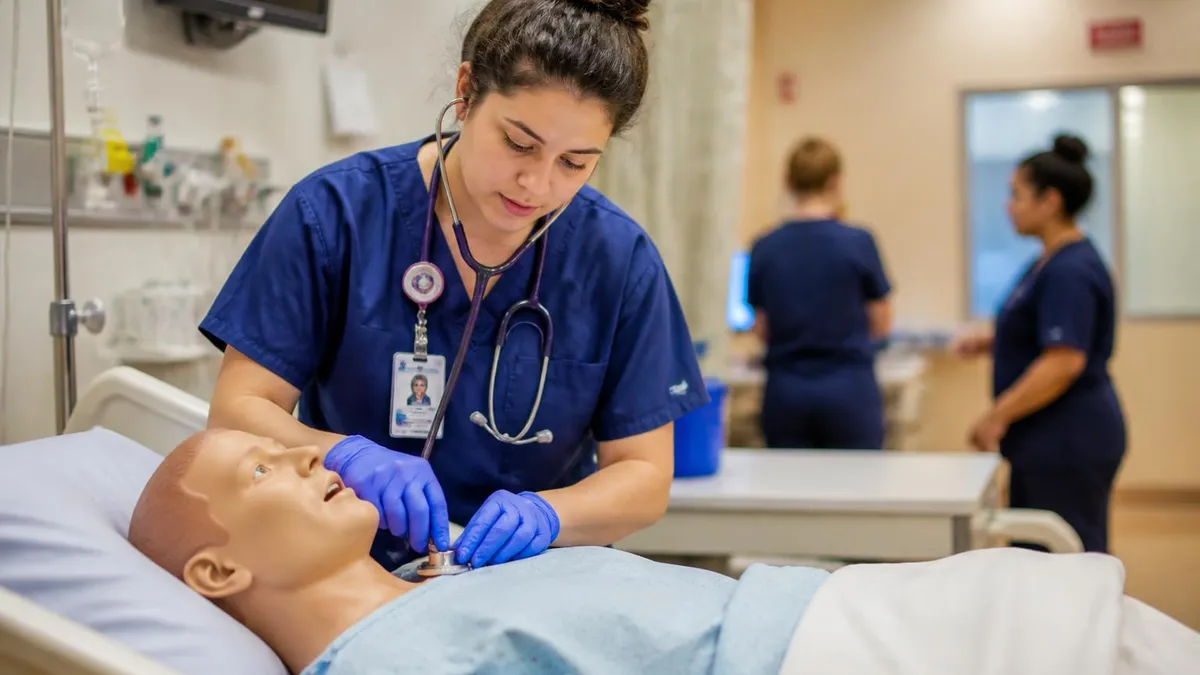
Health assessment labs introduce systematic physical examination techniques, vital sign interpretation, documentation in electronic health records, and basic procedural skills such as catheter insertion and IV initiation. Simulation labs using high-fidelity mannequins allow students to practice scenarios — respiratory distress, cardiac arrest, postpartum hemorrhage — in a safe environment before encountering similar situations in real clinical placements. Many programs assess foundational competency through objective structured clinical examinations (OSCEs) before students advance to full clinical rotations.

Is a Post-Baccalaureate BSN Program Right for You?
- +Complete your BSN in 12–18 months rather than 4 years, dramatically accelerating your career timeline
- +Build on your prior bachelor's degree — science, psychology, or health backgrounds provide a strong academic foundation
- +BSN credential opens doors to Magnet hospitals, leadership tracks, and higher starting salaries from day one
- +Graduates are fully NCLEX-RN eligible and can sit for licensure immediately upon program completion
- +Many programs offer direct-entry MSN options for students who already envision an advanced practice future
- +Networking opportunities with classmates from diverse professional backgrounds enriches clinical reasoning and teamwork skills
- −Highly competitive admissions — GPAs below 3.0 and incomplete prerequisites significantly reduce acceptance odds
- −Full-time intensive format makes it nearly impossible to maintain significant employment during the program
- −Total costs including tuition, fees, uniforms, and equipment can exceed $60,000 at private institutions
- −Accelerated pace is demanding — students report the workload is equivalent to two full semesters compressed into one
- −Limited program availability in rural areas means many students must relocate or commute significant distances
- −Clinical placement competition is fierce in some metro areas, and scheduling conflicts can occasionally delay graduation
Pros and Cons at a Glance
| Pros | Cons |
|---|---|
| Build on your prior bachelor's degree — science, psychology, or health backgrounds provide a strong academic foundation | Full-time intensive format makes it nearly impossible to maintain significant employment during the program |
| BSN credential opens doors to Magnet hospitals, leadership tracks, and higher starting salaries from day one | Accelerated pace is demanding — students report the workload is equivalent to two full semesters compressed into one |
| Graduates are fully NCLEX-RN eligible and can sit for licensure immediately upon program completion | Limited program availability in rural areas means many students must relocate or commute significant distances |
| Many programs offer direct-entry MSN options for students who already envision an advanced practice future | Clinical placement competition is fierce in some metro areas, and scheduling conflicts can occasionally delay graduation |
Post-Baccalaureate BSN Application Checklist
- ✓Verify your undergraduate GPA meets or exceeds the program minimum of 3.0 (ideally 3.2 or higher for competitive programs)
- ✓Complete all required prerequisite science courses — anatomy, physiology, microbiology, chemistry, and statistics — with a B or better
- ✓Accumulate at least 100 hours of direct patient care experience as a CNA, EMT, medical assistant, or hospital volunteer
- ✓Request official transcripts from every college or university you attended, including community colleges
- ✓Secure 2–3 strong letters of recommendation from science faculty and healthcare professionals who know your work directly
- ✓Write a compelling personal statement that connects your prior career, patient care experience, and specific nursing goals
- ✓Research and confirm each target program's CCNE or ACEN accreditation status on the official accreditor websites
- ✓Complete the FAFSA and research state nursing workforce scholarships, hospital tuition reimbursement, and institutional aid early
- ✓Prepare for program interviews by reviewing NCLEX-RN domains, nursing ethics principles, and current healthcare policy issues
- ✓Confirm application deadlines — many programs use rolling admissions and fill cohorts 6–12 months before the start date
Start Clinical Hours Before You Apply — Not After
Programs consistently report that applicants with 200 or more documented patient care hours are admitted at nearly twice the rate of those with fewer than 50 hours. Volunteering as a CNA or hospital patient care technician for even one semester before applying transforms a competitive application into a compelling one. Begin this step early — it takes time to accumulate meaningful hours and the experience will also inform and strengthen your personal statement.
The cost of a post-baccalaureate BSN program is one of the most significant financial decisions a career changer will make, and it requires careful analysis rather than a superficial comparison of headline tuition figures. Total program cost includes not only tuition per credit hour but also student fees, clinical supplies and equipment, uniform costs, background check and drug screening fees, liability insurance, and NCLEX examination registration, which runs $200 to $350 depending on the state. When these additional costs are factored in, the real cost of attendance is often 15 to 25 percent higher than the advertised tuition figure.
Public university programs typically offer the most affordable tuition for in-state residents, with total program costs ranging from $15,000 to $40,000 for accelerated BSN completion. Community college-to-university partnership programs can sometimes reduce costs further, allowing students to complete nursing prerequisites at lower per-credit rates before transferring into the BSN completion portion. However, public programs are also the most oversubscribed, and acceptance rates at flagship state university nursing programs routinely fall below 20 percent for post-baccalaureate applicants.
Private university programs — including those at Georgetown, Drexel, Rush University, and Samuel Merritt — often charge between $50,000 and $85,000 in total tuition for their accelerated nursing sequences. These higher price tags are partially offset by smaller cohort sizes, more individualized advising, stronger hospital affiliation networks for clinical placements, and better NCLEX first-attempt pass rate outcomes. For students focused on working in major metropolitan hospital systems or pursuing graduate nursing education, the investment in a nationally recognized program can yield strong long-term returns.
Federal financial aid is available to post-baccalaureate BSN students, but the specific forms of aid differ from typical undergraduate support. Since you already hold a bachelor's degree, you are not eligible for Pell Grants and standard undergraduate subsidized loan limits apply at a lower ceiling. However, the federal unsubsidized Direct Loan program and the Grad PLUS Loan program can collectively cover a substantial portion of tuition and living expenses. Always complete the FAFSA as soon as the application window opens each October to maximize your aid eligibility window.
Scholarships specifically targeting second-degree nursing students are available through nursing associations, hospital foundations, and state health workforce initiatives. The American Association of Colleges of Nursing (AACN), the National Student Nurses Association (NSNA), the Johnson & Johnson Nursing Scholarship program, and numerous state-level nursing workforce commissions offer awards ranging from $1,000 to $10,000 or more annually. Many hospitals also offer tuition reimbursement or loan forgiveness agreements in exchange for a two- to three-year employment commitment upon graduation — a particularly valuable option in states with nurse staffing shortages.
Living expenses represent a substantial secondary cost for students who must relocate for program attendance or who reduce work hours significantly during their studies. Programs in high cost-of-living cities such as New York, San Francisco, Boston, and Seattle can add $20,000 to $35,000 per year in rent, food, and transportation costs on top of tuition. Some programs provide on-campus housing or maintain lists of student housing cooperatives to help manage these expenses, but budgeting for the full cost of attendance — not just tuition — is essential for financial planning purposes.
Income tax deductions and credits may help offset educational costs for some post-baccalaureate nursing students. The Lifetime Learning Credit allows eligible taxpayers to claim up to $2,000 annually for qualified education expenses, and student loan interest paid after graduation may be deductible up to $2,500 per year depending on income. Consulting a tax professional familiar with education tax provisions in the year before enrollment can help you identify all available deductions and structure your financial plan accordingly for maximum benefit across the program timeline.
Before applying to any post-baccalaureate BSN program, verify its accreditation status directly on the CCNE website (aacnnursing.org) or the ACEN website (acenursing.org). Graduating from a non-accredited nursing program will disqualify you from sitting for the NCLEX-RN exam in most states, rendering the degree professionally worthless. State board of nursing approval is a separate and additional requirement — confirm both accreditation and state board approval before accepting any admission offer.
Career outcomes for graduates of post-baccalaureate BSN programs are consistently strong across all major US nursing labor markets. The BSN credential is now the recognized minimum standard for professional nursing practice in most major hospital systems, and nurses who enter the workforce at the BSN level are substantially better positioned for salary negotiation, rapid promotion, and specialty certification than their ADN-prepared peers. Understanding the specific career pathways available to you as a BSN graduate is essential for setting realistic expectations and making strategic decisions during your program.
The median annual salary for registered nurses in the United States was $86,070 as of the most recent Bureau of Labor Statistics data, but BSN-prepared nurses consistently earn above this median. New graduates of post-baccalaureate BSN programs entering metropolitan hospital markets report starting salaries between $72,000 and $95,000, with the highest figures found in California, Hawaii, Massachusetts, Oregon, and Washington — states with strong collective bargaining agreements and Magnet hospital concentrations that actively recruit BSN-educated nurses at premium rates.
Specialty nursing roles represent the most lucrative and often the most intellectually stimulating career paths available to BSN graduates. Critical care nursing, emergency nursing, labor and delivery nursing, oncology nursing, and perioperative nursing all offer specialty certification pathways and pay differentials ranging from $3,000 to $12,000 annually above base salary. Many post-baccalaureate BSN graduates target these high-acuity specialties specifically because their prior career experience — in biology, healthcare administration, or social work, for example — gives them a meaningful head start in complex clinical environments.
Magnet-designated hospitals are particularly attractive employers for BSN graduates and offer several distinct advantages: higher base salaries, better nurse-to-patient staffing ratios, strong shared governance models that give staff nurses a voice in policy decisions, and strong tuition reimbursement benefits for continuing education. The American Nurses Credentialing Center (ANCC) Magnet Recognition Program requires that participating hospitals demonstrate nursing excellence and that the majority of their nursing staff hold a BSN or higher. This creates sustained demand for BSN-prepared nurses at the highest-quality hospital systems in every state.
Graduate school access is another significant benefit of the BSN credential that post-baccalaureate graduates should factor into their long-term planning. The BSN is the prerequisite for Master of Science in Nursing (MSN) programs, Doctor of Nursing Practice (DNP) programs, and PhD in nursing programs. Advanced practice registered nurse (APRN) roles — including nurse practitioners, certified nurse-midwives, certified registered nurse anesthetists, and clinical nurse specialists — require graduate-level education and offer median salaries ranging from $110,000 to $230,000. Many post-baccalaureate BSN students enter their programs already planning to pursue an NP or CRNA specialty at the graduate level.
Travel nursing is another highly lucrative option available to BSN-prepared nurses with at least one to two years of clinical experience. Travel nurses accept short-term contract assignments — typically 13 weeks — at hospitals across the country and earn base compensation packages that routinely include hourly rates of $40 to $75, tax-free housing stipends, and completion bonuses. Some travel nurses earn total annual compensation exceeding $130,000. While travel nursing is not an immediate option for new graduates, it represents a concrete and achievable financial milestone within two to three years of graduating from a post-baccalaureate BSN program.
Leadership roles in nursing management, quality improvement, nursing education, and healthcare informatics are also increasingly accessible to BSN-prepared nurses as their careers develop. Many hospitals offer nurse residency programs specifically for new graduates that rotate them through multiple units and leadership development experiences during their first year of practice. These residency programs are available exclusively or preferentially to BSN graduates at most participating institutions. Investing in certification through organizations like the American Nurses Credentialing Center (ANCC) or specialty nursing associations can further accelerate your career advancement timeline within these professional pathways.
Succeeding in a post-baccalaureate BSN program requires intentional study habits, strong time management, and proactive use of every support resource your program offers. The accelerated pace means there is little margin for passive learning strategies that may have worked in your first undergraduate degree. Students who thrive in these programs typically develop a consistent daily study routine from the first week, use active recall and spaced repetition techniques rather than re-reading, and form stable study groups with peers who share their academic standards and clinical goals.
Pharmacology is one of the areas where post-baccalaureate BSN students most commonly struggle, even those with strong prior science backgrounds. Nursing pharmacology requires not just memorizing drug classes and mechanisms but integrating medication knowledge with patient assessment findings, nursing diagnoses, and monitoring parameters — a uniquely multidimensional challenge. Using pharmacology flash card systems, sketching out drug class concept maps, and practicing NCLEX-style pharmacology questions from the earliest weeks of the program will help you build and retain this critical knowledge base under exam conditions.
Clinical simulation labs deserve more preparation time than many students allocate. High-fidelity simulation scenarios are graded, and performance in these settings directly informs your clinical instructor's assessment of your readiness for hospital rotations. Reviewing the simulation scenario objectives before each session, practicing physical assessment sequences until they become automatic, and participating actively in debriefing discussions afterward will help you extract the maximum learning value from each simulation encounter and build the clinical reasoning fluency that NCLEX and real patient care both require.
NCLEX preparation should begin on the first day of your program, not after graduation. Each course you complete covers specific NCLEX client needs categories, and reviewing corresponding NCLEX-style practice questions at the end of every unit reinforces knowledge while simultaneously familiarizing you with the exam's distinctive clinical reasoning format. Programs that incorporate NCLEX preparation tools like ATI, HESI, or UWorld into their curriculum give students a measurable advantage on first-attempt pass rates, which many BSN programs track closely and publish.
Self-care and stress management are not optional ancillary concerns — they are clinical competencies in nursing and essential survival skills during an accelerated BSN program. Students who establish exercise routines, maintain adequate sleep, eat regular meals, and sustain at least minimal social connection throughout the program consistently outperform students who neglect these fundamentals. Many programs build wellness check-ins and peer support structures into their curriculum specifically because the research on nursing student burnout is unambiguous: students who burn out academically in semester two rarely recover their momentum before clinical performance suffers visibly.
Networking with alumni of your target programs before you enroll is one of the most underused yet high-value preparation strategies available to prospective post-baccalaureate BSN students.
Alumni can tell you honestly which prerequisites are assessed most rigorously during admissions review, which hospital systems are the strongest clinical placement partners, what the first-year job market looks like for the program's graduates, and whether the program's advertised NCLEX pass rate reflects the experience of the full cohort or only those who took the exam within a certain window. LinkedIn, program-specific Facebook groups, and nursing school subreddits are all productive channels for finding alumni willing to share candid insights.
Finally, begin your NCLEX study plan in earnest during the final semester of your program, not after graduation. The ideal window for taking the NCLEX-RN is within 30 to 60 days of program completion, while foundational content is still active in your memory and clinical reasoning fluency is at its peak.
Using a structured NCLEX review course — Kaplan, Hurst, UWorld, or your program's integrated ATI or HESI pathway — for eight to ten weeks before your target test date, completing at least 2,000 practice questions with detailed answer rationale review, and sitting for multiple timed full-length practice exams will position you for a confident and successful first-attempt NCLEX experience that launches your nursing career immediately.
Sample BSN - Degree Bachelor of Science in Nursing Practice Questions
Try these questions from our free BSN - Degree Bachelor of Science in Nursing practice tests. The correct answer and an explanation follow each question.
A patient post-thyroidectomy suddenly develops stridor, dysphagia, and tingling in the fingertips. What complication should the nurse suspect?
- A. Hypocalcemia from inadvertent parathyroid removal
- B. Recurrent laryngeal nerve damage
- C. Hematoma compressing the airway
- D. Thyroid storm
Answer: A. Hypocalcemia from inadvertent parathyroid removal
Inadvertent removal or damage to the parathyroid glands causes acute hypocalcemia, manifesting as tetany, stridor, and perioral/fingertip tingling.
A patient with post-traumatic stress disorder (PTSD) is experiencing a flashback. Which nursing response is most therapeutic?
- A. Speak in a calm, steady voice and orient the patient to the present environment
- B. Stay silent and give the patient space until the flashback resolves
- C. Encourage the patient to talk about the traumatic event in detail
- D. Administer a PRN benzodiazepine immediately
Answer: A. Speak in a calm, steady voice and orient the patient to the present environment
Grounding techniques and calm reorientation bring the patient back to the present reality, reducing the intensity of the flashback.
A public health nurse is developing a program to reduce teenage smoking rates in a high school. Which intervention is most effective based on evidence-based practice?
- A. Peer-led education programs combined with school-wide policy changes
- B. A one-time assembly featuring a guest speaker about smoking dangers
- C. Distributing pamphlets on the health effects of tobacco to all students
- D. Requiring all students to write a report on tobacco-related diseases
Answer: A. Peer-led education programs combined with school-wide policy changes
Sustained peer-led programs combined with environmental policy changes (e.g., smoke-free campuses) have the strongest evidence for reducing adolescent smoking.
Which antidote should the nurse have readily available when administering IV opioids?
- A. Naloxone (Narcan)
- B. Flumazenil (Romazicon)
- C. Protamine sulfate
- D. Vitamin K (phytonadione)
Answer: A. Naloxone (Narcan)
Naloxone reverses opioid-induced respiratory depression by competitively binding mu-opioid receptors.
Take the full BSN - Degree Bachelor of Science in Nursing practice test
BSN Questions and Answers
ADN to BSN Online: Bridge Programs and Costs Complete Guide

Accelerated BSN Programs by Location: Complete US Guide With Canada Comparison for 2026

Accredited BSN Programs: Complete Guide to CCNE and ACEN Nursing Degrees in 2026

BSN RN: What It Is, Salary, and Why It Matters in 2026

Inexpensive Online RN to BSN Programs: Affordable Paths to Your Bachelor's Degree in 2026
About the Author

Registered Nurse & Healthcare Educator
Johns Hopkins University School of NursingDr. Sarah Mitchell is a board-certified registered nurse with over 15 years of clinical and academic experience. She completed her PhD in Nursing Science at Johns Hopkins University and has taught NCLEX preparation and clinical skills courses for nursing students across the United States. Her research focuses on evidence-based exam preparation strategies for healthcare certification candidates.